Brick, block, concrete walls and the MEP trades - how the work actually gets done, by build type.
The sector guides across this site follow buildings from enabling works to handover. This sector drops down a level: the individual trades and methods that make those stages happen, written for the person who wants to know how a brick wall is actually built, how a concrete core goes up, and what first fix and second fix really involve on a plumbing, electrical or air-conditioning package.
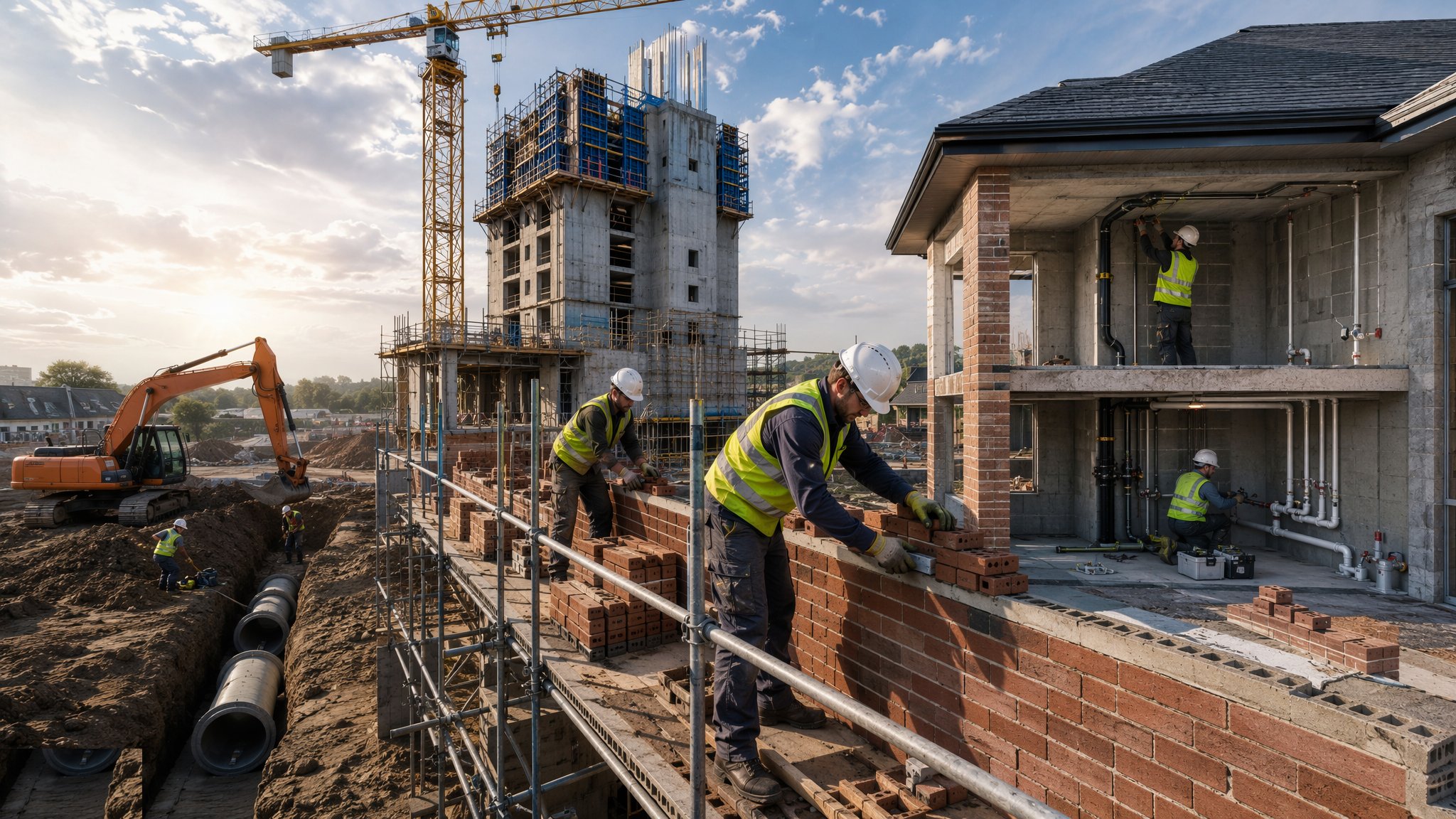
The process map - 18 guides
Each one is a full guide: overview, variants, numbered steps, plant, testing, safety and defects.
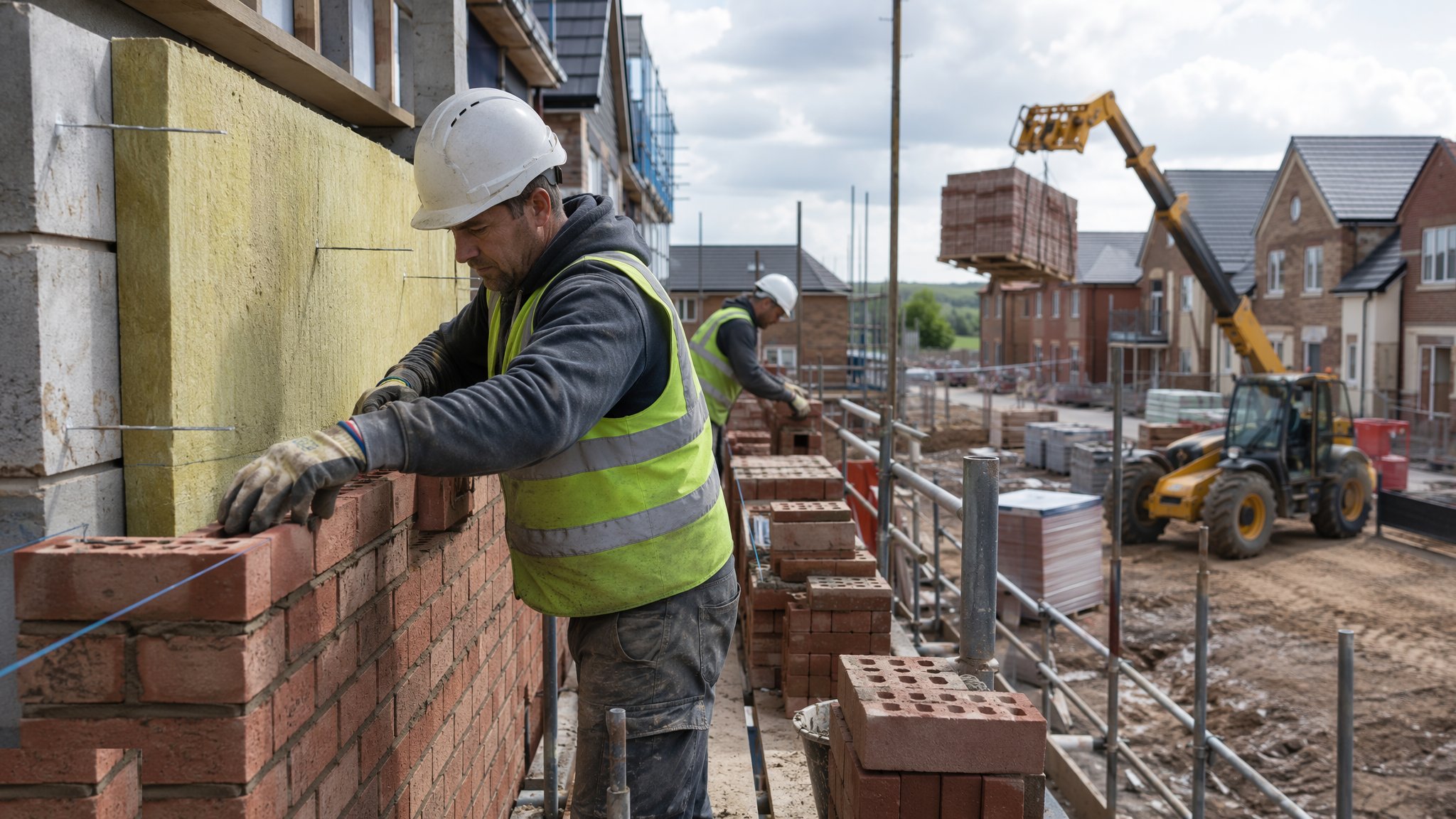
Brick Wall Construction
Laying brickwork that stays plumb, bonded and weather-tight - from a garden wall to a full cavity envelope.
Open process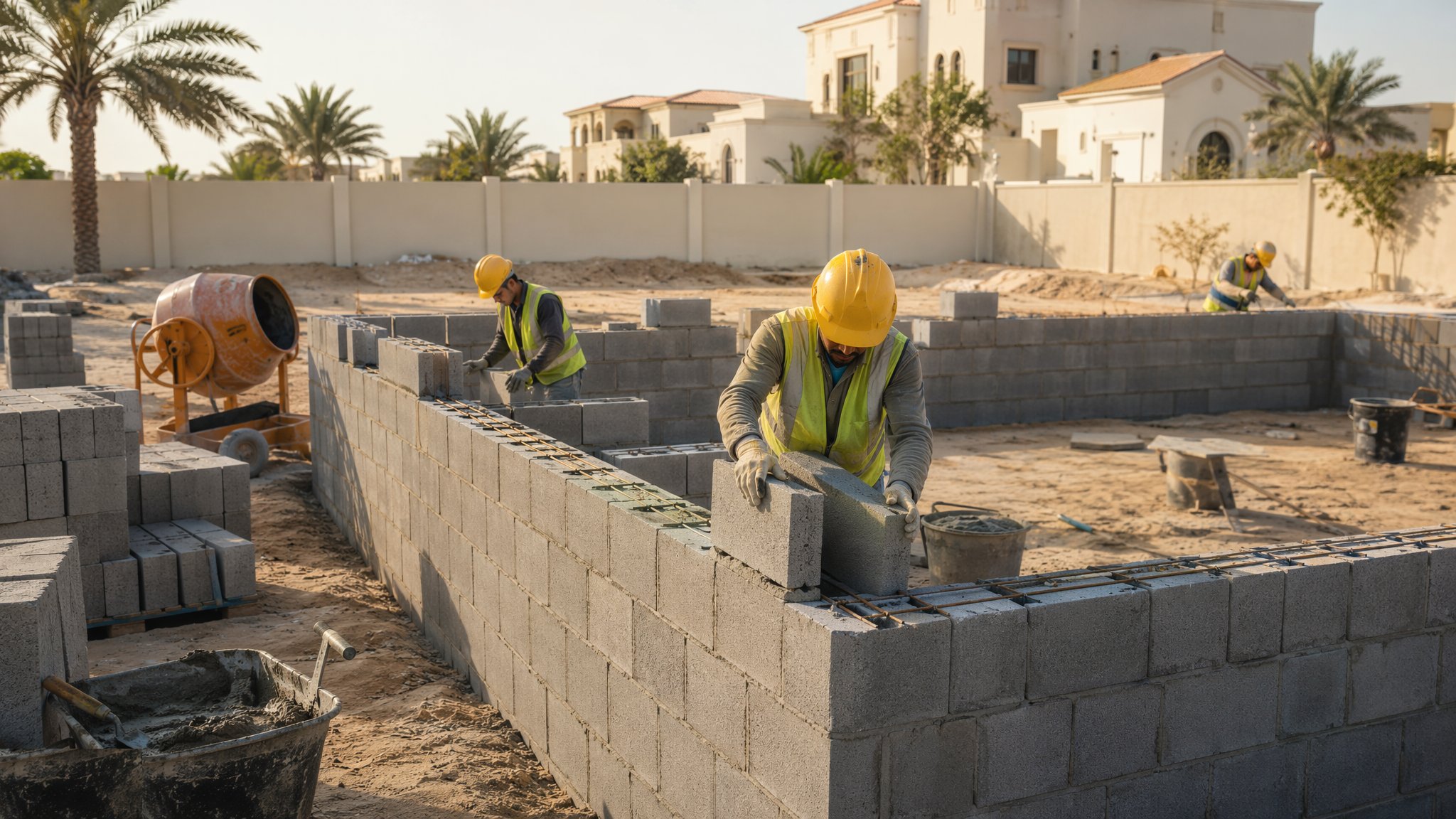
Block Wall Construction
Dense and lightweight blockwork - the structural and partition walling behind most buildings in the UK and nearly all of them in the UAE.
Open process
Concrete Structural Walls
Cast in situ and precast concrete walls - cores, shear walls and basement walls that carry the building and hold it steady.
Open process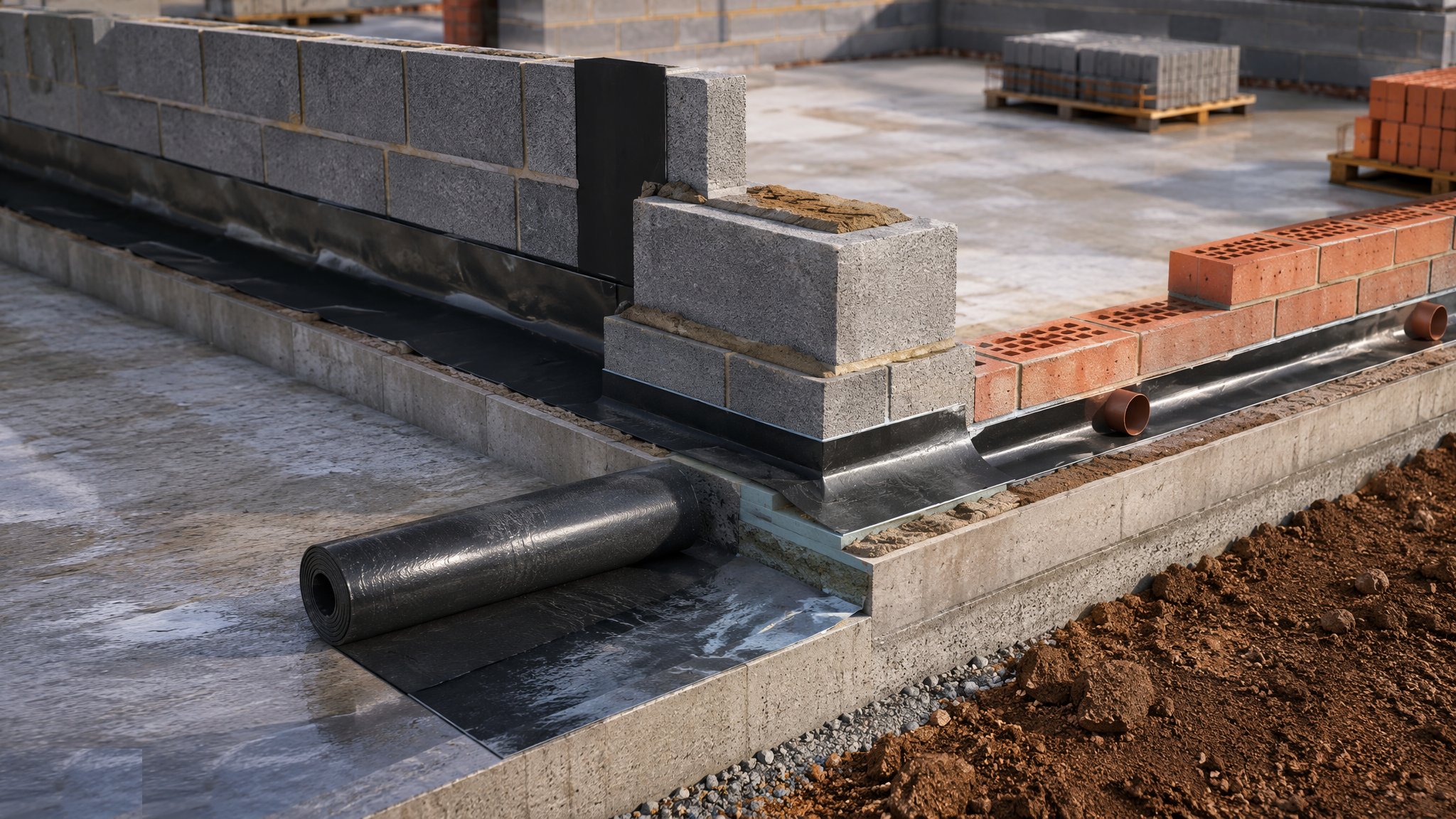
Damp Proofing - DPC, DPM and Cavity Trays
Damp-proof courses, membranes, cavity trays and weep holes - plus honest diagnosis: rising damp, penetrating damp and condensation are three different problems with three different fixes.
Open process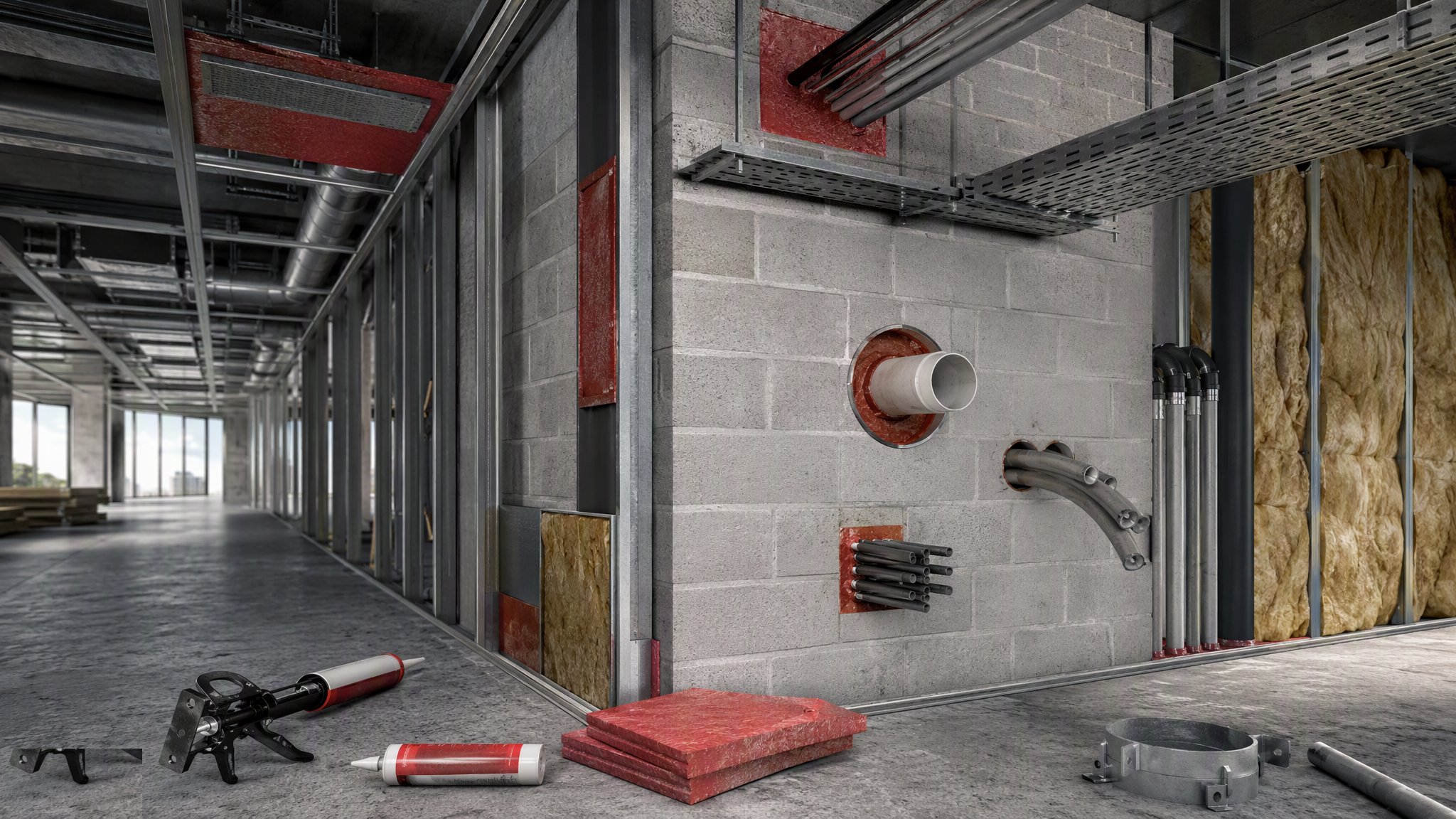
Firestopping and Passive Fire Protection
Compartmentation, penetration seals, cavity barriers and linear gap seals - the hidden work that decides whether a fire stays in one room, plus the certification and golden-thread records that prove it was done.
Open process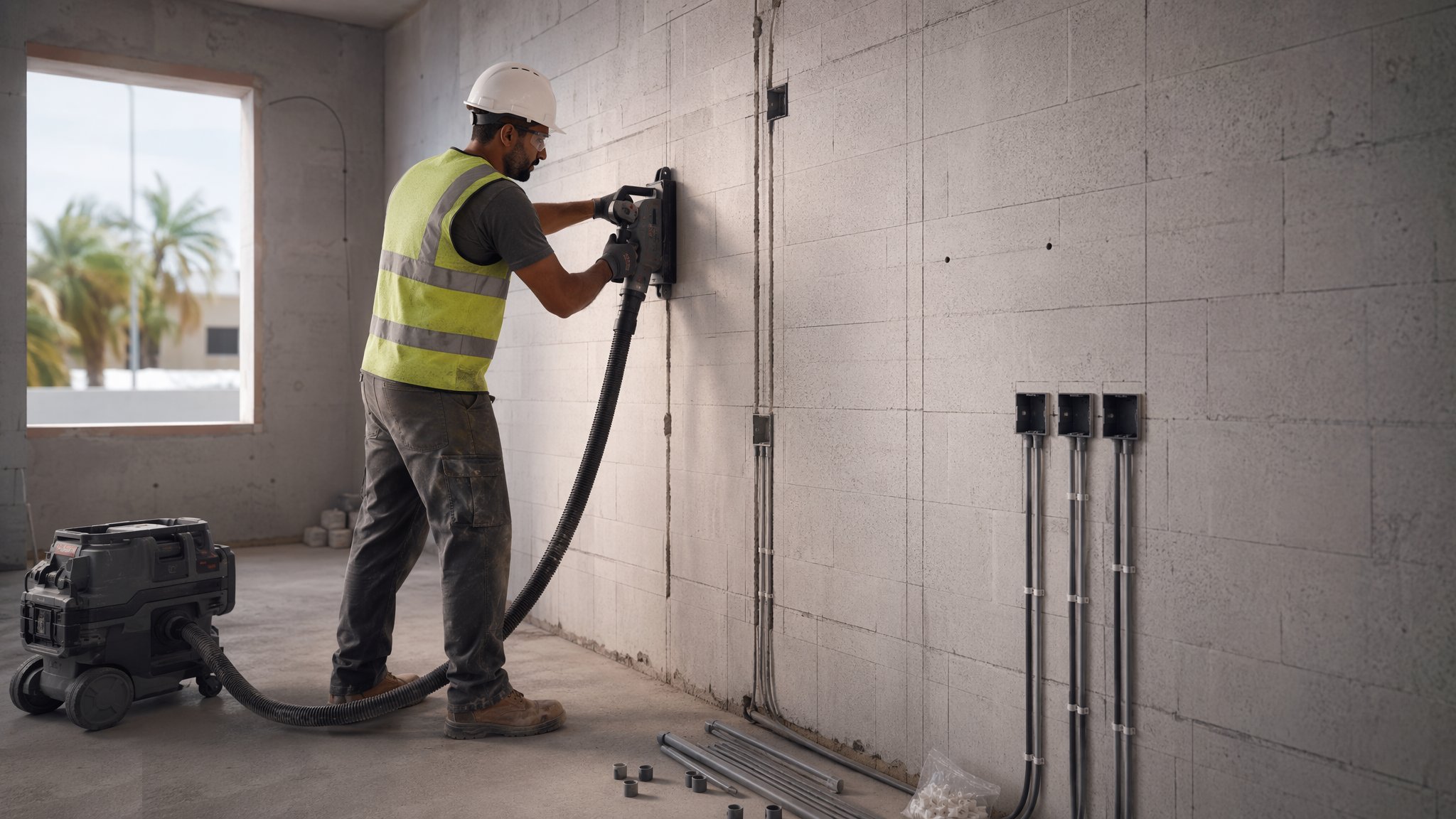
Chasing & First-Fix Cutting for Services
Cutting the channels, holes and routes that let cables and pipes disappear into blockwork and concrete - without weakening the wall.
Open process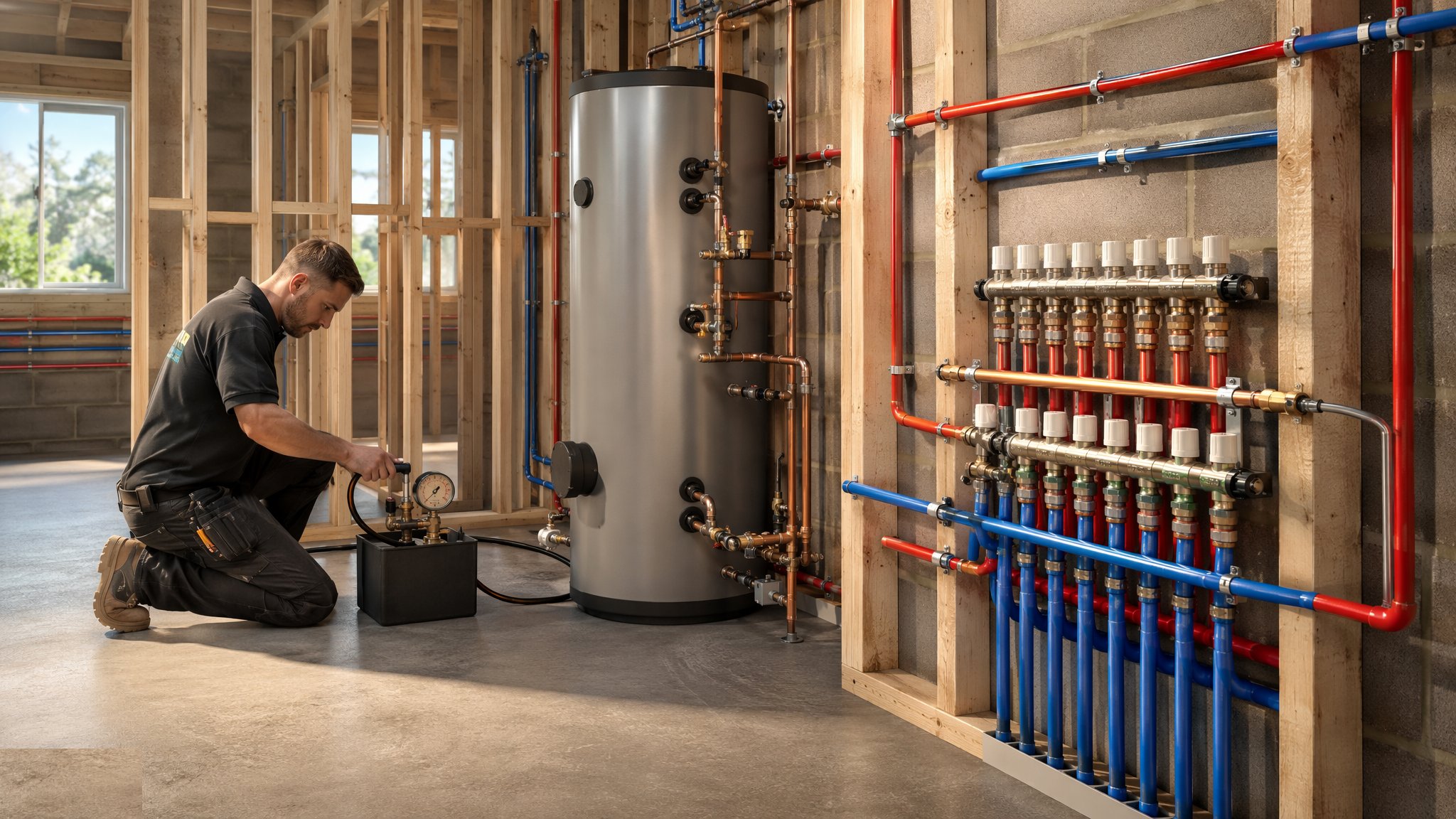
MEP - Plumbing (First & Second Fix)
Hot and cold water, heating pipework and soil connections - first fix carcassing to second fix commissioning.
Open process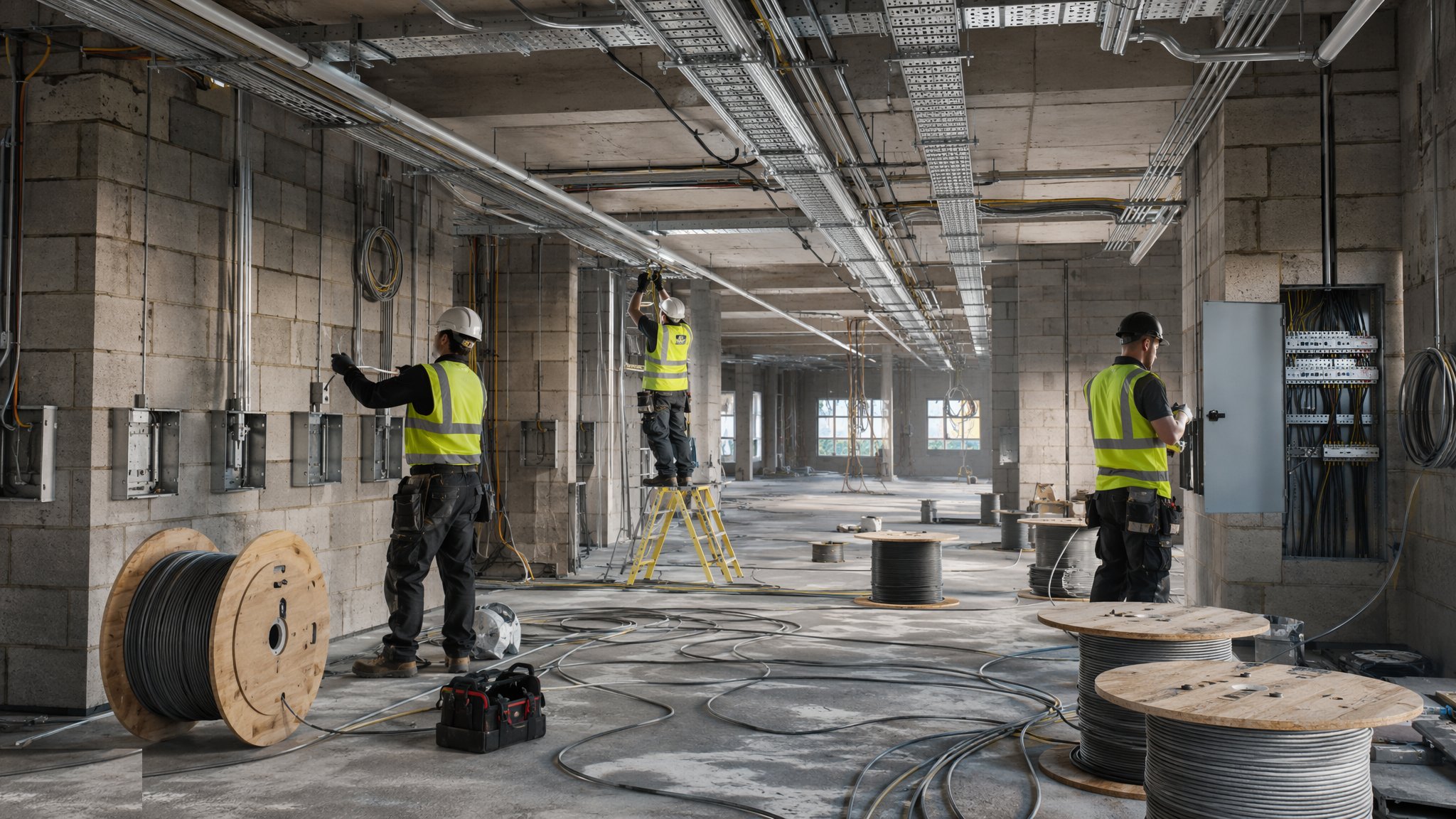
MEP - Electrical (First & Second Fix)
Containment, cabling and circuits at first fix; accessories, testing and certification at second fix.
Open process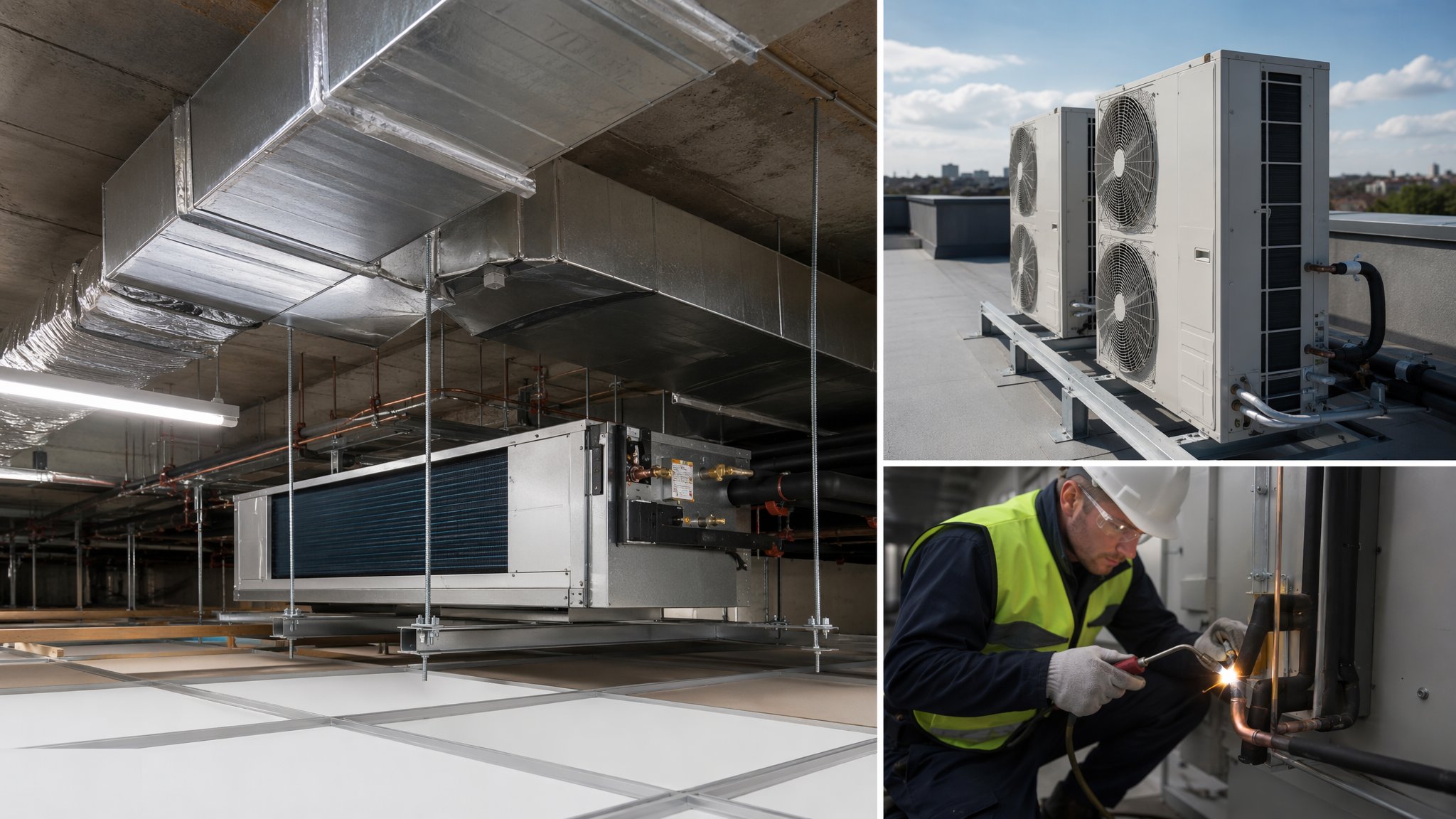
Ventilation & Air Conditioning
Split systems, VRF, ducted ventilation and district cooling interfaces - moving and conditioning air by build type and climate.
Open process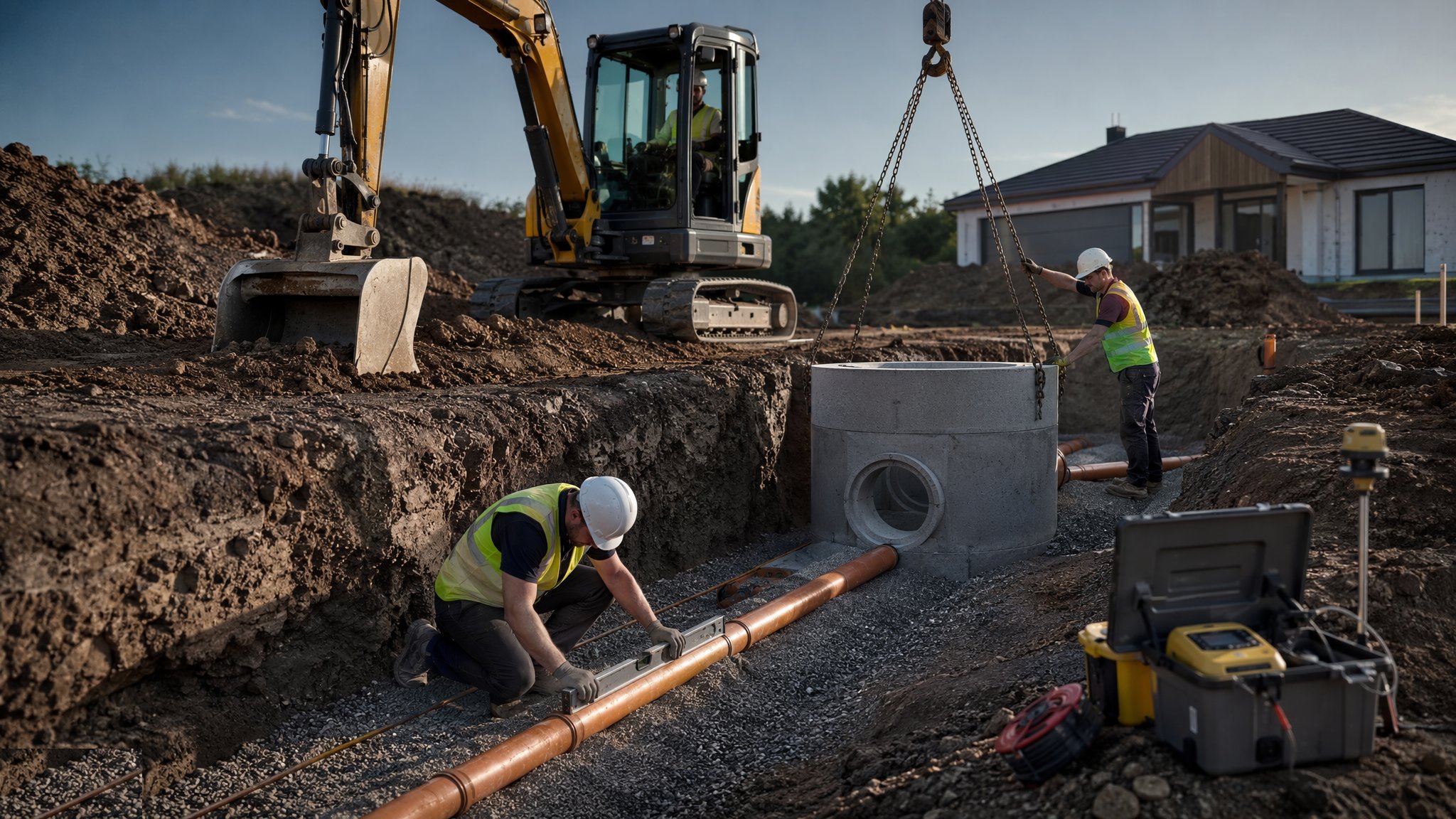
Below-Ground Drainage Installation
Foul and surface water drainage around buildings - pipes, manholes and connections laid to fall, tested, and adopted or approved.
Open process
Sanitary Installation
WCs, basins, baths and showers - the second-fix trade where plumbing, tiling and sealing meet the user.
Open process
Windows & Doors Installation
Fitting windows and doors plumb, sealed and secure - from a villa front door to a tower of repeated openings.
Open process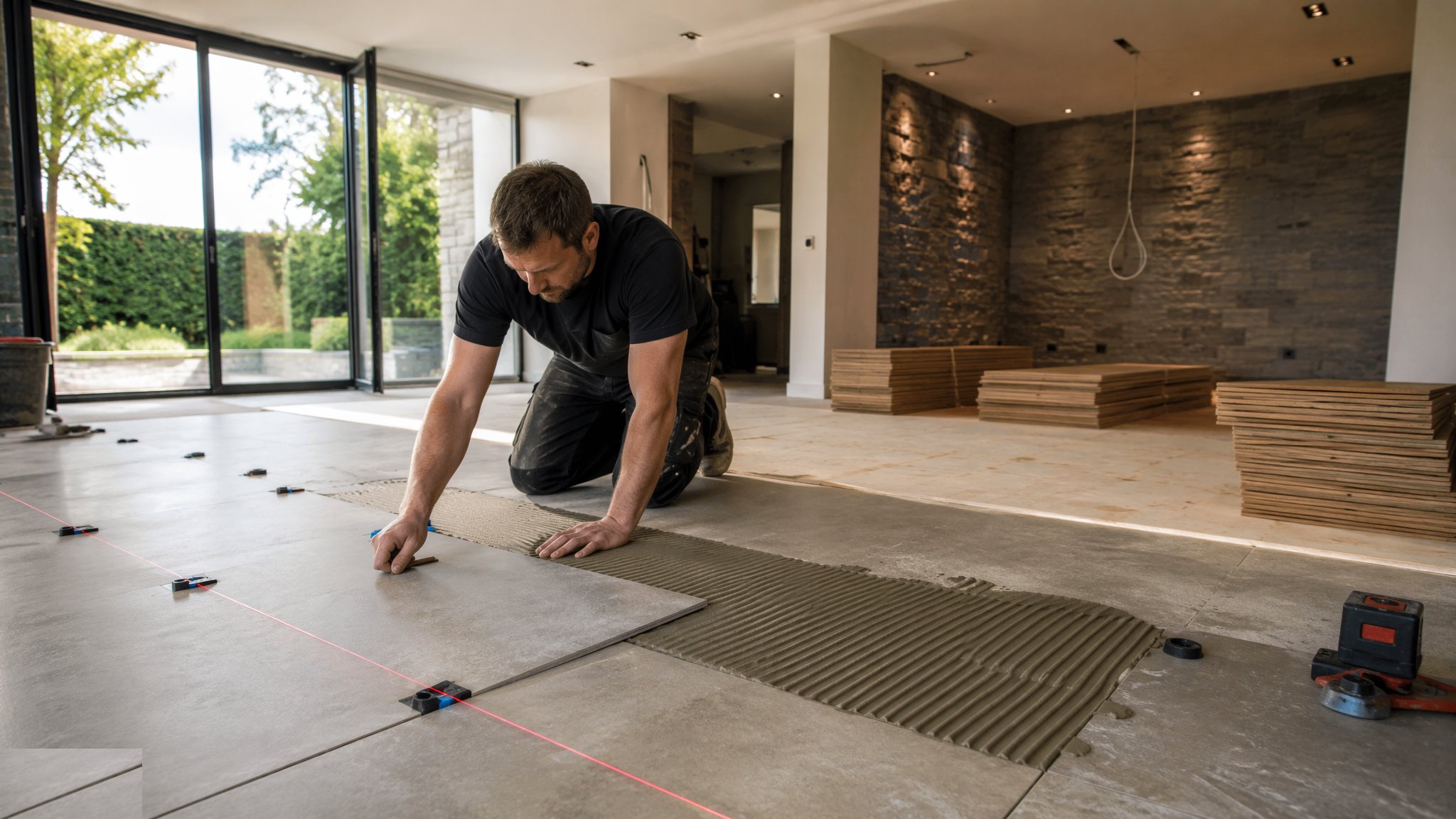
Flooring & Floor Finishes
Tiling, timber, vinyl, carpet and stone over the screed - the finish every foot and eye judges first.
Open process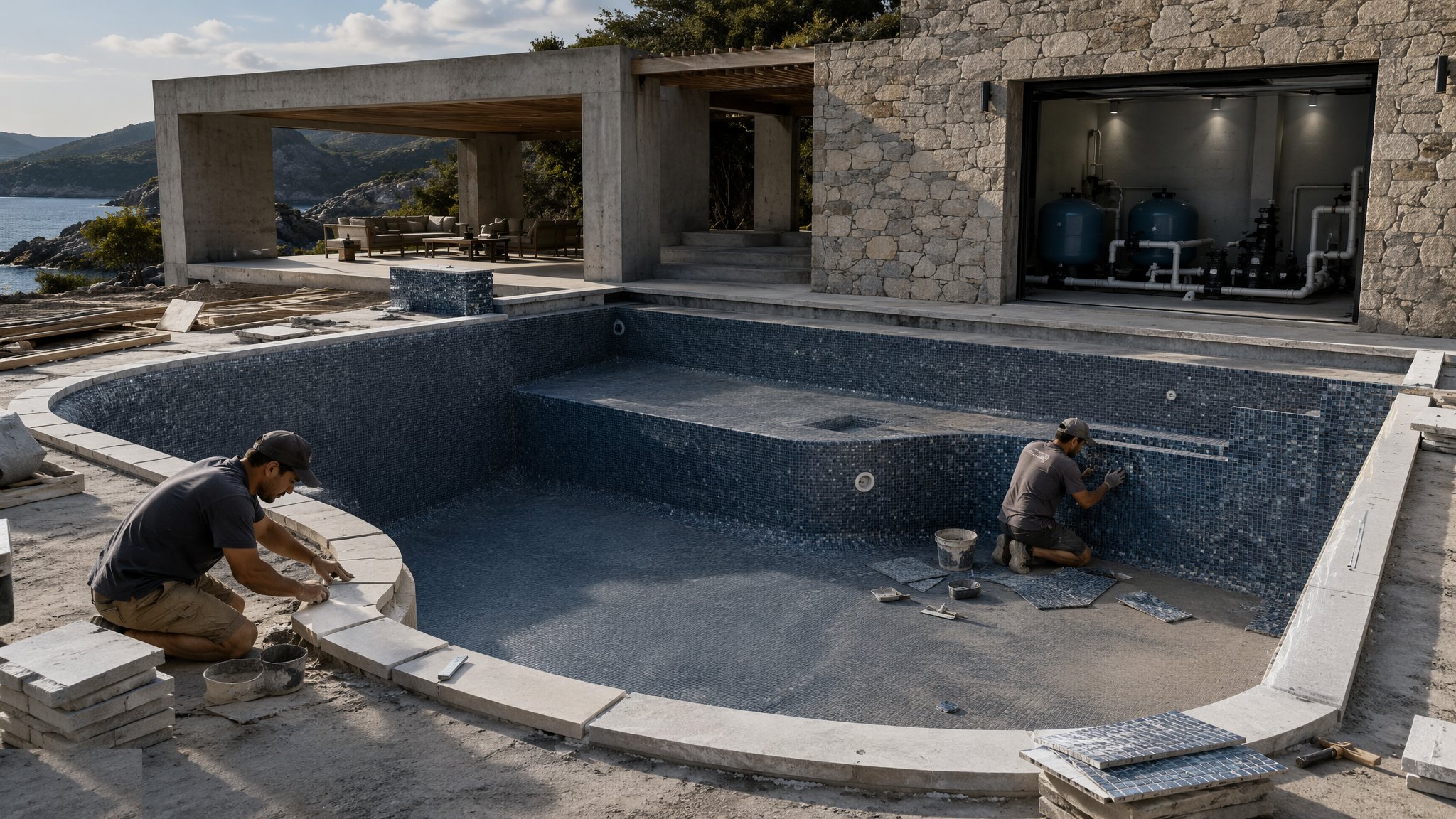
Private Swimming Pool Construction
Villa and residential pools - excavation, shell, waterproofing, filtration and the wet-side finishes.
Open process
CCTV & Security Systems Installation
Cameras, intruder alarms and access control - the ELV trade that wires a building to watch and protect itself.
Open process
TRVs & Heating Controls
Thermostatic radiator valves, programmers and smart controls - the small fittings that decide whether a heating system actually works.
Open process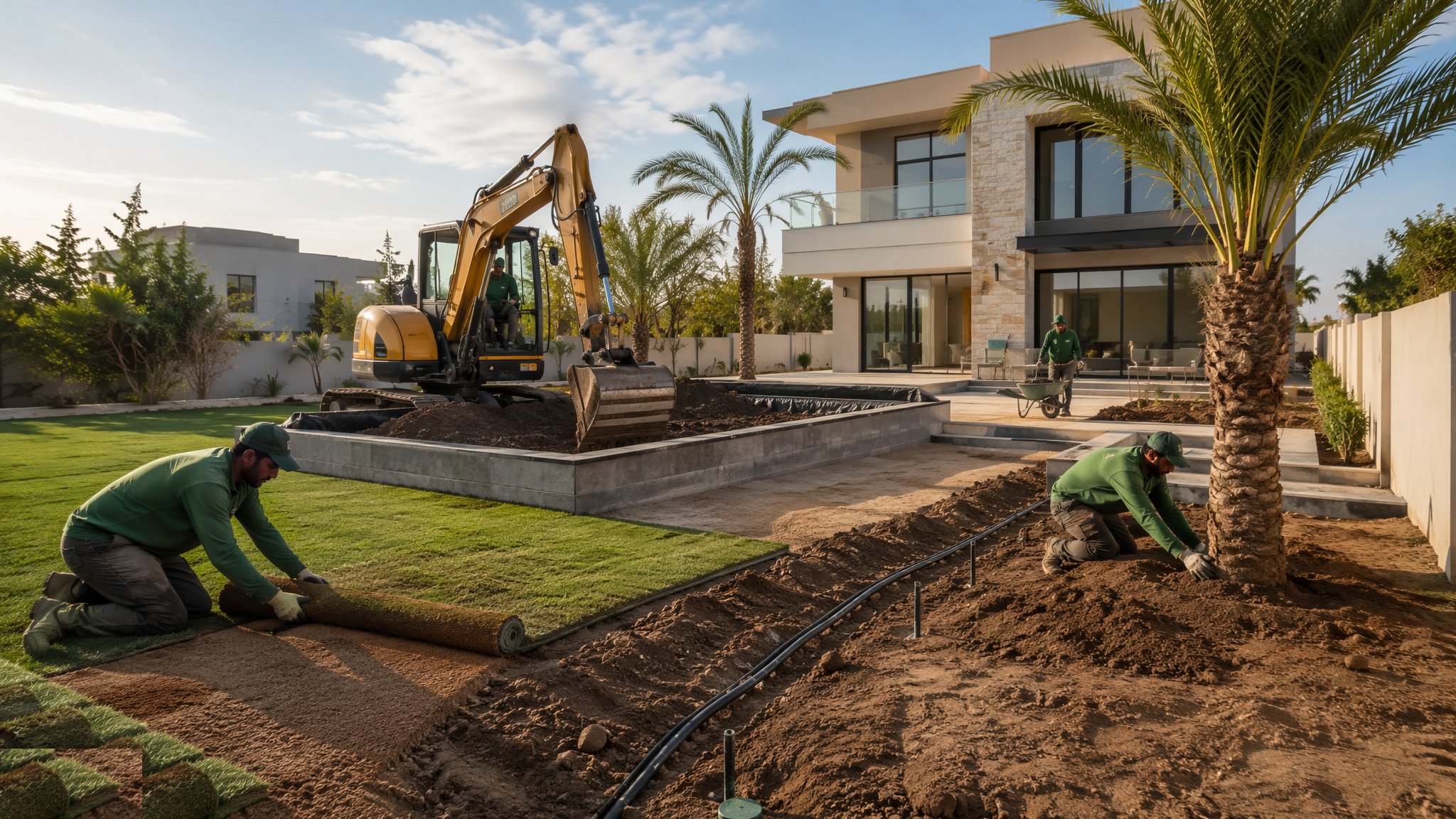
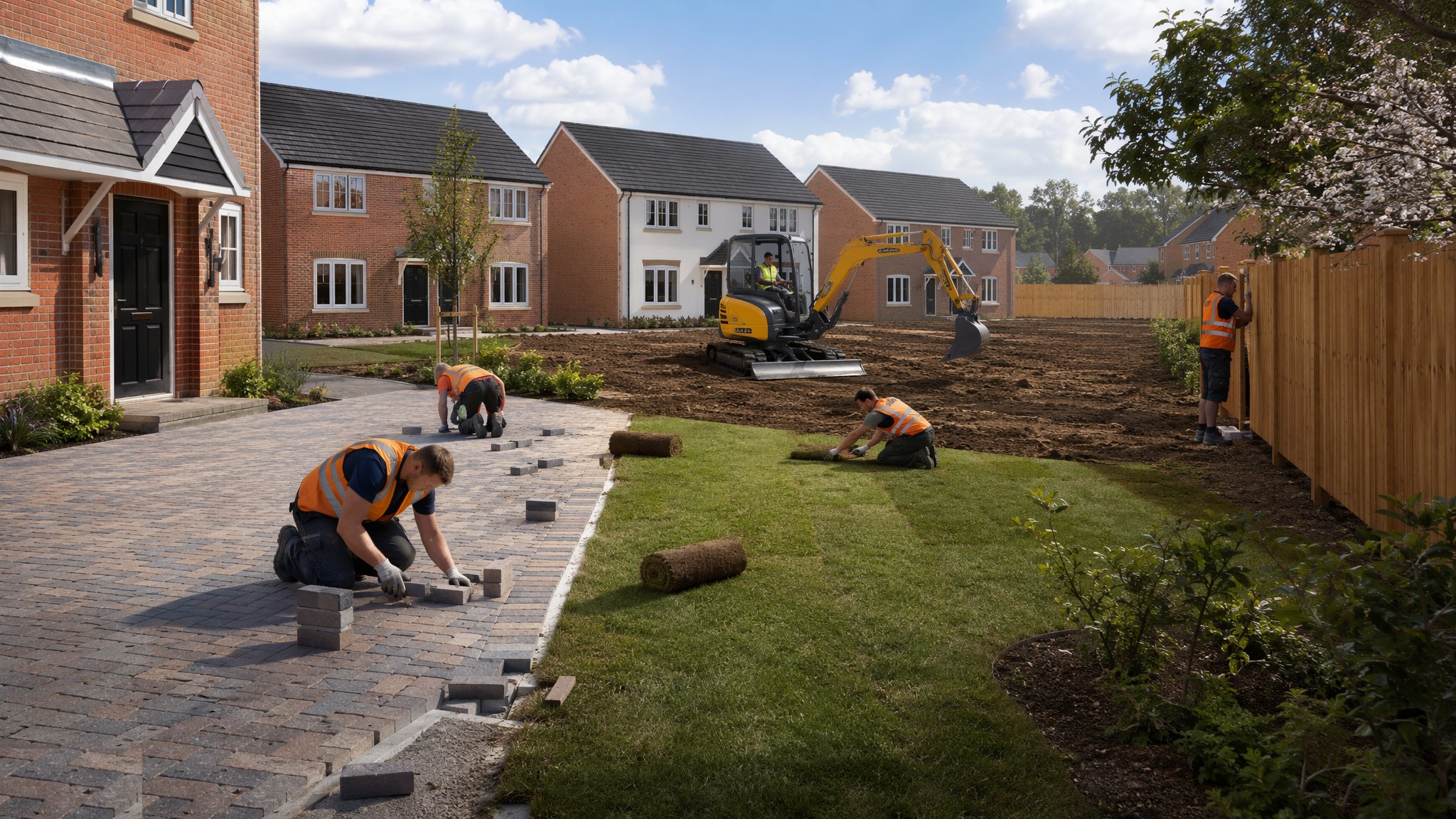
Soft Landscaping & Gardens (Homes & Villas)
Plot-level soft landscaping for homes and villas - topsoil, drainage and irrigation, turfing and planting, from a UK family garden to an irrigated UAE villa plot.
Open process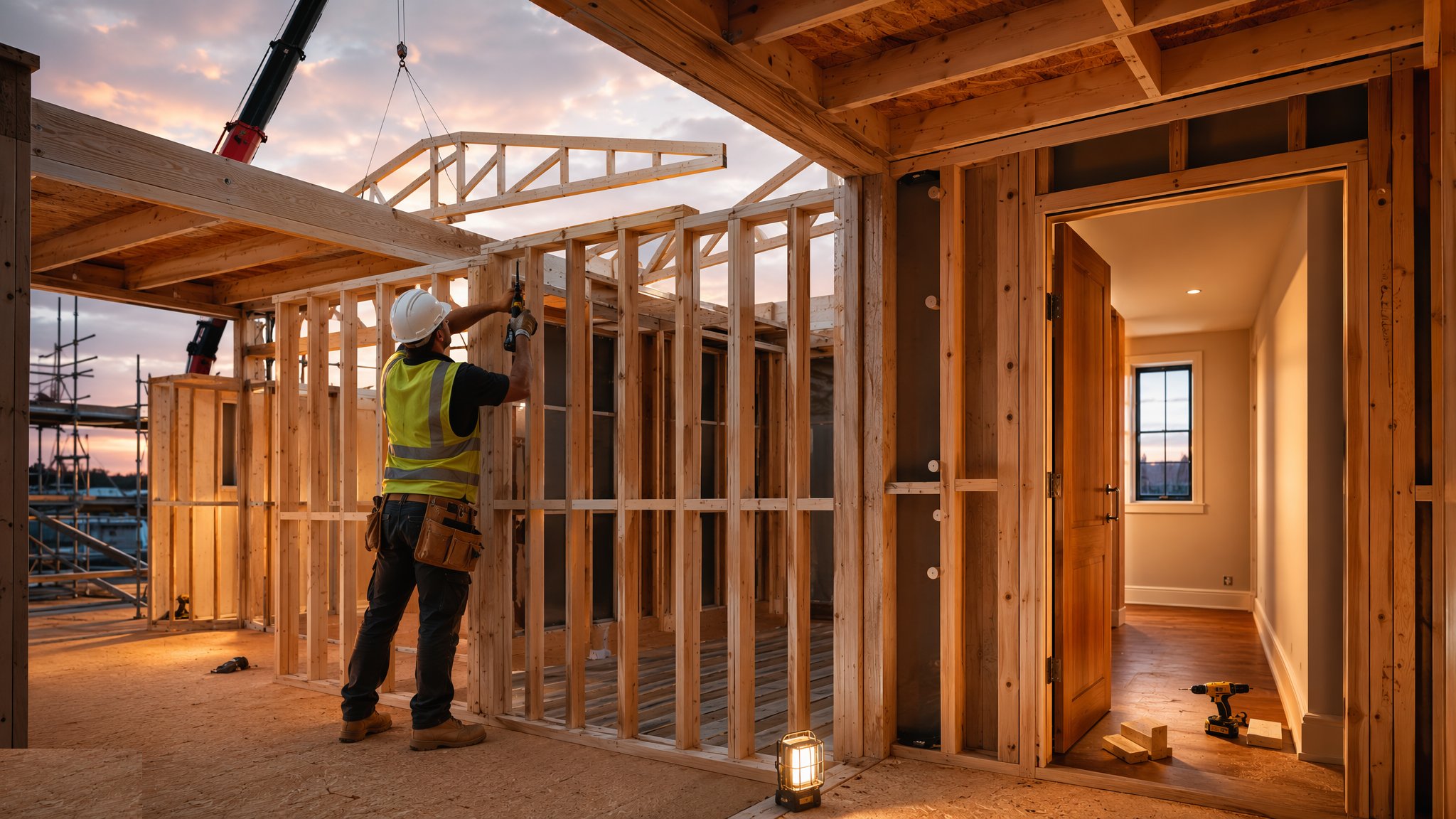
Carpentry - First & Second Fix
The carpenter's two passes through a building - structural studwork, joists, roofs and stair carcasses before the plaster; doors, skirtings, kitchens and joinery after it.
Open processShared methods used in this sector
These guides are owned by other sectors - the canonical page lives there - but the method is the same here. Cards open the guide at its home sector.
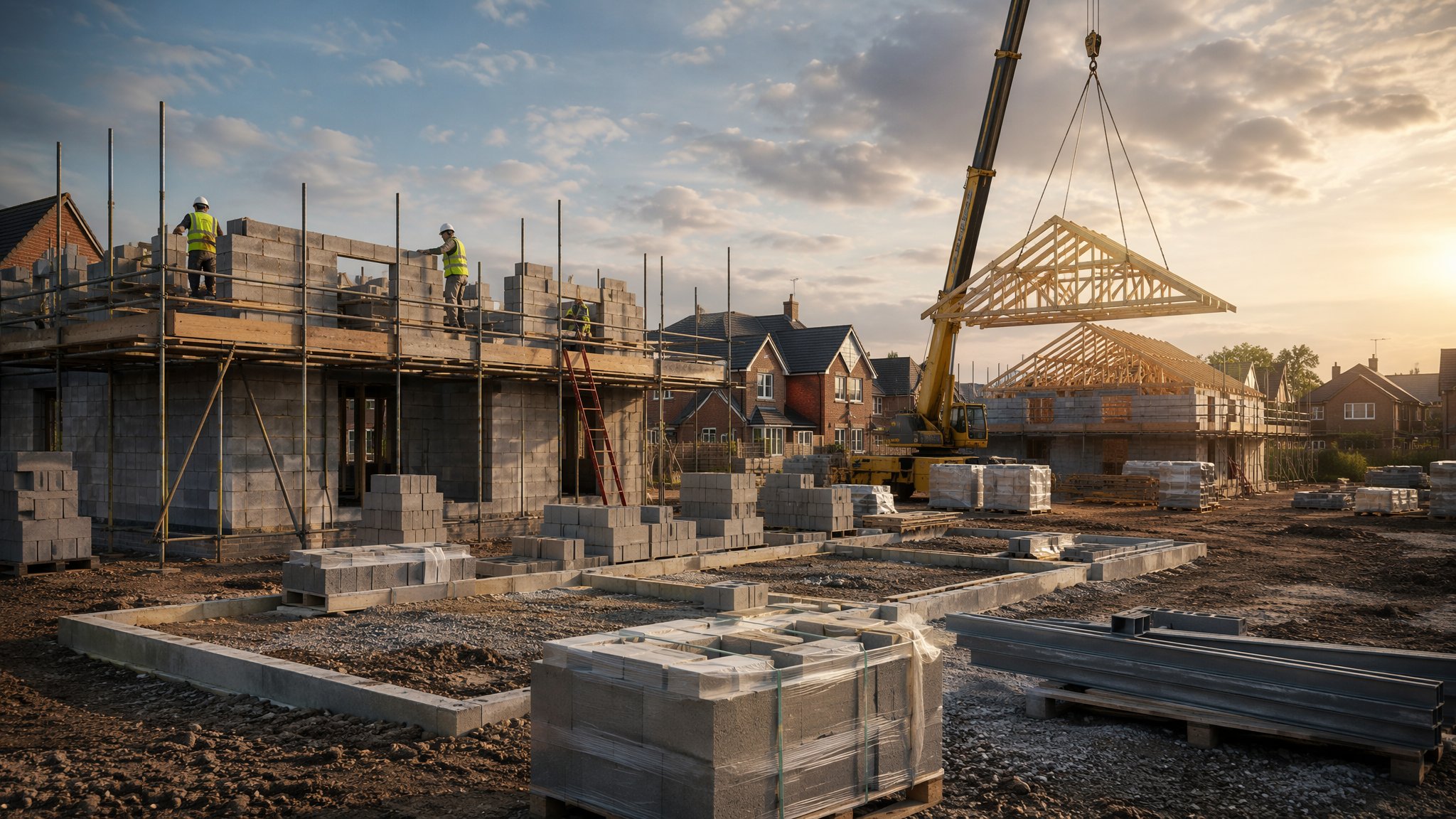
Masonry & Timber Frame
Cavity walls and factory-made timber panels - how homes and villas actually get built.
Open processCanonical guide: Residential & Housing

Concrete Frame Construction
Columns, walls and slabs cast in situ - the ribcage of a residential tower.
Open processCanonical guide: Residential & Housing
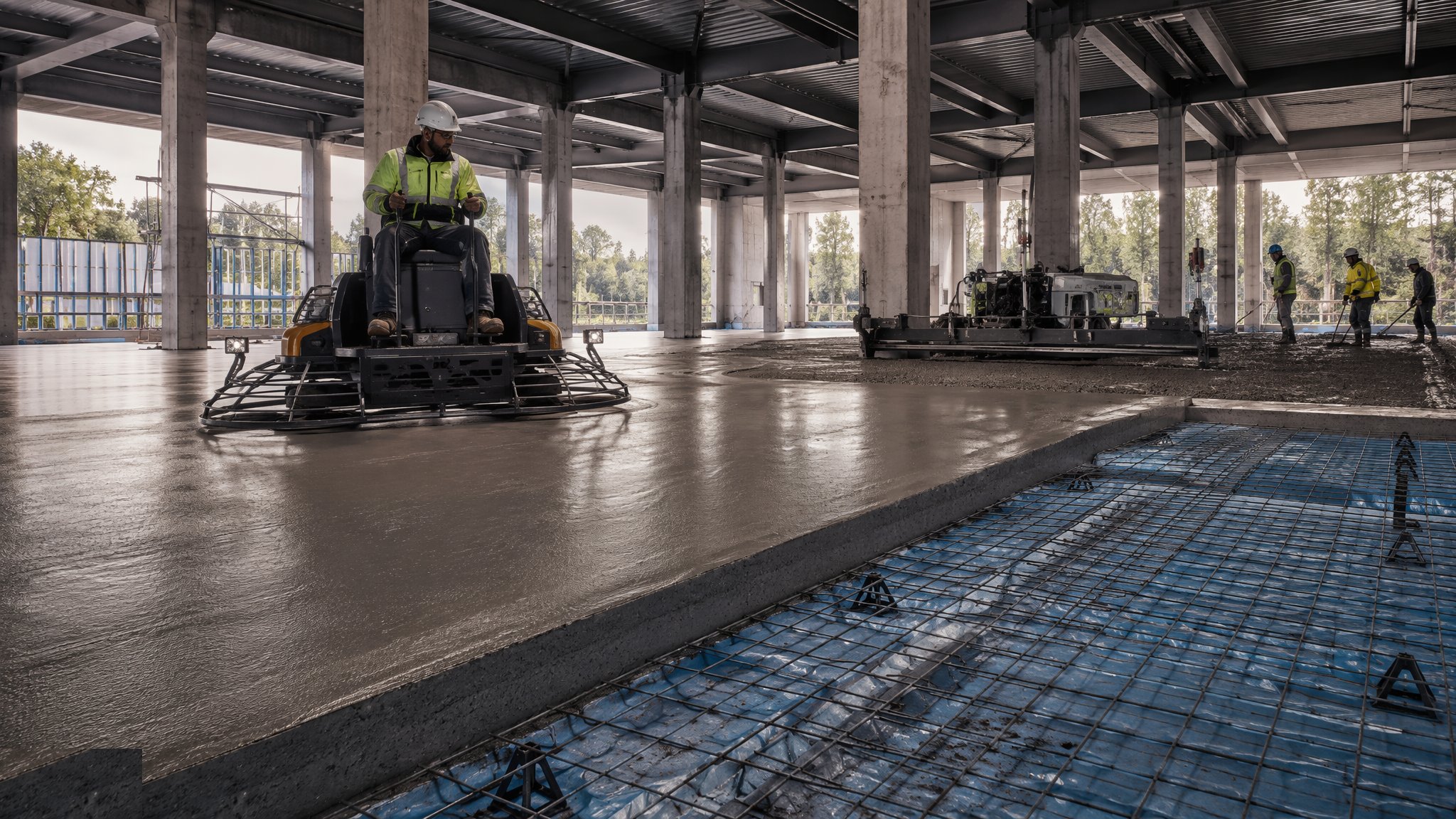
Floor Slabs & Screeds
Hardcore to power float - building the flat, dry, warm surface every finish depends on.
Open processCanonical guide: Residential & Housing

Windows, Doors & Glazing
Survey, fit and seal - the moving parts of the envelope that get used ten times a day.
Open processCanonical guide: Residential & Housing
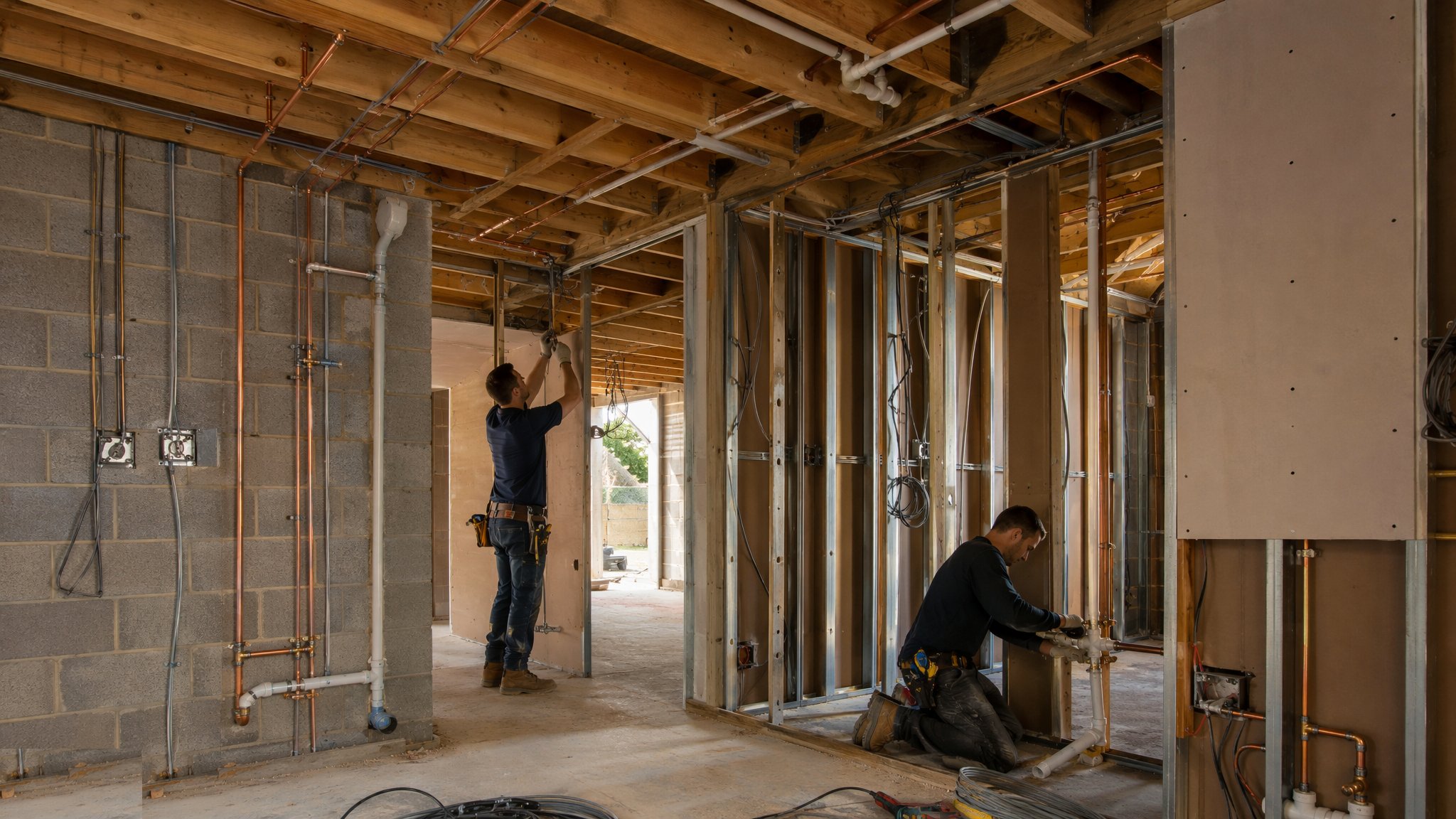
MEP First Fix
Ducts, pipes, cables and containment - the hidden nervous system, installed before the walls close.
Open processCanonical guide: Residential & Housing

MEP Second Fix & Commissioning
Sockets, sanitaryware, lights and controls - then proving every system actually works, together.
Open processCanonical guide: Residential & Housing

Internal Finishes
Boarding, plaster, joinery, tiling and paint - turning a shell into rooms people want to live in.
Open processCanonical guide: Residential & Housing

Building Trades & Methods in depth
About Building Trades & Methods
Every guide is divided down by build type - homes and villas in brick/block or concrete (precast or cast in situ), residential towers, office towers, swimming pools and the ELV systems that finish a modern building - because the trade changes with the building. Chasing a blockwork villa wall is routine; chasing a tower shear wall is a design conversation. These pages sit alongside the broader residential and commercial guides and link through to them where the shared methods overlap.
How the trades are actually organised
Every building on this site is assembled by the same dozen trades, and understanding who they are and how they are bought explains most of what happens on site. The wet trades - groundworkers, concreters, bricklayers, plasters and screeders - work to the weather and the cure; the dry trades - joiners, dry liners, ceiling and floor finishers - work to the programme; the engineering trades - mechanical, electrical and the ELV specialists - work to both ends of the job, first fix buried in the structure and second fix on display. Each gang is a small business: a bricklaying squad of four, a dry-lining crew of eight, priced per thousand bricks or per square metre of board, earning on output.
That price structure drives behaviour the graduate engineer should understand. Piece rates mean speed, and speed means the drawing's small print gets read once, if at all - the site supervisor's morning briefing is the real specification document. It also means sequencing is money: a gang standing idle because the preceding trade is not ready is a cost that lands on the contractor, so the daily choreography of faces and fronts is not admin, it is the job.
In the UAE the organisation differs in form rather than substance: labour supply companies provide gangs on monthly rates rather than piece rates, supervision runs through chargehands who translate drawings into instruction, and the camp-and-bus logistics of moving two hundred men to the gate by 06:30 is a discipline of its own. The output logic is identical - a block laid is a block paid, whoever signs the timesheet.
The single best investment on any job is the trade foreman who has done the detail before. Drawings describe intent; the person bending the pipe, laying the bond or cutting the slate decides the reality, and an hour spent walking the first bay, the first room or the first plot with them - agreeing the benchmark before production - repays itself for the whole job. Every trade has a first-off: inspect it together, photograph it, sign it, and pin it to the cabin wall. After that, supervision is comparison against a standard everyone has seen, not an argument about a drawing nobody opened.
Reading the trade interfaces
Most building defects live at trade boundaries, and the boundaries are knowable. Frame to envelope: the slab edge where cladding meets concrete, the cavity closer at the window jamb, the movement joint that the bricklayer, the frame contractor and the façade designer each thought was another's detail. Structure to services: the holes and chases - a drilled beam, an over-cut chase in a blockwork wall, a notched joist one size too deep - where the services trade's convenience meets the structure's capacity, and the structure loses.
The discipline that manages this is simple and rare: approved setting-out for holes before pour or build, a chasing and coring permit that makes someone look at the drawing before the drill, and first-fix inspections that happen before the boarders close everything up. Concealment is the enemy. Once the ceiling is boarded, the argument about whether the bracket, the fire-stop or the valve ever existed is settled by the person with the photographs - so take them, date them and file them where the defects team will find them in three years.
Wet-to-dry is the other classic boundary: screeds not dry before floor finishes, plaster not cured before decoration, DPMs lapped into DPCs in theory only. Moisture does not respect trade packages, and the flooring contractor's warranty voids the moment their meter reads high - a reading they will take, on the record, before they start. The programme that squeezes drying time buys a defect claim; there is no known workaround except forced drying, honestly specified and actually run.
The MEP trades deserve their own paragraph of respect
First fix is the buried half of building services: soil and waste stacks set out to the millimetre because the bathroom pod or the tiled wall assumes them; pipework and containment in risers built before the walls; cable tray, basket and conduit sharing the ceiling void with ductwork in a negotiation conducted in millimetres and, increasingly, in the model before the site. The trade skill is coordination under pressure - the drawing shows where things go; the installer decides what actually fits, and a good one flags the clash a month early.
Second fix is where services become visible and snaggable: radiators level, faceplates square, luminaires aligned with the ceiling grid, valves accessible, flues compliant. It is also where the commissioning chain starts - flushing, pressure testing, insulation continuity, circuit certification, and the point-by-point BMS checks that turn a wired building into a controlled one. The ELV end of the trade - fire alarm, security, data, access control - arrives late, touches every room, and is proportionally the most snag-prone package on the job.
The recurring expensive mistakes: pressure tests not witnessed and then failed after concealment; fire-stopping at service penetrations installed as an afterthought rather than a system - a defect class the UK regulator now treats with the seriousness it always deserved; and commissioning compressed into the last fortnight, producing a handover file of certificates for tests nobody saw. The fix is not heroic: witness points agreed at start, photographs at closure, and commissioning time defended in the programme like structure.
UK versus UAE at the trade level
The materials default differs first. UK walling trades are masonry-led - brick outer, block inner, cavity details that a bricklayer holds in their hands - with timber frame as the fast alternative. UAE walling is concrete-led: blockwork infill between cast columns, precast panels craned in, render systems over everything, so the plasterer's trade there is the renderer's, working in heat that steals moisture from the mix before it cures. Chasing is the classic example: in a UK block wall it is routine; in a tower shear wall it is a structural conversation with the engineer before the grinder starts.
Climate changes trade practice at the bench level. UK trades fight cold and wet: mortar with frost precautions, concrete protected from freezing, materials stored out of the rain. Gulf trades fight heat and evaporation: mixing water chilled, admixtures dosed for retardation, curing started within the hour, night shifts for the big pours, and render and screed work scheduled around the afternoon sun. The tradesman's skill is the same; the enemy is different.
Certification frames the work differently. UK trades answer to Building Regs inspections, Part P electrical certification, Gas Safe registration, and warranty-provider checks on housing. UAE trades answer to consultant inspection regimes under DM, DDA or Trakhees oversight, DEWA regulations for electrical and water work, and DCD for fire systems - with the consultant's clerk of works carrying the day-to-day authority a UK building inspector never has. Both systems want the same thing: the concealed work proved before it is concealed. The paperwork differs; the photograph is universal.
There is a reason experienced engineers speak of trades with respect that newcomers sometimes mistake for nostalgia. Every system on this site - every frame, façade and services run - terminates in a pair of hands doing something skilful, and the quality of the building is the sum of those moments. Drawings, models and contracts organise the work; they do not perform it. The day a young engineer first watches a good gang set out, build and clean down a bay in a single shift, faster and truer than they thought possible, is usually the day they start to understand the industry they joined.