Substations, pylons and cable corridors - the grid between the generator and the meter.
Grid work is foundations and steel at one end and careful electrical commissioning at the other. The civils are honest - access, ground investigation, foundations and concrete you will recognise from the shared methods linked below - but they march across country in a corridor hundreds of kilometres long, with every landowner, crossing and outage negotiated separately.
The process map - 4 guides
Each one is a full guide: overview, variants, numbered steps, plant, testing, safety and defects.
Substation Construction
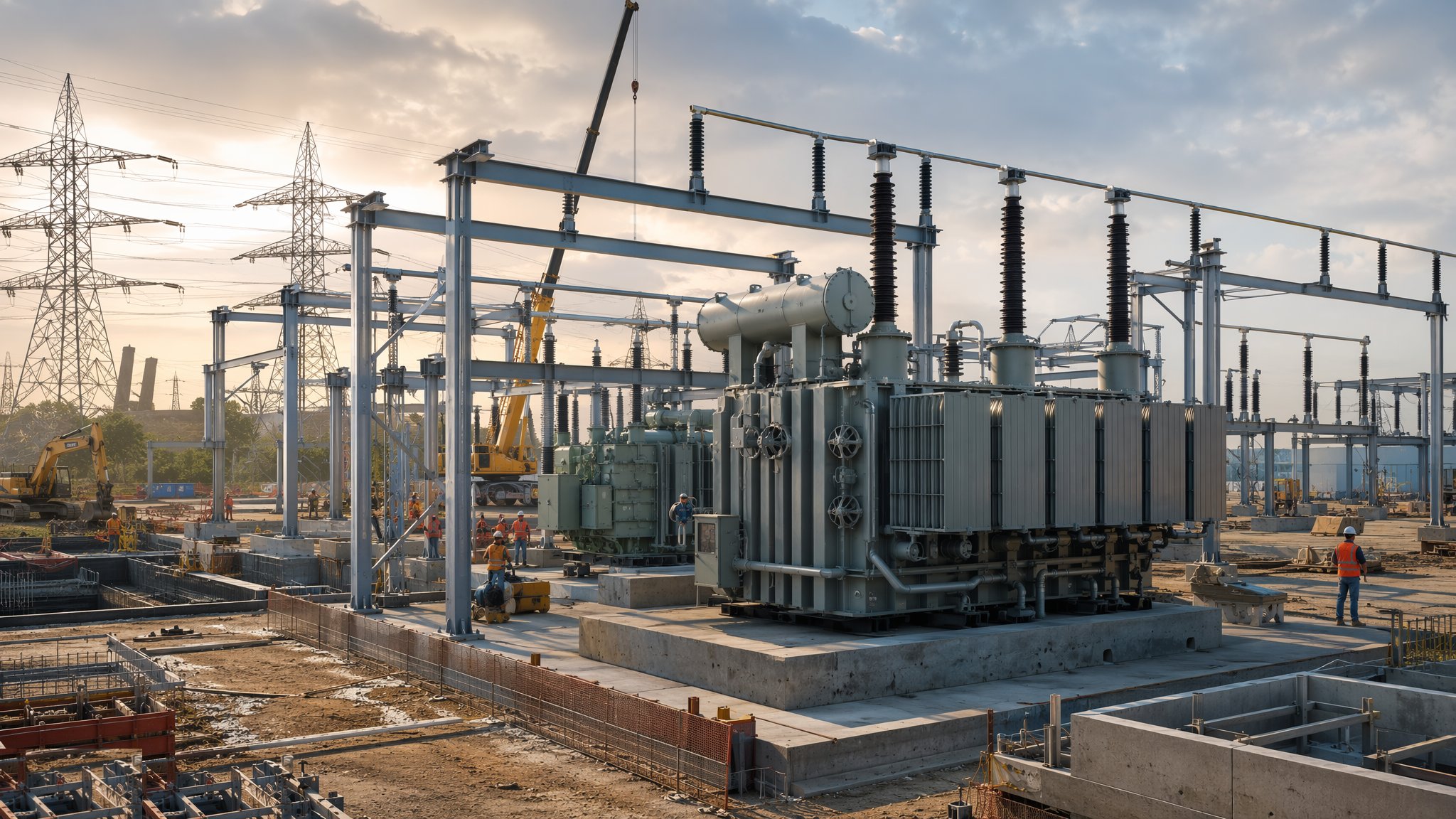
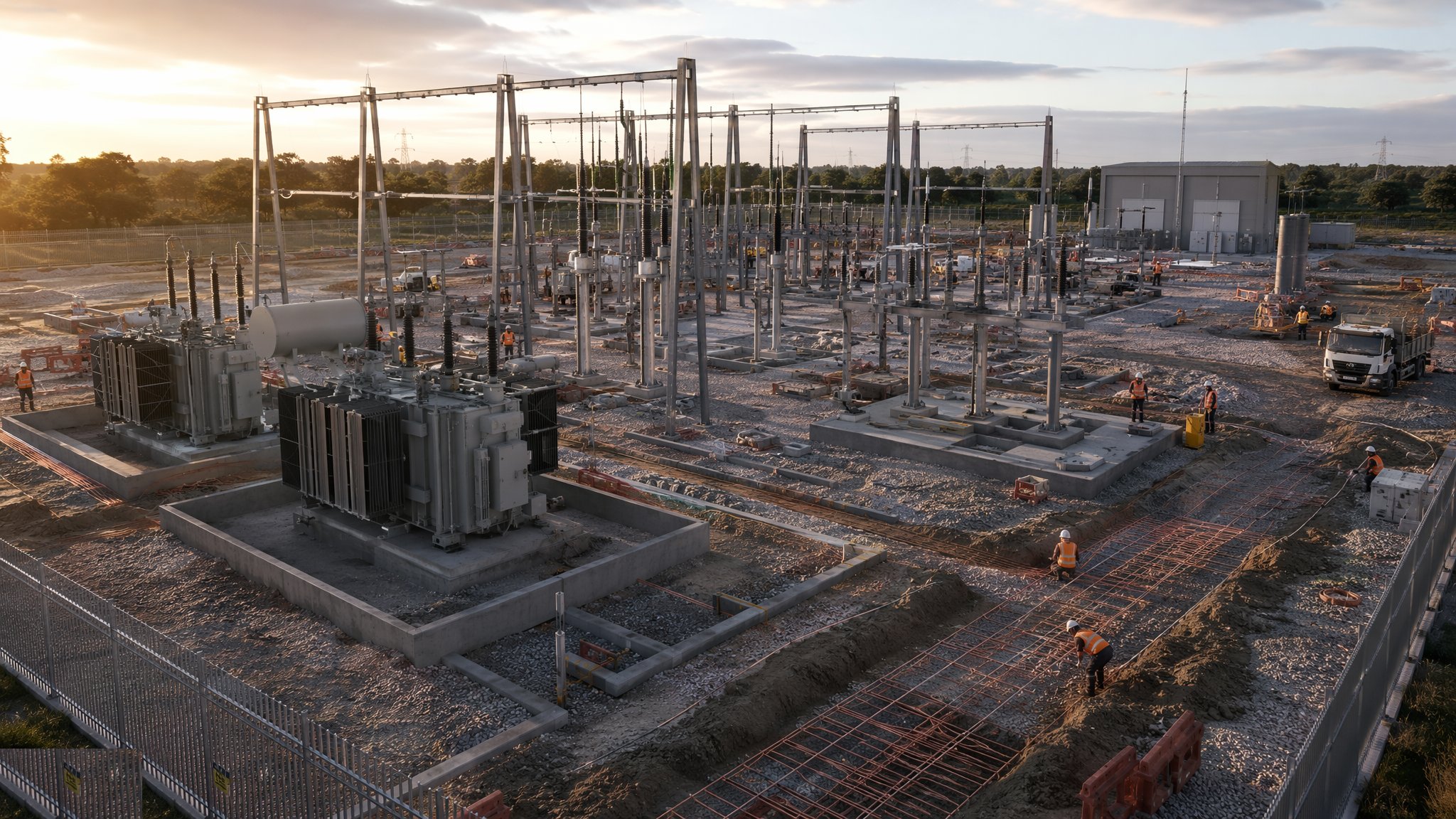
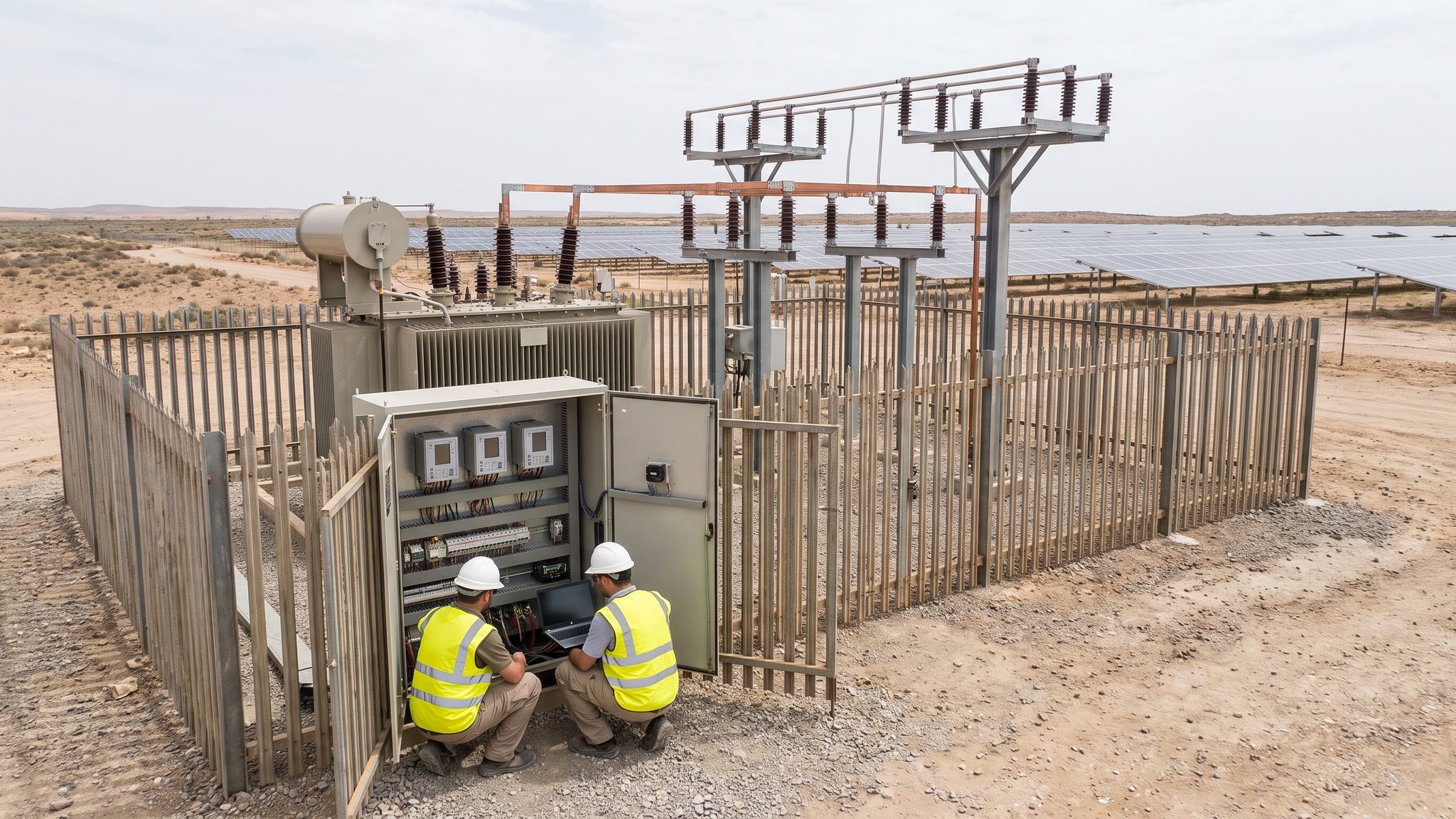
The fenced compounds where voltage changes hands - air-insulated or gas-insulated switchgear, transformers the size of houses, and a buried copper earth grid that has to be right before anything else is built.
Open process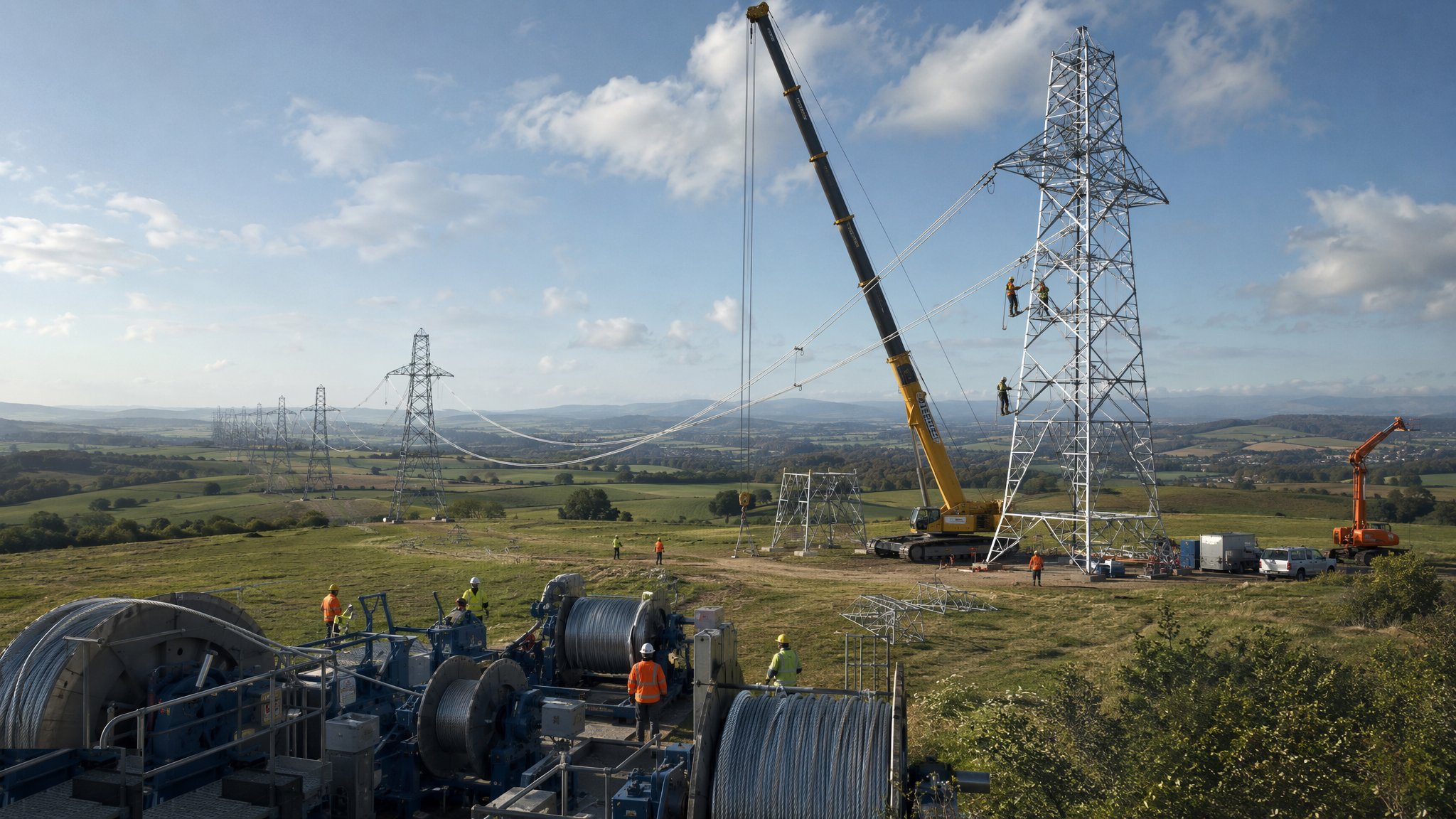
Overhead Line Construction
Lattice towers and steel poles marching across country - four foundations per tower, steel stacked in sections, and conductors strung under tonnes of tension and sagged to the millimetre.
Open process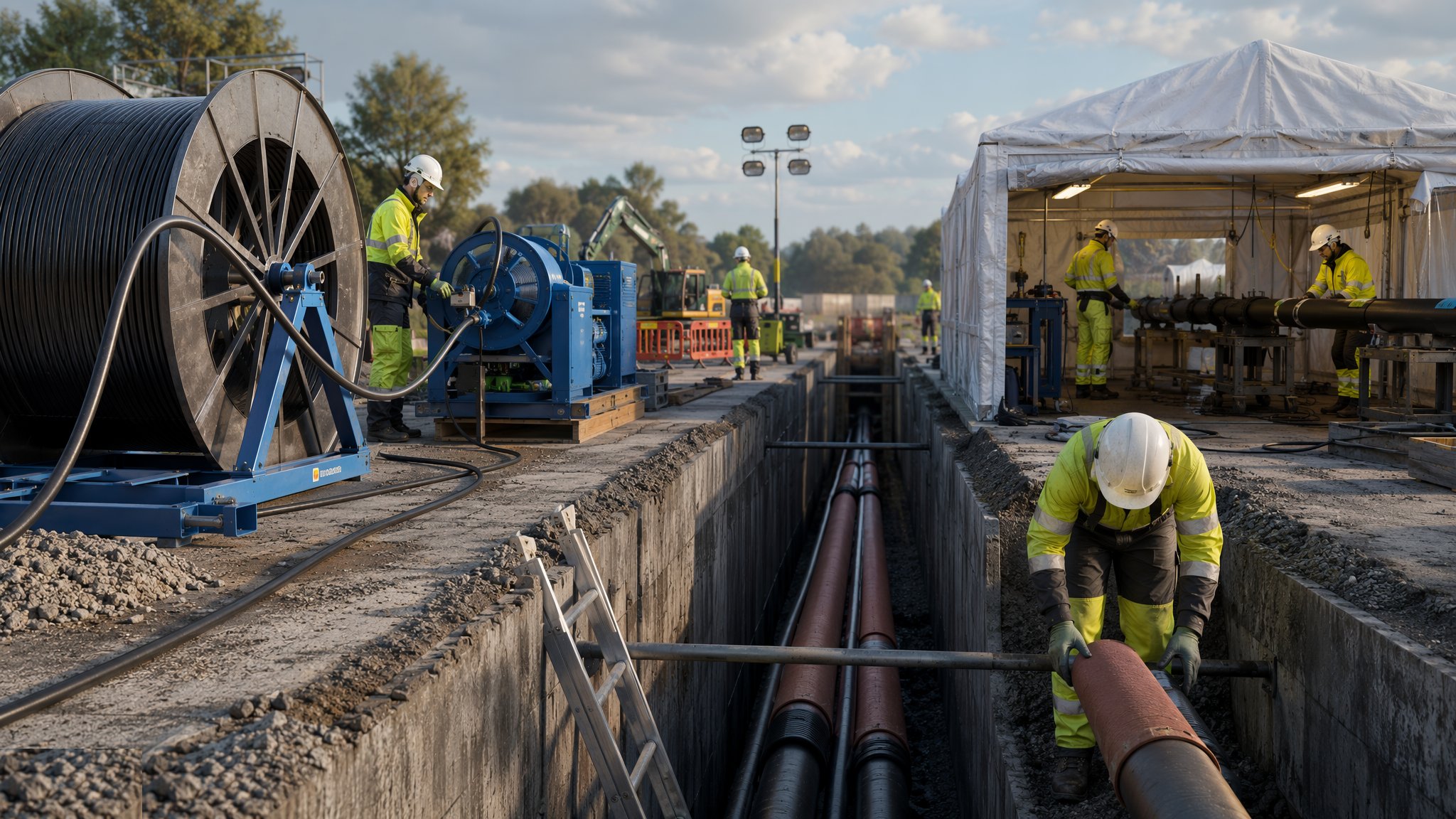
Underground Cable Installation
High-voltage circuits buried in trenches and duct banks - kilometres of XLPE cable pulled between joint bays, bedded in thermal surround, jointed by certified jointers, and proven by the sheath test.
Open process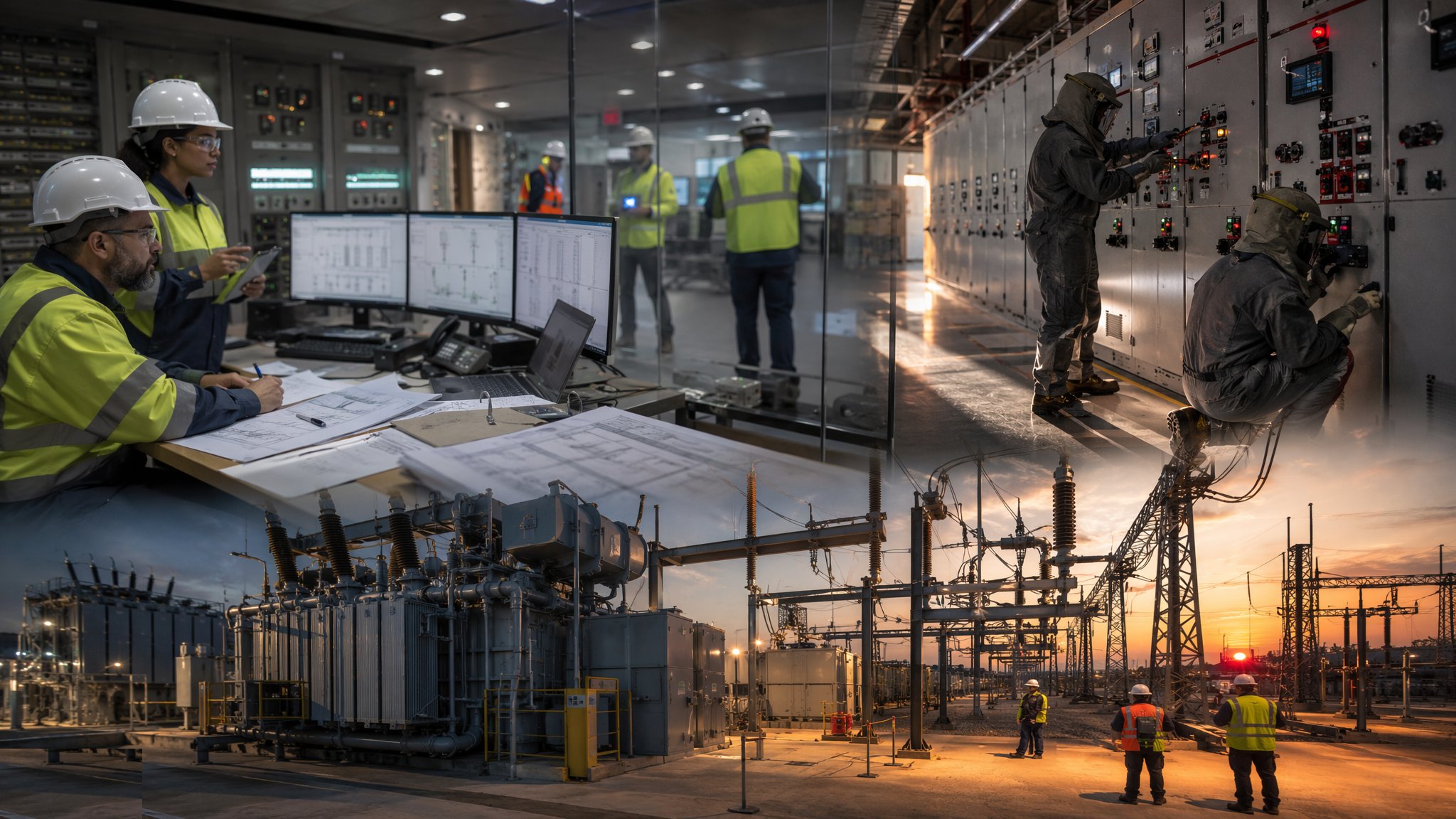
Grid Connections & Energisation
The paper-and-permit end of grid construction - connection agreements, protection witness tests, outages booked seasons ahead, and the phased switching sequence that puts a new asset on the live network.
Open processShared methods used in this sector
These guides are owned by other sectors - the canonical page lives there - but the method is the same here. Cards open the guide at its home sector.
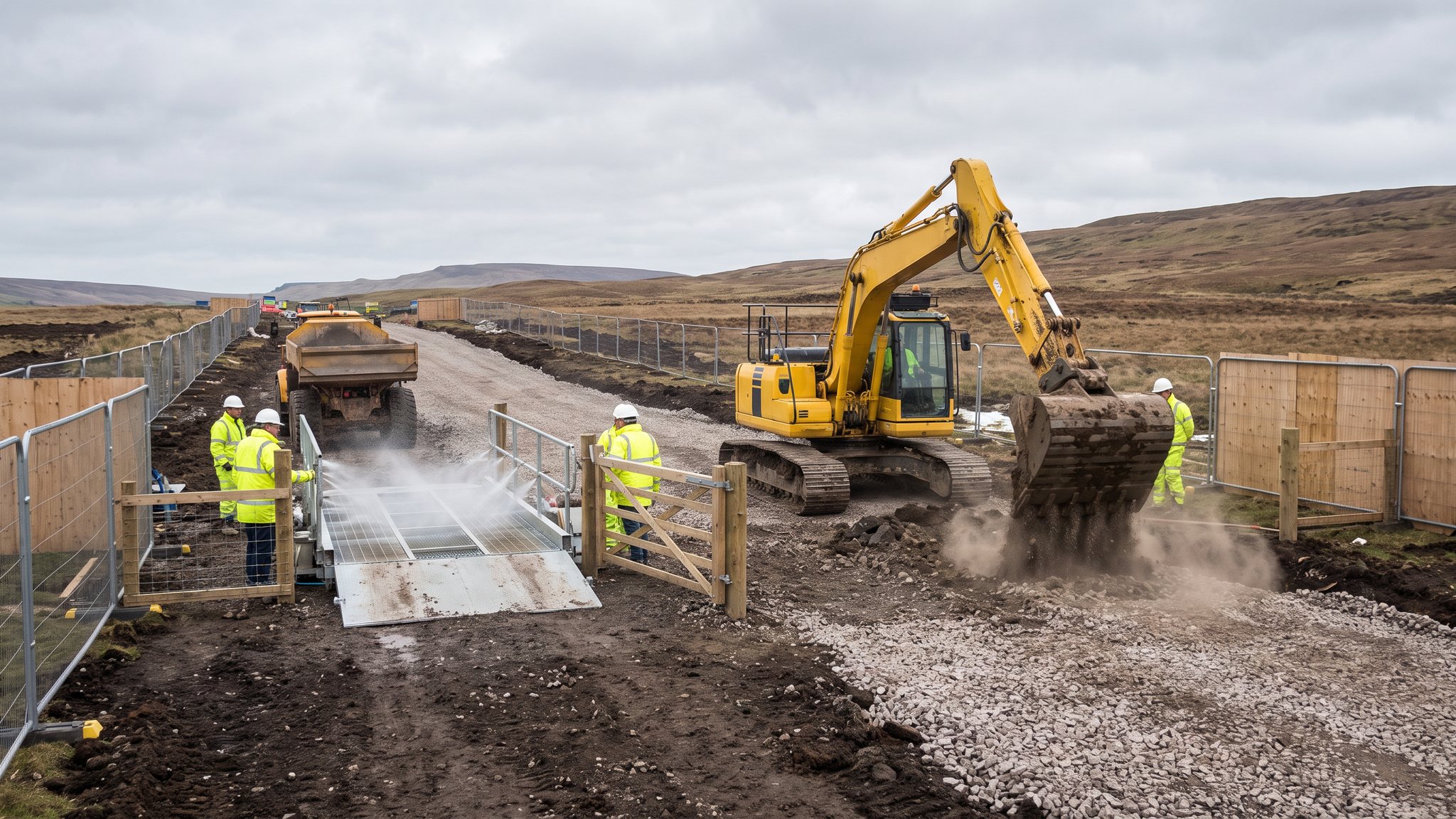
Corridor Access & Enabling Works
Turning a length of route - often a live highway - into a controlled, approved, workable construction corridor.
Open processCanonical guide: Roads & Highways
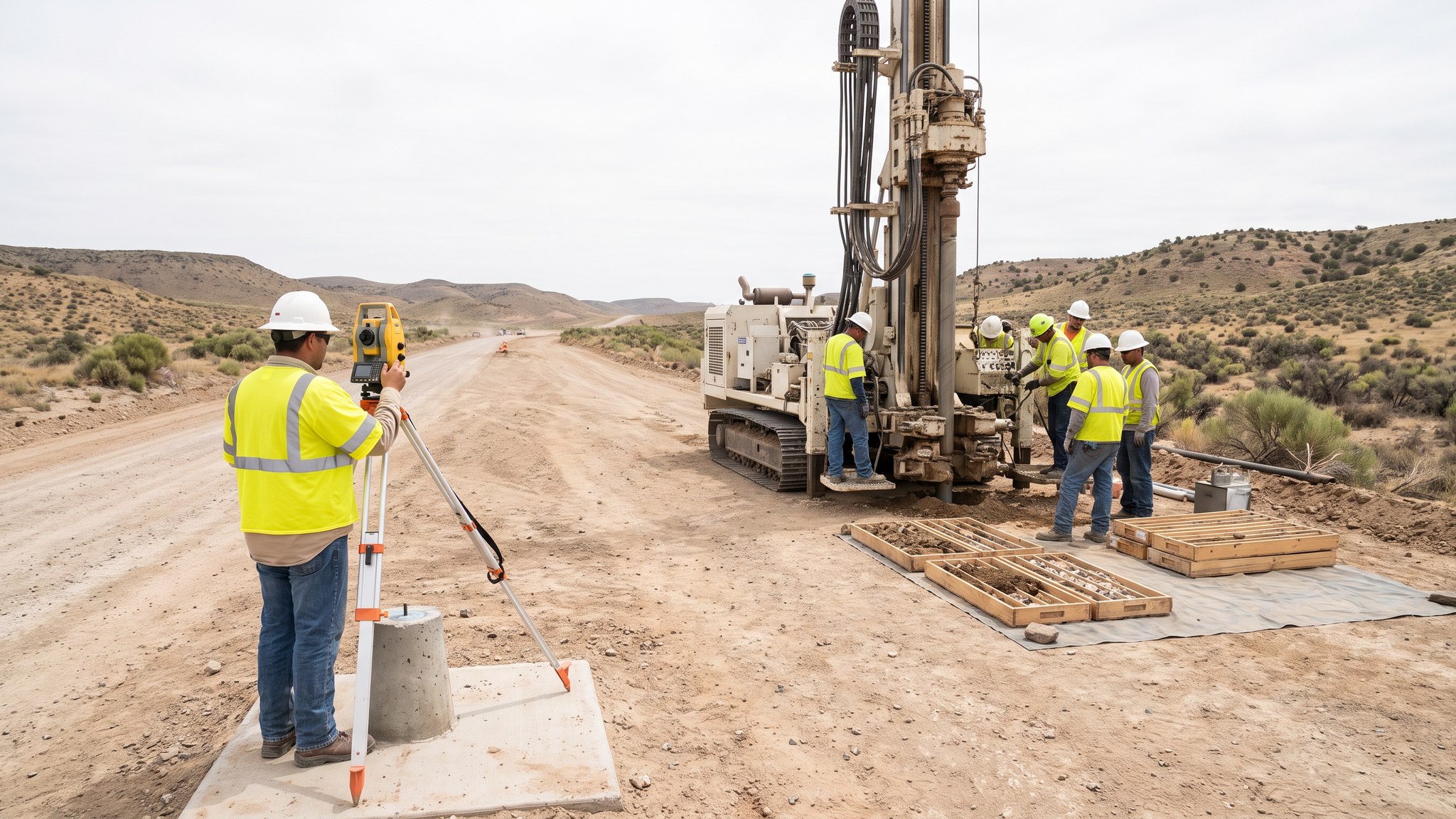
Survey Control & Ground Investigation
Corridor control networks and the ground investigation that tells you what the road, bridge or tunnel is actually standing on.
Open processCanonical guide: Roads & Highways
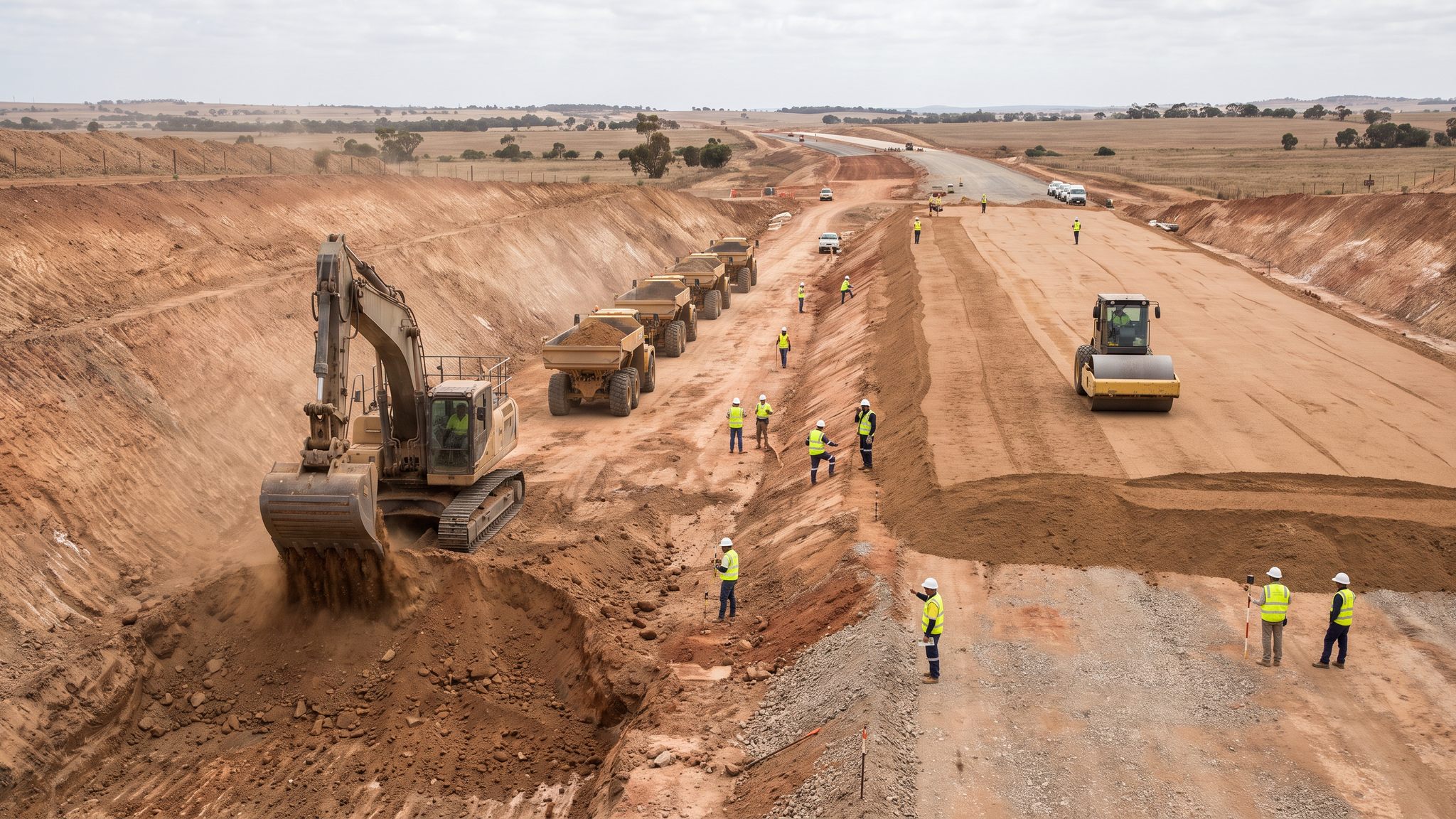
Bulk Earthworks - Cuttings & Embankments
Moving hundreds of thousands of cubic metres to build the corridor's shape - cuttings, embankments and the formation everything sits on.
Open processCanonical guide: Roads & Highways
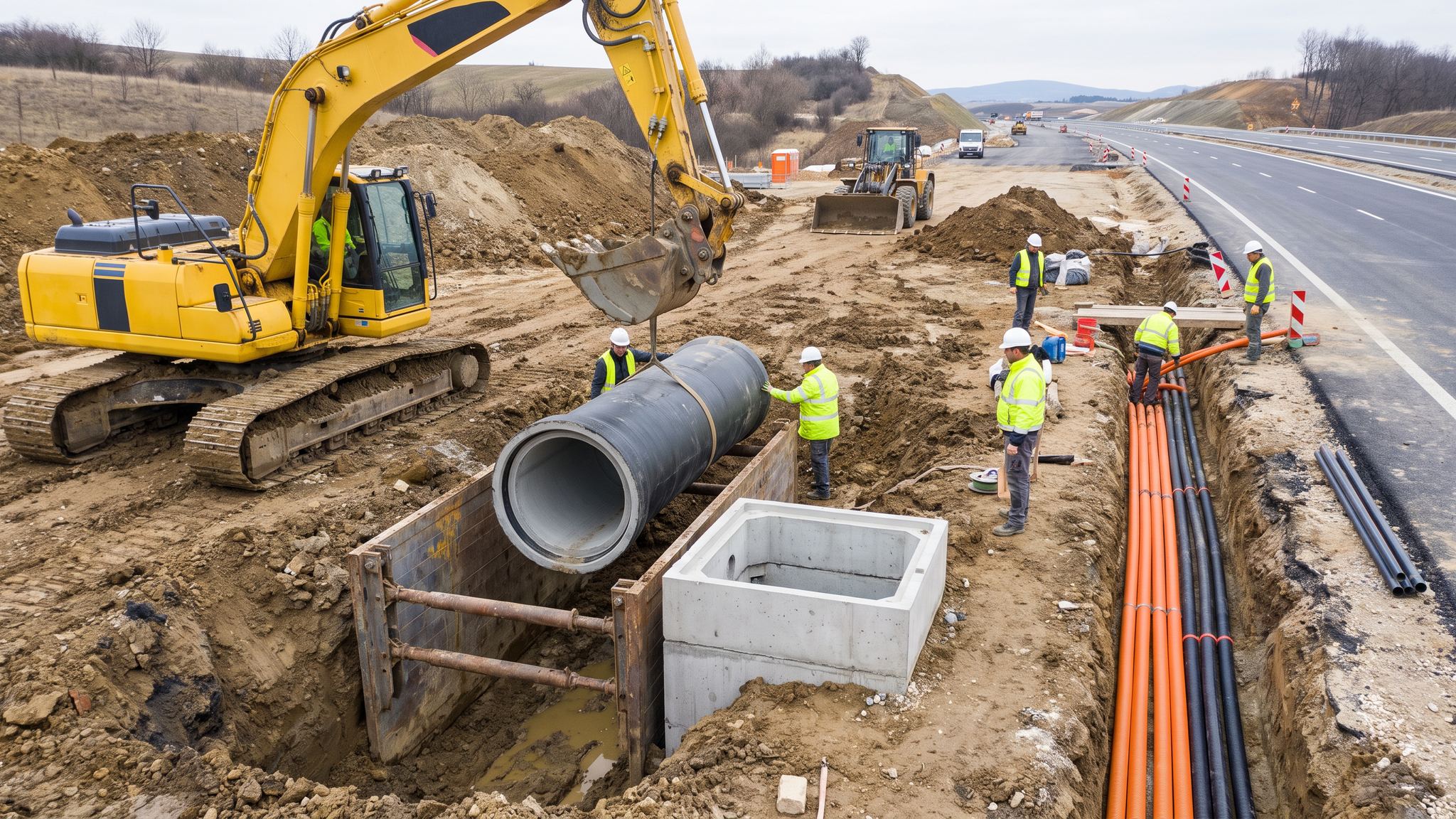
Drainage & Utility Corridors
Pipes, ducts, chambers and culverts - the buried networks installed before the pavement goes over them.
Open processCanonical guide: Roads & Highways
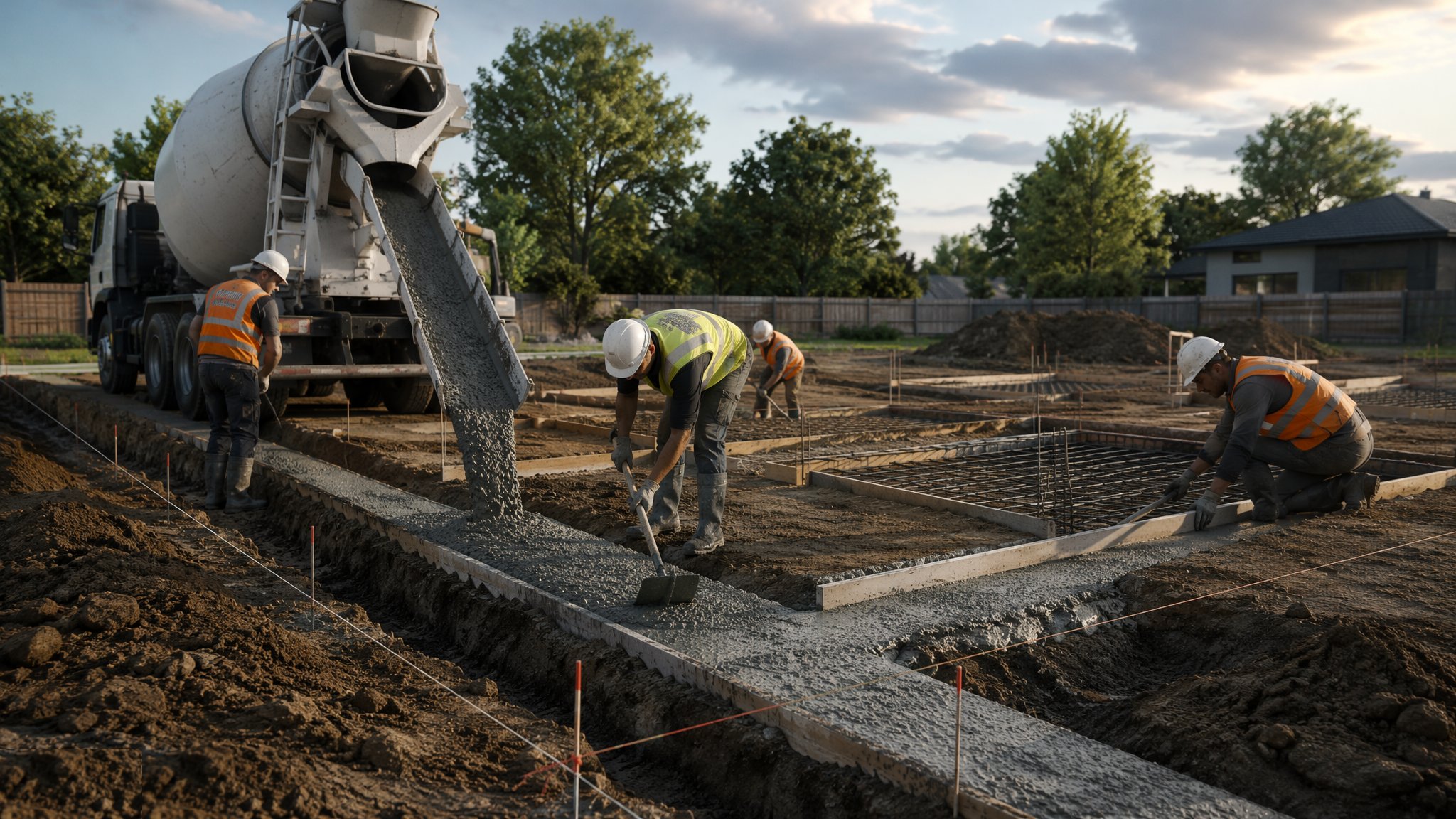
Shallow Foundations
Strips, pads and rafts - spreading the building's weight onto good ground near the surface.
Open processCanonical guide: Residential & Housing
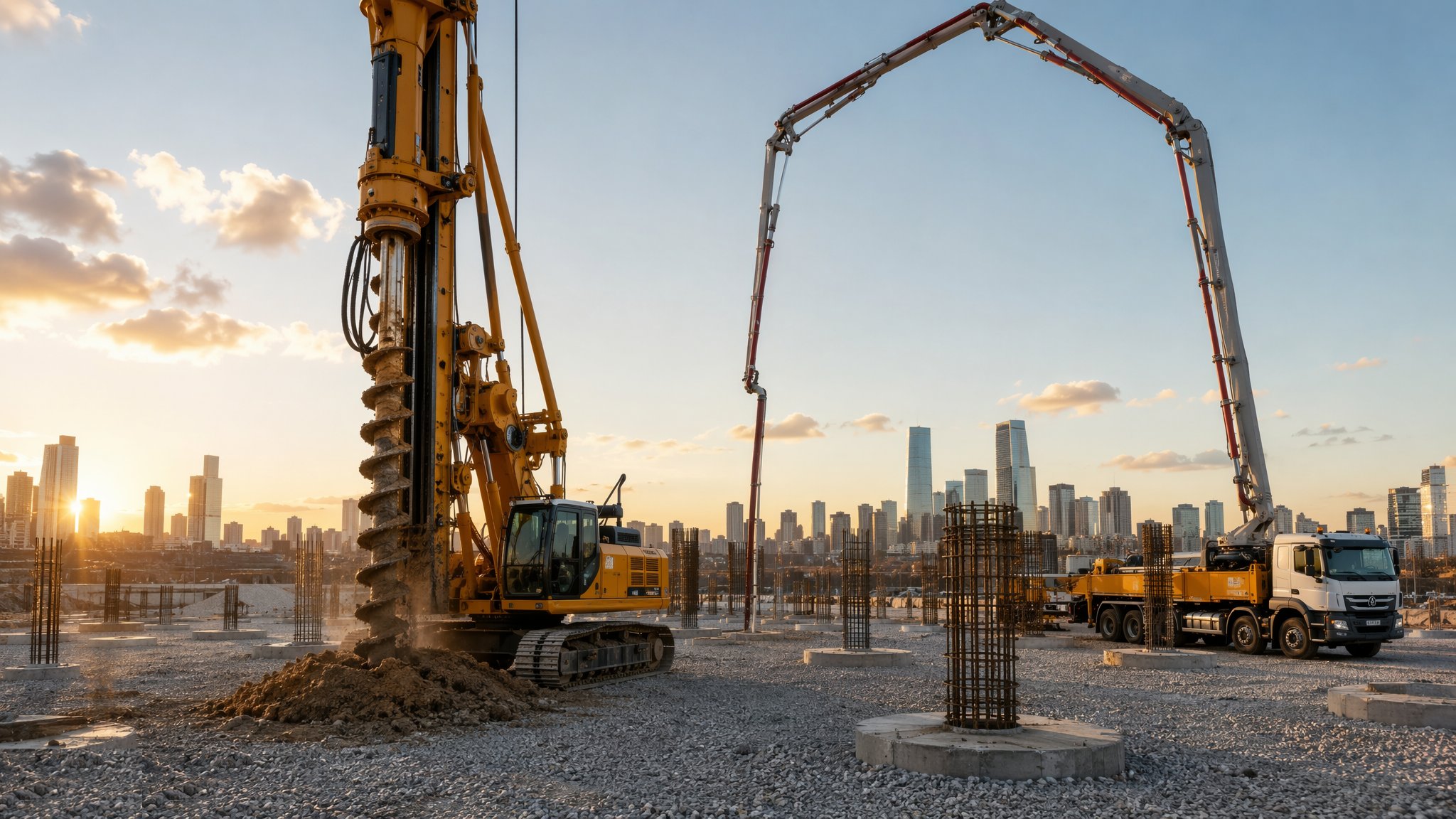
Piling & Deep Foundations
Driven, bored and CFA piles - carrying the building down to ground that can actually take it.
Open processCanonical guide: Residential & Housing
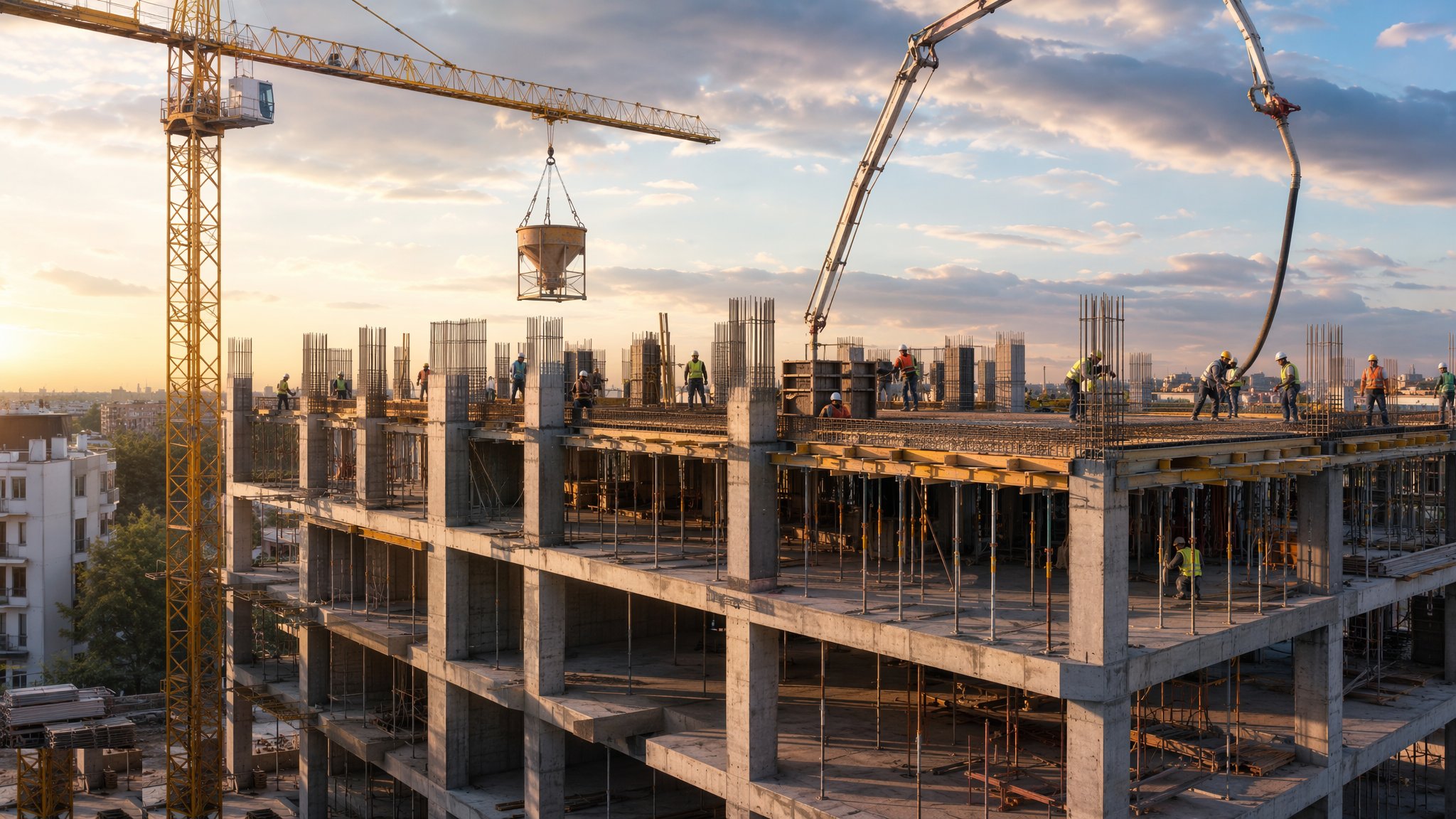
Concrete Frame Construction
Columns, walls and slabs cast in situ - the ribcage of a residential tower.
Open processCanonical guide: Residential & Housing
Power Transmission & Distribution in depth
About Power Transmission & Distribution
The four guides in this sector cover substation construction - the civils, buildings and electrical installation behind the fence; overhead line construction, towers and conductors strung over everything in the way; underground cable installation with joint bays every few hundred metres; and grid connections and energisation, where the new asset meets the live network on a booked outage that does not slip.
Corridor construction with an electrical back end
Transmission work is a linear project measured in tens or hundreds of kilometres, and its programme shape follows the corridor. Access, wayleaves and consents are negotiated plot by plot - every landowner, every road, rail, river and pipeline crossing is its own agreement and its own method statement - and the civils march along the route in gangs: tower foundations or cable trench, then steelwork or cable pulling, then the crossings that could not be done until the adjacent sections were ready. The front end looks like honest, ordinary civils; the constraint is that it is ordinary civils repeated four hundred times across other people's land with a reinstatement obligation on every plot.
The back end is electrical and unforgiving about sequence. Conductors are strung, sagged and tensioned to calculated tables; underground cables are pulled, jointed in purpose-built joint bays every few hundred metres and tested as a system; substations are energised bay by bay under a safety rules regime - the UK distribution and transmission safety rules, or the utility's equivalent in the UAE - with appointed persons, sanctions for test and permits to work controlling everything near the live network. Nothing in the back end can be rushed by adding labour; it is a queue of witnessed tests and booked outages.
Substations concentrate the whole sector behind one fence. The civils are foundations for gantries and transformers, oil containment bunds, cable basements and control buildings; the electrical installation is busbars, circuit breakers, isolators, protection panels and batteries, all installed and tested in a sequence dictated by the outage book. Transformer delivery is a project event in its own right - abnormal load movements, offloading by jacking and skidding where a crane cannot reach, then weeks of drying, oil filling and testing before the unit can be energised.
Outages, windows and the grid code
The controlling fact of grid construction is that the existing network keeps running. Connections, diversions and reinforcements tie into live assets, and every tie-in needs an outage - a planned de-energisation booked with the system operator weeks or months ahead, sized to system demand and often fixed to a season. Winter outages on a heavily loaded circuit are simply unavailable; missed windows can wait a year. The construction programme is therefore built backwards from the outage book: everything that must be done dead is listed, sequenced and resourced so the window is used once, and anything that can be done live or outside the window is moved there.
Compliance is the other gate. New plant must meet the Grid Code or the utility's connection conditions: protection settings, fault ratings, power quality and earthing are all witnessed and documented before energisation. In the UK that means National Grid or the DNO's witness at each stage; in the UAE, DEWA, ADDC/TRANSCO or SEWA inspectors hold the same gates, with 132 kV and 400 kV interfaces in Abu Dhabi and 132 kV and 400 kV in Dubai controlled by the transmission licensee. Energisation is a formal event with a switching programme, not a milestone you declare.
The failures that hurt
Cable strikes are the sector's signature accident: an excavator through a live 33 kV or 132 kV cable puts the operator in hospital and the cable out for days. The defence is procedural and absolute - utility drawings, cable avoidance tools scanned along the route, trial holes by hand or vacuum excavation to prove position, permits to dig and no mechanical excavation within the marked tolerance of a known service. In UAE corridors, where services are dense around development plots and records are thinner, vacuum excavation to positively locate every crossing service before the trench opens is standard practice, and DEWA diversion work is done only under the utility's own permits and supervision.
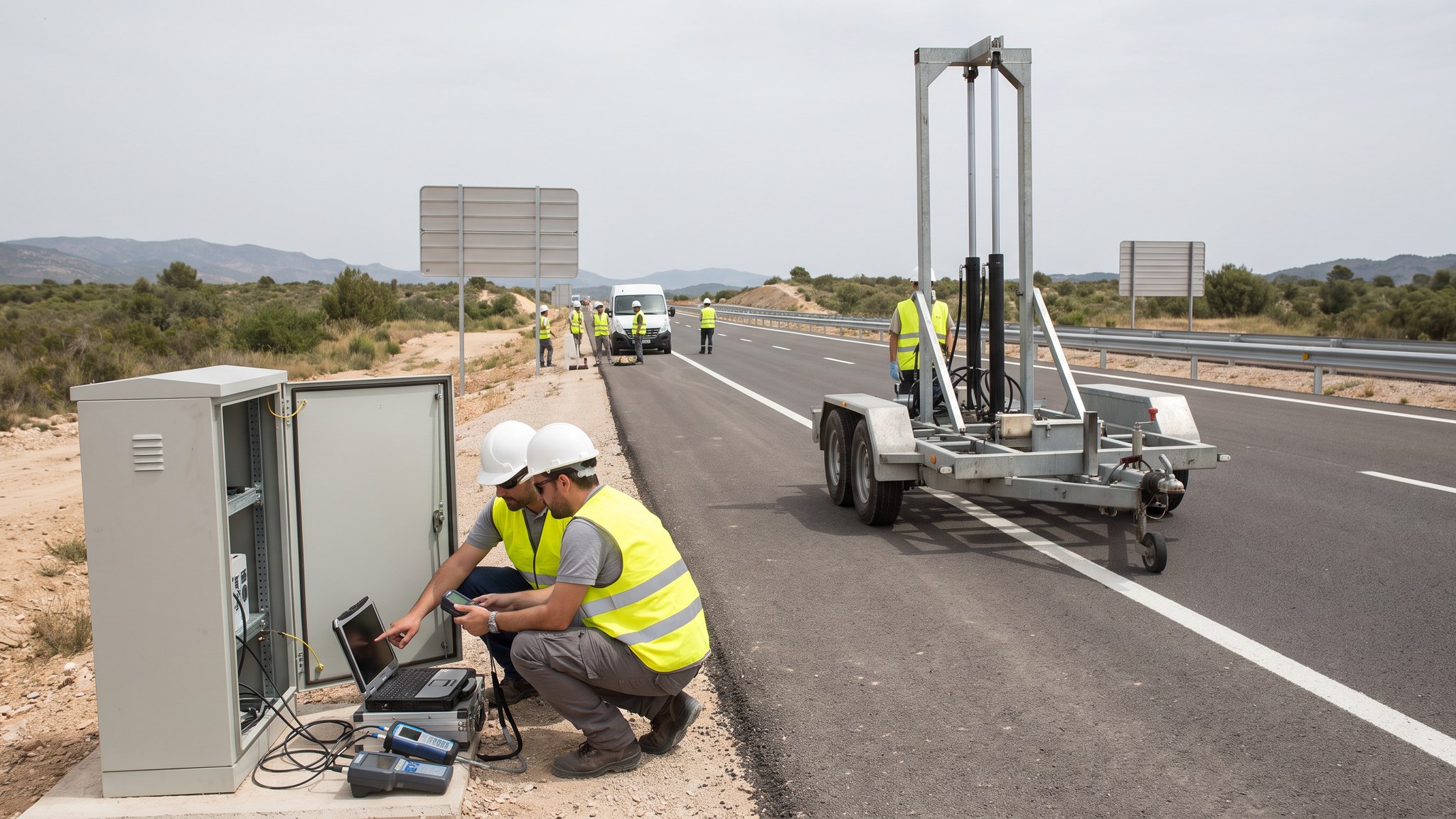
Electrical failures at commissioning are quieter but as costly. A cable joint that fails the very-low-frequency or partial discharge test after energisation means locating and remaking a joint under a new outage; a transformer that fails its dissolved gas or insulation tests on arrival or after installation has a lead time measured in months for repair or replacement; earthing that fails grid compliance measurement stops the whole substation energisation. Foundation errors on towers - stub settings out of tolerance - cannot be corrected after the fact without demolition. The common thread is that the sector's failures are binary: the test either passes or the programme waits, and there is no cosmetic fix.
Working near live apparatus is the standing occupational risk, and it is controlled by people, not paperwork alone. Overhead line gangs work under climbing and rescue discipline with conductors treated as live until proved dead and earthed; substation work runs under permits issued by an authorised person with the point of isolation demonstrated before tools touch plant. The sector's safety culture was bought with fatalities, and the authorised-person ladder - years of training and assessment before you can issue a permit - is the backbone of every site organisation on grid work.
UK and UAE differences on the ground
In the UK the corridor is the battle: wayleaves, planning consents for overhead lines, agricultural reinstatement, winter working in saturated ground, and long programme risk from consents. Voltages run 400, 275 and 132 kV at transmission and 33, 11 kV and 400 V at distribution. Undergrounding is expensive and reserved for where the planning system demands it.
In the UAE the corridor is granted, not negotiated - utility corridors are reserved in masterplans - but the ground fights back differently: sand and sabkha with negligible cohesion, saline groundwater within metres of the surface on coastal routes, and summer heat that derates cables, drives burial depths and trench spacing for thermal reasons, and dictates jointing in air-conditioned tents to keep humidity and dust out of the joint. Distribution is almost entirely underground at 11 kV with extensive use of precast and package substations, and the programme bends around summer working restrictions the way a UK programme bends around winter.
Materials reflect the split. UK overhead lines are steel lattice towers on concrete pad-and-chimney or piled foundations, with aluminium conductor steel-reinforced strung to catenary tables; buried work is cross-linked polyethylene cable in sand-bedded trenches with warning tape and, increasingly, ducted installation for future repair. UAE practice leans on precast concrete and packaged plant for distribution, GRP cable troughs and ducts in reserved corridors, and corrosion protection on every buried metallic item - the saline ground treats unprotected steel as a consumable.
Crossings deserve a final word because they concentrate every difficulty at once. Rail, motorway and river crossings are done by thrust boring, directional drilling or special structures under the asset owner's separate consent, with track or flow monitoring running throughout; on the UK network these possessions and consents are scarcer than the outages themselves. In the UAE, crossings of live roads are typically microtunnelling or auger-bore jobs under RTA permit with night-only working, and the crossing design - sleeve, depth, separation from neighbouring utilities - is agreed on a dedicated drawing before any plant mobilises.
Handover documentation in this sector is as engineered as the assets. Every circuit, bay and cable carries a test dossier - factory and site test certificates, protection setting files, as-built drawings and earthing records - and the network operator's asset data team will reject an energisation pack for a missing certificate as readily as for a failed test. Contractors who assemble the dossier progressively, bay by bay and joint by joint, close out in weeks; those who start at the end chase signatures for months.