Clearing the Way: Demolition Done Properly
Most plots are not empty. Before anything can rise, whatever stands there has to come down - surveyed, stripped, disconnected and demolished in a controlled order, with almost nothing leaving the site as waste.
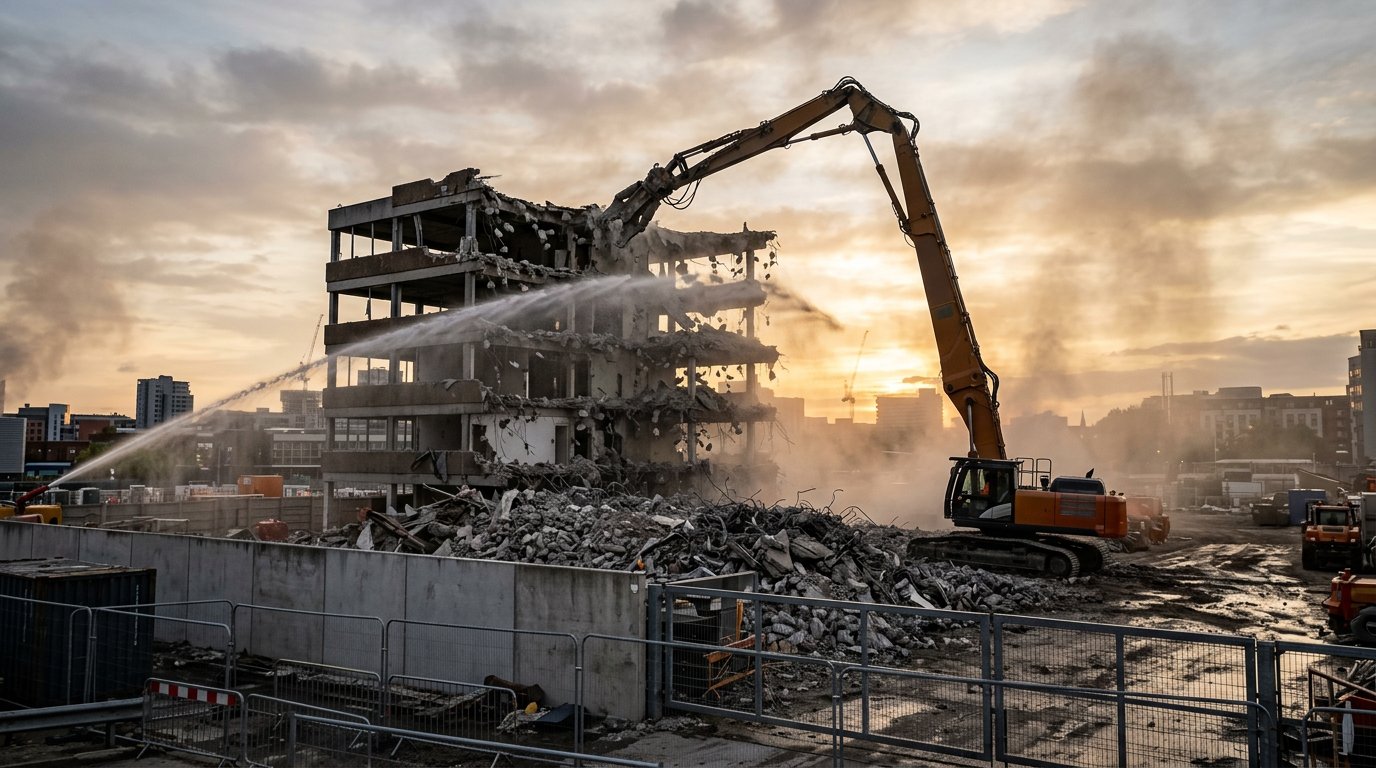
A typical process - not your site
Every site is different. This article describes a common approach on a typical project - not the sequence for any specific site. Ground conditions, access, existing structures and local requirements all change the method. Site-specific decisions belong with the project's appointed professionals - the principal contractor, the designers and the engineers named for the works. Treat this as background, not as a method statement.
The tidy version of a construction project starts with an empty plot. The real version rarely does. There is a disused warehouse, a row of garages, a petrol station nobody has thought about for twenty years, or simply half a metre of scrub, topsoil and whatever the last century buried in it. Between taking possession and the first excavation sits the work of clearing the site - and done properly, it is one of the most disciplined operations in construction.
The discipline exists because demolition punishes improvisation. A building being taken apart is a structure losing the strength it was designed around, floor by floor, and the full process guide treats it accordingly: as an engineered sequence, planned by competent people, not a machine let loose on a wall.
Know what you are pulling down
Nothing is touched until the site has been understood. Three investigations come first. A refurbishment and demolition asbestos survey - the intrusive kind, opening up voids and ducts - because UK law requires it before demolition starts, and because asbestos found early is a priced removal package while asbestos found late is a stopped site. A structural appraisal, because the demolition engineer needs to know what is holding the building up before deciding the order it comes down - including any alterations the drawings never recorded. And a services sweep: every cable, main and drain found, disconnected and certified dead by the utility companies, because the most dangerous thing on a demolition site is the supply everyone assumed was off.
The paperwork runs in parallel, and it is not optional. In the UK the local authority is notified before demolition begins and can impose conditions on how it is done; HSE expects the whole operation to be planned by competent practitioners under the CDM regulations, with a demolition engineer reviewing the method before work starts. In the UAE, demolition has its own permit: a demolition NOC from the municipality or free-zone authority, with certified disconnection letters from the utility providers, before any structure is touched. Different countries, same principle - the authorities sign before the machines swing.
The soft strip
Demolition does not start with the big machine. It starts with people walking the building with hand tools, stripping out everything that is not structure: ceilings, carpets, partitions, doors, cables, pipework, fittings. This is the soft strip, and it has two purposes. It separates the materials - metals, timber, plasterboard, cables - into clean streams that can actually be recycled, rather than burying them in the crushed concrete. And it lays the structure bare, so the demolition engineer can inspect what the finishes were hiding before deciding the final sequence.
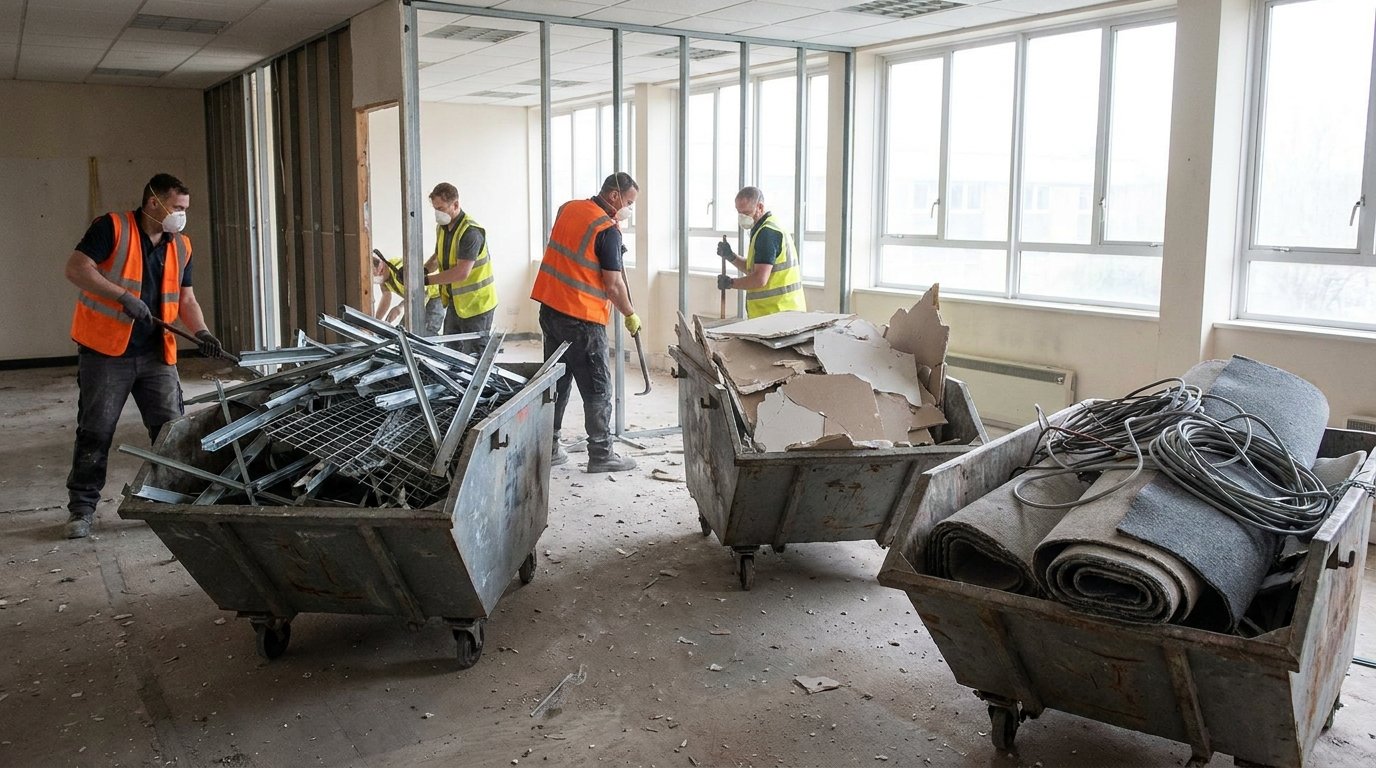
Where the asbestos survey found material, licensed removal happens now, under controlled conditions, before general strip-out reaches it. The rule on every well-run clearance is absolute: the hazardous materials leave first, under their own paperwork, so that everything that follows is handling clean material.
Bringing the structure down
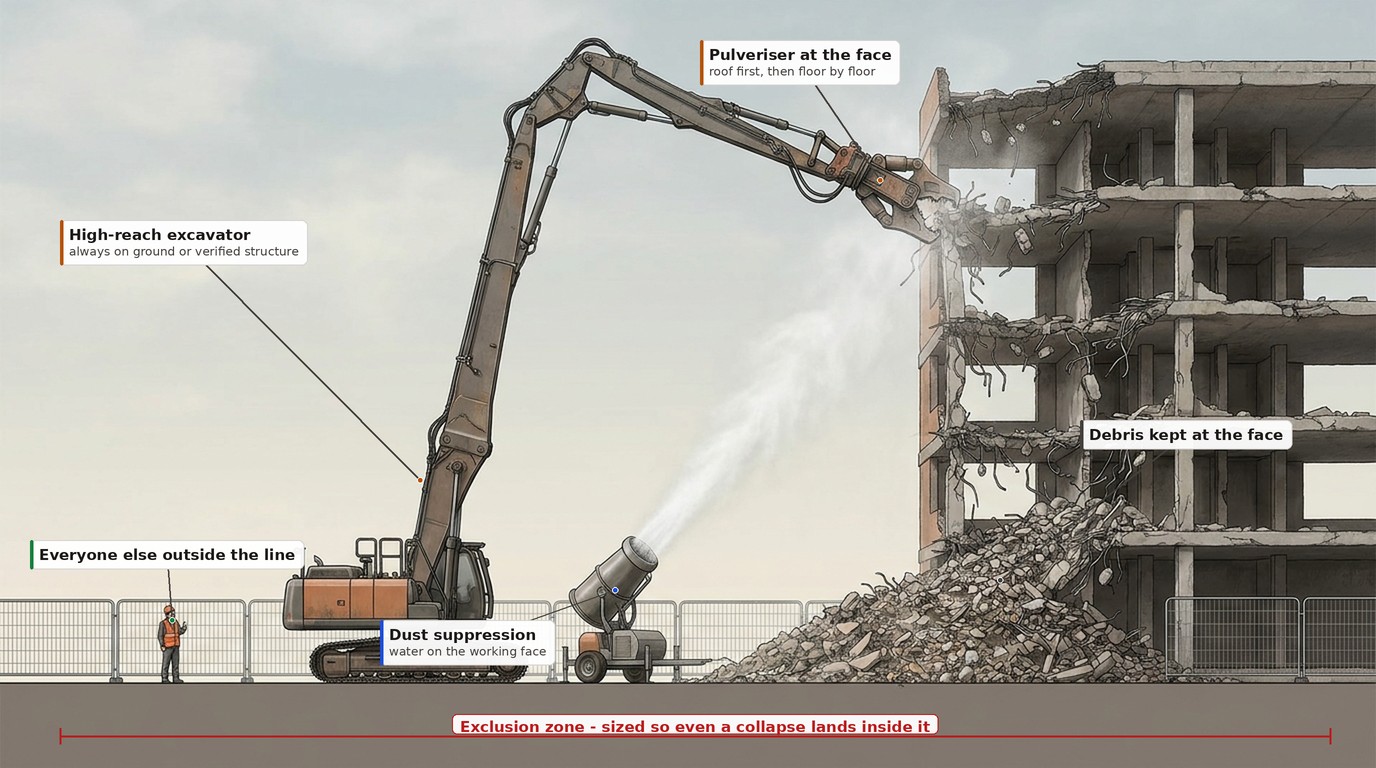
For most buildings the method is top-down mechanical demolition: an excavator - a high-reach machine for anything tall - fitted with a pulveriser, shear or breaker, reducing the building in the reverse order it was built. Roof first, then floor by floor, bay by bay, with the machine always standing on the ground or on structure verified to carry it, pulling material toward itself and never undermining its own position. Explosive demolition exists, but it is the rare exception reserved for structures whose size or condition justifies months of planning; the everyday reality of demolition is patient, mechanical and surprisingly quiet in its logic.
Around the machine sits the most important line on the site: the exclusion zone. It is sized from the demolition method and the distance debris could travel, on one governing rule - if something goes wrong and the structure collapses, everything must land inside the zone. Nobody works inside it but the machine. Dust is held down with water cannons playing on the working face, noise and vibration are monitored at the boundary, and the debris is kept pulled back against the building rather than spilling toward the line.
Almost nothing leaves as waste
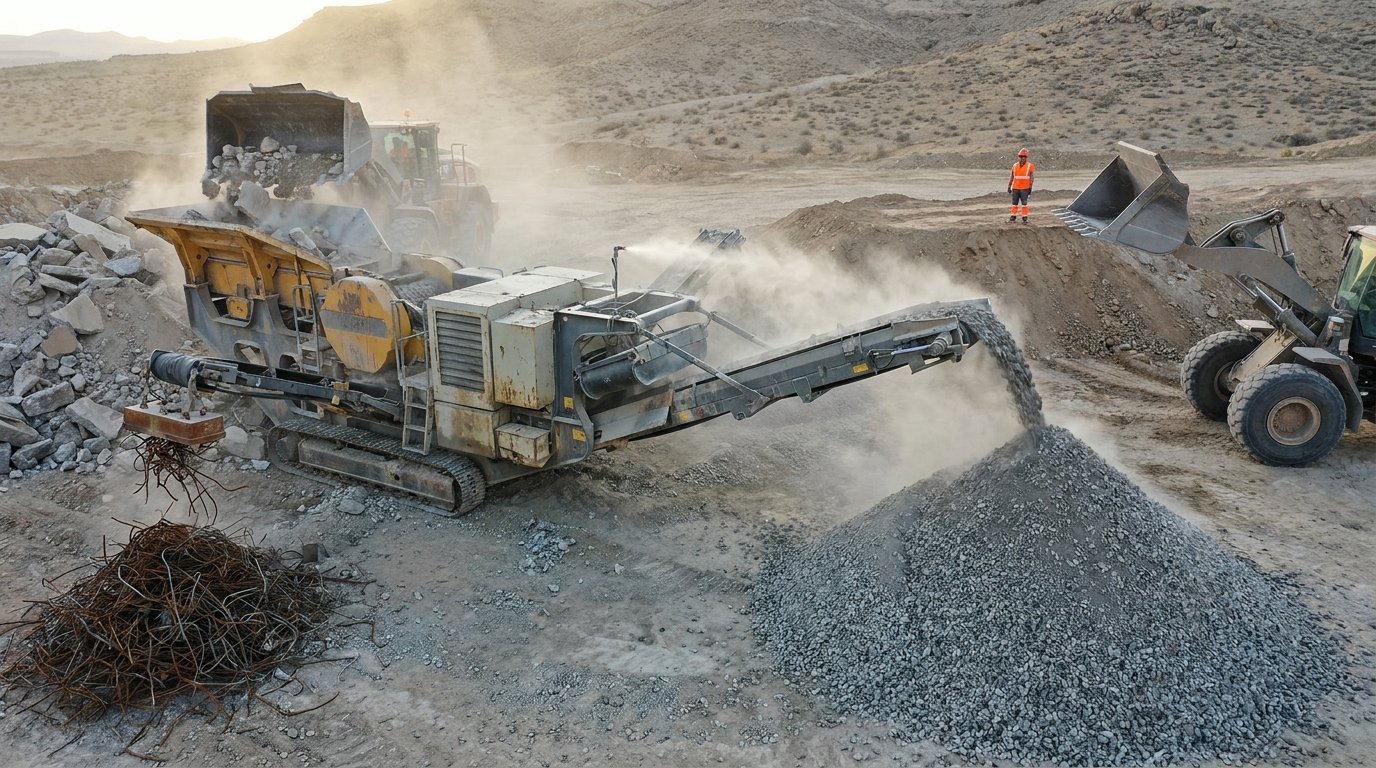
The pile of broken concrete left when the structure is down is not waste - it is the first construction material of the new project. A mobile crusher processes the concrete and masonry into graded fill, an overband magnet pulls the reinforcement out for scrap, and the crushed material is stockpiled for reuse under the new roads and floor slabs. Steel goes to the mill, timber and plasterboard to their own streams, and every load that does leave the site travels on waste-transfer paperwork that says exactly what it is and where it is going. On a well-run clearance it is normal for the large majority of demolition material, by weight, to be recycled or reused rather than tipped.
On greenfield sites the same stage looks gentler but follows the same logic: vegetation cleared, topsoil stripped and saved in windrows for the landscaping that comes years later, protected trees fenced off at the roots, and invasive species like Japanese knotweed dealt with under their own controlled procedures rather than spread across the site by an innocent bucket. Clearance ends the same way everywhere: a clean, level, understood platform - and a site ready for the surveys and setting out that position everything to come.
A controlled demolition, in order
Read the site
A demolition site tells you how good the contractor is at a glance: is there an exclusion zone marked and respected, is there water on the dust, are the material stockpiles separated, is the machine standing clear of its own debris? Tidy demolition is safe demolition.
David
Founder, BuildPedia