Masts, fibre routes and exchanges - light structures, heavy logistics.
Telecoms construction is thousands of small sites rather than one big one. Individually the work is modest - a mast foundation here, a duct crossing there, an equipment room fit-out - and the civils involved are the shared methods linked below. As a programme, though, it is a logistics exercise in permits, traffic management, wayleaves and repetition, with the same detail built correctly a thousand times over.
The process map - 3 guides
Each one is a full guide: overview, variants, numbered steps, plant, testing, safety and defects.
Telecom Towers, Masts & Rooftop Sites
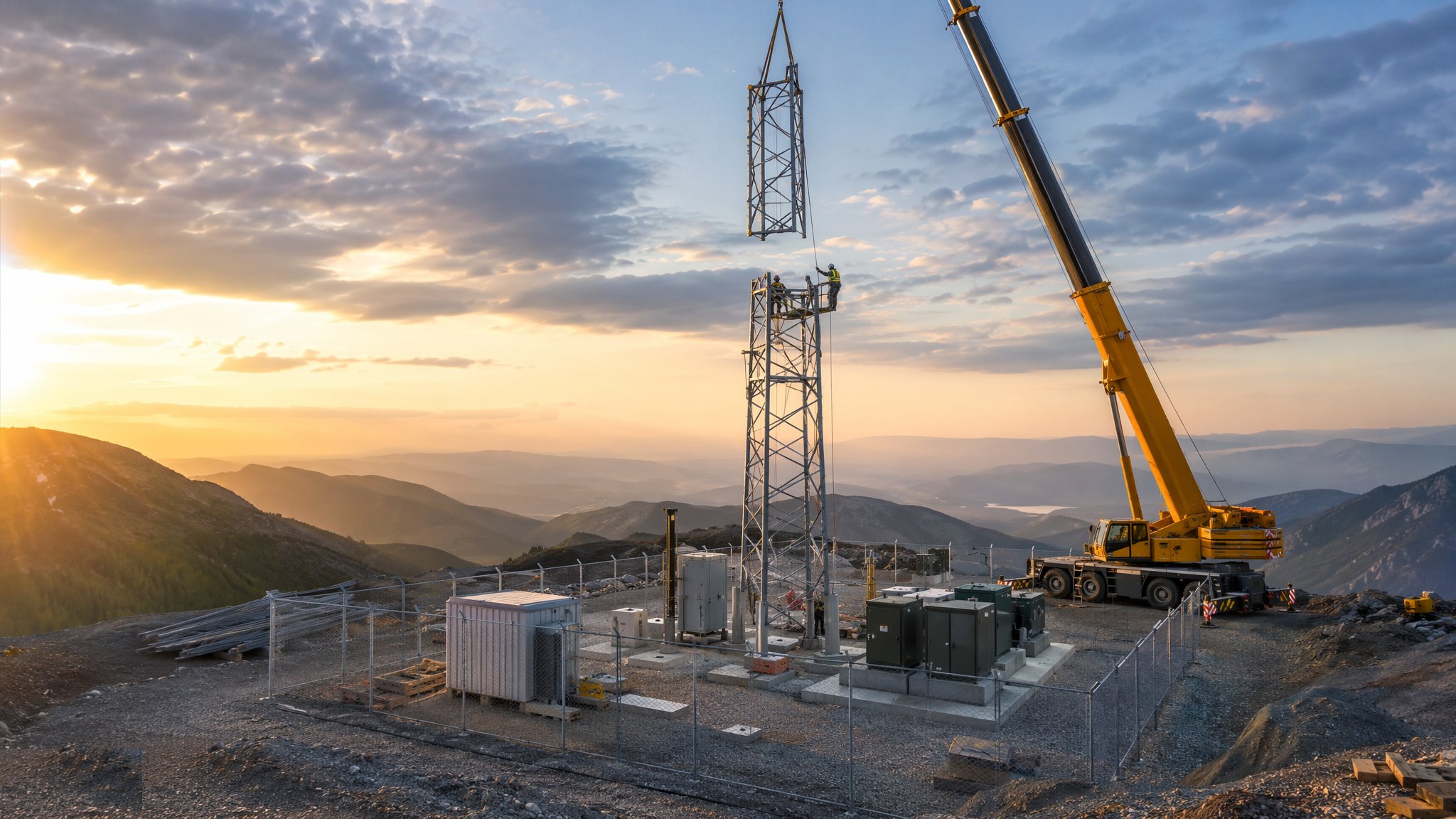
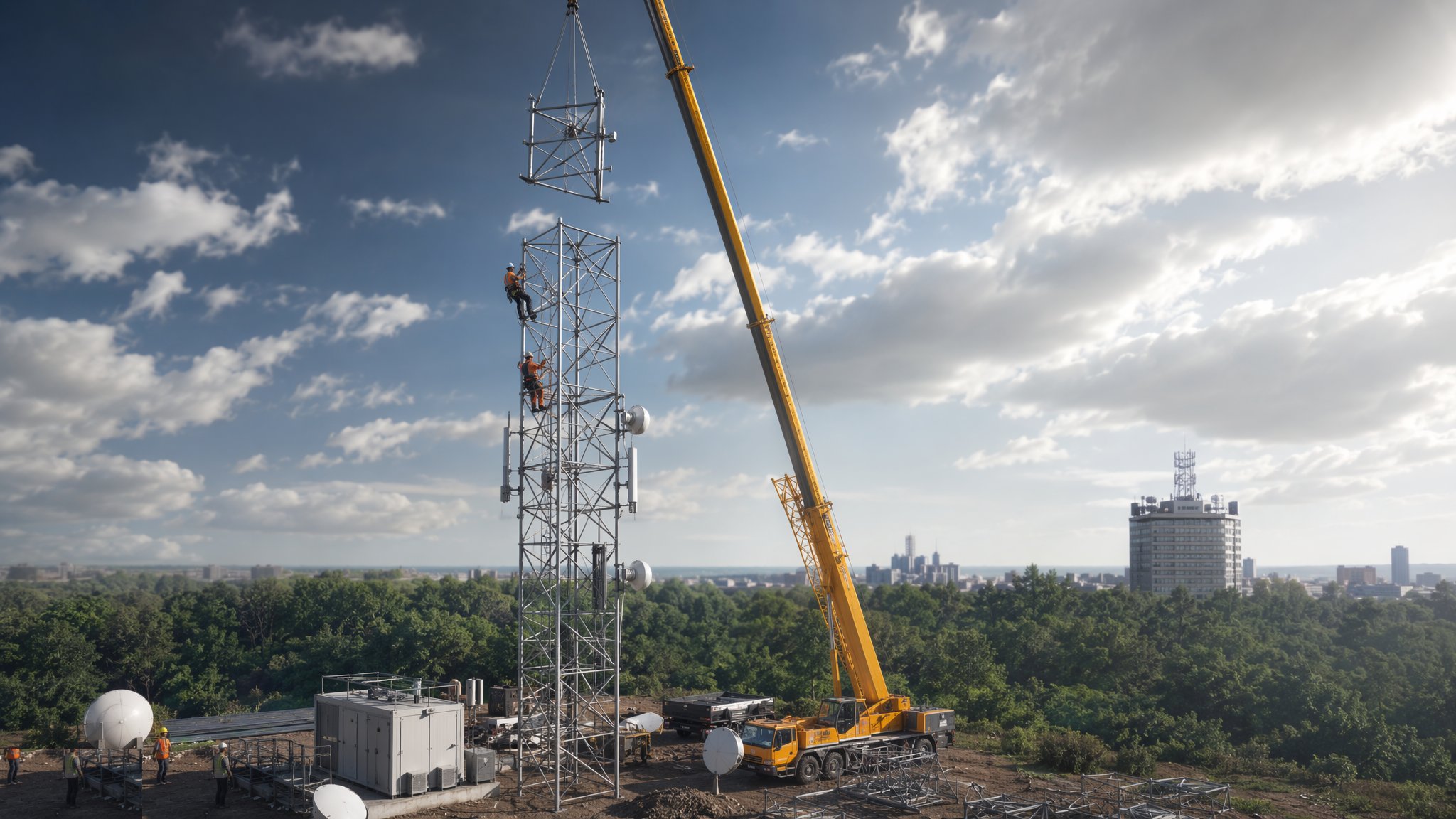
The steel in the air - greenfield lattice towers and monopoles, rooftop stub masts and ballasted frames - founded, erected and dressed with antennas so the network has somewhere to hang its radios.
Open process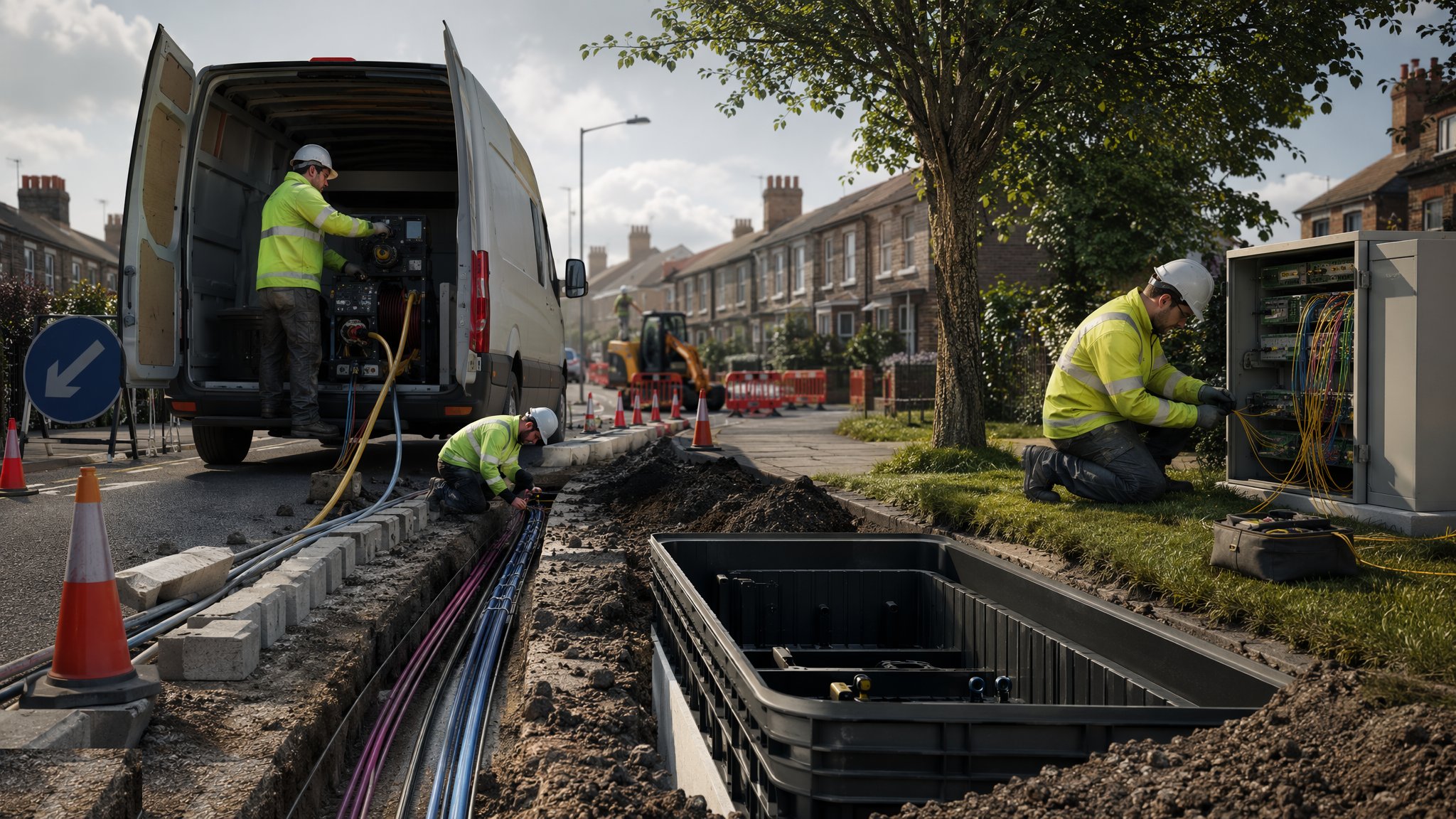
Fibre Network Installation
Ducts in the ground, chambers at the corners and hair-thin glass blown between them - the buried network that carries everything, built in live streets and tested to the decibel.
Open process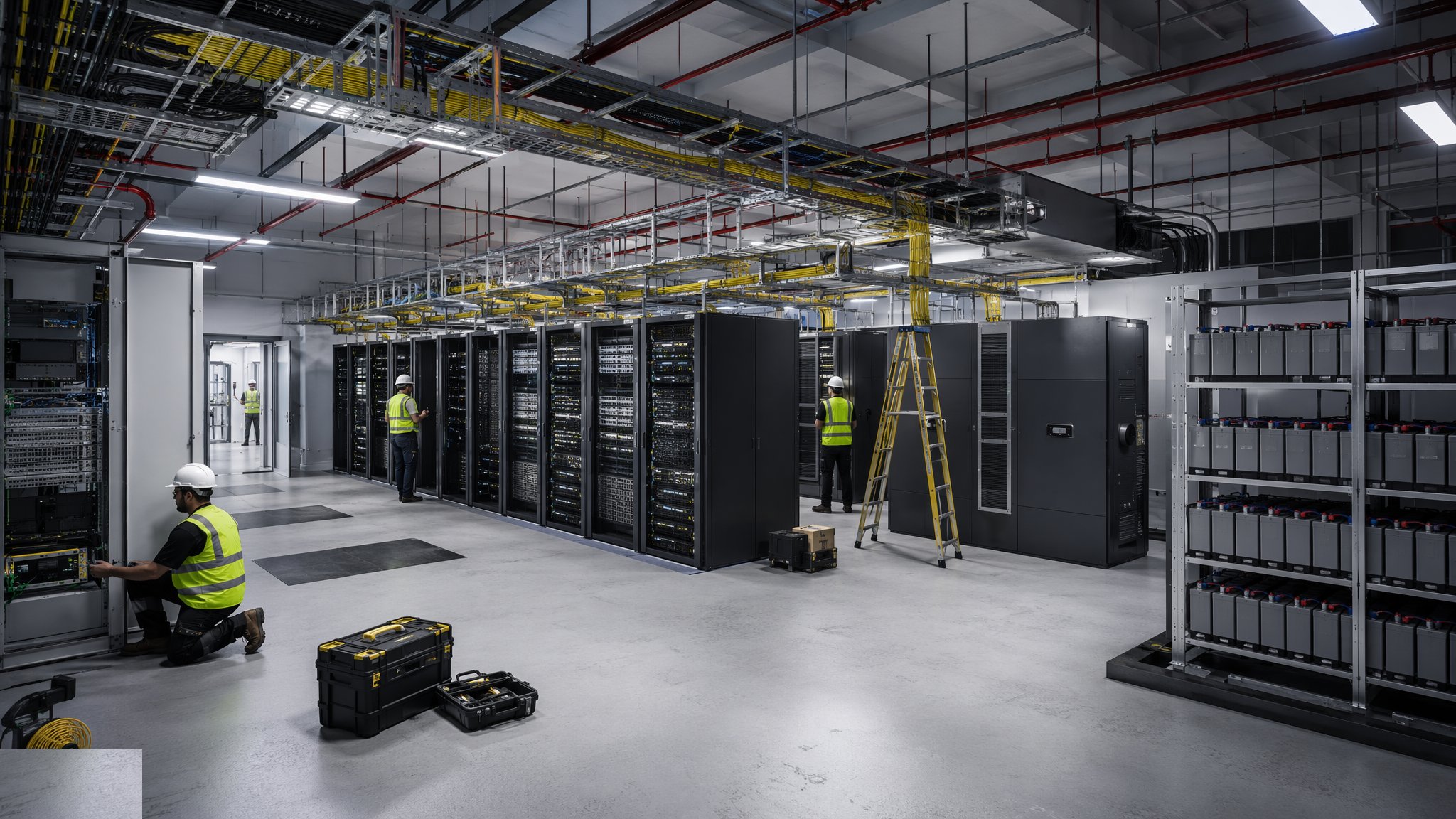
Telecom Exchanges & Equipment Rooms
The building services side of the network - racks, DC power plants and battery strings, precision cooling and clean-agent fire suppression - fitted out inside buildings that have to stay live while you work on them.
Open processShared methods used in this sector
These guides are owned by other sectors - the canonical page lives there - but the method is the same here. Cards open the guide at its home sector.
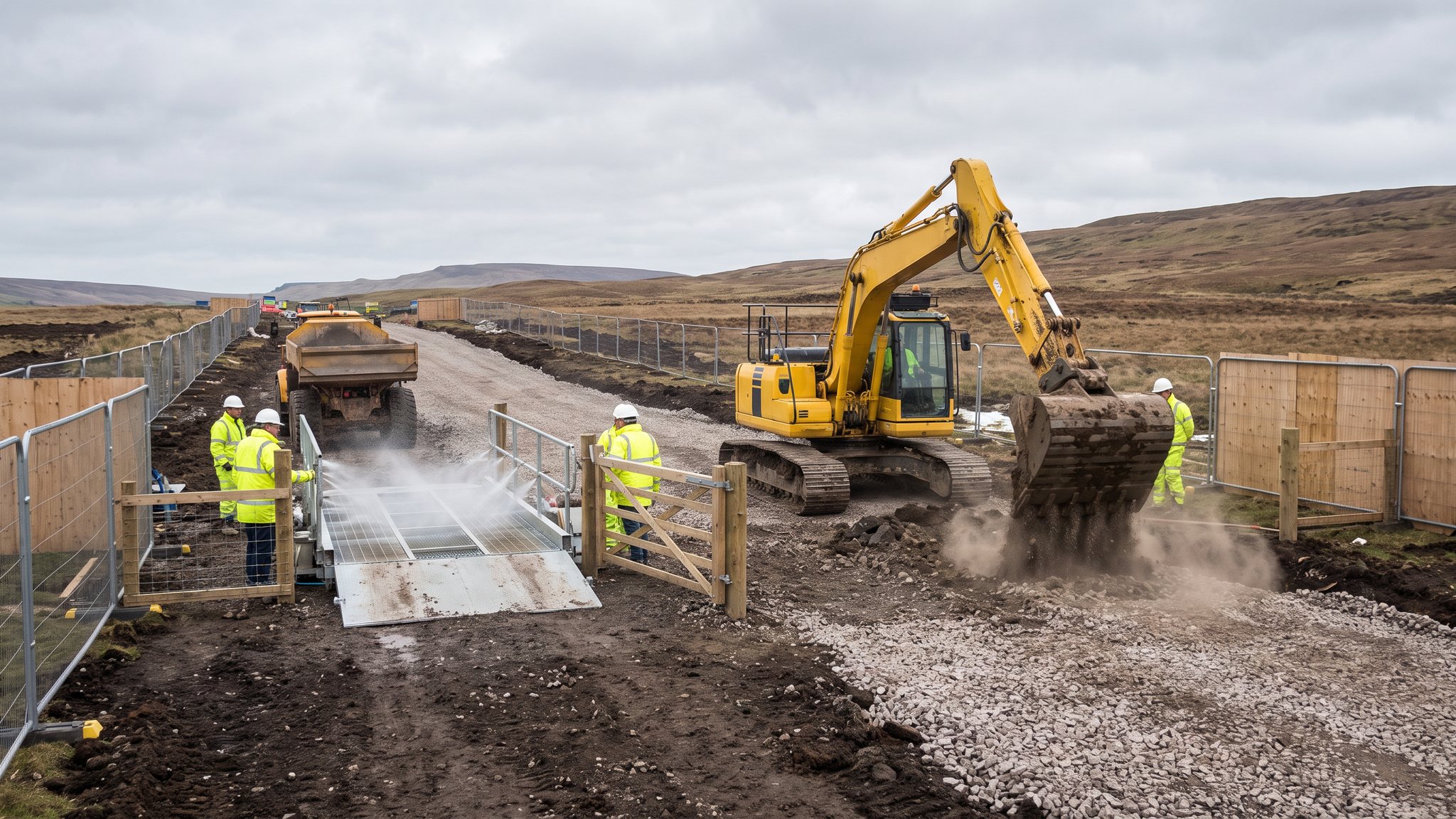
Corridor Access & Enabling Works
Turning a length of route - often a live highway - into a controlled, approved, workable construction corridor.
Open processCanonical guide: Roads & Highways
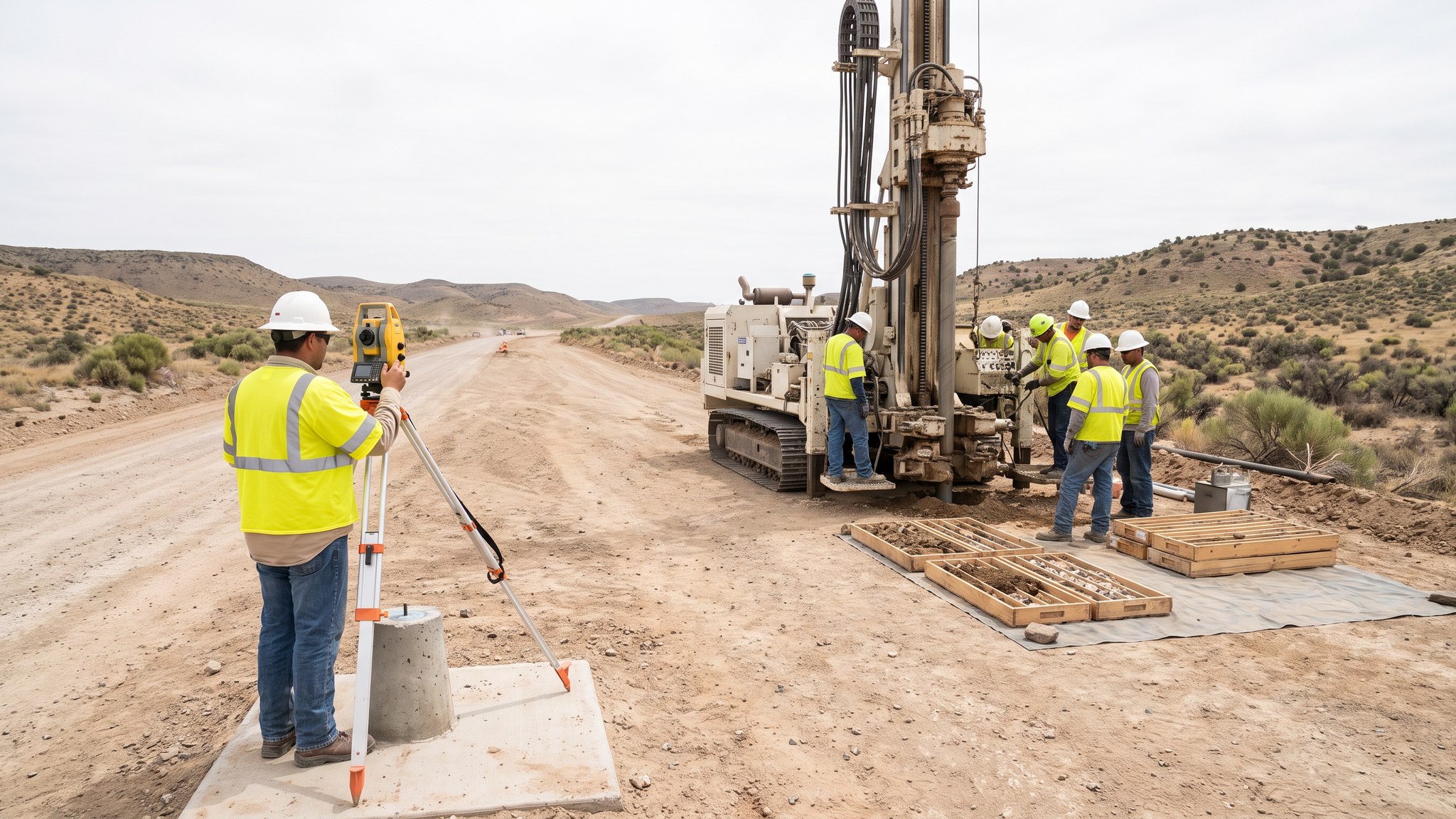
Survey Control & Ground Investigation
Corridor control networks and the ground investigation that tells you what the road, bridge or tunnel is actually standing on.
Open processCanonical guide: Roads & Highways
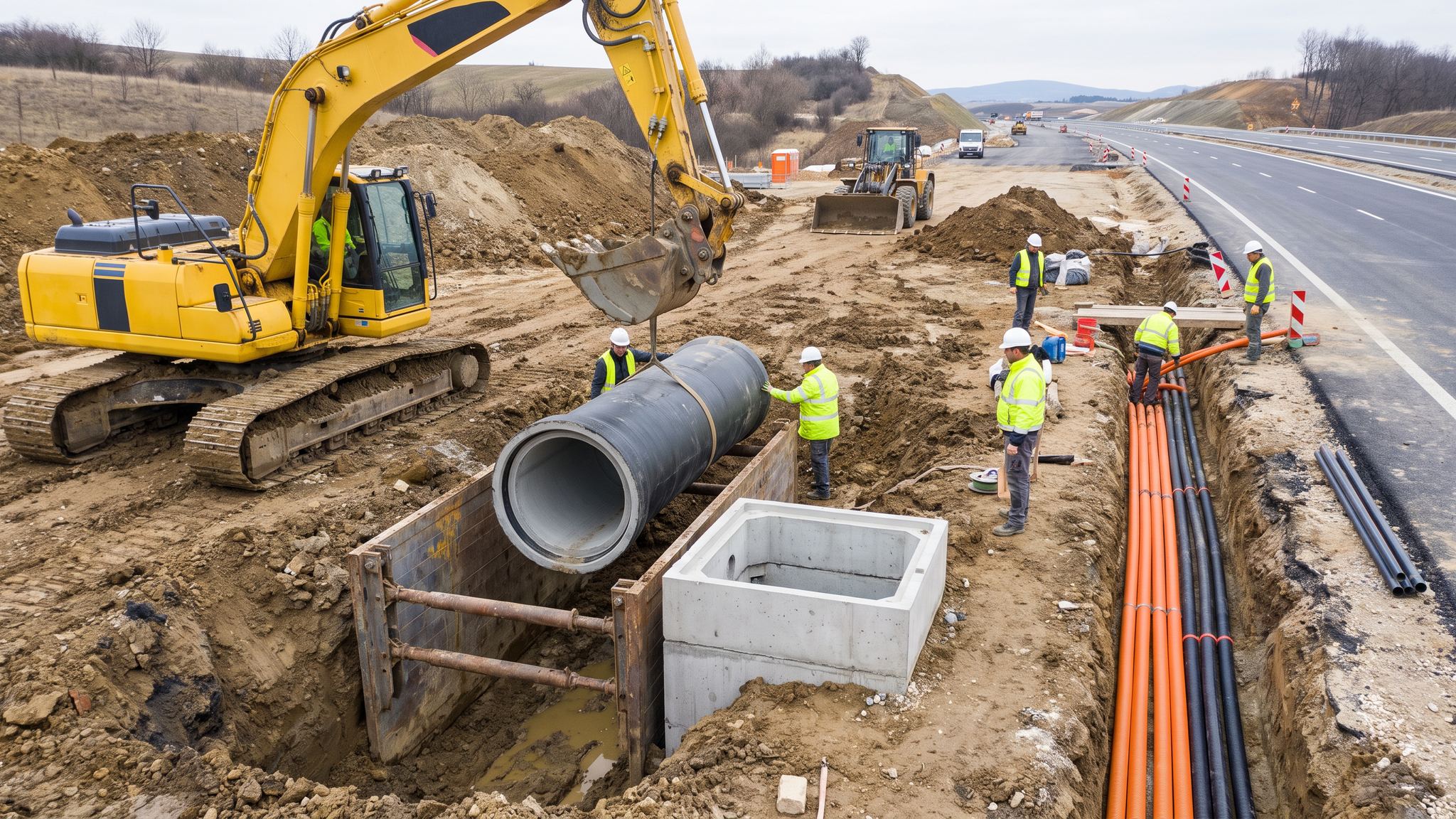
Drainage & Utility Corridors
Pipes, ducts, chambers and culverts - the buried networks installed before the pavement goes over them.
Open processCanonical guide: Roads & Highways
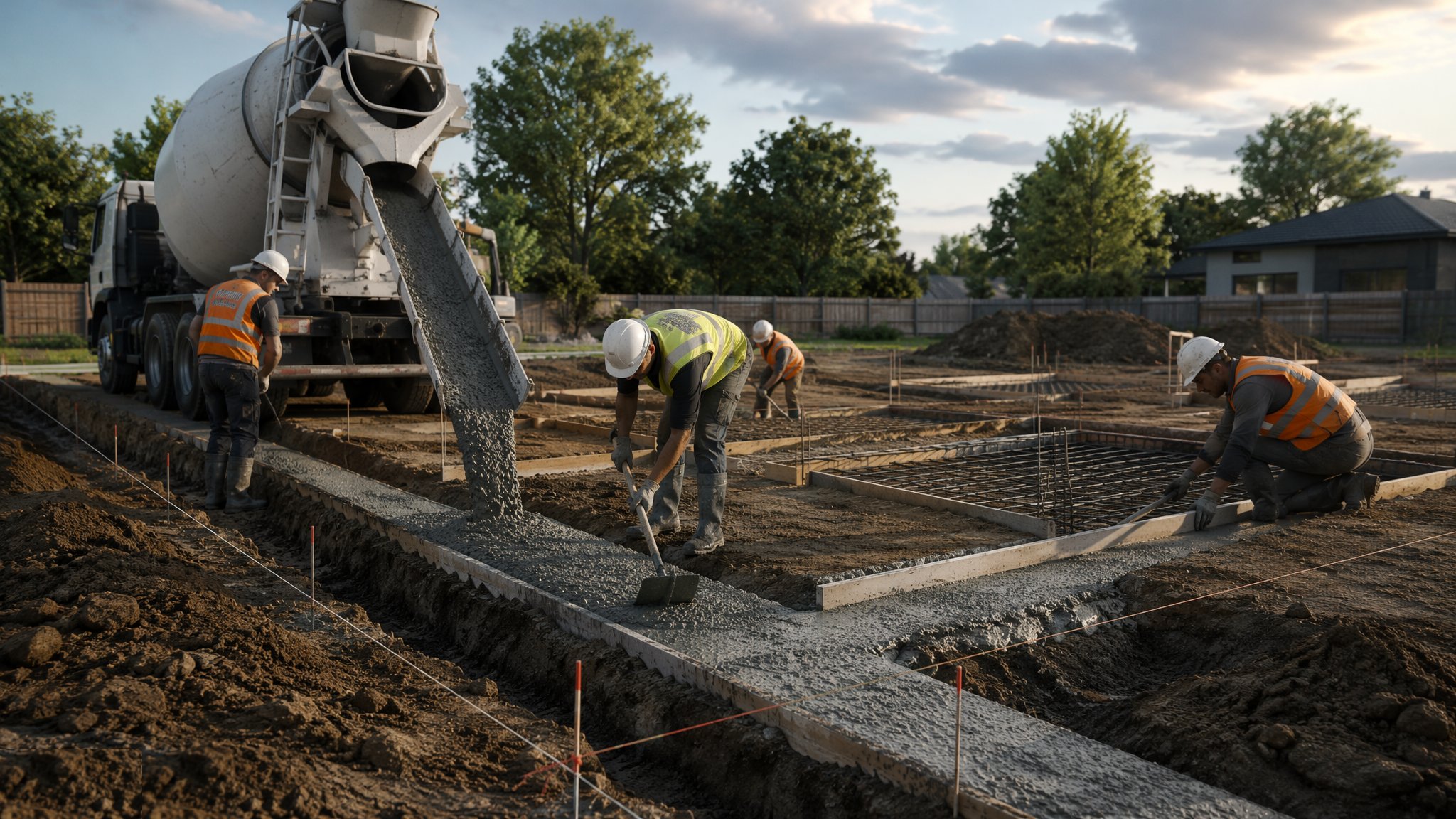
Shallow Foundations
Strips, pads and rafts - spreading the building's weight onto good ground near the surface.
Open processCanonical guide: Residential & Housing
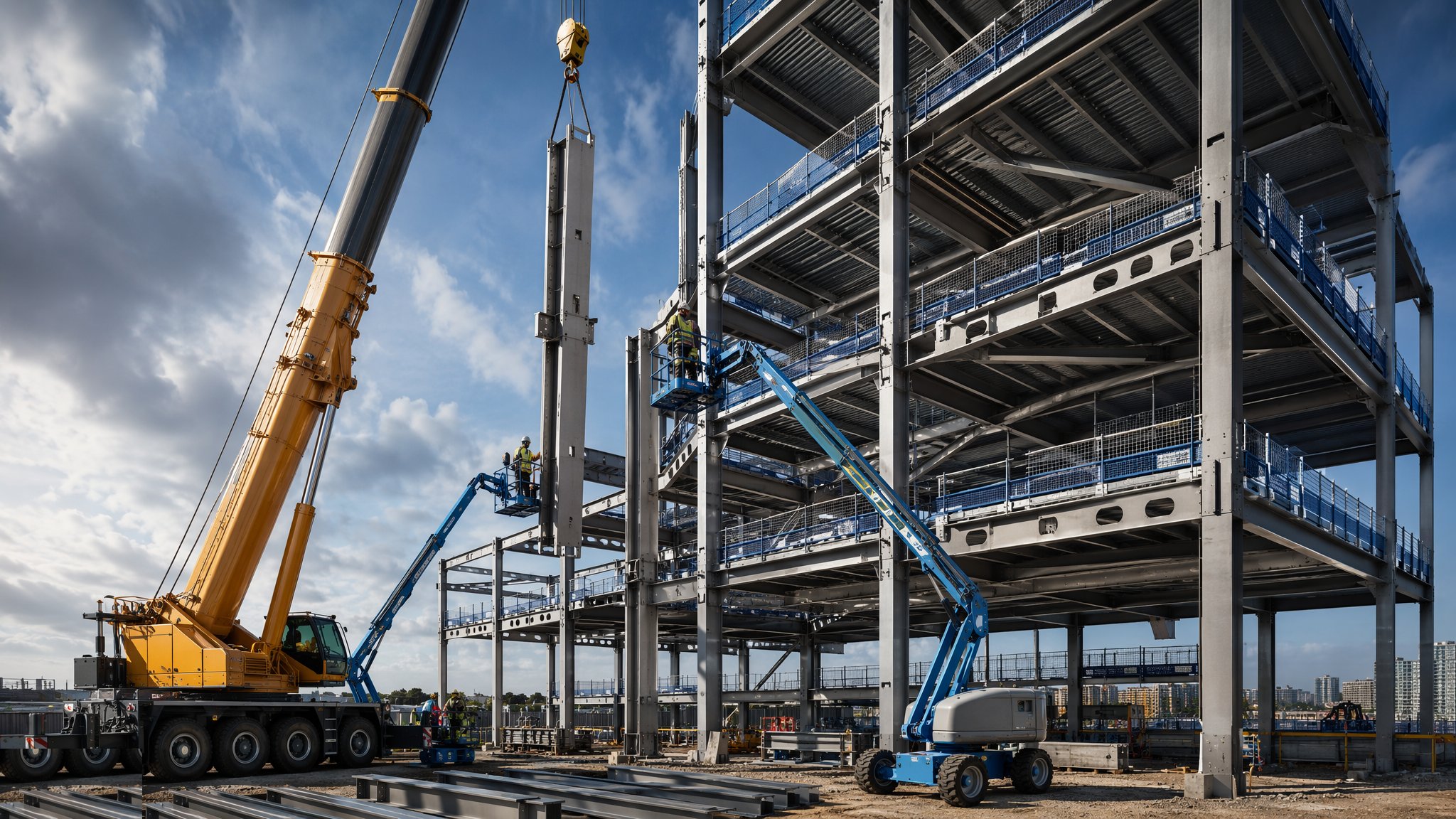
Steel Frame Construction
Fabricated off-site, erected at speed - bolted skeletons for frames that fly up.
Open processCanonical guide: Residential & Housing
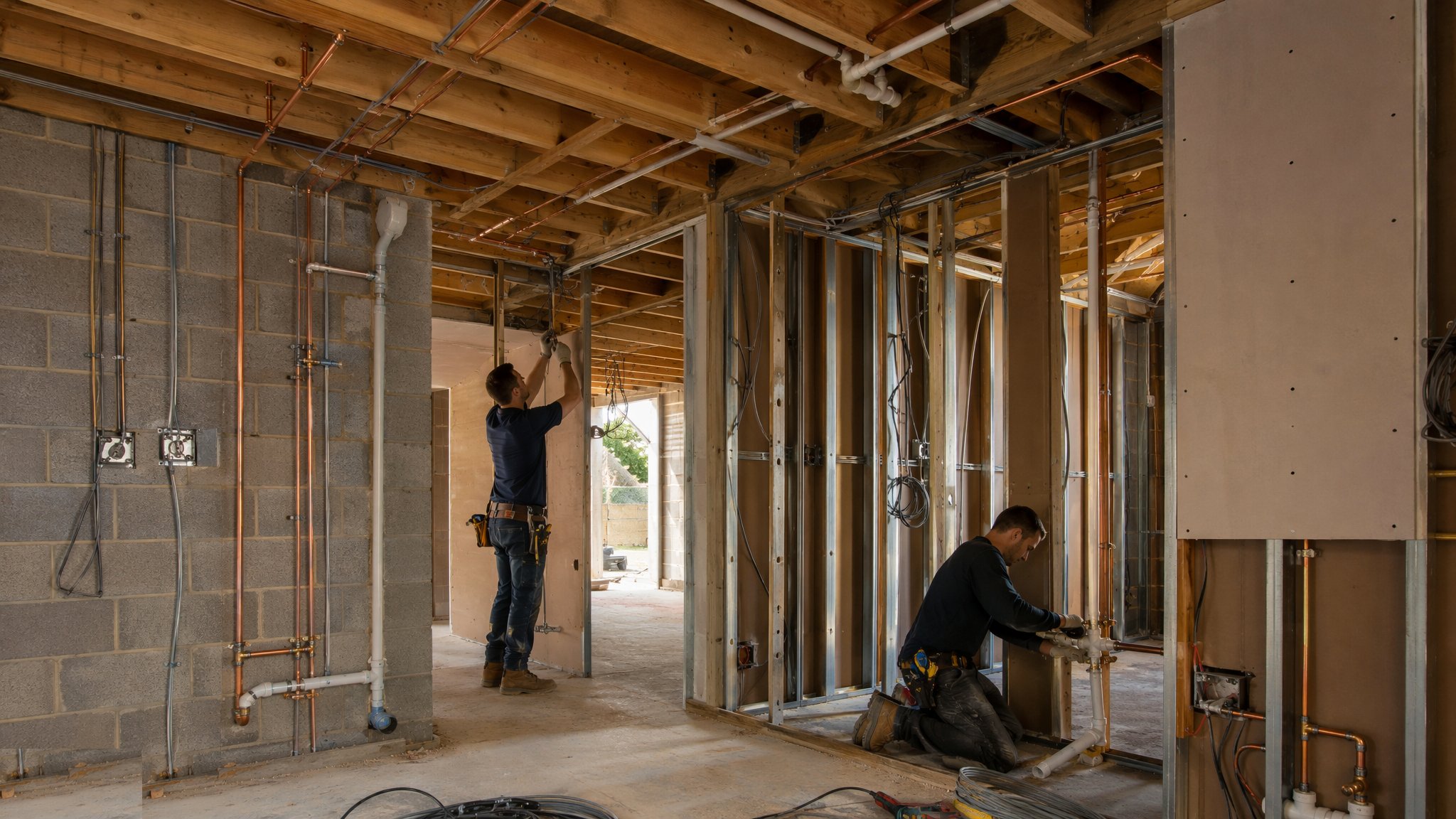
MEP First Fix
Ducts, pipes, cables and containment - the hidden nervous system, installed before the walls close.
Open processCanonical guide: Residential & Housing
Telecommunications in depth
About Telecommunications
The three guides in this sector cover telecom towers and masts - foundations and steelwork on hilltops, rooftops and verges; fibre network installation, ducted and blown through live streets; and exchanges and equipment rooms, fitted out to exacting power, cooling and security standards. The corridor and streetworks methods upstream link through to their canonical guides.
A thousand small sites run as one programme
Telecoms construction is logistics wearing a hard hat. No individual site is technically difficult - a mast base is a few cubic metres of reinforced concrete, a fibre chamber is a precast box, an equipment room fit-out is a small MEP package - but the asset only works when hundreds of sites are complete and connected, so the programme is the product. Rollout contracts are priced per site or per metre, and margin lives in repetition: standard details, standard RAMS, standard reinstatement, and gangs that move site to site without relearning anything. The failures that erode that margin are administrative, not technical: permits refused, wayleaves unsigned, traffic management booked wrongly, a chamber installed 200 millimetres off the duct line.
The client's acceptance regime matches the scale. Every site is audited against the standard - photos of the foundation reinforcement before the pour, duct proving and mandrel tests, fibre splice loss records, as-built GIS coordinates - and handed over in batches. A defect rate of a few percent across a thousand sites is a full-time remedial operation, so quality is designed into the standard detail and policed by sample audit rather than inspected site by site.
Access is the hidden half of the programme. Urban sites are rented corners of rooftops, lampposts and street furniture; rural sites are hilltops reached by farm tracks that need upgrading before a crane can stand. Every site needs a signed wayleave or lease before work starts, and the legal pipeline is managed like a supply chain - a site whose paperwork slips is a gap in the rollout that no amount of gang productivity can close.
Streetworks: the real constraint
Fibre and duct networks in the UK are built under the New Roads and Street Works Act: notice periods to the highway authority, permit schemes in most urban areas, fixed traffic management templates, and reinstatement to the specification for the reinstatement of openings with its guarantee periods. The permit regime dictates the programme more than the ground does - a 200-metre urban duct route is a few days of excavation wrapped in weeks of notices, and a permit overrun or a failed reinstatement inspection costs fees and, worse, credibility with the highway authority that the next fifty permits depend on.
In the UAE the equivalent control sits with the municipality and the roads authority - RTA in Dubai - plus the telecoms operator's own standards, with the added discipline that telecoms ducts share corridors with DEWA and district cooling services in a dense, reserved utility corridor. Coordination drawings and NOCs (no-objection certificates) from every utility whose corridor you cross are the permit currency, and work proceeds junction by junction under approved traffic diversions. The heat changes the materials conversation too: duct and chamber installations in ground that reaches 50 degrees at shallow depth need bedding and surround specs that keep the duct line stable, and blown-fibre work is scheduled to cooler parts of the day to protect both the product and the crew.
Masts, rooftops and the civils that carry them
Greenfield masts are foundation engineering on awkward ground: hilltops and farmland with poor access, where the concrete is often mixed on site or pumped long distances and the reinforcement cage for a monopole base - anchor bolts held by template to a few millimetres over the whole group - is the quality-critical item, because the pole arrives on one lorry and bolts down in one lift. If the bolt group is out, the pole goes back and the crane stands down. Rooftop sites invert the problem: the structure is someone else's building, so the work is structural verification, load-spreading grillages, ballast calculations where penetration is not allowed, and getting every kilogram of steel and equipment up a building that was never designed as a site.
Exchanges and equipment rooms are the sector's fit-out end and behave like small data centres: power with battery or generator backup, cooling sized for continuous load, fire detection and suppression, security, and cable management to a standard that will be audited for decades. The commissioning chain runs power first, then cooling, then the optical and radio equipment by the operator's own engineers - the contractor's handover is a certified, powered, cooled, secure room, and the line between construction completion and service integration is drawn sharply in the contract.
Failures and the chain to handover
The classic failures are all repetition failures: duct routes installed with insufficient cover or without draw cord and markers, chambers set at the wrong level so the lid ponds or sits proud of the footway, fibre damaged by over-tensioned pulling, reinstatement that fails inspection and has to be planed and relaid. Individually trivial, in aggregate they are the difference between a profitable rollout and a loss-maker. The other standing risk is utility strike damage to other people's services in the shared corridor, with the same procedural defences as the power sector: drawings, scanning, trial holes, permits to dig.
The process chain per site is short and rigid: survey and permit, civils, prove, install, test, reinstate, audit, handover batch. The chain across the programme is where the skill sits - sequencing gangs so civils, cabling and splicing never wait on each other, keeping the permit pipeline ahead of the gangs, and closing the audit loop fast enough that remedials are done while the gang is still in the area. Telecoms construction rewards programme discipline more than any other utility sector, because nothing on site is hard and everything on the programme is.
Fibre itself has its own test regime that closes the chain: every splice is measured with an optical time-domain reflectometer and logged, every link is tested end to end for loss against a budget calculated per route, and the records become the operator's baseline for fault-finding for the life of the network. A link that passes at 0.5 dB over budget is accepted and then disputed for years; the good contractors test, record and photograph as they go rather than reconstructing the file at handover.
Working at height is the sector's other defining risk. Mast and rooftop work is rigging and antenna work at elevation, with rescue plans, radio-frequency exclusion zones around live antennas, and lifting plans for every panel and feeder run. The power-down coordination on a shared rooftop - whose antennas can be off, for how long, with whose permission - is negotiated with the operators before the riggers climb, and the climb does not start until the RF permit is signed.
Maintenance access outlives the build. Every chamber lid must be reachable by the operator's vehicles, every mast needs a climbing system and fall-arrest provision for the next thirty years, and every equipment room needs door widths and floor loadings that let future kit in. The rollout contractor who builds only for the install crew leaves the operator with an unmaintainable network, and the audit regime exists largely to stop exactly that - which is why the standard details cover guard rails, step irons, lifting eyes and signage as carefully as they cover ducts and cables. Done well, the finished network is invisible from the day it opens; done badly, the remedial crews never really leave the network.