Sewers, treatment plants and pumping stations - the infrastructure nobody visits.
Wastewater work is tunnelling, pipe-jacking, deep chambers and process civils - often in live urban streets, always in someone's way, and usually below the water table. The corridor civils, dewatering and shaft-sinking methods are shared with the transport and water sectors, linked below; what distinguishes this sector is what flows through the assets when you finish.
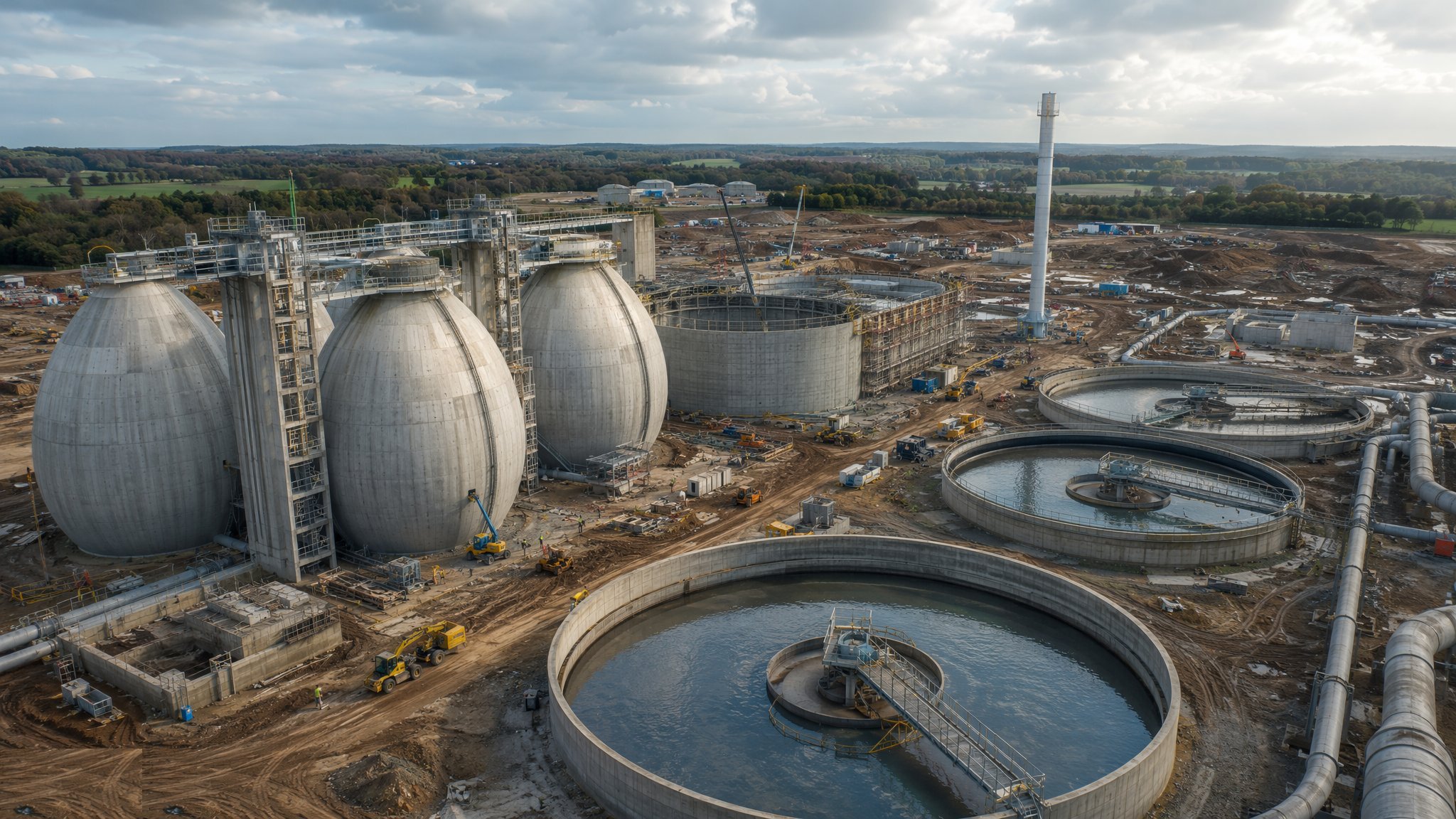
The process map - 4 guides
Each one is a full guide: overview, variants, numbered steps, plant, testing, safety and defects.
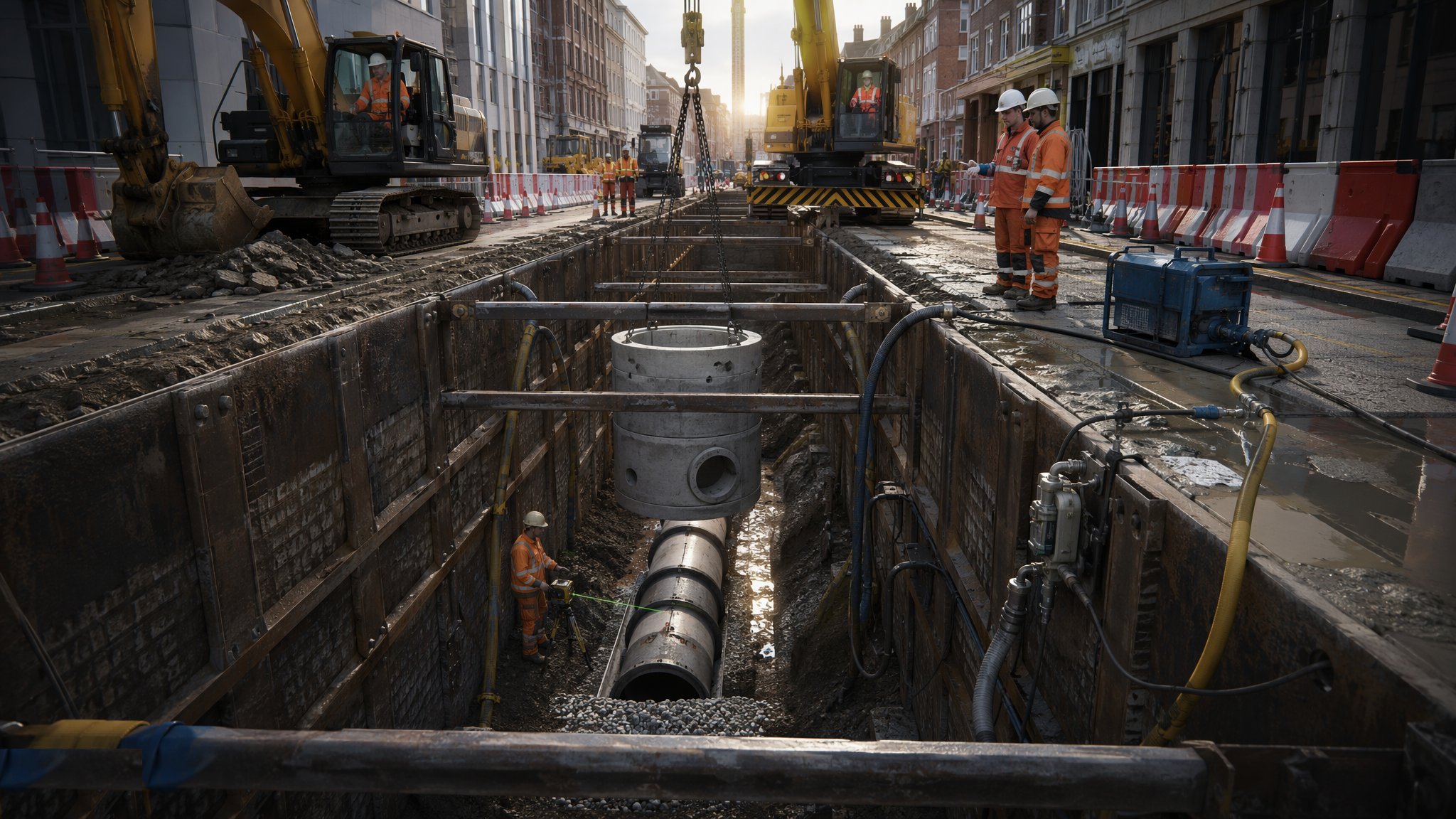
Sewer Network Construction
Gravity sewers laid in open cut to exact line and gradient, manholes at every change of direction, rising mains where the levels give up - tested, CCTV-surveyed and adopted before the first house connects.
Open process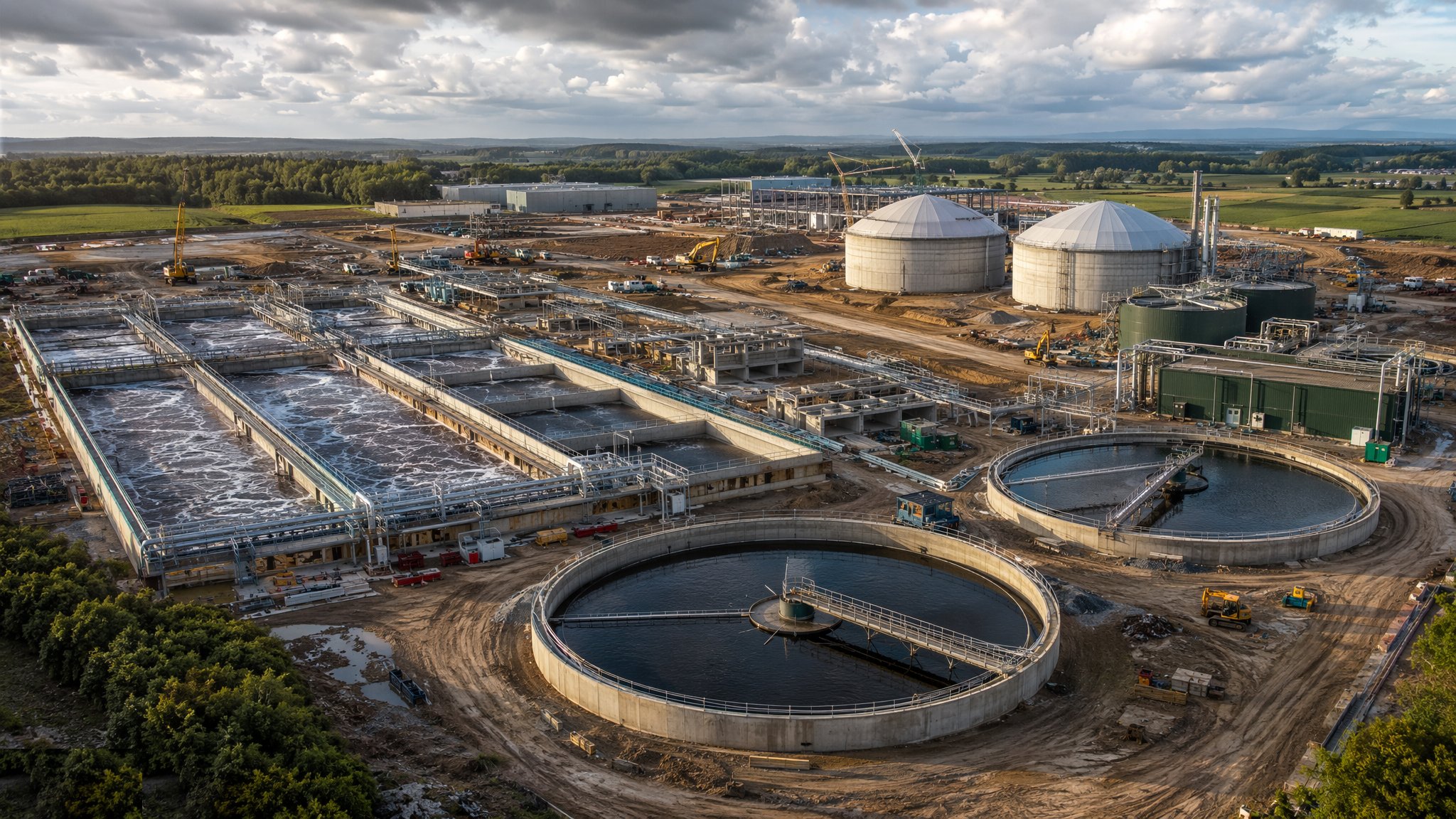
Wastewater Treatment Works Construction
The process civils that turn sewage into clean water - water-retaining concrete tanks, aeration lanes, settlement scrapers, digesters and odour plant - built to hold water before they ever treat it.
Open process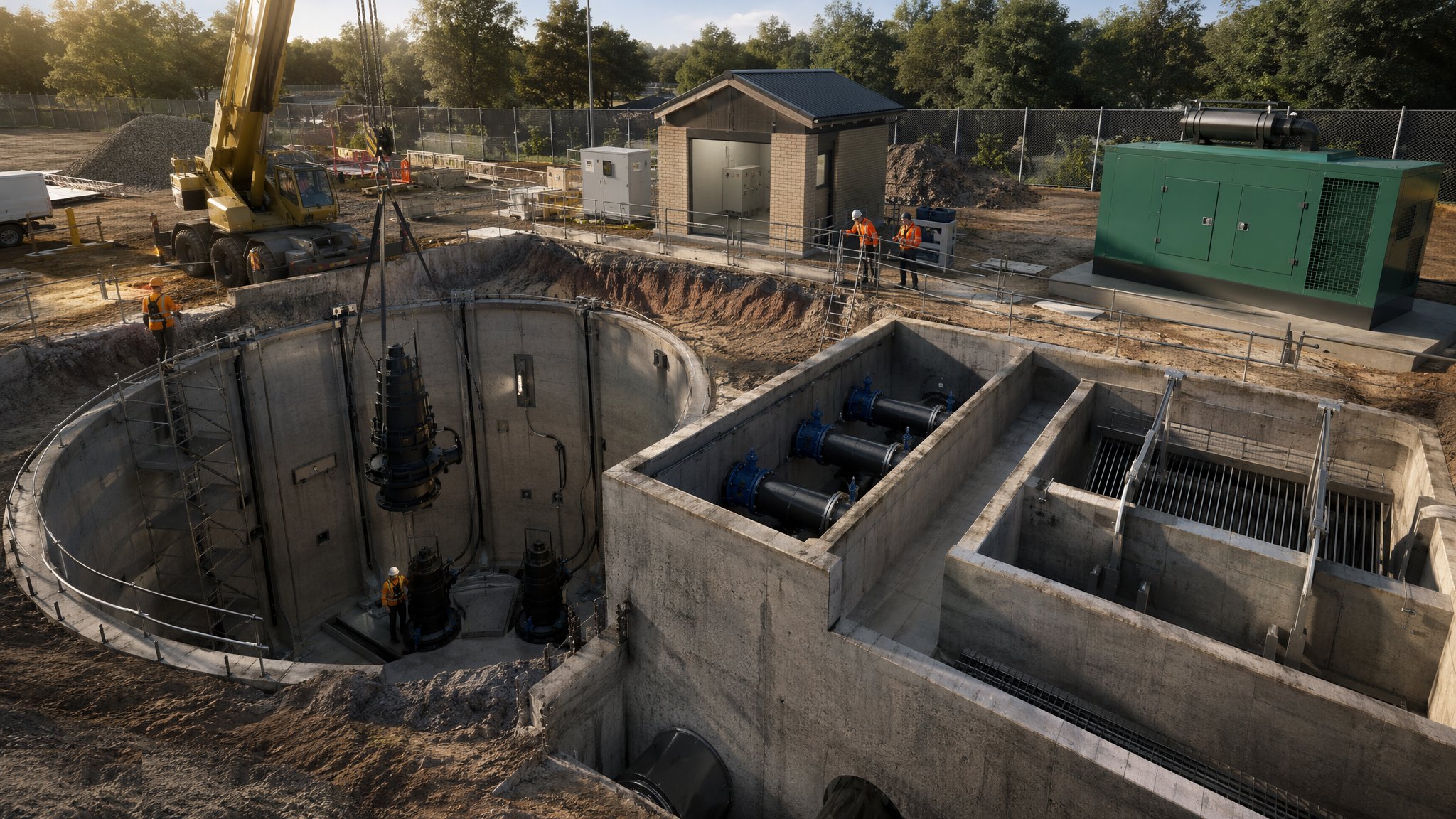
Sewage Pumping Stations & CSOs
The deep wet wells, pumps and overflow structures that keep flat networks moving - built watertight, commissioned against live flows, and expected to run unmanned for decades.
Open process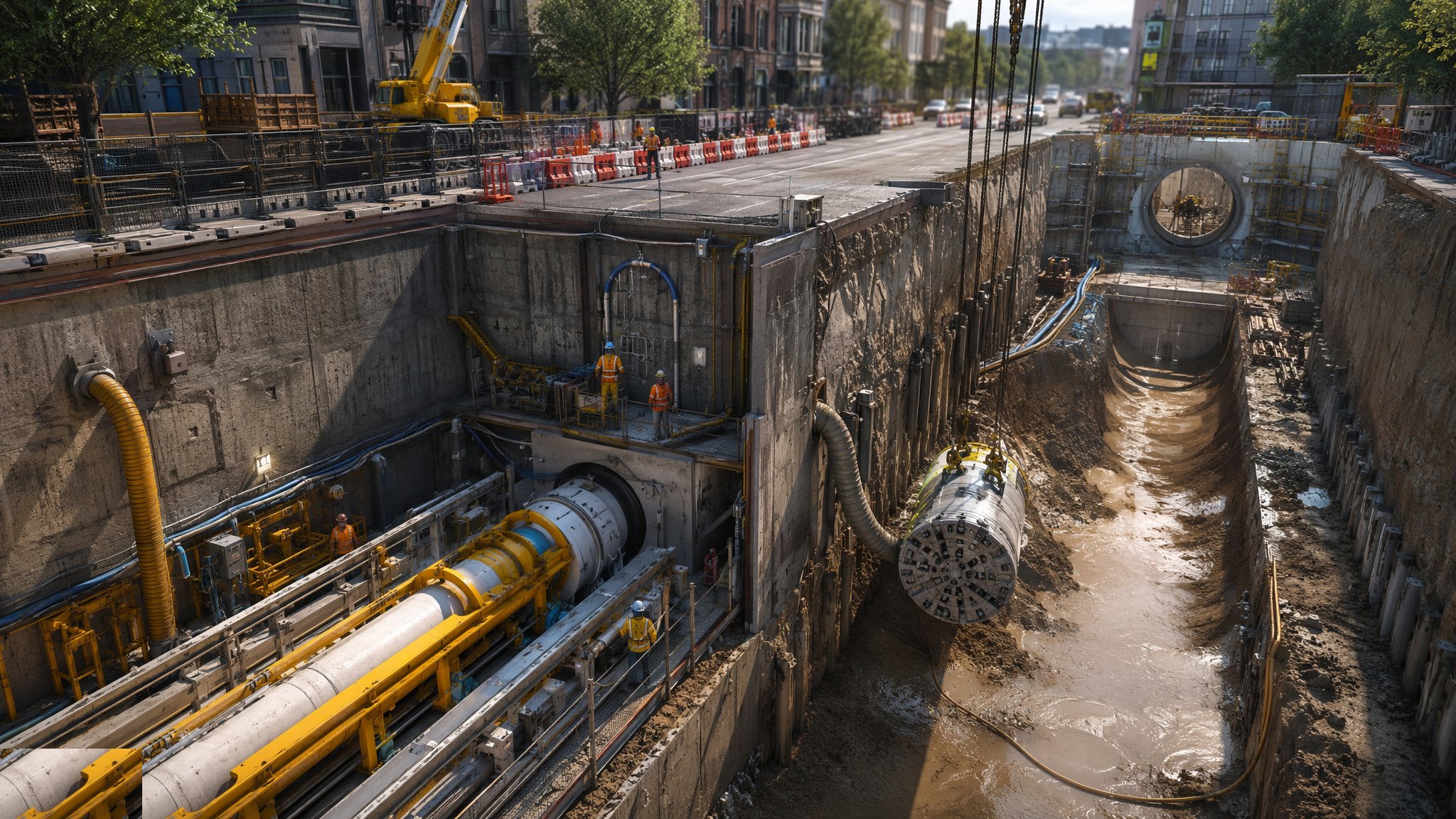
Utility Tunnels & Pipe Jacking
No-dig sewer and utility installation - microtunnels and pipe jacks driven between shafts to millimetre accuracy under roads, railways and rivers the city cannot afford to open.
Open processShared methods used in this sector
These guides are owned by other sectors - the canonical page lives there - but the method is the same here. Cards open the guide at its home sector.
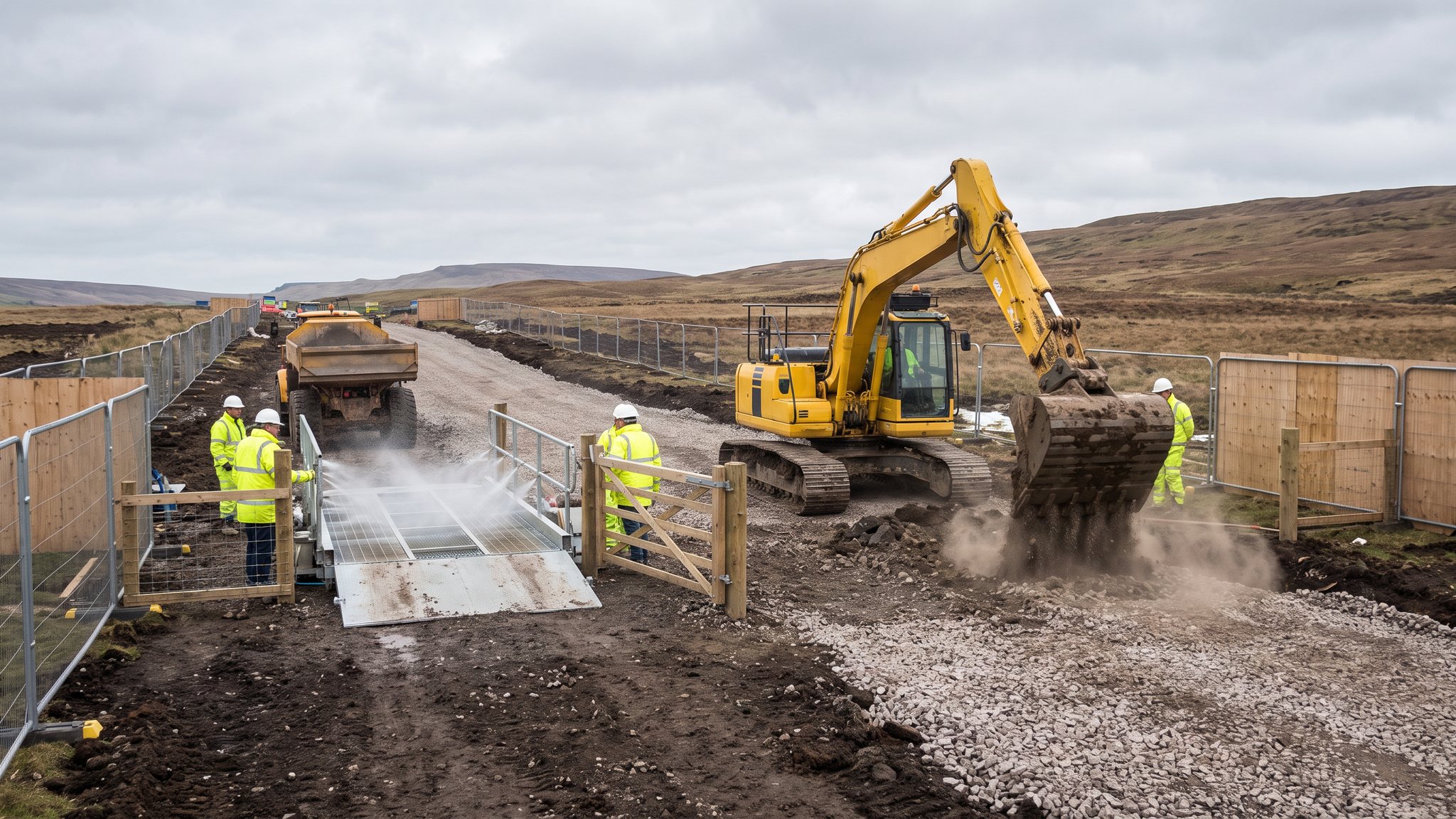
Corridor Access & Enabling Works
Turning a length of route - often a live highway - into a controlled, approved, workable construction corridor.
Open processCanonical guide: Roads & Highways
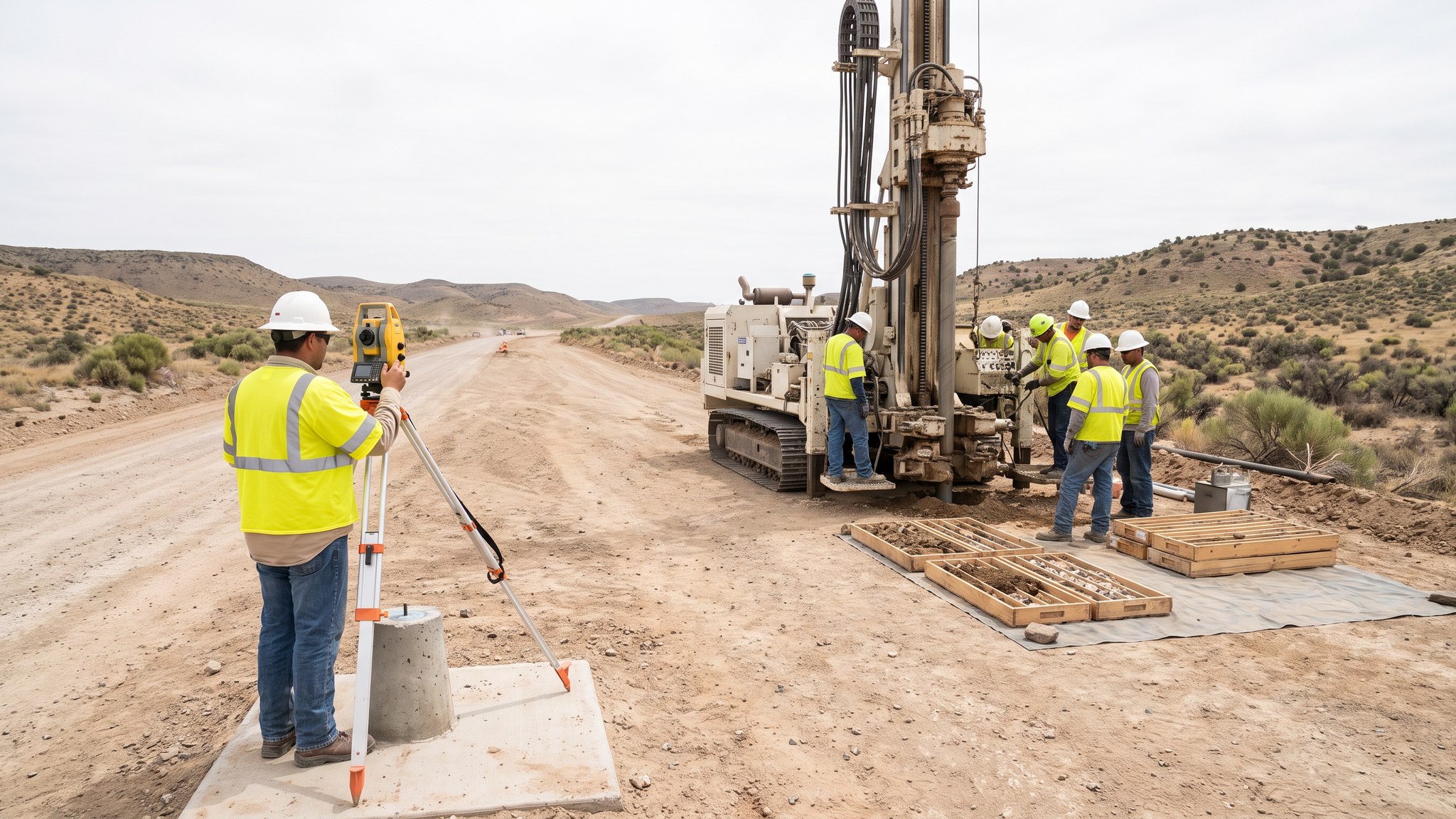
Survey Control & Ground Investigation
Corridor control networks and the ground investigation that tells you what the road, bridge or tunnel is actually standing on.
Open processCanonical guide: Roads & Highways
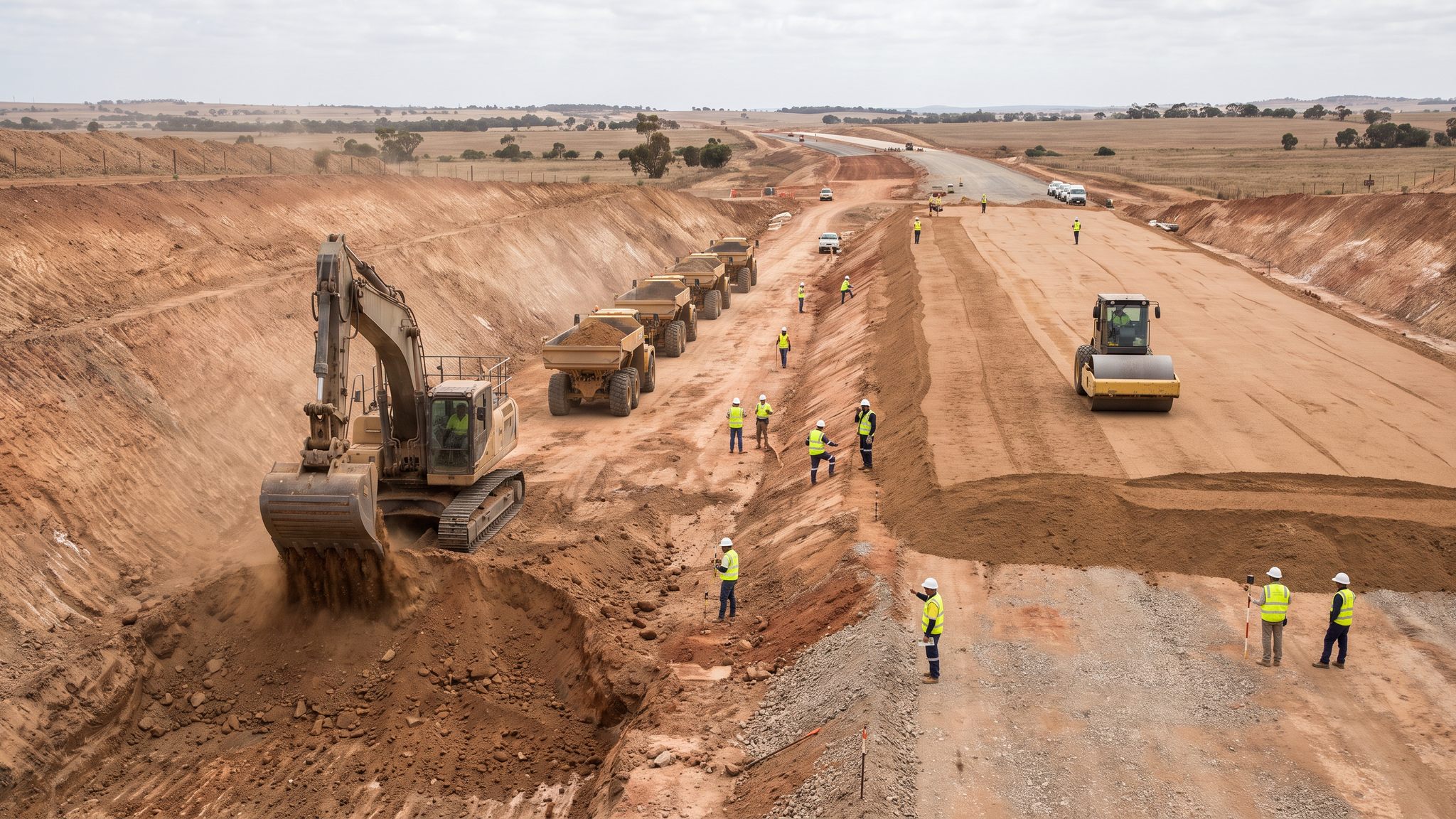
Bulk Earthworks - Cuttings & Embankments
Moving hundreds of thousands of cubic metres to build the corridor's shape - cuttings, embankments and the formation everything sits on.
Open processCanonical guide: Roads & Highways
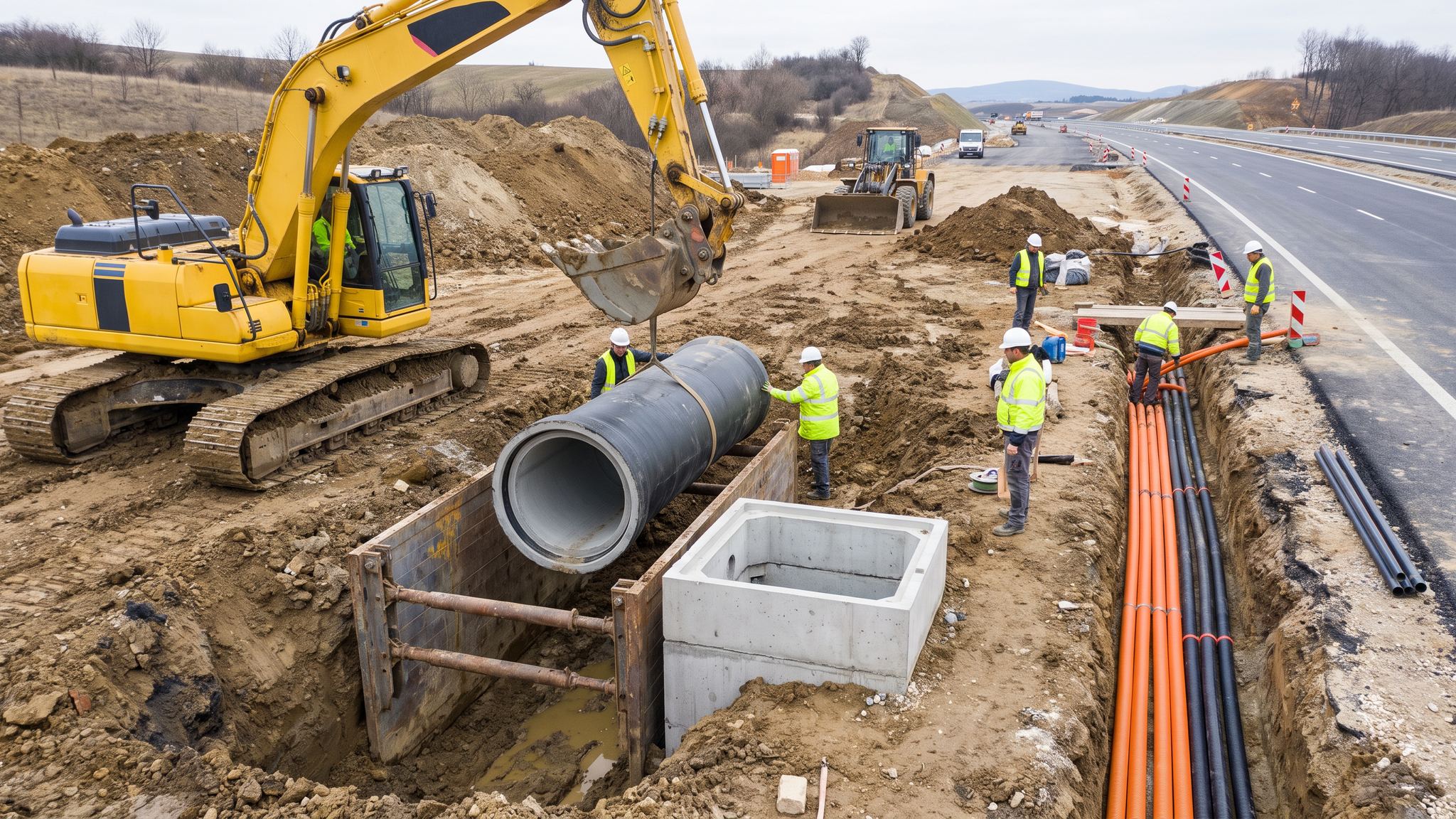
Drainage & Utility Corridors
Pipes, ducts, chambers and culverts - the buried networks installed before the pavement goes over them.
Open processCanonical guide: Roads & Highways
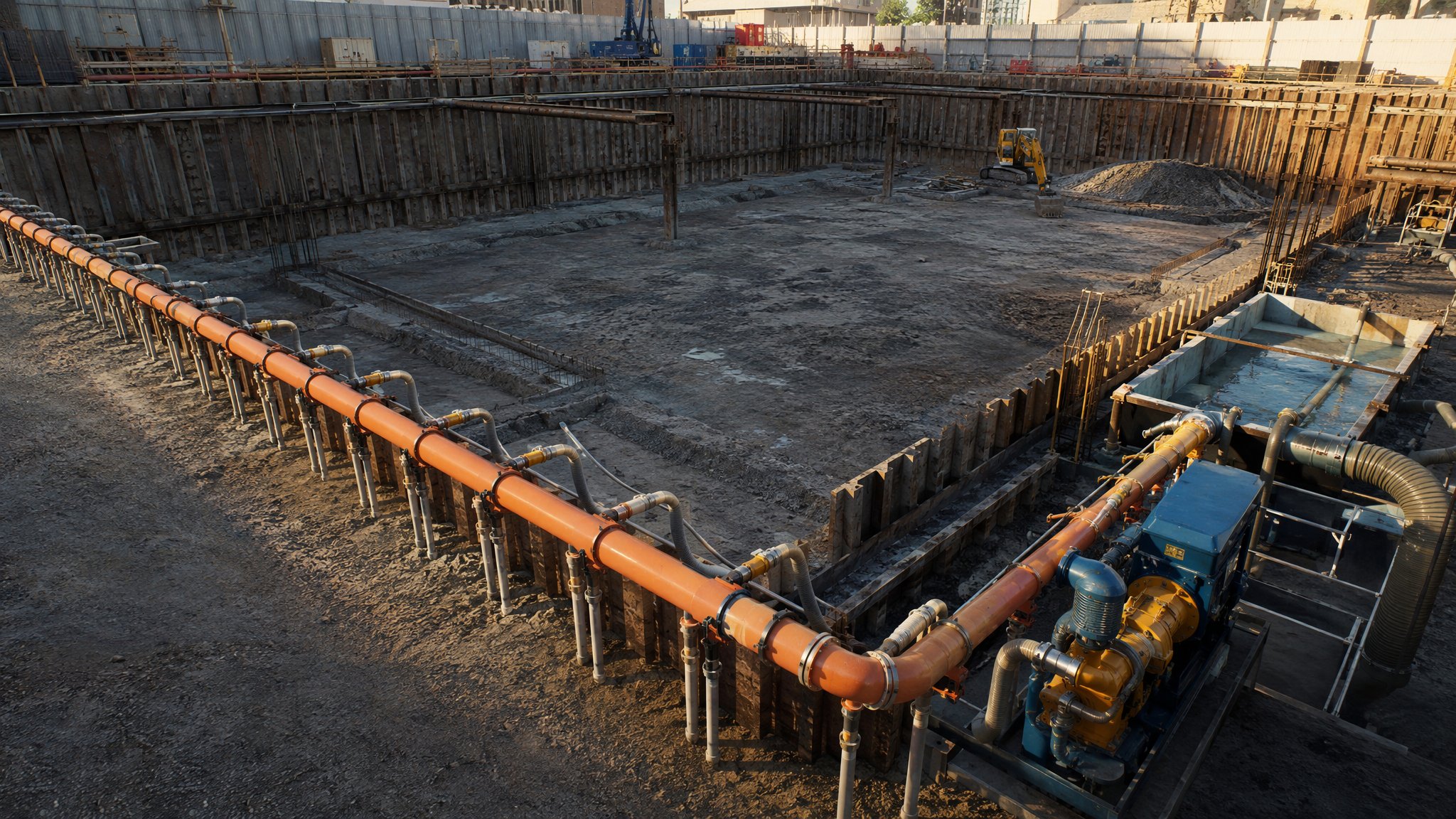
Dewatering & Groundwater Control
Keeping the dig dry - pumps, wellpoints and cut-off walls against an enemy that never sleeps.
Open processCanonical guide: Residential & Housing
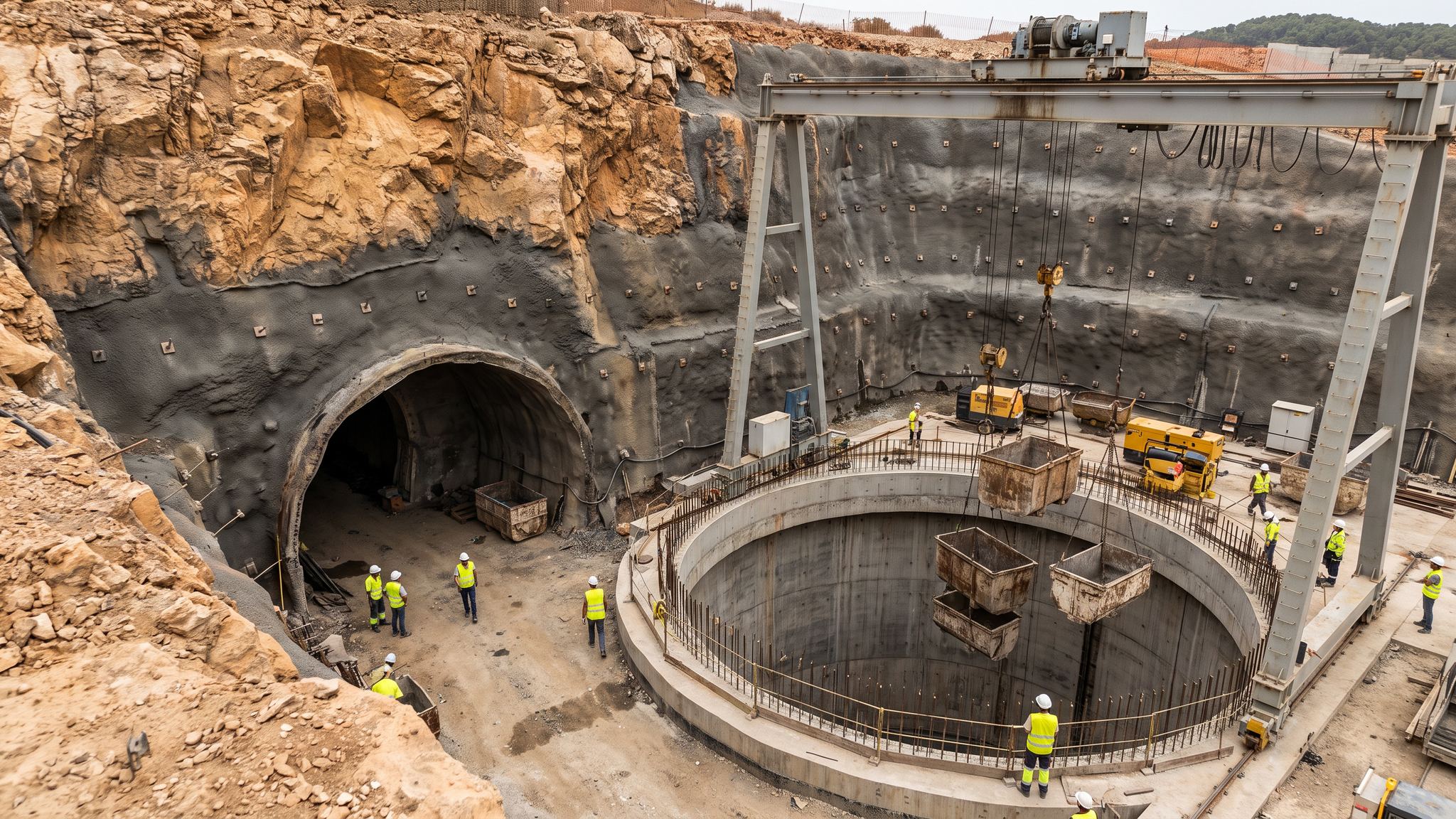
Shafts & Portals
The deep excavations that let tunnelling begin - launch and reception shafts, and the portal structures where the tunnel meets daylight.
Open processCanonical guide: Tunnels & Underground
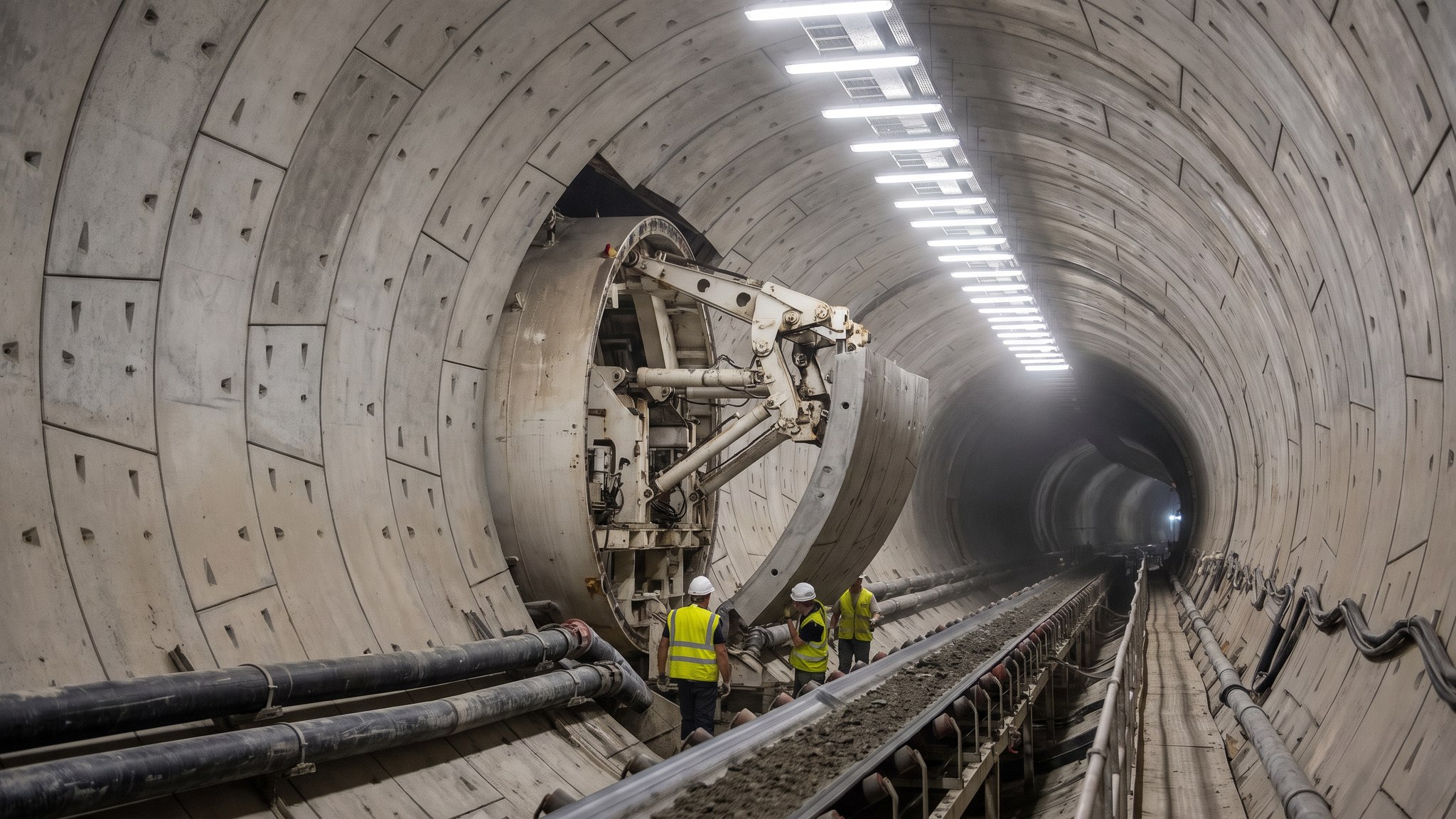
TBM Tunnelling & Segmental Lining
Mechanised tunnelling: the machine, the muck, and the gasketed precast rings that become the finished tunnel.
Open processCanonical guide: Tunnels & Underground
Wastewater & Sewerage in depth
About Wastewater & Sewerage
The four guides in this sector cover sewer network construction - open-cut and trenchless; wastewater treatment works, where process civils meet odour control and a commissioning regime measured in biological performance, not just pressure tests; sewage pumping stations; and utility tunnels and pipe-jacking, the trenchless end of the trade where the drive happens underground and the surface never knows.
Built below the water table, judged by biology
Wastewater is the utilities sector where ground risk concentrates. Sewers run deep because they drain by gravity, which puts them below the water table in most of lowland Britain and below the saline water table on almost any coastal UAE plot. Every deep manhole and every drive shaft is a dewatering and temporary-works problem first and a drainage problem second. Trenchless methods - pipe-jacking and microtunnelling - exist precisely because open-cut at five to eight metres depth in a live street is slow, dangerous and politically impossible; the trade-off is that a failed drive floods a tunnel face instead of a trench, and recovering a stuck machine is a shaft-sinking exercise of its own.
Treatment works add the dimension no other sector has: the asset is commissioned biologically. Concrete, steelwork and mechanical plant can be finished and tested, but a sewage works is not handed over until the process performs - the activated sludge or biofilm plant is seeded, the biomass is grown up over weeks, and effluent quality is demonstrated against the discharge consent over a proving period. The programme for a works therefore has a long tail that no amount of concrete acceleration can remove, and experienced planners put the process commissioning on the critical path from day one rather than treating it as an afterthought.
Flow management runs through everything. The existing network does not stop while you build, so over-pumping and flow diversion are standing items on the prelims of any live-network scheme: diesel pumps sized for peak wet-weather flow, standby pumps, fuel contracts and noise attenuation for plant that runs all night beside housing. When an over-pump fails at three in the morning, the result is a pollution incident and a regulator call-out, so the contingency is engineered with the same seriousness as the permanent works.
Regulation and the buying structure
UK sewerage sits in the same OFWAT AMP framework as clean water, but the environmental regulator weighs heavier. The Environment Agency sets discharge consents, and the political pressure on storm overflows has pushed combined sewer overflow schemes and storage tunnels to the front of the AMP7 and AMP8 programmes - deep tunnels and big shafts in London, the Midlands and the North West. For the contractor this means tunnelling work packaged by water companies, with specs borrowed from the transport tunnel sector but payment and risk structures borrowed from water frameworks.
In the UAE, sewerage is the emirate municipality's domain - Dubai Municipality for Dubai, with ADDC's wastewater counterpart in Abu Dhabi - and the networks are younger, mostly pumped rather than purely gravitational, and flatter. Flat terrain means lift stations every few kilometres and long rising mains, so the sector there is as much about pumping stations, surge control and odour management as about pipes. Septage tanker operations remain part of the system on the urban fringe, and treatment plant capacity expansions are typically design-build-operate packages where the contractor carries process performance guarantees, which changes the risk conversation at tender fundamentally.
The failures that hurt
Infiltration is the chronic UK failure: groundwater entering the sewer through defective joints until the network is pumping as much rainwater as sewage, overwhelming pumping stations and treatment works and diluting the process. This is why new sewers are air-tested or water-tested length by length and mandrel-tested for deformation on flexible pipe before adoption, and why CCTV surveys before handover are contractual gates rather than courtesies. In the UAE the mirror failure is exfiltration and flotation: sewers in saline groundwater that leak outwards contaminate the ground, and empty GRP or polyethylene structures float if installed without ballast - a buoyancy calculation on every buried tank and chamber is standard practice, not paranoia.
Gas is the acute risk. Sewer work is confined-space work: hydrogen sulphide from septic sewage is toxic, flammable and heavier than air, and it kills quickly at depth. Live sewer connections, man-entry surveys and chamber work run under confined-space procedures with gas monitoring, ventilation, rescue arrangements and trained standby personnel. In hot climates sewage goes septic faster, which raises both the gas risk and the corrosion rate - sulphide attack on concrete crowns is why UAE sewers and wet wells are lined or coated as standard, and why unlined concrete above the waterline in a live wet well has a design life measured in years, not decades.
Third-party damage and public interface complete the failure list. A collapsed trench in a live street, a trench support failure that undermines the adjacent carriageway, or a drive that loses ground beneath a building are the incidents that bring the job to a standstill and the client to the site. The defences are the boring fundamentals done without exception: temporary works designed and checked, trench supports installed as the dig proceeds, services proved by trial holes before excavation, and settlement monitoring where drives pass under structures.
From corridor to commissioning
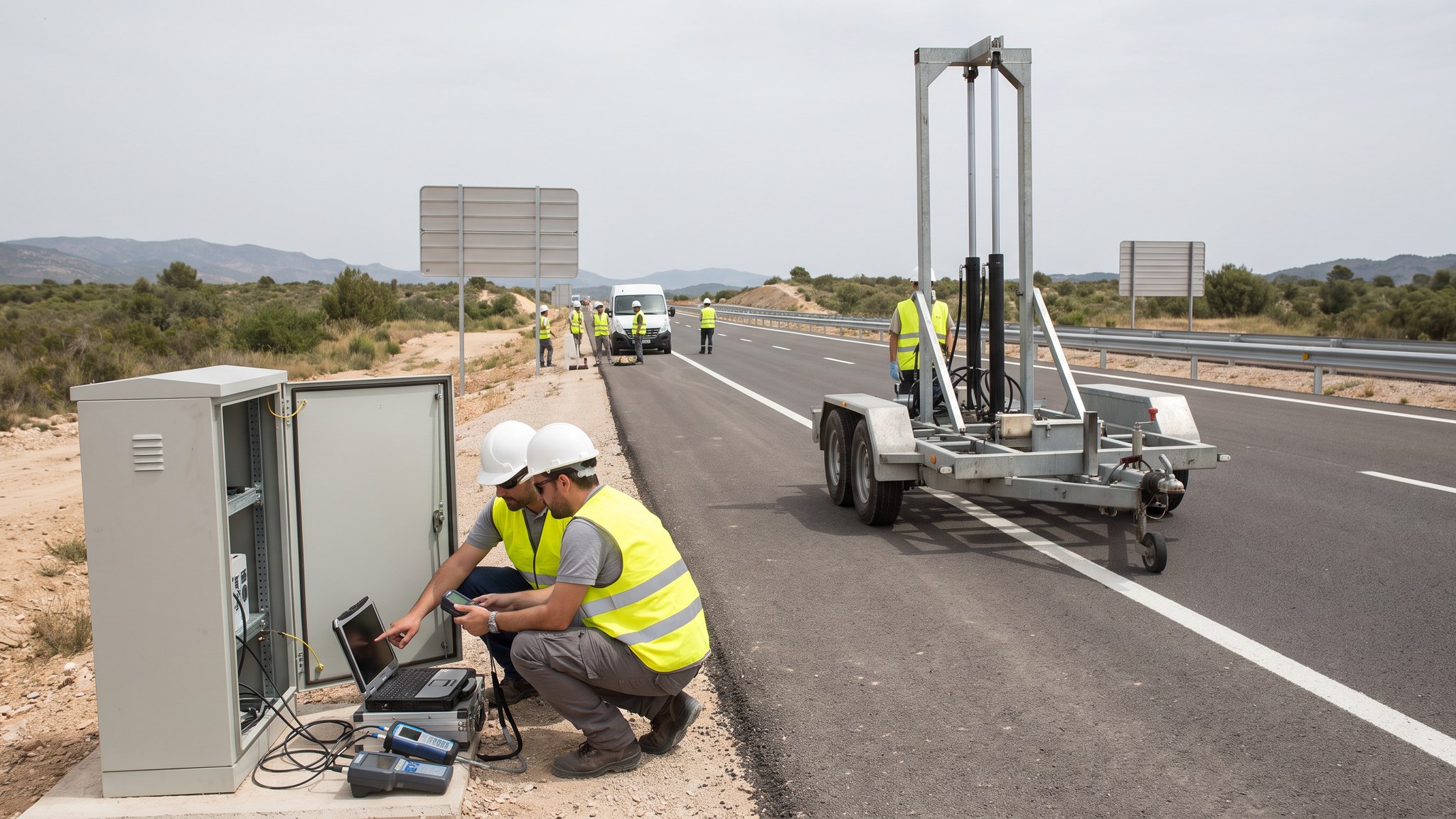
The process chain on a network scheme is corridor access, survey and service location, then the drive or the cut, chamber construction, testing, connection and reinstatement - repeated every few hundred metres. The gates that matter are the ones underground: line and level verified at every pipe, because a gravity sewer laid to the wrong gradient cannot be adjusted later; joint integrity proved before backfill; and the connection into the live system made under permit with flows managed, usually by over-pumping, because the existing sewer does not stop while you tie into it.
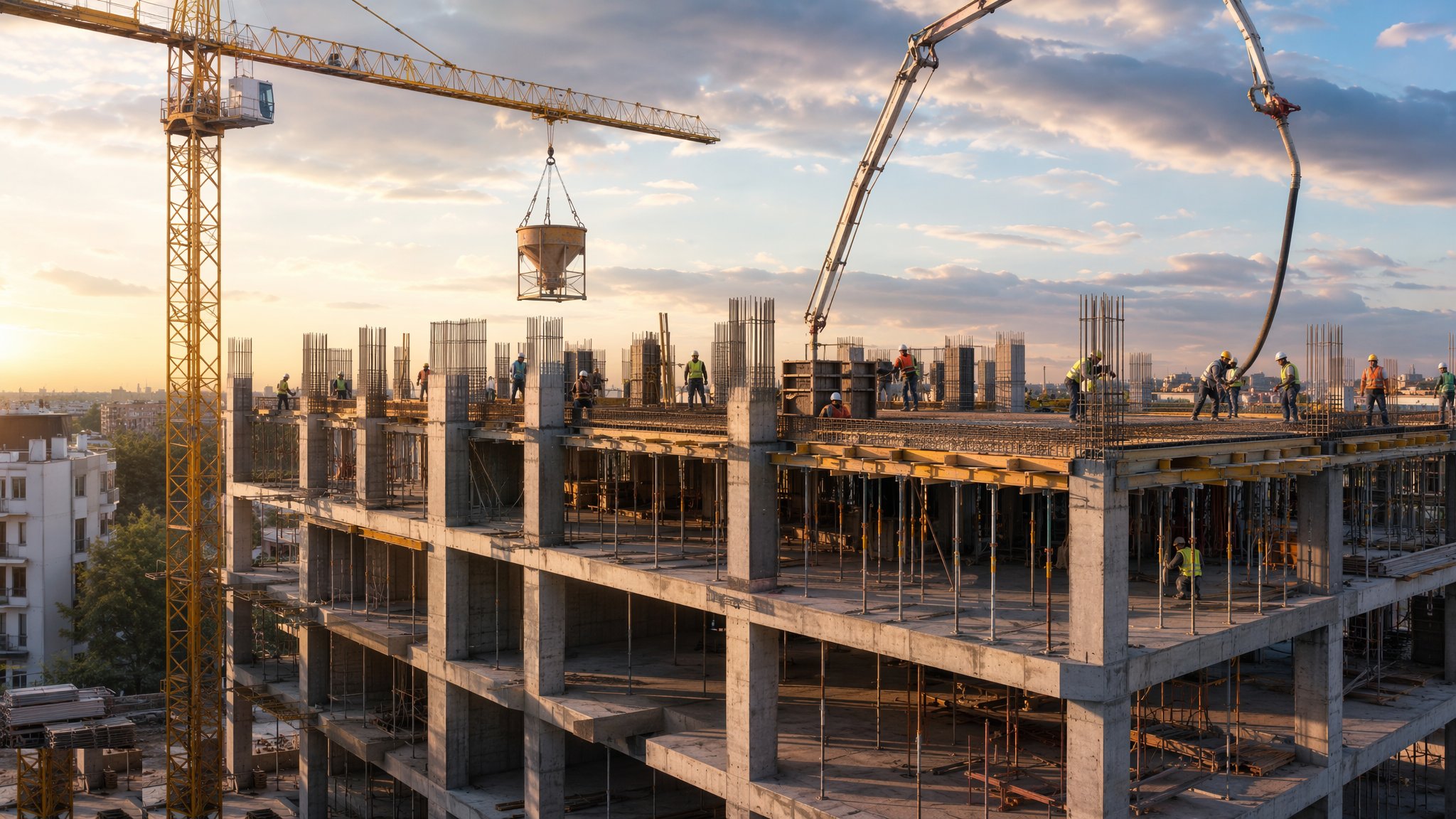
On treatment works the chain is civils first - tanks, which are watertightness-tested like water-sector structures - then mechanical and electrical installation, then dry and wet commissioning of each process stream, then seeding and the proving period. Odour control is built, not added: covered tanks, extraction and treatment of vent air are part of the process design because a works that smells is a works that gets closed down by its neighbours. Handover is against effluent quality and odour performance demonstrated over the proving period, with process guarantees running into the defects liability period - the contractor's exposure lasts long after the concrete has cured.
Pumping stations sit between the two patterns: civils for the wet well and valve chamber, mechanical installation of pumps and rising main, and commissioning against duty and standby performance with simulated flows. The details that bite are hydraulic - surge analysis on long rising mains decides the valve and air-vessel specification, and a station commissioned without proving its surge protection is a burst main waiting for its first power cut. Screenings and grit handling, often treated as fit-out, are in fact part of the process guarantee and are tested with the rest.
Rehabilitation is the quiet half of the UK market: relining existing sewers with cured-in-place liners or sprayed coatings instead of digging them up, and man-entry repairs on the big Victorian brick barrels. The construction content is cleaning and CCTV survey, bypass pumping, liner installation and curing - often by steam or ultraviolet light - then reconnection of every lateral by robotic cutter. It is factory work done inside a live sewer, and the same flow-management and confined-space disciplines apply with the added twist that the 'structure' being worked in is a hundred and fifty years old and nobody has its drawings.