Reservoirs, treatment works and trunk mains - clean water, heavy concrete.
Water infrastructure is concrete and pipework held to drinking-water standards. The enabling works, ground investigation, earthworks and drainage are the shared corridor methods, linked below - the sector starts where the ordinary civils stop. Treatment works are process plants wearing a civil engineer's coat: tanks, filters and chemical plant that must be watertight, cleanable and commissionable to standards most sectors never meet.
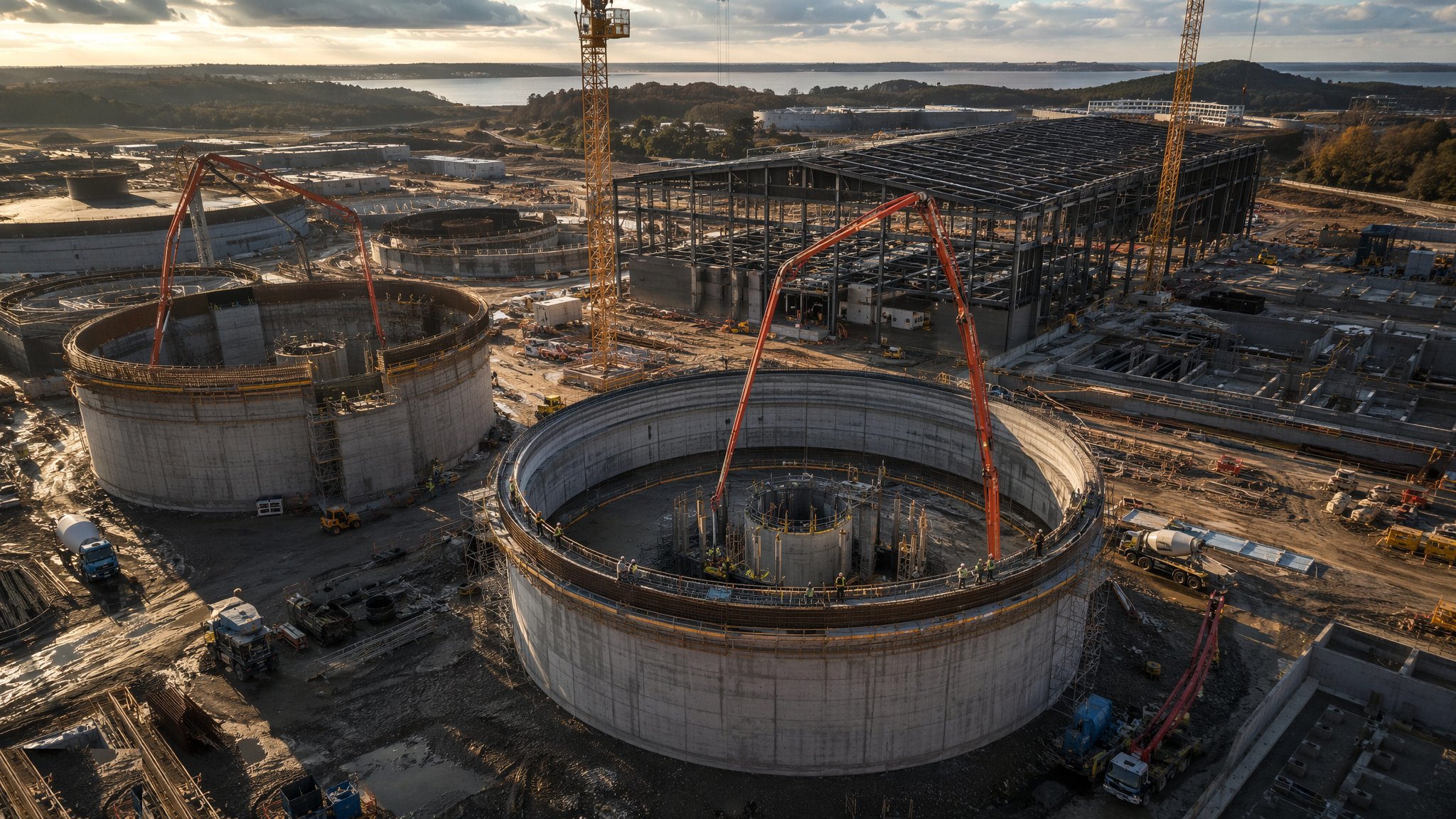
The process map - treatment works to tap
Four guides in build order, in two streams - treatment and storage, then the networks and pumping that carry the water onwards. The corridor civils upstream are shared with the transport sectors and are linked below. Each process is a full guide: overview, variants, numbered steps, plant, testing, safety and defects.
Treatment & storage2
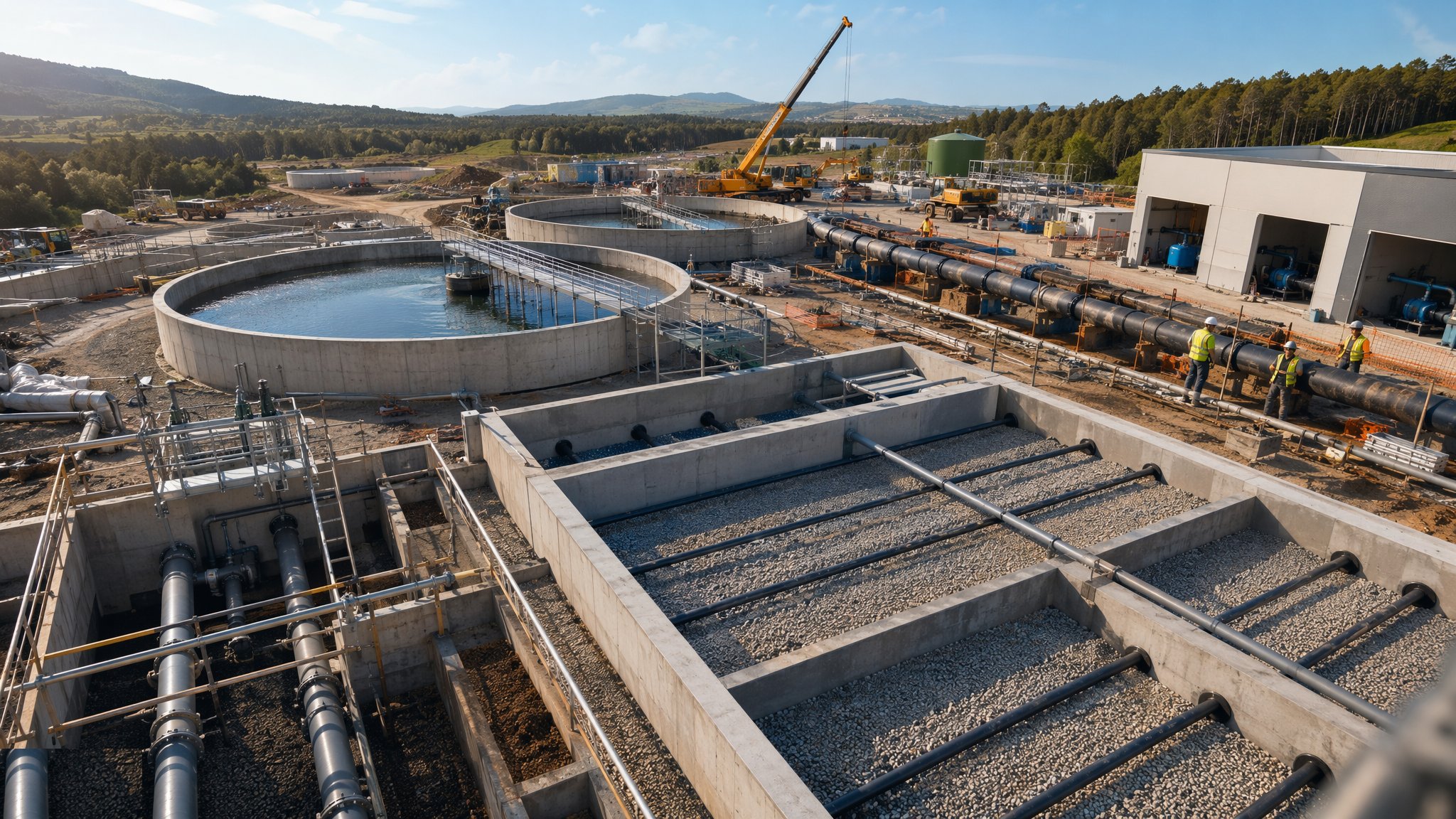
Water Treatment Works Construction
Concrete boxes that must hold water and clean it - water-retaining tanks to BS 8007 and EN 1992-3, filters and clarifiers with their underdrains and nozzles, process pipework and valves threaded between them, washwater recovery, and a tightness test that decides whether the tank exists at all.
Open process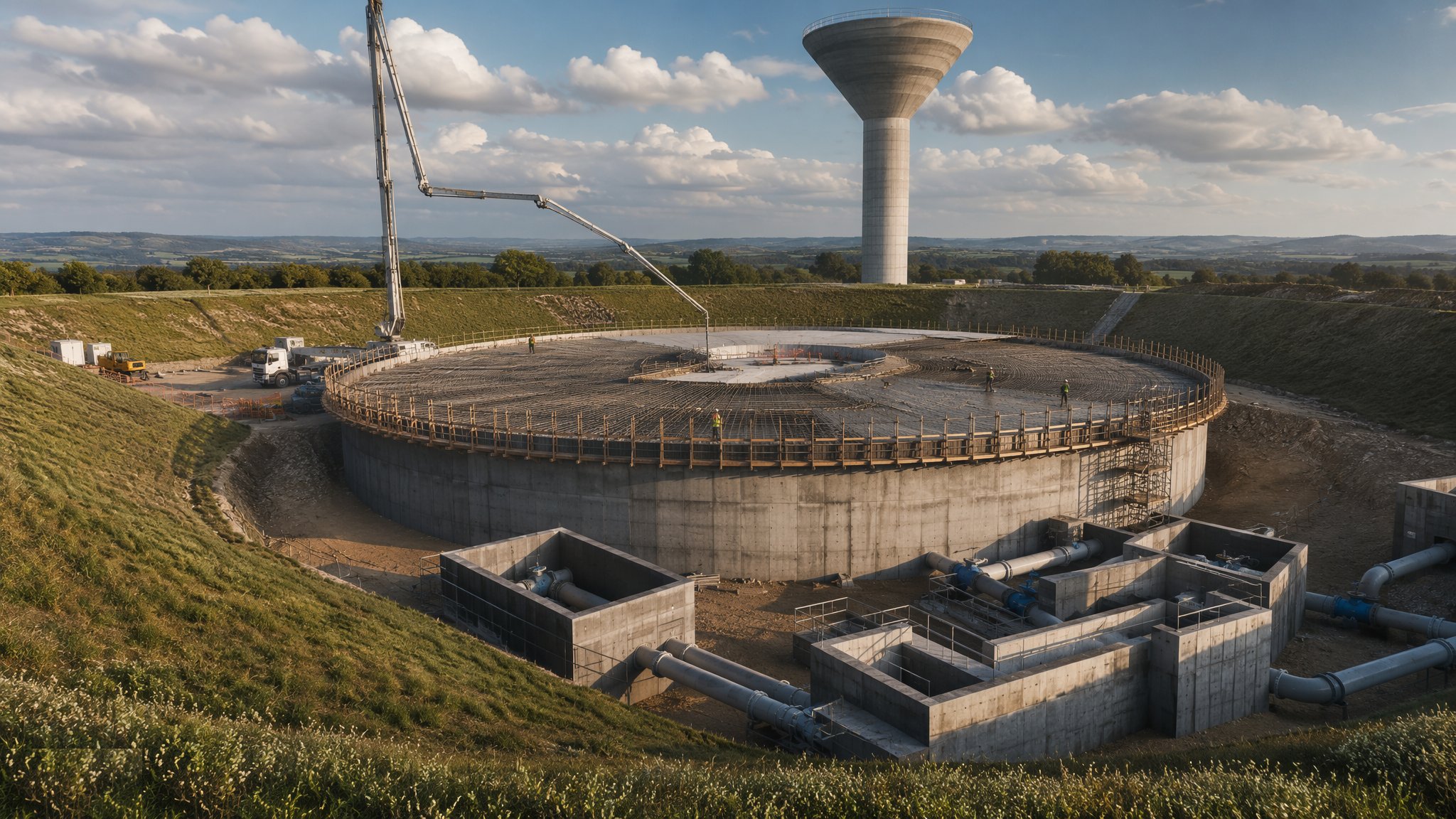
Service Reservoirs & Water Towers
Treated water stored against the day's demand - circular prestressed and rectangular reinforced concrete tanks holding millions of litres, roofs in flat slab, membrane or dome, valve houses and instrumentation at the rim, then cleaning, sterilisation and sampling before the water company lets a drop near the network.
Open processNetworks & pumping2
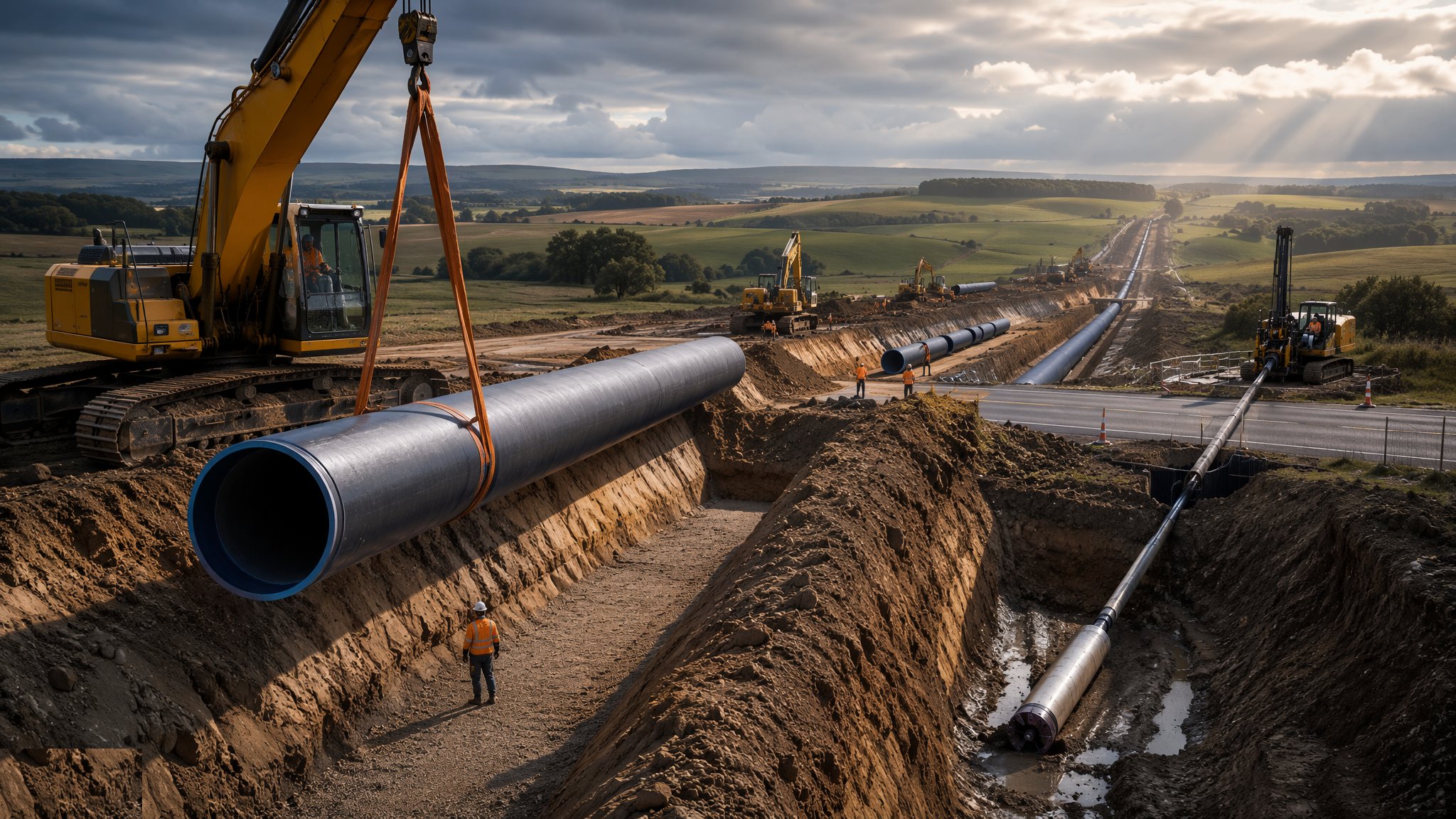
Water Pipelines & Trunk Mains
Long kilometres of buried pressure main - open-cut laying with bedding and surround, thrust boring and directional drilling under the obstacles, ductile iron, PE, steel and concrete pipe, thrust blocks at every bend, then pressure test, swab, chlorinate and connect to a live network that cannot go without water.
Open process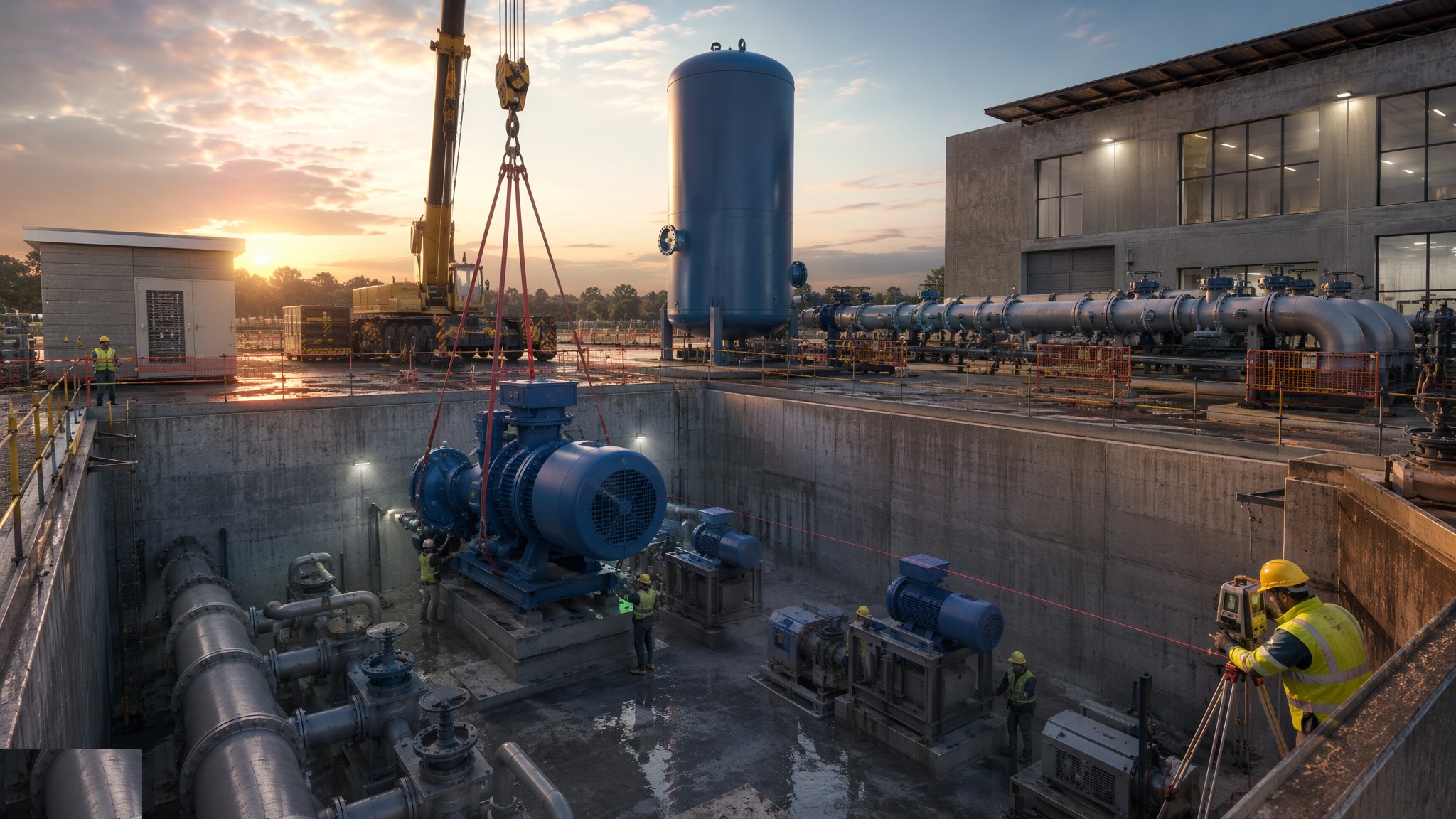
Water Pumping Stations
Civil engineering built around machines - wet wells and dry wells as the concrete, pumps lifted, set and laser-aligned on their plinths, surge vessels taming the pressure waves, the full M&E fit-out with standby power, and witnessed performance tests proving the duty before the network trusts it.
Open processShared methods used in this sector
These guides are owned by other sectors - the canonical page lives there - but the method is the same here. Cards open the guide at its home sector.
Corridor Access & Enabling Works
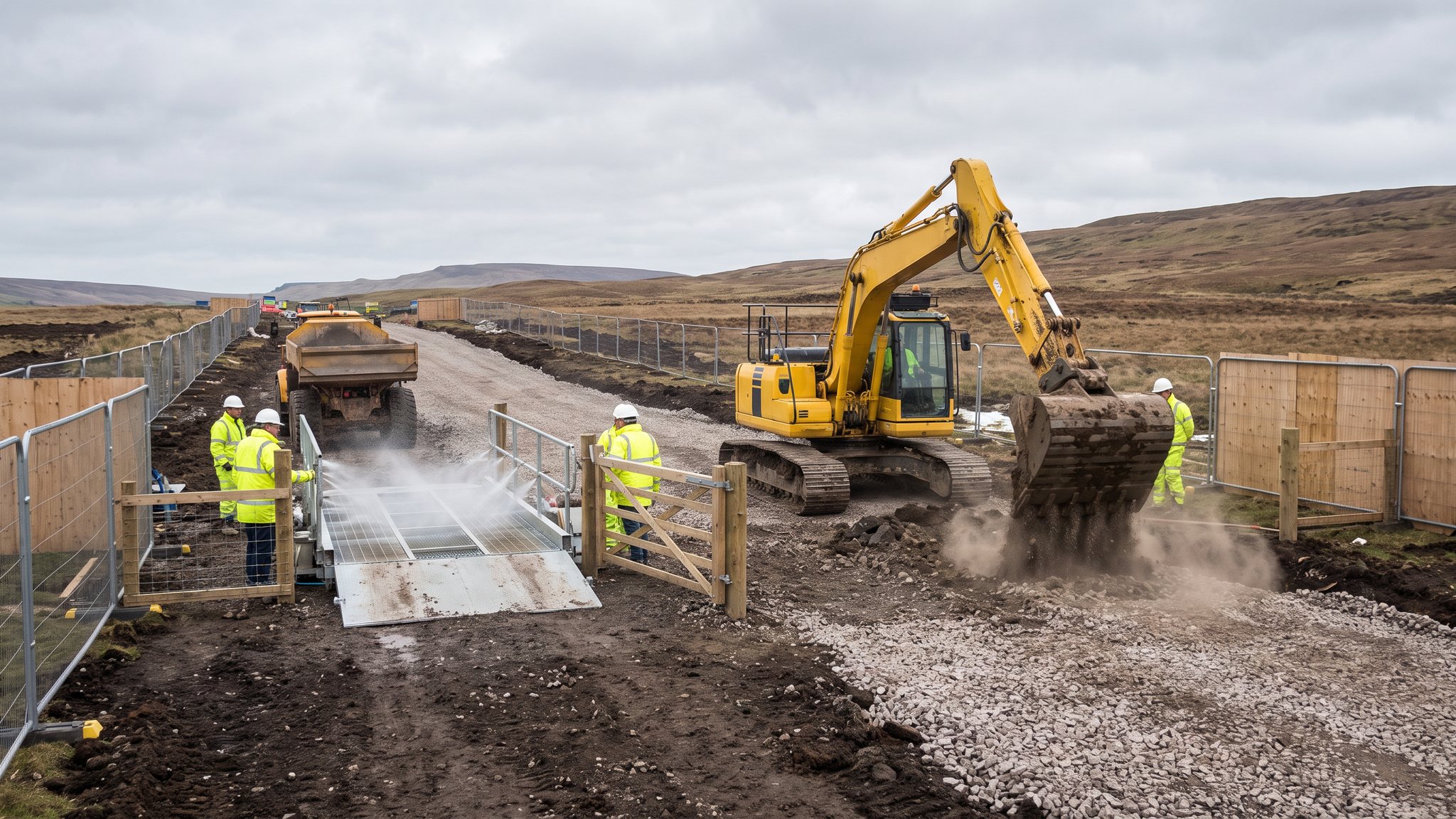
Turning a length of route - often a live highway - into a controlled, approved, workable construction corridor.
Open processCanonical guide: Roads & Highways
Survey Control & Ground Investigation
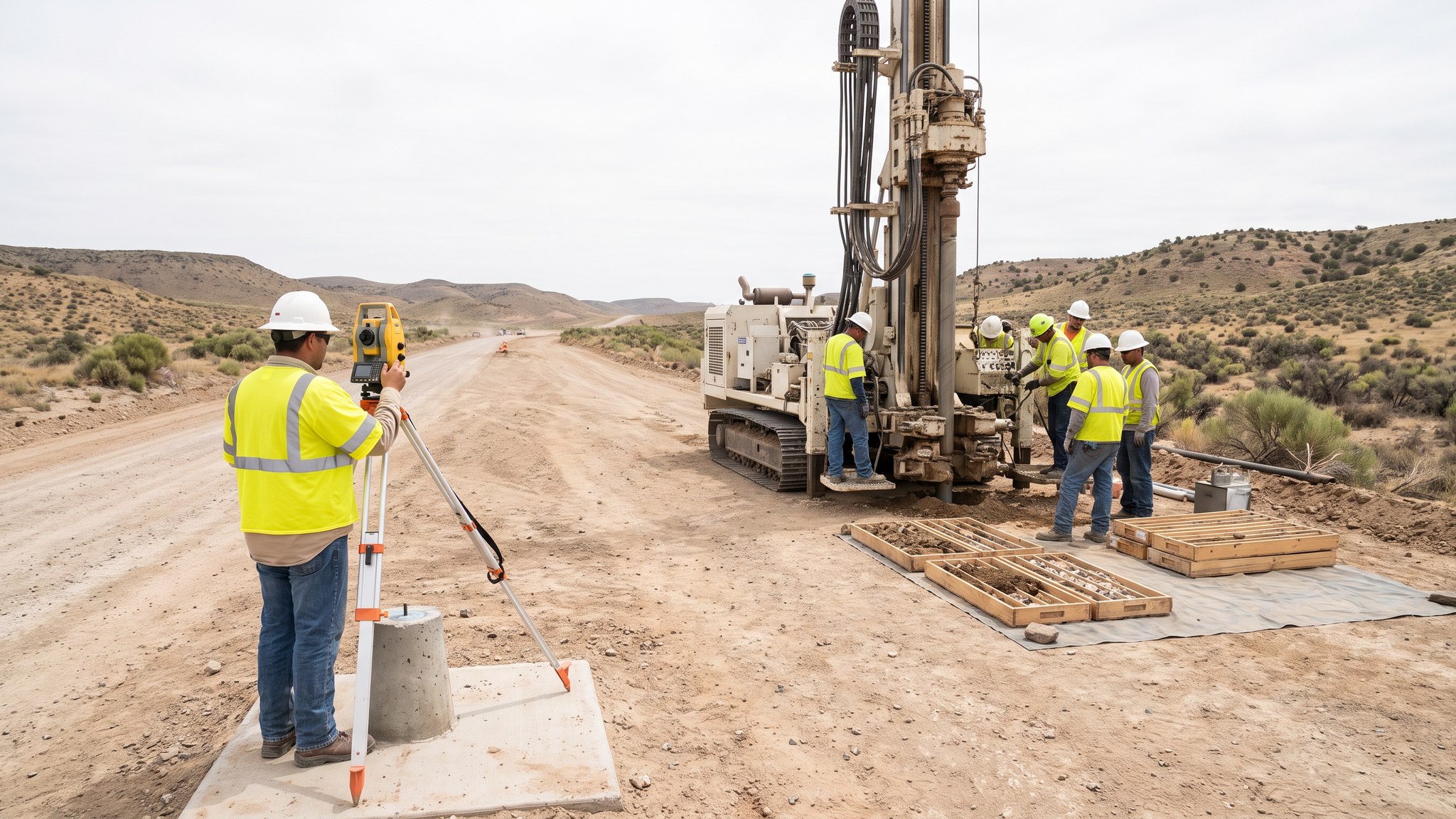
Corridor control networks and the ground investigation that tells you what the road, bridge or tunnel is actually standing on.
Open processCanonical guide: Roads & Highways
Bulk Earthworks - Cuttings & Embankments
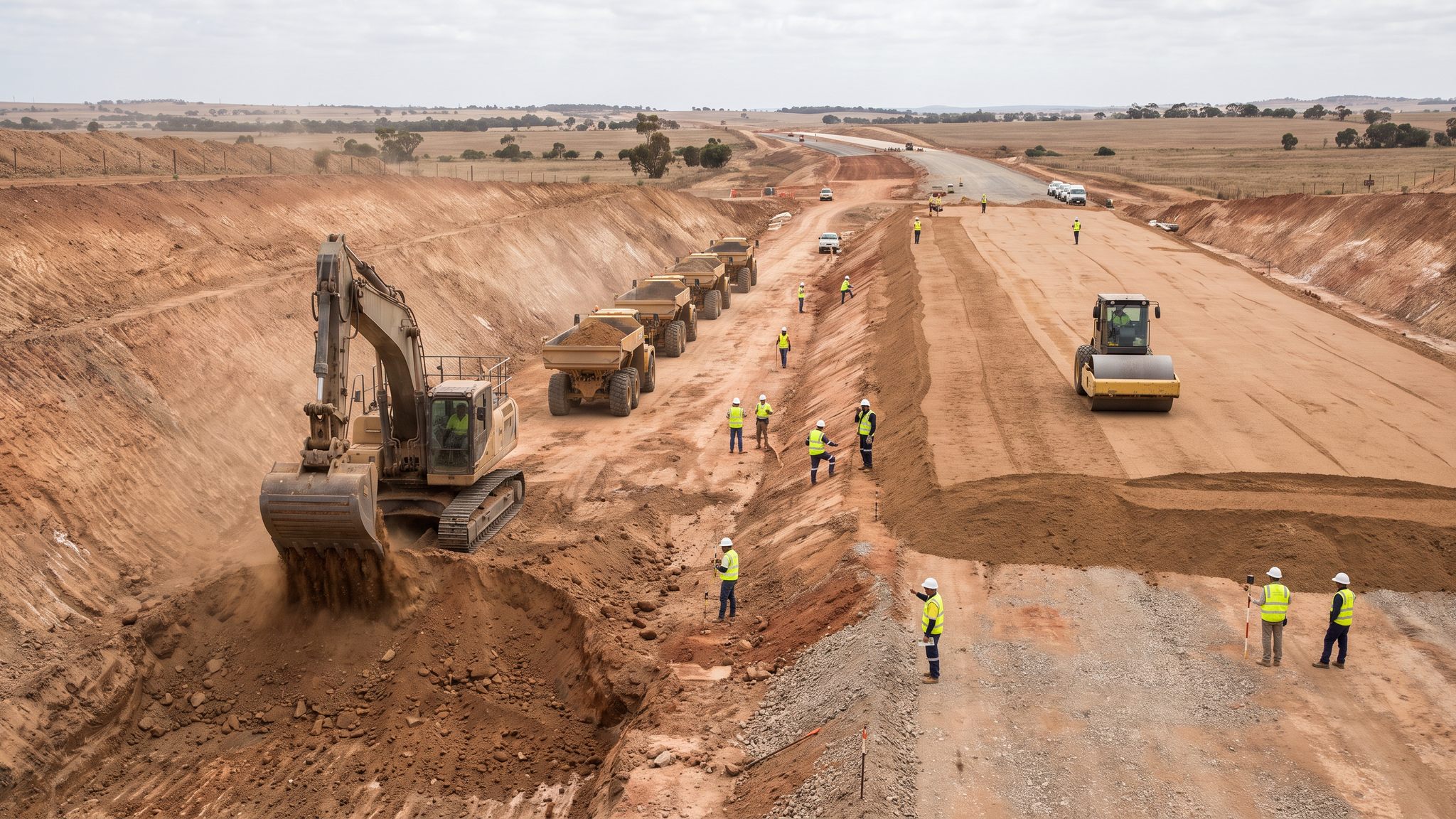
Moving hundreds of thousands of cubic metres to build the corridor's shape - cuttings, embankments and the formation everything sits on.
Open processCanonical guide: Roads & Highways
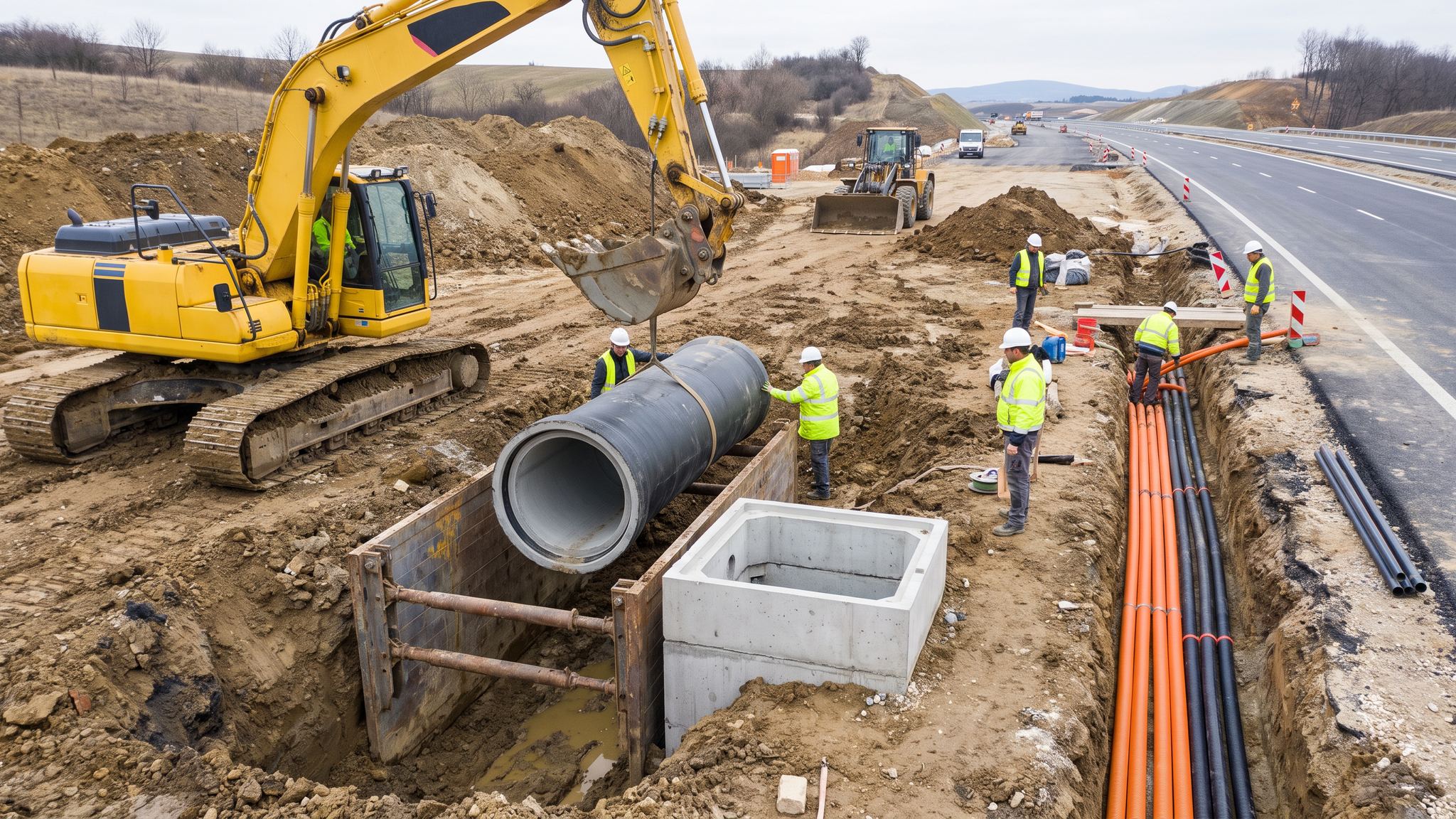
Drainage & Utility Corridors
Pipes, ducts, chambers and culverts - the buried networks installed before the pavement goes over them.
Open processCanonical guide: Roads & Highways
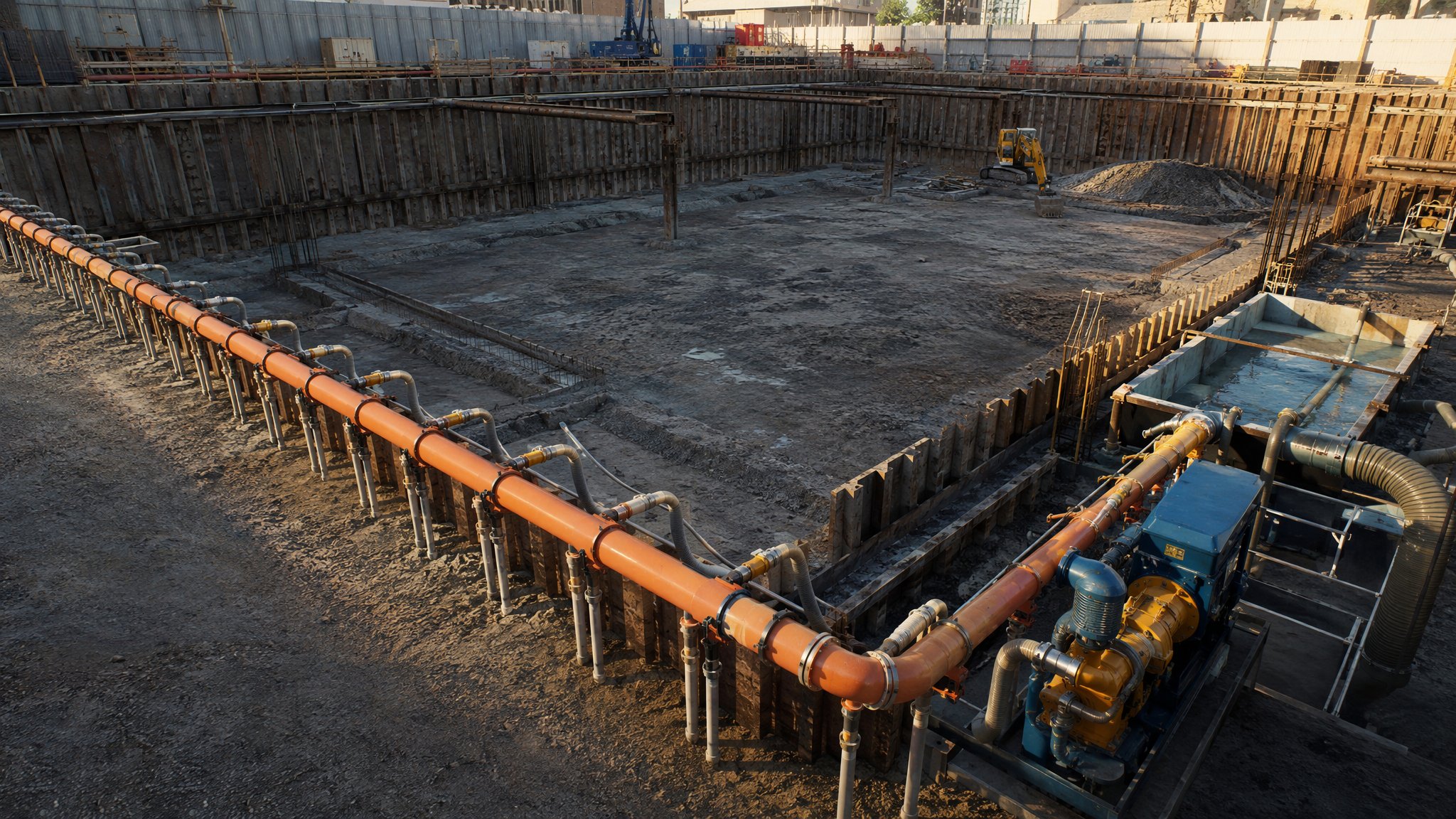
Dewatering & Groundwater Control
Keeping the dig dry - pumps, wellpoints and cut-off walls against an enemy that never sleeps.
Open processCanonical guide: Residential & Housing
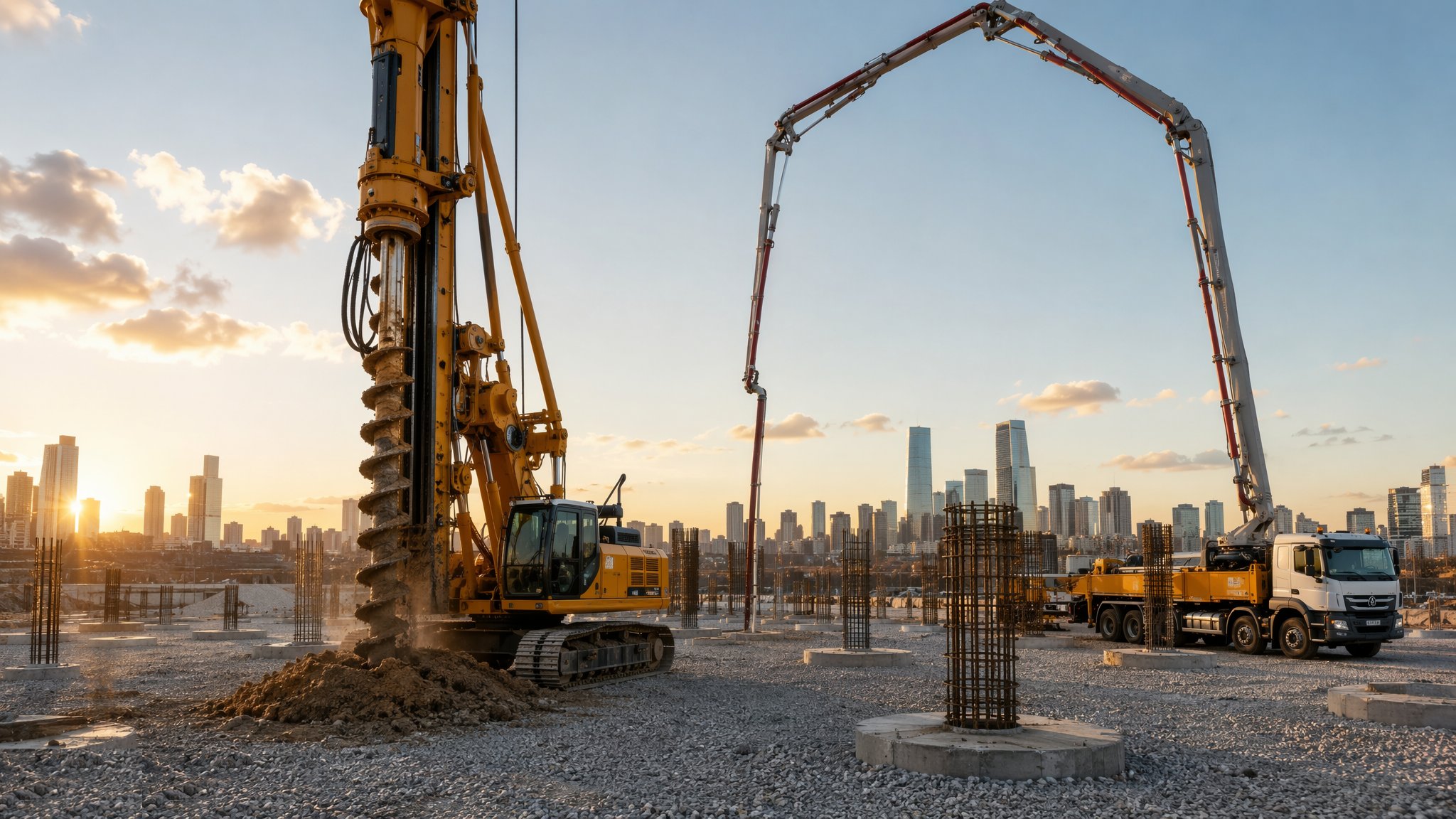
Piling & Deep Foundations
Driven, bored and CFA piles - carrying the building down to ground that can actually take it.
Open processCanonical guide: Residential & Housing

Concrete Frame Construction
Columns, walls and slabs cast in situ - the ribcage of a residential tower.
Open processCanonical guide: Residential & Housing
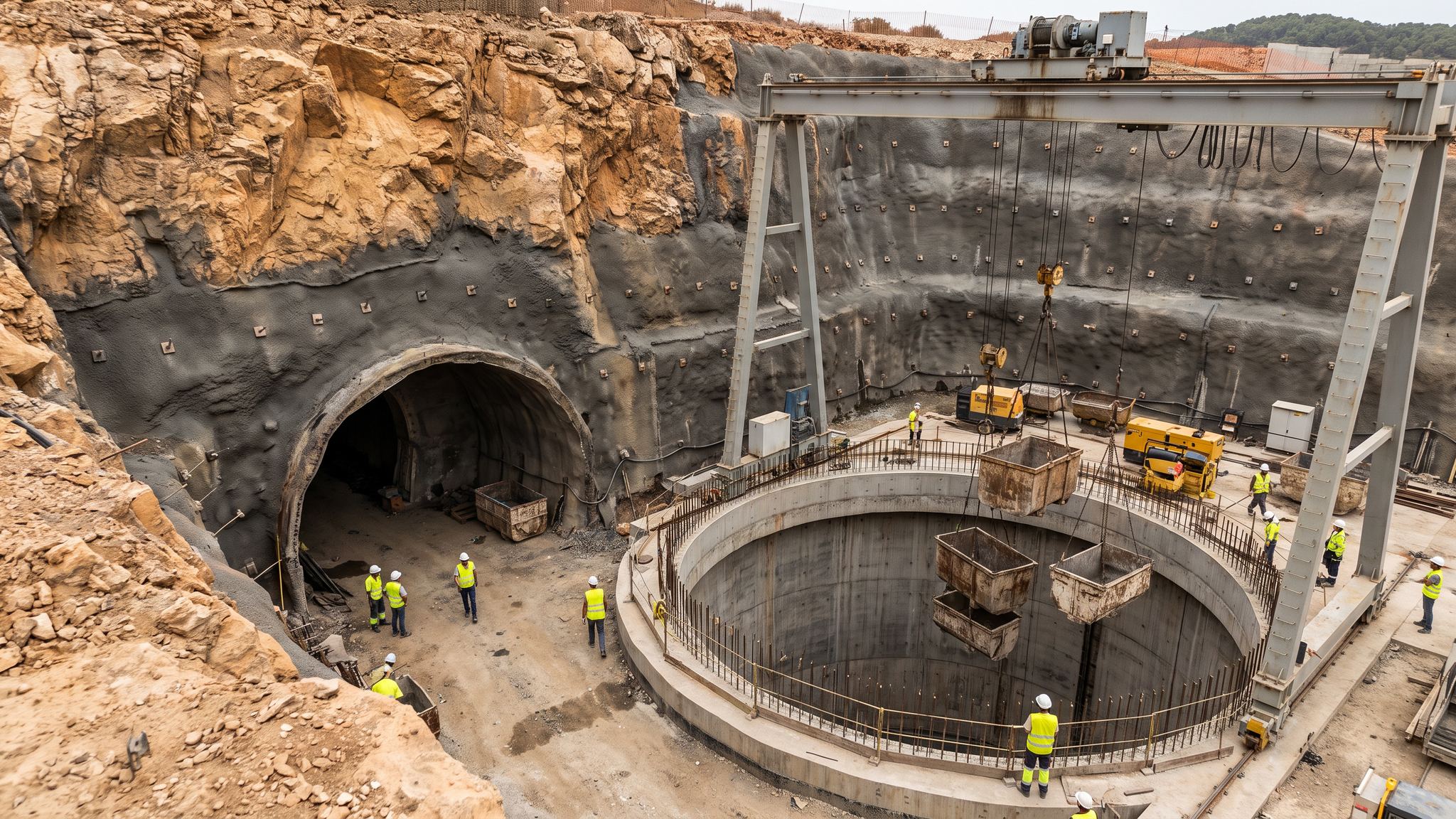
Water Infrastructure in depth
About Water Infrastructure
The four guides in this sector follow the water: treatment works construction, pipelines and trunk mains laid through live cities without turning off the tap, service reservoirs and storage tanks that must not leak in either direction, and pumping stations. Testing and disinfection run through all of it - you are building something people will drink from.
Regulated to the last litre
Clean water construction in the UK is bought through the water companies' five-year Asset Management Plan cycles, regulated by OFWAT. The AMP cycle shapes the market completely: framework contractors are appointed for the whole period, workloads surge in the middle years and tail off as the next price review approaches, and every asset is specified against the company's own engineering standards layered over BS EN codes. Drinking-water safety adds a second regulator in practice - the Drinking Water Inspectorate - whose requirements on materials in contact with potable water mean every coating, joint lubricant, sealant and cement product on a potable job must carry Regulation 31 approval. That approval list governs procurement before a single order is placed.
In the UAE the equivalent structure is the emirate utility: DEWA in Dubai, ADDC (now part of TAQA Distribution) in Abu Dhabi, SEWA in Sharjah and FEWA in the northern emirates. Each publishes its own materials and workmanship specifications, its own approved-products lists and its own connection procedures, and no tie-in happens without the utility's inspector. The big structural difference is source water: UAE networks are fed largely by desalination, so trunk systems are sized for continuous high-volume transmission from coastal plants, and the chemistry of desalinated water - low alkalinity, aggressive to cement and steel - dictates lining and material choices that a UK surface-water scheme would not need.
The commercial consequence of both regimes is that design freeze comes early and holds hard. Water companies and emirate utilities approve drawings and materials submittals through staged gates, and a substitution on site - an unapproved valve, a different jointing compound - is a non-conformance that can put acceptance of the whole asset at risk. Contractors who work this sector well treat the approved-products list as the materials schedule, full stop, and keep the paper trail from purchase order to installed fitting.
Programme shape: keep the taps on
Water work programmes around one rule: customers do not notice. Trunk main diversions and tie-ins are planned months ahead with the network operator, shutdown windows are booked for low-demand periods - typically night shifts in the small hours - and every tie-in has a back-out plan in case the new work cannot be made live in the window. Where a shutdown is impossible, under-pressure drilling and line-stopping techniques let a branch be cut into a live, charged main. The contractor's method statement for a tie-in is an event plan: valves located and proved, by-pass pumping on standby, tankers scheduled if the window overruns, and the utility's standby team on site.
Treatment works construction programmes around commissioning instead. A new stream of a works is built alongside the operating one, and the process chain - inlet, screens, clarification, filtration, disinfection, contact tank - is wet-tested stage by stage with clean water before any process fluid is introduced. Service reservoirs and contact tanks add their own gates: hydrostatic water-tightness testing to the relevant code, usually a seven-day fill-and-drop test with permissible loss measured in millimetres, followed by cleaning, chlorination and bacteriological sampling before the asset can hold drinking water. No sample pass, no handover, regardless of how good the concrete looks.
The enabling chain upstream is the familiar corridor sequence - access, survey and service location, ground investigation, earthworks and drainage, with dewatering on almost every deep structure - but the sector's own discipline starts at the pipe or the tank. Pipe laying runs bedding, barrel, surround and backfill in controlled layers with compaction testing at each stage, because a flexible pipe is a soil-structure system and the trench is half the structure. Every stage is a potential hold point for the client's inspector, and the as-laid survey - coordinates, depth, material, joint positions - is recorded pipe by pipe because the record is what the next contractor digs by.
Pumping stations and the moving parts
Pumping stations are where the water sector turns mechanical. The civils are a wet well or suction tank, often deep and always watertightness-tested, and a dry well or superstructure for the switchgear; the plant is pumps, valves, pipework in ductile iron or steel, variable-speed drives and a control kiosk. Construction sequencing matters because the mechanical installation cannot start until the structure is proved watertight, and the electrical commissioning cannot finish until the mechanical is complete - the station is a chain, not a set of parallel trades.
Commissioning is hydraulic: pumps are run against closed and open valves to prove the duty curve, surge protection is demonstrated, standby changeover is tested by killing the duty pump, and the station is run against the live network under the utility's supervision before handover. In UAE booster stations feeding high-rise districts the control philosophy - pressure zones, variable-speed profiles, reservoir level signals - is tested as a system, because a badly tuned station hammers the network it serves.
The failures that hurt
Contamination is the failure that ends careers in this sector. A dirty joint, a dead leg left unflushed, a crossing where a new main passes too close to a sewer, or backflow during a tie-in can put a whole zone on a boil-water notice, and the remedial cost - flushing, sampling, reputational damage, DWI investigation - dwarfs the saving that caused it. This is why hygiene discipline on potable work is a culture, not a procedure: dedicated clean tools, sealed pipe ends, chlorination of every fitting that touches the bore, and operatives briefed that a main is food-contact plant, not drainage.
Leakage is the other chronic cost. The UK industry is measured publicly on leakage per kilometre of main, and every badly bedded joint or thrust block omitted at a bend becomes a burst in five years. Pressure testing to BS EN 805 before backfill is the gate, but the failures that matter are usually workmanship: pipe bedding and surround not to spec, joints not homed, valves left on debris-scarred seats. In the UAE the water table adds a third failure mode - infiltration into sewers is the wastewater sector's problem, but flotation is the water sector's: empty tanks and large-diameter mains in saline groundwater will float out of the ground unless the design and the construction sequence keep them ballasted until backfilled and, where specified, strapped down.
UK versus UAE on the ground
UK water work is predominantly brownfield: ageing networks in live streets, congested corridors where the actual position of existing services rarely matches the records, and streetworks governed by the New Roads and Street Works Act with its notice periods and reinstatement standards. Ground is wet, dewatering is routine, and winter working is assumed. Ductile iron with cement mortar lining and polyethylene for smaller diameters dominate, with welded steel on the largest trunk mains.
UAE water work is predominantly greenfield or expansion: new corridors in made ground and sabkha, high ambient temperatures that put polyethylene pipe handling and electrofusion jointing under strict temperature controls, and saline ground that pushes specifications towards fully wrapped or coated ductile iron, GRP on large diameters, and corrosion protection treated as a first-order design decision. Distances are longer - transmission mains from coastal desalination plants run tens of kilometres - and the utility inspection regime is procedural and gate-driven, with each hold point signed before the next activity starts.
Both markets share one final reality: the asset outlives everyone who built it. Trunk mains are designed for fifty to a hundred years, reservoirs for longer, and the records left at handover - as-laid surveys, test certificates, material traceability, valve and hydrant schedules - are what the operator's teams will dig by for generations. The contractors who win repeat framework work are the ones whose handover packs the operations team never has to chase.