The Muck Shift: How a Project Moves the Ground
Between the cleared plot and the first concrete sits the muck shift: thousands of tonnes of ground cut, carried, placed and compacted until the site matches the drawings. On most projects the aim is blunt: move the ground as little as possible, and keep as much of it as you can. Here is how a typical dig runs, and why the paperwork matters as much as the digging.
A typical process - not your site
Every site is different. This article describes a common approach on a typical project - not the sequence for any specific site. Ground conditions, access, existing structures and local requirements all change the method. Site-specific decisions belong with the project's appointed professionals - the principal contractor, the designers and the engineers named for the works. Treat this as background, not as a method statement.
There is a stretch on most projects when the only thing being built is a level. The frame is months away. What the site produces is ground in the back of a dumper: cut from where the design says too high, placed where it says too low. Whatever neither end can use leaves on a lorry. The industry calls this the muck shift: the cheapest-looking phase a project can get wrong at the greatest expense.
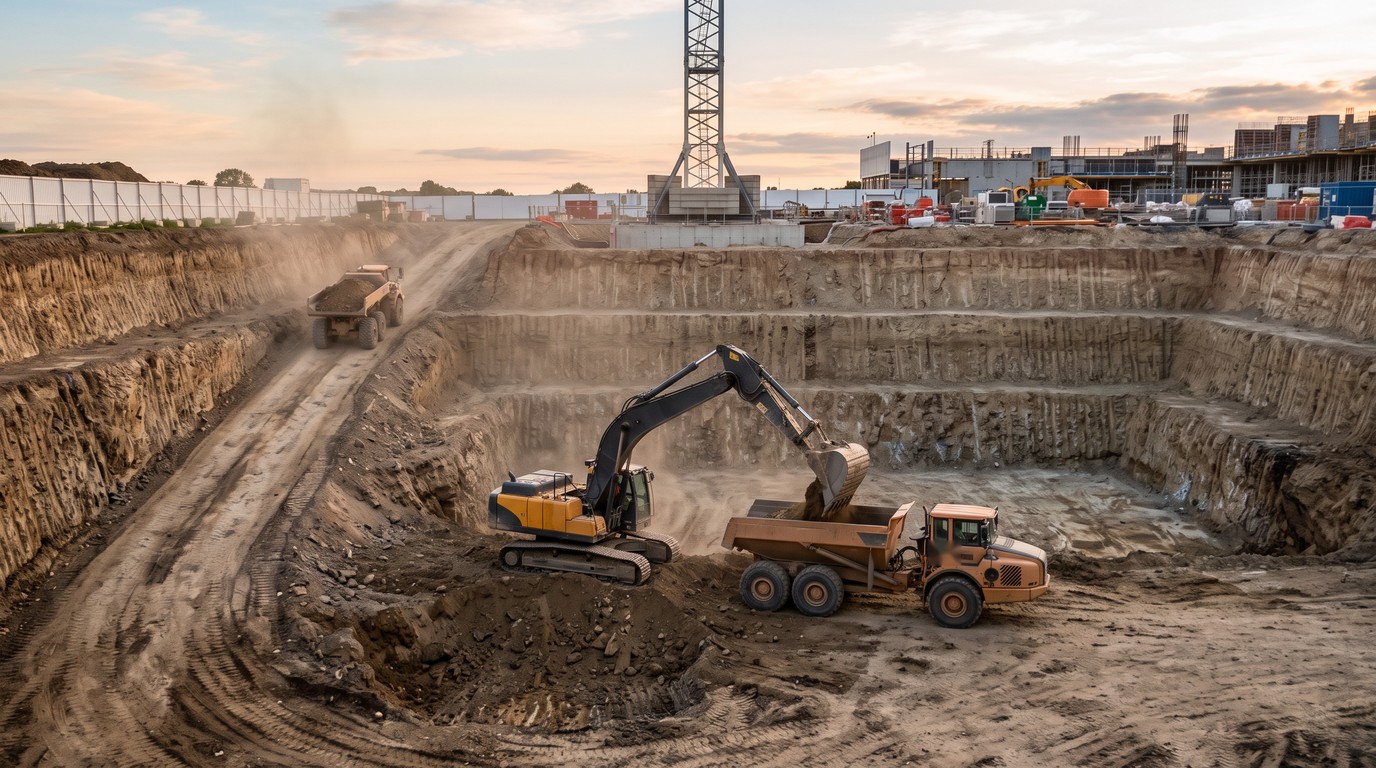
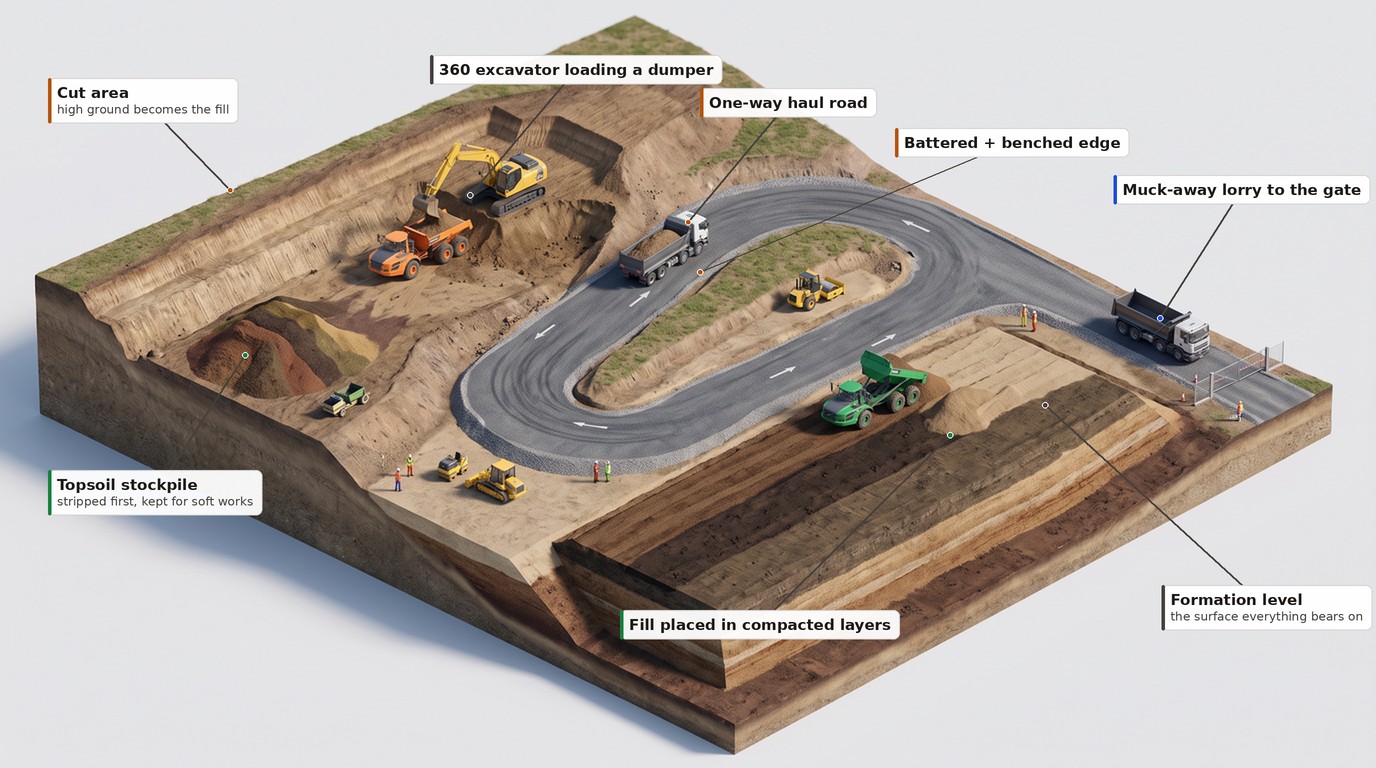
The dig itself has a precise name: the reduced level dig. The excavators dig not a hole but a set of engineered surfaces, the most protected of which is formation level, the plane the foundations or ground slab will bear on. The whole phase is organised around reaching formation efficiently, then not wrecking it.
Cut and fill: the case for balance
On an uneven plot, a common approach is to treat the site as its own quarry. High ground is cut and hauled to the low corners, placed in layers a few hundred millimetres thick and rolled before the next goes down. Earthworks designers chase a balanced site, cut equal to fill, because the alternative is paying at both ends: once to cart surplus away, and again to import stone the site now lacks.
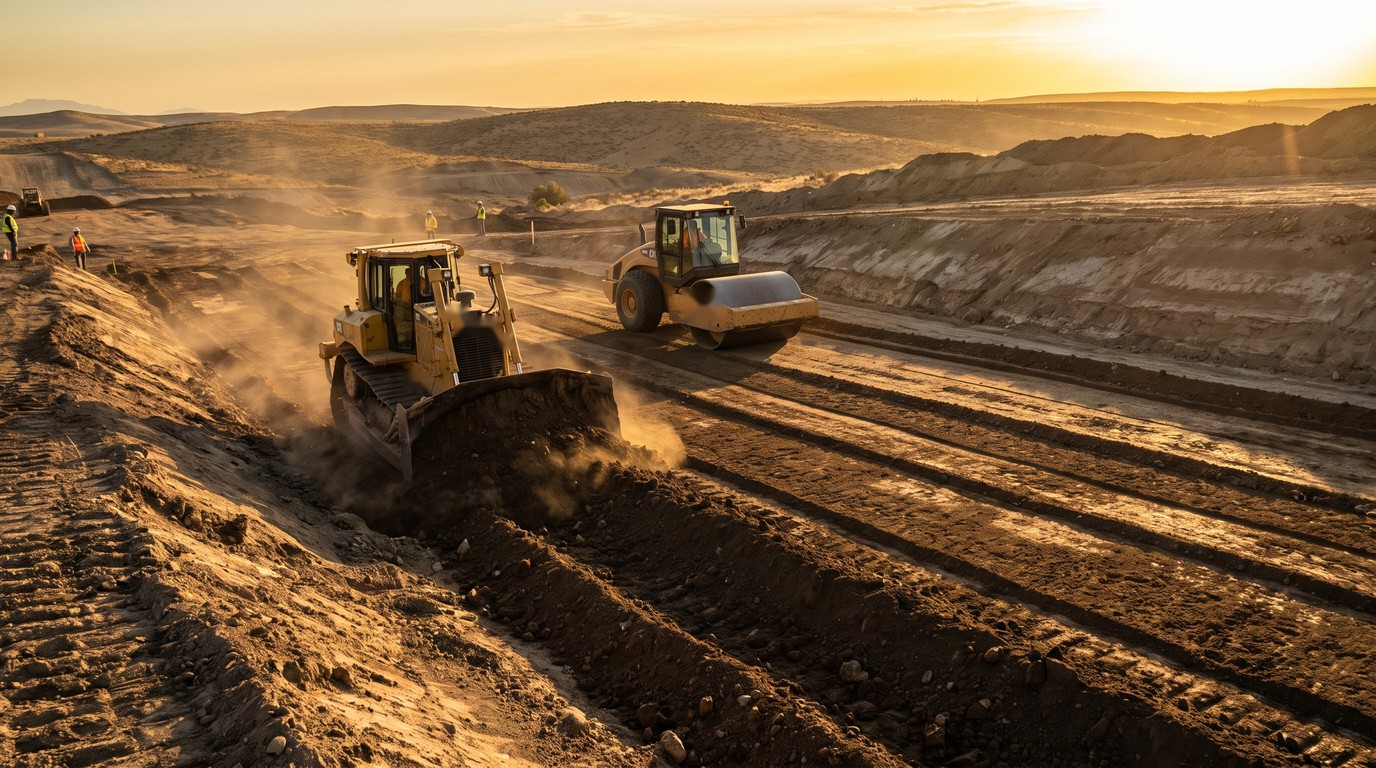
The balance is never quite what the spreadsheet promised. Dug ground swells: a cubic metre of clay in the bank becomes a metre and a quarter in the dumper, then compacts back to less than it was. Topsoil cannot act as structural fill, so it is stripped first and stockpiled for the soft works at the end. And a cubic metre of soil can weigh more than 1.5 tonnes, which is why nobody who has priced haulage moves ground twice.
Holding the sides up
No ground can be relied on to stand vertical and unsupported, however solid it looked at eight in the morning. HSE's excavation guidance says exactly that, and the fatality record is why: a collapsing face drops more than a tonne of soil per cubic metre onto whoever is in front of it.
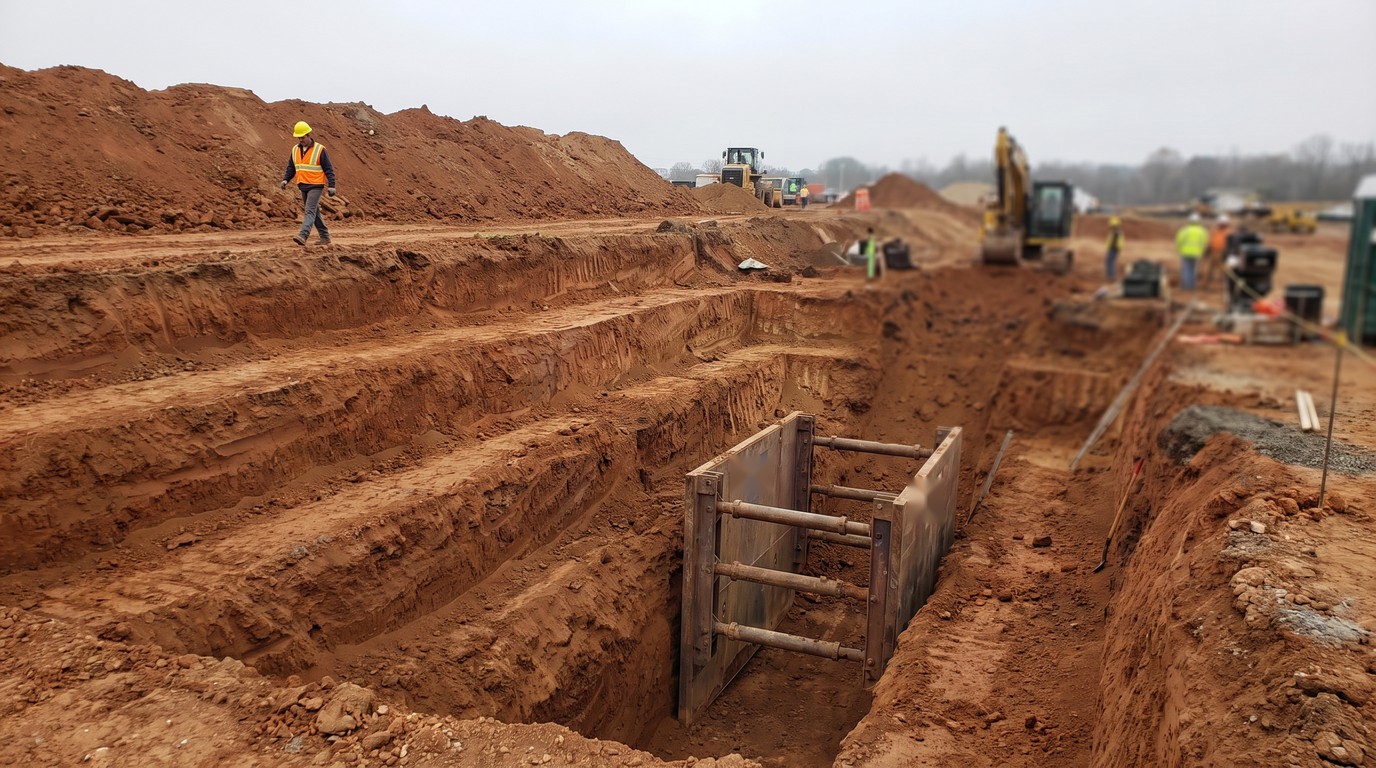
With room to spare, the sides are battered, cut back to a safe slope that gets flatter in granular ground and flatter again in wet, or benched into steps that break the face into short lifts. Where the boundary is tight or the dig is deep, support goes in instead: trench boxes on the drainage runs, sheets and props or a king-post wall on the bigger cuts. The choice is a design decision, not an improvisation from the cab.
The edge discipline is half the safety case. Spoil heaps and plant stay back from the top of the face, because surcharge is what makes slopes fail. A competent person inspects the supports or batters at the start of every shift, and again after rain, a thaw or anything else that might have changed the ground's mind.
Plant on a loop
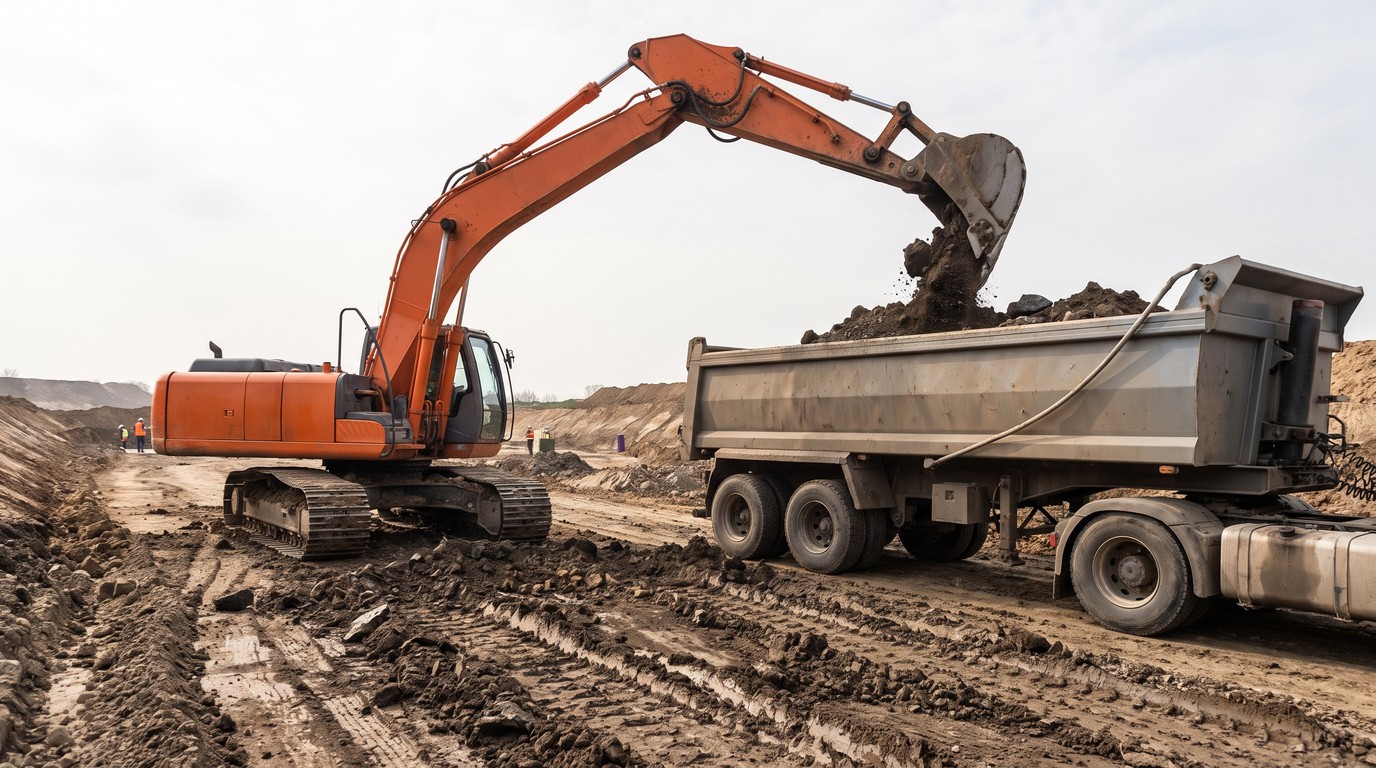
The classic bulk-dig set is a tracked 360 excavator loading articulated dumpers, a dozer spreading at the fill, a roller behind. The choreography matters more than the machinery: on a well-run dig the dumpers run a one-way haul road circuit, and nobody on foot enters the loop unseen. GPS machine control has quietly reshaped the phase: the design surface lives in the excavator's cab and the bucket reads its own level to a couple of centimetres. Over-dig still happens, but less, and it is never free, because ground taken out below formation cannot be pushed back. It returns as imported stone, bought twice.
Muck-away runs on paper
Whatever the balance, most projects still export something: soft spots, tree roots, the swell that would not compact, the clay nobody could re-use. This is muck-away: a haulage operation with a legal spine. In the UK, excavated material leaving site is waste in law, and the duty of care follows it. The project describes each load accurately, uses a registered waste carrier, sends it to a facility permitted to accept it, and keeps the transfer documentation on file. A load that surfaces fly-tipped in a lay-by is still the producer's problem, which is why careful sites check the carrier's registration on the public register.
The daily version is tickets. Every departing lorry generates one, recording time, registration, material and destination, and the weighbridge receipts returning from the tip either reconcile with the site's own count or somebody has questions. Classification is money: clean natural ground is cheap to dispose of, contaminated ground startlingly expensive. Formal routes exist to re-use excavated material on site, or between sites, as material rather than waste. The forms carry different names in every country; the principle, know what the ground is and prove where it went, does not.
When the ground answers back
Every dig is a test of the site investigation against the truth. The boreholes and trial pits sampled a few cubic metres out of tens of thousands; the dig exposes everything in between. Most days the ground behaves as forecast. The interesting days are the other ones.
Obstructions are the common surprise: old foundations that no record mentioned, a buried slab, a backfilled cellar, a well. Buried services are the dangerous one. The routine followed on most sites runs plans first, then detection, then careful trial excavation - because the drawings record where services were meant to go, not where the installers left them.
Contamination discovery is the surprise that stops work. Staining, an oily sheen, suspect fibres, buried drums: the typical protocol is to stop excavating in that area and quarantine the suspect material, covered and separate, until testing says what it is. The UK's land contamination framework runs in stages, from risk assessment through to remediation and verification, and an unplanned discovery drops the project into that process mid-dig. It feels slow on the day. It is far quicker than explaining to a regulator how contaminated ground reached a clean tip, an offence with no upper limit on the fine.
Protecting the formation
Formation level is fragile in a way that surprises anyone who has not watched rain land on clay. A surface that proof-rolled beautifully on Thursday can be soft as porridge by Monday. So a common approach is to stop the dig short of formation and take the final cut only when the following trade is ready, with a bucket that trims the surface rather than gouging it. Once exposed, formation gets blinded with lean concrete or capped with stone, and water is pumped away before it can pond. Tracked plant stays off it. The engineer inspects it before anything bears on it; everything above takes that surface on trust.
When the last levels are proved and the stockpiles gone, the muck shift ends the way it began: quietly. The site has stopped being ground and become a platform, and everything that follows stands on what this phase left behind.
Walk the project
Read a dig from the fence line: are the batters one steady angle, is the haul road one-way and damped down, are the stockpiles separate and sheeted, is the formation blinded or left in the rain? Tidy edges predict true levels.
David
Founder, BuildPedia