Water in the Hole: How Sites Beat the Water Table
Dig below the water table and the hole starts filling while the ground around it quietly weakens. On most projects the answer is pumping - a sump, a ring of wellpoints or a line of deep wells - and every litre pumped has to go somewhere legal. Groundwater control is typically designed weeks before the excavator arrives.
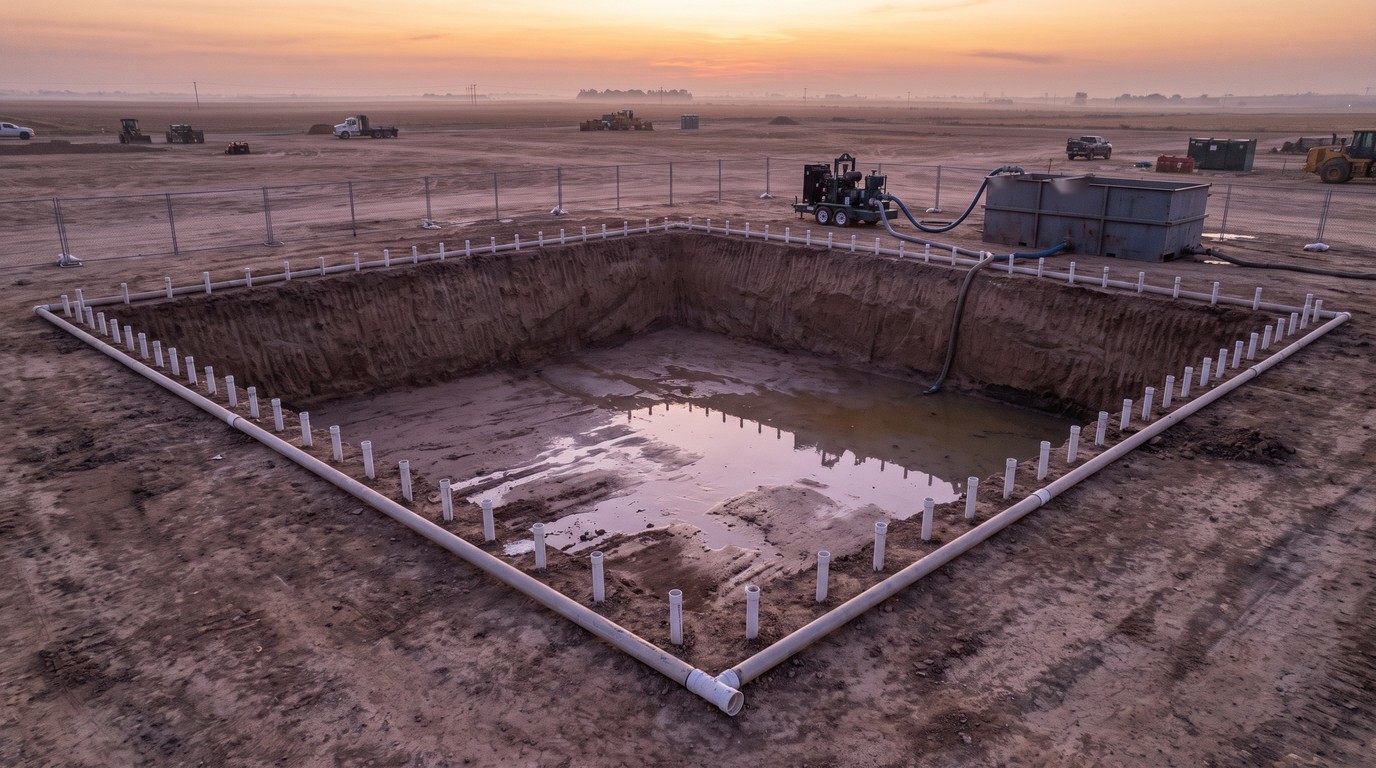
A typical process - not your site
Every site is different. This article describes a common approach on a typical project - not the sequence for any specific site. Ground conditions, access, existing structures and local requirements all change the method. Site-specific decisions belong with the project's appointed professionals - the principal contractor, the designers and the engineers named for the works. Treat this as background, not as a method statement.
There is a level in the ground below which the soil is saturated. Dig above it and the ground mostly behaves. Dig below it and the hole starts to fill while the sides slump, and the formation on the drawing becomes something no concrete should be poured on. That level is the water table, and the first question a temporary works designer asks about a deep dig is blunt: are we going below it, and by how much?
Groundwater control is temporary works in its own right, with its own design and paperwork. Getting it wrong floods programmes as reliably as it floods holes.
Why water stops a dig
Water in an excavation is not just a puddle. Below the water table, the water in the pores of the soil carries part of the load, and disturbing it changes how the ground behaves. A granular soil that stood at a steep batter dry needs a much flatter one wet. Fine sands and silts are worse: they turn to running sand and flow into the hole as fast as the excavator takes it out. At the base, upward seepage loosens the formation, quietly wrecking the surface the foundations were meant to bear on.
HSE's excavation guidance is blunt: supports must control the entry of groundwater and carry the extra water load, and a competent person must inspect the dig at the start of every shift. A cubic metre of soil weighs more than 1.5 tonnes. Saturated, moving ground is what buries people in trenches.
Sump pumping: the first move
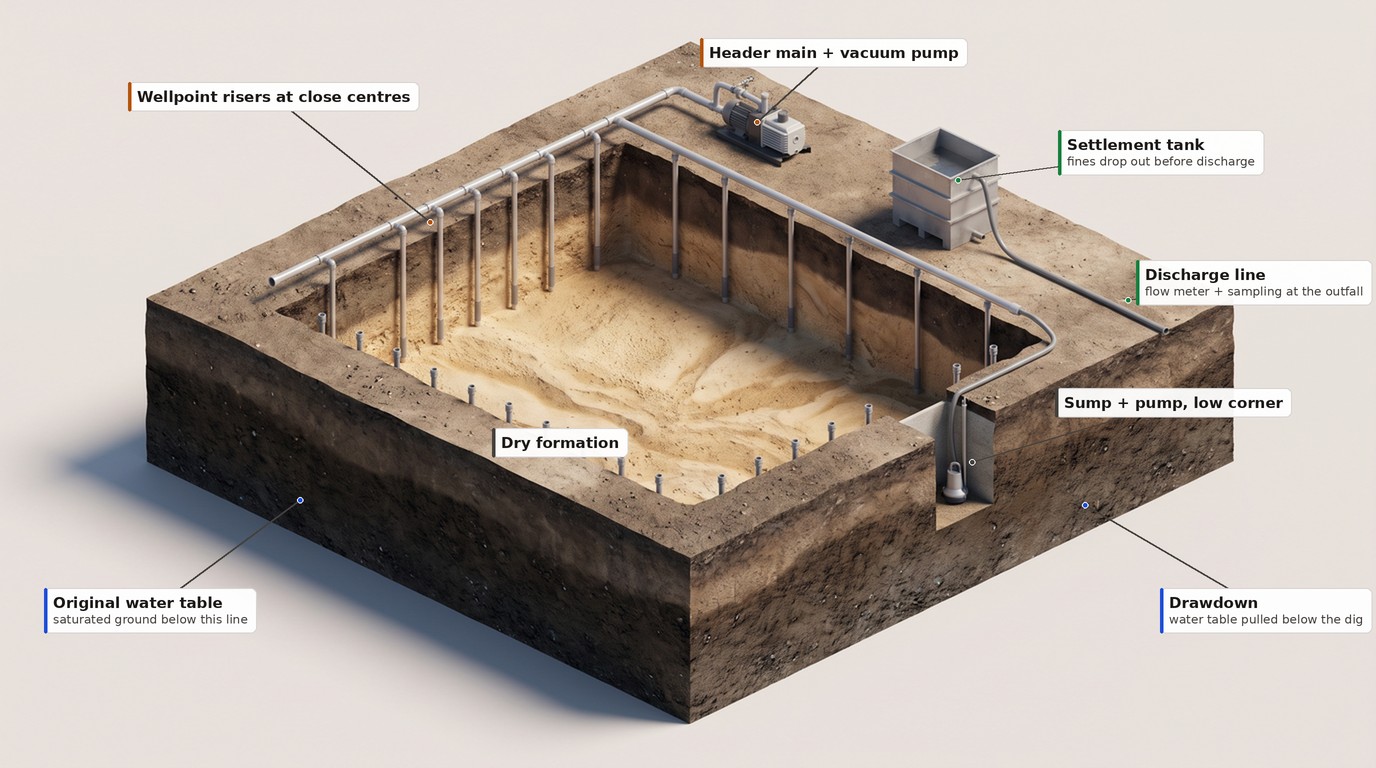
The common first tool is also the oldest. Dig a small pit - a sump - at the lowest corner of the excavation, slightly below formation level, drop in a pump and let the water come to you. The dig drains towards it and stays workable. For shallow digs in soils with some clay in them, sump pumping is often all a project ever needs.
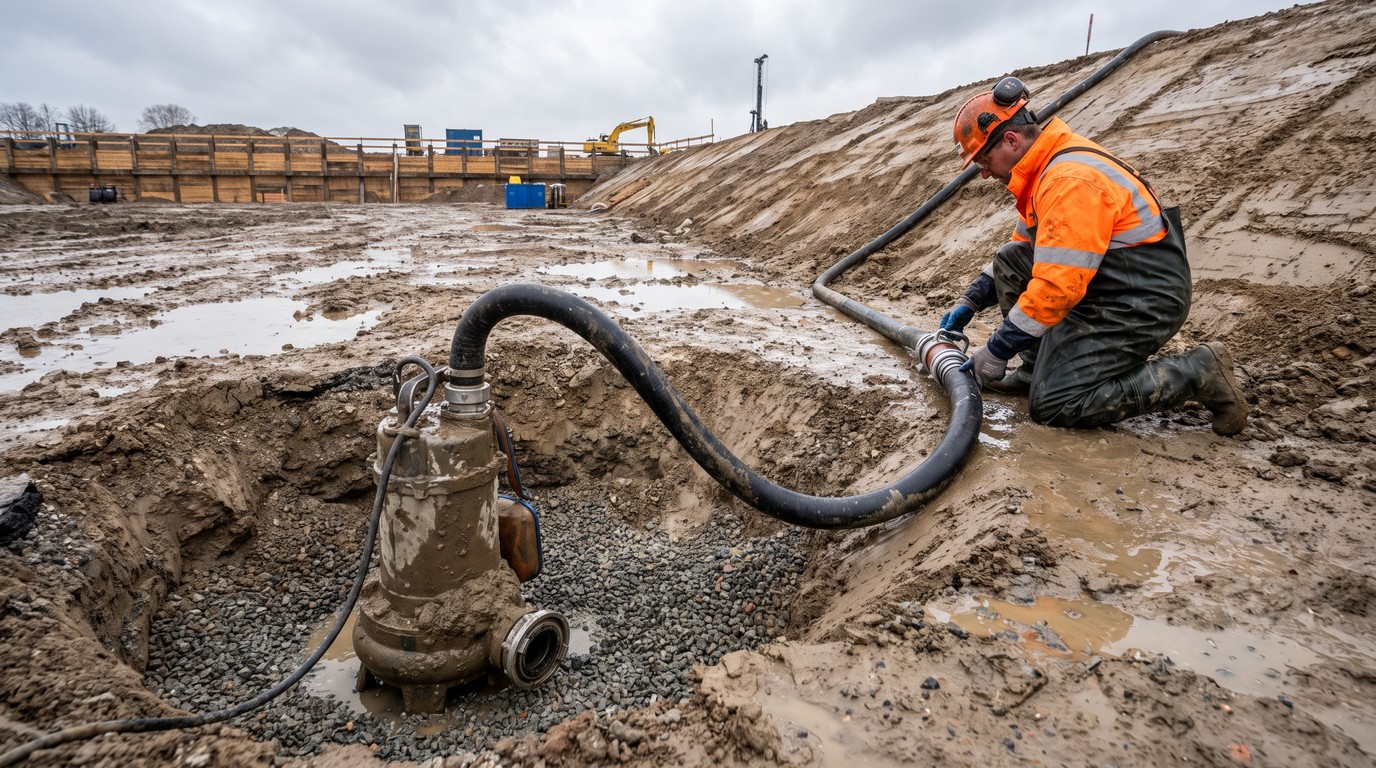
It has a limit, and the limit is fines. Pumping from an open sump drags silt and fine sand out of the ground along with the water. In the wrong soil that undermines the very formation it is meant to protect, and it sends dirty water to the discharge point - a legal problem as much as an engineering one. When inflows are heavy or the soil travels, most designers stop chasing water inside the hole and lower it outside instead.
Wellpoints and deep wells
Lowering the water table before the dig is called predrainage, and the workhorse is the wellpoint system. Small-diameter tubes with screened tips are jetted into the ground a metre or two apart around the excavation, all connected to a header main and a vacuum pump. Run the pump and the water table inside the ring is pulled down; excavate within it and the dig stays dry. Suction sets the ceiling. A single stage of wellpoints gives five or six metres of drawdown in practice, so deeper digs add a second stage from a bench partway down or change system.
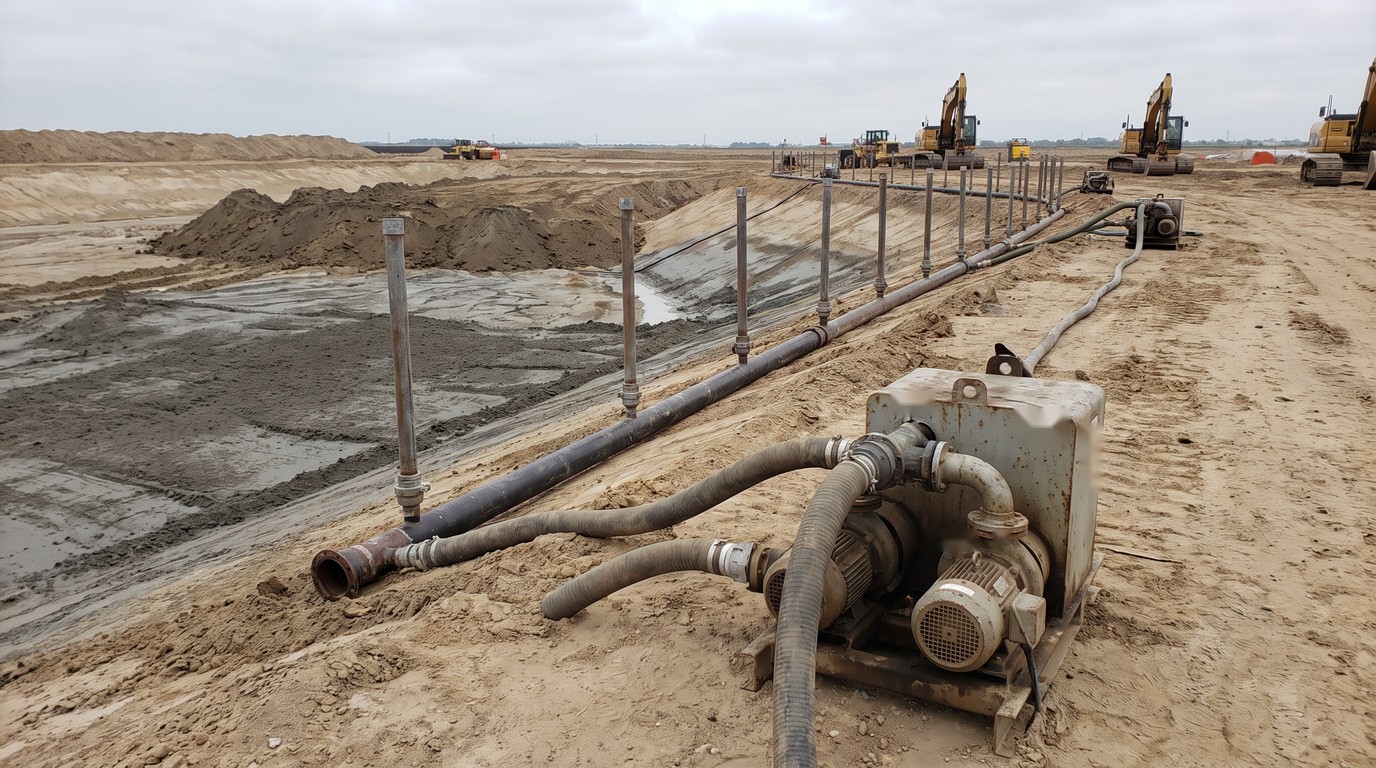
The change is usually to deep wells: bored wells ringing the excavation, each with its own submersible pump far below the water table. There is no suction limit and they will run for months if the programme needs it. Deep wells suit basements, shafts and permeable ground; in low-permeability silts, ejector wells do a similar job at lower flows. On a typical project the choice is arithmetic: how permeable the soil is, and how far below the water table the formation sits.
Drawdown is a shared experience
Pumping does not lower the water table only inside the hoarding. The drawdown forms a cone of depression spreading outward from the excavation, in permeable ground well beyond the boundary. Where the drained ground is soft clay or peat, taking the water out increases the effective stress and the soil consolidates. It settles. Buildings above it settle too, and rarely evenly.
On most projects the response is proportionate: a condition survey of nearby structures before pumping starts, then level monitoring while it runs. The design pulls the water table no lower than the dig needs. Where the stakes are higher - old buildings on shallow footings, or a railway - recharge wells put water back into the ground beyond the site to hold the level up.
When a wall beats a pump
There is another route: keep the water in the ground instead of moving it. A cut-off wall - interlocked sheet piles, secant piles, a diaphragm wall or a grout curtain - is formed around the excavation and toed into a low-permeability layer below, so the water outside stays outside and only what is trapped inside needs pumping. Ground freezing does the same job in extreme cases, turning the water itself into the wall.
Cut-offs cost more up front. They earn it back where pumping volumes would be huge or drawdown would damage the neighbours, and they are the only answer where groundwater is contaminated and must not be dragged across the site. Plenty of deep basements use both: a wall to cut the flow, wells inside to mop up the rest.
Where the water legally goes
Every litre pumped is an abstraction, and both ends of the pipe are regulated. Depending on how much is pumped and for how long, a project may need the environmental regulator's permission to take the water out of the ground at all. Sending that water to a river or stream needs its own consent, and the conditions attached to it turn on how clean the water is, how much there is and how long it will run. A public sewer is a different conversation, with the water company, under a trade effluent consent. Other UK nations and other countries run their own versions. The paperwork changes; the principle does not.
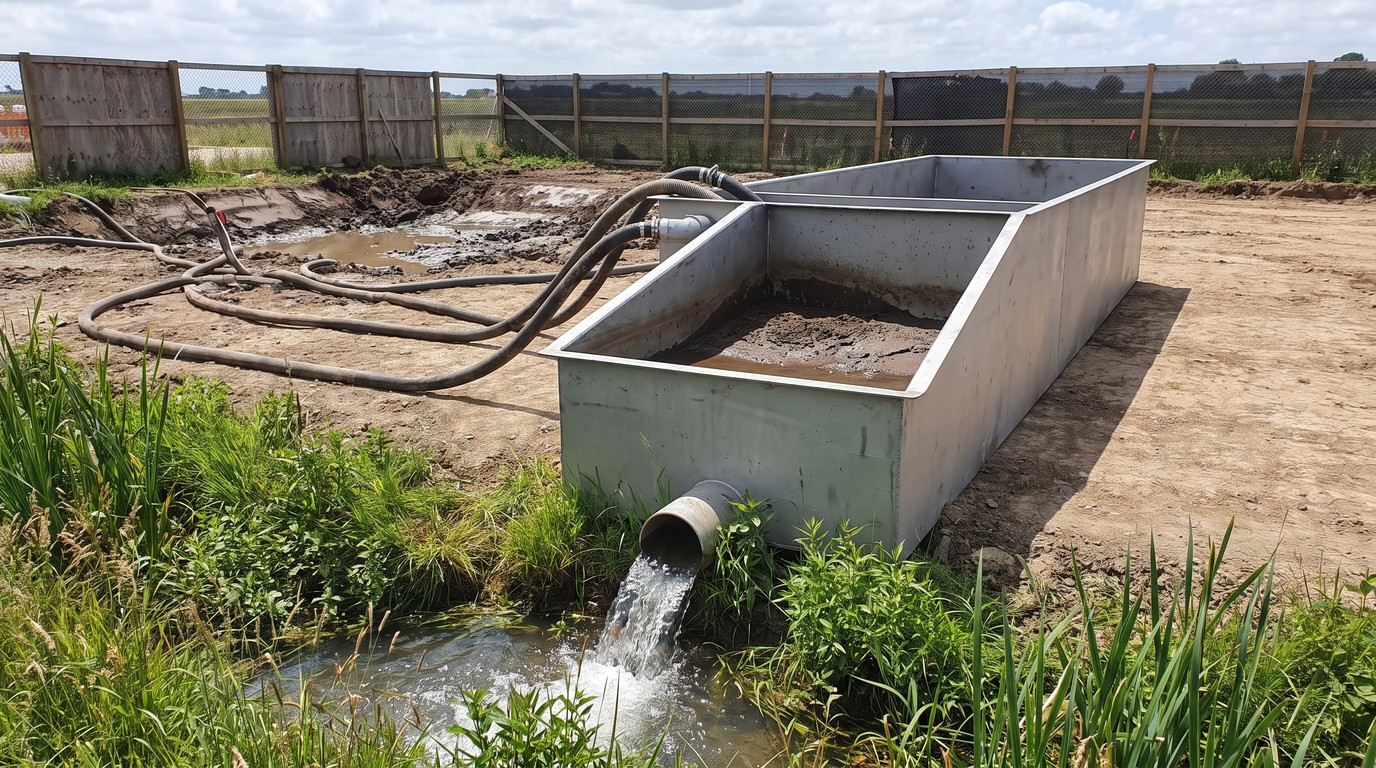
The recurring offence is silt. Silt-laden water smothers watercourses, and it is the pollutant regulators see most from construction. Hence the settlement tank between pump and outfall: a steel tank or lagoon where the flow slows and the fines drop out, so the water leaving site runs clear. The tank usually sits beside a flow meter and a sampling point, because sooner or later somebody will ask for the numbers.
Proving it works, in every season
Groundwater control runs on evidence. Standpipes and piezometers - simple monitoring wells - are read before pumping starts to fix the baseline, then through the works to prove the drawdown is there before anyone digs below the original water table. Flow meters log what the wells are taking. Trigger levels are agreed in advance: if a piezometer refuses to fall, or a neighbour's level monitoring starts to move, the dig pauses while somebody finds out why.
One more thing: the water table is not a fixed line. In most temperate ground it rises through the wet season and falls through the dry, sometimes by a metre or more. A trial pit dug dry in August proves nothing about February. Typical practice designs for the highest credible level, not the level on the day of the site investigation, because the water table has never read a programme.
David
Founder, BuildPedia