Process plant bolted onto a live emitter, a pipeline, and a well that has to hold.
Carbon capture is retrofit construction most of the time. The capture plant goes in beside something already running - a power station, a cement works, an industrial site - and the hardest constraints are the ones the existing operation imposes: where the tie-ins can go, when the host plant can come down, and how little space is left to build in.
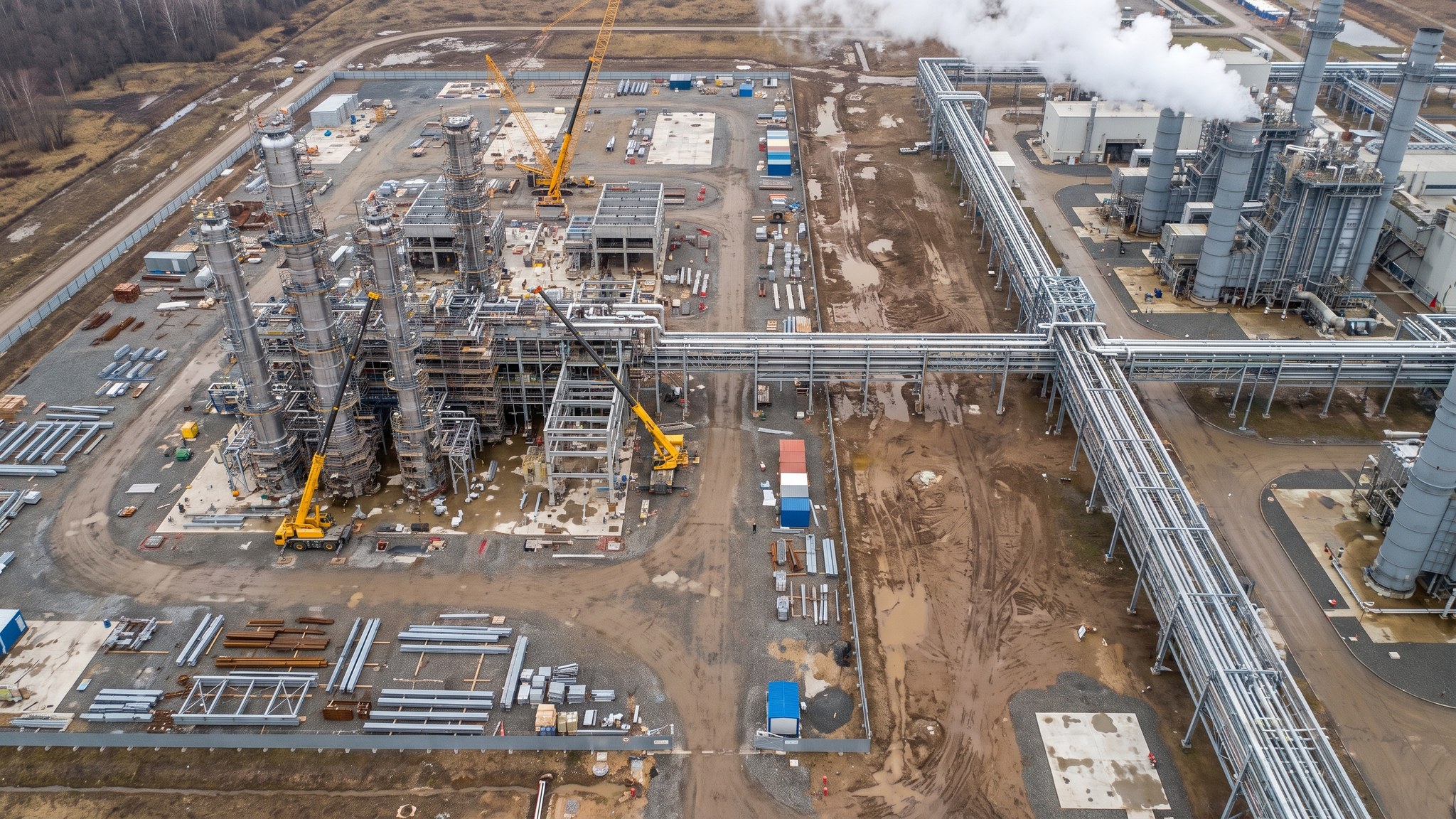
The process map - 5 guides
Each one is a full guide: overview, variants, numbered steps, plant, testing, safety and defects.
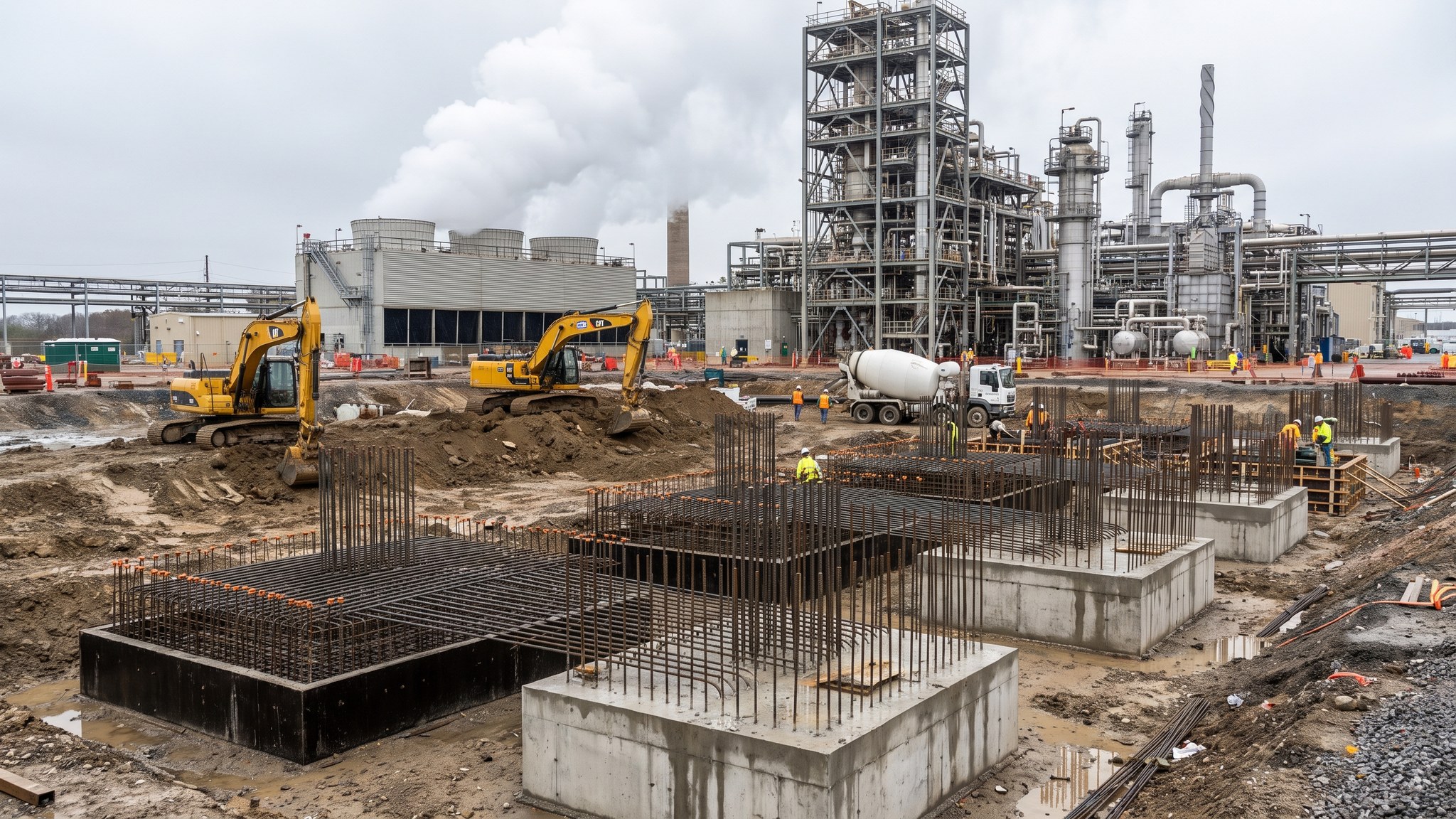
Site Civils & Heavy Foundations
The platform, piles and heavy bases a capture plant stands on - built on a congested brownfield plot beside a working emitter, where the ground is already full of somebody else's foundations and services and the host plant never stops for you.
Open process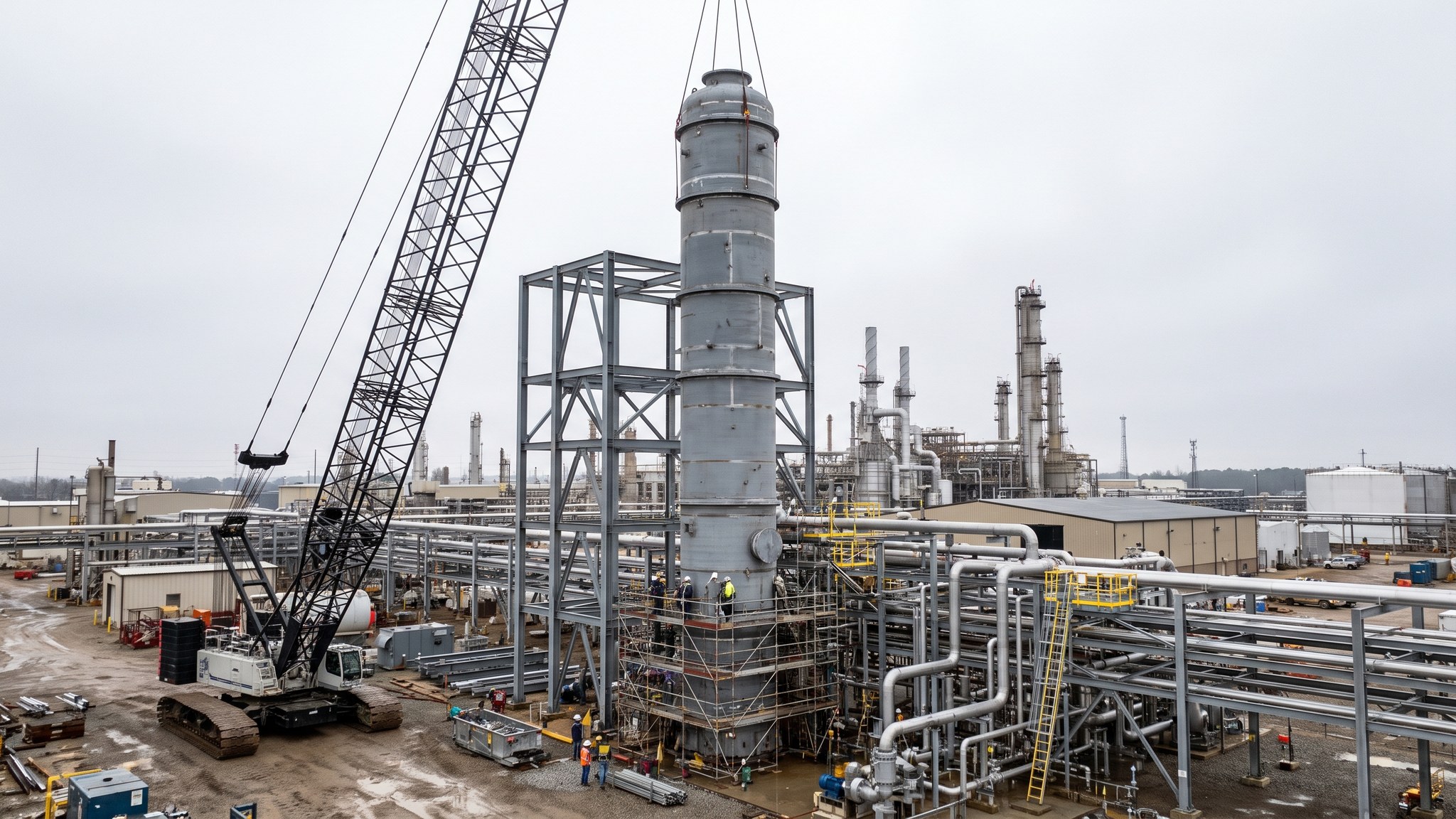
Capture Plant Installation
Erecting the capture island itself - the absorber, the vessels, the ducting and the modules - beside a working emitter, where the tallest lift on the site and the tie-in into the host plant are the two things the whole programme is arranged around.
Open process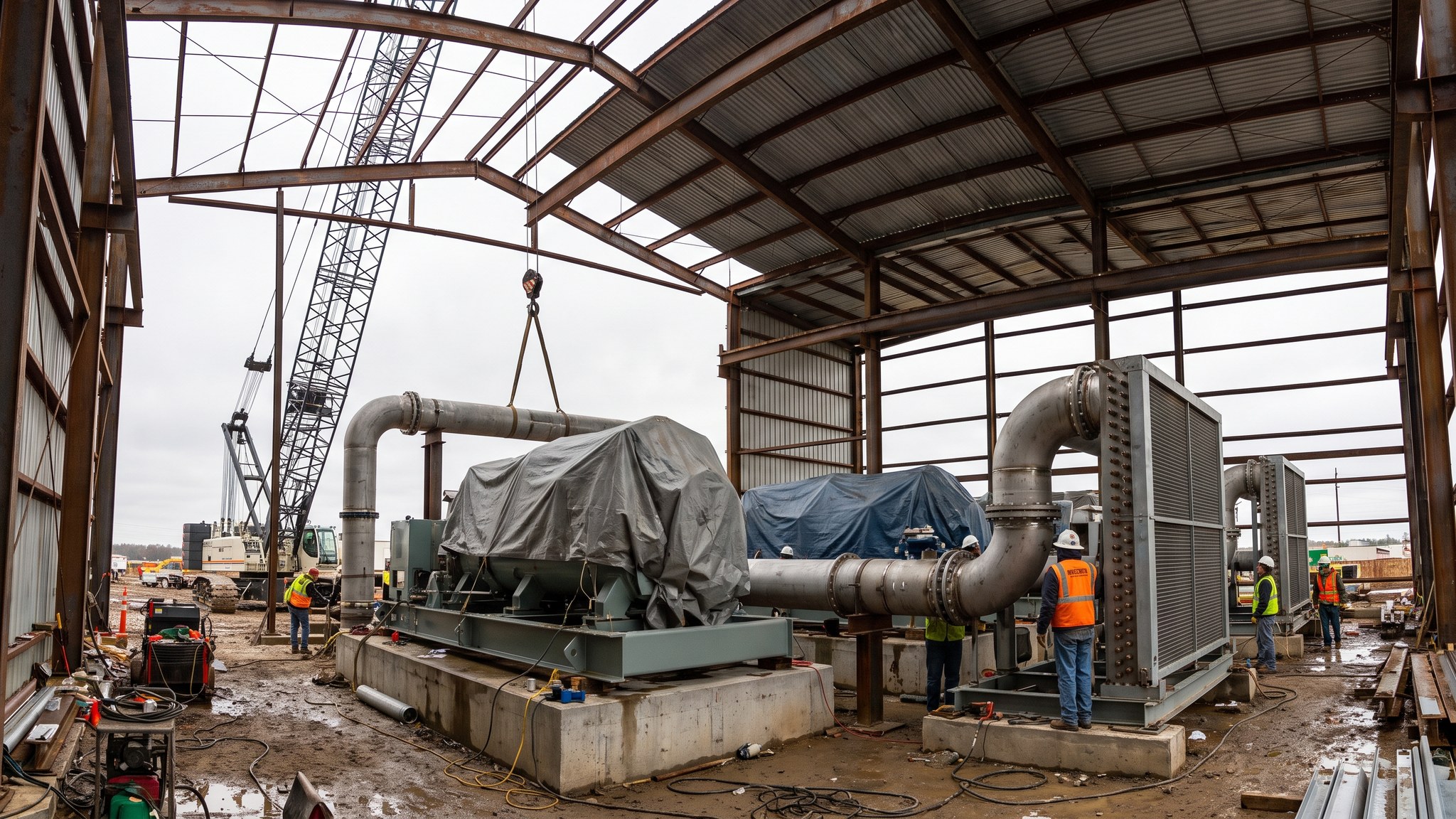
Compression & Conditioning
The machinery that turns a low-pressure gas into a dense fluid a pipeline can actually move, and the drying and clean-up that make the stream fit to put into somebody else's system.
Open process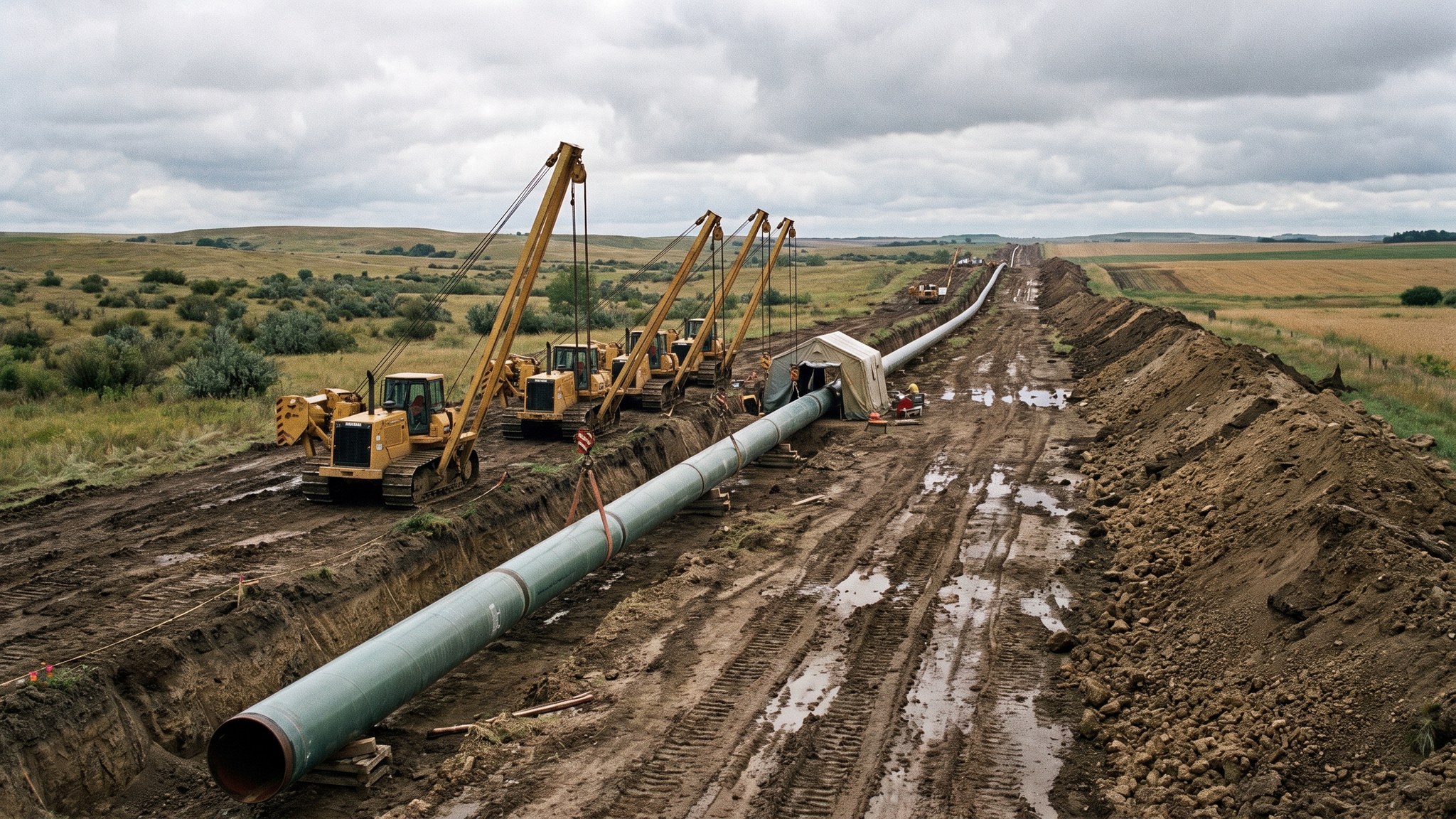
CO2 Transport Pipelines
Getting the stream from the emitter to the storage site - a linear construction project that crosses farmland, roads, rivers, towns and usually a stretch of seabed, built by a spread that moves every day.
Open process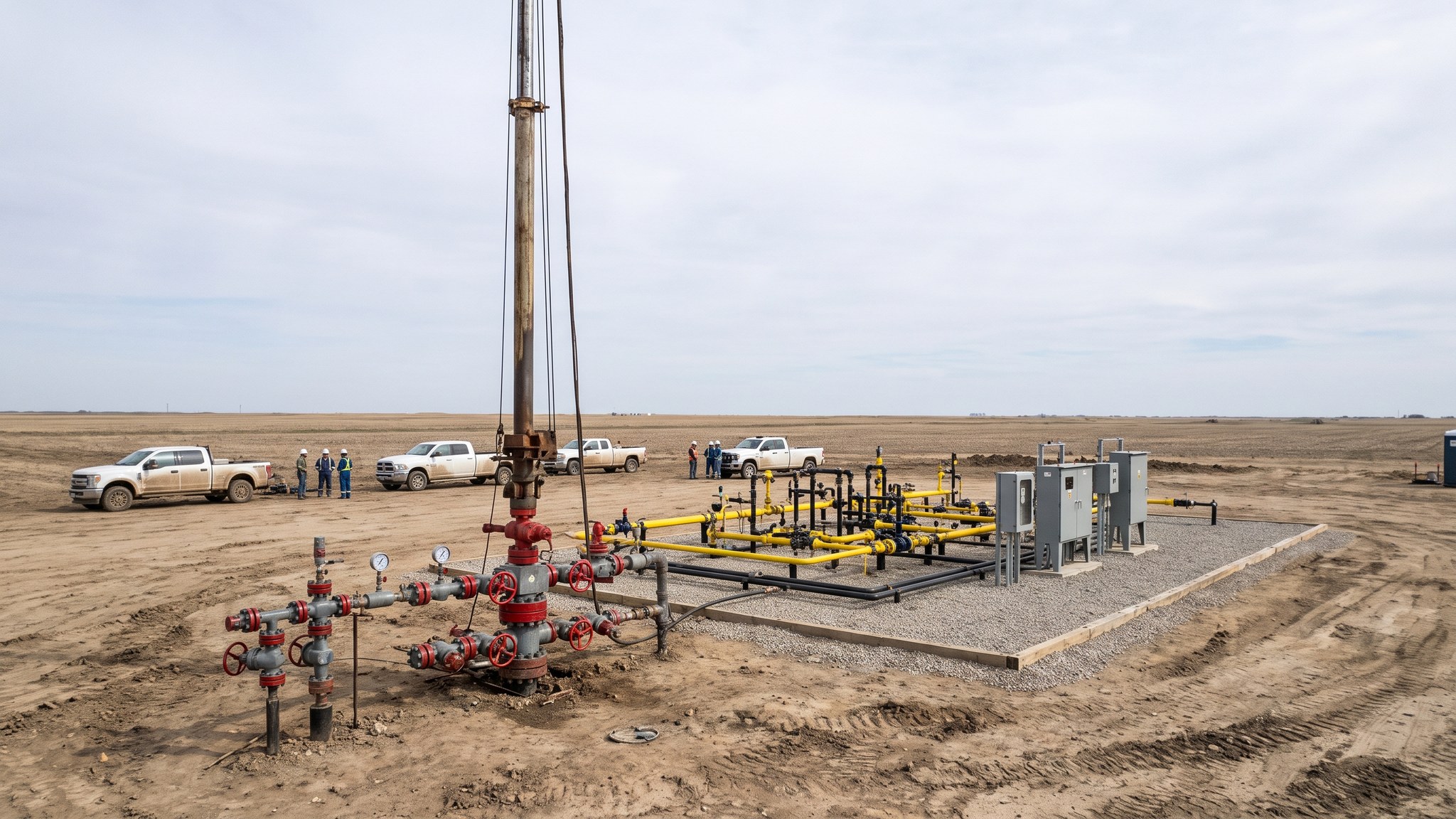
Injection Wells & Commissioning
The end of the chain - the wells that put the stream underground, the facilities around them, and the commissioning and long-term monitoring that prove the store keeps what it is given.
Open processShared methods used in this sector
These guides are owned by other sectors - the canonical page lives there - but the method is the same here. Cards open the guide at its home sector.
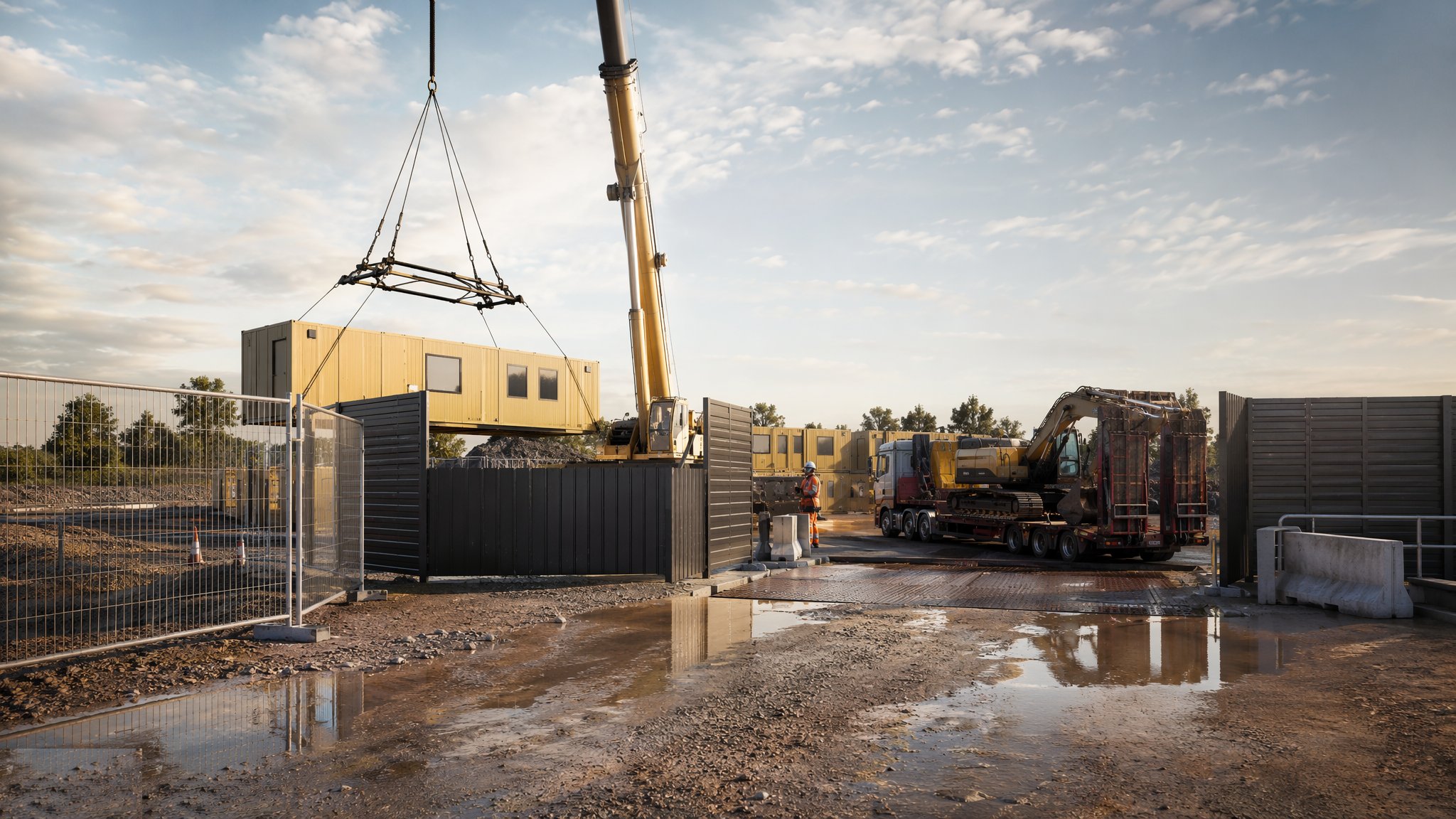
Site Access & Enabling Works
Turning a piece of land into a controlled, serviced, legal construction site.
Open processCanonical guide: Residential & Housing
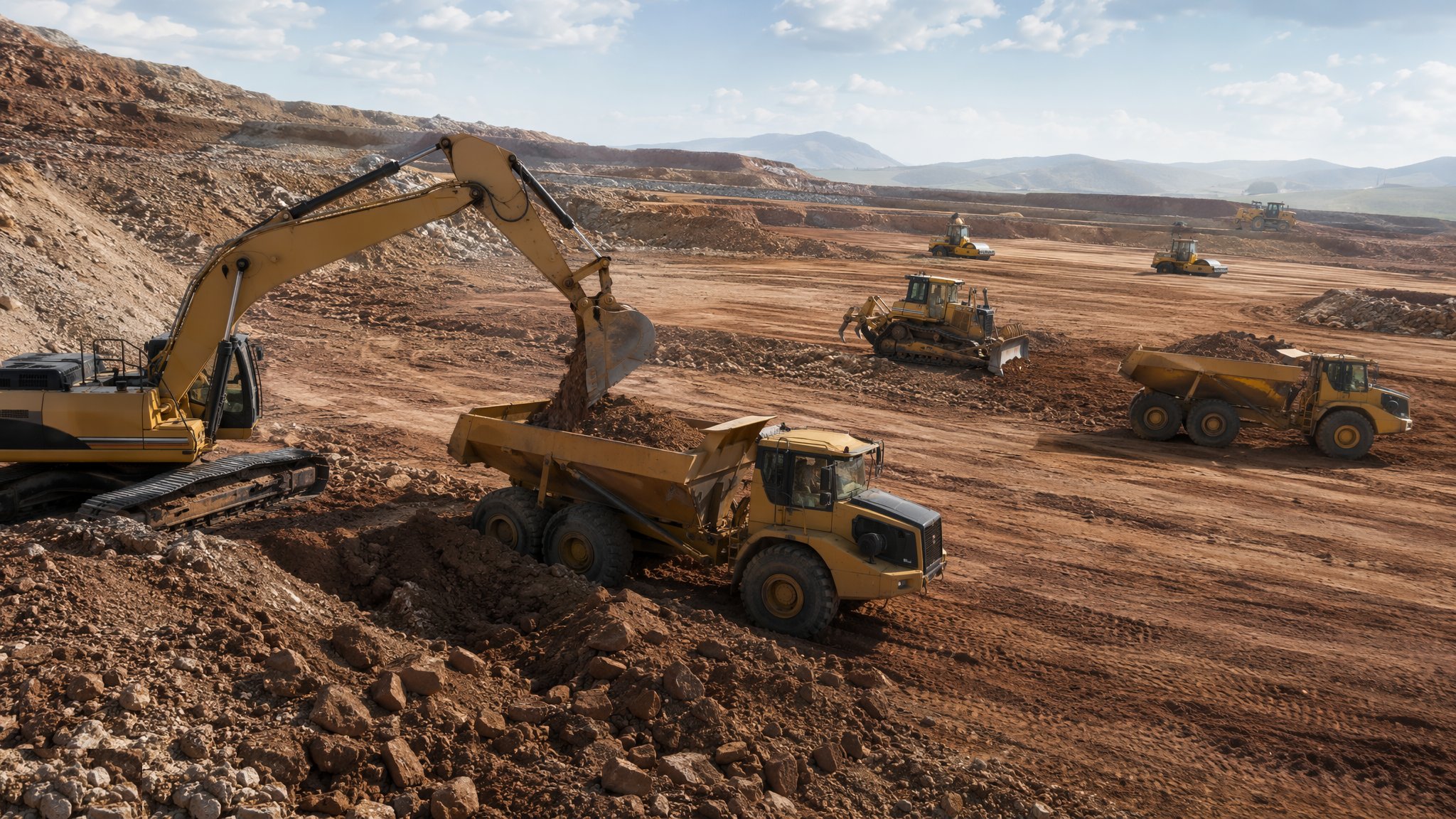
Earthworks & Excavation
Cut and fill, trenching and compaction - reshaping the ground to take the building.
Open processCanonical guide: Residential & Housing
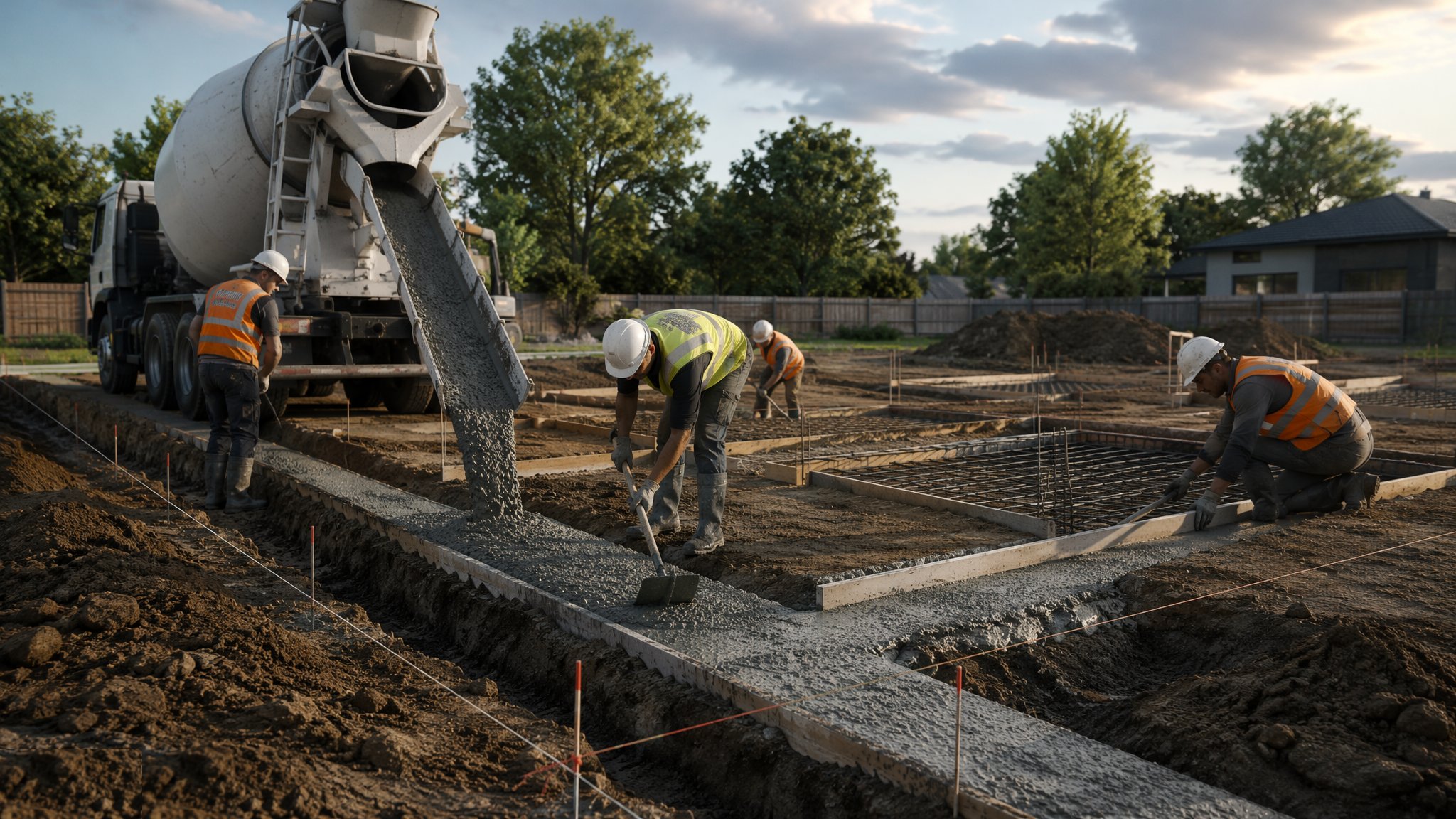
Shallow Foundations
Strips, pads and rafts - spreading the building's weight onto good ground near the surface.
Open processCanonical guide: Residential & Housing
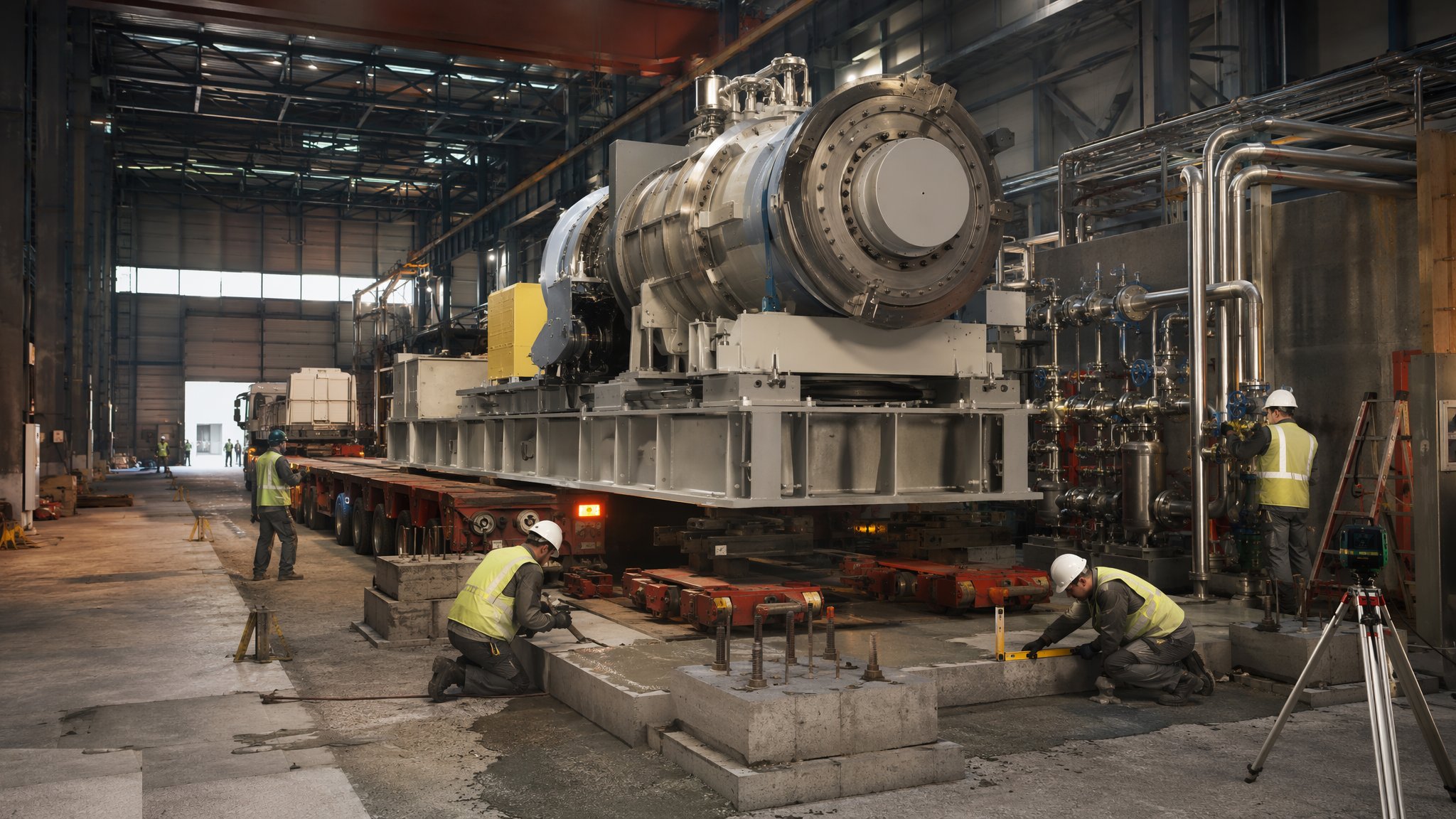
Process Plant & Production Line Installation
Machines off the low-loader and onto their bases - grouted, levelled and aligned to hundredths of a millimetre, hooked up to every service, then proven cold before anything gets hot.
Open processCanonical guide: Manufacturing & Industrial Plants
Carbon Capture & Storage (CCUS) in depth
About Carbon Capture & Storage (CCUS)
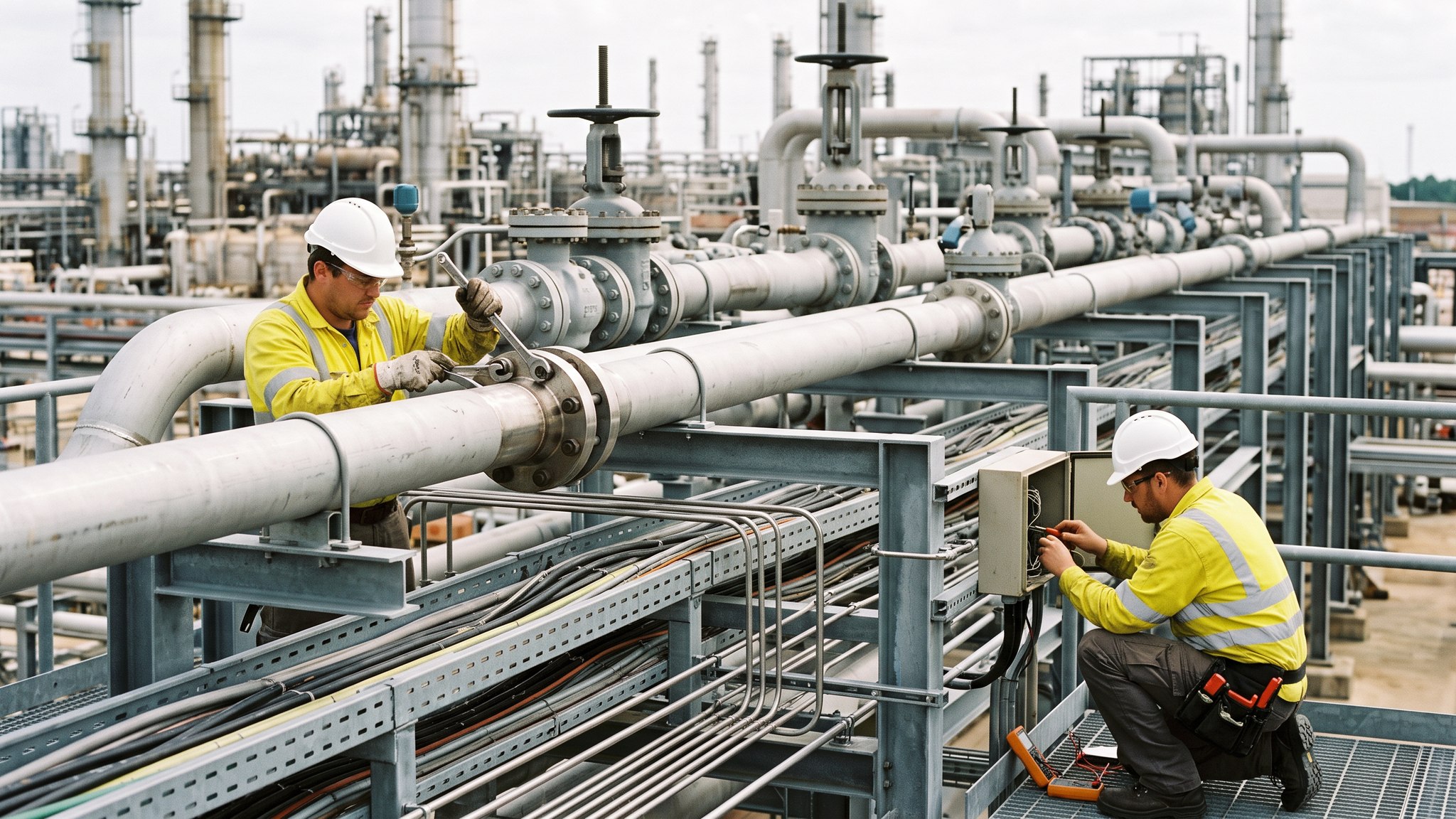
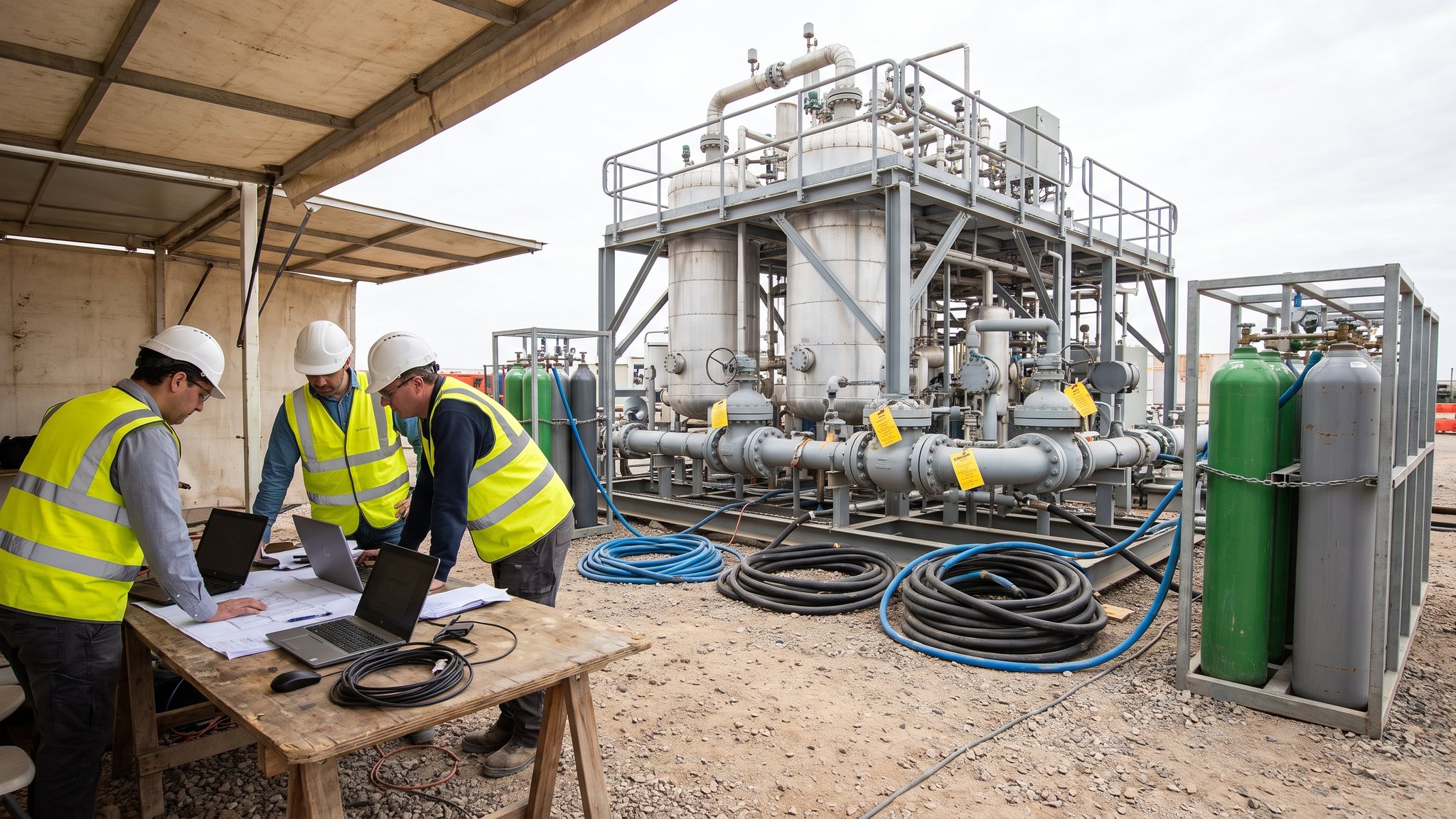
The plant itself is process construction: heavy foundations, tall modular units, dense pipework and a compression train that turns a gas into something dense enough to move economically. From there the project becomes a pipeline job, often crossing land and seabed, and finally a well - the point where the whole chain either contains what it is given or does not.
The obligation does not end at handover. Storage carries a long monitoring duty, so the instrumentation and the records built during construction outlive the construction team by decades.