Data centres - warehouses of power and cooling, built like fortresses.
A data centre is mission-critical construction: the shell is familiar - long-span steel, high-load slabs, a secure envelope - and those shared methods are linked below. But the building is only ever the wrapper. The job is power, cooling, white space and proving it all works under load before handover.
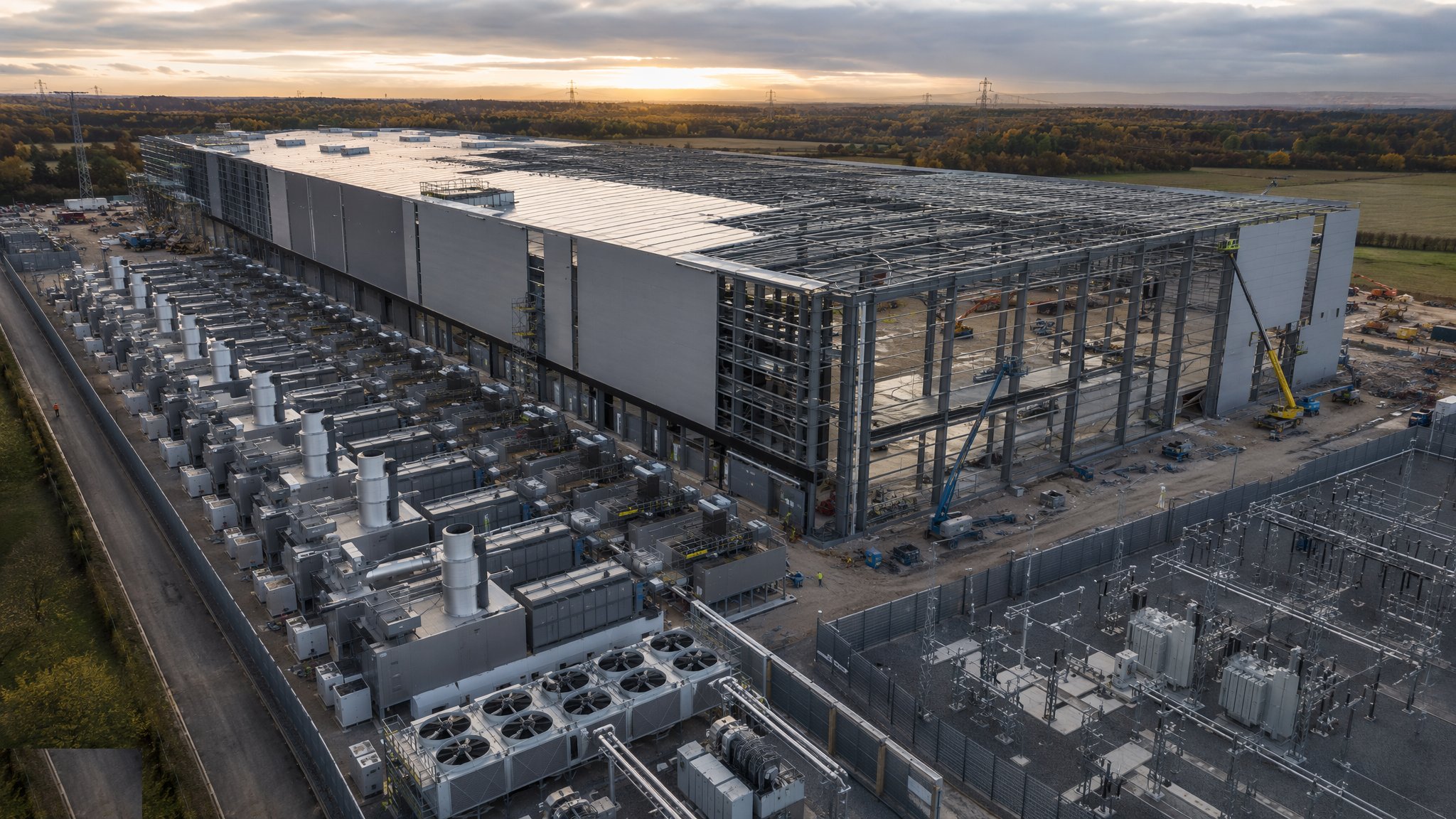
The process map - 5 guides
Each one is a full guide: overview, variants, numbered steps, plant, testing, safety and defects.
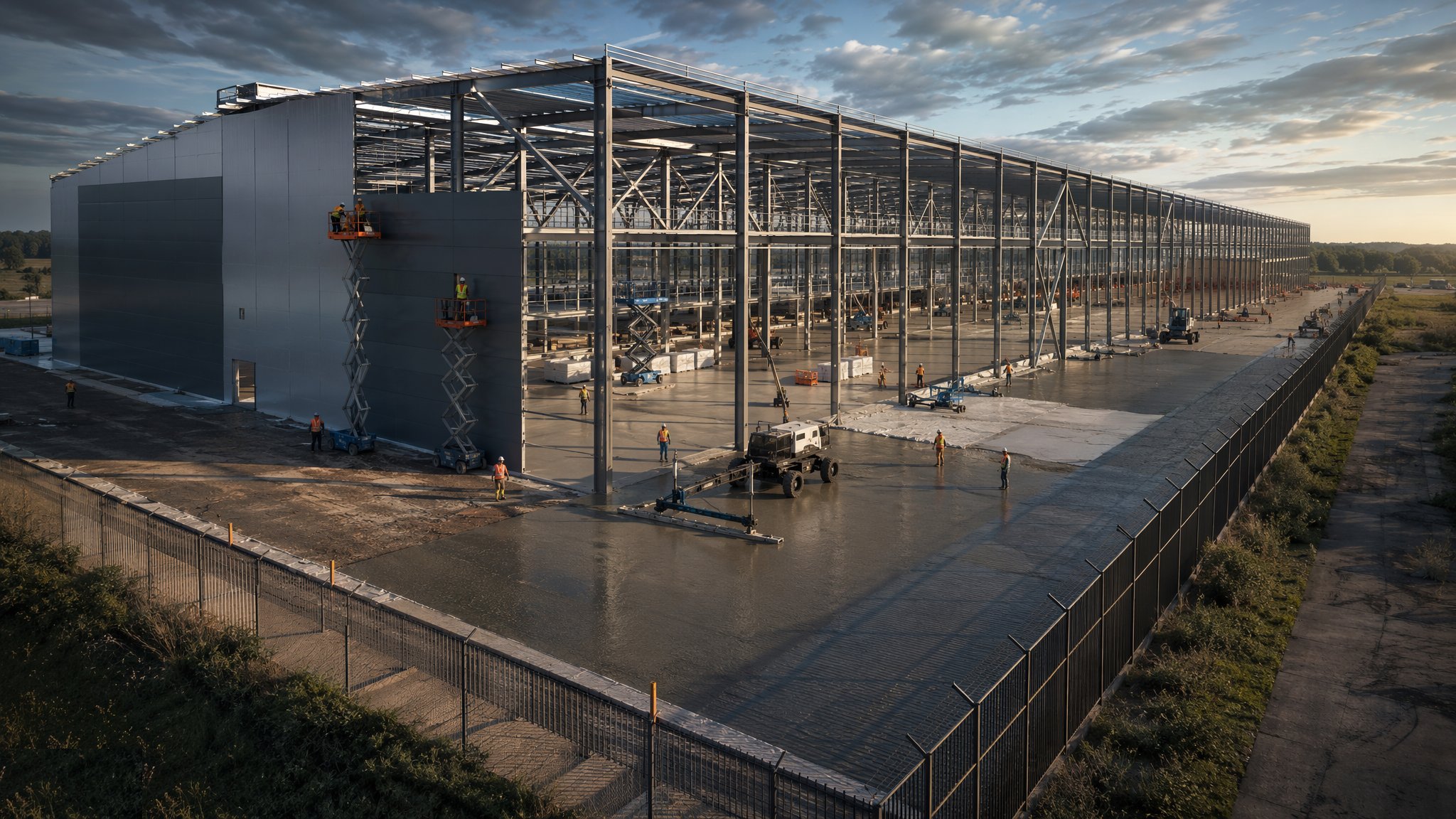
Data Hall Shell & Structure
Long-span steel, high-load slabs and a secure, weather-tight envelope - the warehouse-scale structure engineered for rack loads, not roof lights, where weather-tightness is a hold point the whole fit-out depends on.
Open process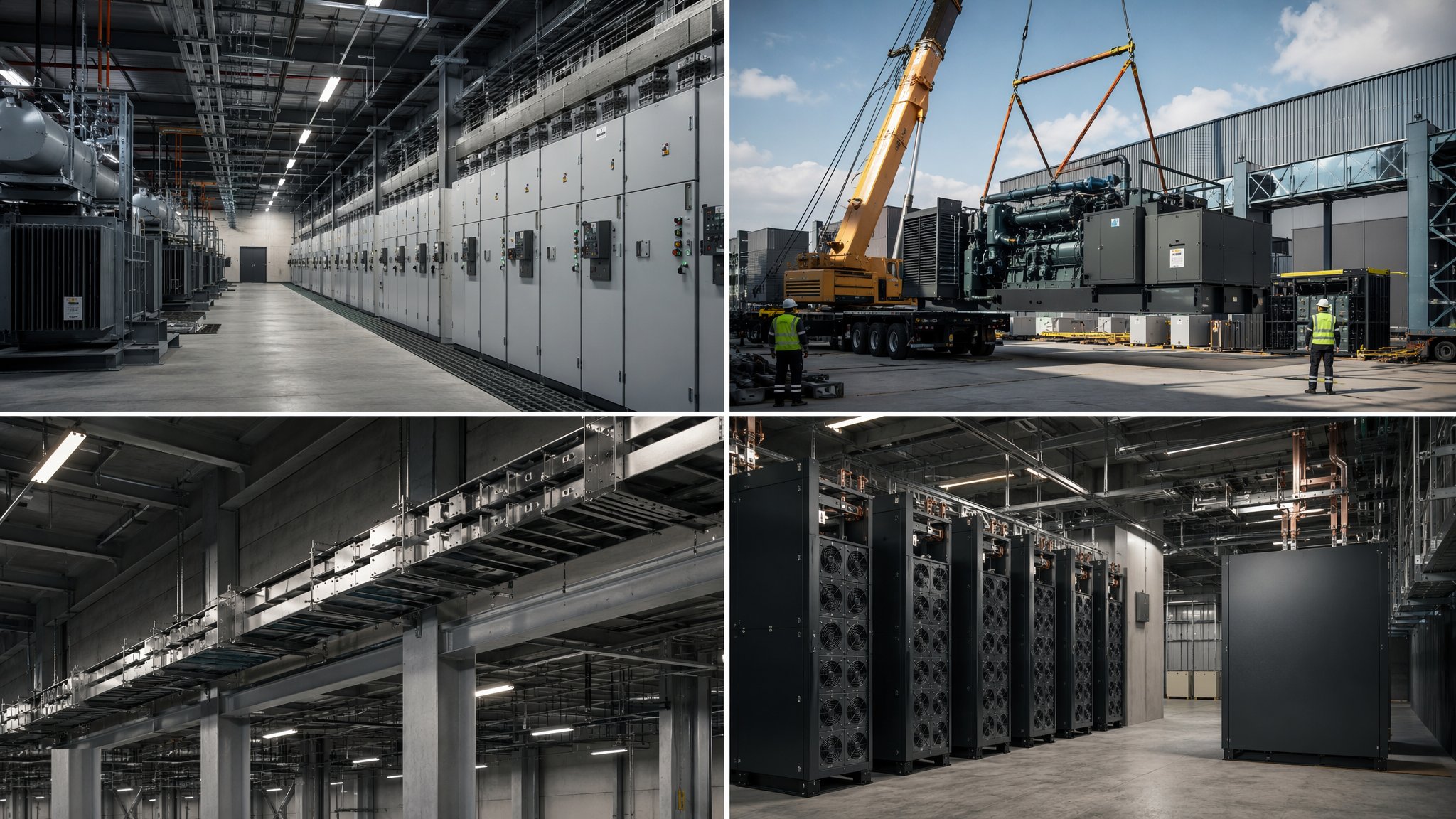
Power Infrastructure
From utility intake to the rack PDU - substations, HV/LV switchgear, UPS and batteries, standby generators and busway distribution, engineered to a redundancy philosophy that tolerates failure without dropping a single server.
Open process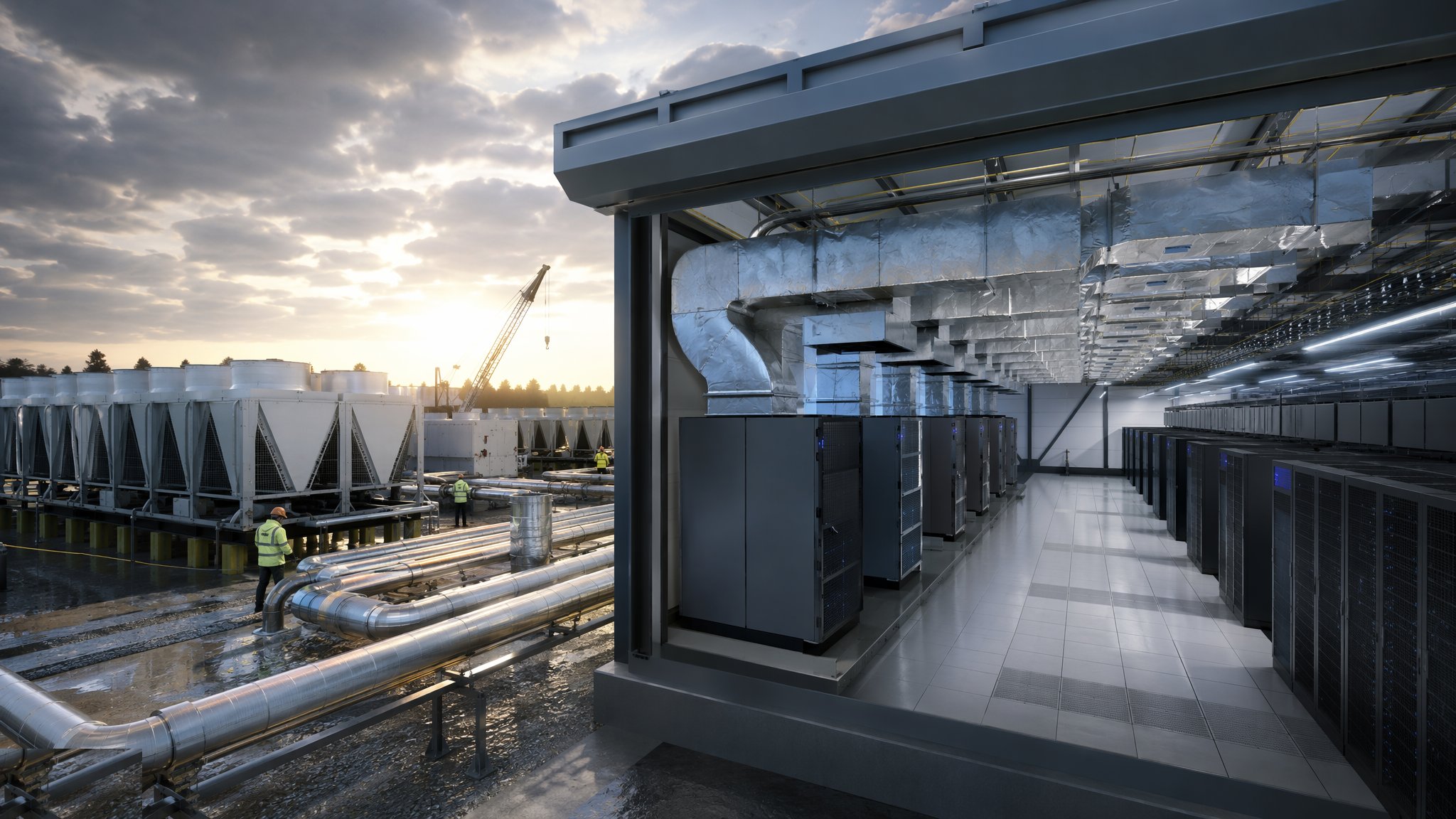
Cooling Systems
Getting the heat out - chillers and chilled-water loops, CRAH units and aisle containment, free cooling, and the direct liquid cooling that high-density AI racks now demand, all measured by one number: PUE.
Open process
White-Space Fit-Out
Turning the shell into sellable white space - racks and containment aligned to the millimetre, kilometres of structured cabling overhead, VESDA and gas suppression below, and the security layers and DCIM that make the hall a product.
Open process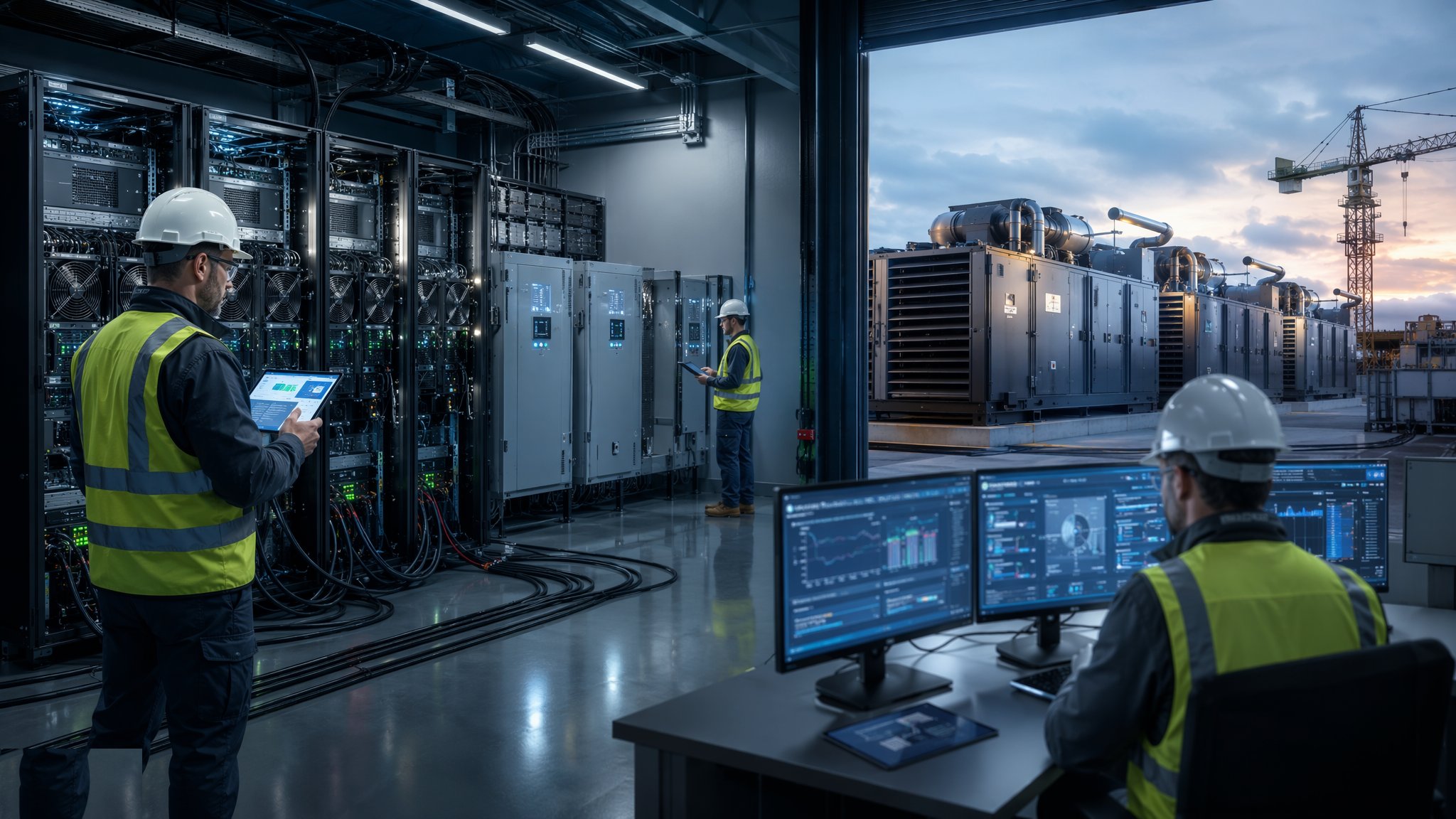
Commissioning & Integrated Systems Testing
The five-level commissioning framework that ends with pulling the plug on a live load - factory witness tests, load banks, integrated systems testing and failure drills that prove the facility behaves exactly as the redundancy philosophy promised.
Open processShared methods used in this sector
These guides are owned by other sectors - the canonical page lives there - but the method is the same here. Cards open the guide at its home sector.
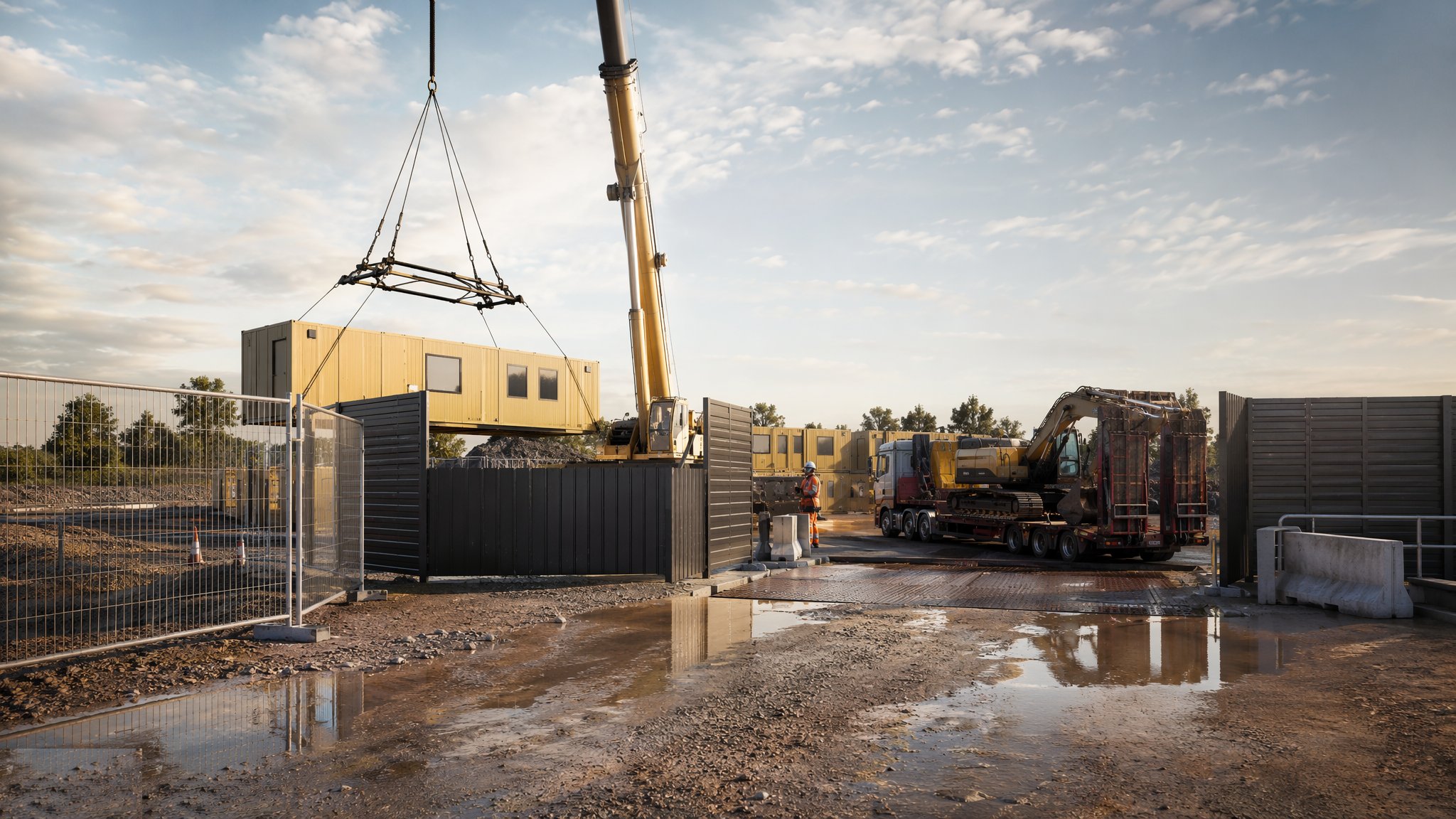
Site Access & Enabling Works
Turning a piece of land into a controlled, serviced, legal construction site.
Open processCanonical guide: Residential & Housing
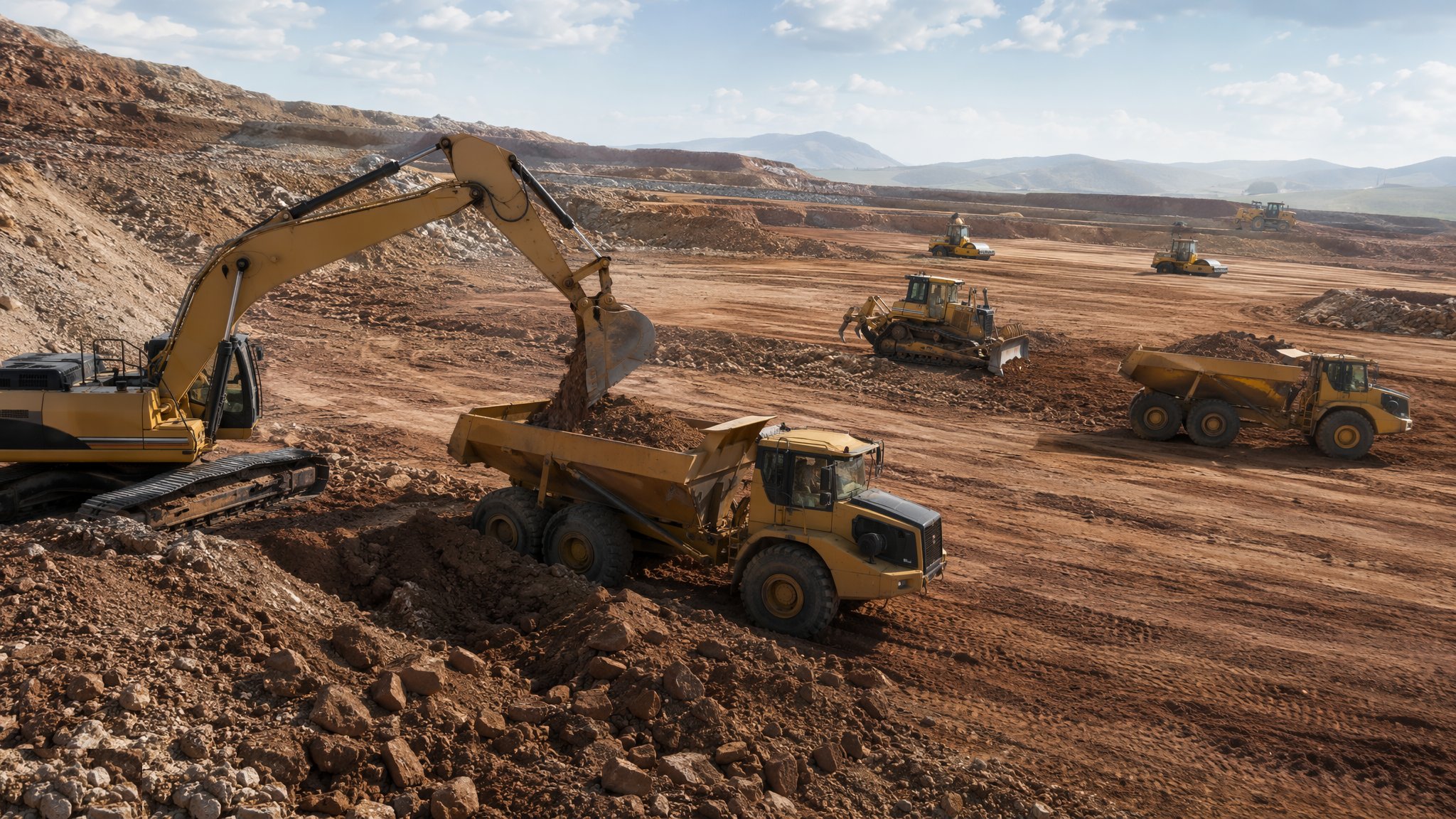
Earthworks & Excavation
Cut and fill, trenching and compaction - reshaping the ground to take the building.
Open processCanonical guide: Residential & Housing
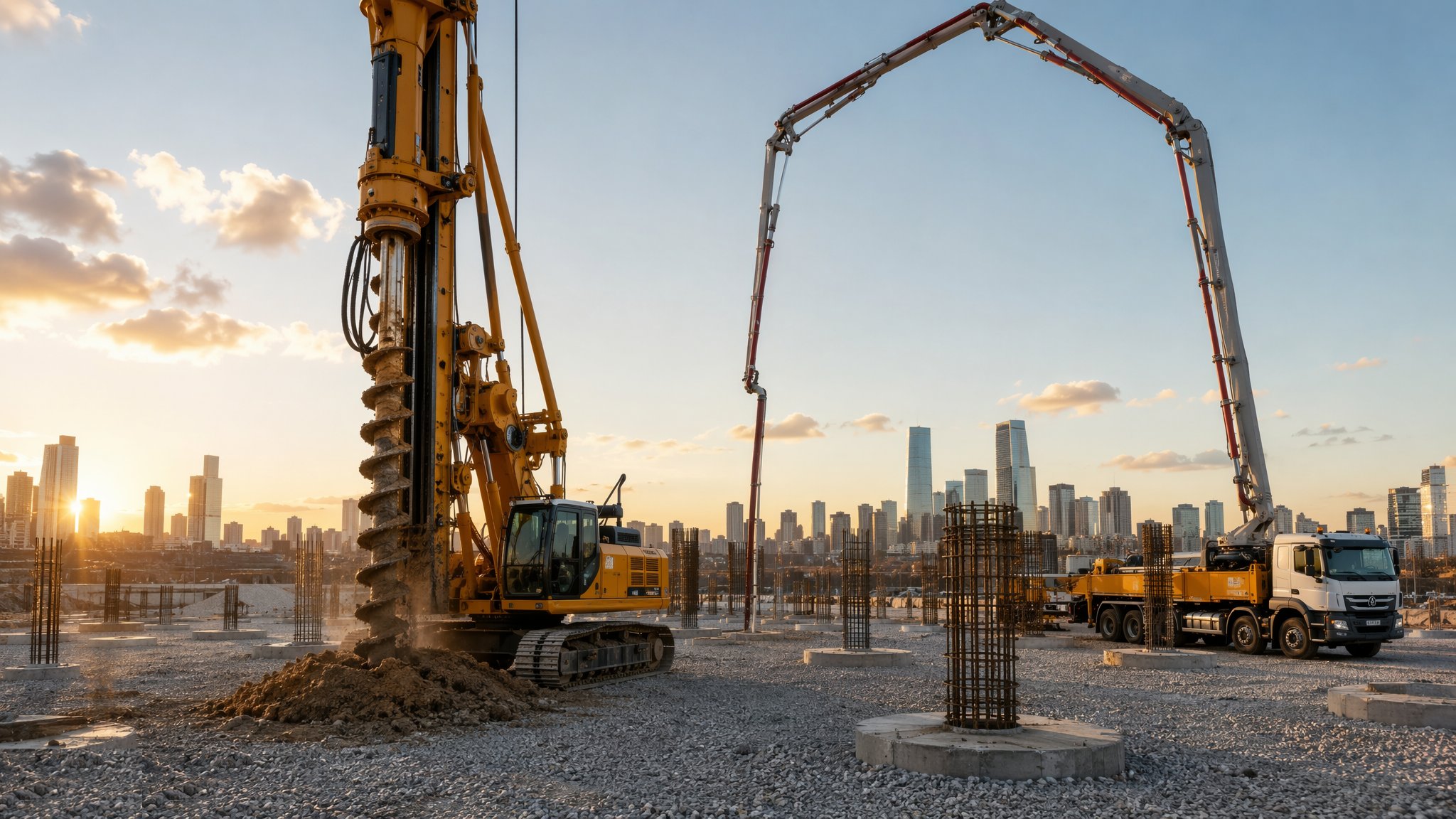
Piling & Deep Foundations
Driven, bored and CFA piles - carrying the building down to ground that can actually take it.
Open processCanonical guide: Residential & Housing
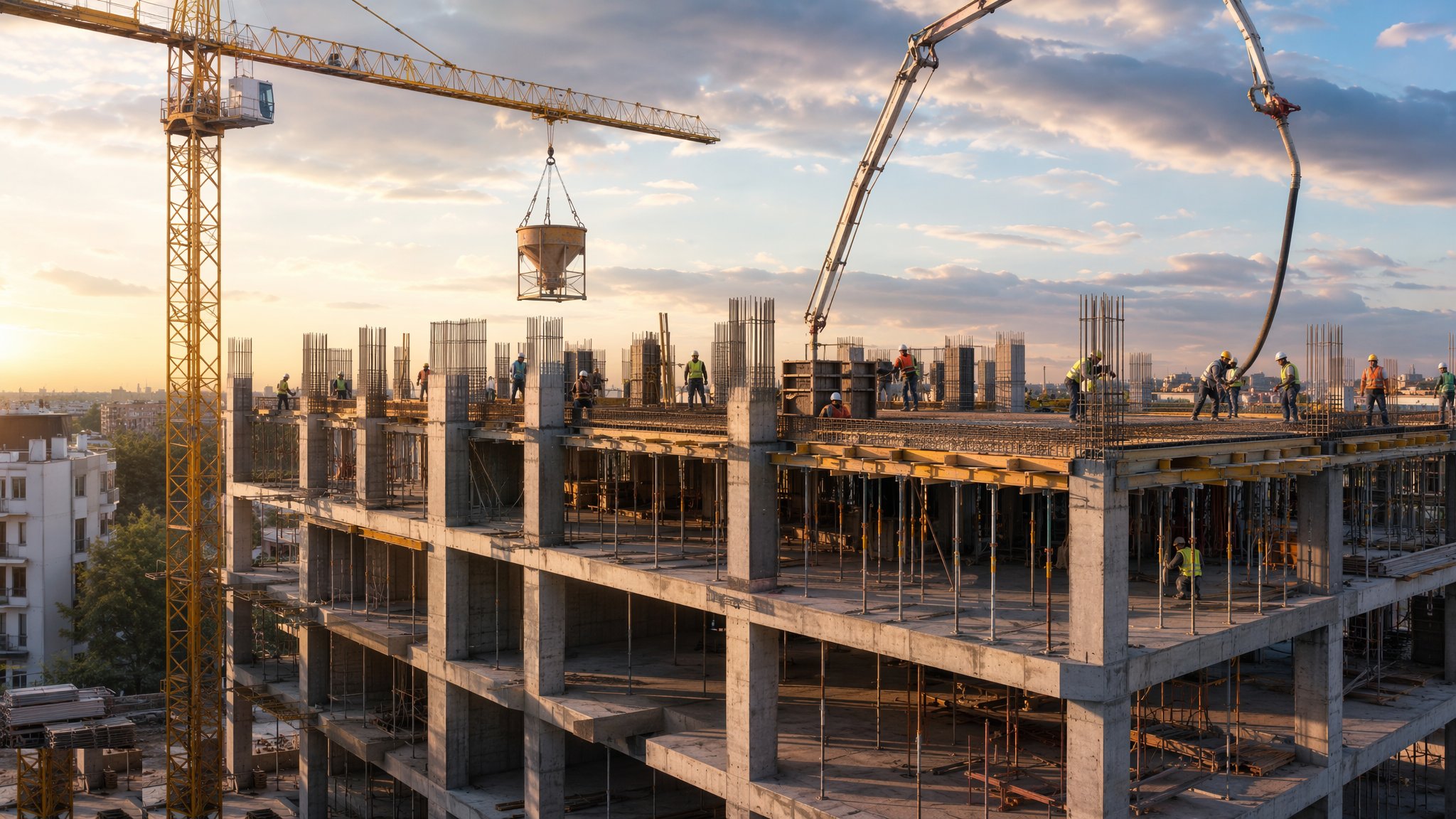
Concrete Frame Construction
Columns, walls and slabs cast in situ - the ribcage of a residential tower.
Open processCanonical guide: Residential & Housing
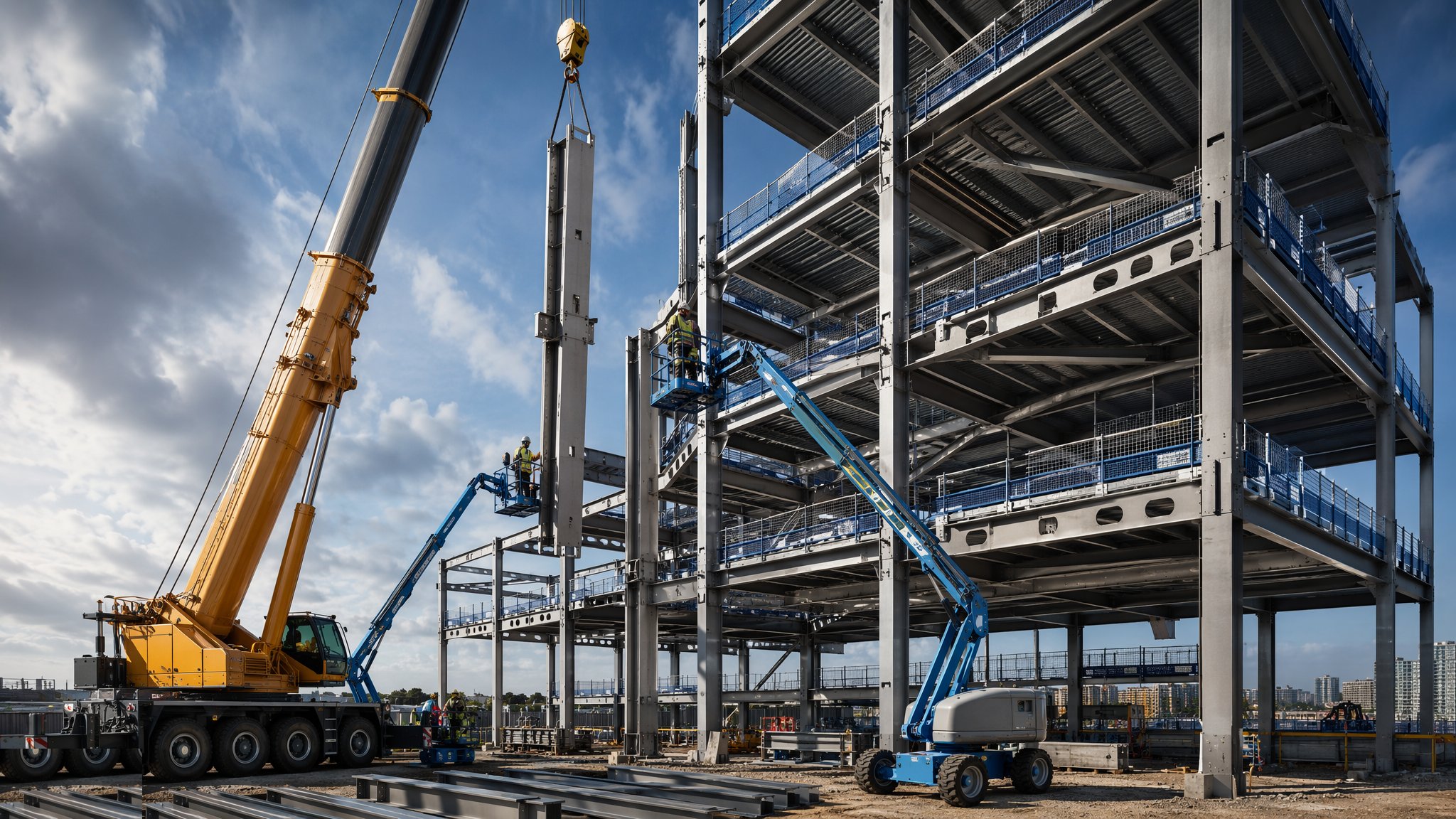
Steel Frame Construction
Fabricated off-site, erected at speed - bolted skeletons for frames that fly up.
Open processCanonical guide: Residential & Housing
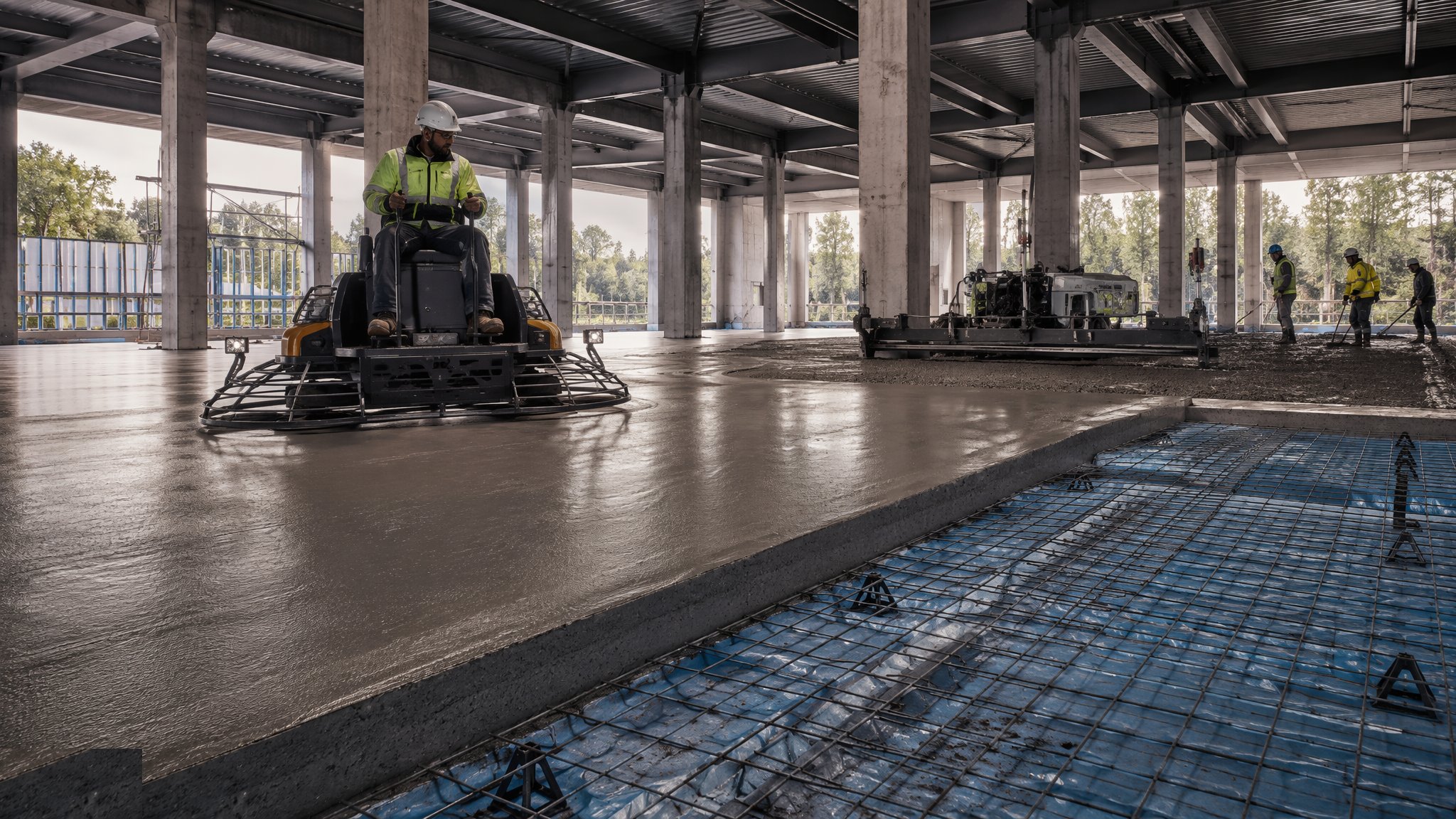
Floor Slabs & Screeds
Hardcore to power float - building the flat, dry, warm surface every finish depends on.
Open processCanonical guide: Residential & Housing
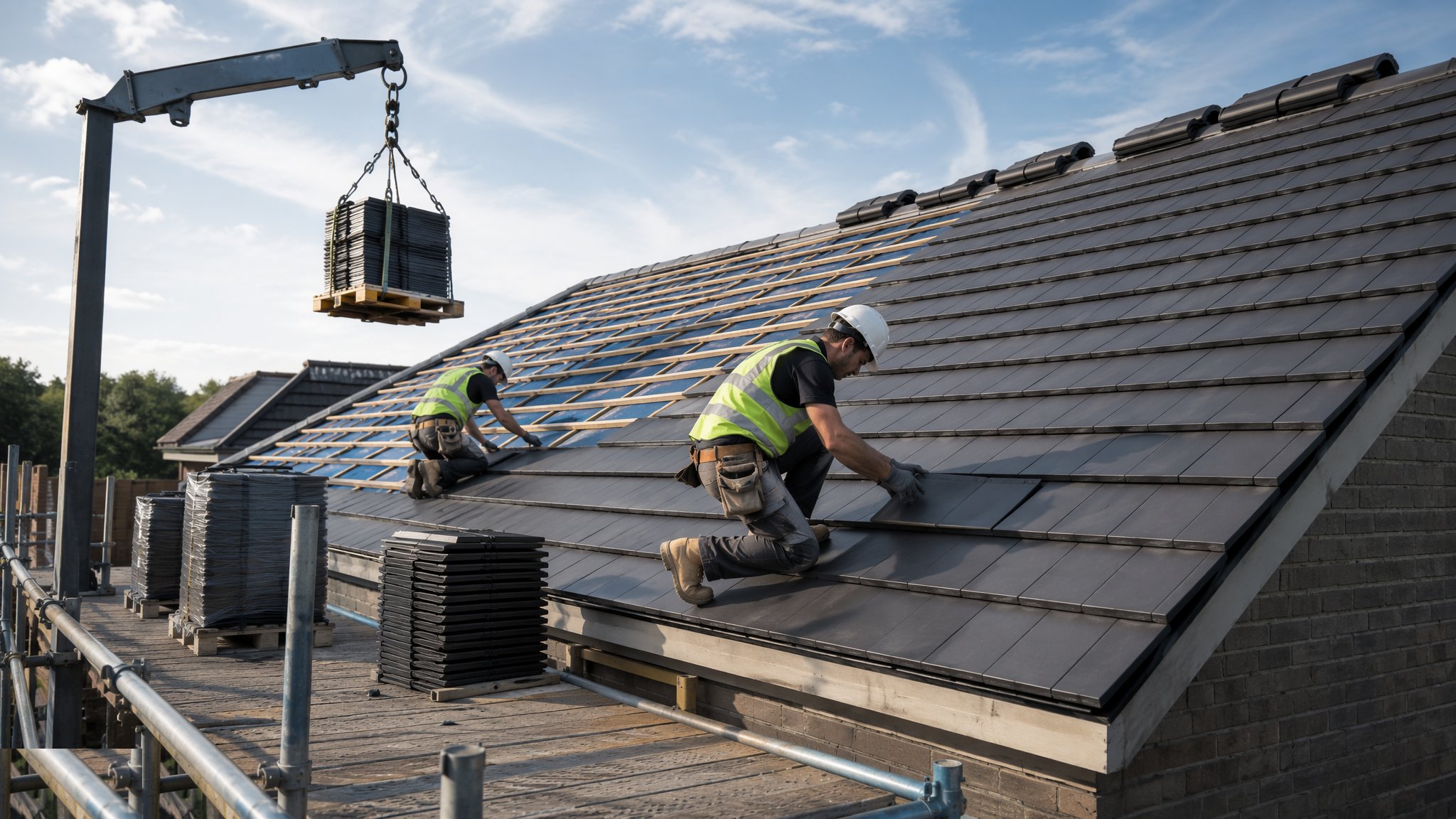
Roofing
Pitched trussed rafters and warm flat roofs - the hat that has to keep the weather out for fifty years.
Open processCanonical guide: Residential & Housing
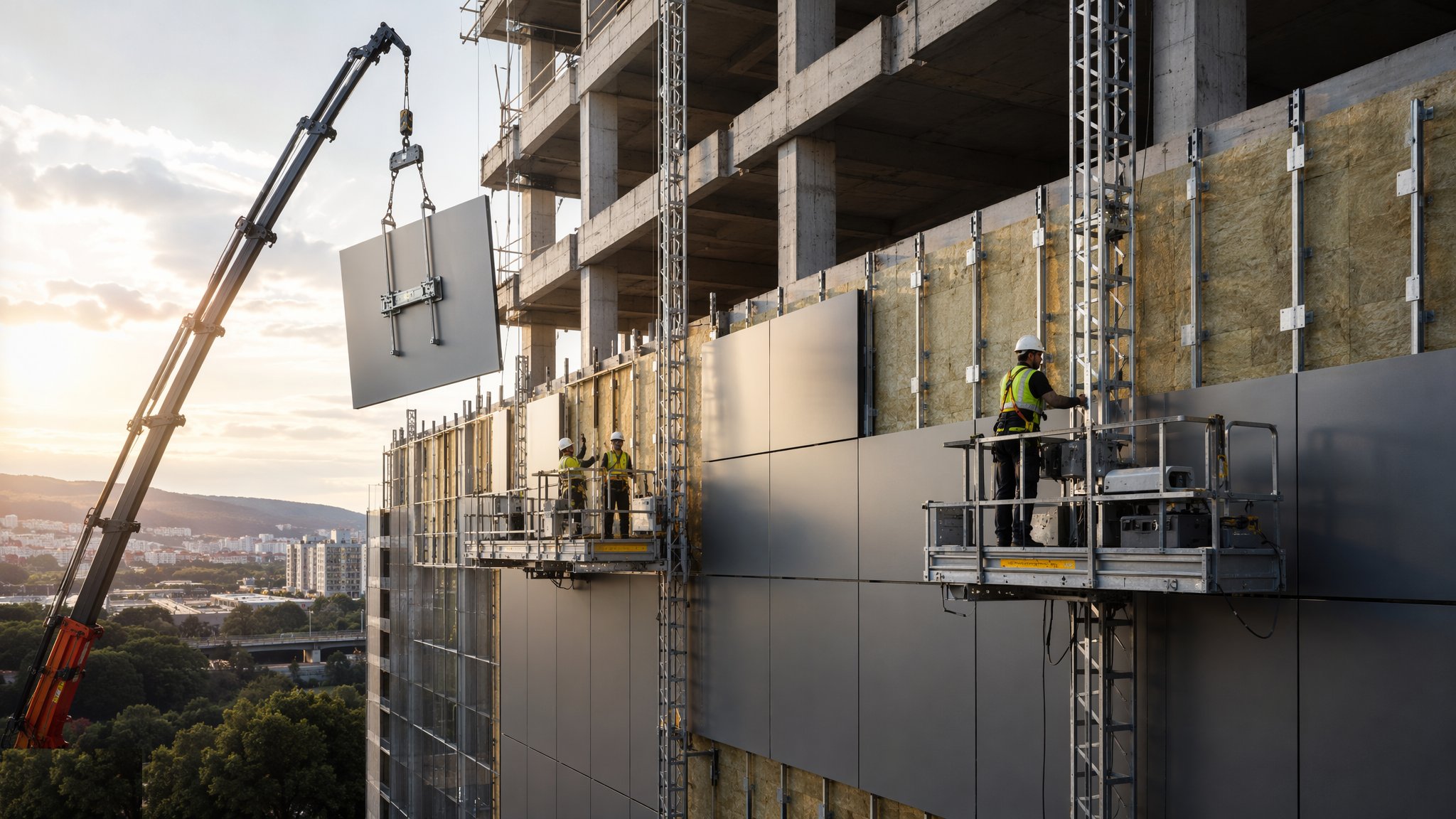
Façade & Cladding
The building's face - brick, render, rainscreen and curtain walling, and the fire details behind them.
Open processCanonical guide: Residential & Housing
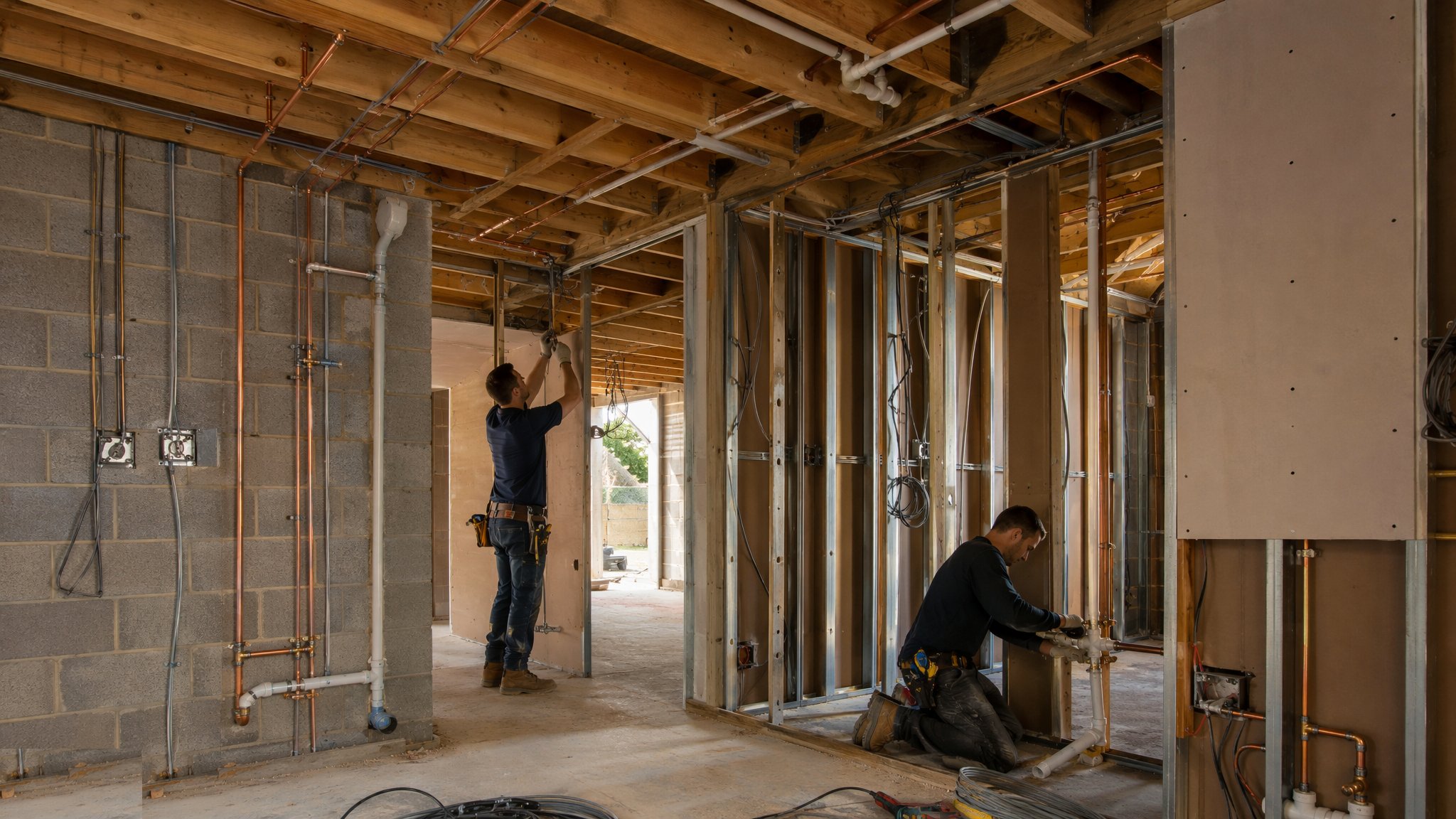

Data Centres & Digital Infrastructure in depth
About Data Centres & Digital Infrastructure
The electrical infrastructure is sized in megawatts and built in layers of redundancy - substations and grid connections, switchgear, UPS and generators - because the facility is sold on never going dark. The cooling plant runs as hard as the servers it serves. And the fit-out turns the shell into certified white space: raised floors, containment, racks and cabling, all of it commissioned under simulated load at integrated systems testing, where the facility rehearses every failure mode before a single customer server arrives.
The five guides in this sector cover the mission-critical layer - shell and structure, power, cooling, white-space fit-out, and commissioning and IST. The everyday civils upstream are the shared methods, linked through to their canonical guides.
Power first, building second
Everything about a data centre programme is downstream of the power connection. Site selection starts with the grid: available capacity, the voltage of the interface - typically 132 kV or 33 kV in the UK, 132 kV in the UAE for hyperscale - and the date the connection can be delivered, which in constrained grids can be the longest item on the programme by years. The on-site electrical infrastructure is then built in layers of redundancy: utility intake substation, MV switchgear, UPS with battery or flywheel ride-through, standby diesel or gas generators with fuel storage for 24 to 72 hours, all arranged so that no single failure and no single maintenance action can drop the load. The contractor builds this as a power project that happens to have a building round it.
The electrical programme ends in staged energisation long before the fit-out finishes: the substation energises under the utility's safety rules and connection conditions, then switchgear line-ups, then UPS and generator systems, each with its own factory and site acceptance tests - protection trip testing, battery discharge tests, generator load-bank runs at full rated load for hours, fuel system proving. These are witnessed, documented events, and the as-tested documentation becomes part of the facility's operating licence in the customer's eyes.
The shell, for all that it is 'only the wrapper', is still serious engineering: long-span steel frames over high-load slabs rated for rack rows that get denser every generation, a secure envelope with ballistic and blast considerations on some facilities, and a roof that carries plant rather than weather alone. Fire compartmentation between data halls, fuel systems with double-skinned tanks and bunding, and cable routes with their own fire rating all sit on the civils and structure programme before the mission-critical trades start.
Cooling as critical plant
Cooling plant on a data centre runs as hard as the IT load it serves, and it is built and commissioned to the same redundancy philosophy: chillers, pumps, cooling towers or dry coolers, and distribution pipework arranged in N+1 or 2N configurations so a failure or a maintenance isolation never interrupts cooling. In the UK the trend is to free-cooling and evaporative systems that cut energy use for most of the year; in the UAE the ambient temperature removes most free-cooling hours and pushes designs towards high-efficiency centrifugal chillers, sometimes with district cooling from Empower or Tabreed as the primary source and the data centre holding backup plant - an arrangement that changes both the plant room design and the utility interface.
Water treatment for the cooling loops is part of the construction scope, not an afterthought: chemical dosing, filtration and commissioning flushes to a cleanliness standard, because debris left in a 500-millimetre chilled-water header will find its way into a heat exchanger after handover. The thermal commissioning is done against simulated load - load banks heating the white space - because there are no servers yet, and the facility must prove it can hold temperature and humidity at full design load, in failure modes, before a customer will rack a single machine.
White space and the chain to IST
The fit-out turns the shell into certified white space: high-load slabs with pedestal raised floors or slab-on-grade designs, hot-aisle or cold-aisle containment, busway and rack power distribution, structured cabling in the hundreds of kilometres, leak detection, very-early-smoke-detection systems, gas suppression or hypoxic air fire protection, and physical security in layers - the building is specified like a fortress because the customer's whole business sits inside it. Cleanliness is a controlled state: the white space is built dirty, then cleaned progressively, then held under positive pressure with access control and protective measures until handover, because dust in a server hall is an operational defect.
The programme closes with commissioning in five escalating levels, from component tests through system tests to integrated systems testing - the IST - where the facility rehearses its failure modes under simulated load: utility power is cut and the generators must carry the building; a chiller is failed and the others must hold temperature; fire alarms are proved against suppression and shutdown sequences. The IST is scripted, witnessed by the customer's engineers, and any failure resets the relevant section. Only after a clean IST does the facility take its first live customer load, and the defects and warranty regime then runs against performance, not appearance - power usage effectiveness, temperature stability and availability are the snagging list.
UK versus UAE: what actually changes
In the UK the binding constraints are grid connection lead time, planning - increasingly scrutinised for energy and water use - and sustainability targets that push designs towards free cooling, heat reuse and renewable procurement. Construction follows a temperate-climate playbook with the mission-critical layering on top.
In the UAE the grid interface is a single utility relationship with DEWA or the emirate utility, capacity is generally planned rather than queued, but the climate sets the engineering: cooling plant sized for ambient design temperatures that UK plant never sees, external plant and fuel systems shaded and ventilated, dust filtration on every air path, concrete temperature control and summer working restrictions on the civils, and Civil Defence fire approvals as a distinct authority gate alongside the utility and municipality. The structure of the work - shell, power, cooling, white space, IST - is identical; the loads, the deratings and the authority sequence are not.
Procurement shape differs too. UK hyperscale and colocation work is let in fast-track packages - shell and core first, then electrical and mechanical packages let on the equipment lead times, with generators and switchgear ordered at contract award because their lead times run to many months. UAE work follows the same logic under FIDIC-based contracts with Taking-Over Certificates and defects liability periods, but adds the authority approval chain into every package: no plant starts, no fuel system is filled, and no hall is occupied until the relevant utility, municipality and Civil Defence sign-offs are in hand.
Speed is the market's other constant in both regions, and it changes how the work is organised. Hyperscale customers buy capacity in phases of tens of megawatts and expect each phase in months, not years, so data centres run on design standardisation: the same hall, the same electrical block, the same cooling module repeated across the site and across sites. Construction quality is therefore a systems problem - the second hall must be built exactly like the first, the commissioning scripts are reused, and lessons from each IST are folded into the next phase's standard. The contractor who treats every hall as a one-off loses the programme; the one who industrialises it wins the next campus.
Security shapes the build as much as any technical requirement. Perimeter fencing, vehicle barriers, blast-rated walls where specified, biometric access layers and CCTV are installed as the building rises, and site access during construction is itself controlled - vetted labour on sensitive phases, escorted deliveries to the white space, no photography beyond defined points. The practical consequence for the programme is that security trades sit on the critical path at the end: the facility cannot take customer load until the accreditation walk-downs are complete, and a failed door contact or an unterminated camera is a handover blocker like any failed breaker.