Modest civils on a live site, governed entirely by the grid connection.
An EV charging scheme looks like a small job and behaves like a utility connection with some paving attached. The construction - trenching, ducts, bases, bollards, surfacing and lighting - is well within any competent groundworks contractor. What decides whether the scheme happens at all is the electricity network: how much capacity is available at that point, what it costs to reinforce, and how long the connection takes.
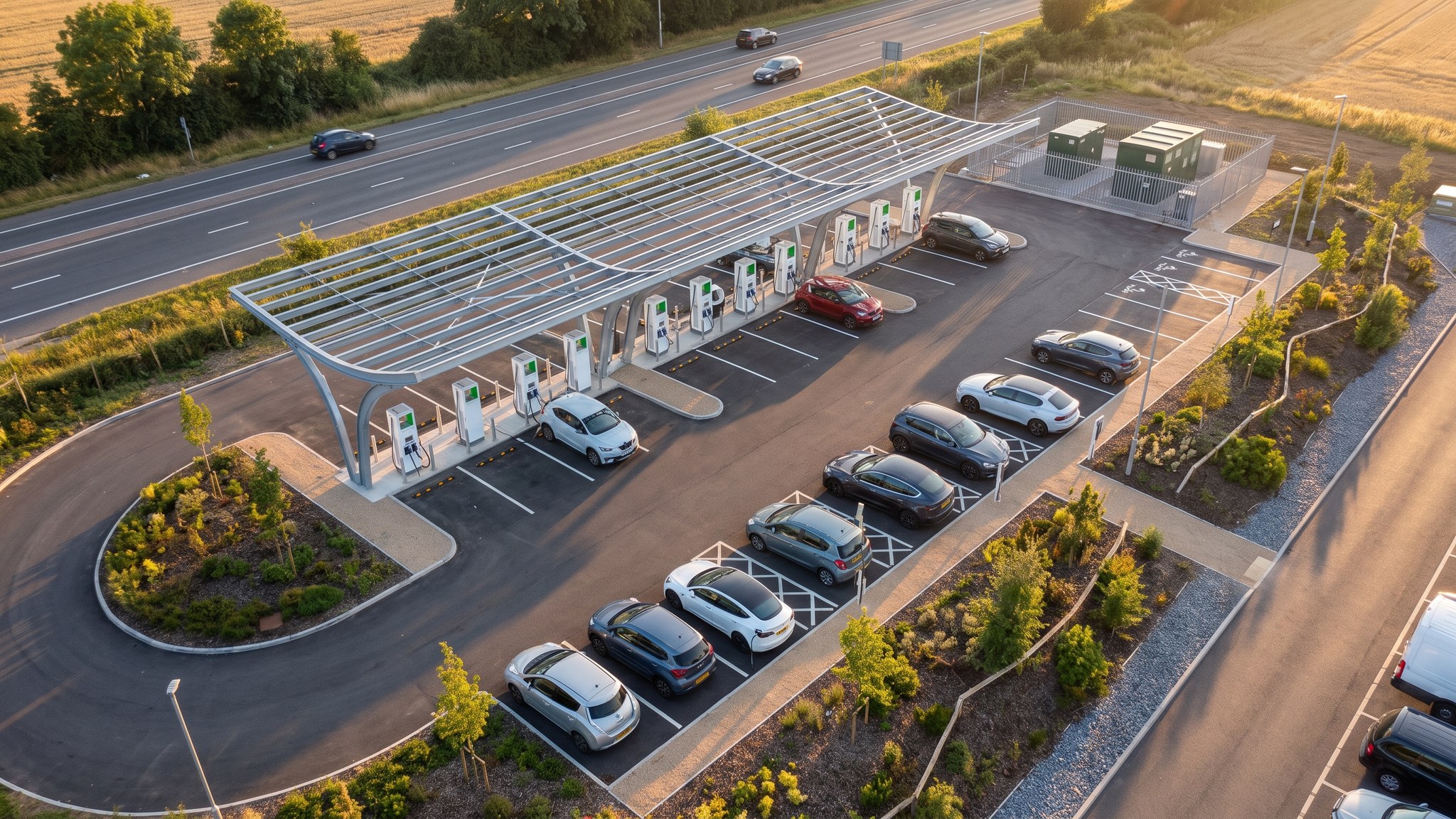
The process map - 5 guides
Each one is a full guide: overview, variants, numbered steps, plant, testing, safety and defects.
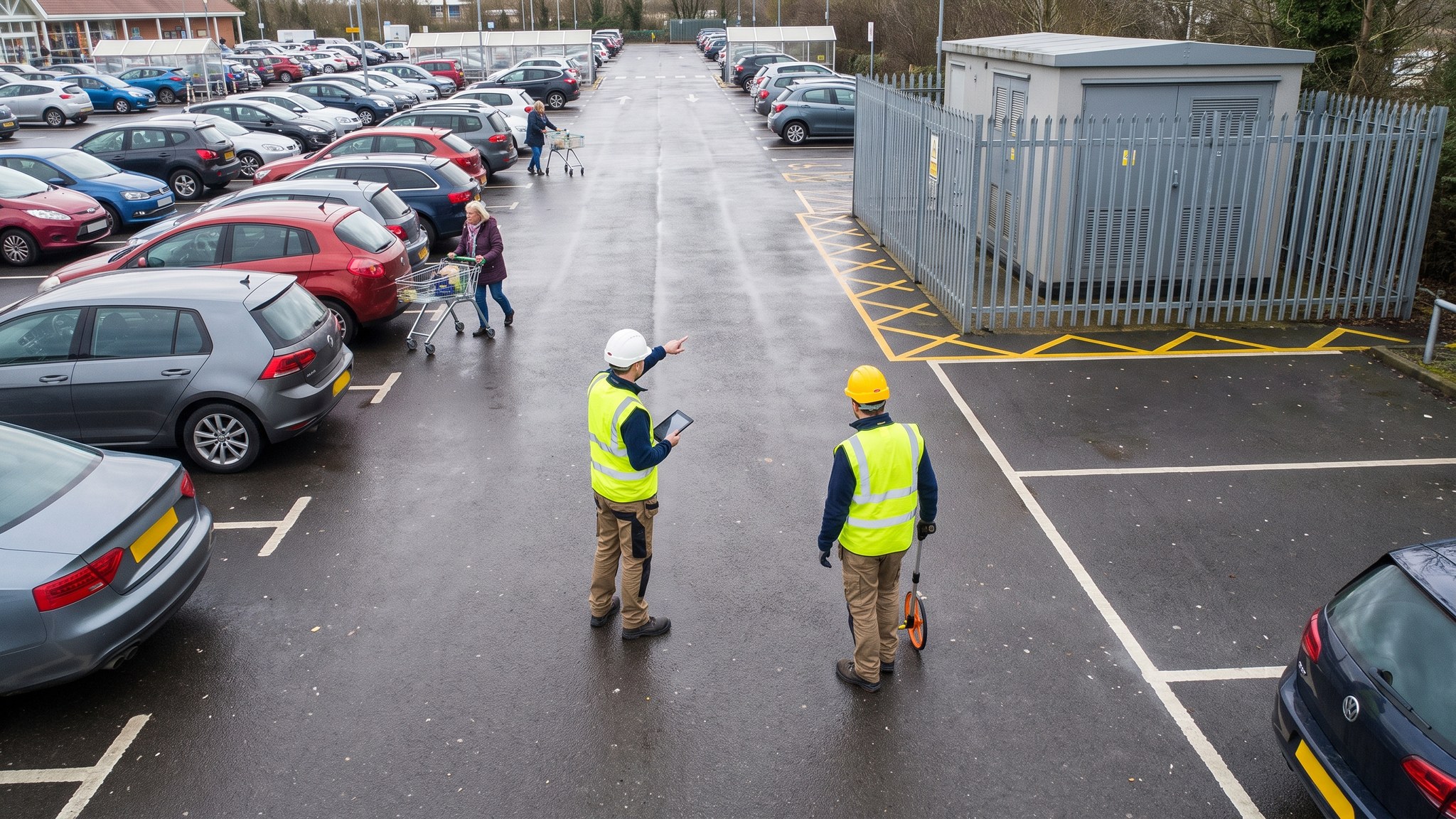
Site Survey & Grid Application
The stage that decides whether the scheme happens at all - surveying what is above and below the ground, establishing what power the network can actually give, and getting the connection application in, because its lead time sets the programme.
Open process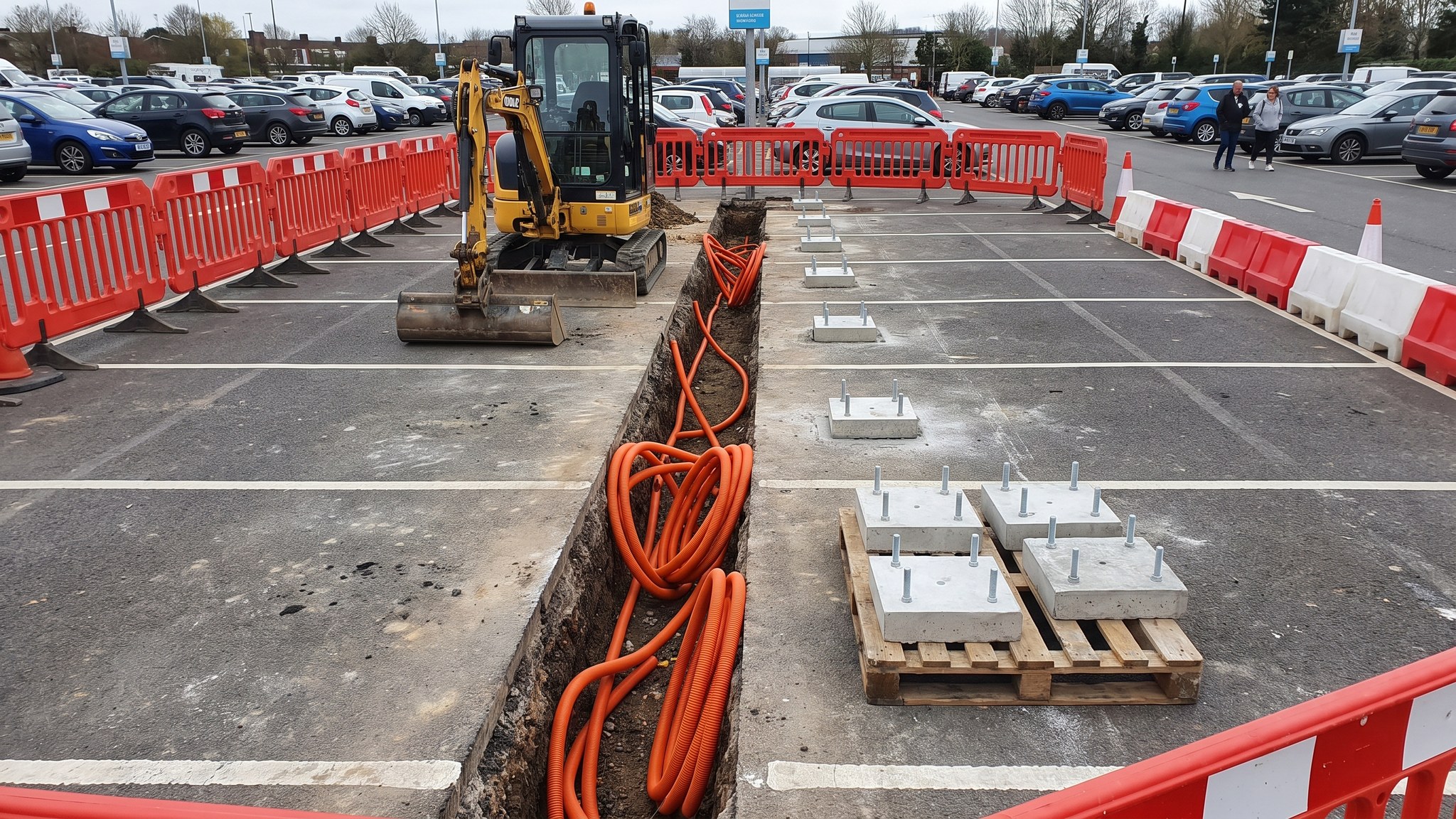
Civils & Groundworks
Trenching, ducting, chambers, bases, bollards, drainage, lighting and reinstatement - modest civils carried out in phases on a live trafficked site, where keeping customers moving matters as much as the works themselves.
Open process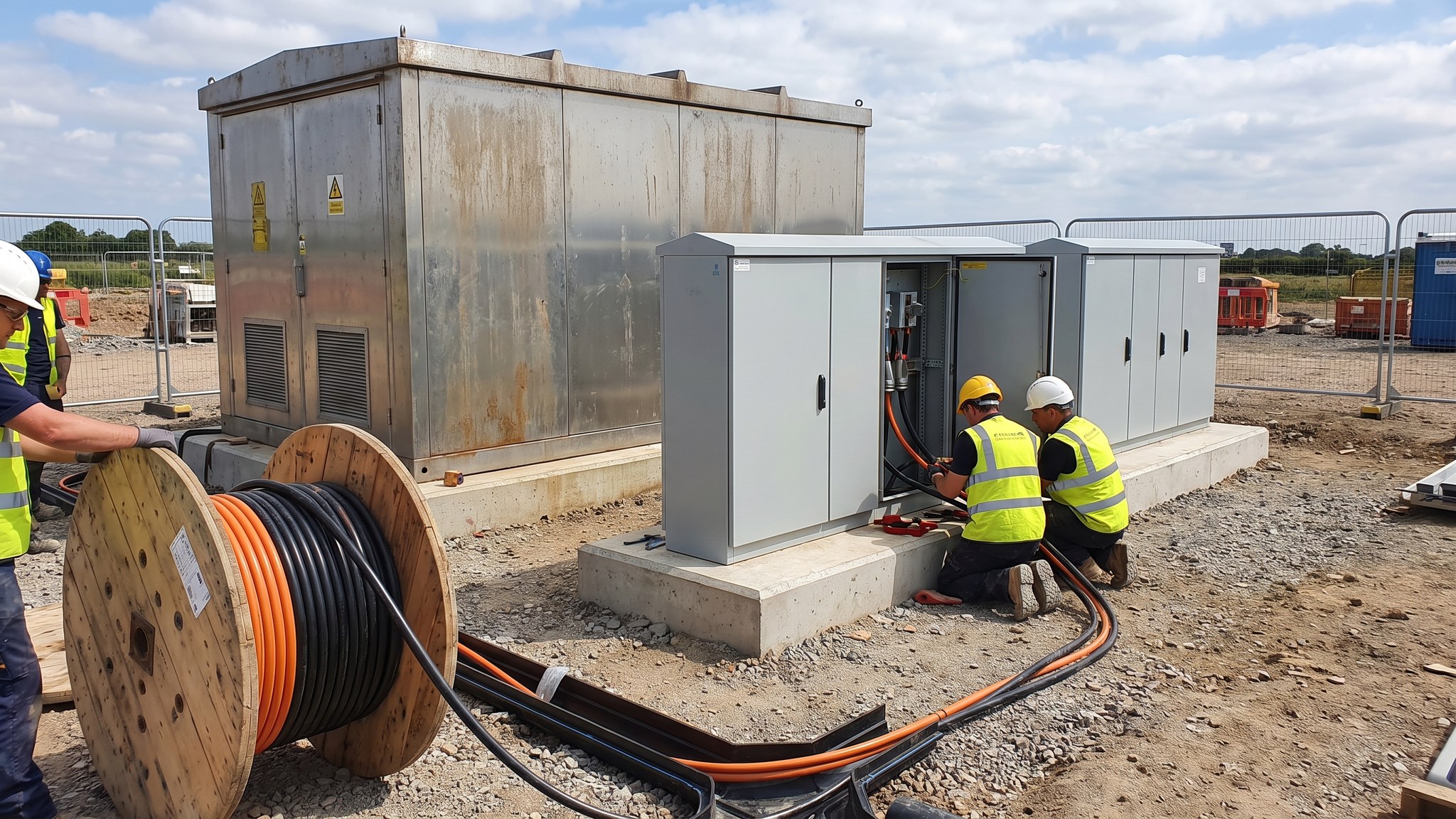
Electrical Infrastructure
Everything between the network operator's connection point and the bays - substation or supply position, switchgear, distribution, protection, metering, cable and the containment that carries it, plus the comms that make the site controllable.
Open process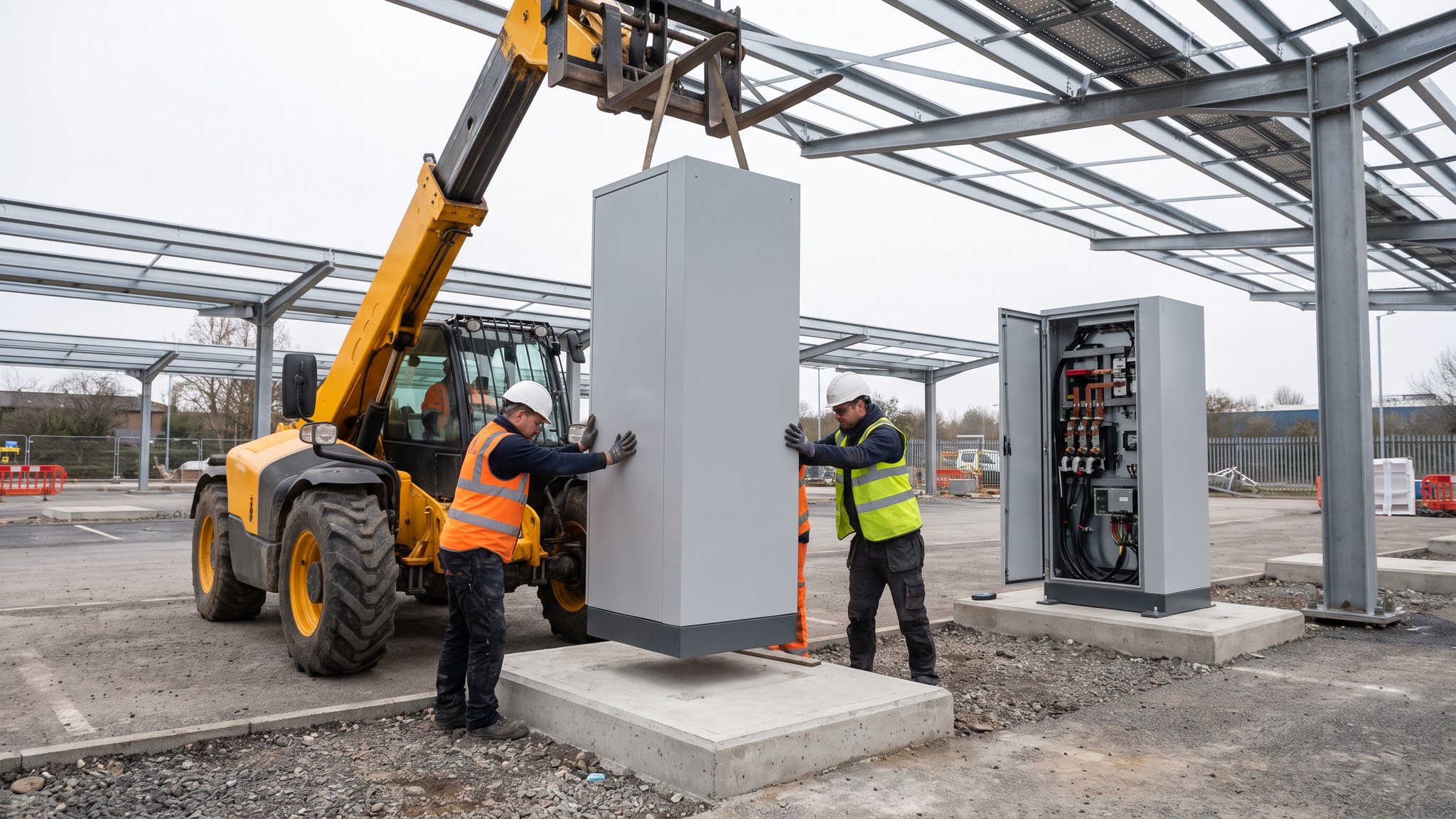
Charger Installation
Receiving, setting, fixing, connecting and protecting the units themselves - heavy, delicate, long-lead items that have to land exactly where the base says they will, because a plinth in the wrong place cannot be moved.
Open process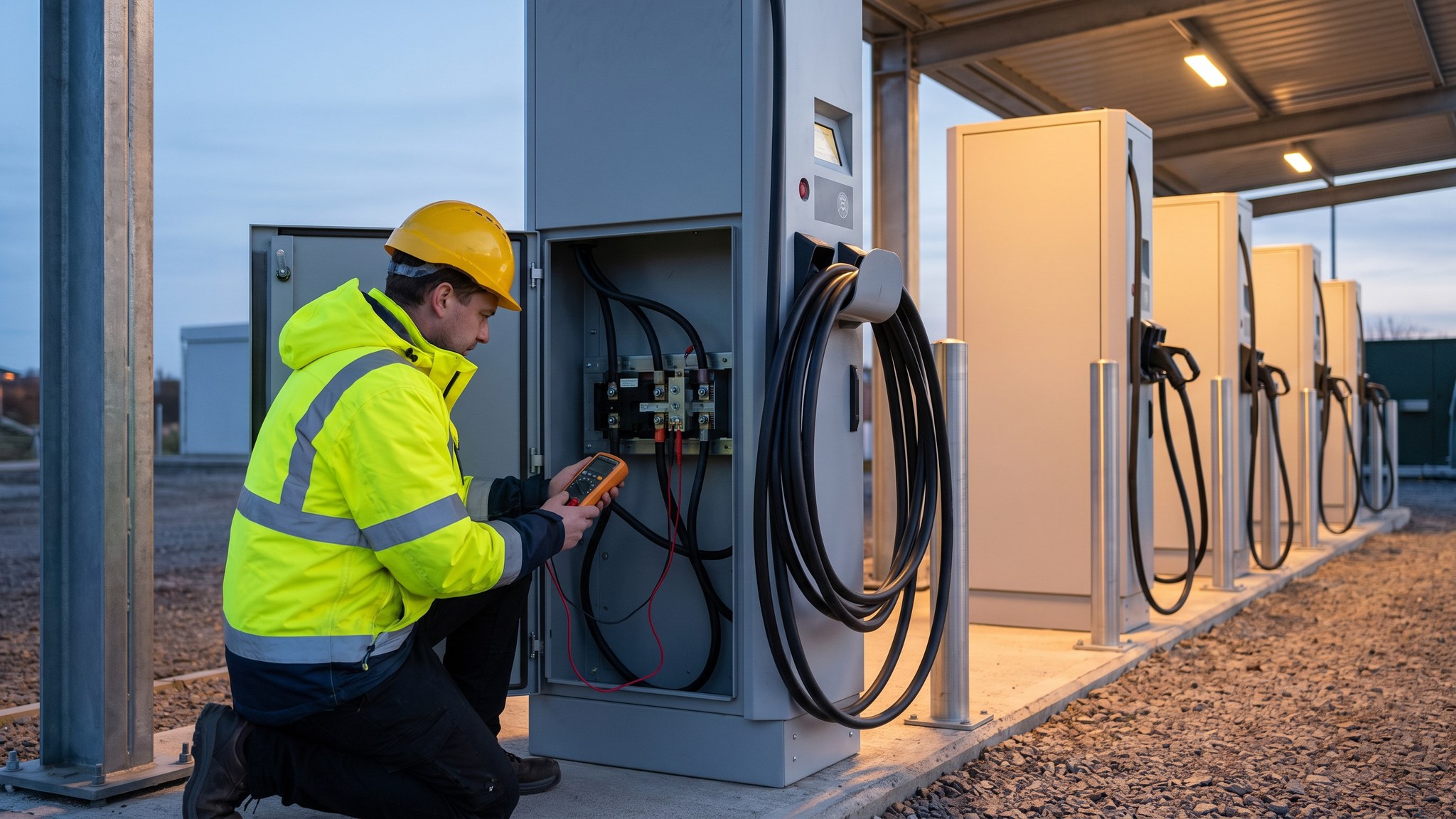
Commissioning & Energisation
Dead testing, energisation by the network operator, then proving every unit charges a real vehicle and takes a real payment - because a charger that delivers energy but cannot bill for it is not a finished charger.
Open processShared methods used in this sector
These guides are owned by other sectors - the canonical page lives there - but the method is the same here. Cards open the guide at its home sector.
Site Access & Enabling Works
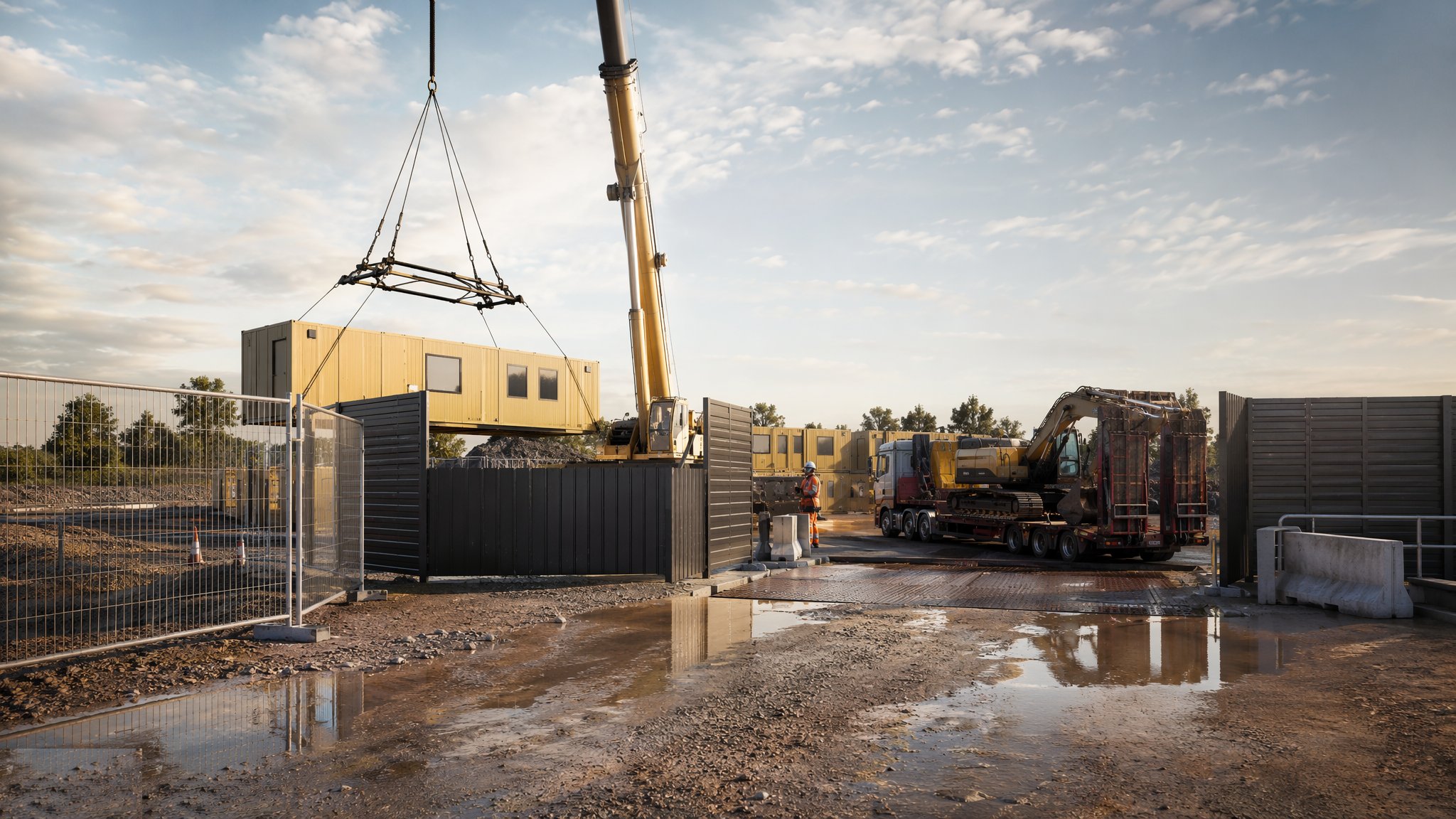
Turning a piece of land into a controlled, serviced, legal construction site.
Open processCanonical guide: Residential & Housing

Earthworks & Excavation
Cut and fill, trenching and compaction - reshaping the ground to take the building.
Open processCanonical guide: Residential & Housing
Underground Cable Installation
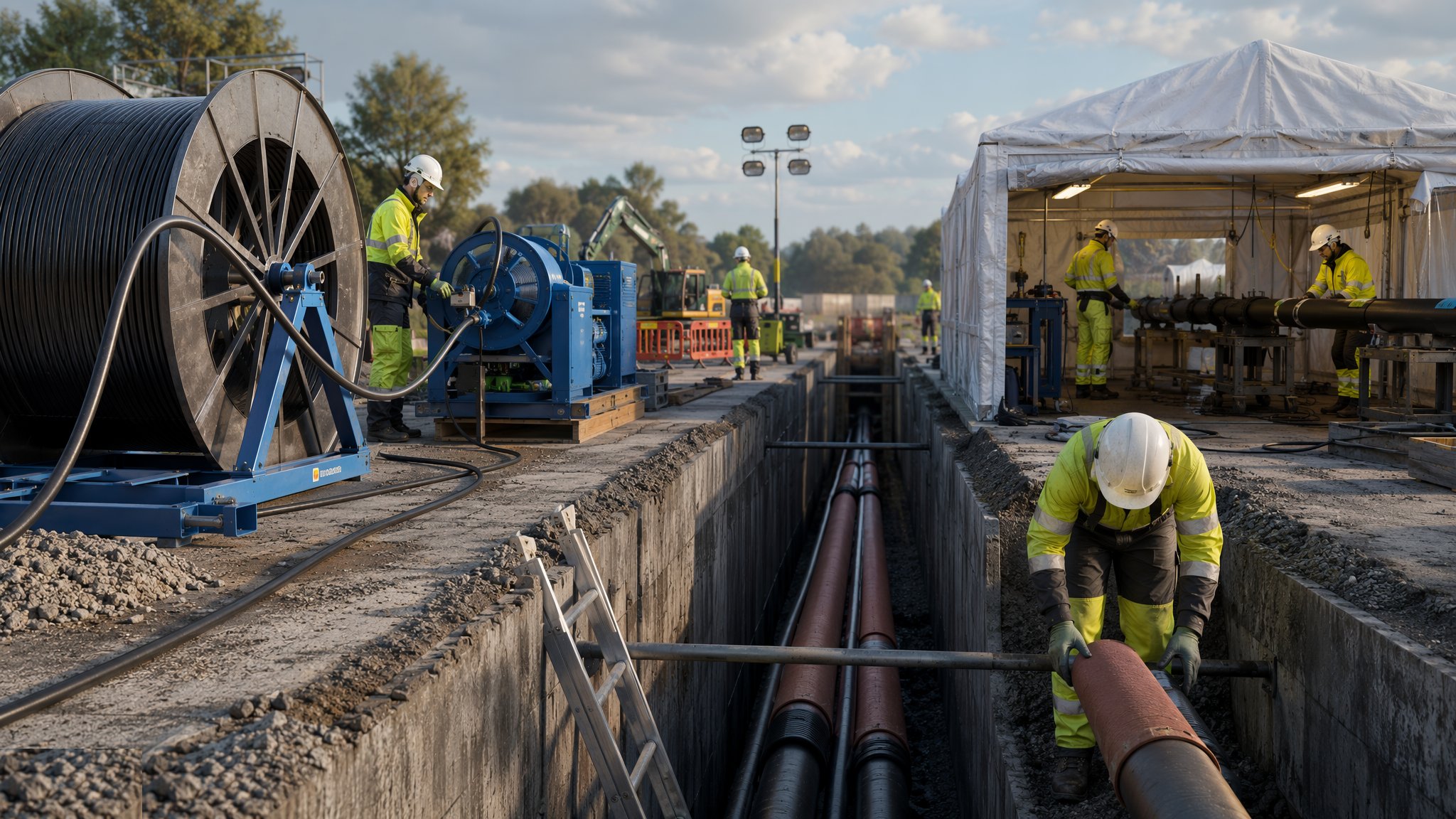
High-voltage circuits buried in trenches and duct banks - kilometres of XLPE cable pulled between joint bays, bedded in thermal surround, jointed by certified jointers, and proven by the sheath test.
Open processCanonical guide: Power Transmission & Distribution
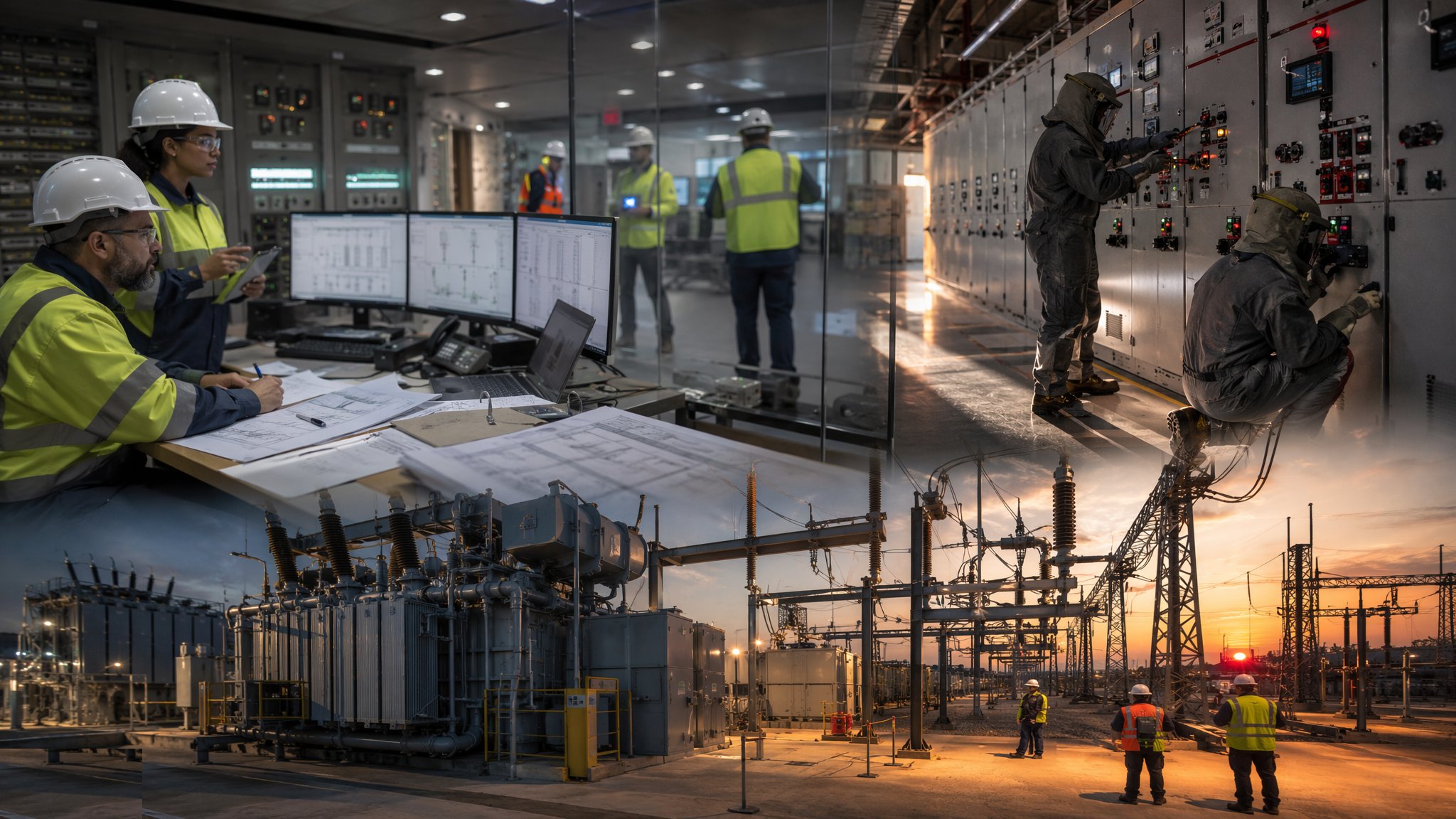
Grid Connections & Energisation
The paper-and-permit end of grid construction - connection agreements, protection witness tests, outages booked seasons ahead, and the phased switching sequence that puts a new asset on the live network.
Open processCanonical guide: Power Transmission & Distribution
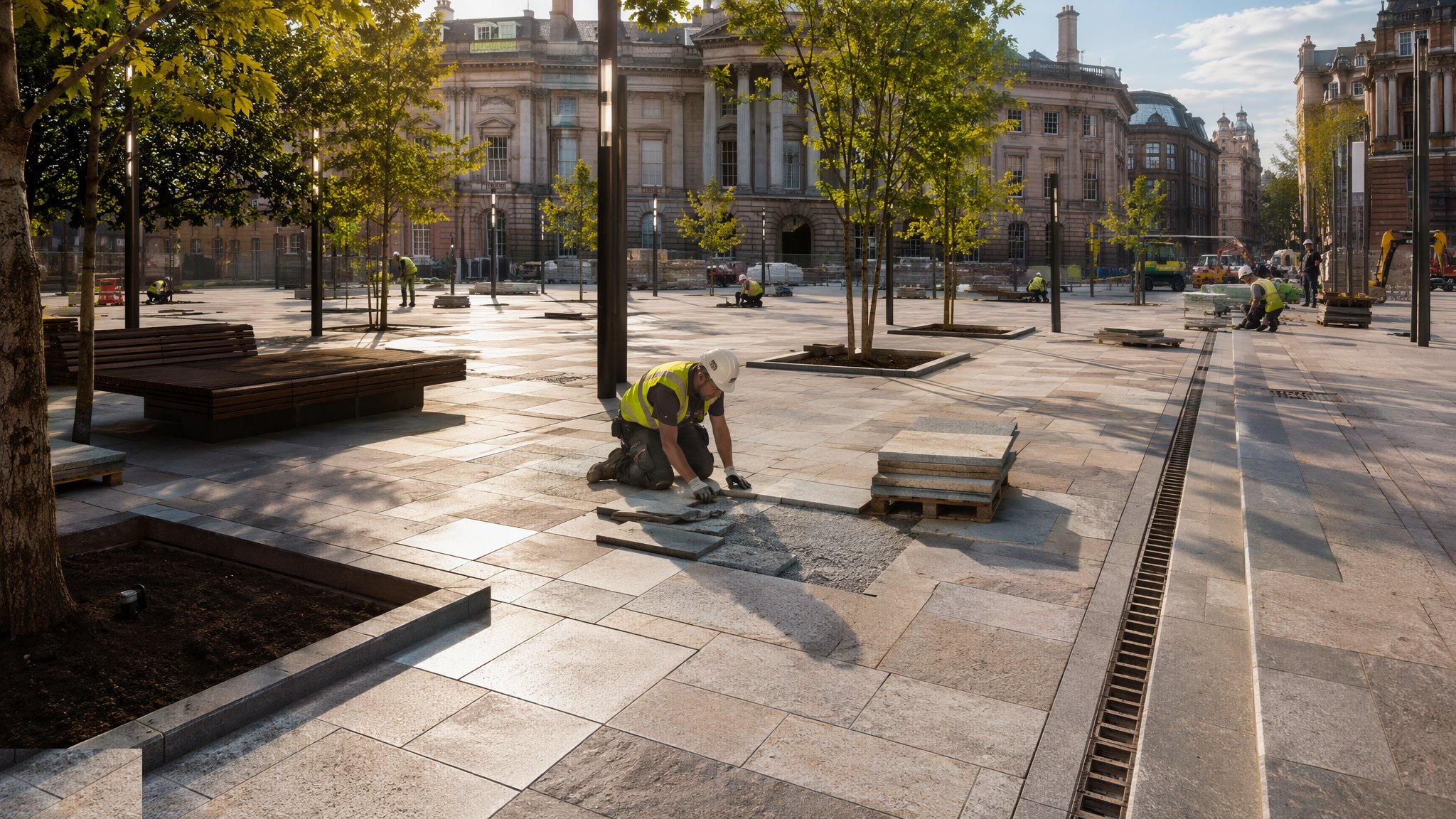
Hard Landscaping & Public Realm
The paved, kerbed and furnished surface people actually walk on - footways, plazas and streetscapes built up in engineered layers, laid to millimetre tolerances and edged, drained and detailed to stay put for decades.
Open processCanonical guide: Landscaping & Public Realm
EV Charging Infrastructure in depth
About EV Charging Infrastructure
That inverts the usual programme. The grid application goes in long before anyone thinks about setting out, and its lead time governs everything. Meanwhile the physical work almost always happens on a site that is still trading - a forecourt, a retail car park, a depot - so phasing, traffic management and keeping customers moving matter more than the works themselves.
The chargers arrive late, cost a great deal and do not tolerate being in the wrong place. Bases and ducts have to be right first time. And the job is not finished when a unit powers up: it is finished when the network operator has energised it, the back office recognises it and a customer can actually pay.