Asset Care & Preparation
Getting a redundant plant into a state it can be left in or worked on - stripping out non-active plant, removing the conventional hazards, refurbishing the fabric for a long second life, installing the services the dismantling will need, and shrinking the site to what has to be kept.
Last updated 2026-08-25
Typical duration
Typically 3-10 years from the plant coming out of service to a structure ready either for dismantling or to be left quiescent, and where care and maintenance is the chosen route the quiescent period itself is commonly measured in decades.
What is Asset Care & Preparation?
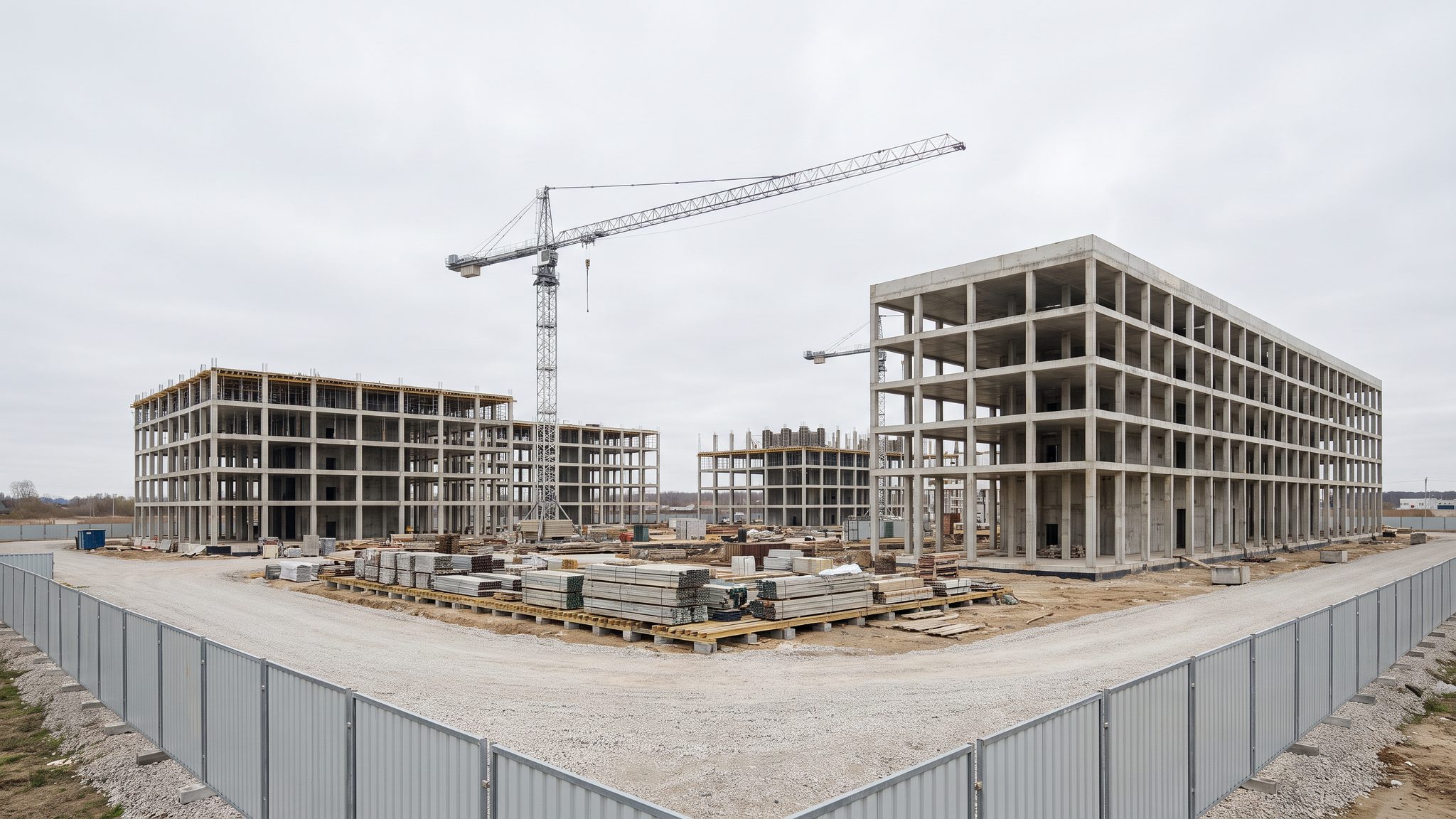
When a plant stops operating it does not become a demolition site. It becomes a building that still has to be maintained, heated, drained, lit, ventilated and kept weathertight, but that no longer earns anything. Asset care and preparation is the work of turning it from an operating facility into something that can either be dismantled efficiently or left quiescent for a long time. Most of the work is recognisable to any refurbishment contractor: strip out, hazardous material removal, roofing, cladding, drainage, new small power and lighting, new ventilation, upgraded lifting. The difference is the length of the horizon. The roof going on may need to keep water out for fifty years without anyone entering the building underneath it.
The strip-out is where the volume is. A working plant carries an enormous quantity of equipment that has no radiological history at all - offices, workshops, canteens, stores, switchrooms, boiler houses, laboratories, compressor houses and the miles of redundant services that connect them. All of it can be taken out under ordinary construction arrangements, and taking it out early is worth doing for its own sake, because it removes fire load, removes maintenance liability, releases space for the decommissioning infrastructure and produces a clean stream of scrap metal that has a straightforward destination. It also shrinks the licensed footprint that has to be looked after, which is the single biggest running cost on a site with no output.
The other half of the work is deciding what the building has to do next and building that in. If dismantling starts immediately, the plant needs power, lighting, ventilation, access, lifting and waste routes designed for demolition rather than for operation, and none of the original installation was built for that. If the site is going into care and maintenance, the requirement is the opposite - a simple, robust, low-maintenance structure with as few systems as possible, designed so that a small team can inspect it and keep it sound for decades with minimal intervention. Both routes end with a formal handover. Radiological, security and nuclear material matters are controlled by the licensee and the regulator throughout, and are outside the scope of this guide.
Compare the methods at a glance
When and why is Asset Care & Preparation used?
This phase starts as soon as the plant comes out of service and the operating systems have been made safe, and it runs for years because the volume of ordinary construction work in a redundant industrial plant is enormous. It comes before dismantling because dismantling is expensive and slow, and every cubic metre of building you can empty, simplify or knock down under ordinary arrangements is a cubic metre that never has to be handled under the difficult ones. There is also a straightforward asset argument. A redundant plant deteriorates faster than an operating one, because the heating stops, the ventilation stops, the small leaks stop being reported and nobody walks through the far end of the building any more. Roofs fail, gutters block, water gets in, steel corrodes and a structure that was fit to be dismantled becomes a structure that has to be propped before it can be dismantled. Spending money on a roof for a building you intend to demolish feels wrong and is usually right. The strategic driver behind the whole phase is time. A decommissioning programme is measured in decades, and long quiescent periods are chosen deliberately - to let the site work through a queue of structures in a sensible order, to wait for a disposal route to become available, and to reduce the standing cost of a site producing nothing. Care and maintenance only works if the preparation was done properly, which is why this phase is where the money goes on sites nobody appears to be working on.
Types of Asset Care & Preparation
Explore each method in depth - benefits, limitations, plant and quality control on its own page.
Post-operational clean out and redundant plant removal
Draining, de-energising, emptying and removing the plant, tanks, pipework and services that are finished with. Large volumes of it are ordinary industrial strip-out with a clean scrap metal destination, and getting it out early removes fire load, maintenance liability and clutter from every operation that follows.
Fabric refurbishment for a long second life
Reroofing, recladding, replacing rainwater goods, repairing structure, sealing the envelope and putting in drainage that will work unattended. It is conventional building refurbishment specified to an unconventional design life, because the building may have to stand and stay dry with almost nobody in it for a very long time.
Care and maintenance preparation
Reducing the site to a small number of simple, robust, weathertight structures with the minimum of systems, then setting up the inspection and maintenance regime that keeps them sound. The engineering objective is a structure a small team can look after cheaply and indefinitely, which usually means fewer systems rather than better ones.
Preparation for immediate dismantling
Building in what the demolition will need - temporary power and lighting, containment and ventilation capacity, lifting and access, waste handling routes, laydown, welfare and monitoring. It is enabling works inside an existing building, and it is almost always more disruptive than the equivalent work on open ground.
Best suited for
- Plants that have just come out of service, where a large volume of ordinary industrial strip-out can be done under conventional arrangements
- Sites heading for a long quiescent period, where the fabric has to stand and stay dry with minimal intervention
- Large sites with many redundant buildings, where shrinking the maintained footprint gives the biggest single saving
- Structures about to be dismantled, which need power, ventilation, lifting and waste routes that the original installation never provided
- Programmes waiting on a disposal route, where the sensible engineering answer is to secure the asset and pause
Asset Care & Preparation: step by step
- 1
Step 1: Take the plant out of service and make it dead
The transition from an operating plant to a redundant one is a formal, staged handover rather than a switch-off. Systems are isolated, drained, de-energised, locked off and recorded as dead, and the isolations are made physical rather than procedural wherever possible, because a decommissioning site will be worked on by people who never operated it. Services that have to stay - fire detection, some lighting, some ventilation, drainage, security systems - are identified and separated from the ones that are finished with, which usually means new distribution rather than reusing what is there. Anything under radiological or nuclear material control remains with the licensee under arrangements agreed with the regulator and is outside the scope of this guide.
- 2
Step 2: Drain and remove the fluids, oils and chemicals
Every industrial plant holds a surprising volume of liquid: lubricating and hydraulic oil, transformer fluids, coolants, water treatment chemicals, laboratory reagents, fuel, refrigerants and the residues in the bottom of tanks and sumps that nobody has looked at for years. All of it is emptied, characterised and routed to the appropriate disposal arrangement, and the tanks, bunds and drainage that held it are cleaned and inspected. This is the point at which the site stops having a spill risk, and it is worth doing early because a leak into the ground during the demolition phase turns a straightforward remediation into a difficult one.
- 3
Step 3: Strip out the redundant non-active plant and services
The bulk removal begins. Workshops, stores, offices, switchrooms, compressor houses, boiler plant, laboratories, canteens and the redundant mechanical and electrical services throughout the site are stripped out under ordinary construction arrangements. Metal is segregated at source and goes out as a clean scrap stream, which pays for a useful share of the work. Cable is pulled and recovered rather than cut and abandoned. The sequence matters, because pulling the wrong distribution board out leaves half the site without lighting, so the strip-out follows a services isolation plan rather than working outwards from the front door.
- 4
Step 4: Remove the conventional hazardous materials
Buildings of this age carry the full inventory of twentieth-century industrial materials: asbestos in insulation, boards, gaskets, ropes and sprayed coatings, lead in paint and flashings, refractory linings, mineral fibre, and a range of coatings that nobody would specify now. Removal is done under the conventional regime for those materials, by licensed specialists where required, with enclosures, monitoring, and clearance of the space before it is handed back. Doing it now rather than during the dismantling matters enormously, because separating a conventional hazard from anything else is far cheaper than dealing with the two together.
- 5
Step 5: Refurbish the fabric to a long design life
The envelope is put right. Roofs are recovered or replaced, cladding is repaired or renewed, rainwater goods are replaced with larger and simpler ones, penetrations are sealed, structural steel is treated and recoated, and the drainage around the building is cleared, repaired and made to work without attention. The specification is driven by the intended standing period rather than by the normal building life, so simple, robust and maintainable beats efficient and clever every time. Where the building will be inspected but rarely entered, safe permanent access for the inspection is designed in now - fixed ladders, walkways, edge protection and lighting - rather than hired in every time somebody needs to look at a gutter.
- 6
Step 6: Install the services the next phase will need
The original installation was designed to run a process, not to demolish a building, so most of it is the wrong thing in the wrong place. New temporary or semi-permanent distribution is installed for power, lighting and compressed air, sized for demolition plant rather than for process loads. Ventilation and filtration capacity is installed or upgraded to serve the containment enclosures that will be built later. Lifting is reviewed - existing cranes are inspected, tested and either recommissioned or replaced, and new lifting beams and openings are formed where the arisings will have to come out. Access routes, laydown areas, monitoring positions and welfare are all built in while the building is still easy to work in.
- 7
Step 7: Shrink the footprint and demolish what is finished with
Any structure with no further role comes down now, under conventional demolition arrangements. Every building removed at this stage is one that does not have to be inspected, insured, heated, lit, drained and maintained for the next thirty years, and the cumulative saving on a large site is very large indeed. Demolition is sequenced around the services that still have to run through or past the buildings coming down, and the slabs are usually left in place at this stage to keep a working surface and to avoid opening up ground that has not yet been characterised. The site is progressively consolidated towards the small number of structures that will carry the programme forward.
- 8
Step 8: Hand over to care and maintenance, or to the dismantling team
The phase ends with a formal handover in one of two directions. Into care and maintenance, the handover is the structure plus a maintenance and inspection regime - a schedule, a resourced team, defined inspection routes, monitoring, and a record system that will still be legible and usable when the people who wrote it have retired. Into dismantling, the handover is the building plus its new services, its containment and ventilation capacity, its lifting and its waste routes, with a record of every isolation, every removal and every change made during the preparation. Either way the handover is documented, because the next people through the door will be strangers to the plant.
Plant & equipment
- Mobile elevating work platforms, scissor lifts and scaffold access for strip-out and envelope works throughout tall industrial buildings
- Cutting and demolition attachments - shears, crushers, nibblers and cold cutting equipment for non-active plant removal
- Vacuum and tanker equipment for draining tanks, sumps, bunds and drainage systems
- Licensed asbestos removal enclosures, negative pressure units and monitoring equipment
- Roofing and cladding plant, telehandlers and mast climbers for envelope refurbishment, plus segregation and baling plant for the clean scrap stream
- Temporary and semi-permanent power distribution, generators, lighting and compressed air installations
- Ventilation and filtration plant installed to serve later containment enclosures
- Overhead crane inspection, testing and refurbishment equipment, plus new lifting beams and padeyes
Quality control & testing
- Every isolation recorded, physically verified and marked up on a controlled services drawing before the strip-out starts
- Retained services identified, separated and proved to be working before the redundant distribution is removed
- Hazardous material removal carried out under the conventional regime and the space cleared before it is handed back
- Envelope works specified and inspected against the intended standing period, not against ordinary building expectations
- Weathertightness and drainage proved by testing and by inspection through at least one full winter
- New services commissioned, labelled and recorded as-built, because the people using them will not have been there when they were installed
- Lifting equipment inspected, tested and certificated before the dismantling team relies on it
- A complete handover record covering every isolation, removal and modification made during the preparation
Safety watchpoints
- Asbestos, lead paint, refractory linings and other legacy materials throughout buildings of this age
- Stored energy and residual fluids in systems that were believed to be isolated but had never been proved dead
- Working at height on roofs and cladding of unknown condition, with fragile surfaces and corroded fixings
- Structural instability created by progressive strip-out of plant that was providing incidental restraint
- Confined space entry into tanks, sumps, ducts and voids under a formal permit regime
- Hot work and fire risk in buildings full of cable, insulation, oil residues and combustible packaging
- Deteriorating access, lighting and welfare in a building that is no longer being maintained to operating standards
- Radiological protection, security and nuclear material controls, which remain with the licensee and the regulator and are outside the scope of this guide
Common defects to hunt
- Roof and envelope work deferred to save money, so the structure deteriorates through the quiescent period and needs propping before it can be dismantled
- Isolations recorded on paper but never physically proved, leaving live services in a building believed to be dead
- Retained services demolished with the redundant ones because the distribution was never separated
- Care and maintenance structures fitted with more systems than a small team can realistically maintain
- Ventilation and power installed for the plant as it was, not for the demolition plant that has to work in it
- Rainwater goods and drainage sized and detailed for a maintained building rather than an unattended one
- Clean scrap metal contaminated by poor segregation at source, losing its value and its easy destination
- Handover records that make sense only to the team that wrote them, in a programme where the next team arrives twenty years later
How long does Asset Care & Preparation take?
Typical duration: Typically 3-10 years from the plant coming out of service to a structure ready either for dismantling or to be left quiescent, and where care and maintenance is the chosen route the quiescent period itself is commonly measured in decades..