Construction by vessel - where the weather sets the programme and the sea sets the rules.
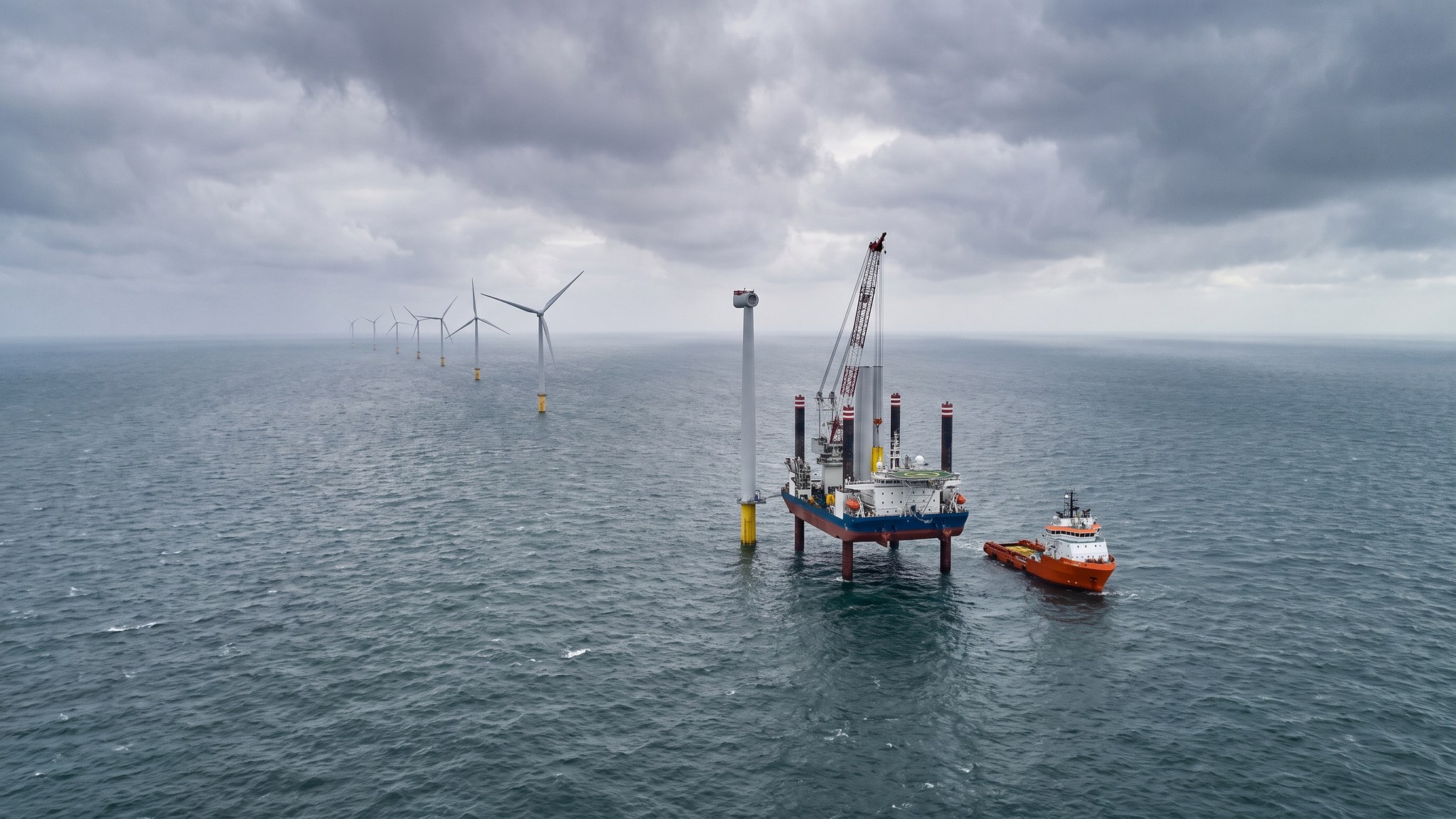
Offshore wind is a marine logistics operation that happens to produce a power station. Almost nothing is built at sea in the way sites are built on land: components are made in factories, gathered at a marshalling port, loaded onto vessels and installed offshore in campaigns. The vessel is the site, the crane and the accommodation all at once, and it is the single most expensive thing on the project.
The process map - 5 guides
Each one is a full guide: overview, variants, numbered steps, plant, testing, safety and defects.
Offshore Foundations
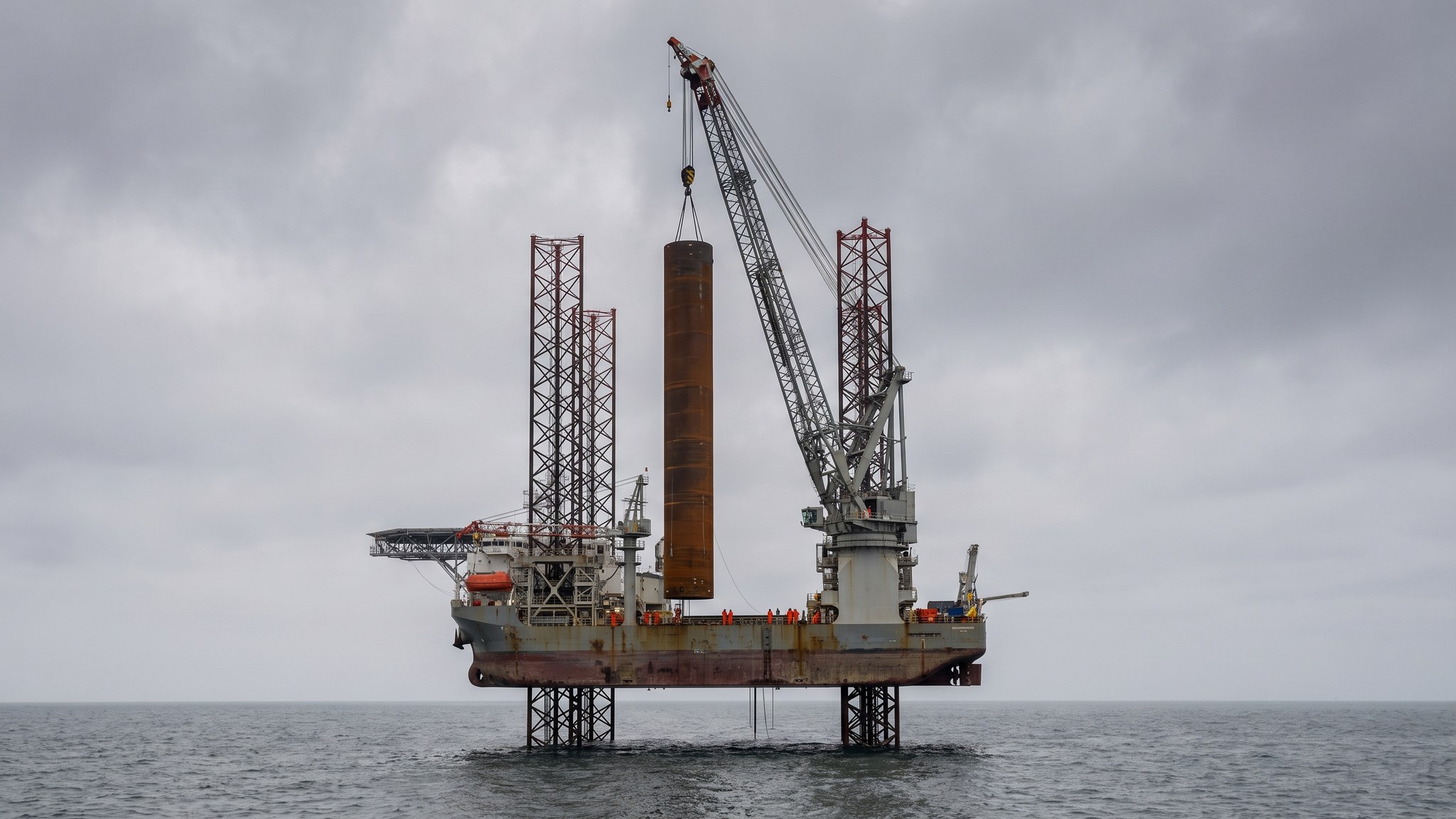
The steel that holds a turbine still in moving water - monopiles, jackets and floating substructures - fabricated onshore, marshalled at a port and installed from a vessel inside a weather window. Nothing else on the project can start until they are in.
Open process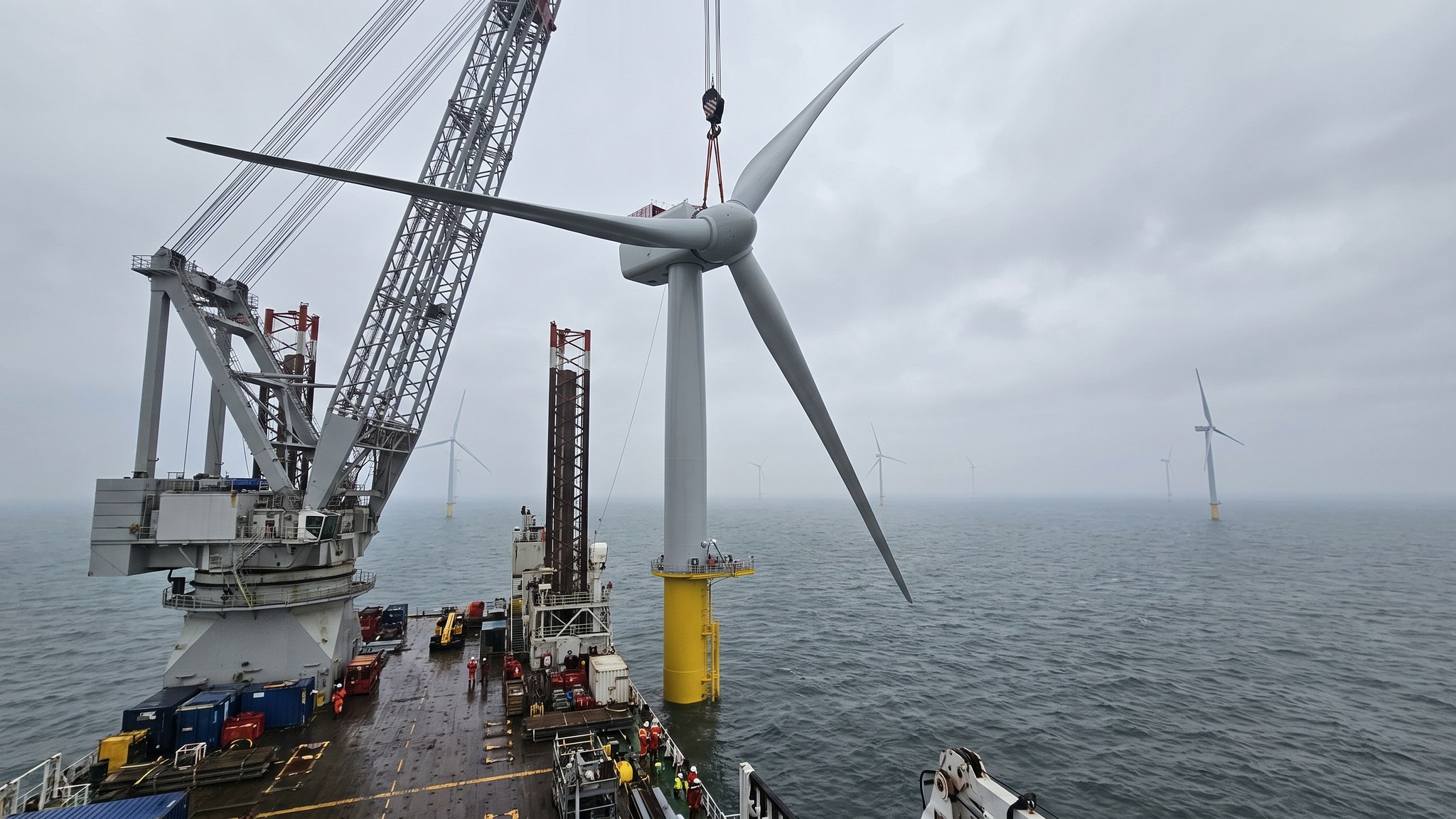
Turbine Installation
Towers, nacelles and blades pre-assembled at a marshalling port, loaded out in sets and lifted into place from a jack-up vessel. The campaign is a repeating cycle, and the weather decides how many times it turns.
Open process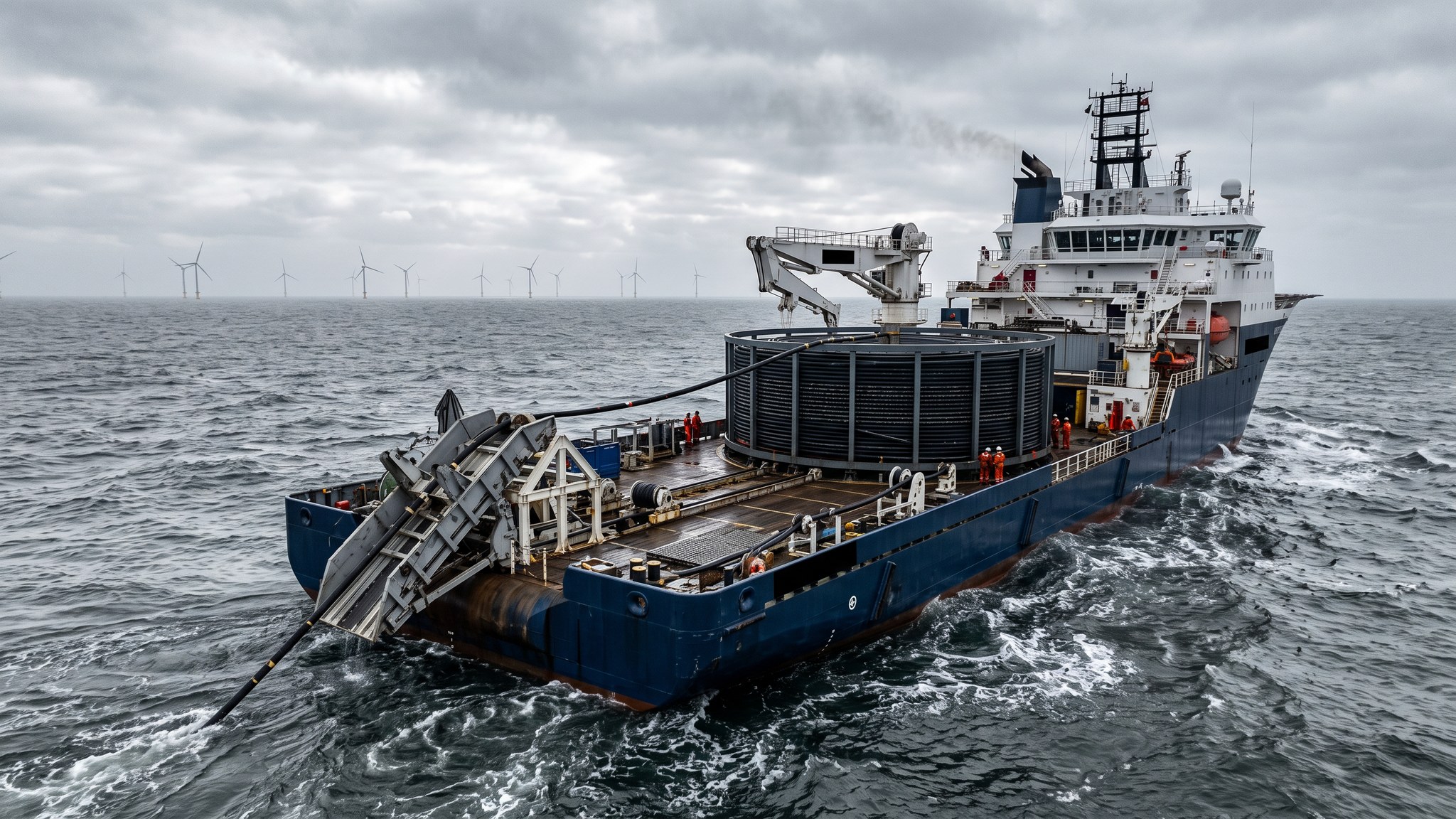
Array & Export Cables
The array cables that string the turbines together and the export cables that carry the power ashore, laid on the seabed and buried into it. Cables are a small share of the capital cost and by far the largest share of the sector's failures.
Open process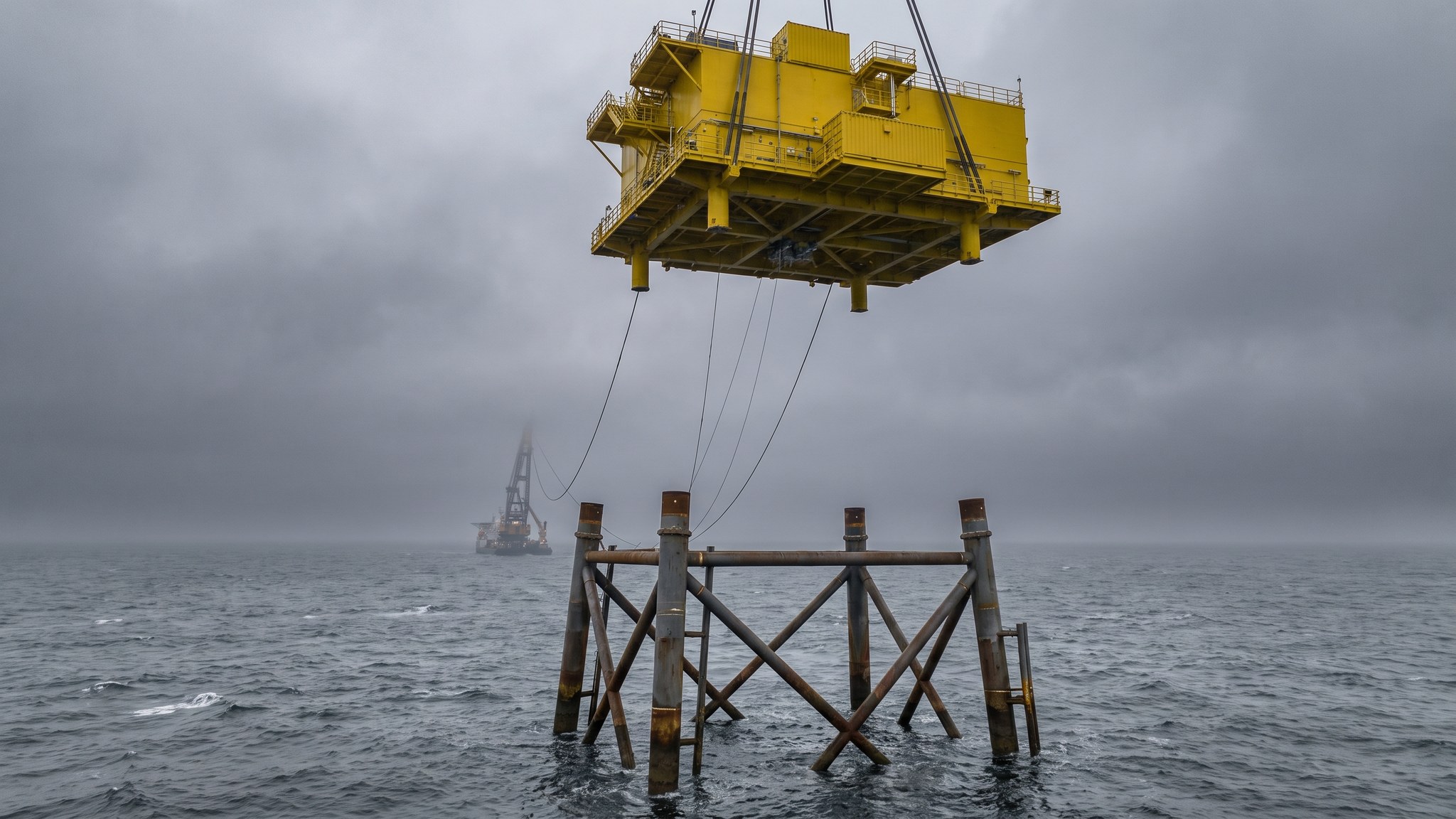
Offshore Substation
The platform that gathers every array cable, steps the voltage up and sends the power ashore down a single export route. It is built and commissioned onshore as a complete topside, then lifted onto its foundation in as few pieces as the vessel allows.
Open process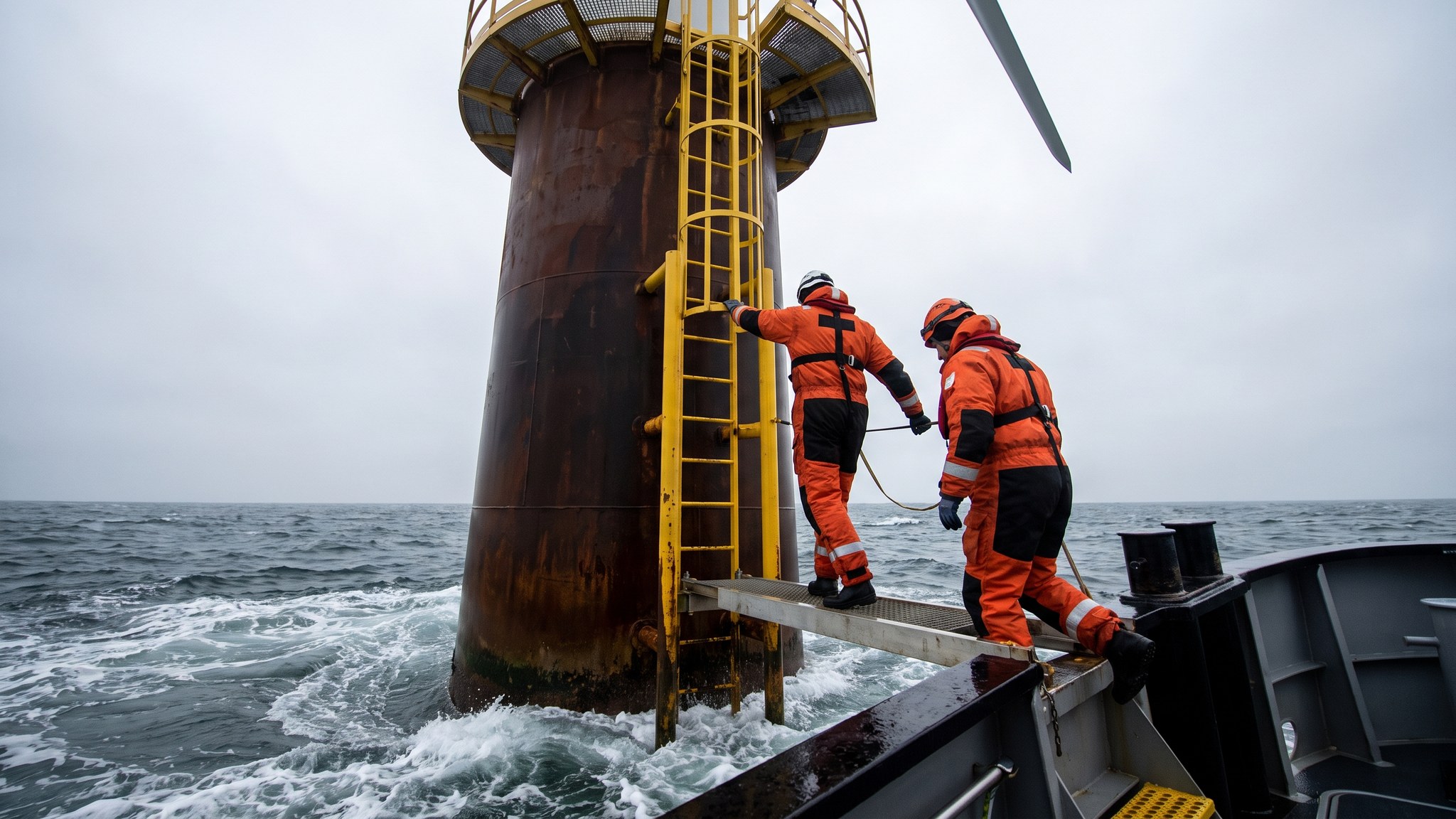
Commissioning & Handover
Turning a field of installed machinery into a generating asset - energisation, turbine commissioning, first power, performance testing and the formal handover into operations. It is the end of the project and the first day of a twenty-five year maintenance job.
Open processShared methods used in this sector
These guides are owned by other sectors - the canonical page lives there - but the method is the same here. Cards open the guide at its home sector.
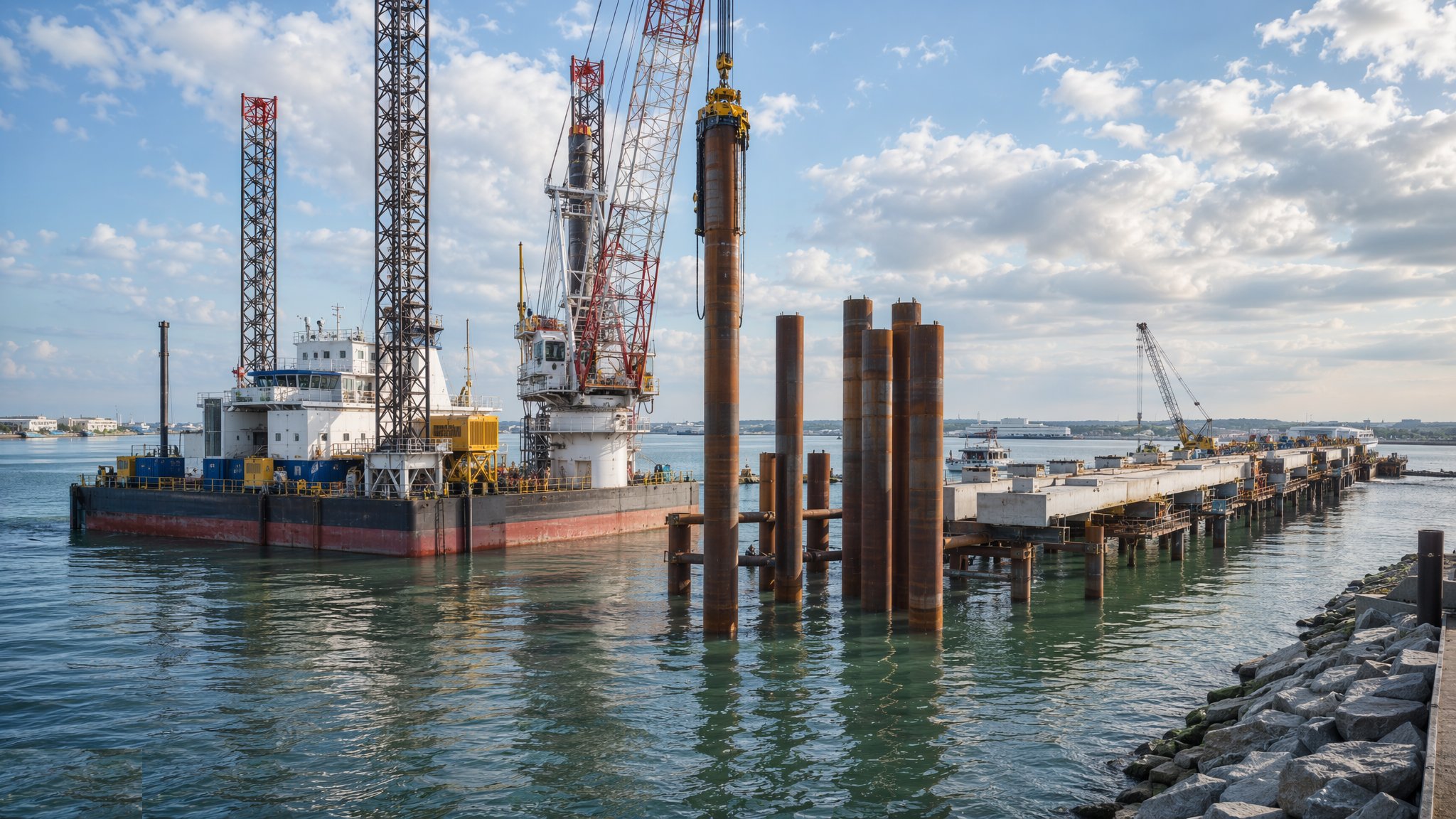
Marine Piling & Jetty Construction
Structures standing in the sea on driven steel - tubular piles pitched and driven from barges and jack-ups, berthing and mooring dolphins, linkspans and access trestles, precast deck units stitched with in situ concrete, cathodic protection fitted, and the whole job danced to the tide tables.
Open processCanonical guide: Ports, Harbours & Marine Works
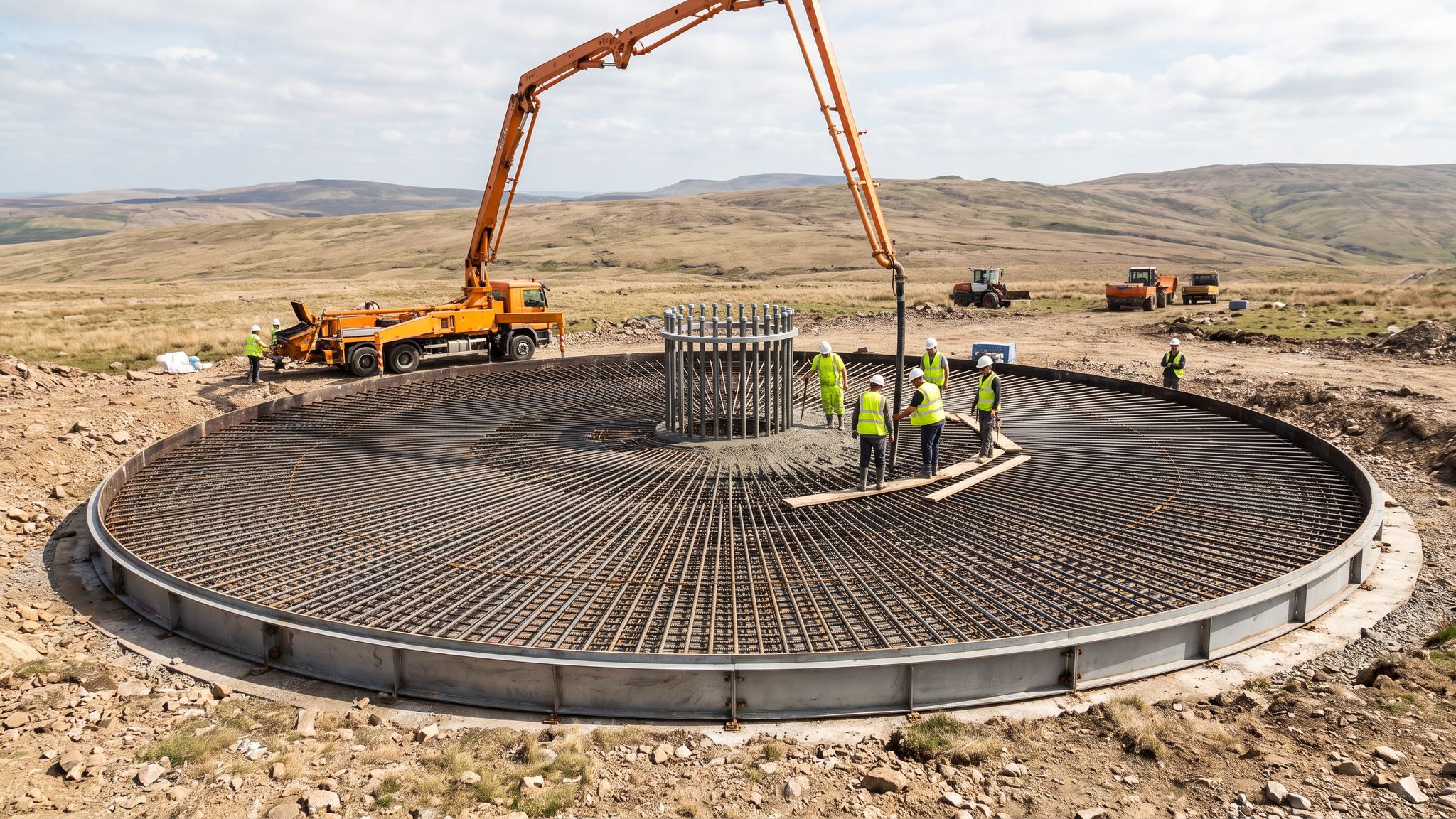
Wind Turbine Foundations
The reinforced concrete bases that hold a 100-metre-plus tower against the overturning pull of the rotor - built to millimetre-level bolt tolerances at the end of a moorland track.
Open processCanonical guide: Power Generation
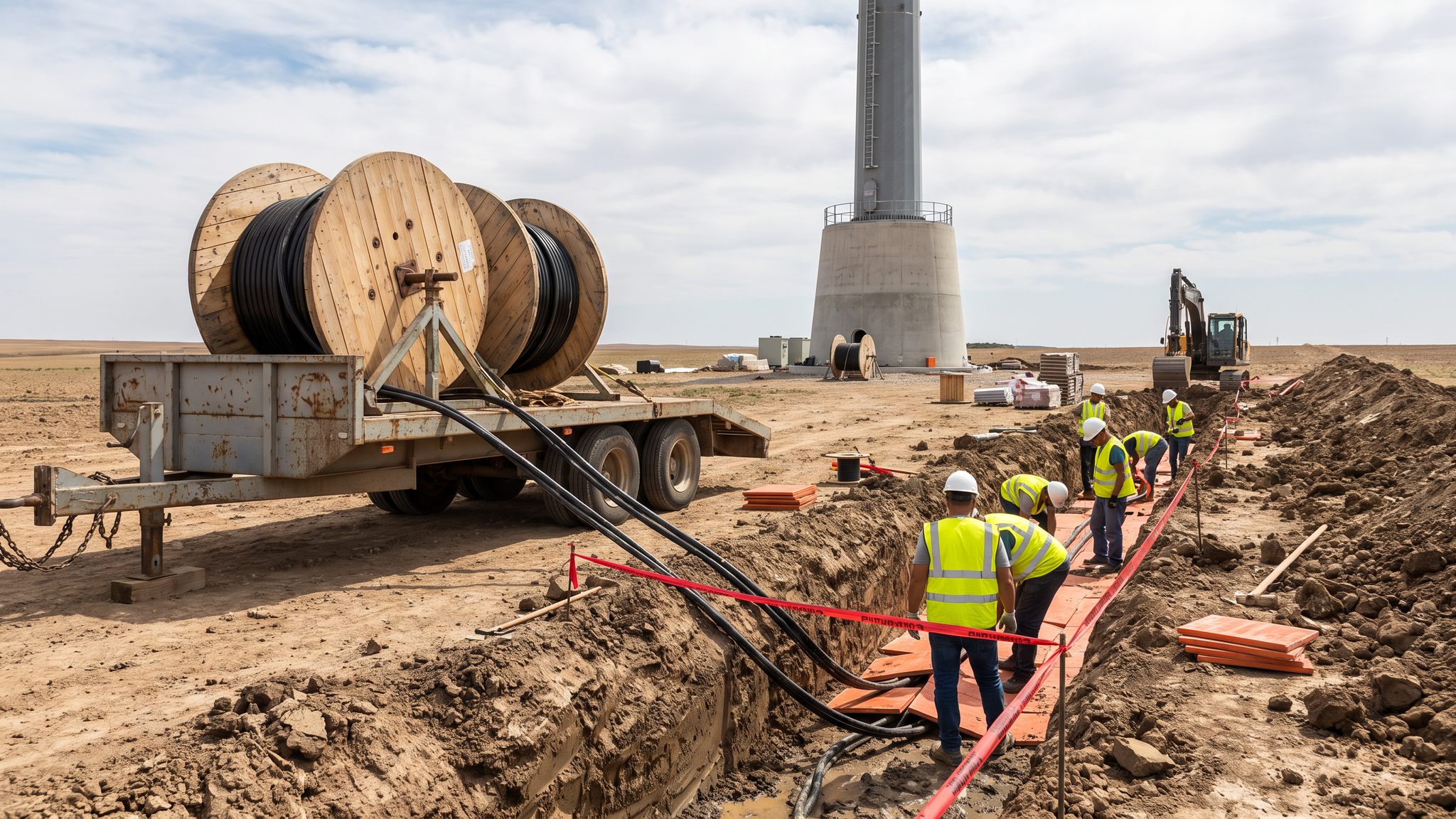
Wind Farm Electrical Infrastructure
Kilometres of buried 33 kV array cable stitched from turbine to turbine, a collector substation, and the grid compliance work that turns a field of machines into a power station.
Open processCanonical guide: Power Generation
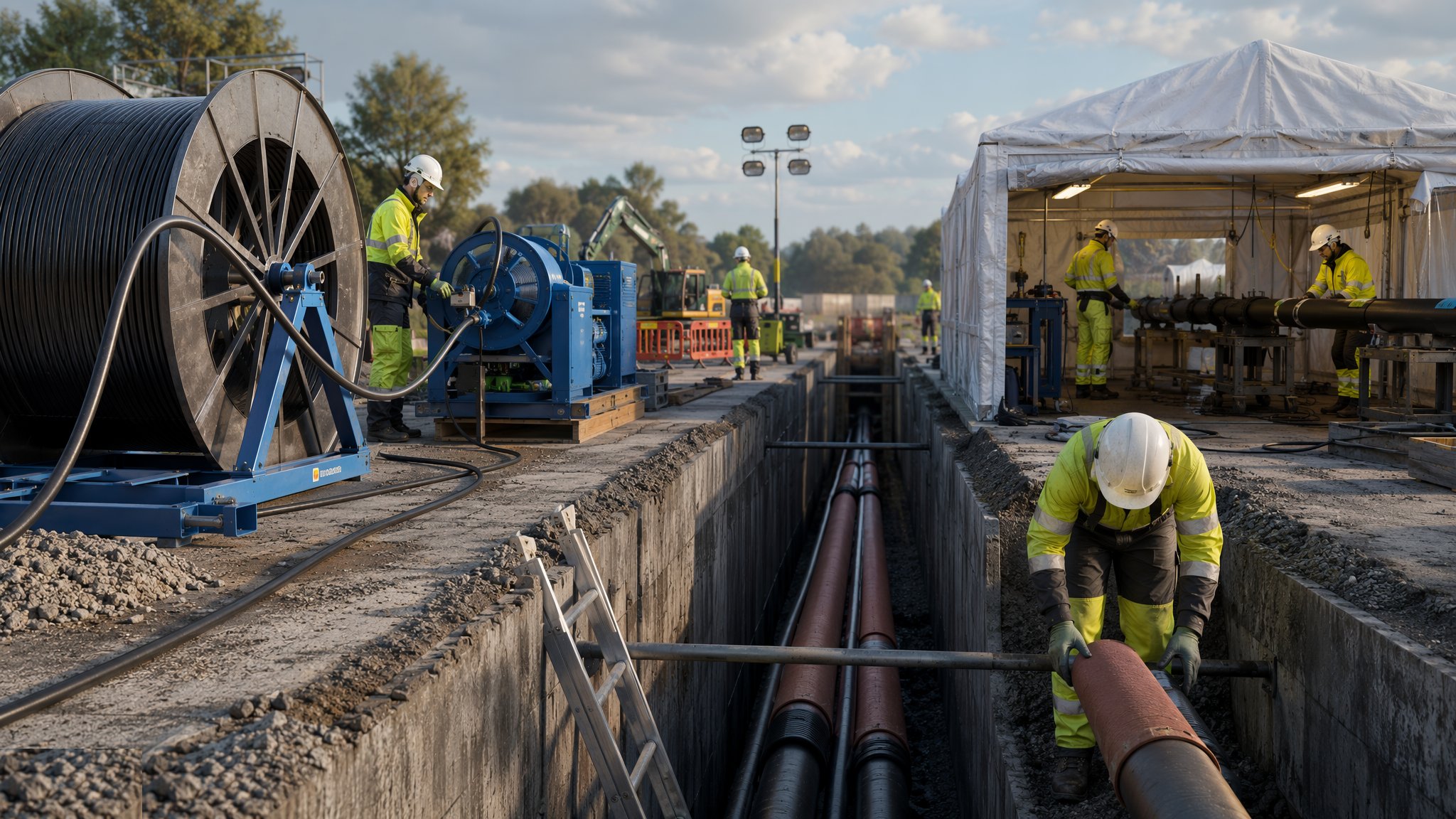
Underground Cable Installation
High-voltage circuits buried in trenches and duct banks - kilometres of XLPE cable pulled between joint bays, bedded in thermal surround, jointed by certified jointers, and proven by the sheath test.
Open processCanonical guide: Power Transmission & Distribution
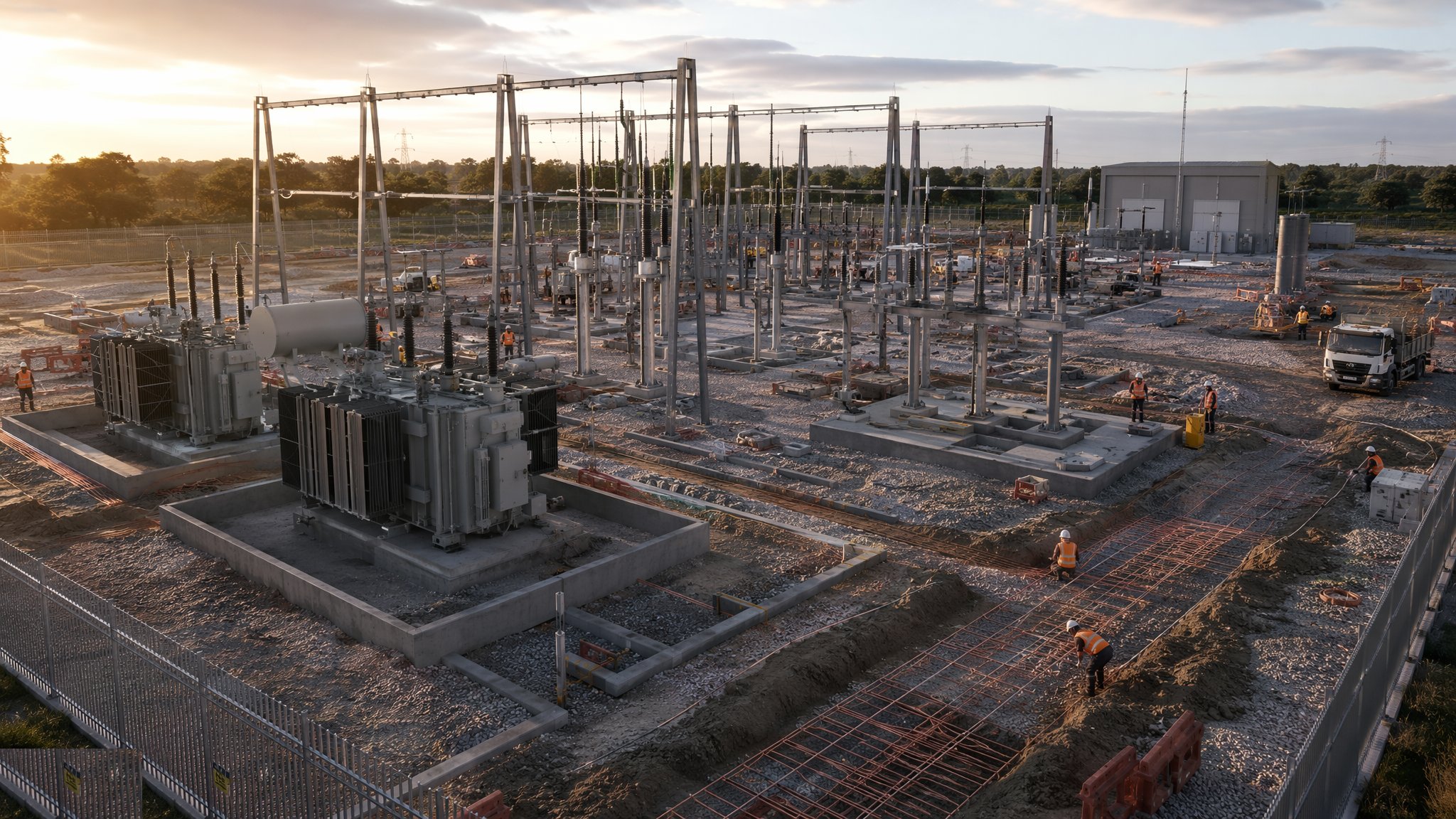
Substation Construction
The fenced compounds where voltage changes hands - air-insulated or gas-insulated switchgear, transformers the size of houses, and a buried copper earth grid that has to be right before anything else is built.
Open processCanonical guide: Power Transmission & Distribution
Offshore Wind in depth
About Offshore Wind
The order is foundations, turbines, cables and a substation to collect it all. Each is its own campaign with its own vessel spread. Between them sits the one factor no programme controls: the weather. Work happens inside windows when sea state and wind allow, and a lost window is not a delayed shift but a lost day of a vessel that costs more per day than most tower cranes cost per year.
The industry's hardest lesson is buried in the seabed. Cables - laying them, protecting them and proving their burial - are the most common and most costly source of defects in the sector, and the guides here treat them with the weight that record deserves.