Phased occupation
Hand the site over in parcels, and the enabling works become a moving target you re-hit monthly.
Last updated 2026-08-22
What is Phased occupation?
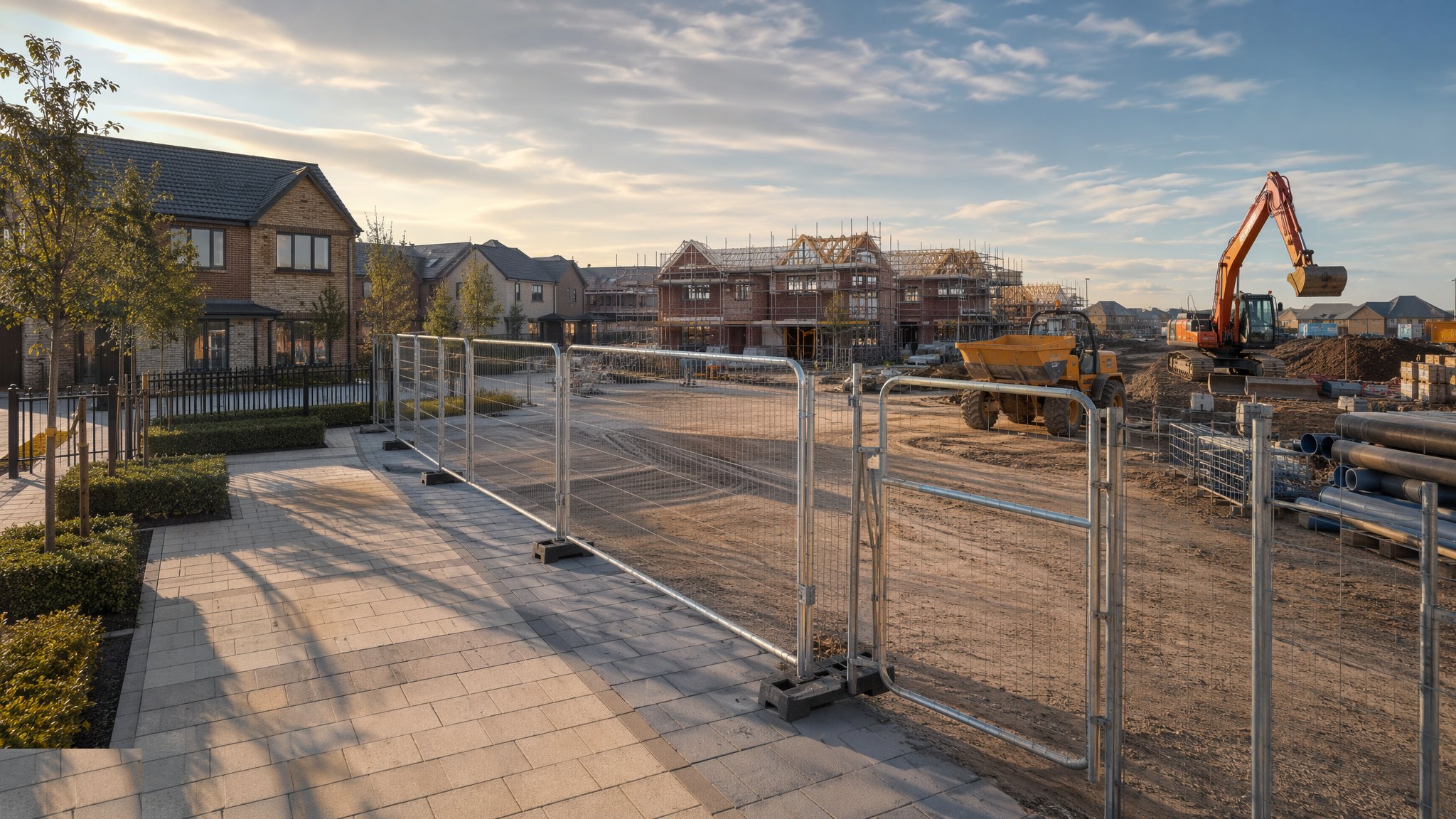
Phased occupation is what happens when the client wants the rent or the sales revenue before the last plot is finished. The site is handed over - and handed back - in parcels: block A completes and gets its residents while block C is still a hole in the ground. Every assumption of a single set-up collapses. Hoarding lines move, the compound shrinks or relocates twice, the haul road that served phase one now runs past somebody's front door, and the boundary between "construction site" and "occupied premises" becomes the most heavily managed line on the project.
The logistics plan stops being a drawing and becomes a living document, reissued at every phase transition. Pedestrian routes for residents must be lit, signed and physically incapable of delivering a pushchair into a loading bay. Construction traffic is re-routed so an artic delivering plasterboard never shares a corner with the school run from the completed phase. Get the segregation wrong once and the incident report outlives the project.
Done well, phasing is a genuine commercial advantage - early revenue, a show-home phase, a de-risked sales programme. Done badly it is a permanent state of compromise: cabins moved three times, power re-routed over finished landscaping, and a snagging team working in a live site. The difference is decided at the first set-up, when someone insists on designing the phase-two hoarding line and the phase-three compound location before phase one is even fenced.
Process storyboard
Step 1 of 6 - slide through the snapshots.

STEP 1
Map the phase plan onto the physical site
Take the contractual handover sequence and draw every phase boundary on the logistics plan: hoarding lines, gates, haul routes, compounds, crane positions and…
How does Phased occupation work, step by step?
- 1
Step 1: Map the phase plan onto the physical site
Take the contractual handover sequence and draw every phase boundary on the logistics plan: hoarding lines, gates, haul routes, compounds, crane positions and utility routes for each stage. Check that phase two's access does not cross phase one's finished drainage, and that no phase depends on a temporary work - a road, a transformer, a compound - that a later phase demolishes. This drawing is the argument-settler for the next two years.
- 2
Step 2: Set up phase one for the whole sequence
Position the initial compound, power distribution and haul road where they serve the maximum number of phases without relocation - even if it is not optimal for phase one alone. A distribution board moved twice costs more than a longer cable run at the start. Water, drainage and duct routes are laid to serve later phases now, capped and marked, while the ground is open and cheap to dig.

- 3
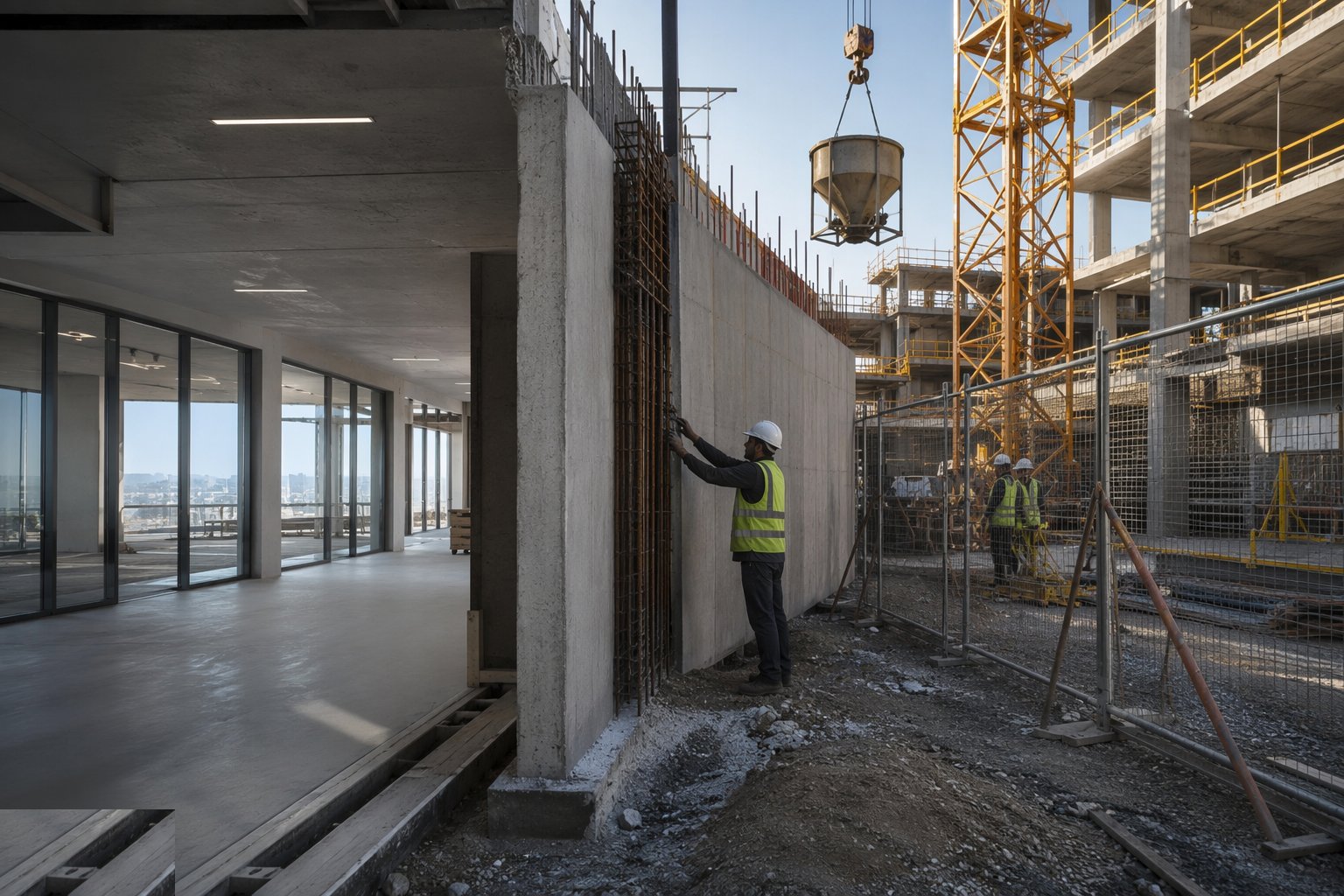
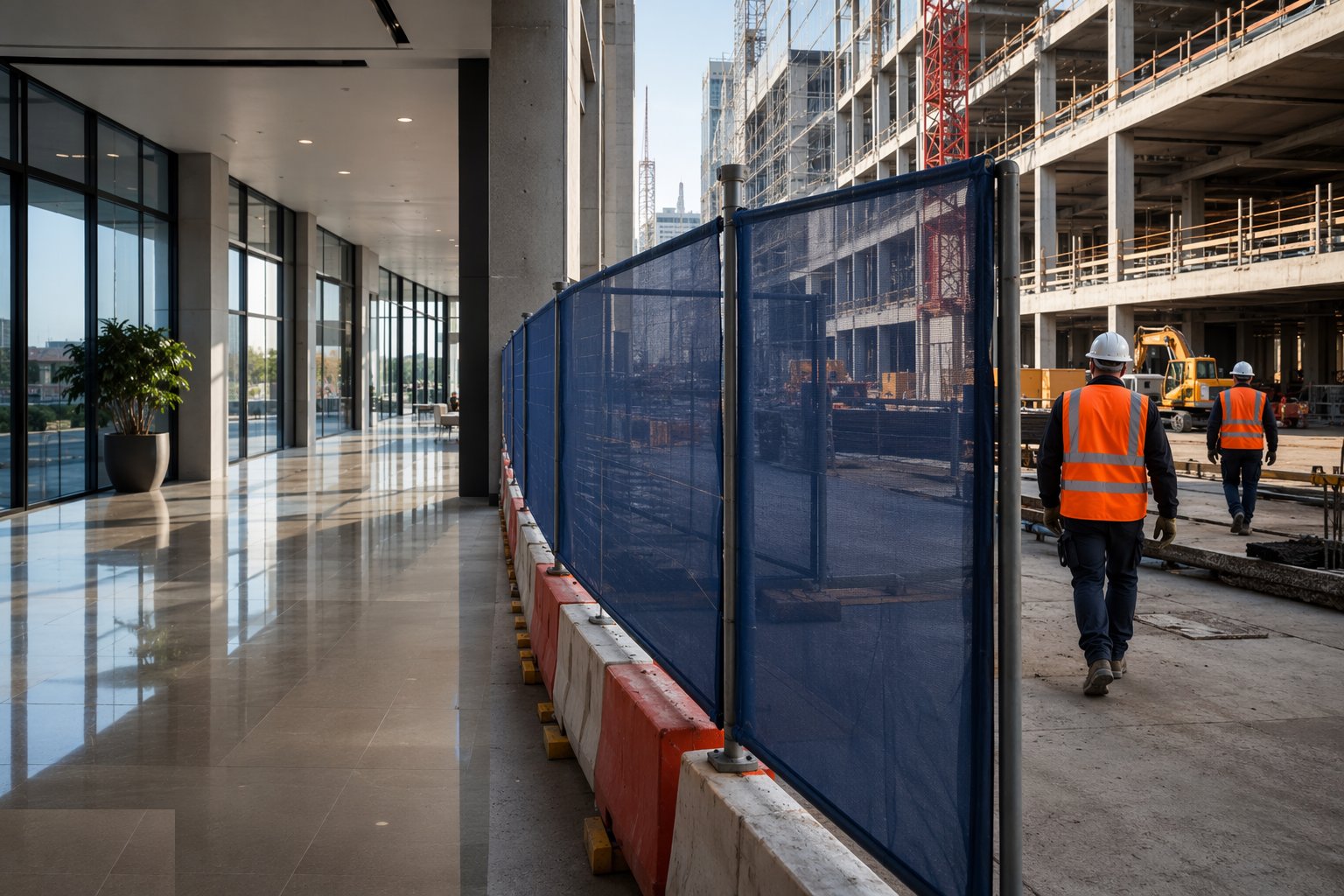
Step 3: Build the occupation boundary like a party wall
The line between live works and occupied premises gets solid hoarding, self-closing gates, lighting, signage and a physical separation that cannot be wandered through - not Heras panels and hope. Resident pedestrian routes are paved, lit and fenced on both sides where they run near the works. The boundary is inspected weekly and after every wind event, and it moves only under a planned, briefed operation.
- 4
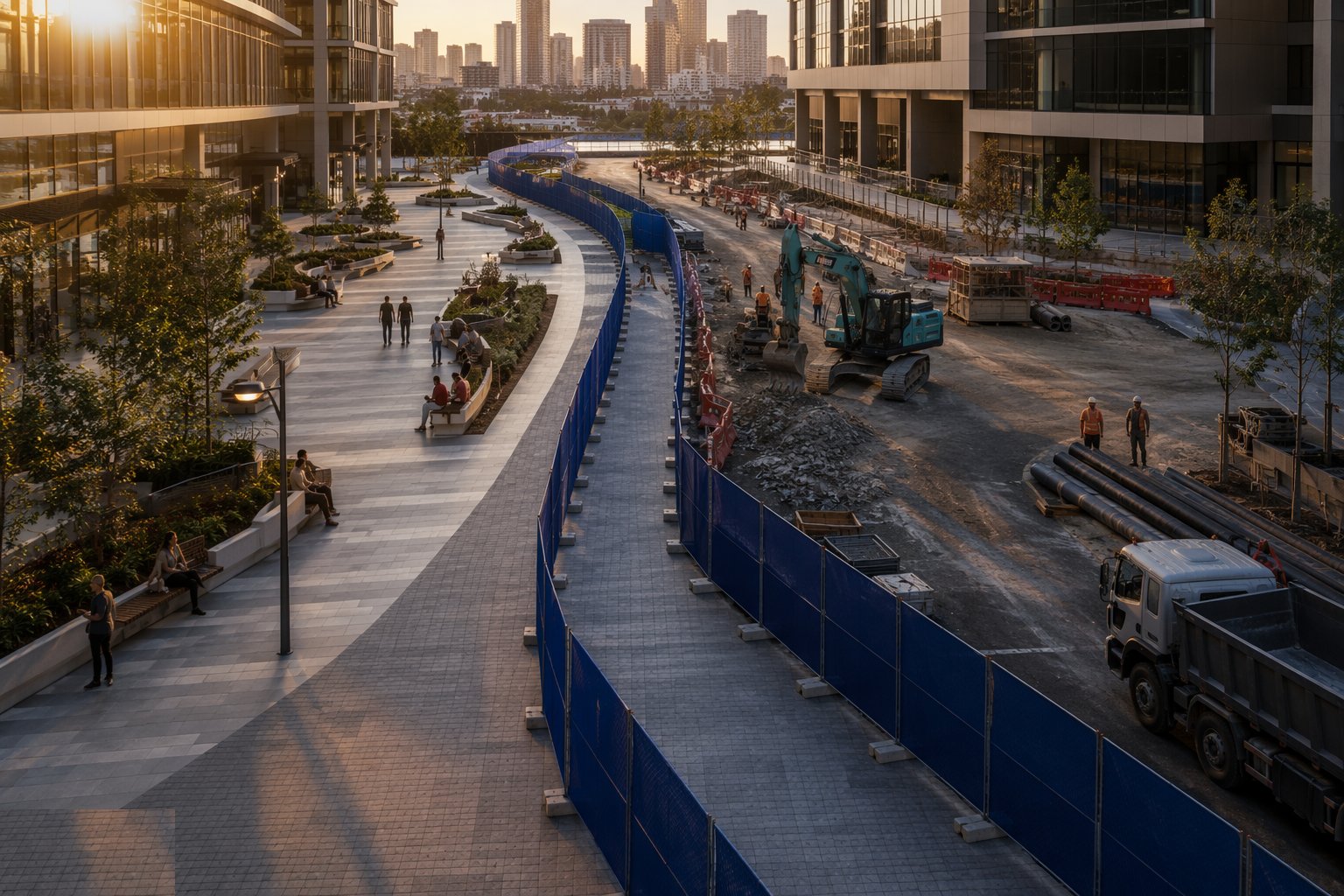
Step 4: Separate the traffic - permanently
Construction traffic and resident traffic get different gates, different routes and different rules from the day the first keys are handed over. If they must share a stretch, it is time-controlled with banksmen at the peak resident hours. Delivery booking tightens: a wagon idling outside an occupied block at 07:00 generates the complaint that ends the flexible delivery window.
- 5
Step 5: Plan and execute each transition
Every phase transition is a mini-project with its own method statement: hoarding moves, gates relocate, power and data re-route, signage changes, and the site induction map is reissued - every operative re-briefed, because the route they have walked for six months is now wrong. Transitions happen on weekends or quiet days, with the new arrangement inspected and signed off before Monday's deliveries.

- 6
Step 6: Protect the finished work as an asset
Completed phases are handed over, insured and someone else's problem to damage - so protect them like it. Finished roads get protection from construction axles or a bond for reinstatement; landscaping is fenced; completed façades near the works get survey-monitored and wrapped where plant slews past. The defect that costs most is the one inflicted on the phase you already finished.
What are the benefits of Phased occupation?
- Early revenue and handover - sales, rent or operation starts while the build continues
- A completed phase acts as a live show home and de-risks the sales programme
- Cash flow improves; the final phase is part-funded by the first
- Snagging and lessons from phase one feed directly into later phases
- Smaller peak workforce and compound than an all-at-once build
What are the limitations of Phased occupation?
- Enabling works are paid for several times over - compounds, hoarding and power relocate
- Segregation failures between residents and works carry the highest incident risk on site
- Deliveries, working hours and noise are constrained once neighbours move in
- Later phases inherit the damage and compromises of the earlier ones
- The logistics plan needs constant revision - a full-time coordination overhead
- Insurance, security and welfare arrangements change at every handover
What is Phased occupation best suited for?
What plant does Phased occupation need?
- Relocatable welfare and cabin stacks on pads designed for crane moves
- Solid hoarding systems with engineered ballast for repeated re-erection
- Temporary lighting towers and pedestrian-route lighting
- Traffic barriers, gates and banksman equipment for split access
- Distribution boards and cable routes designed for staged re-feeding
- Monitoring kit that moves with the boundary - dust, noise, vibration
How is Phased occupation quality-checked?
- Phase boundary inspected and recorded weekly, and after every relocation
- Induction maps and traffic management plan reissued and re-briefed at each transition
- Temporary supply re-test certificates at every re-route of power
- Resident pedestrian routes audited for lighting, surfacing and segregation
- Pre-condition surveys refreshed at each new interface with completed phases
- Handover documentation for each phase reconciled against the master logistics plan