Performance testing and reliability run
Proving capacity, efficiency and availability over a sustained period before the owner takes the asset over.
Last updated 2026-09-06
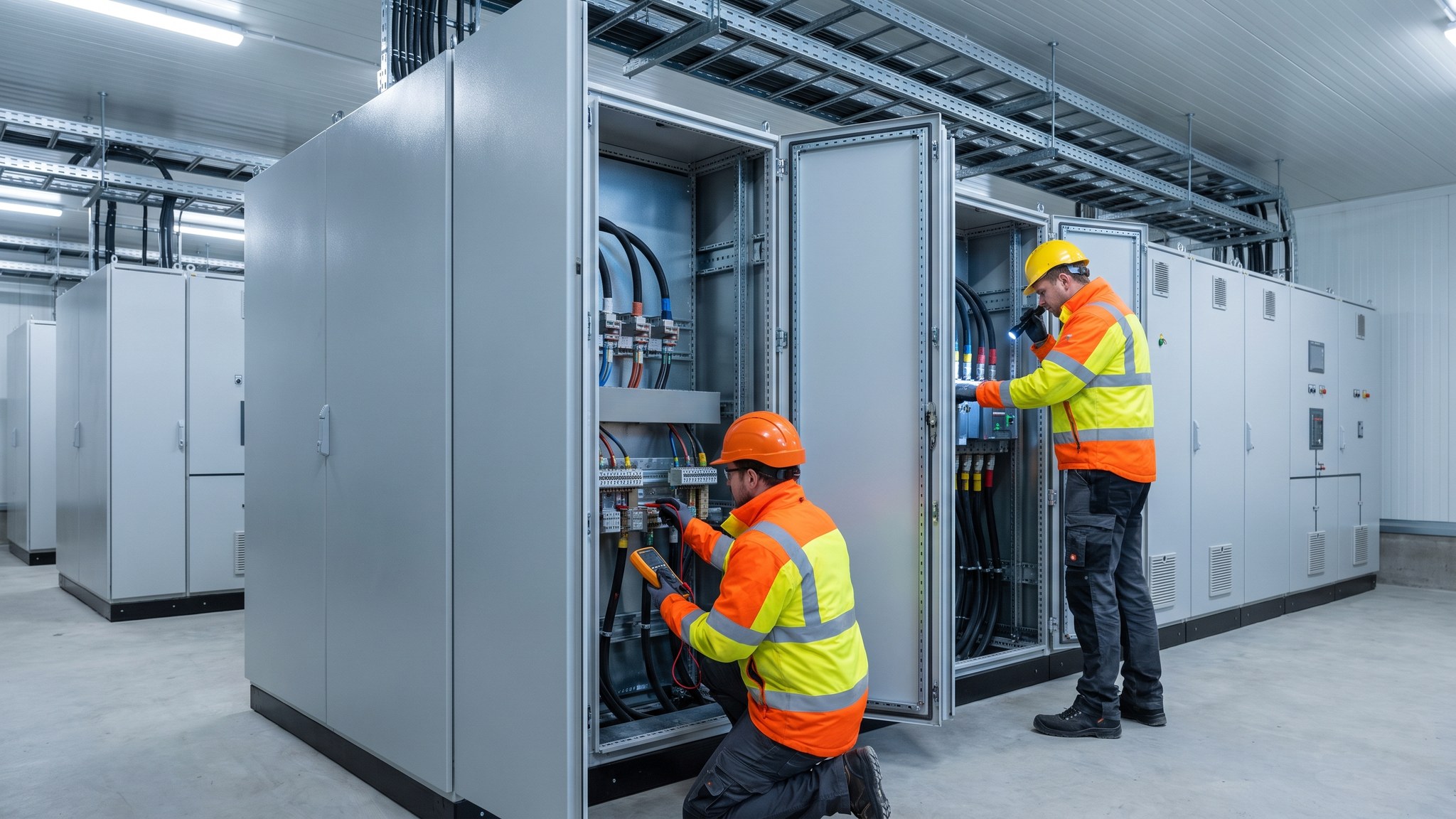
What is Performance testing and reliability run?
Performance testing is where the project demonstrates that the asset delivers what was bought. Capacity, efficiency and availability are measured against what the contract said they would be, and the results determine whether the asset is taken over, whether payments are released, and in some cases whether damages become payable. It is the commercial conclusion of the project. Unlike grid compliance testing, which is owed to the network operator, this is owed to the owner, and the criteria come from the contract rather than from the network.
It is measured over a sustained period rather than in a single demonstration, and that is deliberate. A battery can be made to look good for an afternoon. What the owner is buying is an asset that performs reliably day after day under the conditions the site actually experiences, so the tests are typically run over an extended window, with agreed methods of measurement and agreed corrections for the conditions of the day. Ambient conditions matter to a battery, so how results are adjusted for them is agreed in advance rather than argued about afterwards, and every project that has skipped that agreement has regretted it.
Alongside the measured performance sits a reliability run: a period during which the asset simply operates and its availability is recorded. The intent is to catch the faults that only appear with time and cycling, which are exactly the faults an owner would otherwise inherit. The duration, the availability required and what counts as an outage are all set by the contract for the project. What matters generally is that the definitions are agreed before the run starts, because almost every dispute at this stage is about whether a particular hour counted, not about whether the asset works. Takeover follows a successful run, and it is a formal step with a documented state, a defect list, a handover of documentation and a clear transfer of responsibility to the operator.
How does Performance testing and reliability run work, step by step?
- 1
Step 1: Agree the criteria and the method before anything is tested
What will be measured, how it will be measured, what corrections will be applied for conditions, and what constitutes a pass are all agreed and documented before testing begins - ideally when the contract is signed. Disputes at this stage are almost always about method rather than performance, and they are almost always avoidable by having settled the method in advance.
- 2
Step 2: Establish the measurement arrangements
The instrumentation and metering used for the tests are identified, their accuracy is established, and both parties agree that the measurements they produce will be accepted. Where contractual metering exists it is normally the reference. Data recording, storage and access are arranged so that the evidence is complete and available to both parties.
- 3
Step 3: Plan the test programme around the site and the market
The asset is often live and able to trade during this period, so testing has to be scheduled around commercial operation, network conditions and the availability of the parties. The programme sets out when each test happens, who is present, and what happens if conditions on the day make a test invalid. Rescheduling rules agreed in advance save a great deal of argument later.
- 4
Step 4: Measure capacity
The energy the asset can deliver is measured by the agreed method under the agreed conditions, with the corrections applied as agreed. The result is compared against what the contract required. Capacity is the headline figure and the one most likely to be scrutinised, so the record supporting it needs to be complete enough to stand on its own.
- 5
Step 5: Measure efficiency
Efficiency is measured across the whole system as the contract defines it, which is generally what the owner cares about rather than the efficiency of any single component. What is included in the measurement boundary is one of the classic sources of dispute, which is exactly why it is defined in the criteria agreed at the outset.
- 6
Step 6: Run the reliability period
The asset operates for the agreed period while availability is recorded against the agreed definition. Faults are logged, investigated and corrected as they arise, and the effect of each on availability is assessed under the rules already agreed. The value of the run is precisely that it finds the intermittent faults that a short demonstration never would.
- 7
Step 7: Close out the defects
Defects found during testing and the reliability run are listed, categorised by whether they prevent takeover or not, and closed out or carried forward with agreed dates and owners. The list is a live document during this period, and its status at takeover forms part of the record of what the owner is accepting.
- 8
Step 8: Complete takeover
Takeover is a formal step, not a date that passes. The performance results, the reliability record, the defect list, the operating and maintenance documentation, the as-built records, the fire strategy evidence, the spares and the training are all handed over, and responsibility transfers to the operator on a documented state. It is the last of the sequence of authorisations that began at pre-commissioning.
What are the benefits of Performance testing and reliability run?
- Demonstrates that the owner has bought what the contract described
- Sustained measurement rather than a single favourable demonstration
- The reliability run finds intermittent faults before the owner inherits them
- Produces a performance baseline against which later degradation is measured
- Provides the objective basis for releasing payments or applying damages
- Concludes with a documented transfer of responsibility rather than an assumed one
What are the limitations of Performance testing and reliability run?
- Takes an extended period, during which takeover and final payment are deferred
- Results depend on conditions, so agreed corrections are essential and often contested
- Measurement boundaries and availability definitions are a frequent source of dispute
- Testing has to be scheduled around commercial operation of a live asset
- Failures at this stage are commercially significant and slow to resolve
- Requires both parties to commit people for the whole period
What is Performance testing and reliability run best suited for?
What plant does Performance testing and reliability run need?
- Contractual metering and instrumentation of established accuracy
- Data recording and storage arrangements accessible to both parties
- Control system monitoring for availability and fault logging
- Diagnostic equipment for investigating faults found during the run
- Document management arrangements for the handover pack
- Training facilities and materials for the operator's team
How is Performance testing and reliability run quality-checked?
- Performance criteria, measurement methods and corrections agreed before testing begins
- Measurement instrumentation and its accuracy accepted by both parties
- Availability definition and outage rules agreed before the reliability run starts
- Defect list maintained live through the period, categorised against takeover
- Results compiled with evidence complete enough to stand on their own
- Takeover completed as a formal, documented transfer with the handover pack issued