Water provision, access and containment
Water for the fire and rescue service, routes for their appliances, and somewhere for contaminated run-off to go other than the nearest watercourse.
Last updated 2026-09-06
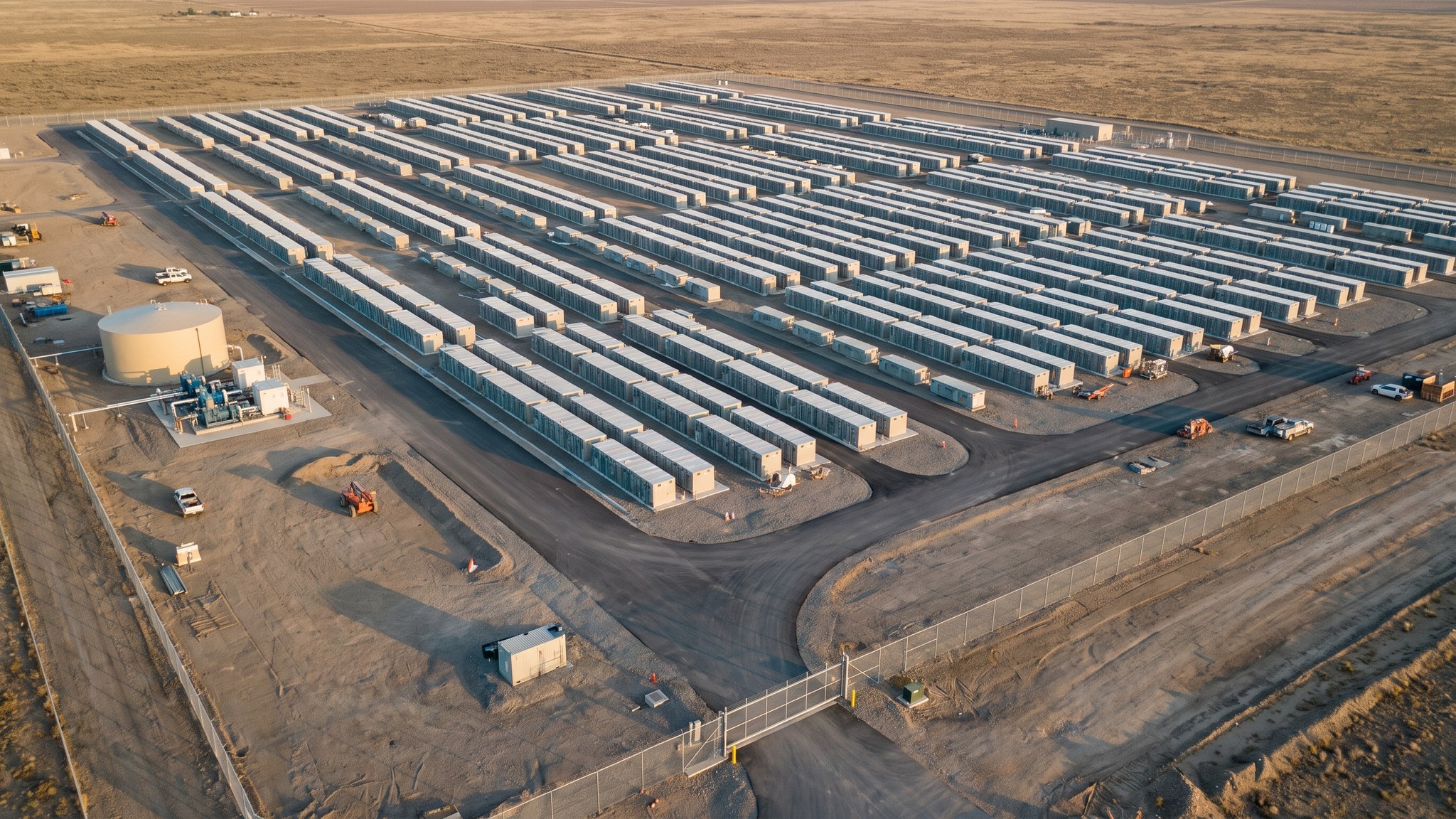
What is Water provision, access and containment?
Three practical provisions sit at the end of a battery site fire strategy: water, access and containment. Water because the fire and rescue service may need it and a rural site rarely has it; access because appliances have to reach the site and move within it; and containment because water used at an incident on a battery site does not come away clean. All three are designed in, and all three are frequently underestimated, because they look like site infrastructure rather than fire engineering and are therefore treated as somebody else's package.
Water provision is agreed with the fire and rescue service during design, and what is provided depends on what they say they may need, on what already exists nearby, and on the fire engineer's assessment. Battery sites are often in exactly the locations where mains provision is poor, so the answer commonly involves stored water on site, and that means a structure, a supply, a maintenance obligation and a means for appliances to draw from it. What is provided and how much is a matter for that consultation and the specification. Access is the same discipline applied to roads: routes that appliances can use in the conditions of the day, hardstandings they can stand on, room to manoeuvre, gates that open when there is no power, and an approach that is not blocked by the incident itself.
Containment is the provision most often missed. Water applied at an incident on a battery site picks up contaminants, and if it runs off the site it can reach ground or surface water and turn a fire into an environmental incident with a long tail. Containment means the site is designed so that run-off is collected and held rather than released - which usually involves falls, kerbs, bunding, penstock or valve arrangements, and a holding capacity - and so that what is held can later be removed and disposed of properly. The capacity and the arrangement are set by the fire engineer and the environmental designer for the project. What is universal is the principle: assume the water will be contaminated, assume it has to be caught, and design the site accordingly. All three provisions also have to be maintained, tested and understood by the operator, because they will be used, if at all, on the worst day the site ever has.
How does Water provision, access and containment work, step by step?
- 1
Step 1: Consult the fire and rescue service during design
Water, access and the site's emergency arrangements are discussed with the fire and rescue service while the design can still change. They advise on what they may need and how they would expect to approach the site. That consultation is recorded, and its outcomes are carried into the design as requirements rather than as notes. Presenting them with a finished design is how projects end up rebuilding access roads.
- 2
Step 2: Establish what water can be provided
Existing provision near the site is established first, and the shortfall is then made up by the project. On many battery sites that means stored water, which is a designed structure with a supply, a level monitoring arrangement, a means for appliances to draw from it and a maintenance obligation. What is provided is set by the consultation, the fire engineer's assessment and the specification for that project.
- 3
Step 3: Design access for appliances, not for cars
Access roads, hardstandings and turning provision are designed for the weight and dimensions of fire and rescue appliances and for the ground conditions the site will have in winter, not in June. Routes are arranged so that an incident in one part of the site does not cut off access to the rest, and so that appliances can approach from more than one direction where the layout allows it.
- 4
Step 4: Make gates, security and information work under stress
Security arrangements have to let the fire and rescue service in quickly, including when the site has no power. Gate operation, key or access arrangements, and the site information provided to responders on arrival are all designed and agreed, and are kept current. A locked gate and an out-of-date site plan are a familiar and entirely avoidable combination.
- 5
Step 5: Design the containment system
The site is designed so that water used at an incident is collected and held. That usually means falls and levels that direct run-off where it is wanted, kerbs or bunding to stop it going where it is not, a valve or penstock arrangement that can isolate the site drainage, and a holding capacity. The arrangement and the capacity come from the fire engineer and the environmental designer, and the isolation arrangement has to be operable quickly and by the people who will be there.
- 6
Step 6: Integrate containment with the site drainage
Containment cannot be a separate system bolted on beside the drainage. Normal surface water drainage and the incident containment arrangement are designed together, so that the site drains as it should day to day and can be isolated and held when it must be. The interface between the two is where the design has to be explicit, and it is what gets missed when drainage and fire strategy are procured as separate packages.
- 7
Step 7: Plan the removal of what is held
Holding contaminated water is only half the answer. The plan for testing it, removing it and disposing of it properly is prepared before the site operates, with the arrangements identified and the responsibility named. An operator discovering after an incident that they have a full containment tank and no plan is dealing with a second problem on top of the first.
- 8
Step 8: Test, maintain and rehearse
Water provision, gates, access routes and containment isolation are tested before operation and at intervals through the life of the asset, and the operator's people are trained on them. The emergency plan is exercised rather than filed. These provisions are used, if ever, in the worst circumstances the site will see, and that is not the moment to find out that a valve has seized or a route is blocked.
What are the benefits of Water provision, access and containment?
- Gives the fire and rescue service the water and the room they may need
- Keeps access to the site available when it is most needed
- Prevents a fire from becoming a pollution incident with a long aftermath
- Turns the emergency plan into physical provisions rather than intentions
- Provides arrangements that can be tested and demonstrated to consultees
- Protects the owner from environmental liability that far outlasts the fire itself
What are the limitations of Water provision, access and containment?
- Water storage, access roads and containment all take land and capital cost
- Rural sites frequently have poor existing water provision to build from
- Containment must be integrated with normal drainage, which complicates both
- Isolation arrangements have to be operable quickly by whoever is present
- All of it requires testing and maintenance for the life of the asset
- Held contaminated water needs a disposal route arranged in advance
What is Water provision, access and containment best suited for?
What plant does Water provision, access and containment need?
- Excavators, dozers and rollers for access roads and appliance hardstandings
- Surfacing plant for routes designed to carry appliance loads in winter conditions
- Excavation and concreting plant for storage structures, bunds and containment
- Drainage installation equipment, including isolation valve or penstock chambers
- Fencing, gate and access control installation equipment
- Test equipment for proving water provision and containment isolation
How is Water provision, access and containment quality-checked?
- Fire and rescue service consultation recorded and carried into the design as requirements
- Access routes and hardstandings verified against appliance dimensions and loads
- Gate and access arrangements proved to work with the site unpowered
- Containment isolation demonstrated and timed with the people who would operate it
- Drainage and containment interface recorded as built and included in the handover
- Disposal route for held contaminated water identified and documented before operation