Pre-commissioning and mechanical completion
Proving everything is built, complete and correct before anything is energised.
Last updated 2026-09-07
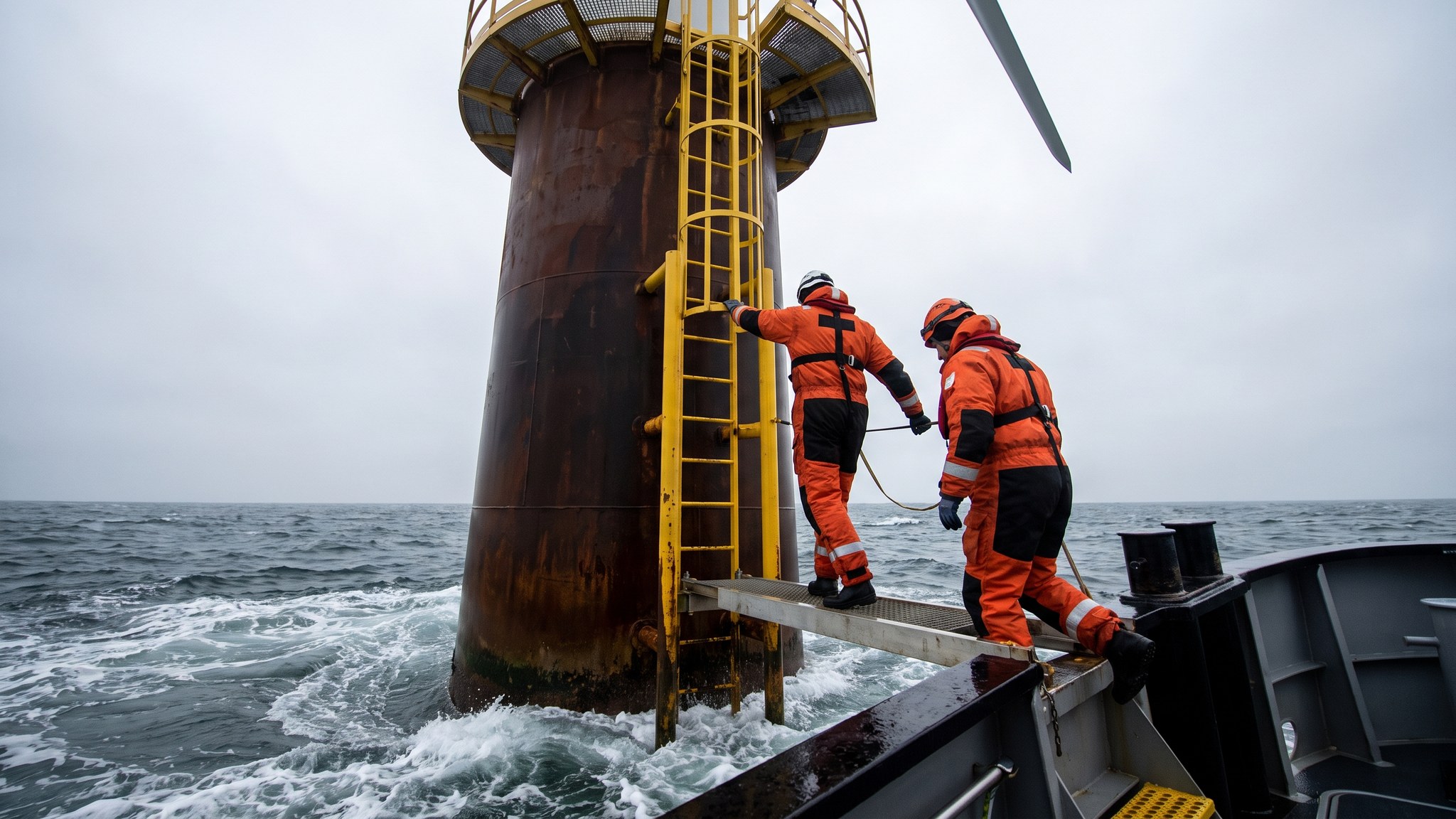
What is Pre-commissioning and mechanical completion?
Pre-commissioning is the discipline of proving that what was built matches what was specified, before anything is taken live. It covers every structure, every cable, every turbine and every system on the platform, and it is done system by system rather than area by area, because a system is what will eventually be operated and a system is what has to work. The output is a formal statement, for each system, that it is mechanically complete: installed, connected, inspected, cleaned, adjusted, tested where it can be tested without being live, and documented. Nothing goes forward to energisation without that statement.
The tool that makes this work at the scale of an offshore wind farm is the punch list. Every inspection generates items, and items are categorised by whether they prevent the system going forward or not. Items that would make energisation unsafe or would damage equipment must be cleared before the system progresses. Items that are cosmetic or that can be dealt with later are recorded, agreed and carried, with an owner and a date. Managing hundreds of turbines and dozens of systems this way generates a great deal of paperwork, and the projects that run it well use a single database that everybody works from rather than separate lists held by each contractor.
The reason for the formality is that offshore correction is disproportionately expensive. A wrongly connected cable, a missing gasket or an omitted test found on land costs an afternoon. The same fault found after energisation costs a vessel mobilisation, a weather window, an outage and a great deal of argument about who pays. Pre-commissioning is therefore where the project spends effort deliberately, and it is also the point where construction hands responsibility to commissioning. That handover is formal, it is documented system by system, and after it the rules that apply to working on the asset change completely.
How does Pre-commissioning and mechanical completion work, step by step?
- 1
Step 1: Break the asset down into systems
Long before anyone tests anything, the whole wind farm is broken down into systems and subsystems that reflect how it will be operated rather than how it was built. Each system is given a boundary, an equipment list, a set of drawings and a defined set of checks and tests that will prove it. That breakdown is agreed by everybody who will contribute to it, because a system whose boundary is disputed will be nobody's responsibility at the worst moment. The breakdown then drives the completion database, the documentation structure and the sequence of the whole campaign.
- 2
Step 2: Build the completion database and the check sheets
Each system gets a set of check sheets covering installation checks, inspections and the tests that can be done without the system being live. These are loaded into a single completion database that every contractor works in, so that the project has one view of progress rather than several. Check sheets are signed by the people who did the work and verified by the people accountable for accepting it. The database also holds the punch list, so that an item raised during a check is visible immediately to whoever has to clear it.
- 3
Step 3: Verify what was installed against what was specified
The first substantive activity is a physical check that the right equipment was installed in the right place, the right way round, connected to the right things and to the right revision of the drawings. On a project with hundreds of near-identical turbines this matters more than it sounds, because the failure mode is not a missing item, it is the right item in the wrong position. Equipment records, serial numbers and certification are checked against the equipment list. Discrepancies are raised as punch items and traced back to whether the installation was wrong or the record was.
- 4
Step 4: Complete the mechanical checks and preparation
Systems are then physically prepared: cleaned and flushed where they carry fluid, filled and vented, adjusted and set, lubricated, torqued and locked, with the supports, restraints and protection all confirmed in place. Temporary items used during construction are removed and their removal is recorded. Access, escape routes, lighting and safety equipment are confirmed complete for the areas concerned. Each of these steps is a signed line on the check sheet rather than an assumption.
- 5
Step 5: Carry out the tests that can be done without the system live
A great deal can be proved before anything is energised. Continuity and integrity checks, functional checks of mechanical equipment, pressure testing of fluid systems, verification of instruments and their settings, and proving of the protection and detection systems can all be done at this stage. Every test has a procedure, an acceptance basis agreed beforehand and a recorded result. Where a test cannot be completed because it needs the system live, that is identified explicitly and carried into the next stage rather than left to be discovered.
- 6
Step 6: Manage the punch list to closure
Punch items are categorised on impact, and the categorisation is agreed by the commissioning team rather than decided by whoever raised the item. Items preventing safe progress must be cleared before the system moves on. Others are carried with an owner and a date and are tracked in the same database. A running report shows, for every system, what is outstanding and what is stopping it, and that report is what the project management team steer by in the closing months. Uncontrolled punch lists are one of the most common reasons an offshore project drifts.
- 7
Step 7: Declare mechanical completion system by system
When all the required check sheets are signed, the tests are complete, the records are in the database and no blocking punch items remain, the system is declared mechanically complete. That declaration is a formal document with named signatories, and it is the gate between construction and commissioning. Systems reach it at different times, which is deliberate: the campaign is arranged so that the systems needed first, such as the platform auxiliaries, reach completion before the ones that depend on them.
- 8
Step 8: Hand over to the commissioning team and change the rules
Once a system is handed over, the control regime around it changes. Work on it is no longer construction work, it is work on a system under the commissioning team's control, and it happens under their authorisation arrangements rather than the construction ones. That change is briefed to everybody on site because the transition is a known point of confusion and therefore a known point of risk. From this moment the system is treated as though it could become live, and the project moves into the energisation stage.
What are the benefits of Pre-commissioning and mechanical completion?
- Finds errors while they are still cheap to correct, before any vessel mobilisation is needed to fix them
- Gives a defensible, documented statement that each system is complete and correct
- System-by-system completion lets parts of the asset progress while others are still being finished
- A single completion database gives the whole project one view of progress rather than several
- Creates the record set the operator will rely on for the whole life of the asset
- Establishes a clear, formal boundary between construction and commissioning responsibility
What are the limitations of Pre-commissioning and mechanical completion?
- Generates a very large volume of documentation that needs real resource to manage
- The system breakdown has to be right early, and reworking it later is disruptive
- Progress depends on contractors keeping their records current, which needs active management
- Punch lists grow quickly and can obscure what actually matters if categorisation is weak
- Offshore access limits how quickly items can be cleared once the crews have demobilised
- The transition of control between construction and commissioning is a recognised point of confusion
What is Pre-commissioning and mechanical completion best suited for?
What plant does Pre-commissioning and mechanical completion need?
- Completion management database accessible to every contractor on the project
- Test equipment appropriate to each system, with valid calibration records
- Flushing, cleaning, filling and pressure testing equipment for fluid systems
- Temporary power, lighting and communications to support the campaign offshore
- Crew transfer vessels or an accommodation vessel to keep commissioning teams on site
- Document control and records management for the handover dossiers
How is Pre-commissioning and mechanical completion quality-checked?
- System breakdown and boundaries agreed by all parties before the campaign starts
- Check sheets signed by the person performing the work and verified independently
- Installed equipment verified against the specification, the drawings and the equipment records
- Every test carried out to an approved procedure with the acceptance basis agreed beforehand and the result recorded
- Punch items categorised by the commissioning team, tracked in one database and reported to closure
- Mechanical completion certificates issued system by system with named signatories, filed in the handover dossier
More commissioning & handover methods
Next method
Energisation and cold commissioning