Sump pumping
A hole, a pump and a hose - the tool that keeps the dig alive, and the method that can quietly ruin it.
Last updated 2026-08-22
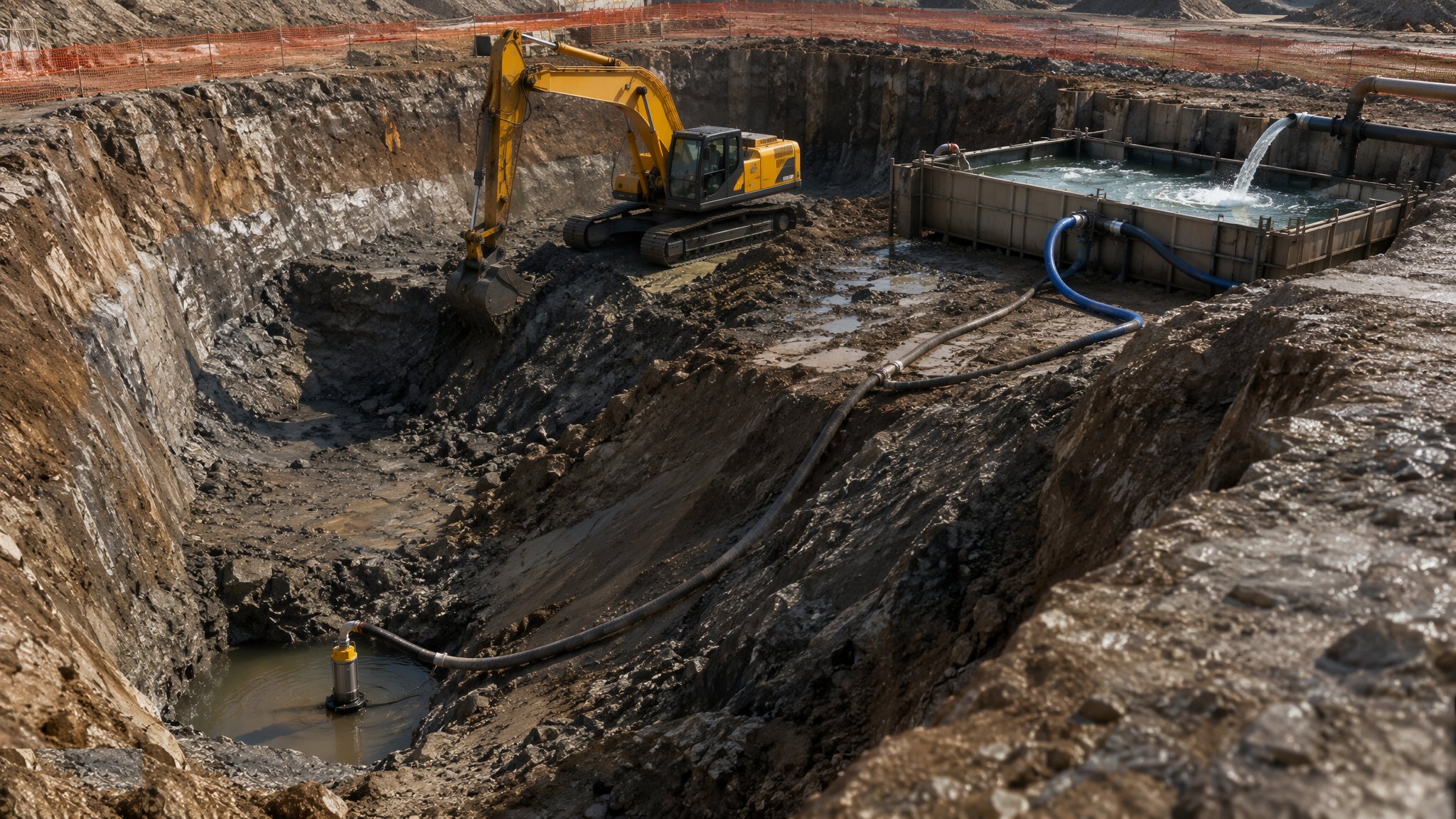
What is Sump pumping?
Sump pumping is dewatering at its most direct: dig a pit lower than the formation, let water collect, and pump it away. Every site has one running somewhere - the trench end, the lift pit, the corner of the basement dig. As a maintenance tool it is indispensable: it handles rain, seepage and the odd inflow, keeps formations workable, and costs almost nothing. The kit is a submersible pump, a hose and a generator; the skill is knowing where to put it and when it is not enough.
The danger is treating sump pumping as a design solution in the wrong ground. In sands and silts below the water table, a sump does not just remove water - it pulls the ground with it. Water flowing toward the sump drags fines through the formation, the base loosens and boils, trench sides ravel and collapse, and the excavation quietly undermines itself from below. The tell-tale signs are a pump that never clears, discharge that runs dirty, and sand volcanoes at the formation. That is the moment to stop digging sumps and design a proper system - wellpoints, deep wells or a cut-off - before the formation's bearing capacity is pumped out through the hose.
Used correctly, the rules are simple. The sump sits below and clear of the formation it serves, lined or wrapped so it filters rather than excavates. The pump runs on a float, discharge goes through silt control to a consented outfall, and standby capacity exists before the weekend does. And the formation is inspected before concrete: if water has been standing or flowing across it, the soft, ruined surface is dug out and made good - because concrete on a water-damaged formation is a foundation on porridge.
Process storyboard
Step 1 of 6 - slide through the snapshots.
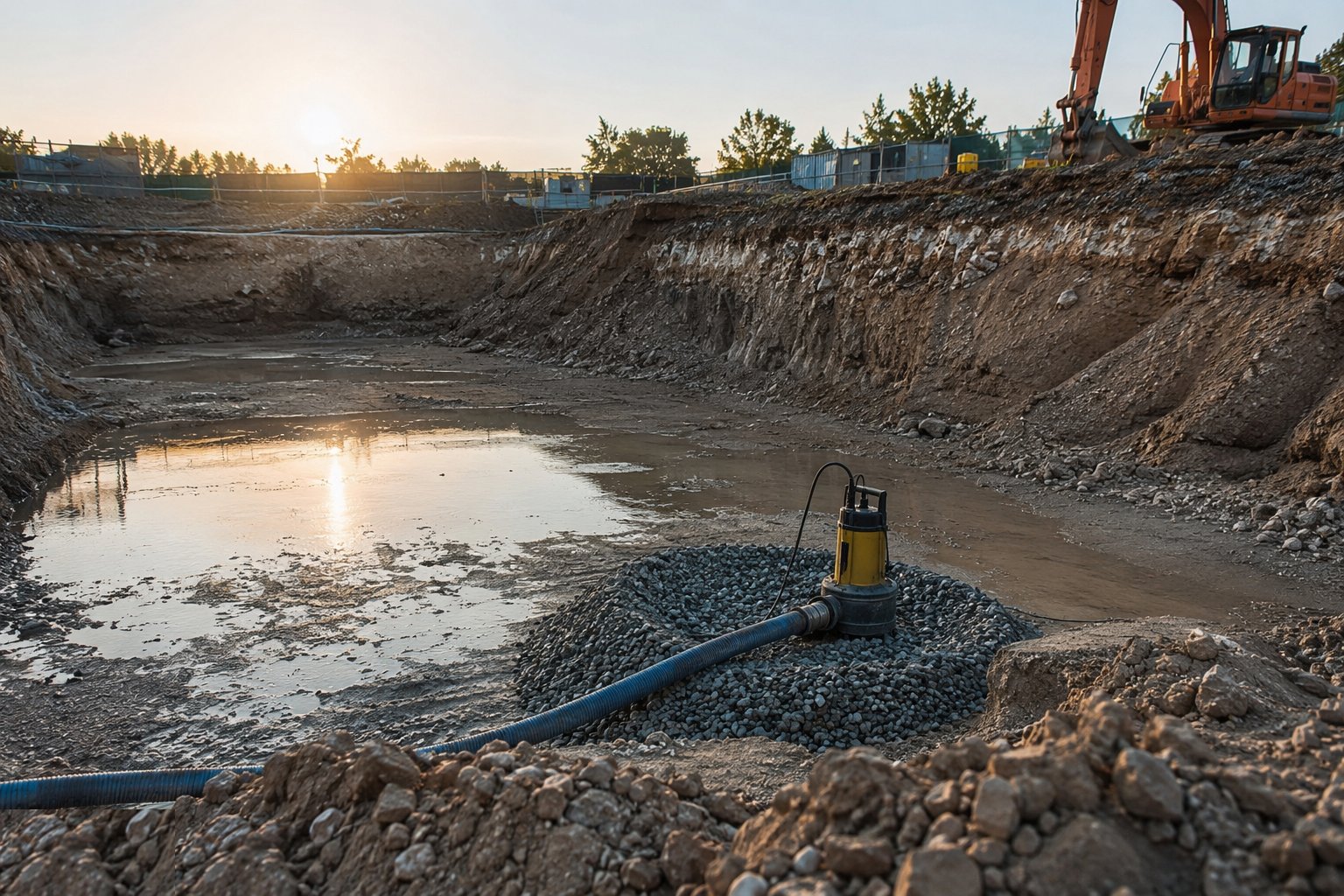
STEP 1
Decide if the ground allows it
Check the GI: sump pumping suits clays, low-permeability ground, shallow digs above or just into the water table, and rainfall control.
How does Sump pumping work, step by step?
- 1
Step 1: Decide if the ground allows it
Check the GI: sump pumping suits clays, low-permeability ground, shallow digs above or just into the water table, and rainfall control. In permeable sands and silts below the water table, it is a maintenance tool at best - design a proper drawdown system instead. The decision is made from the permeability data, not from the size of the pump in the stores.
- 2
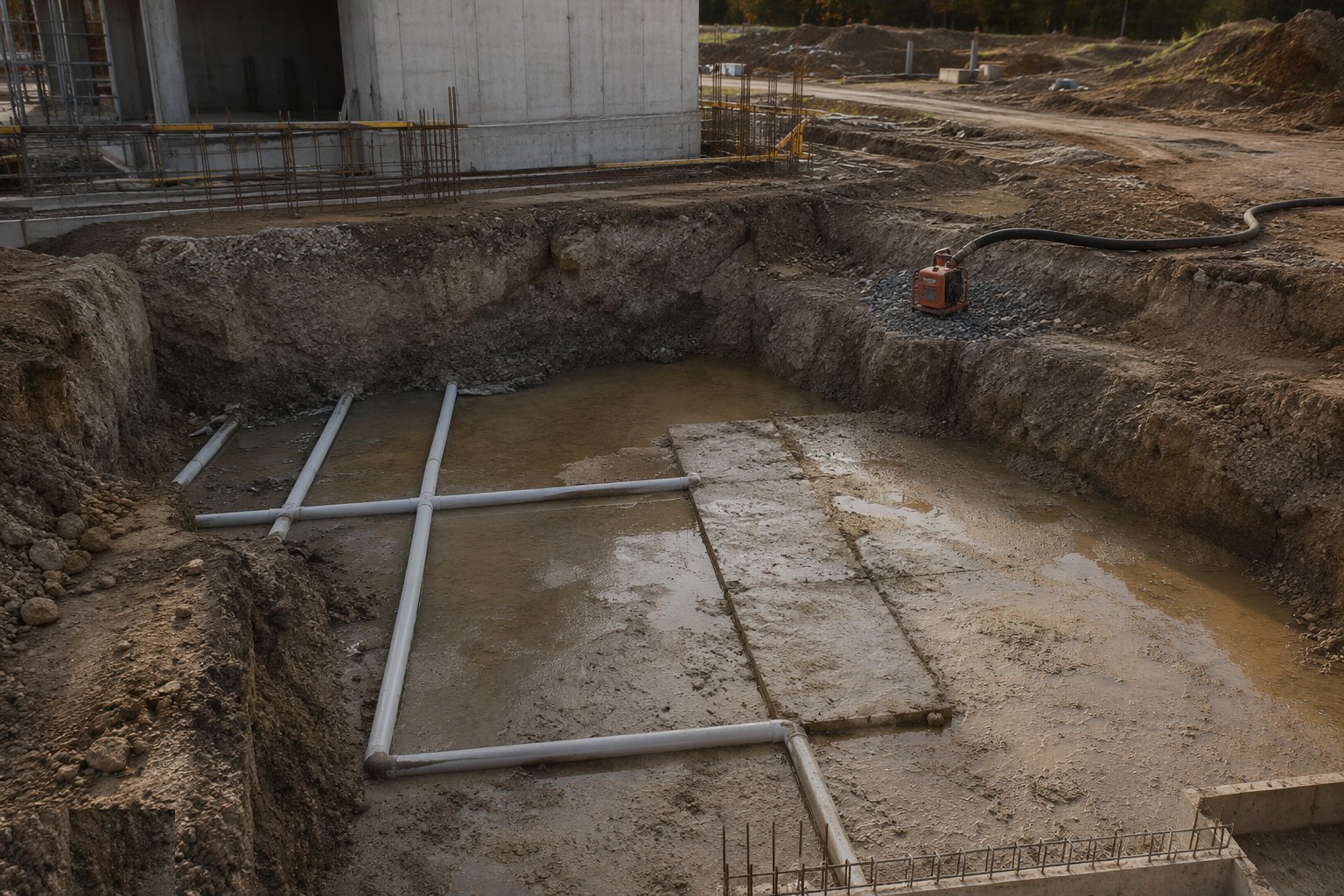
Step 2: Position the sump clear of the work
The sump goes at the low point, below formation, and outside the line of foundations, slabs and pipe runs - a sump backfilled under a footing is a soft spot with a history. Dig it deep enough to keep the pump strainer below the water surface, and size it so the pump cycles rather than cavitates.
- 3
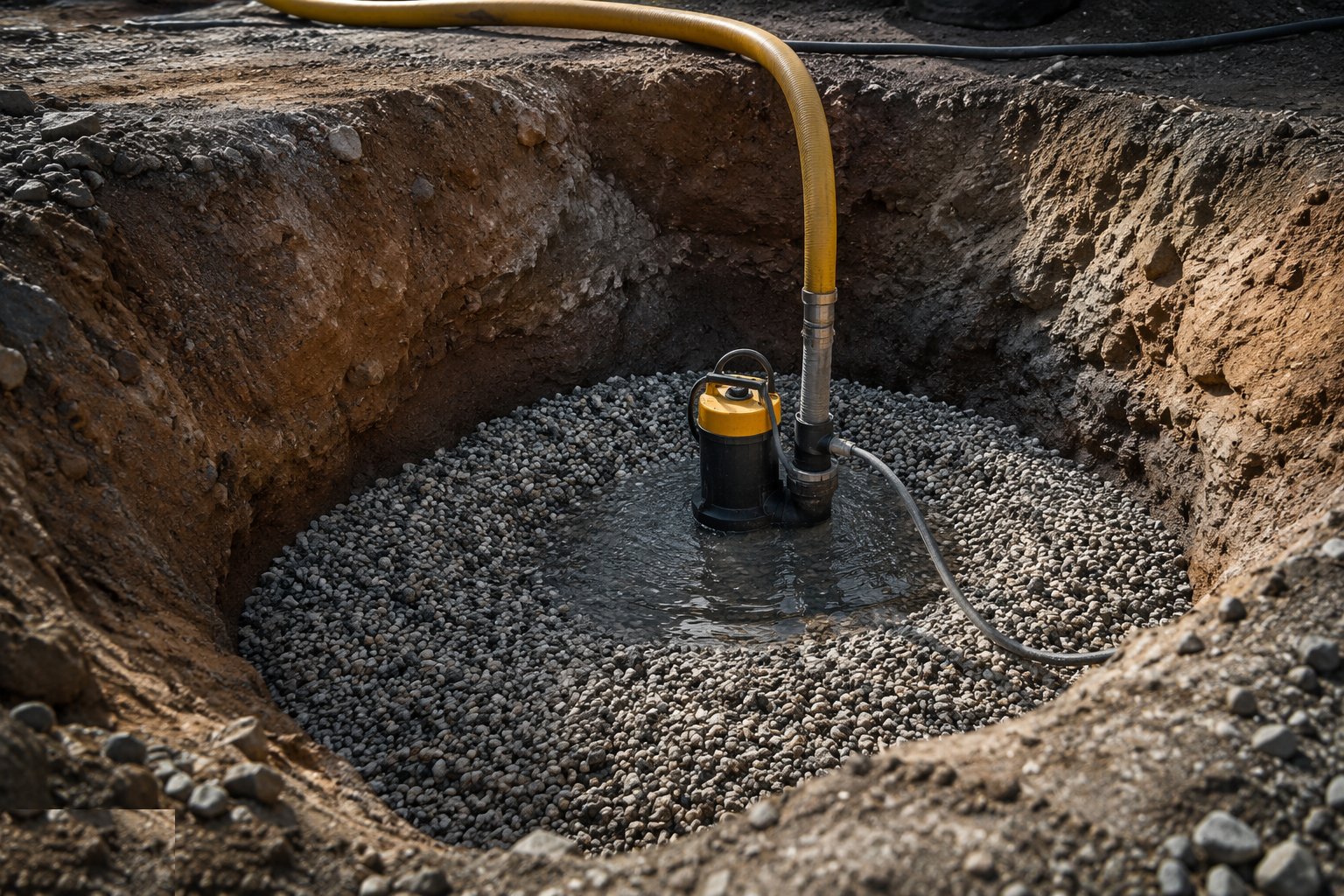
Step 3: Line and filter the sump
In anything but clay, line the sump: a perforated drum or wellpoint filter, wrapped geotextile, or a bed and surround of clean gravel. The filter passes water and holds ground - an unlined sump in silt is a slow-motion excavation of the formation. Dirty discharge is the alarm; a correctly filtered sump runs progressively cleaner.
- 4
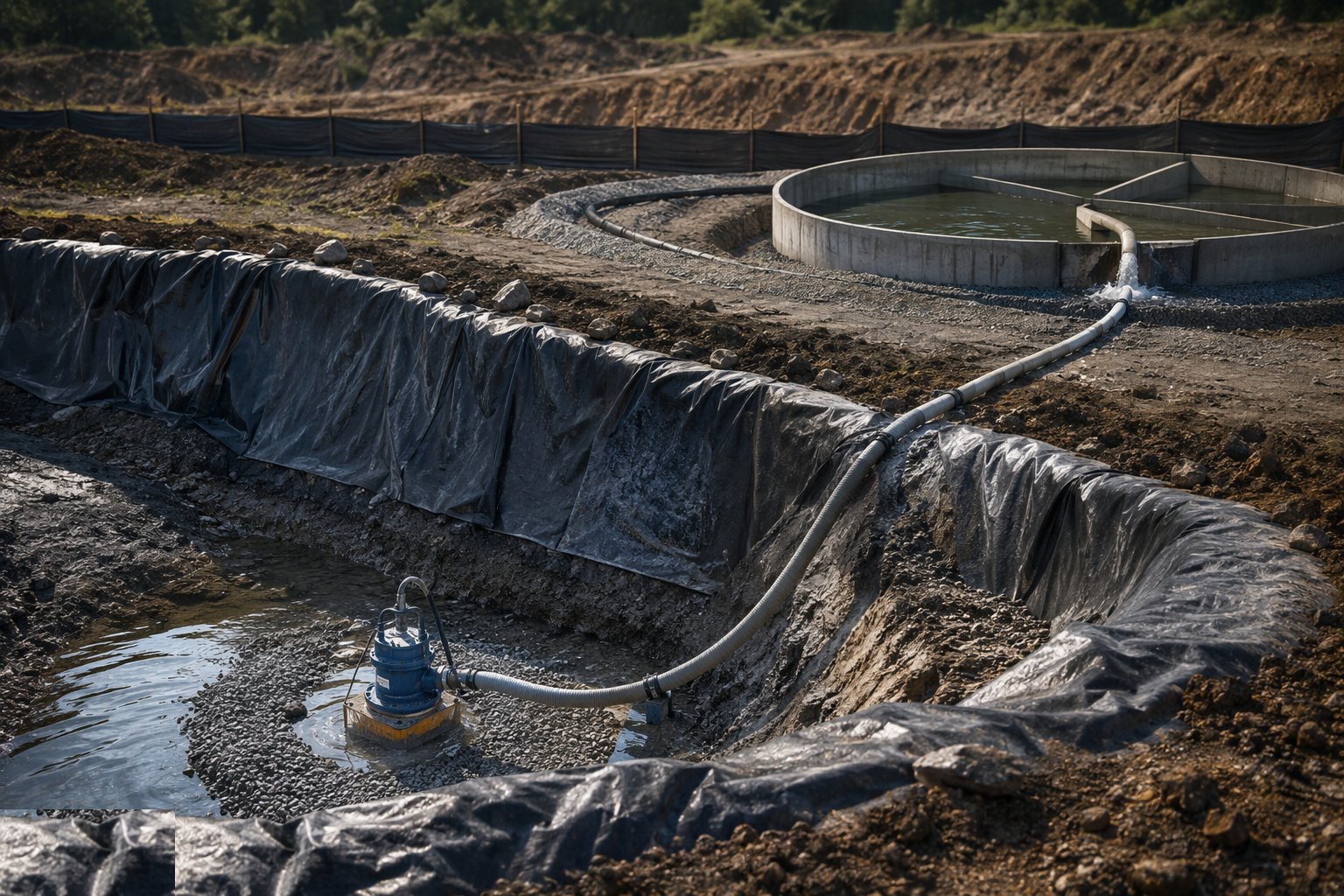
Step 4: Pump to a consented, silt-controlled discharge
Discharge runs through a settlement tank, silt buster or at minimum a stilling arrangement before the outfall, and the outfall itself is consented - watercourse, sewer agreement or overland to a permitted area. A pump hose straight into the brook is an offence the day the water runs cloudy, and it will run cloudy.
- 5
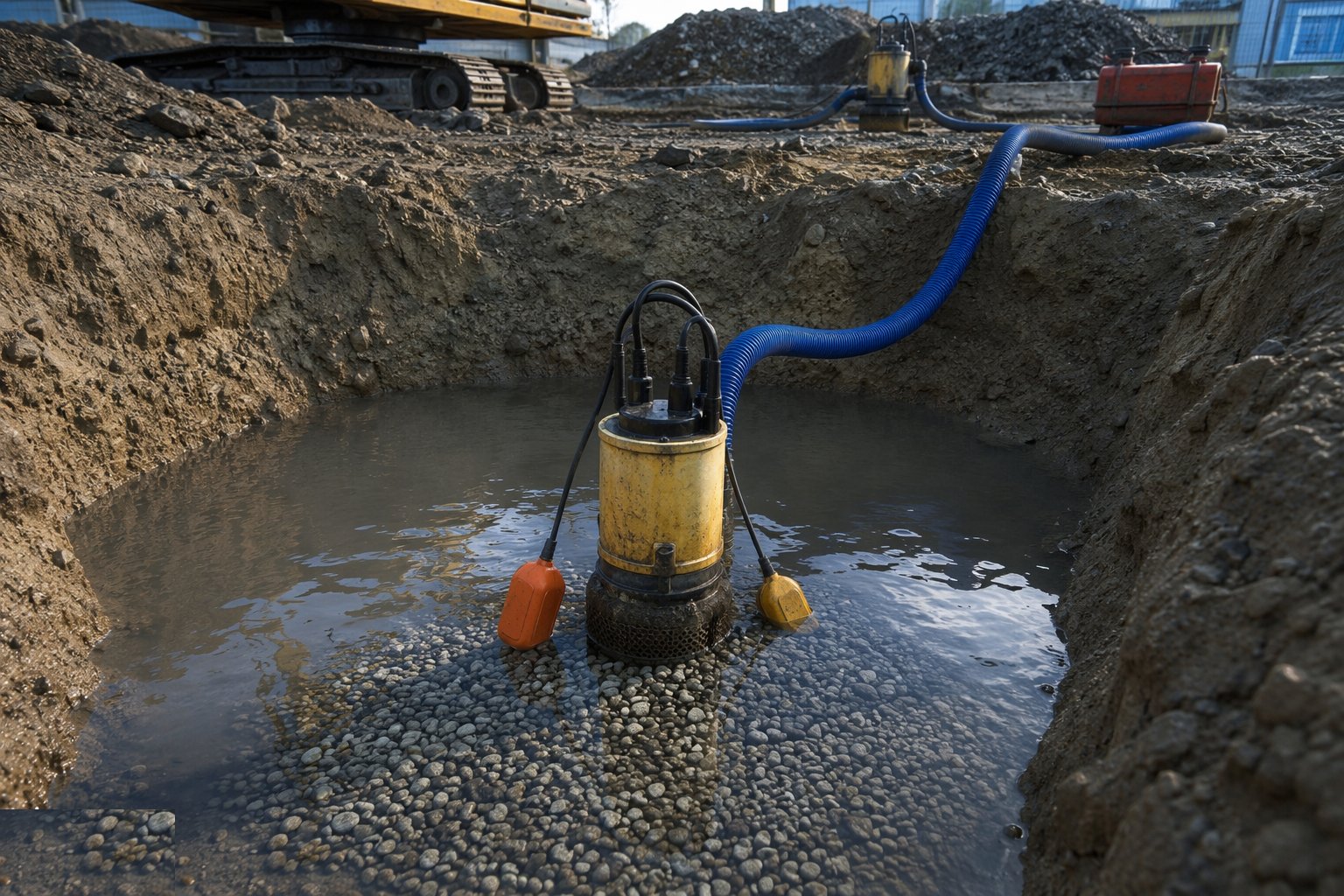
Step 5: Run on floats, with standby ready
Float switches run the pump on demand; alarms or telemetry watch the critical sumps. Standby pump and generator are on site and tested before every weekend and shutdown - the classic disaster is a Friday slab, a silent pump, and a floated, cracked structure on Monday morning. Running logs are kept for the sumps that matter.
- 6
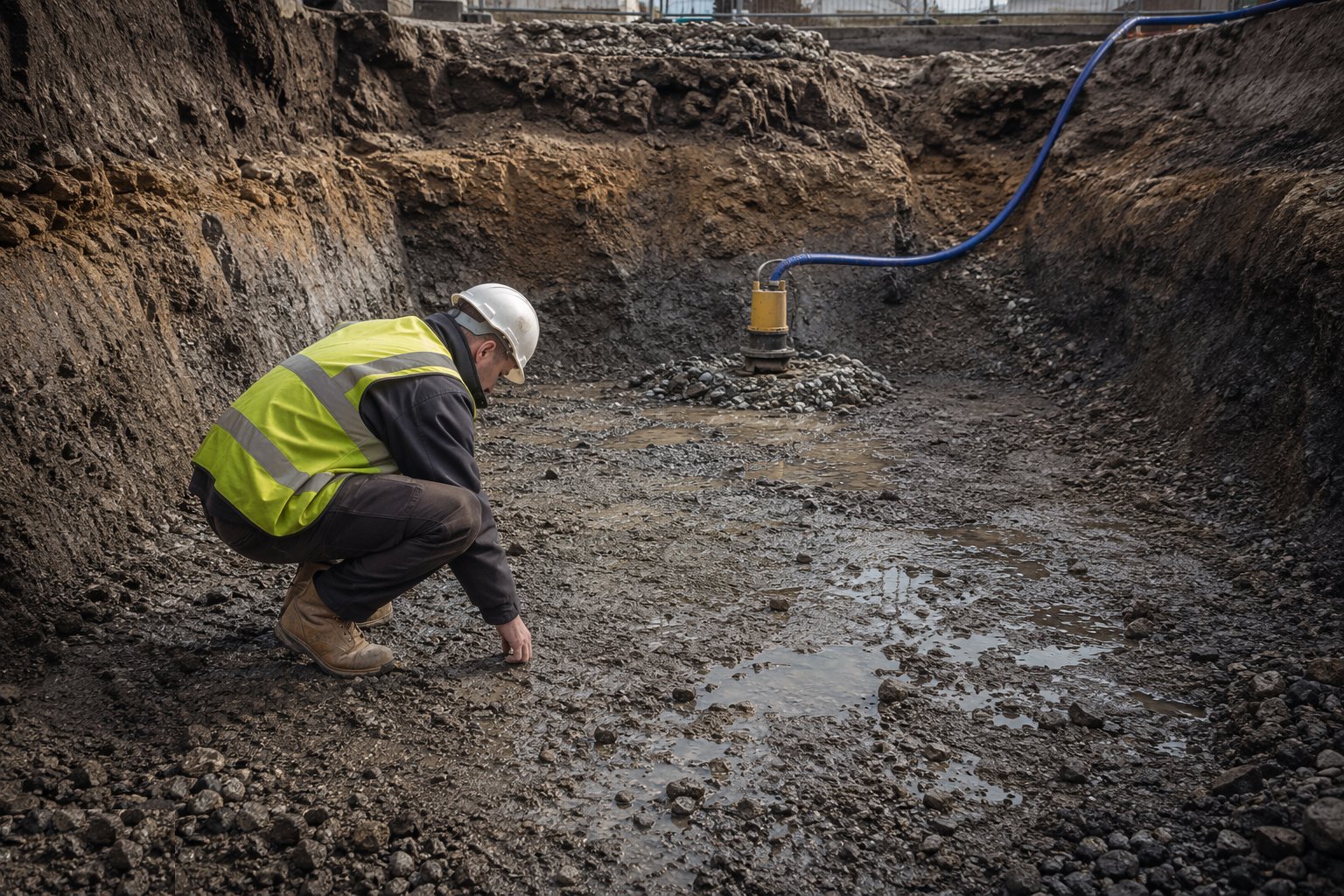
Step 6: Inspect and make good the formation
Before blinding or concrete, the formation is inspected for water damage: softened, disturbed or loosened material is dug out and replaced with compacted granular or lean-mix. The sump itself, once redundant, is backfilled in compacted layers or grouted - never tipped full of loose spoil under the works.
What are the benefits of Sump pumping?
- Cheap and instant - pump, hose and power, deployed in an hour
- Ideal for rainwater and minor seepage control in cohesive ground
- Flexible - sumps move with the dig as levels change
- Minimal design input for genuinely minor inflows
- The essential backup even when engineered systems do the primary work
What are the limitations of Sump pumping?
- In sands and silts it drags fines, boils the formation and collapses sides
- Draws down almost nothing - water control at the point of entry only
- Continuous power and attention required - silent pumps sink digs
- Discharge needs consent and silt control like any engineered system
- Sumps near foundations become permanent soft spots if badly backfilled
- A pump that never stops is a symptom, not a solution - inflow exceeds the method
What is Sump pumping best suited for?
What plant does Sump pumping need?
- Submersible pumps (2–4 in) with float switches
- Perforated drums, geotextile and clean gravel for lined sumps
- Hoses, layflat and fittings for discharge runs
- Settlement tank or silt buster on the discharge
- Generator with standby pump and tested changeover
- Alarms or telemetry on critical sumps
How is Sump pumping quality-checked?
- GI permeability reviewed before relying on sump pumping in granular ground
- Discharge consent in place; discharge water visually checked for silt
- Pump running logs kept for critical sumps; standby tested weekly
- Formation inspected for water damage and made good before concrete
- Dirty or never-clearing discharge escalated to a designed dewatering review
- Redundant sumps backfilled in compacted layers or grouted, recorded
More dewatering & groundwater control methods
Next method
Wellpoint systems