Boundaries and soft landscaping
Walls on foundations, trees with water - the boundary drawn and the landscape kept alive.
Last updated 2026-08-22
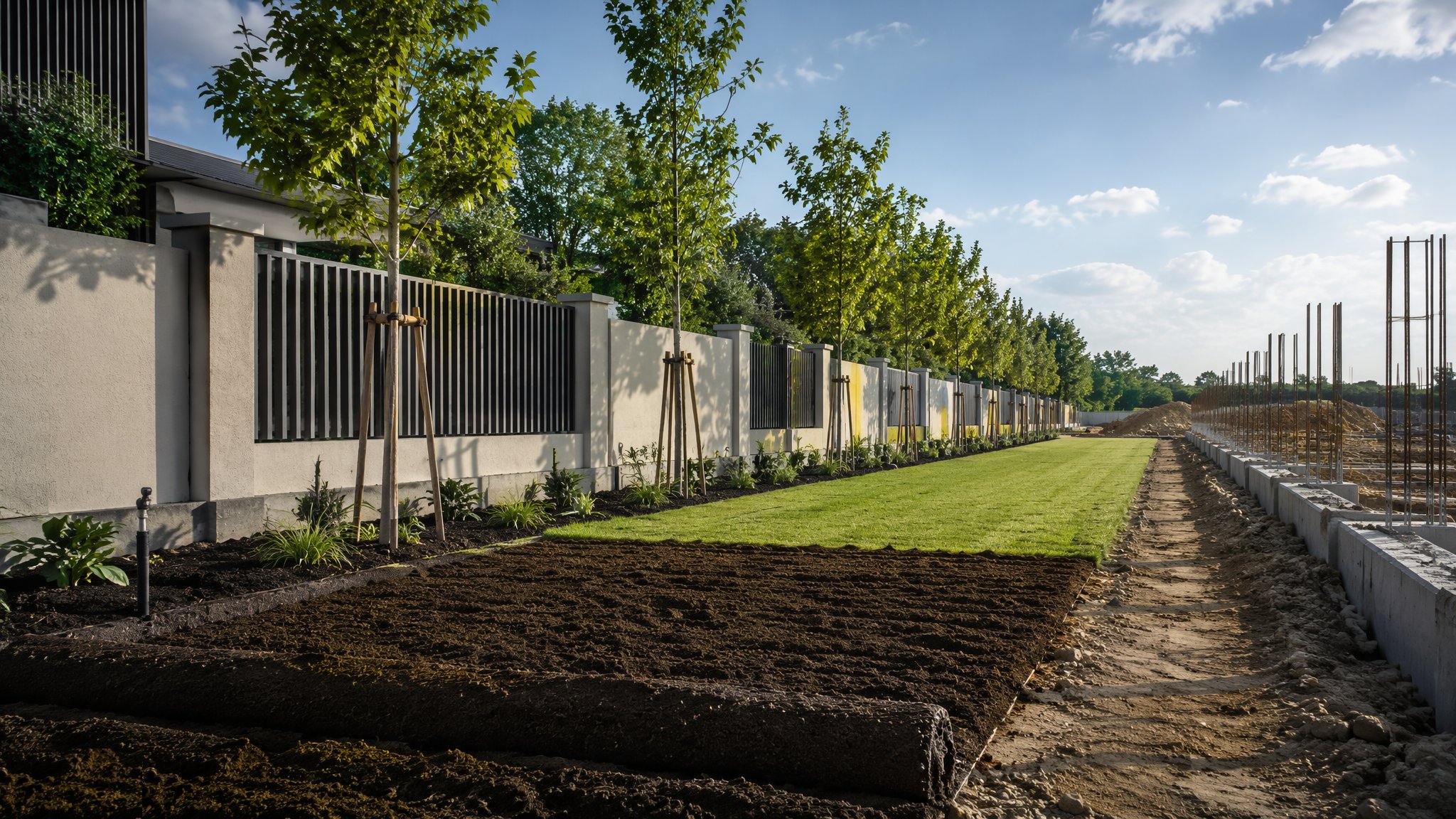
What is Boundaries and soft landscaping?
Boundary works look simple and carry legal weight: walls on their own strip foundations with piers, copings and movement joints per the design; fences with posts concreted plumb to a string line; railings and gates hung true. Everything is set out from the legal or site survey - never from a kerb line or a neighbour's assumption - because a wall 50 mm off the boundary is a dispute that outlives the job and lands on the developer's desk in a solicitor's envelope.
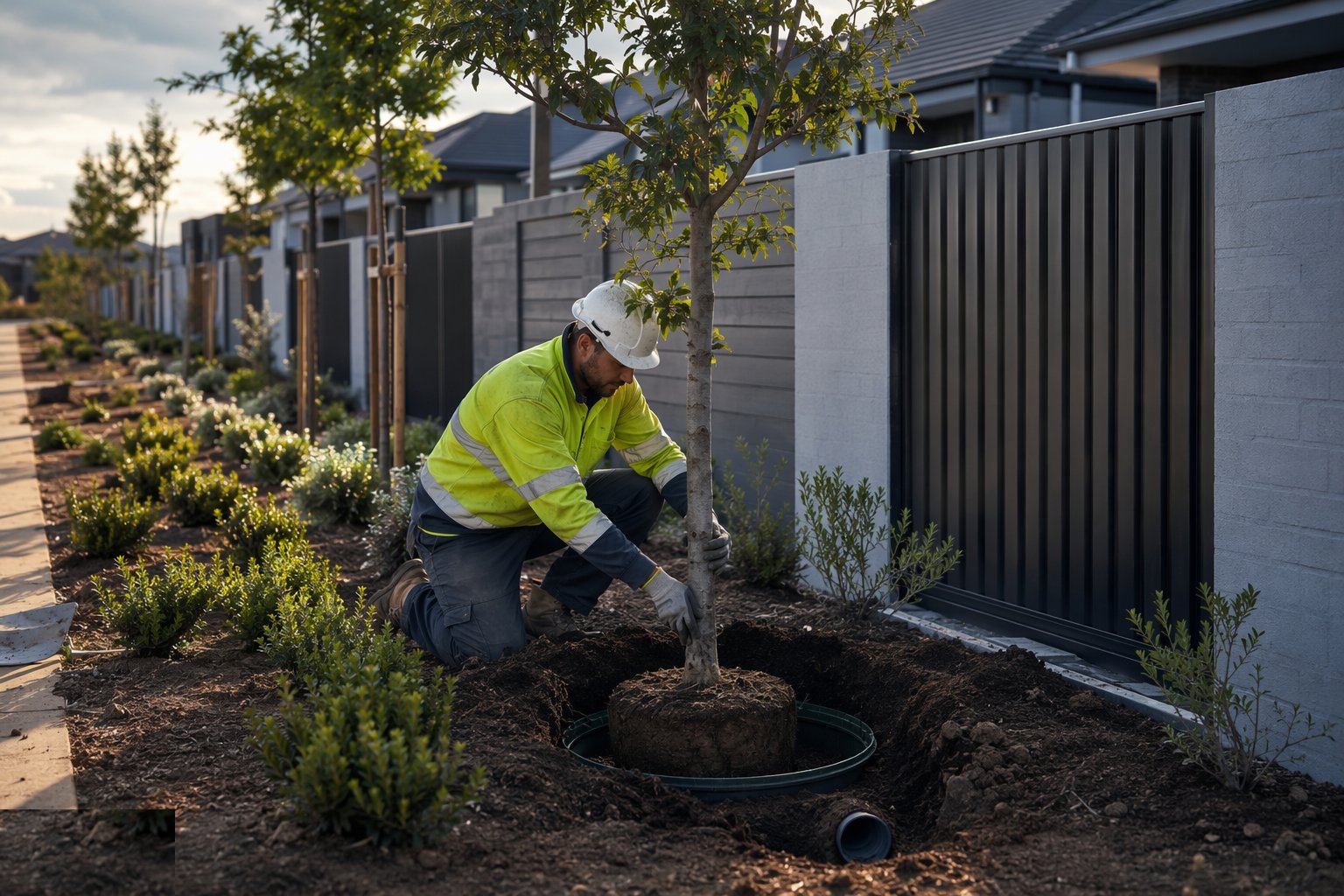
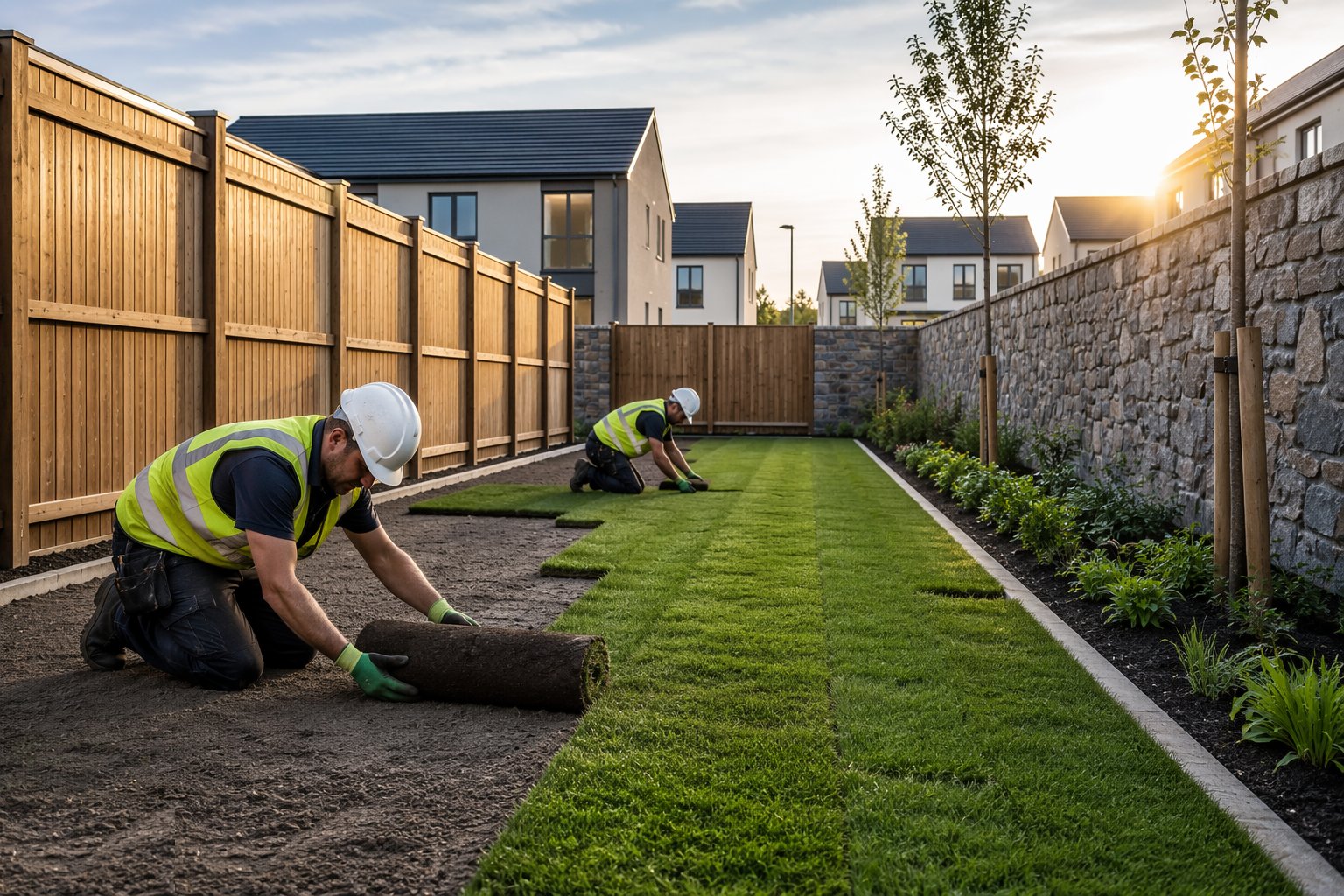
Soft landscaping is engineering that happens to be alive. Topsoil is respread to the specified depth, decompacted and cultivated, with levels finished to marry paths and thresholds and falls away from every building. Trees are pit-planted - pits sized and drained, the tree set at the depth it grew at, staked and tied, watered in - and shrubs and hedges follow the planting plan, with root barriers where services run close. Turf is laid on a prepared bed or seed sown in season; both are hostage to the calendar in a way concrete never is.
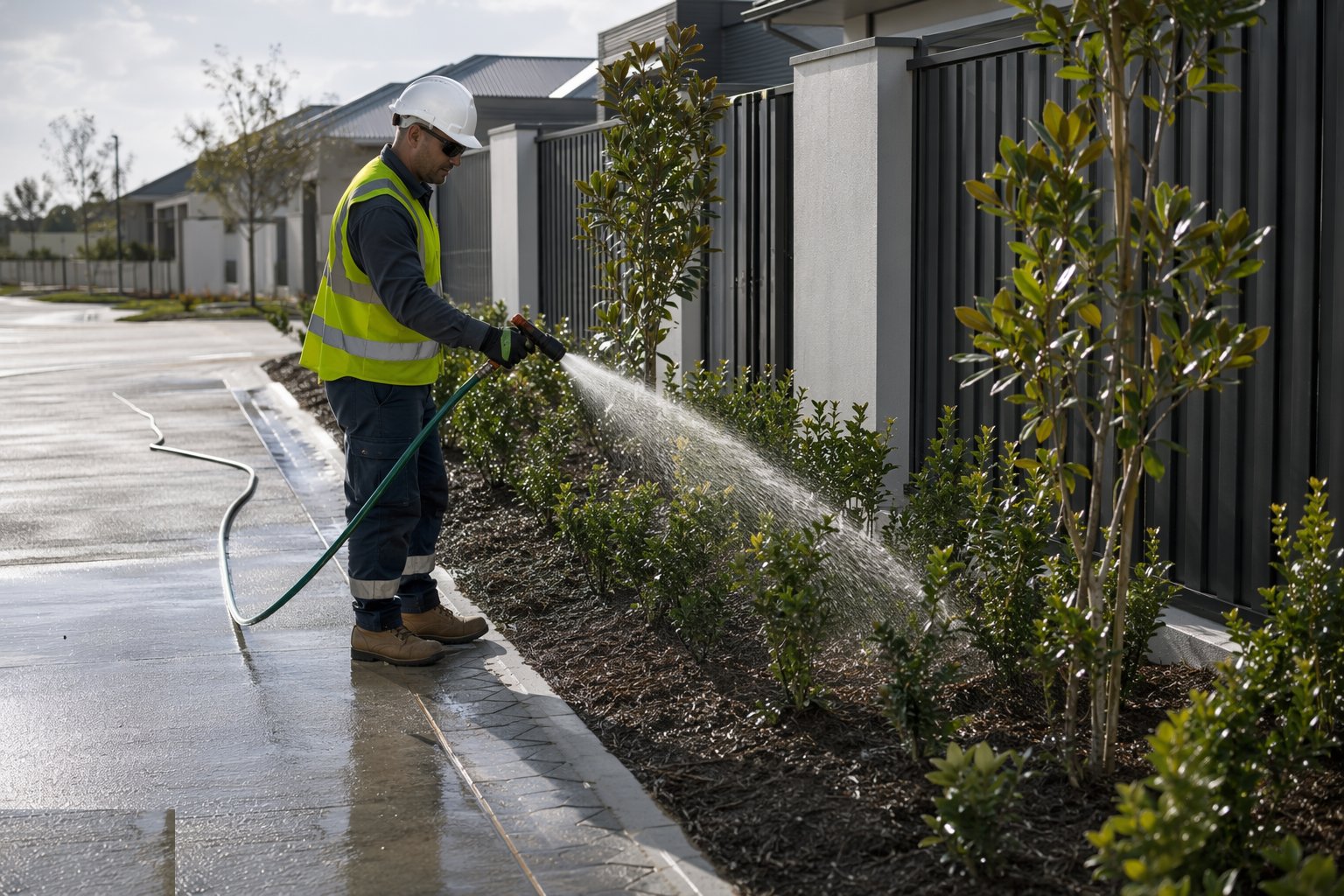
The maintenance period decides whether the landscape lives. Planting too deep, in rubble, or without water is a slow-motion failure measured in dead whips next spring; stored materials and compaction kill root zones silently before the tree even arrives. A watering and aftercare regime is logged through establishment, failures are replaced and recorded, and the end-of-defects inspection walks the planting with the landscape architect - because the development's reputation in year three is written by what survived year one.
Process storyboard
Step 1 of 6 - slide through the snapshots.
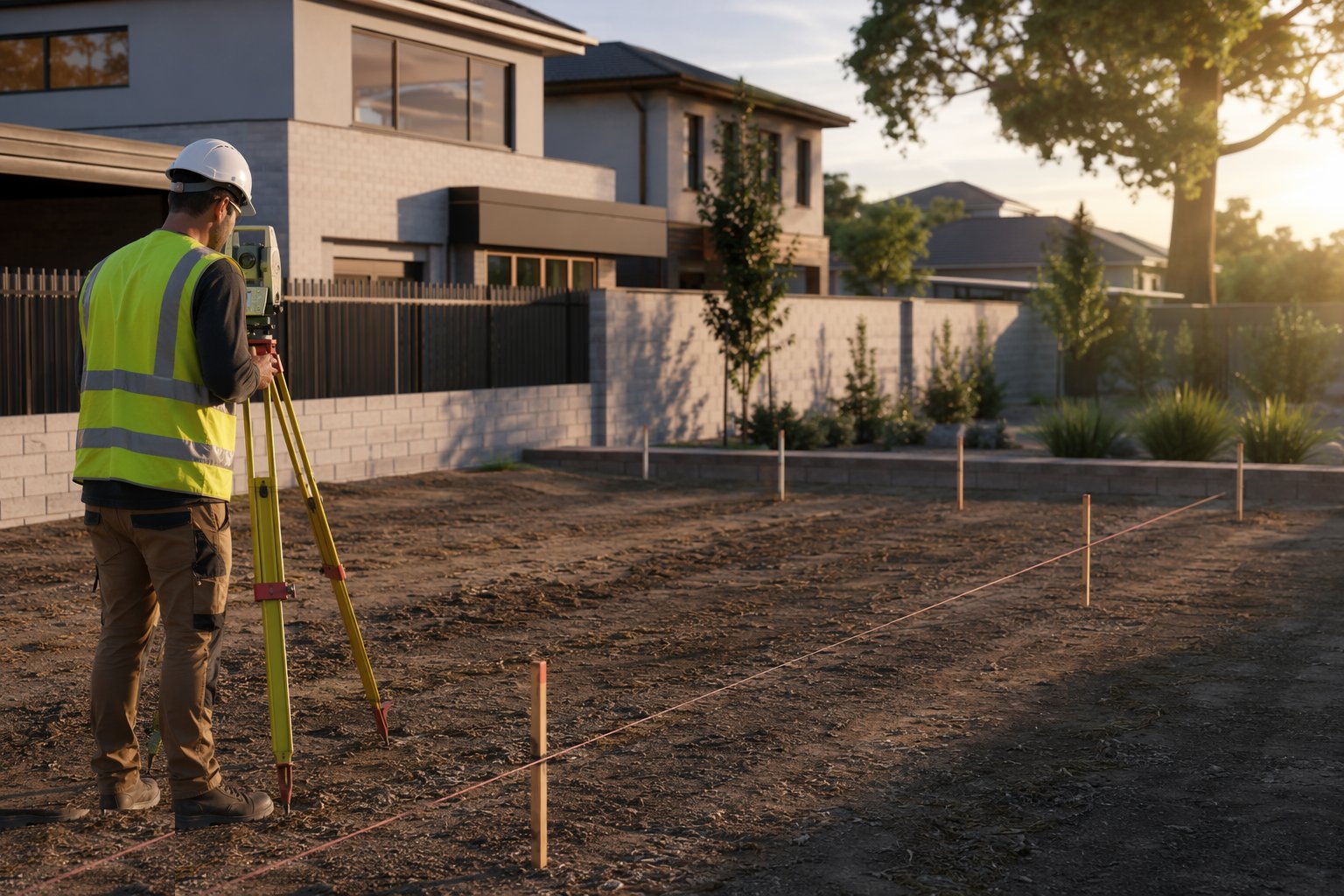
STEP 1
Set out the boundaries
Boundary lines are set out from the legal or site survey and agreed before construction; wall foundations are excavated and poured, with pier positions marked…
How does Boundaries and soft landscaping work, step by step?
- 1
Step 1: Set out the boundaries
Boundary lines are set out from the legal or site survey and agreed before construction; wall foundations are excavated and poured, with pier positions marked at the design centres. The line is settled now or litigated later.
- 2
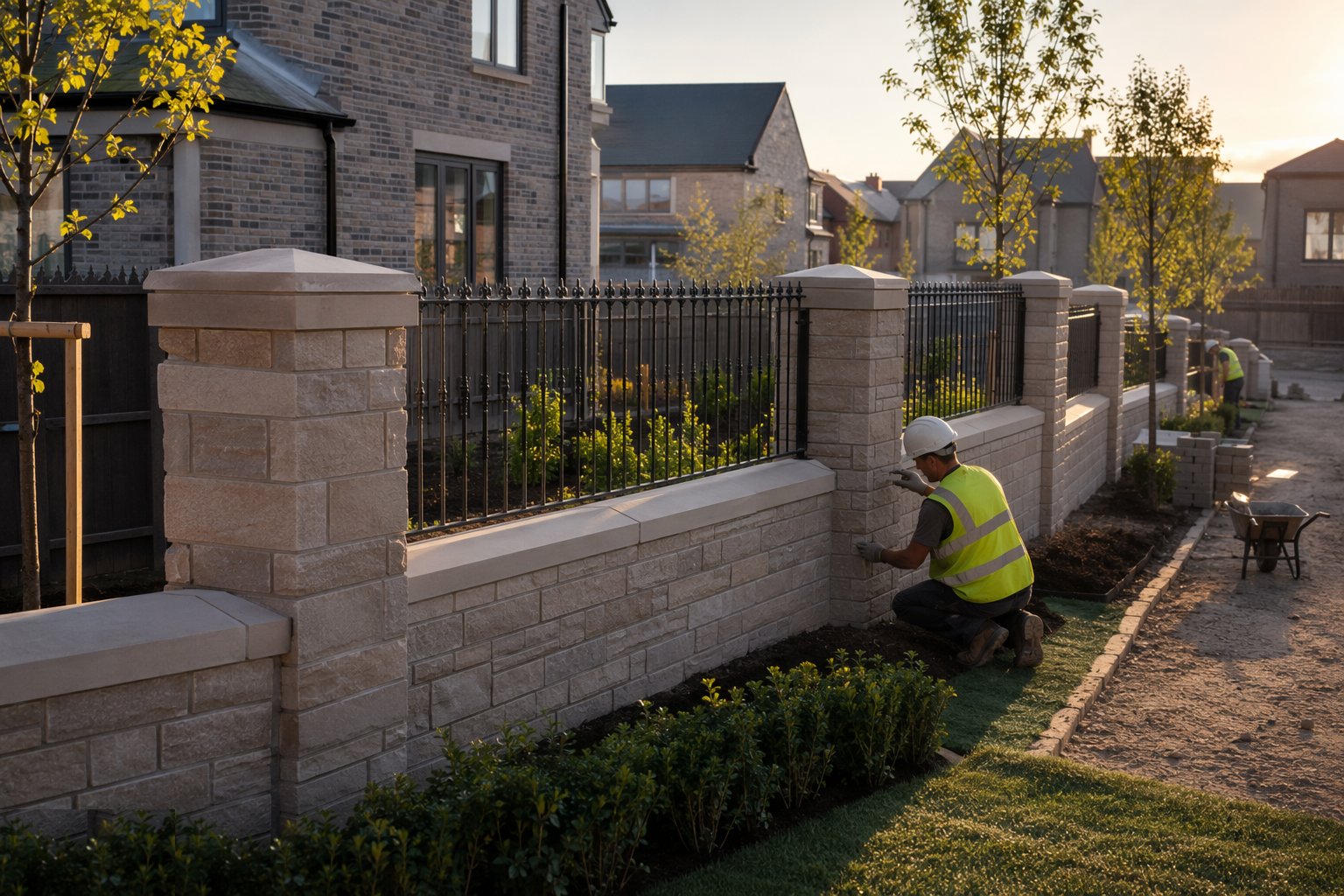
Step 2: Build walls and fix fences
Walls are built with piers, copings and movement joints per the design; fence posts are set plumb and concreted to line; rails, panels, railings and gates are hung true. Gates get the clearances and latches the layout promises.
- 3
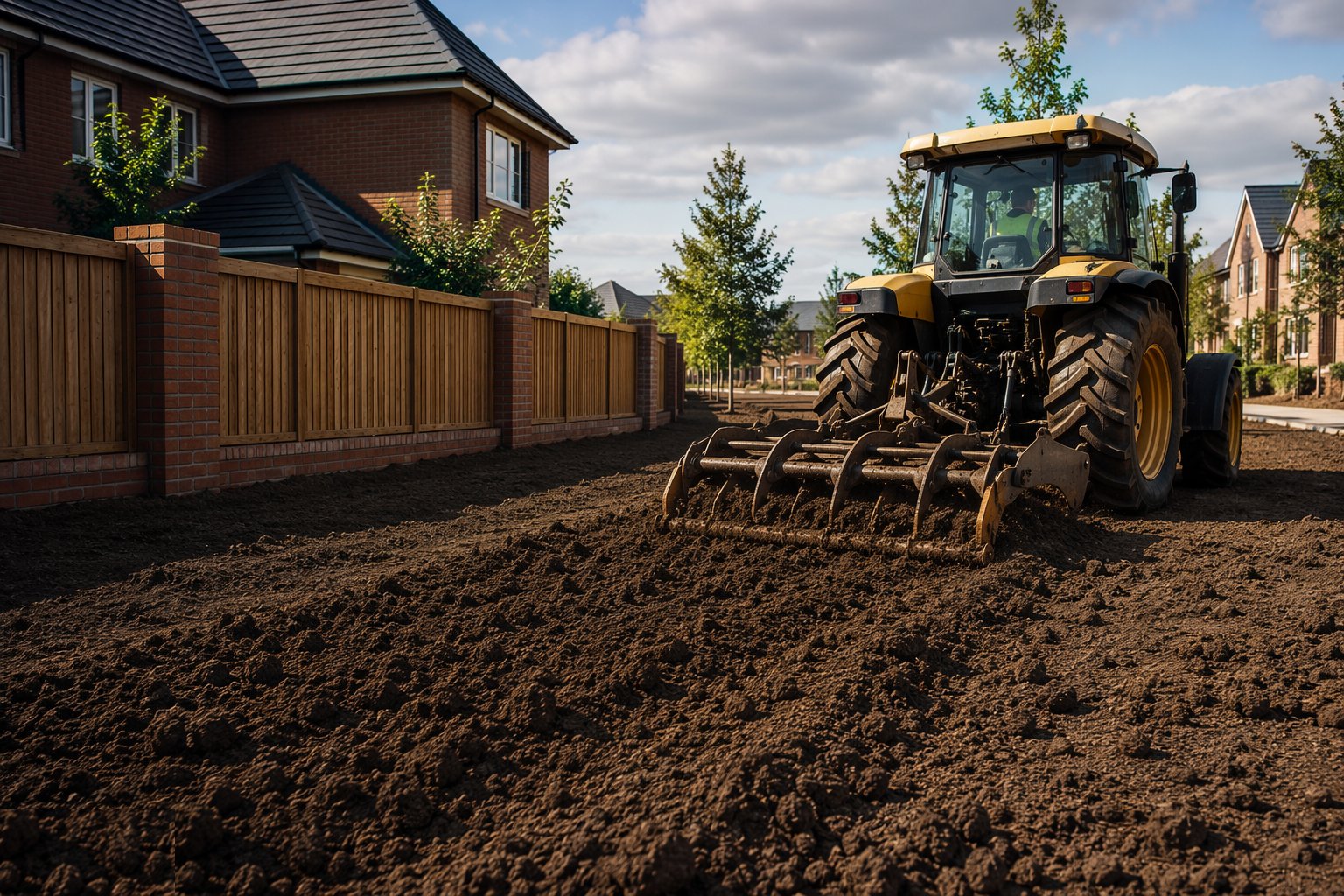
Step 3: Respread and cultivate the topsoil
Topsoil is respread to the specified depth, decompacted and cultivated, with levels finished to marry paths and thresholds and falls away from every building. Subsoil compaction from construction traffic is ripped first - roots cannot push through a pan the dumpers made.
- 4
Step 4: Plant the trees and shrubs
Tree pits are sized and drained, trees planted at their nursery depth, staked and tied, and watered in; shrubs and hedges follow the planting plan; root barriers protect services where the plan runs them close.
- 5
Step 5: Turf and seed
Turf is laid on a prepared, firmed bed and watered; seed is sown in season with protection from birds and boots. Both need the calendar's cooperation - the programme that ignores the growing season re-buys the landscape.
- 6
Step 6: Maintain to establishment
Watering, firming after wind, weed control and replacements are logged through the maintenance period. The end-of-defects inspection records what lived, what was replaced, and what the adopting body is inheriting.
What are the benefits of Boundaries and soft landscaping?
- Legal clarity - boundaries set out from the survey prevent disputes that outlive the job
- Instant place - trees, hedges and turf turn a site into somewhere people choose
- Planning compliance - landscape conditions discharged with evidence
- Durable boundaries - walls with proper foundations and joints outlast fence panels by decades
- Ecology and drainage value - planting supports biodiversity and the SuDS train
What are the limitations of Boundaries and soft landscaping?
- Season-bound - turf, seed and bare-root planting have windows the programme must respect
- Establishment risk - trees die from depth, drought and damage more than from disease
- Maintenance-dependent - the first two summers decide whether the landscape lives
- Boundary precision is unforgiving - a wall on the wrong line becomes a legal problem
- Construction damage - stored materials and compaction kill root zones silently
What is Boundaries and soft landscaping best suited for?
What plant does Boundaries and soft landscaping need?
- Excavators and augers for foundations and tree pits
- Telehandlers for trees, topsoil and materials
- Concrete supply for wall foundations and post footings
- Rotavators and soil cultivation kit
- Water bowsers and irrigation kit
- String lines, lasers and the boundary survey
How is Boundaries and soft landscaping quality-checked?
- Boundary set-out checked against the legal or site survey before construction
- Wall foundations, pier centres and movement joints verified against the design
- Topsoil depth and cultivation checked per area
- Tree pit size, drainage, planting depth and staking inspected per tree
- Watering and maintenance regime logged through establishment
- End-of-defects landscape inspection with replacements recorded