SuDS: attenuation and infiltration
Hold the storm, release it slowly - tanks, ponds and permeable paving engineered to a flow rate.
Last updated 2026-08-22
What is SuDS: attenuation and infiltration?
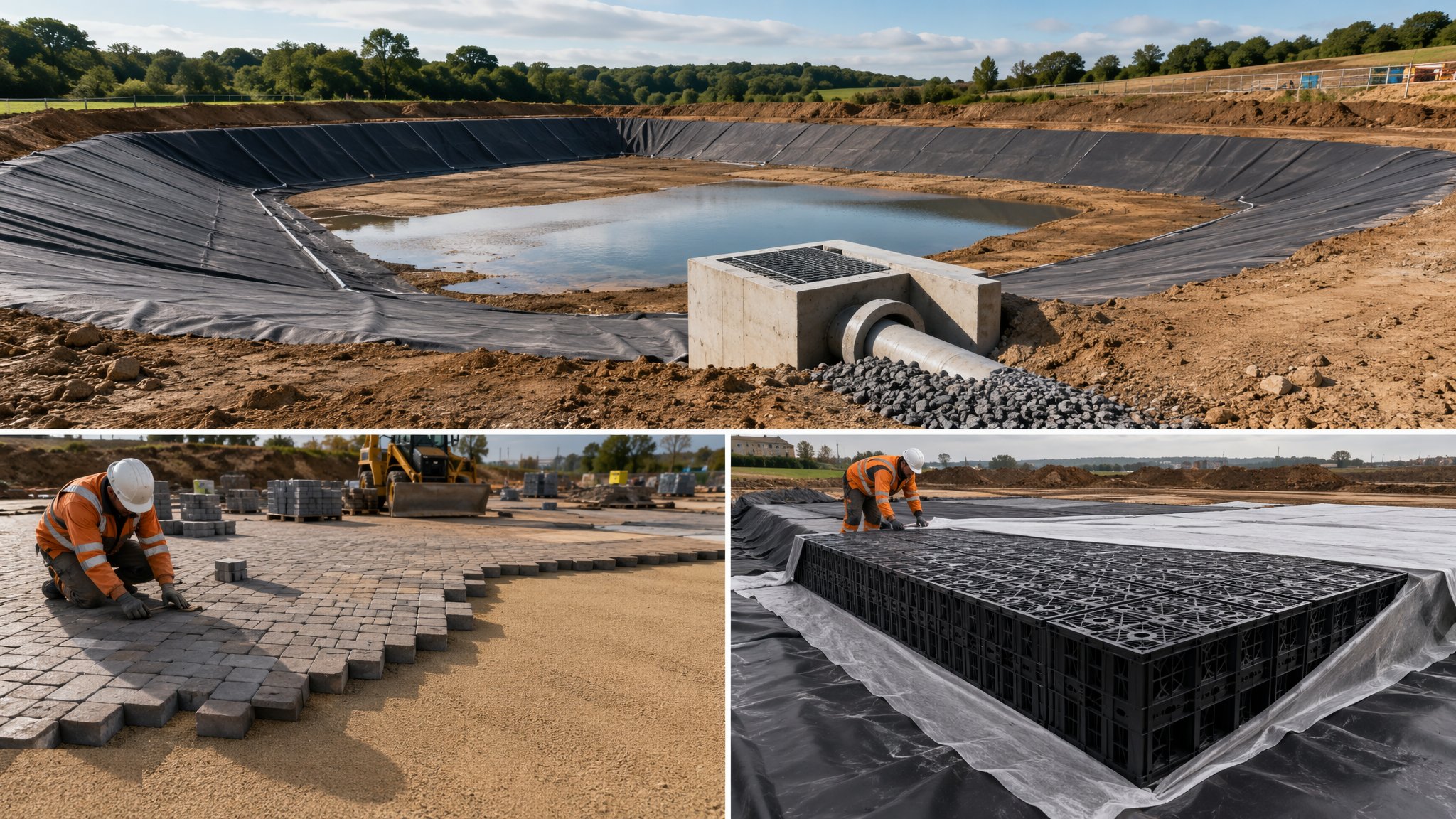
Modern drainage is a hydrological promise: the development will not discharge stormwater faster than the agreed rate - often the greenfield run-off the site produced before it was built on. Geocellular attenuation tanks hold the peak underground, wrapped in welded geomembrane and released through a flow control chamber whose orifice sets the discharge. That orifice is the whole design made physical: set it 50 mm high and the hydrology changes, so flow controls are surveyed to the millimetre, not measured with a boot.
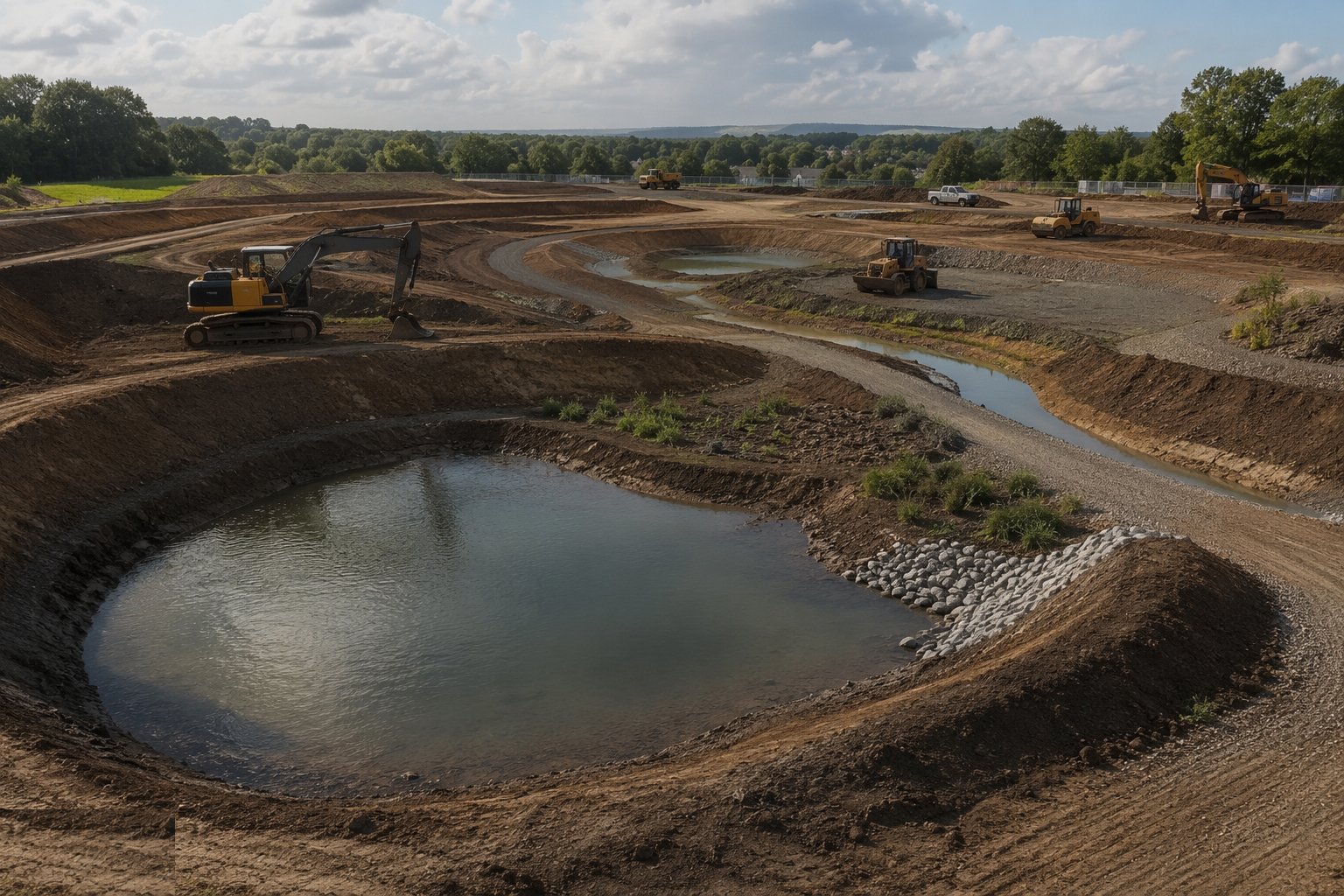
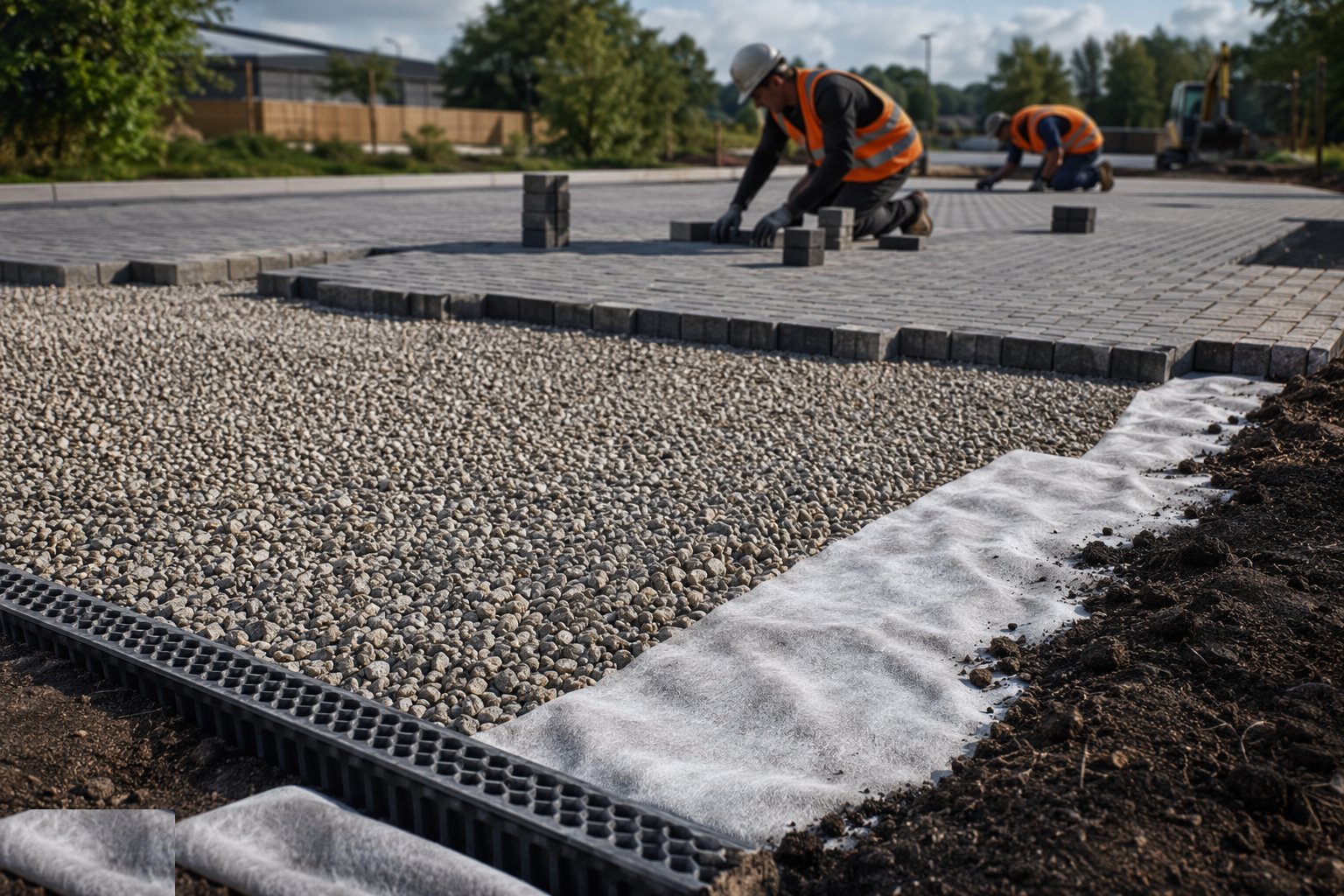
Surface SuDS do the same job visibly and treat the water on the way: detention basins and ponds profiled and lined where required, swales that convey and filter, permeable paving whose graded clean-stone sub-base is itself the storage. These systems work silently for years and earn their keep in one storm - which means their failure modes are equally silent: a membrane punctured during backfill, a swale slowly silting, permeable paving clogging with fines. Maintenance access and a maintenance regime are part of the construction, not an appendix.
Verification is evidence-based: formation levels and bearing confirmed before installation, membrane seams tested, as-built levels surveyed against the hydraulic design, and infiltration systems reconciled with the percolation results that justified them - low-permeability ground rules soakaways out no matter what the layout wishes. The recognised industry guidance on SuDS design drives the whole train, and the adopting or maintaining body gets a record that proves the promise can be kept.
Process storyboard
Step 1 of 6 - slide through the snapshots.
STEP 1
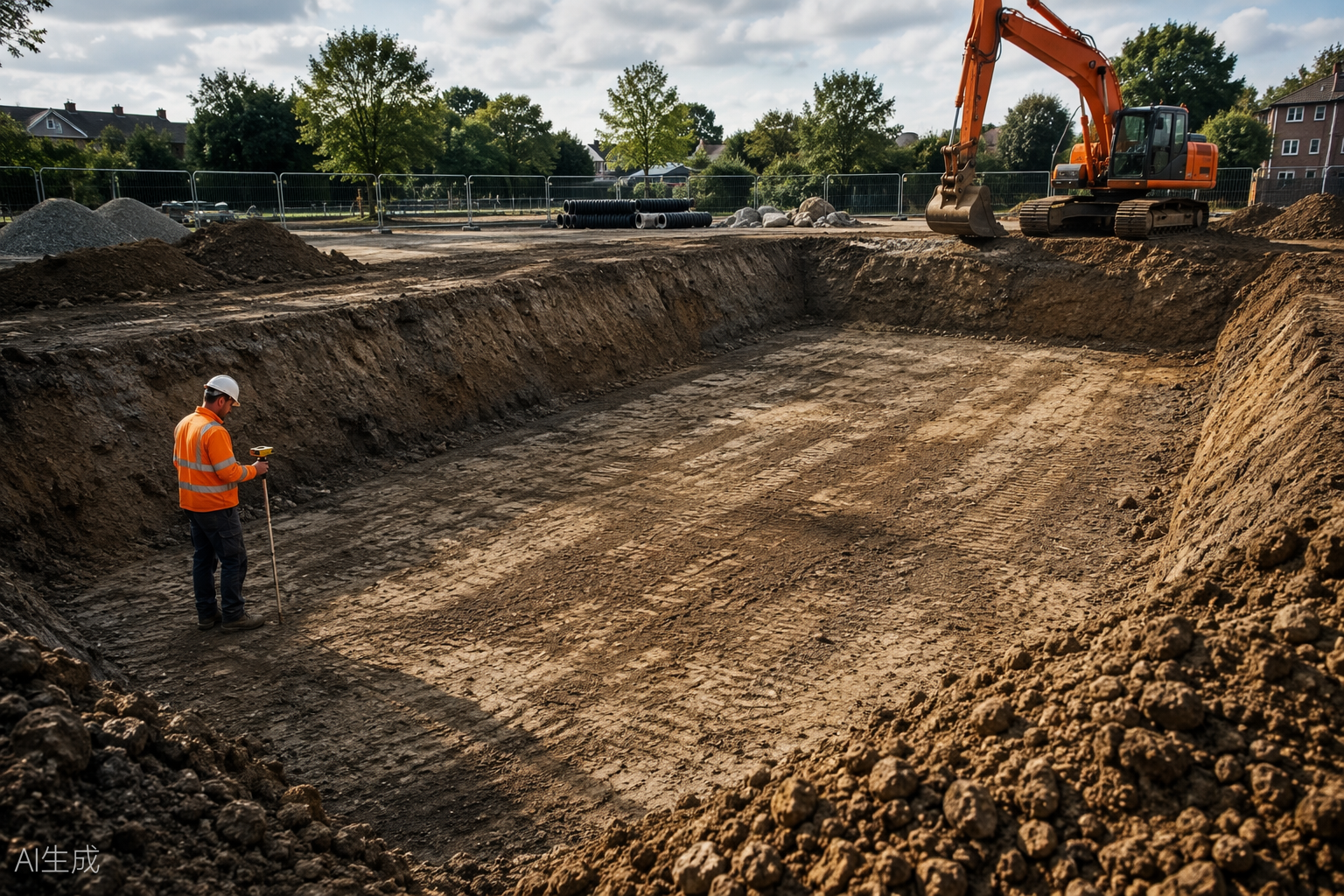
Excavate and verify the formation
The tank or basin excavation is taken to level, formation levels and bearing are confirmed, and soft spots are dug out and replaced.
How does SuDS: attenuation and infiltration work, step by step?
- 1
Step 1: Excavate and verify the formation
The tank or basin excavation is taken to level, formation levels and bearing are confirmed, and soft spots are dug out and replaced. The structure above trusts the formation below - prove it before anything is built on it.
- 2
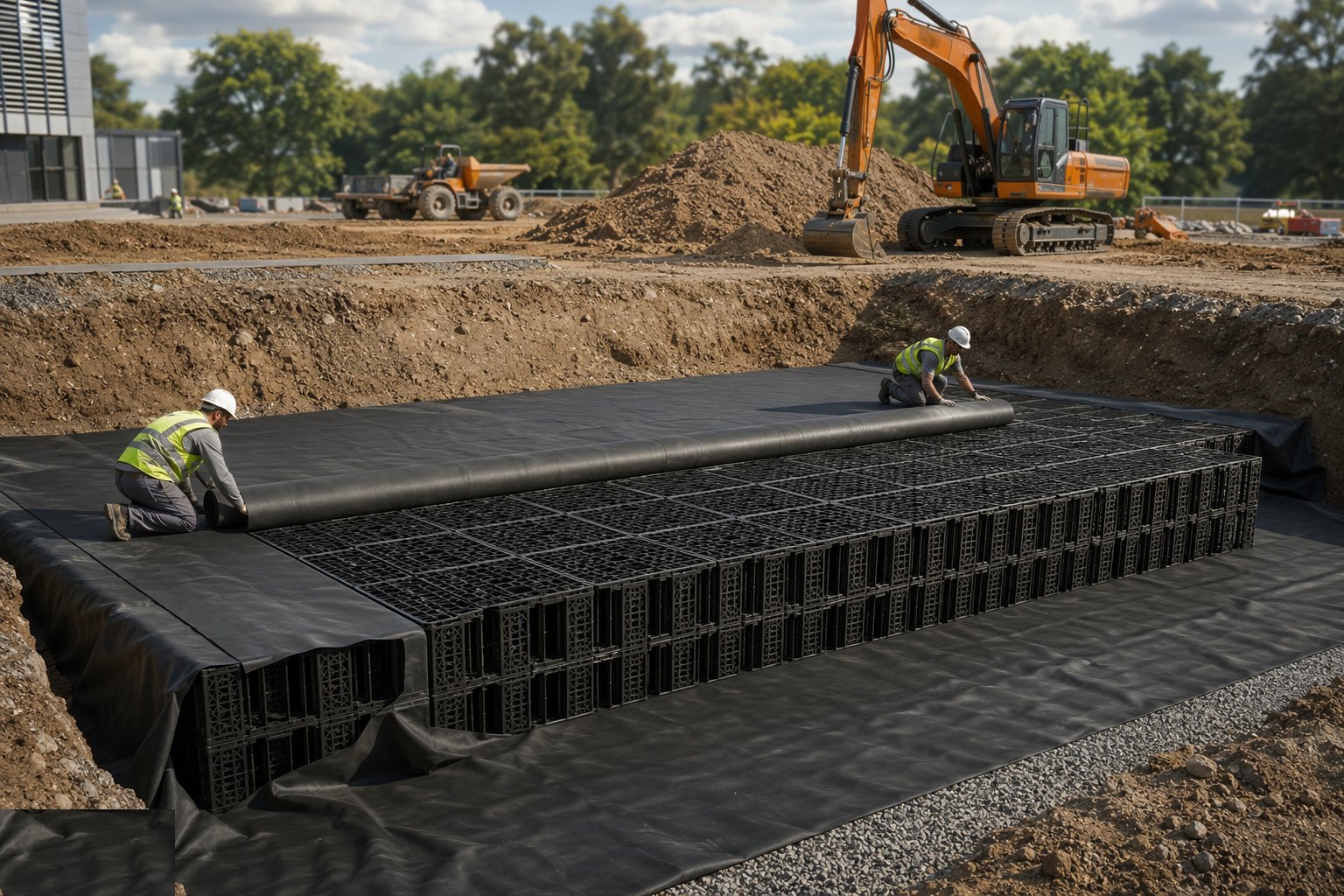
Step 2: Install the tank and membrane
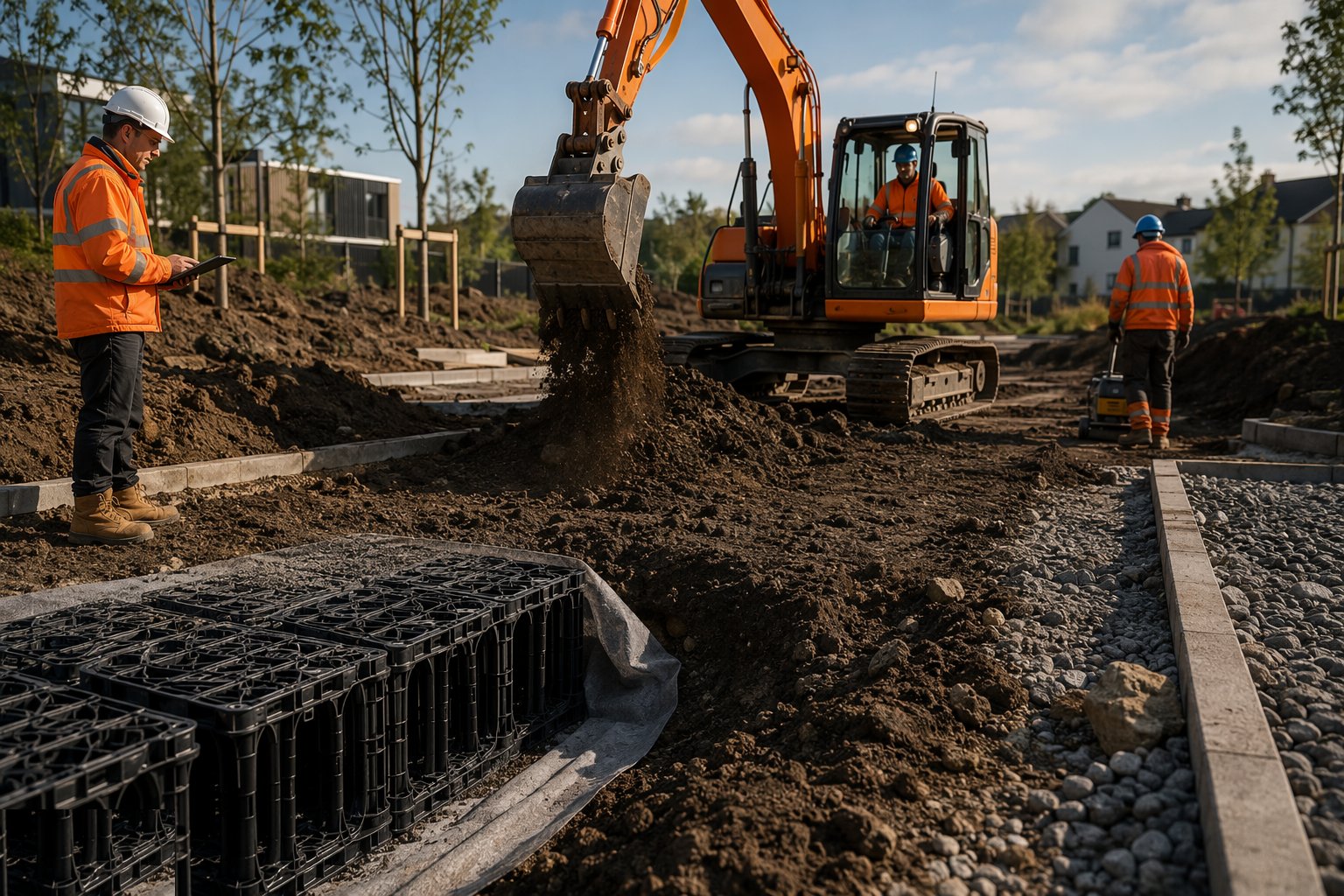
Geocellular crates are assembled on the prepared formation, wrapped in geomembrane with welded, tested seams, and all pipe connections sealed through factory-formed openings. Sharp fill and careless backfill are the membrane's enemies - the protection layers go down first.
- 3
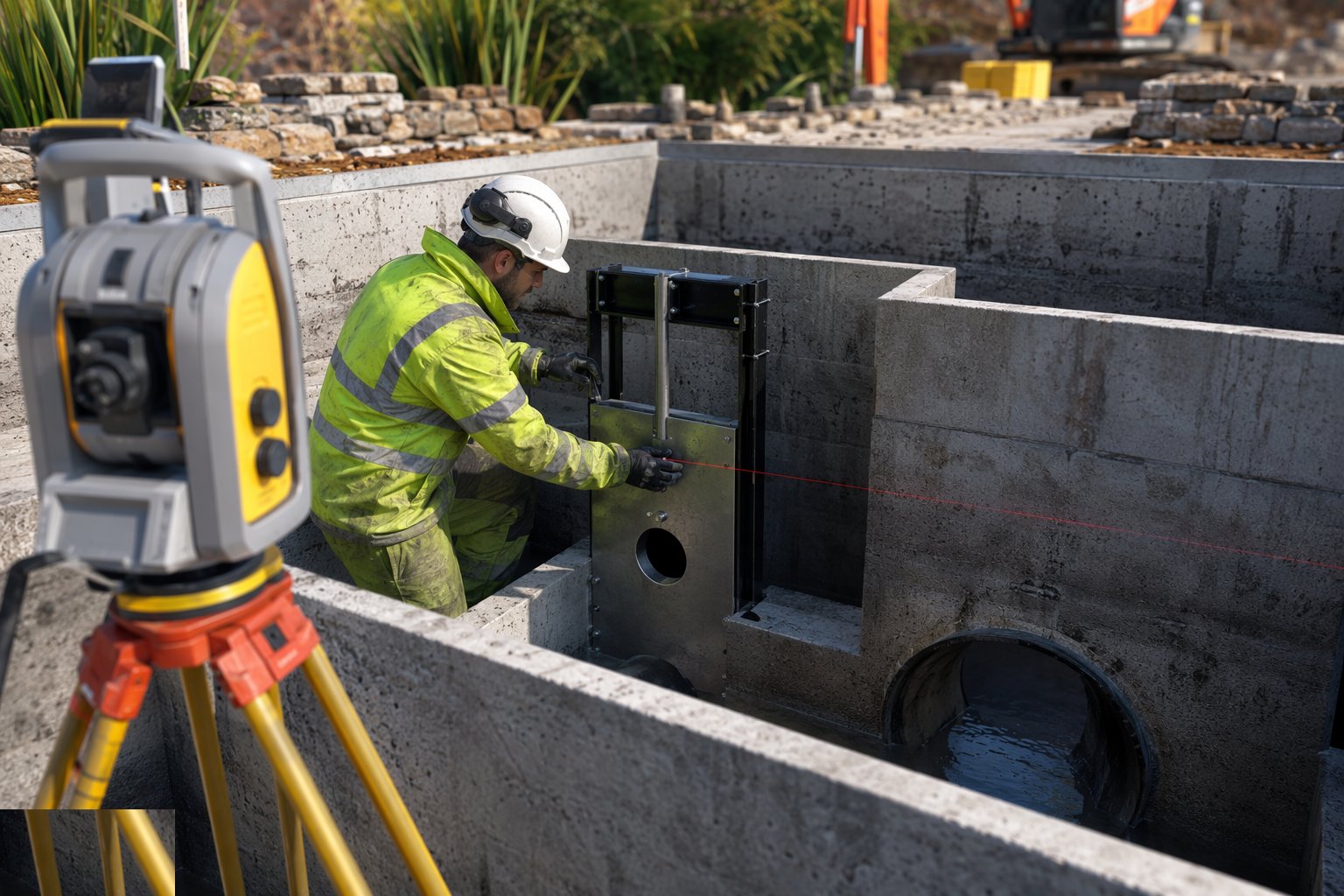
Step 3: Set the flow controls
Orifice plates, weirs and overflow levels are surveyed to the millimetre against the hydraulic design; benching and access are formed in the control chamber. This is the most important tape reading in the external works.
- 4
Step 4: Form the ponds, basins and swales
Surface features are profiled to the landscape levels, lined where the design requires, and inlets and outlets detailed against erosion. Margins are graded safe and the maintenance access is formed as drawn.
- 5
Step 5: Lay the permeable paving
Geotextiles and graded clean-stone sub-base go down in layers - the stone is the storage, so contamination with fines is kept out - and blocks are laid on the specified bedding with rigid edge restraint.
- 6
Step 6: Backfill, verify and record
Backfill proceeds per the method statement with no heavy plant over shallow cover; as-built levels, seam tests and photographs are filed, and the maintenance regime is agreed in writing with whoever inherits the system.
What are the benefits of SuDS: attenuation and infiltration?
- Flood protection engineered in - peak flows held to the agreed discharge rate
- Planning unlocked - SuDS satisfy drainage conditions and the lead local flood authority
- Water quality treated - swales and ponds strip silt and pollutants before discharge
- Amenity and ecology - ponds and soft SuDS add landscape value that pipes never can
- Reduced sewer load - attenuation and infiltration shrink the adoptable network
What are the limitations of SuDS: attenuation and infiltration?
- Level-critical - an orifice or overflow 50 mm off is a different hydrology
- Membrane vulnerability - one puncture during backfill compromises the tank
- Maintenance-dependent - silted swales and clogged permeable paving fail slowly and quietly
- Land-hungry - ponds and basins take area the density targets want back
- Infiltration is ground-dependent - low-permeability soils rule soakaways out entirely
What is SuDS: attenuation and infiltration best suited for?
What plant does SuDS: attenuation and infiltration need?
- Excavators and dumpers with GPS or laser level control
- Geomembrane welding and seam-testing kit
- Telehandlers and cranes for crate handling
- Compaction plates with protective layers over tanks
- Survey equipment for the level-critical controls
- Vacuum and jetting kit for commissioning cleans
How is SuDS: attenuation and infiltration quality-checked?
- Formation levels and bearing verified before installation
- Membrane seams tested and inspected; protection layers confirmed
- Flow control levels surveyed against the hydraulic design
- Backfill method statement followed - no sharp fill, no heavy plant over shallow cover
- Infiltration results reconciled with the percolation tests behind the design
- As-built levels, photographs and maintenance plan filed for adoption