Foul and surface water drainage
Pipes to fall, chambers to level - tested before backfill, adopted on evidence.
Last updated 2026-08-22
What is Foul and surface water drainage?
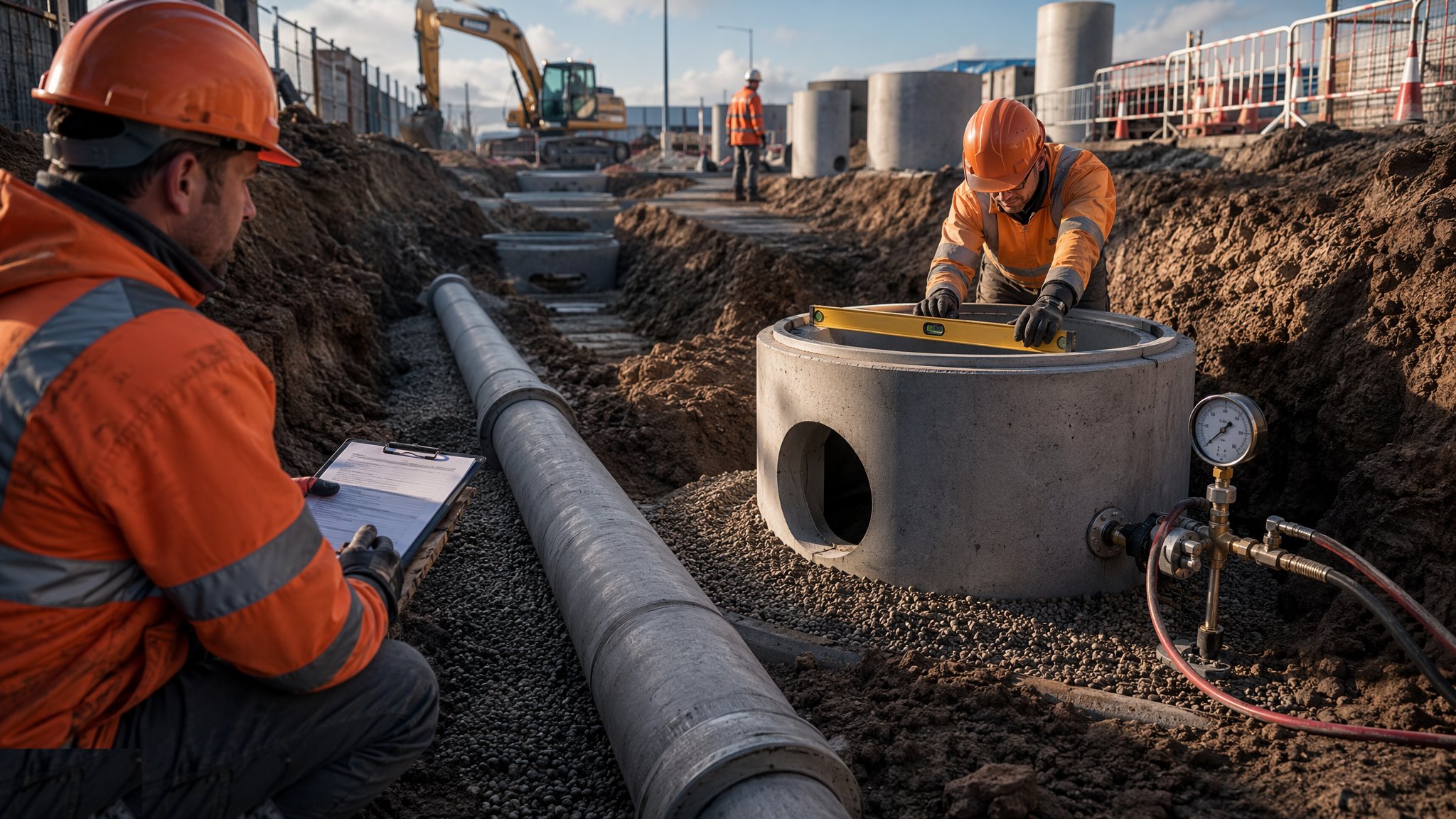
Below-ground drainage is two separate systems sharing the same discipline: foul water from the WCs and appliances to the foul sewer, surface water from roofs and paving to the surface water sewer or the SuDS train - never the other way round, because a cross-connection is illegal, pollutes watercourses and is found eventually by dye test or CCTV. Pipes run from the buildings outward on granular bedding at the designed falls, set with a pipe laser, with inspection chambers at changes of direction and junctions where the adopting standard puts them.
The work is unforgiving because it disappears. Invert levels are surveyed per run against the design; bedding and surround are placed as specified; and every run is air- or water-tested, witnessed and recorded before backfill closes over it in compacted layers. A displaced joint or a back-fall buried untested surfaces at occupation as a blockage, and the repair comes up through somebody's finished driveway. Adoptable runs are CCTV-surveyed so the water company's inspectors can see what they are adopting.
Connections to the public system are made under the adopting authority's inspection regime, and the whole scope is built to the published adoption standards - bedding classes, chamber construction, cover levels and all. Trench work carries its own hazards: support, edge protection and access drive the method, and wet weather defeats bedding and testing discipline alike. The as-built records - every run, chamber and connection - go into the handover file, because the next person to dig on that site deserves a map.
Process storyboard
Step 1 of 6 - slide through the snapshots.
STEP 1
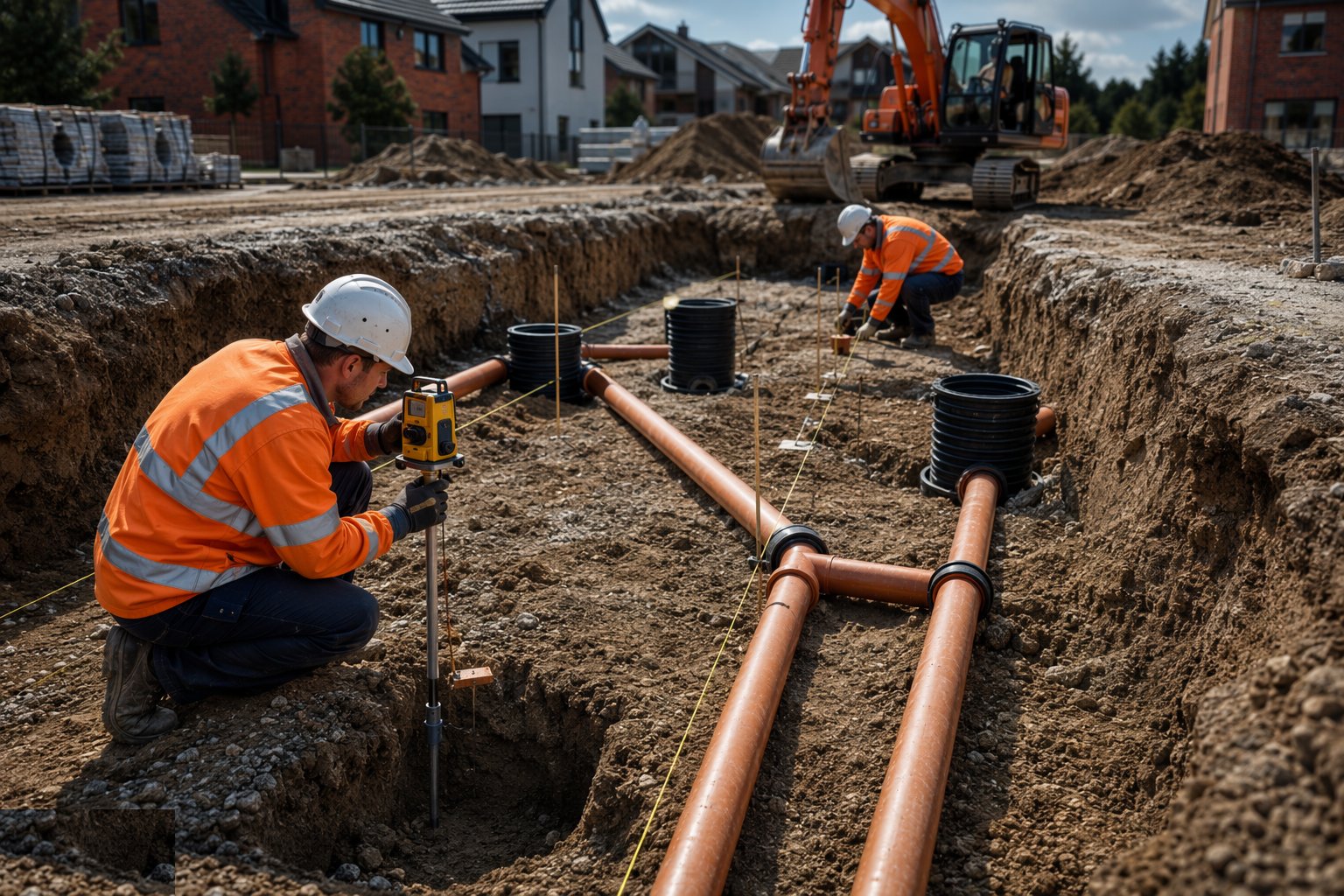
Set out the runs and chambers
Lines and inverts are set from the design; the pipe laser is set to the fall and checked.
How does Foul and surface water drainage work, step by step?
- 1
Step 1: Set out the runs and chambers
Lines and inverts are set from the design; the pipe laser is set to the fall and checked. Chamber positions are confirmed against the layout - and against every other buried service, because drainage crosses all of them.
- 2
Step 2: Excavate and bed
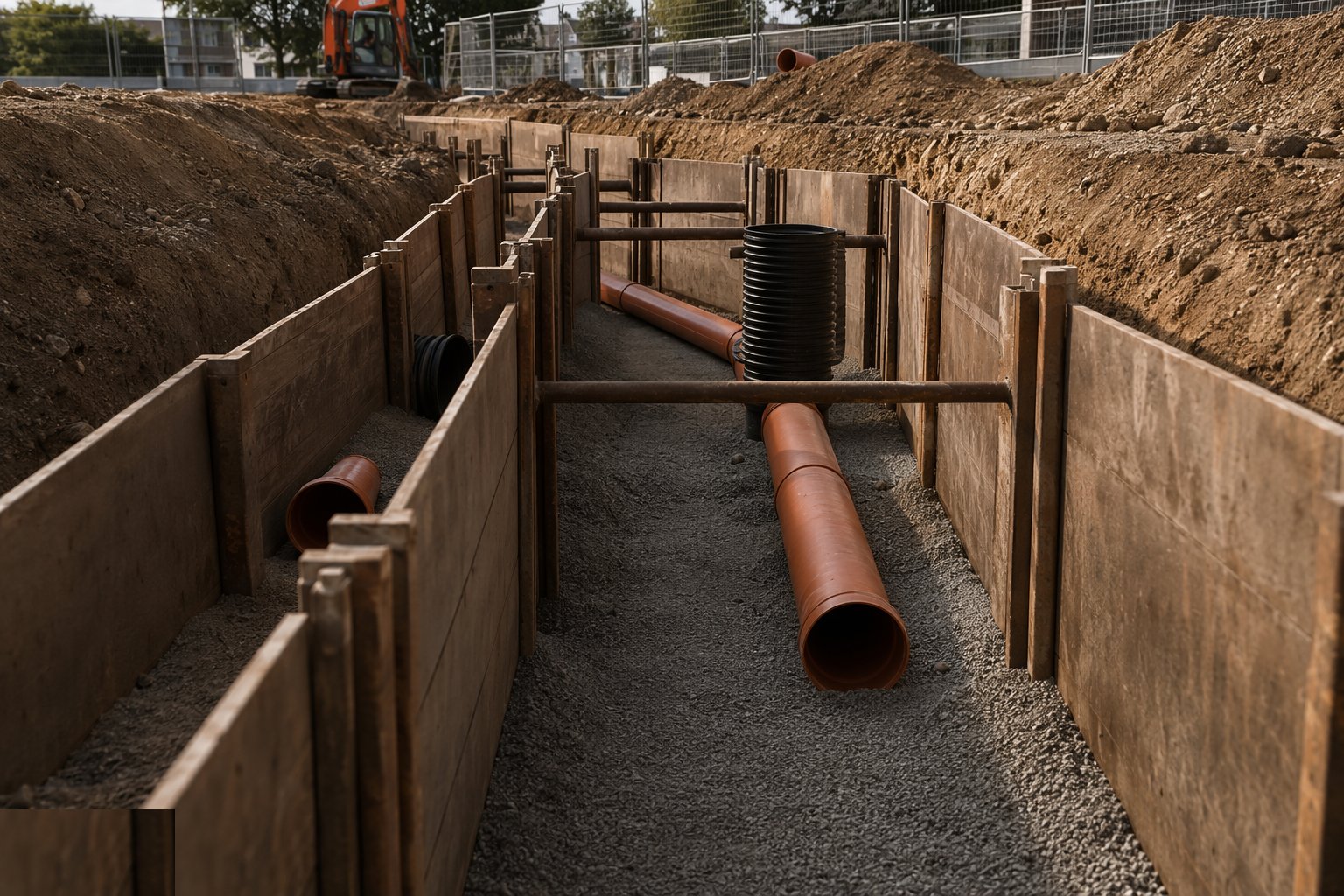
Trenches are excavated to depth with support and edge protection as the ground demands; granular bedding is placed and the pipe laid and jointed clean. A joint made with grit in the socket is a leak installed by hand.
- 3
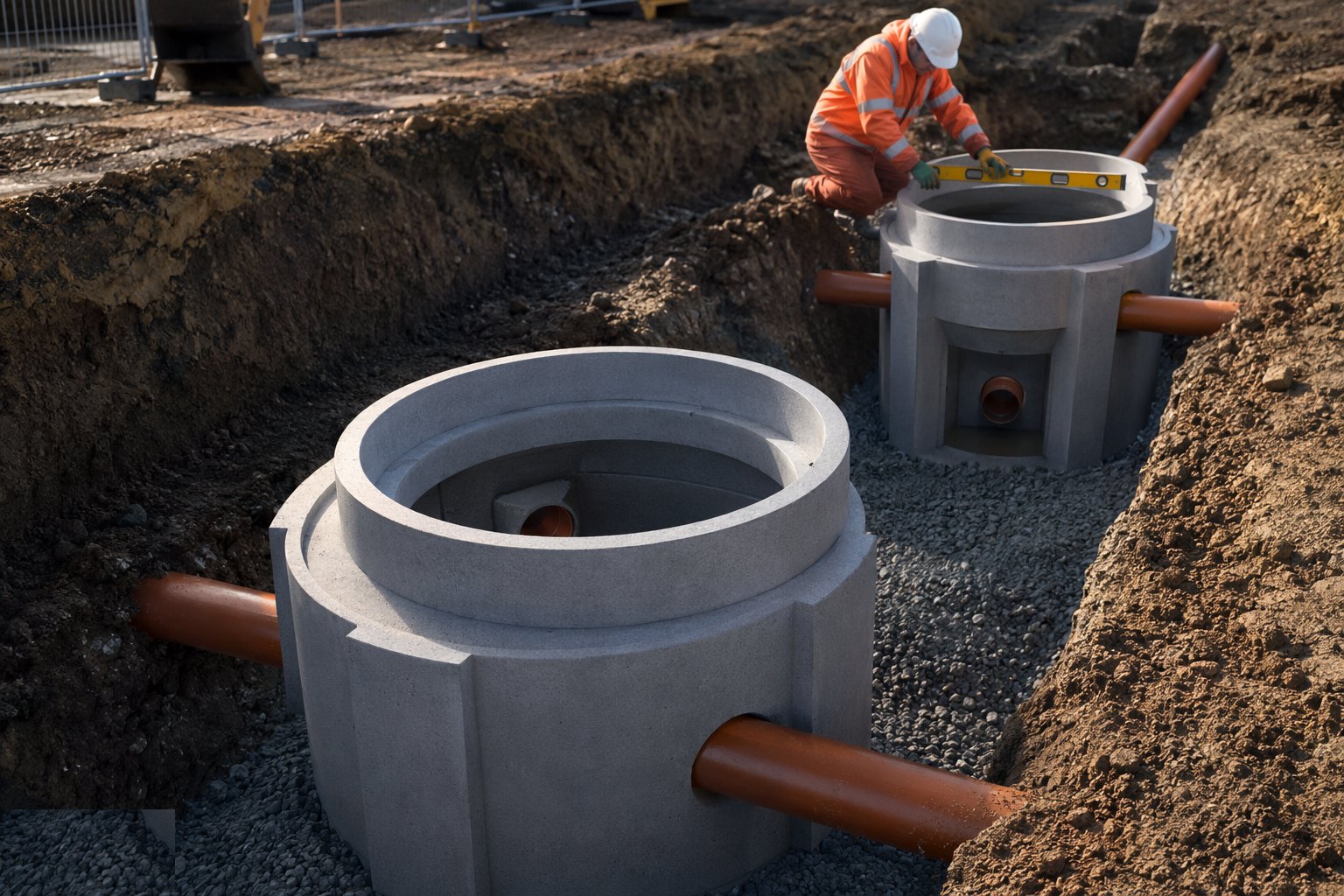
Step 3: Build the chambers
Chambers are set to line and invert level, benching formed so flows carry through without ponding, and access provided as the adopting standard requires. Covers and frames are set to the finished level to come - an ironwork problem at the end is a chamber problem now.
- 4
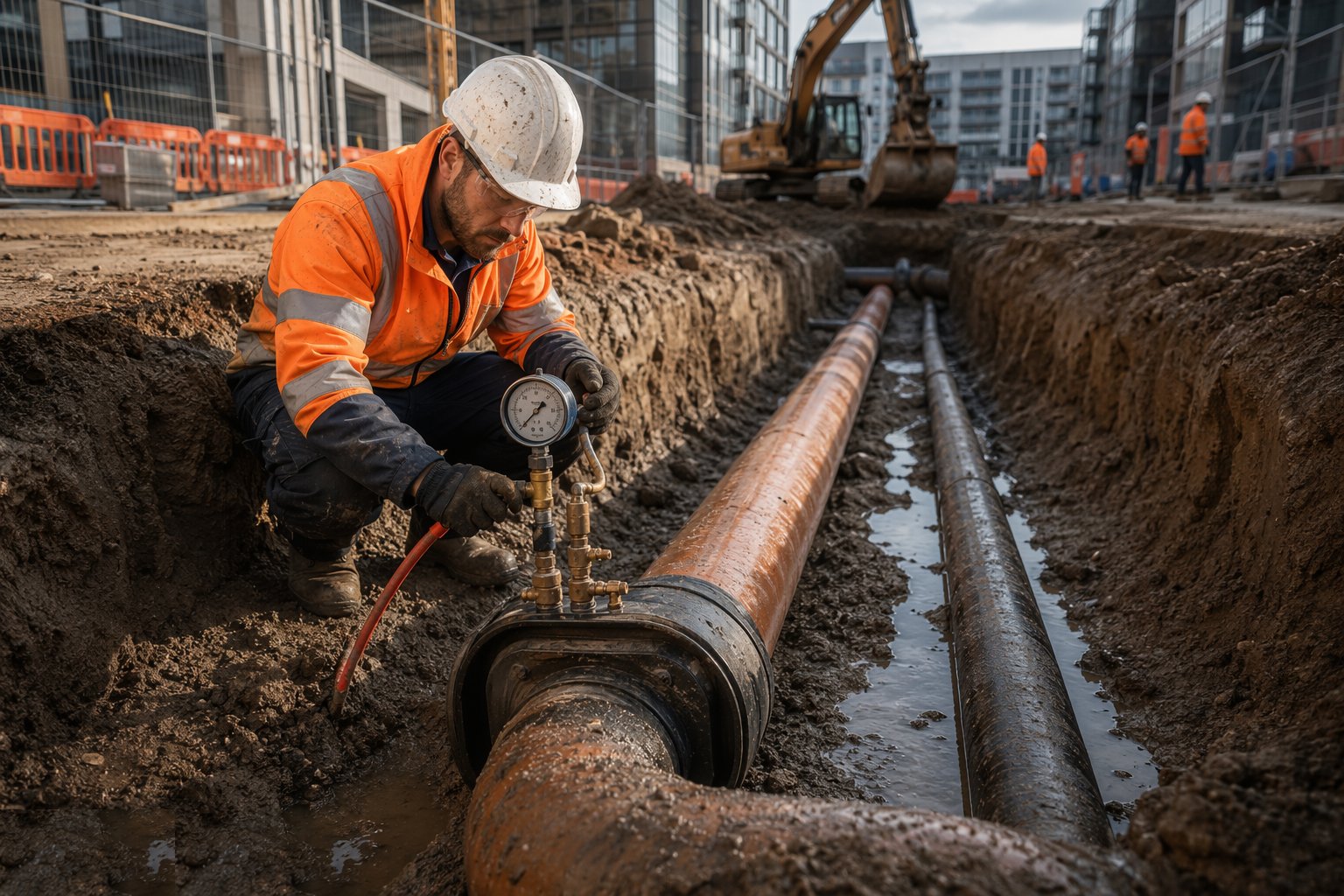
Step 4: Test before backfill
Every run is air- or water-tested with calibrated gauges, witnessed and recorded. Failures are re-jointed and retested before a single shovel of backfill - the test is cheap, the excavation to find a buried failure is not.
- 5
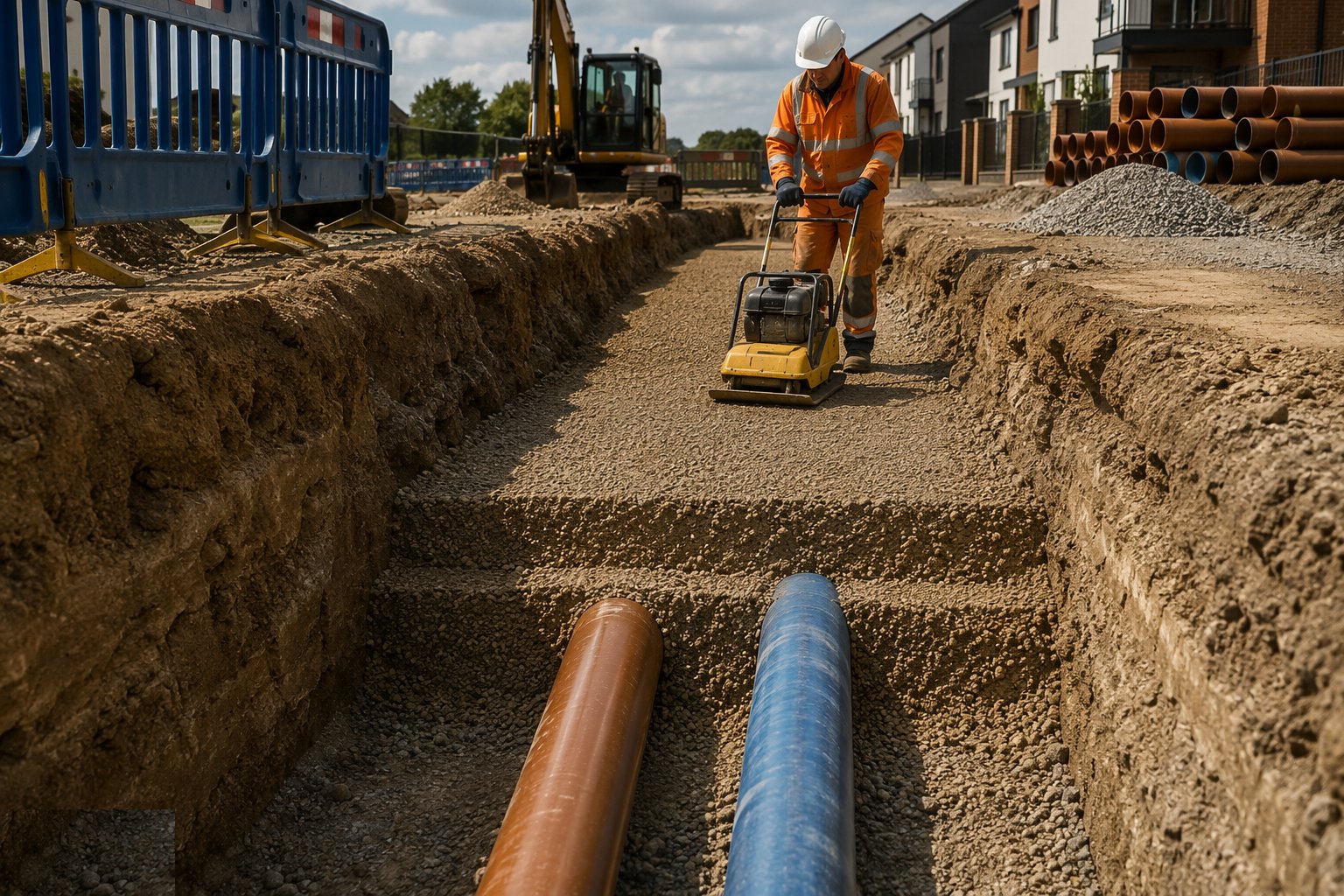
Step 5: Backfill in layers
Granular surround is placed and compacted in lifts, marker tape laid above, and heavy plant kept off shallow cover. Compaction beside the pipe, never impact on it.
- 6
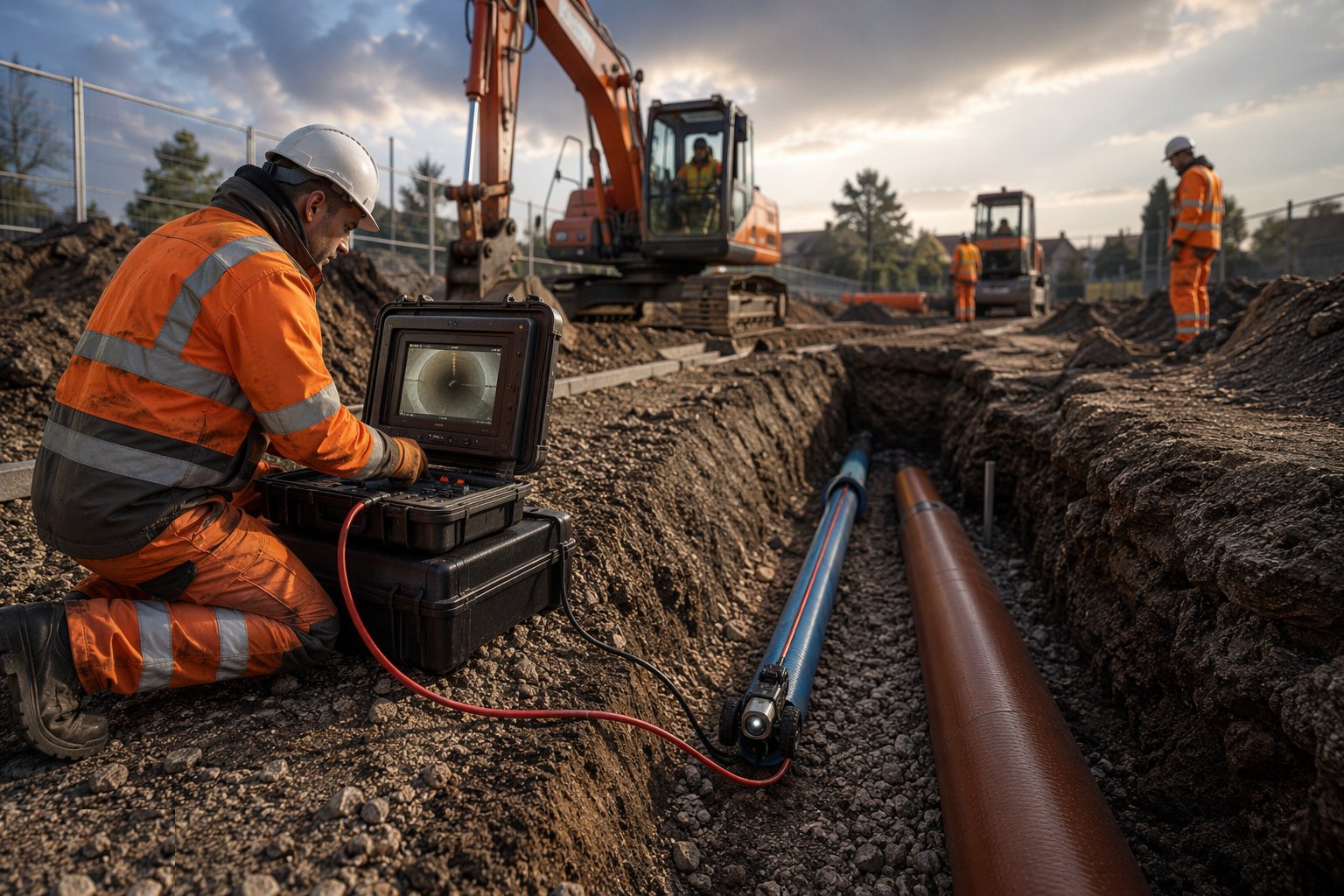
Step 6: CCTV, connect and record
Adoptable runs are CCTV-surveyed; connections are made under the adopting authority's inspection; as-builts of every run, chamber and connection are recorded and filed. The evidence file is what adoption actually buys.
What are the benefits of Foul and surface water drainage?
- Gravity reliability - correct falls and bedding give decades of silent service
- Adoption secured - tested, surveyed runs satisfy the water company's inspectors
- Separated systems - foul and surface water kept apart as the law and design require
- Maintainable - chambers positioned where rodding and CCTV access actually works
- Flood risk controlled - proven drainage is the first line against site flooding
What are the limitations of Foul and surface water drainage?
- Below ground and unforgiving - defects surface as blockages at occupation, expensively
- Trench work is dangerous - support, edge protection and access drive the method
- Clashes with everything - drainage crosses every other buried service on site
- Weather-dependent - wet trenches defeat bedding and testing discipline
- Adoption timescales - inspections and sign-off extend well beyond site completion
What is Foul and surface water drainage best suited for?
What plant does Foul and surface water drainage need?
- Excavators and dumpers; trench boxes and support systems
- Pipe laser and drainage levels
- Air and water test kits with calibrated gauges
- Compaction plates for layered backfill
- CCTV survey unit and dye test kit
- Pipe cutters, jointing lubricant and lifting slings
How is Foul and surface water drainage quality-checked?
- Invert levels and falls surveyed per run against the design
- Air/water test certificates per run - witnessed before backfill
- Bedding and surround materials verified against the specification
- CCTV survey reports for adoptable runs
- Chamber benching, covers and levels inspected
- As-built records of every run, chamber and connection
More external works & landscaping methods
Next method
SuDS: attenuation and infiltration