Roads, pavements and kerbs
Built in layers, tested per layer - the surface course only ever copies what lies beneath.
Last updated 2026-08-22
What is Roads, pavements and kerbs?
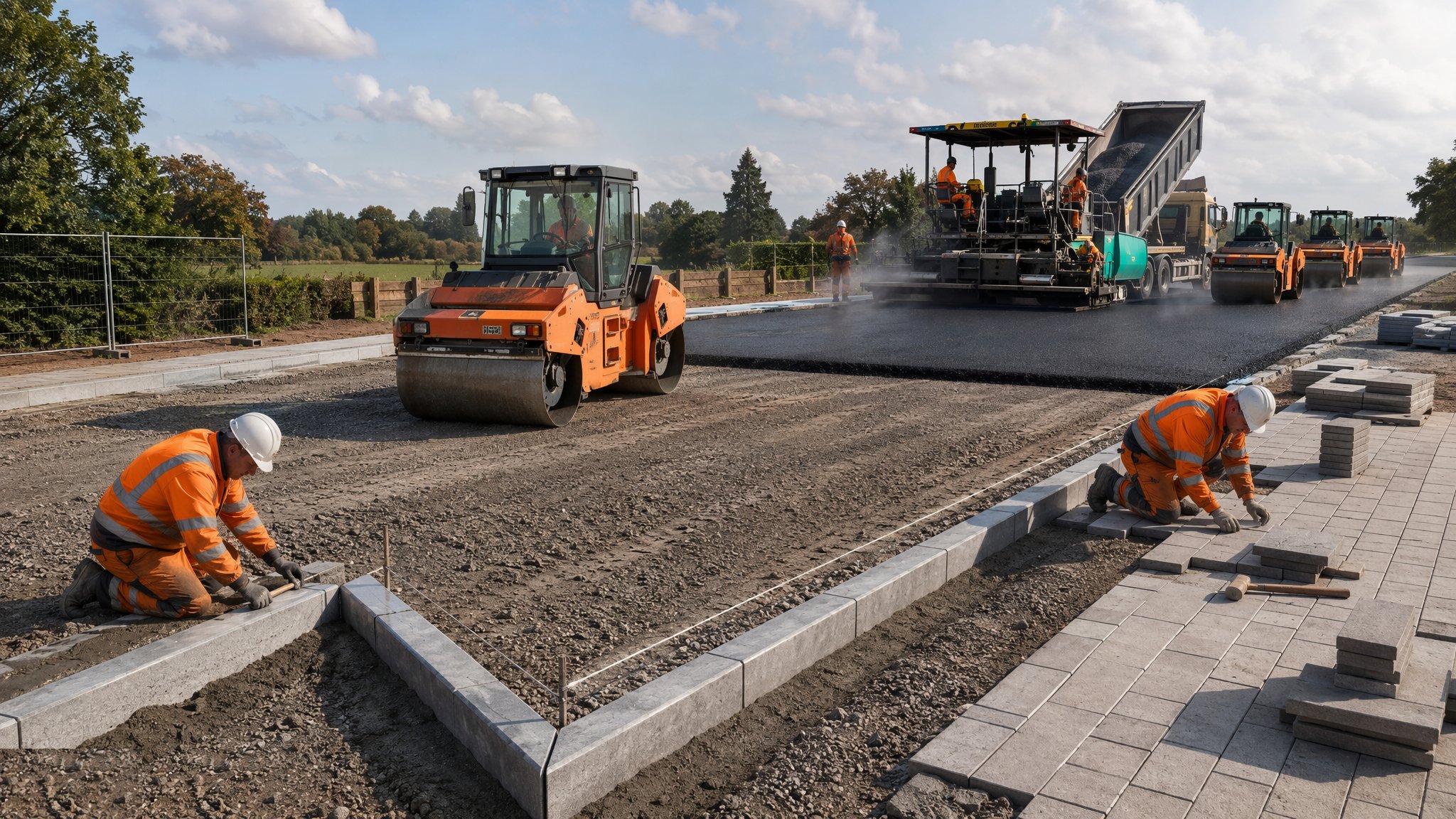
Adoptable roads are built to the highway authority's published standard, layer by tested layer: formation prepared and proof-rolled, sub-base laid and compacted in lifts with plate-bearing or density tests to prove it, kerbs bedded and backed in concrete to string lines and level pins, then base and binder courses of asphalt paved and rolled, and the surface course held back until the construction traffic is done with the road. Falls are set to the gullies, because a road that ponds is a complaint that photographs itself.
Kerbs, footpaths and hard landscape carry the detail the public actually touches. Kerbs on concrete beds with proper backing hold the carriageway edge; flags and block paving go on their own compacted, screeded beds with rigid edge restraint - a creeping edge restraint is a spreading pavement. Dropped kerbs and tactile paving follow the adopting standard exactly, and ironwork - covers, frames, gullies - is set to finished level in mortar beds and adjusted to the surface. Rocking or sunken covers are the classic defect, and every one of them was set in a hurry.
Testing is per layer because failure hides downwards: a soft sub-base passes the eye and cracks the surface course within a year by reflective cracking. Drainage crossings and service ducts go in before the carriageway closes over them. Asphalt has its own disciplines - delivered temperature, rolling windows, weather limits - handled by the specialist surfacing gang, and the records of temperature and compaction are kept per load. Adoption inspections walk the finished work with checklists, and the as-builts for every buried service under the road go into the file.
Process storyboard
Step 1 of 6 - slide through the snapshots.
STEP 1
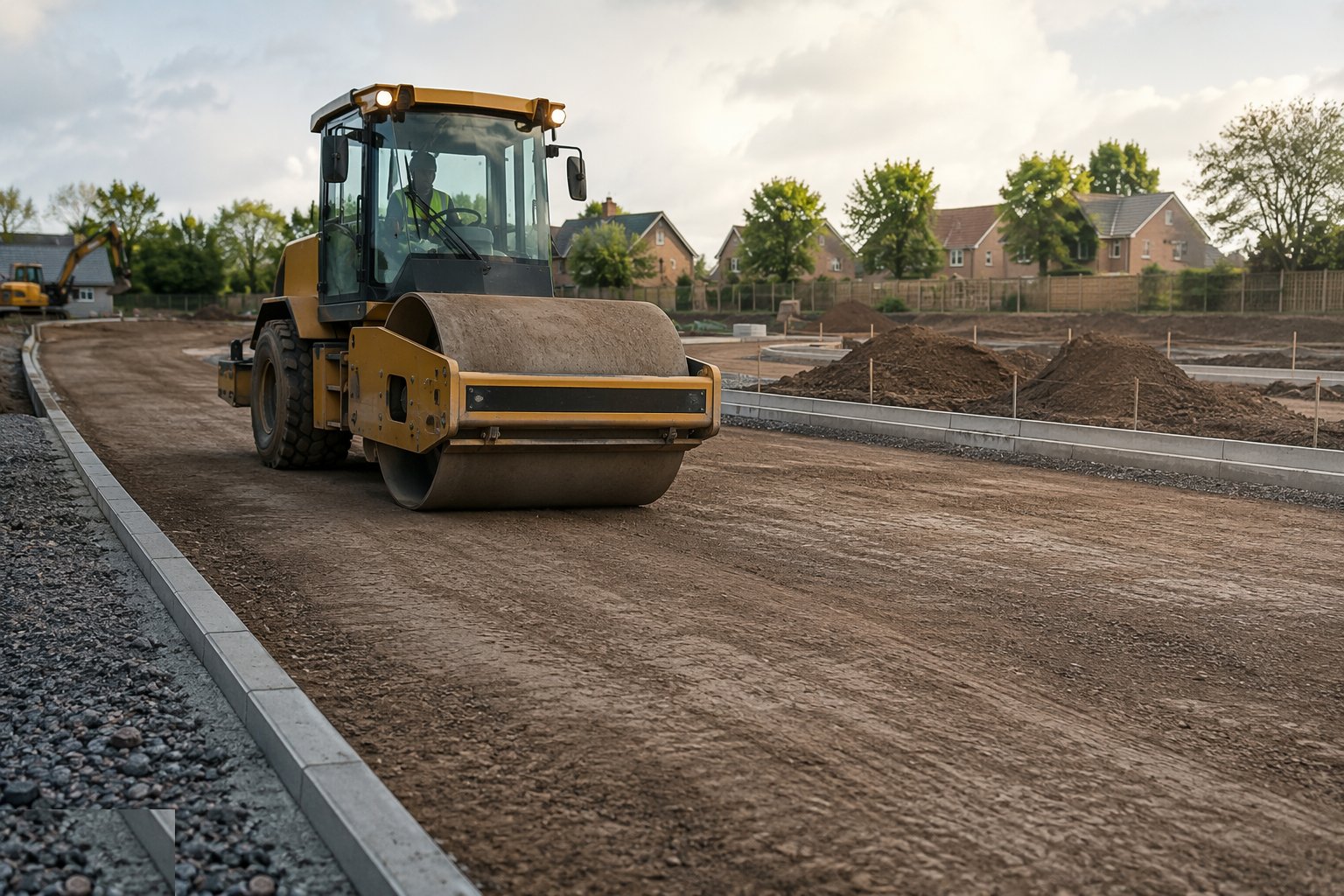
Prepare the formation
The formation is brought to level, proof-rolled, and soft spots dug out and replaced.
How does Roads, pavements and kerbs work, step by step?
- 1
Step 1: Prepare the formation
The formation is brought to level, proof-rolled, and soft spots dug out and replaced. Everything above trusts it - a failure here is a failure everywhere.
- 2
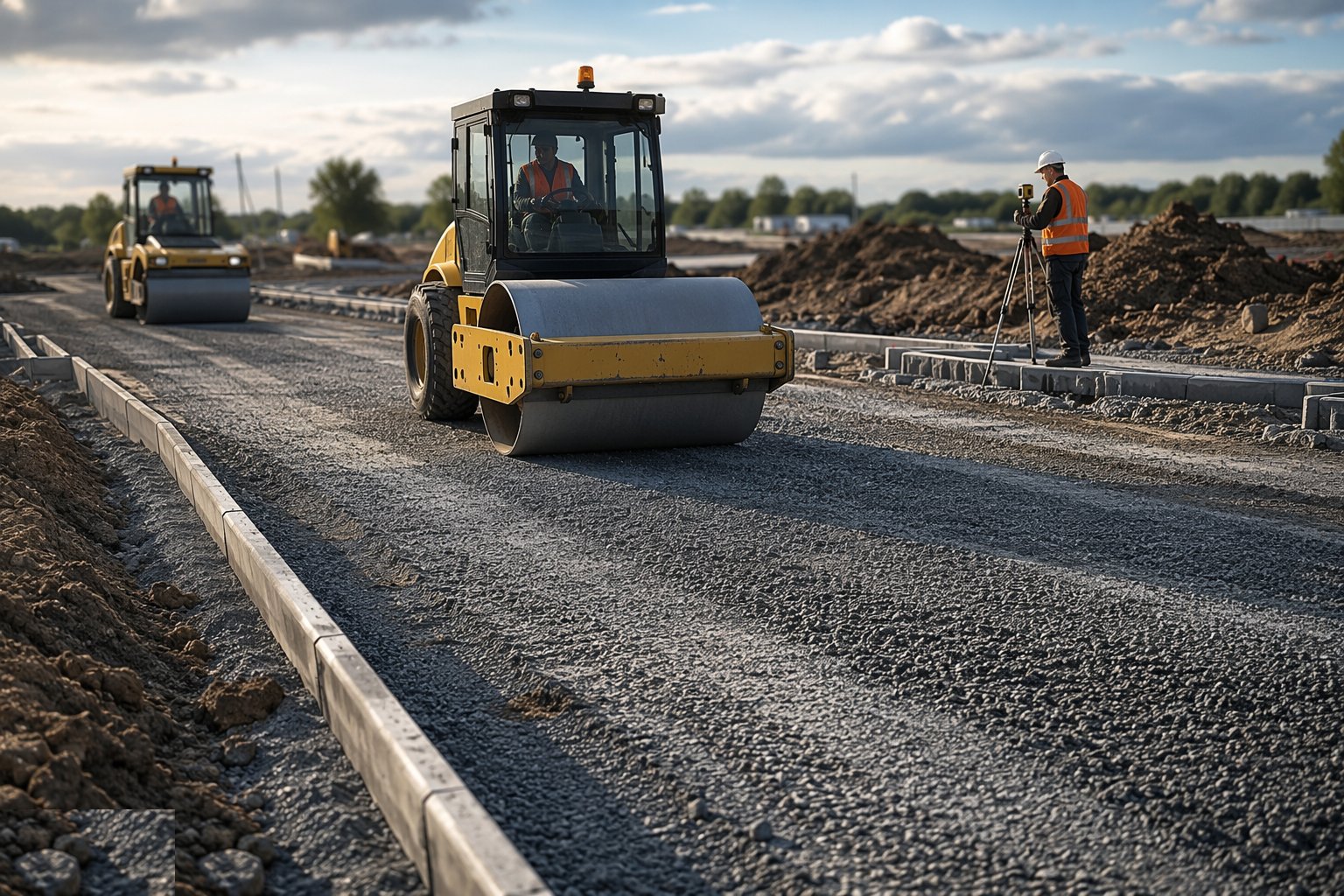
Step 2: Lay and test the sub-base
Sub-base is laid and compacted in layers, with plate-bearing or density tests per the adopting authority's requirements. Results are recorded per area; the next layer waits for the pass.
- 3
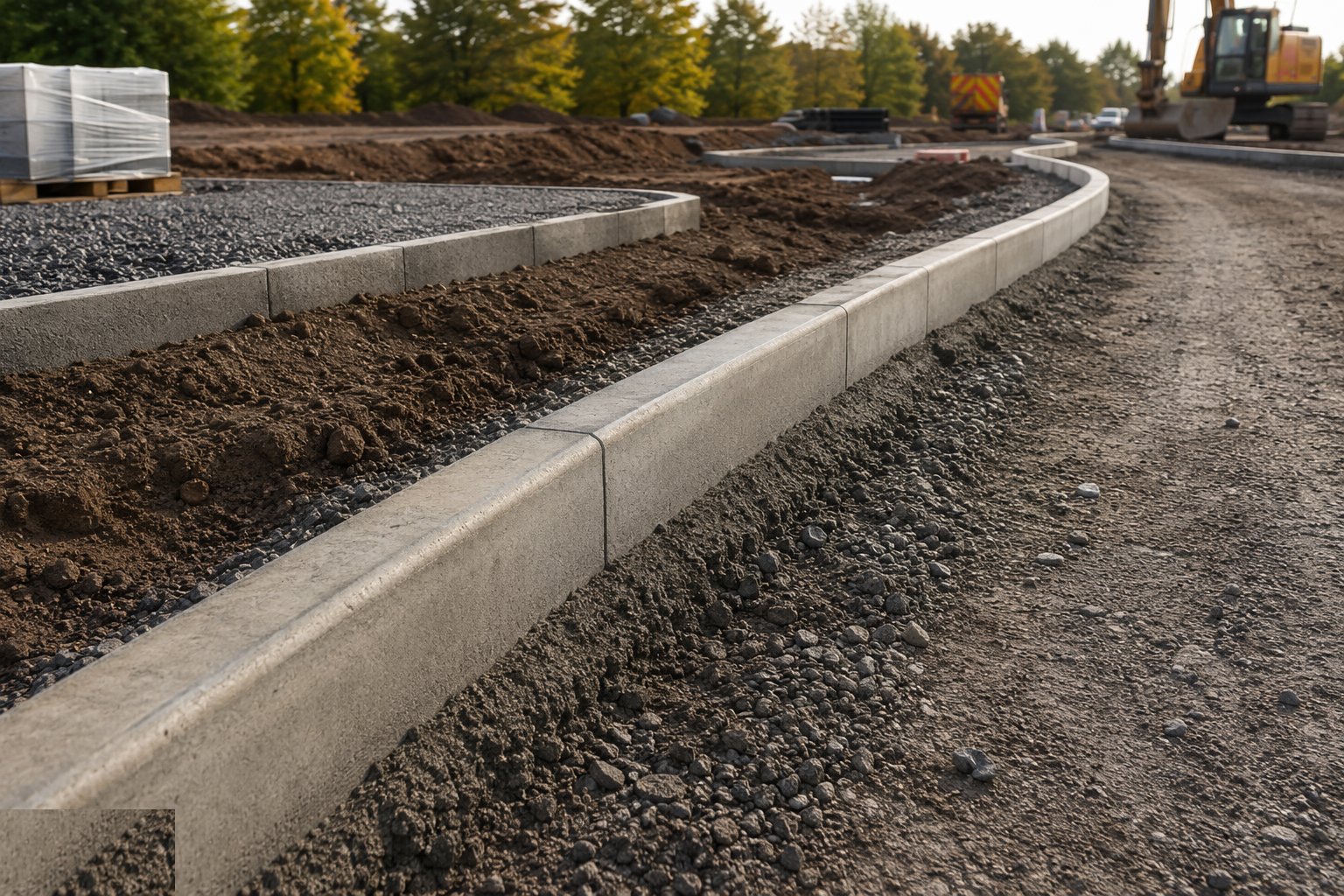
Step 3: Set the kerbs
Kerbs and edgings are bedded and backed in concrete to string lines and level pins, with radii and transitions set out properly. Drainage crossings and service ducts are installed before the carriageway closes over them.
- 4
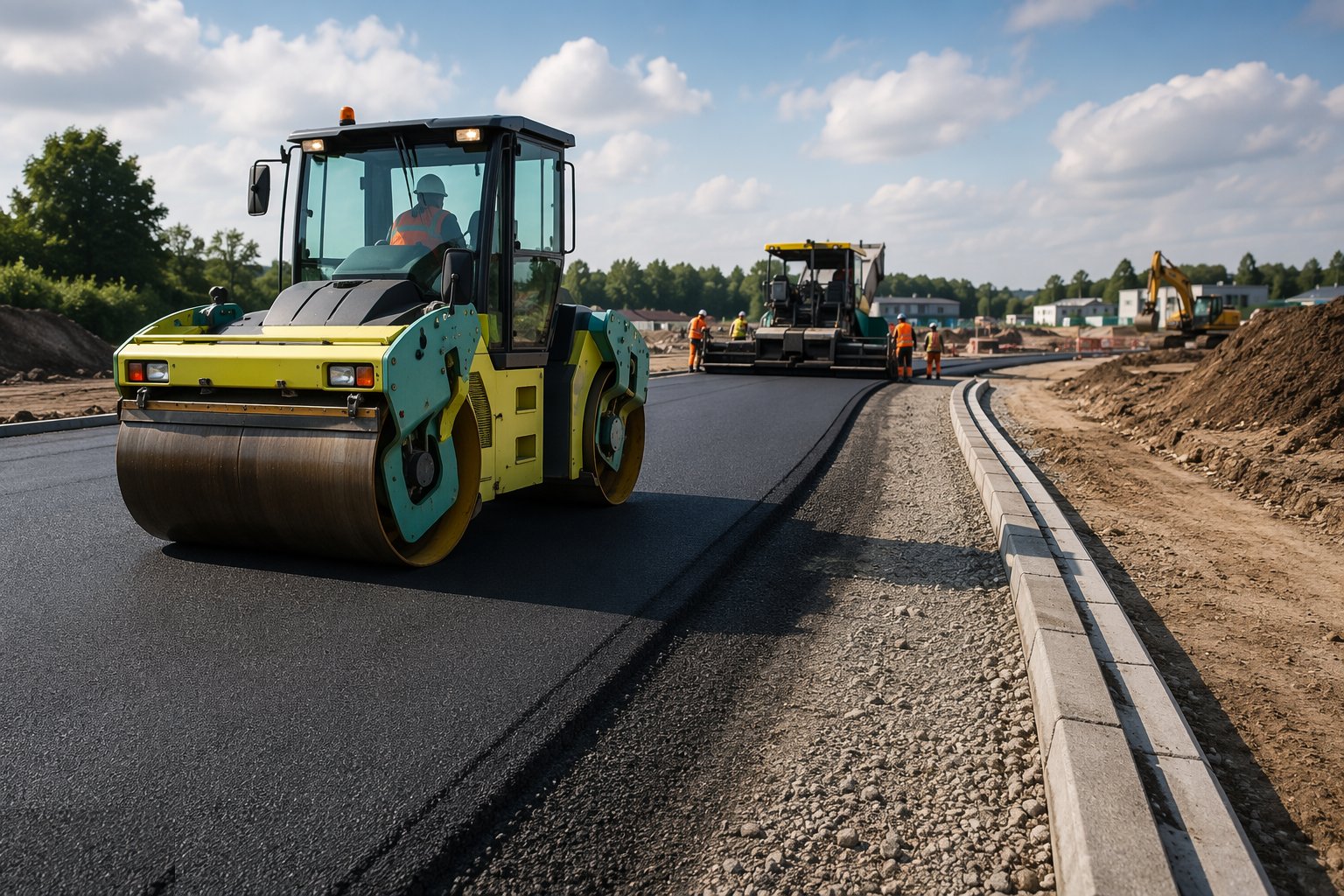
Step 4: Lay base and binder courses
Asphalt courses are paved and rolled within their temperature windows, with delivery temperatures and compaction recorded per load. Levels and falls are checked as each course goes down.
- 5
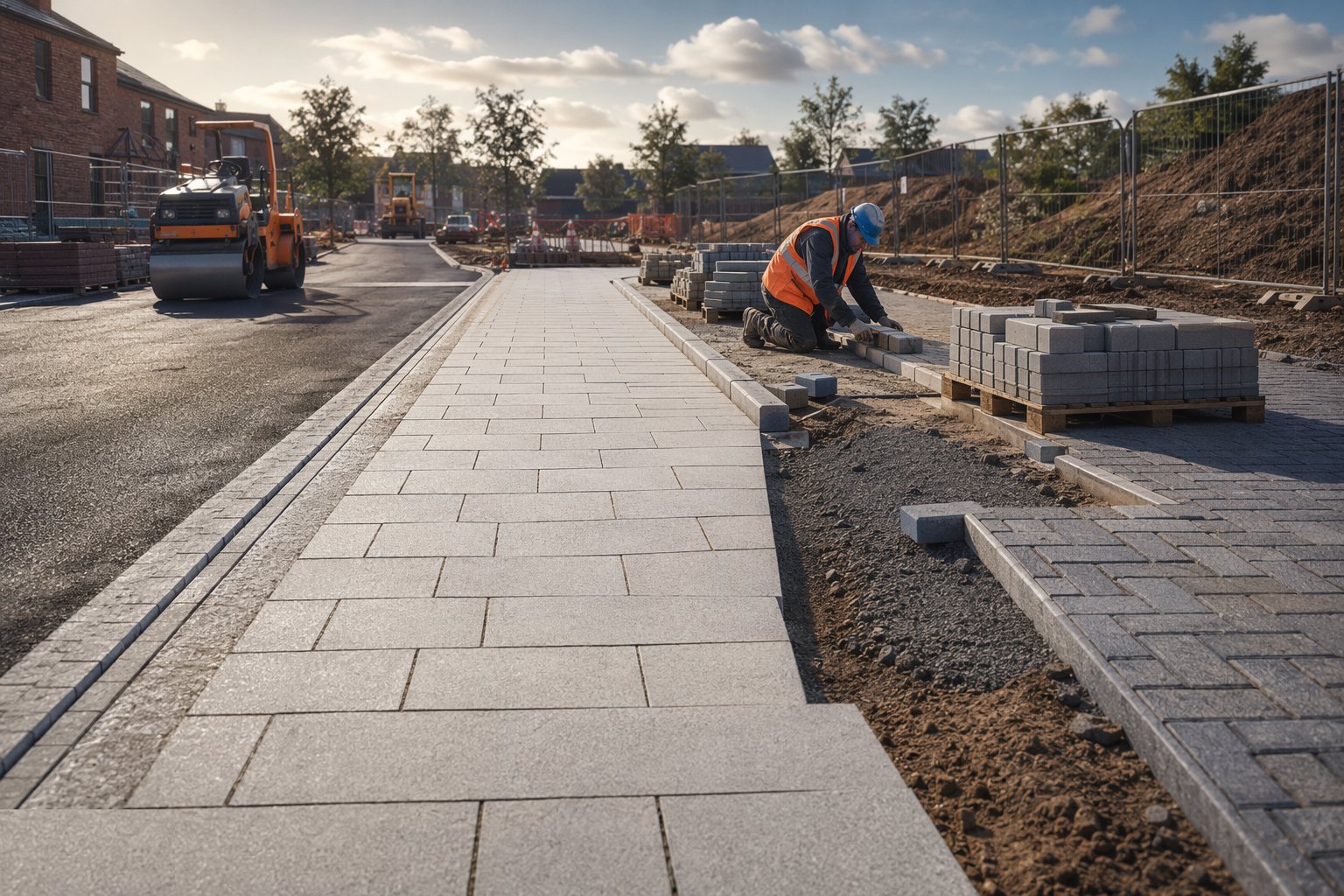
Step 5: Build footpaths and hard landscape
Flags and block paving are laid on compacted, screeded beds with rigid edge restraint; dropped kerbs and tactile paving follow the adopting standard. Crossovers are built for the vehicles that will actually use them.
- 6
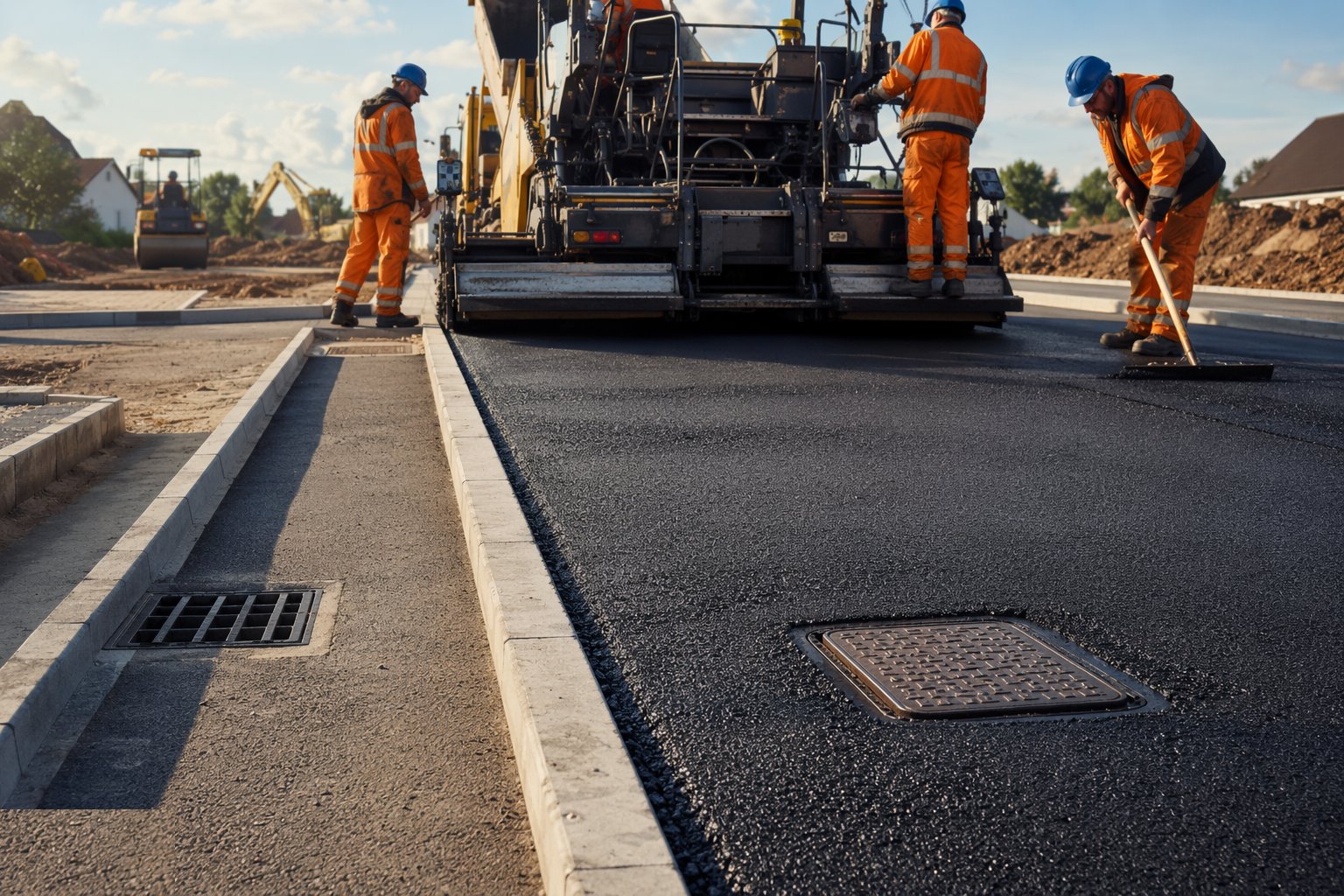
Step 6: Set ironwork and lay the surface course
Covers and gullies are set to finished level in mortar beds, adjusted flush and non-rocking; the surface course goes down late, when construction traffic is done. Final levels, falls and the adoption inspection close the scope.
What are the benefits of Roads, pavements and kerbs?
- Adoptable quality - built and tested to the highway standard, adopted without argument
- Durable surfaces - layered construction with proven compaction lasts decades
- Drainage that works - falls to gullies keep roads and car parks free of ponding
- Safe for all users - dropped kerbs, tactile paving and flush ironwork done right
- Pristine finish - the surface course laid late escapes the construction traffic entirely
What are the limitations of Roads, pavements and kerbs?
- Weather and temperature windows - asphalt and wet sub-bases both have hard rules
- Heavy-plant dependency - paver and roller availability drives the programme
- Failed layers hide - a soft sub-base passes the eye and cracks the surface within a year
- Ironwork is fiddly - setting covers to finished level is slow, skilled and often rushed
- Adoption drags - highway inspections and remedials extend past practical completion
What is Roads, pavements and kerbs best suited for?
What plant does Roads, pavements and kerbs need?
- Excavators and graders for formation
- Rollers and compaction plates
- Asphalt paver and tandem rollers with the specialist surfacing gang
- Laser levels, string lines and level pins
- Vacuum lifters for kerbs, flags and blocks
- Plate-bearing and density test equipment
How is Roads, pavements and kerbs quality-checked?
- Plate-bearing or density tests per layer, results against the standard
- Kerb line and level checked continuously; radii and transitions inspected
- Asphalt delivery temperatures and compaction recorded per load
- Falls to gullies verified - no ponding after a hose test or rainfall
- Ironwork checked flush, level and non-rocking at finished surface
- Adoption inspection snags closed out and re-inspected