Plumbing second fix
Sanitaryware on, radiators hung - then filled, vented, flushed and proven clean.
Last updated 2026-08-22
What is Plumbing second fix?
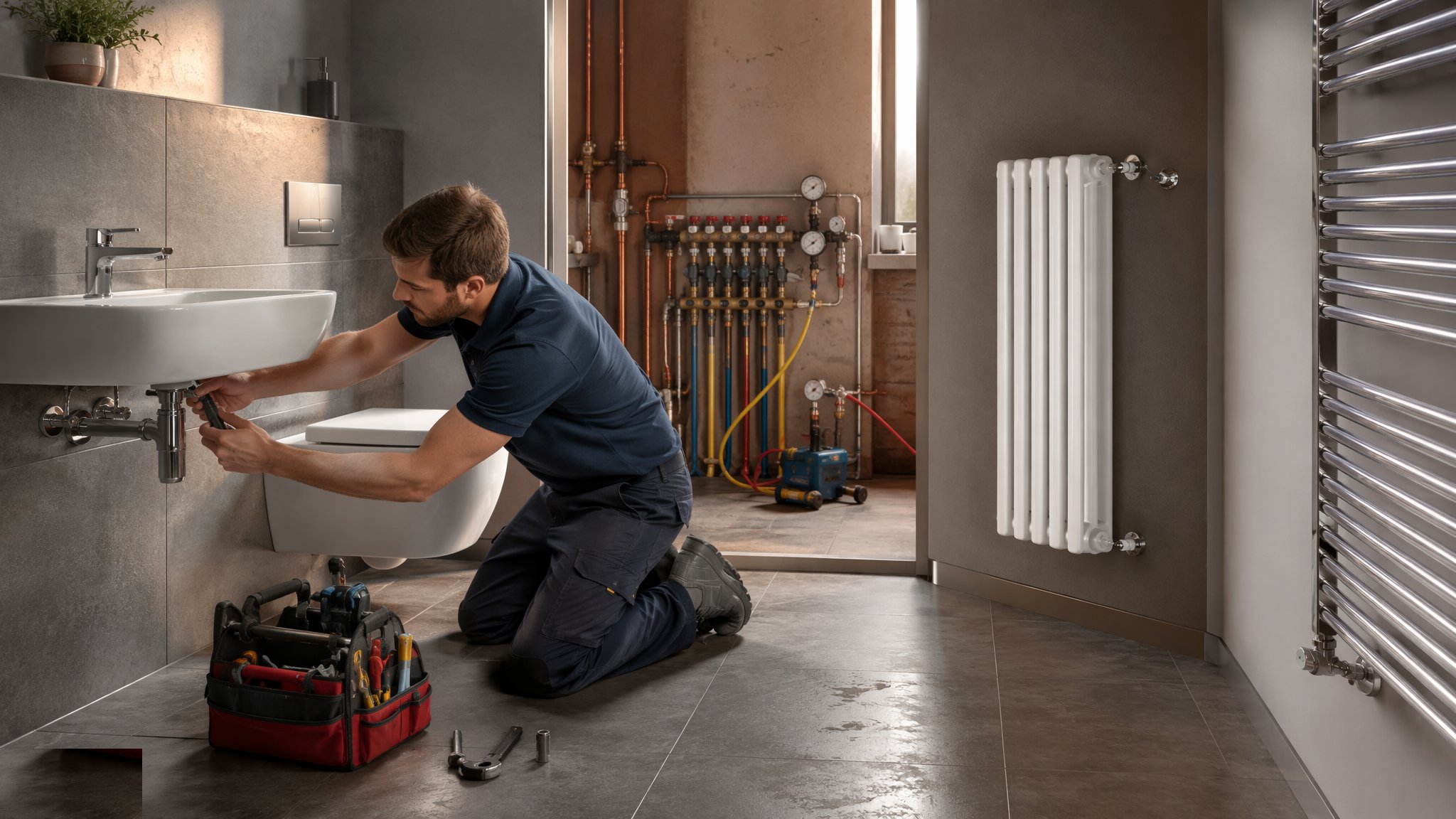
Second-fix plumbing connects the visible ends of the water systems: sanitaryware fixed and sealed to the prepared points, radiators and towel rails hung level on their brackets and valved, taps and appliances connected. It is quick, satisfying work that transforms a plot - and it inherits everything first fix left behind. A pipe 30 mm off its drawing position becomes an exposed offset; a waste without its fall becomes a slow basin forever. Good second fix is mostly good first fix, finally visible.
Then the systems come alive. Filling is slow and deliberate: vent the high points systematically, chase the air out of the emitters, and inspect every joint under pressure as the system comes up - leaks weep before they burst, and a dry joint inspection under test pressure catches them all. Flushing removes the debris of construction; where specified, chlorination or thermal disinfection follows, with certificates. Water hygiene is part of the plumbing scope, not an afterthought: the recognised guidance on Legionella control drives temperature regimes, dead-leg elimination and the flushing of any system that will sit idle.
Scald protection closes the loop. Hot water is stored and distributed hot enough for hygiene, then limited at baths and basins by thermostatic mixing valves set and verified at the outlet - hot enough to be safe from bacteria, cool enough to be safe for skin. Temperatures are recorded, valves are tagged, and the flushing and disinfection records go into the handover pack, because a building that sits part-filled and unflushed between second fix and occupation is a water hygiene problem being quietly incubated.
Process storyboard
Step 1 of 6 - slide through the snapshots.
STEP 1
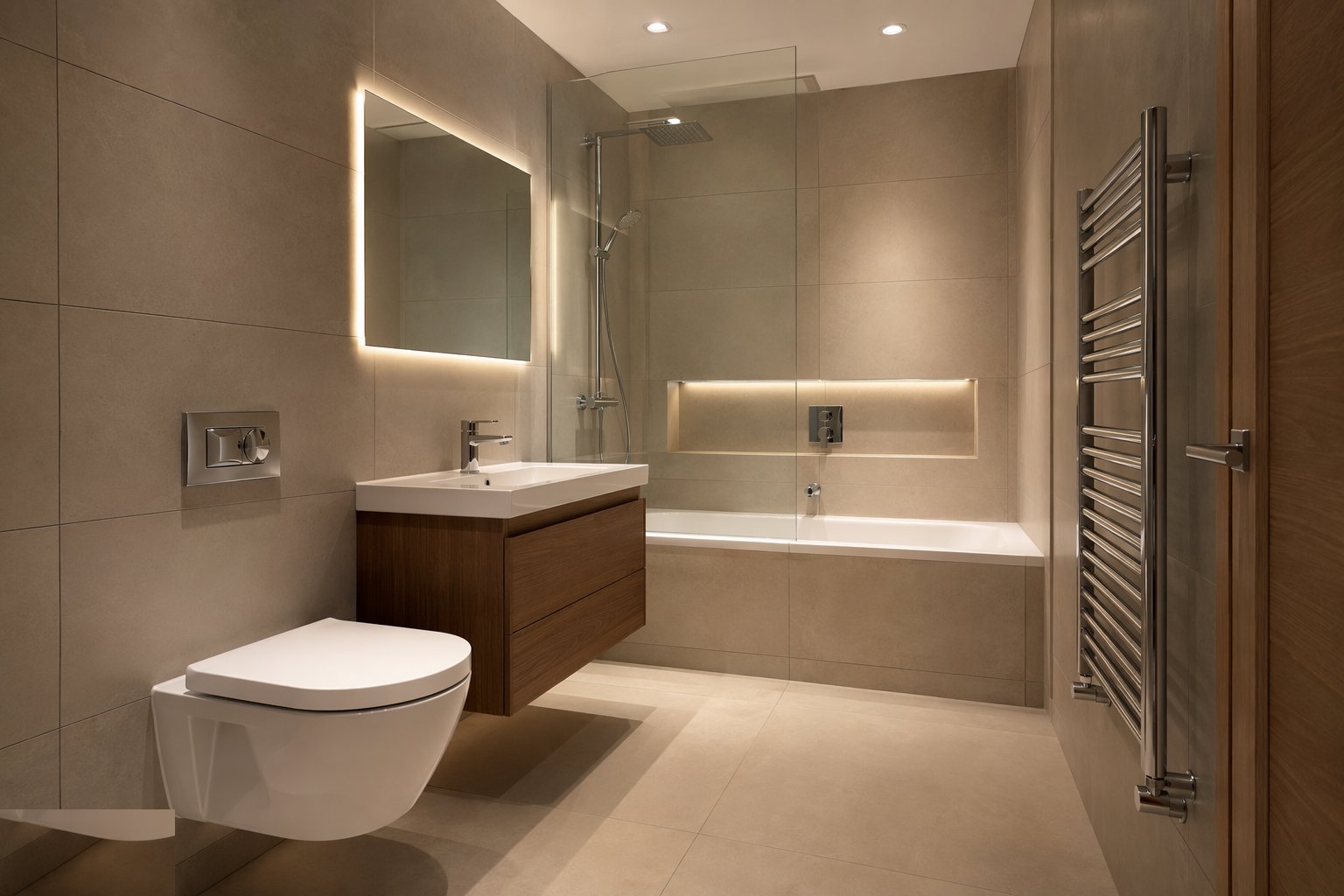
Fit the sanitaryware and brassware
WCs, basins, baths and taps are fixed to the prepared points and sealed; wastes are checked for fall and traps for seal.
How does Plumbing second fix work, step by step?
- 1
Step 1: Fit the sanitaryware and brassware
WCs, basins, baths and taps are fixed to the prepared points and sealed; wastes are checked for fall and traps for seal. Every fixing is checked for soundness - a rocking basin is a cracked seal in six months.
- 2
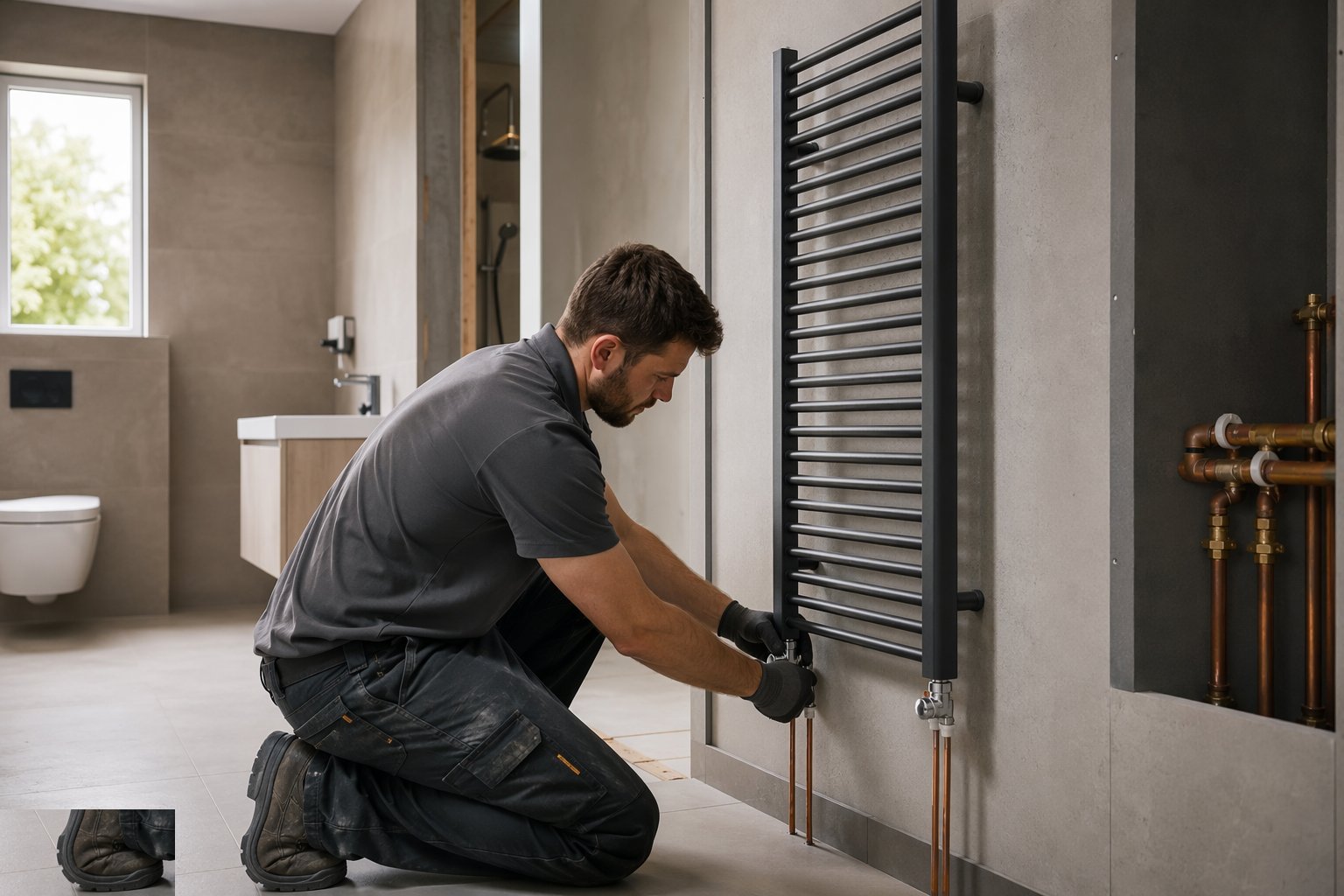
Step 2: Hang and connect the emitters
Radiators and towel rails are hung level on their brackets, valved, and connected to the first-fix tails. Brackets go into structure or pattresses, not just board - a radiator full of water is a heavy thing to trust to a plasterboard plug.
- 3
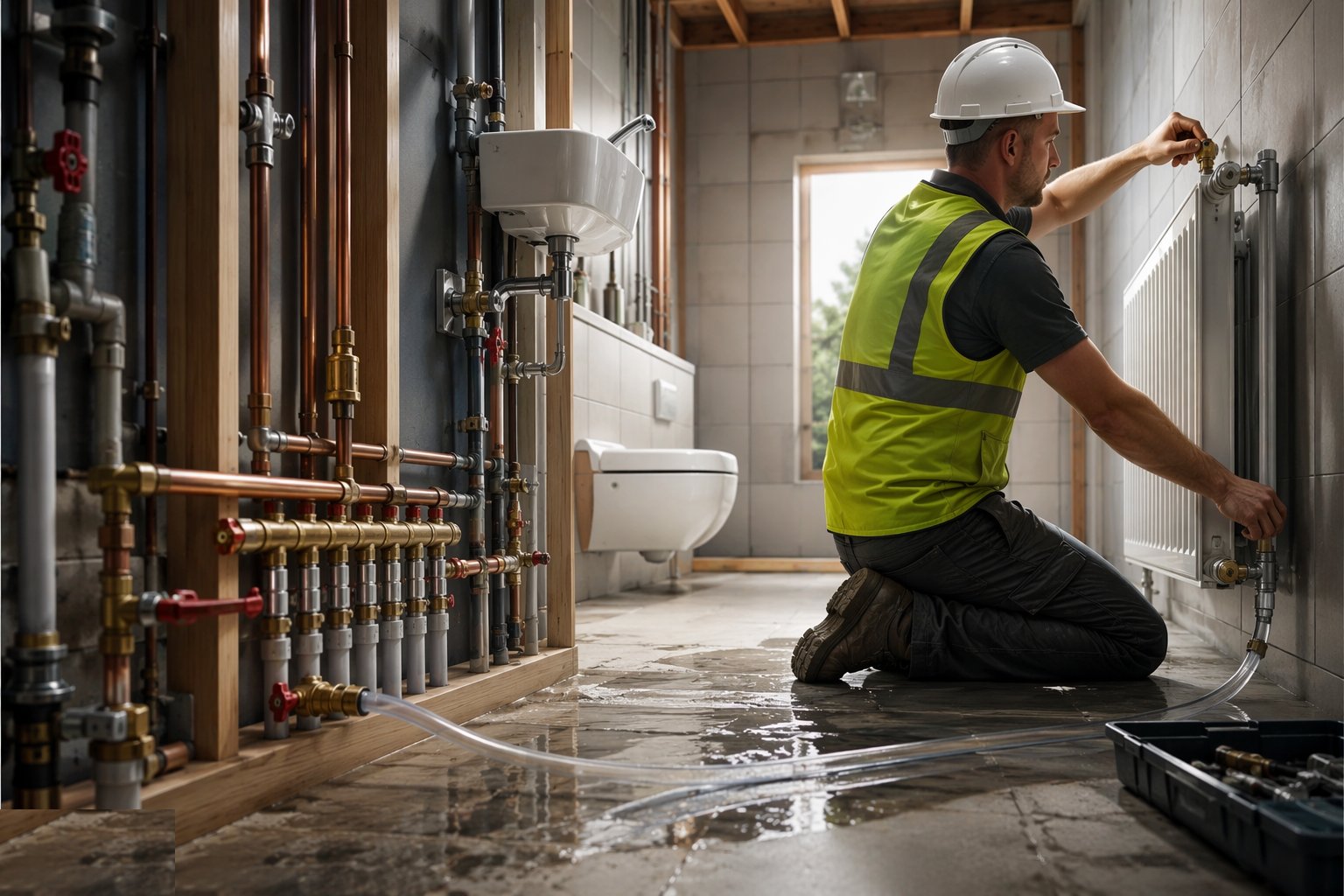
Step 3: Fill, vent and leak-hunt
Systems are filled slowly, vented at every high point, and brought up to pressure while every accessible joint is inspected dry. Weeps are remade now; the alternative is a stain on a finished ceiling and an insurance conversation.
- 4
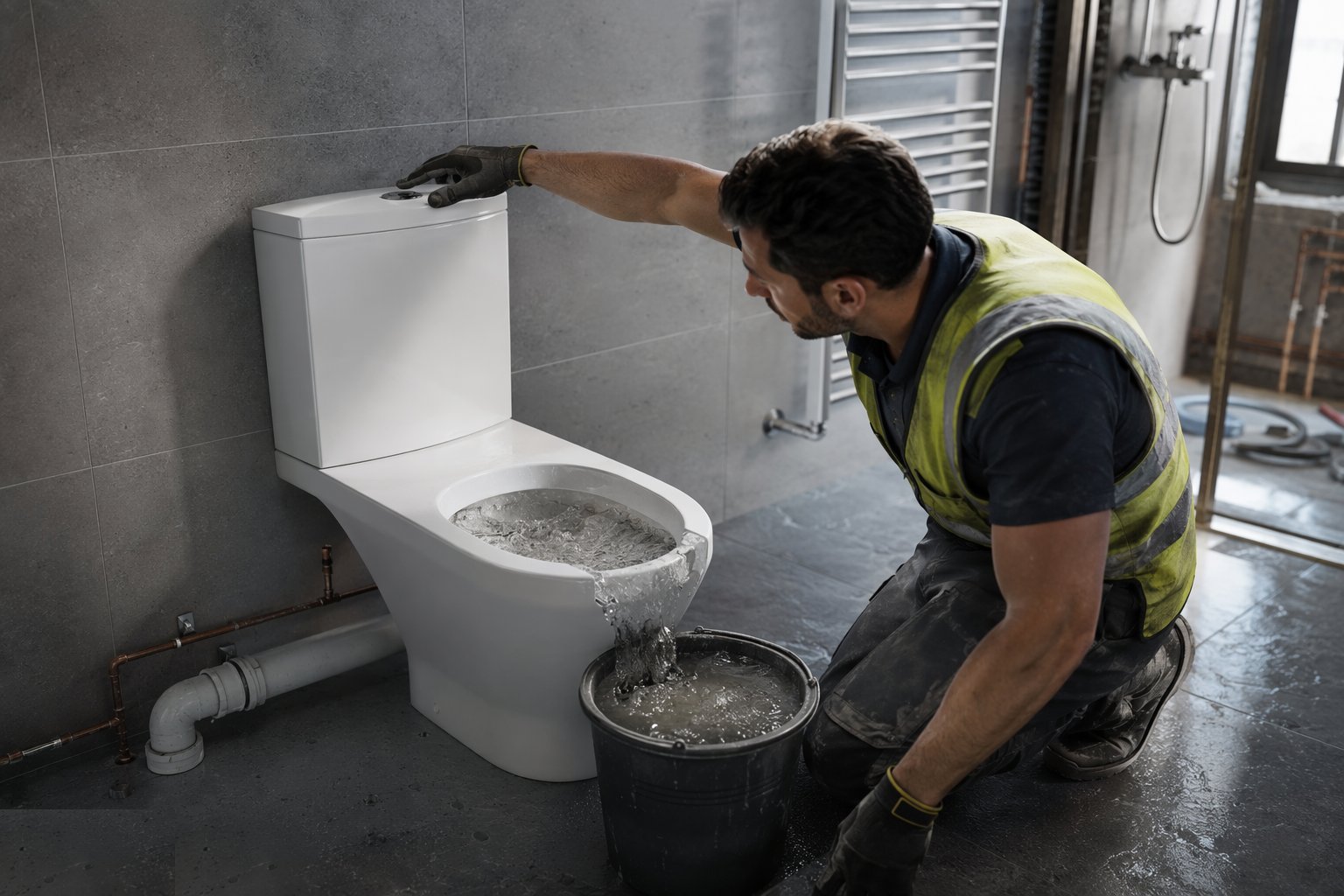
Step 4: Flush and disinfect
Debris is flushed until the water runs clean; chlorination or thermal disinfection follows where specified, with contact times observed and certificates issued. The records go straight into the O&M pack.
- 5
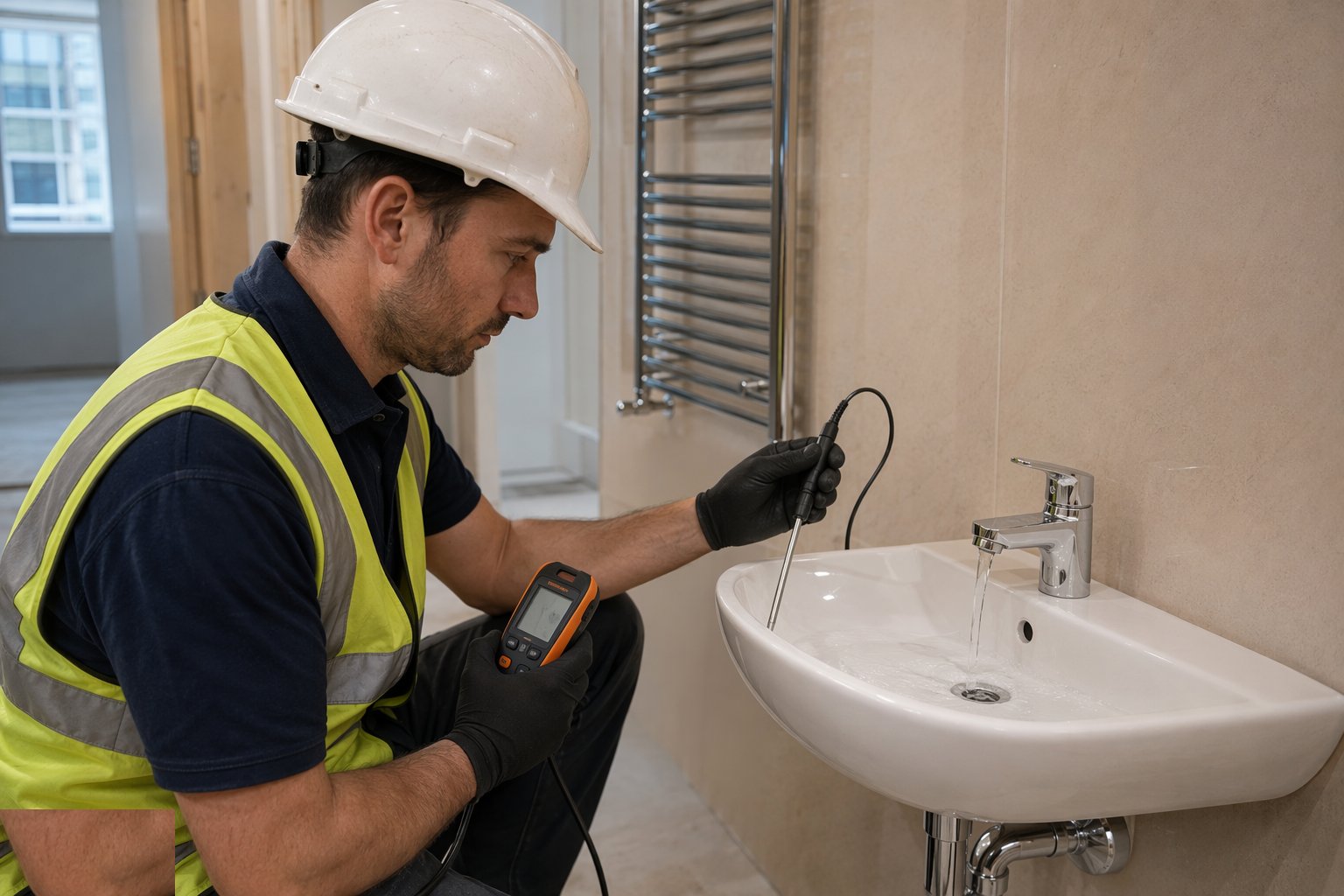
Step 5: Verify temperatures
Hot water temperatures are measured at outlets against the design regime - hot enough for hygiene at the source, limited by mixing valves at baths and basins against scalding. Every reading is logged with its location.
- 6
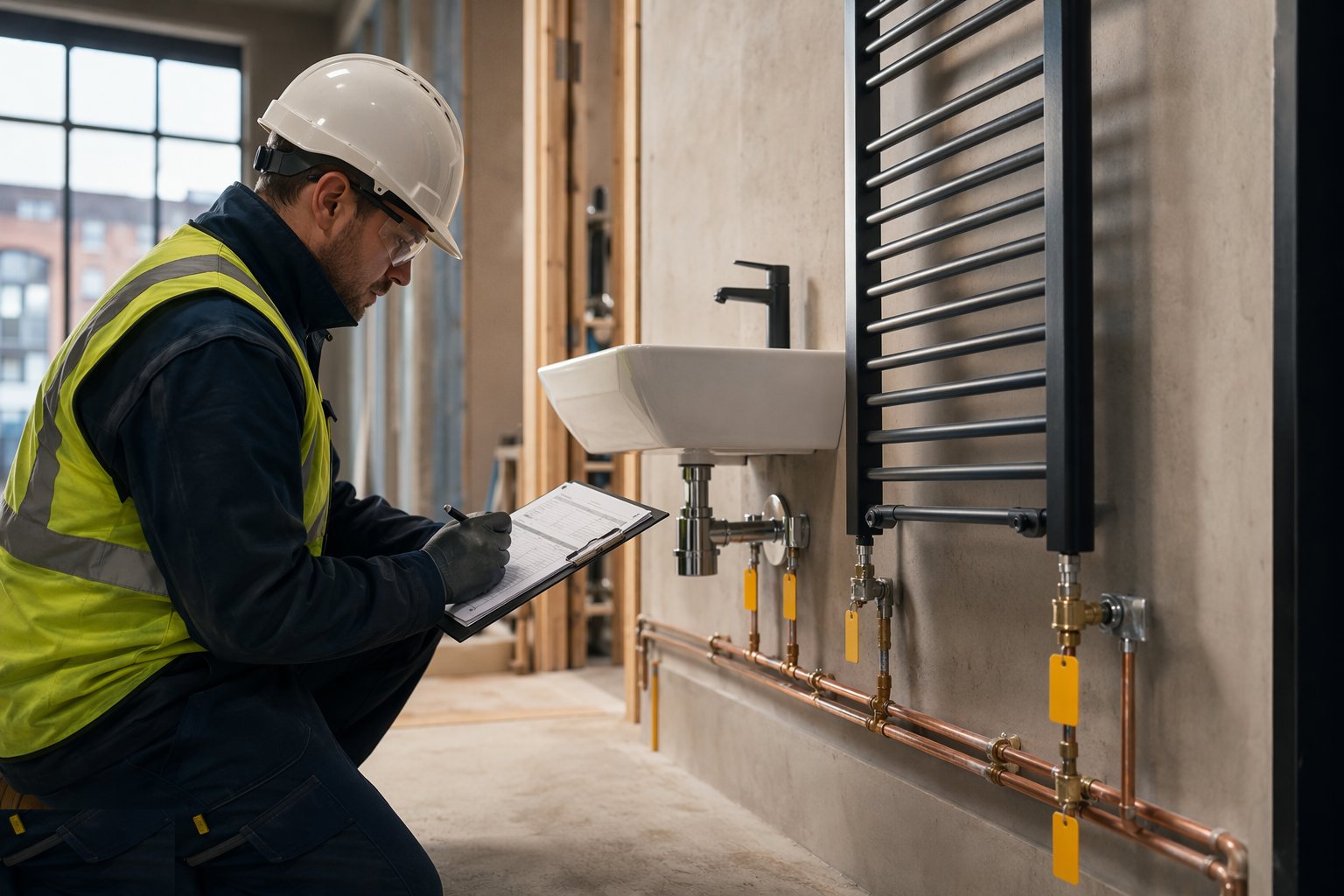
Step 6: Record and label
Valves are tagged, the location schedule is completed, and flushing, disinfection and temperature records are filed. The facilities team should be able to isolate any room on their first day without a phone call.
What are the benefits of Plumbing second fix?
- Working rooms fast - a fitted bathroom changes the feel of a plot in a day
- Hygiene by design - flushing, disinfection and temperature control keep the water safe
- Leak-free handover - every joint proven under pressure before occupation
- Scald protection delivered - mixing valves set and verified at vulnerable outlets
- Maintainable systems - valves tagged and records filed for the facilities team
What are the limitations of Plumbing second fix?
- Inherits first-fix accuracy - a pipe 30 mm off becomes an exposed offset after tiling
- Water hygiene is schedule-sensitive - long gaps between fill and occupation breed risk
- Chlorination is disruptive - it needs time, access and careful chemical handling
- Sanitaryware damage is expensive - one dropped basin is a week of re-order and re-fit
- Temperature verification depends on flow - unbalanced systems give misleading readings
What is Plumbing second fix best suited for?
What plant does Plumbing second fix need?
- Pressure test pumps and flushing rigs
- Chlorination and sampling kit; thermometers and temperature loggers
- Sanitaryware handling and fixing tools
- Pipe freezing kit for live-system connections
- Valve keys, spanners and torque tools
- Label printer for valve tags and records
How is Plumbing second fix quality-checked?
- Fill and vent records with leak inspection sign-off per system
- Flushing and disinfection certificates; sample results where specified
- Outlet temperature records against the design regime - hot and blended
- Mixing valve settings verified and recorded at baths and basins
- Valve tagging and location schedule completed
- Photographs of concealed connections before final closure
More mep second fix & commissioning methods
Next method
Electrical second fix