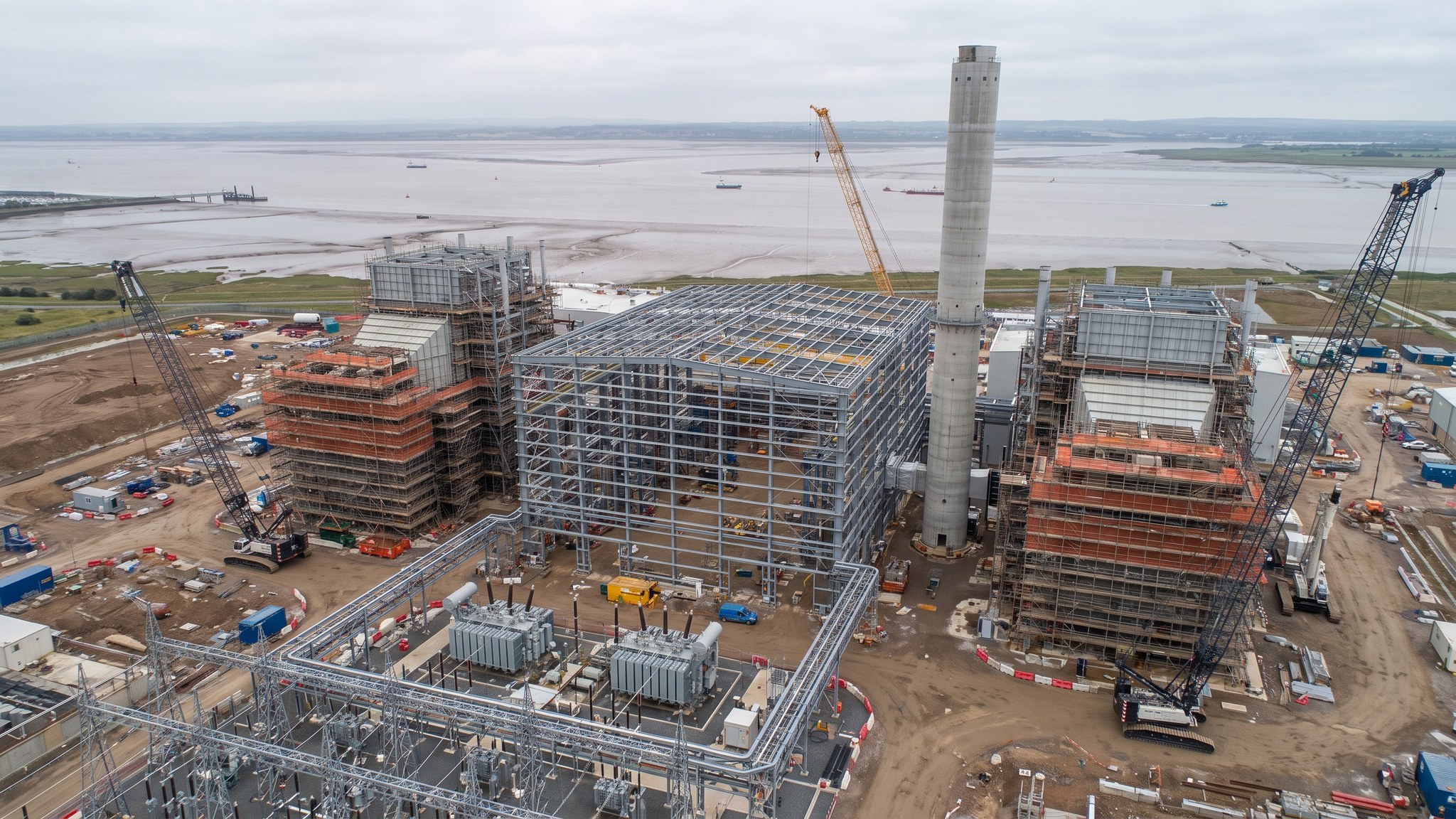
Heavy mechanical construction organised around one enormous machine.
A thermal power station is a building built to serve a machine. The turbine sets the geometry: its foundation is designed for vibration and alignment rather than load alone, and the hall around it exists largely to carry the crane that will lift it. Get those two things wrong and nothing downstream recovers.
The process map - 5 guides
Each one is a full guide: overview, variants, numbered steps, plant, testing, safety and defects.
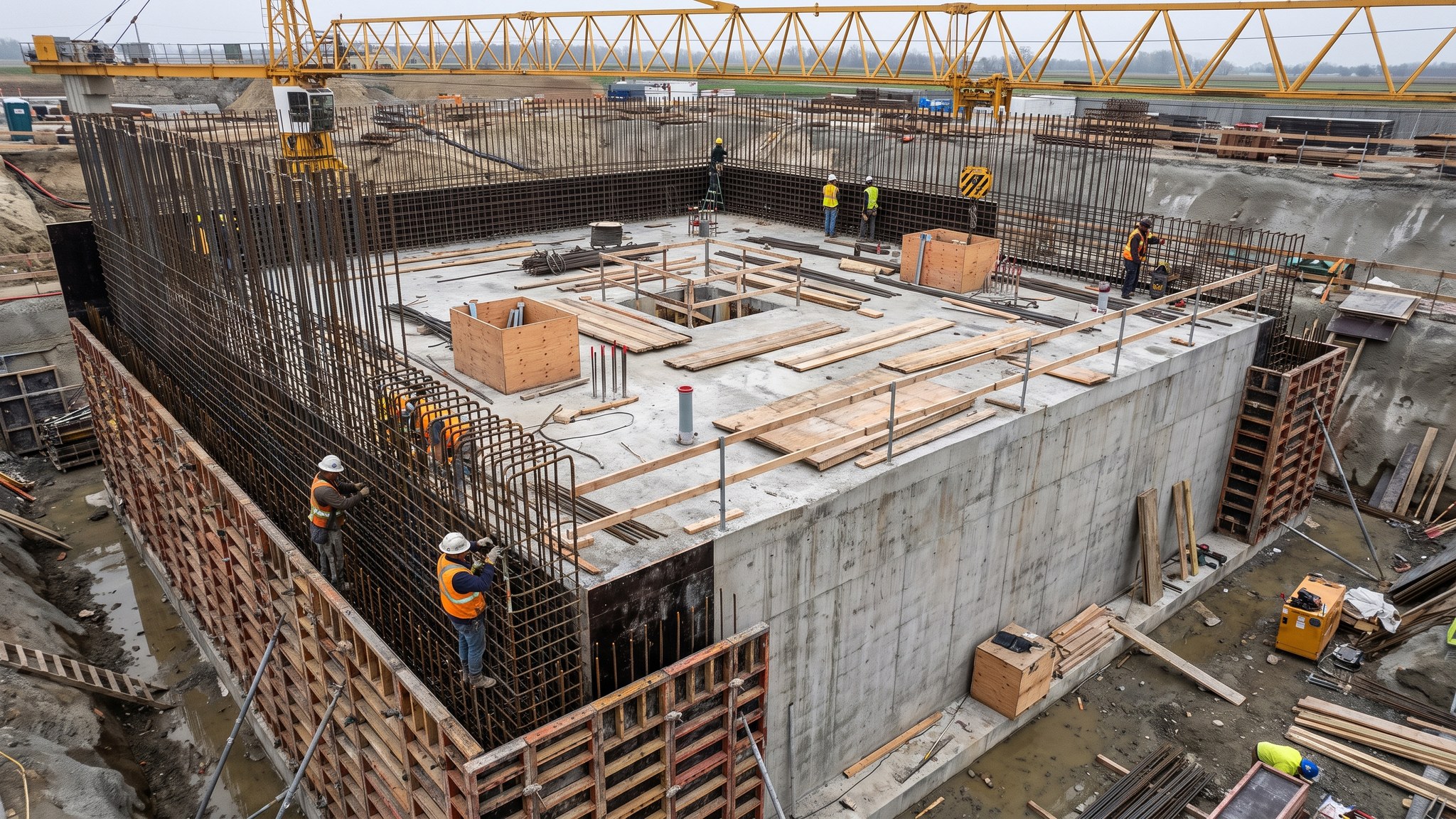
Civils & Heavy Foundations
The platform, piles and heavy bases a power station stands on - where the governing design case is rarely weight. It is vibration and alignment, because the machine that sits on top spins for decades and will not forgive a foundation that moves.
Open process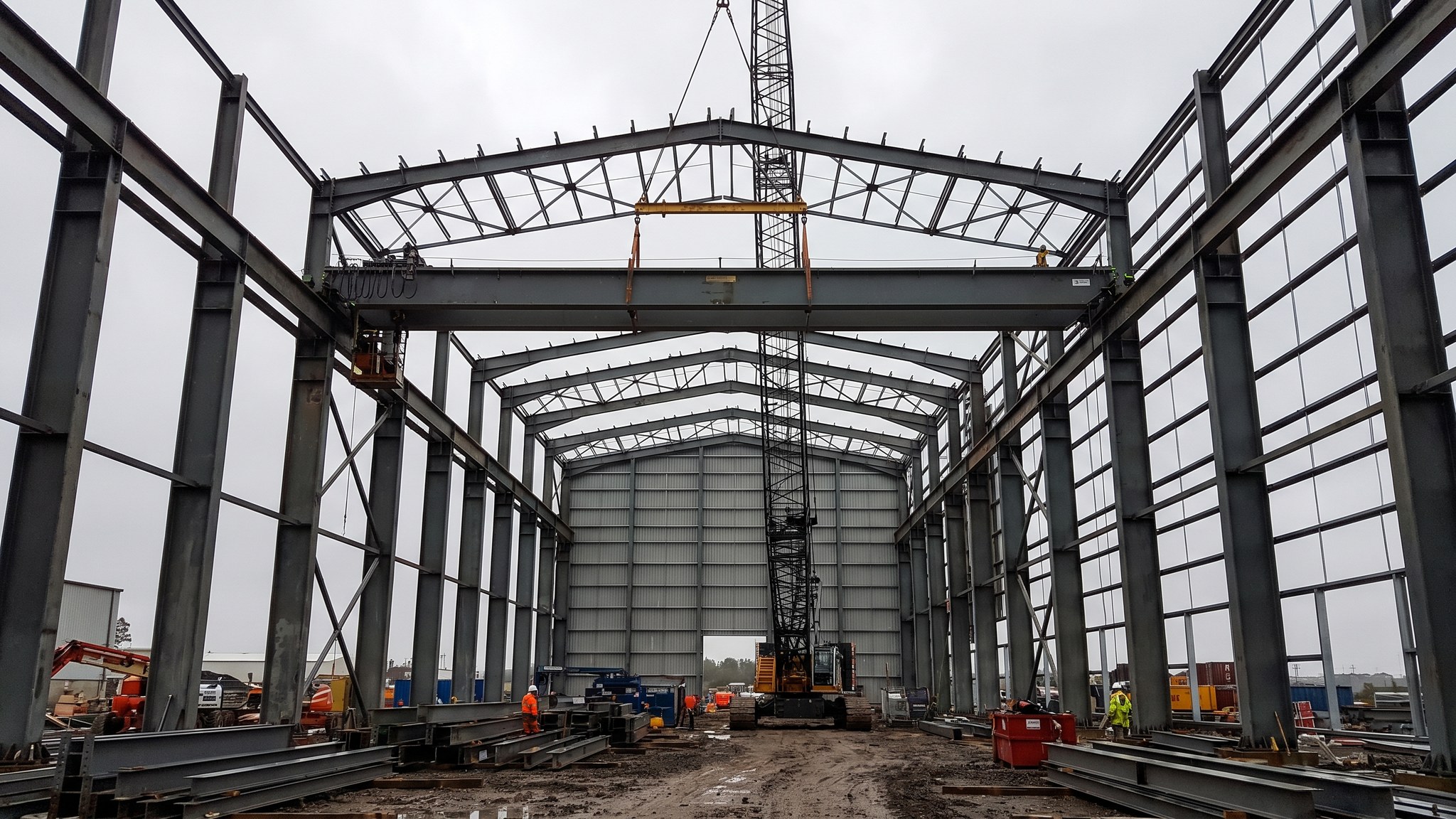
Turbine Hall & Structures
The steel-framed building over the turbine-generator - designed from the crane downwards, because the hall exists to lift, open and maintain the machine inside it for the whole of the station's life.
Open process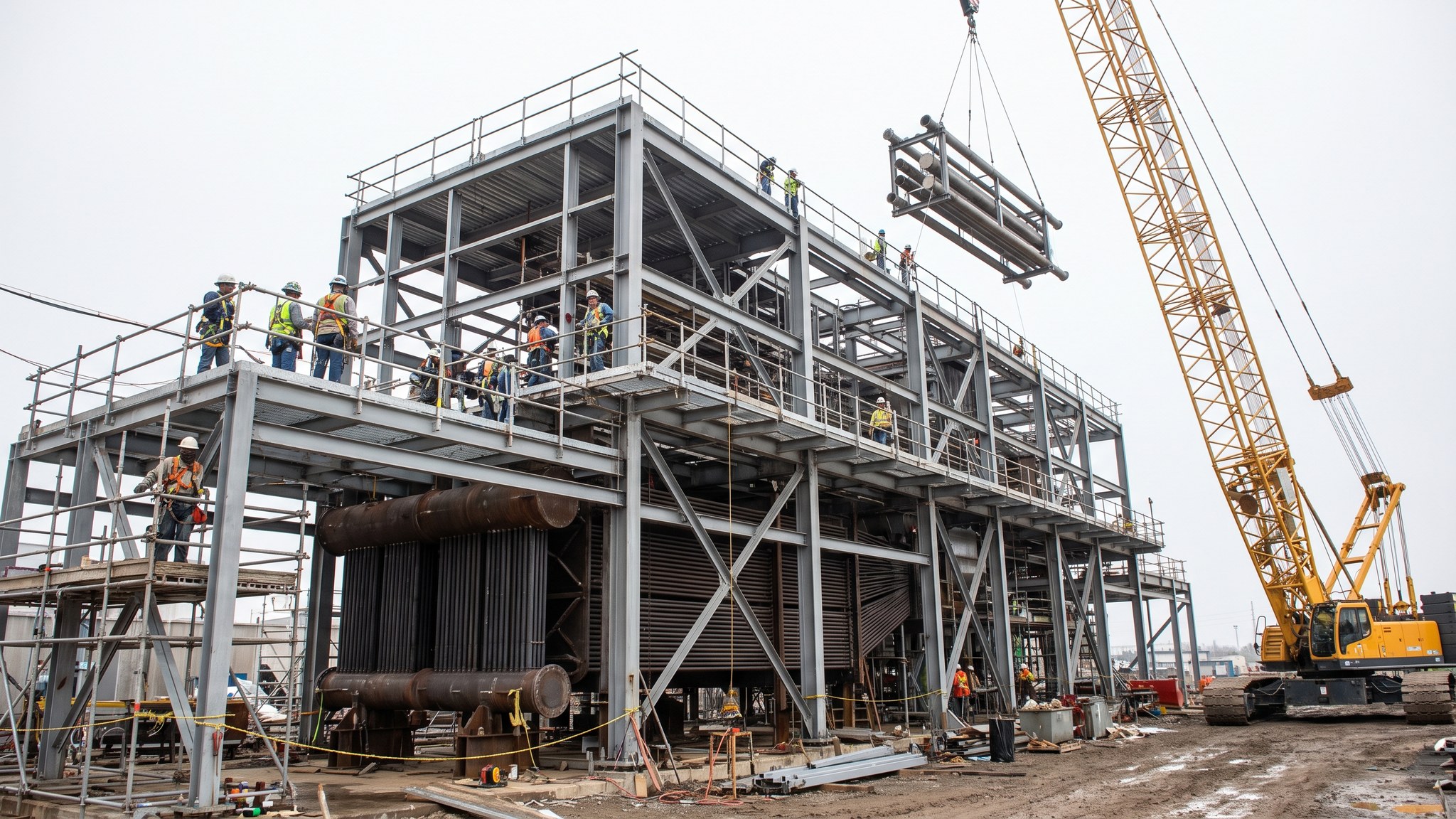
Boiler & HRSG Erection
The tallest and most weld-intensive structure on the plot - a pressure system built from thousands of tubes, assembled into modules at ground level, lifted into a support frame and joined up at height, where the welding record is the product.
Open process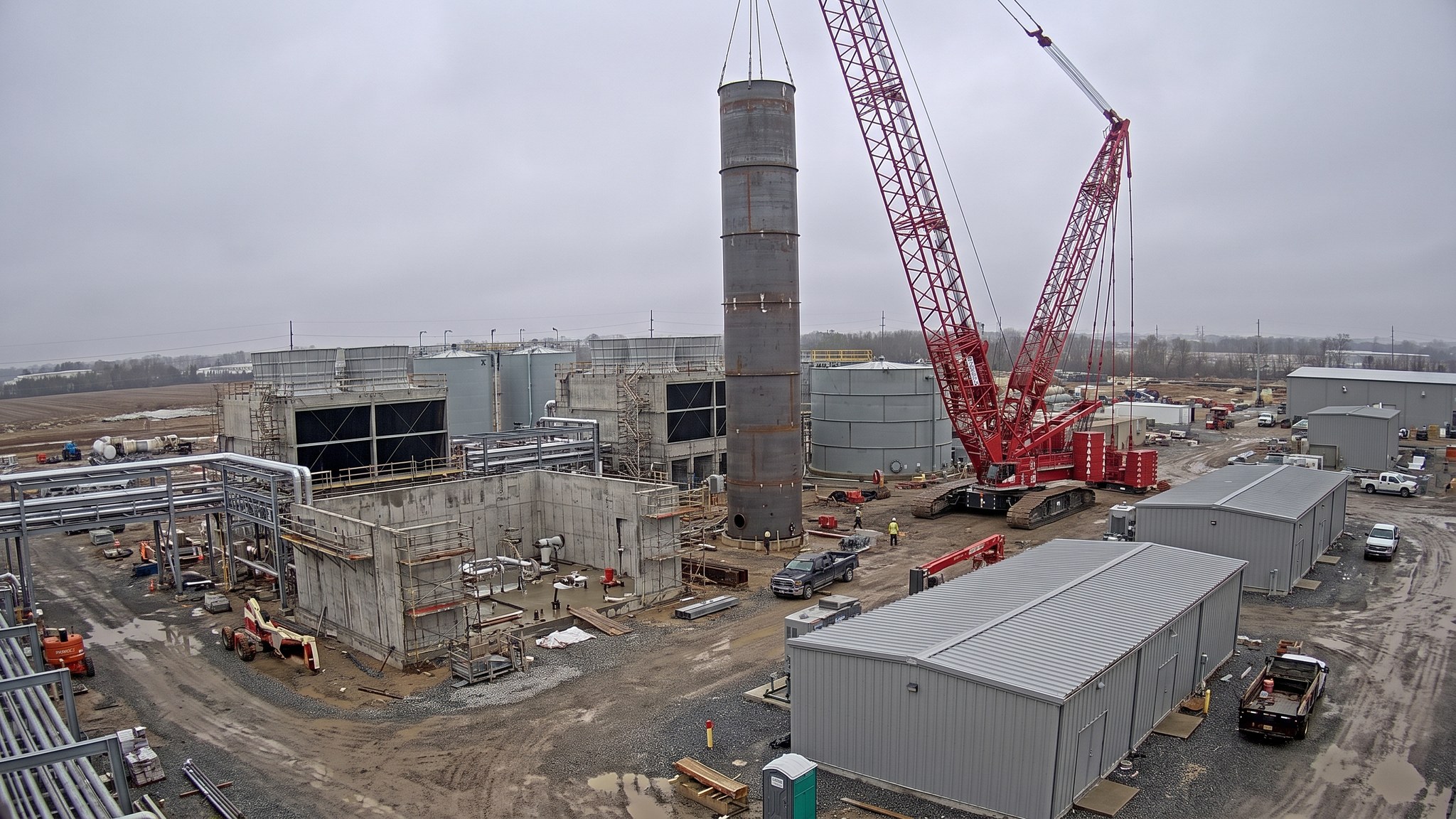
Balance of Plant & Stack
Everything that is not the turbine or the boiler - cooling, water treatment, fuel supply, compressed air, firefighting, electrical distribution and the stack. Individually ordinary, collectively most of the scope, and the part that decides whether the station can actually run.
Open process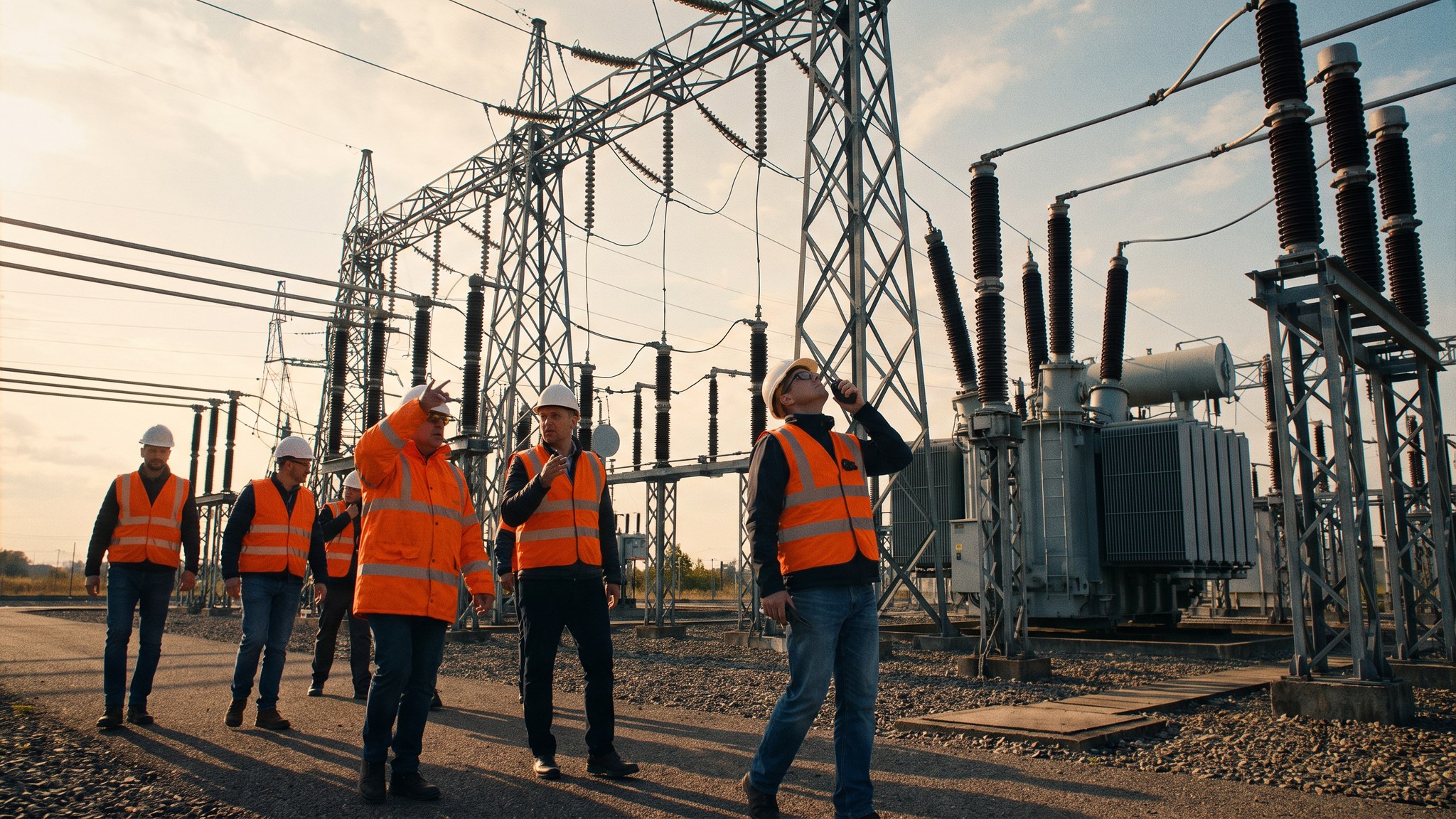
Commissioning & Grid Connection
The staged sequence that turns a finished construction site into a running power station - clean it, energise it, fire it, raise steam, then synchronise and prove it. The network operator has the final say on when it connects.
Open processShared methods used in this sector
These guides are owned by other sectors - the canonical page lives there - but the method is the same here. Cards open the guide at its home sector.
Site Access & Enabling Works
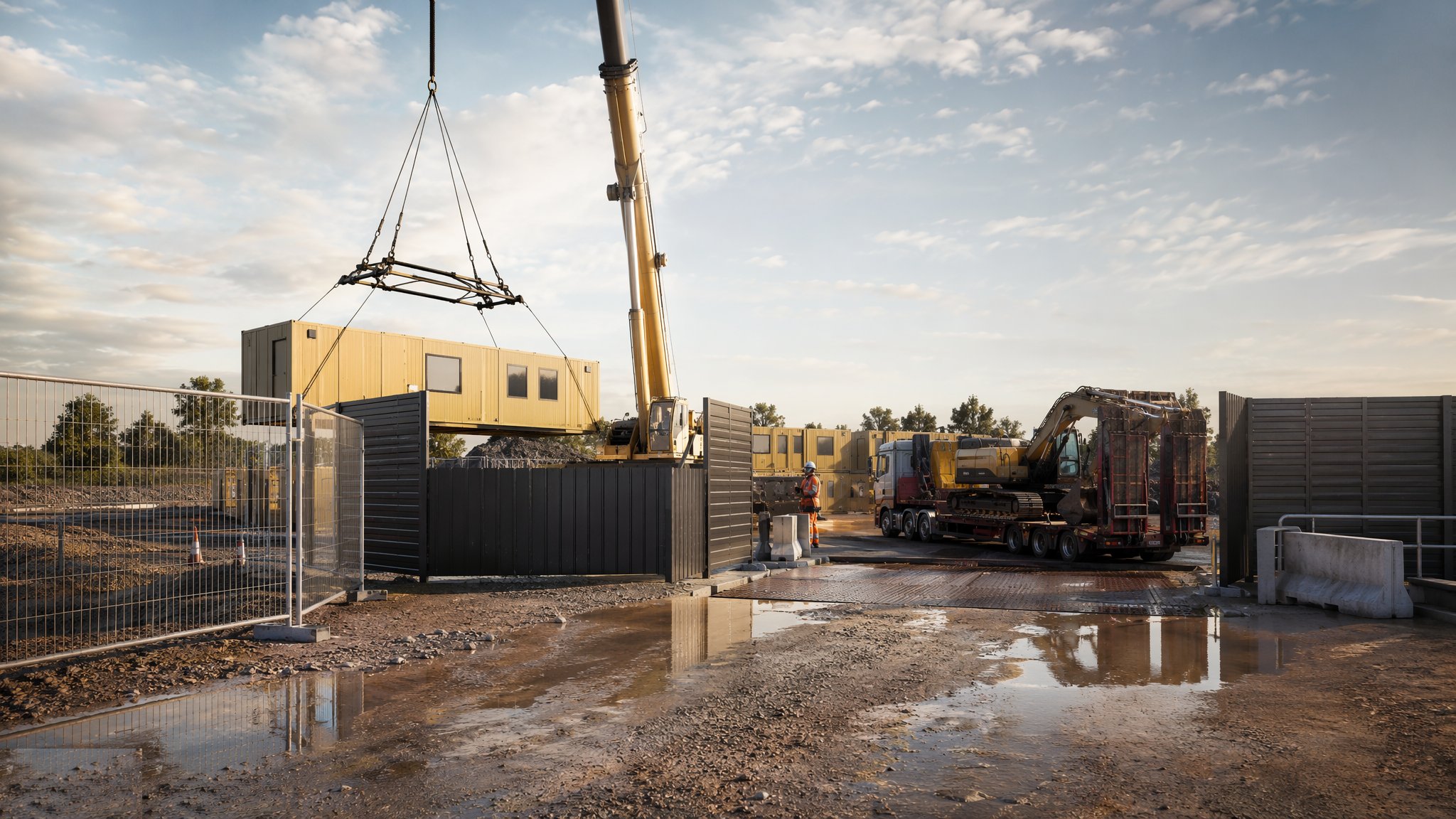
Turning a piece of land into a controlled, serviced, legal construction site.
Open processCanonical guide: Residential & Housing
Shallow Foundations
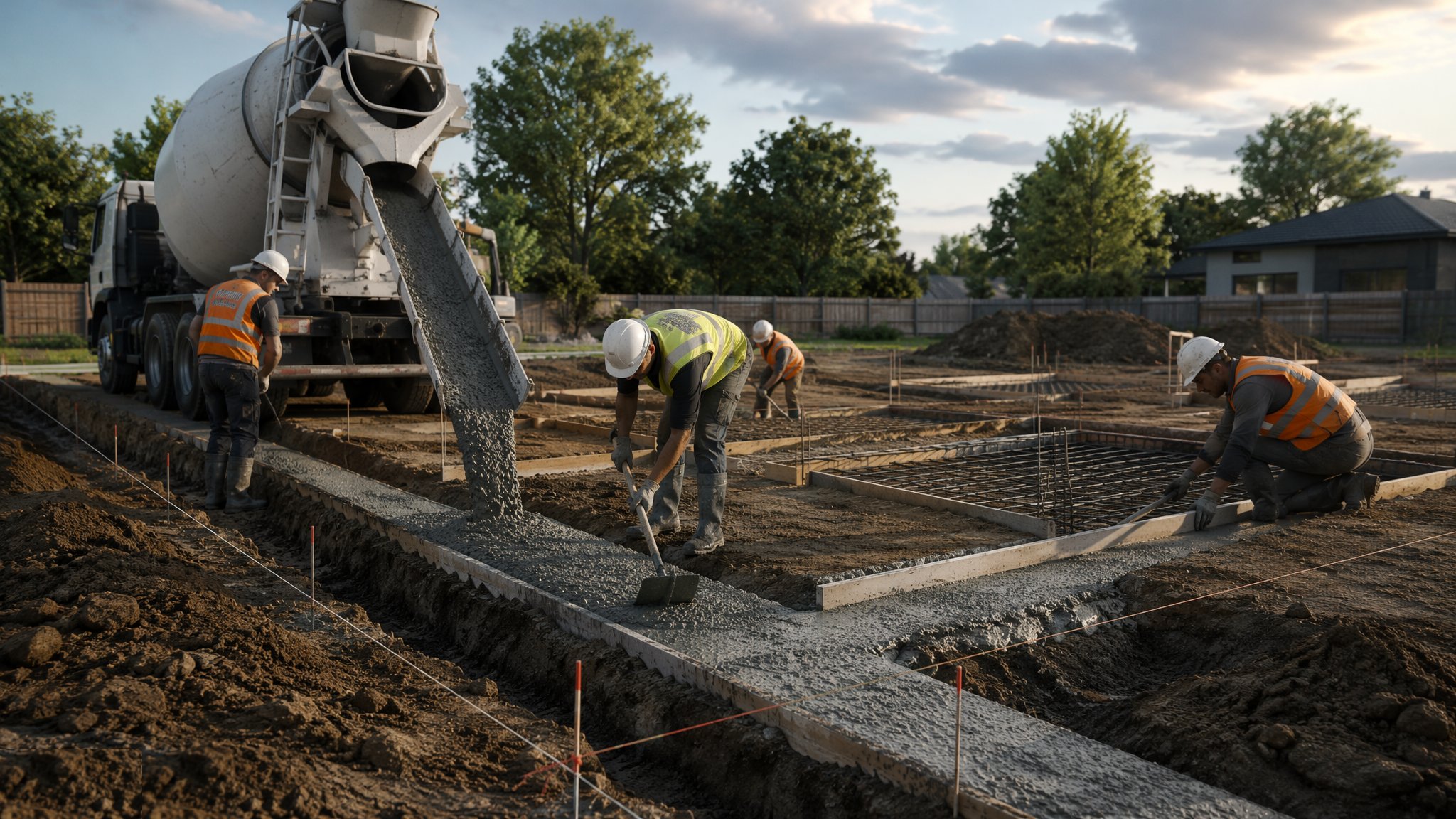
Strips, pads and rafts - spreading the building's weight onto good ground near the surface.
Open processCanonical guide: Residential & Housing
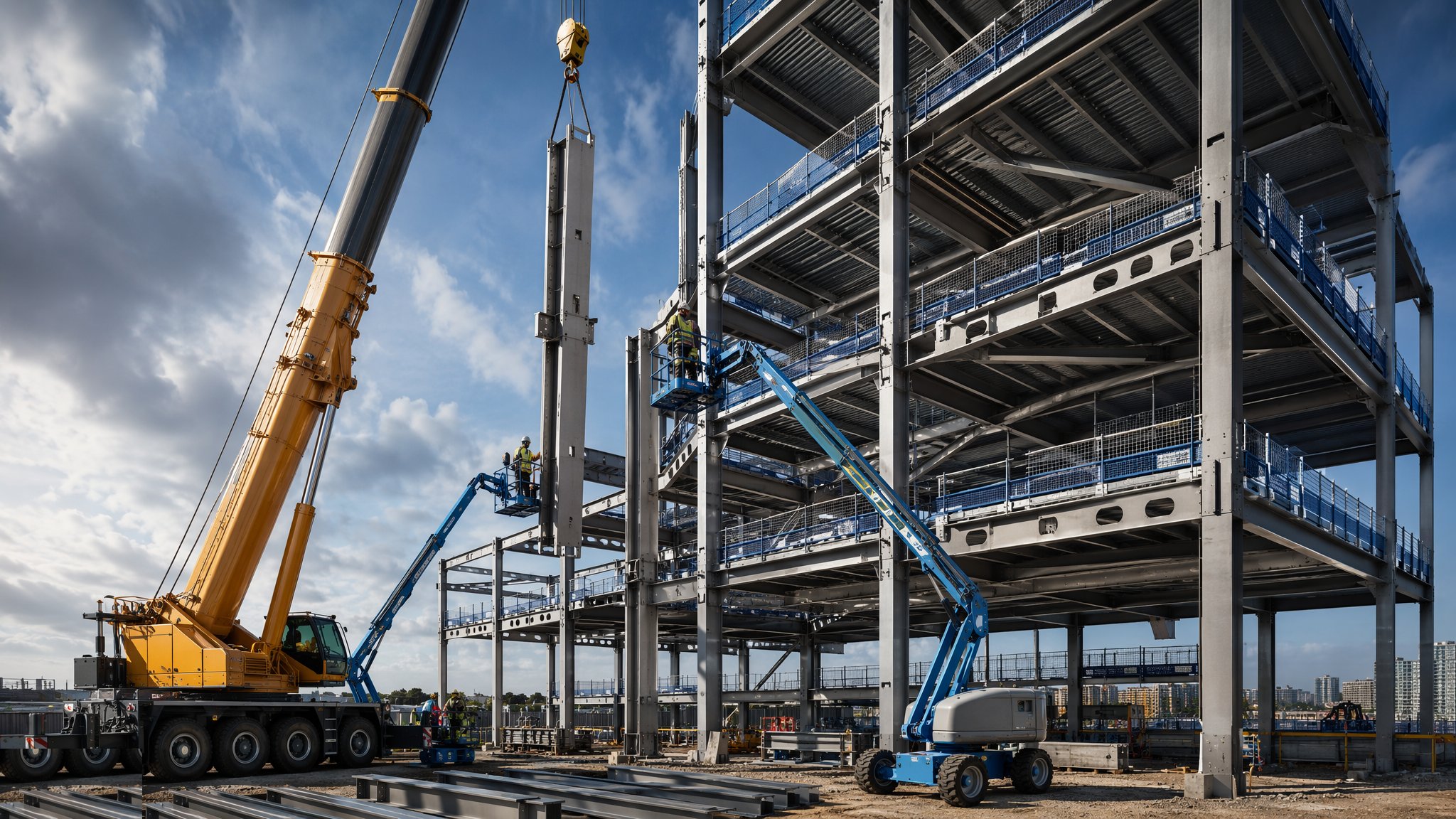
Steel Frame Construction
Fabricated off-site, erected at speed - bolted skeletons for frames that fly up.
Open processCanonical guide: Residential & Housing
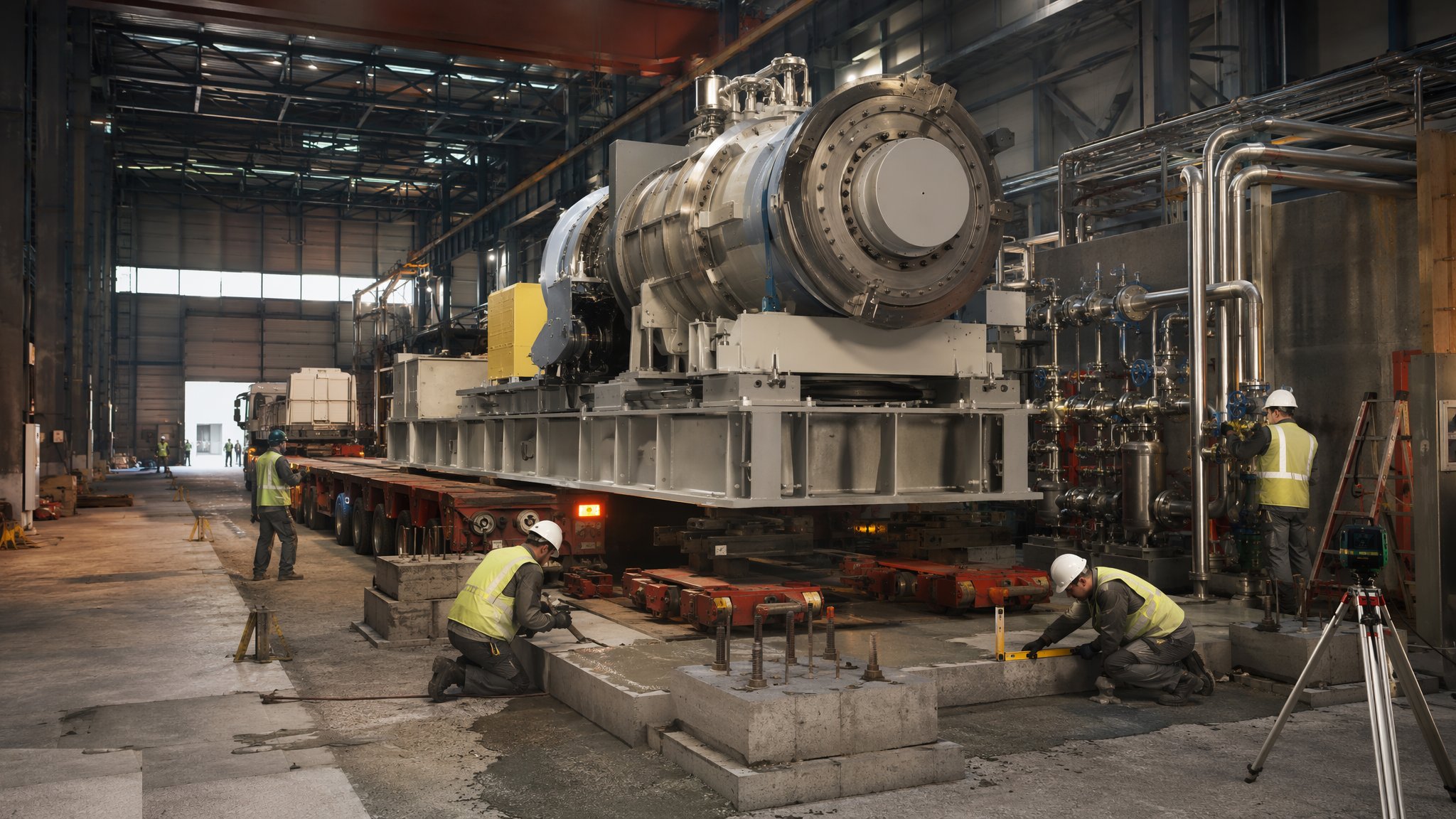
Process Plant & Production Line Installation
Machines off the low-loader and onto their bases - grouted, levelled and aligned to hundredths of a millimetre, hooked up to every service, then proven cold before anything gets hot.
Open processCanonical guide: Manufacturing & Industrial Plants
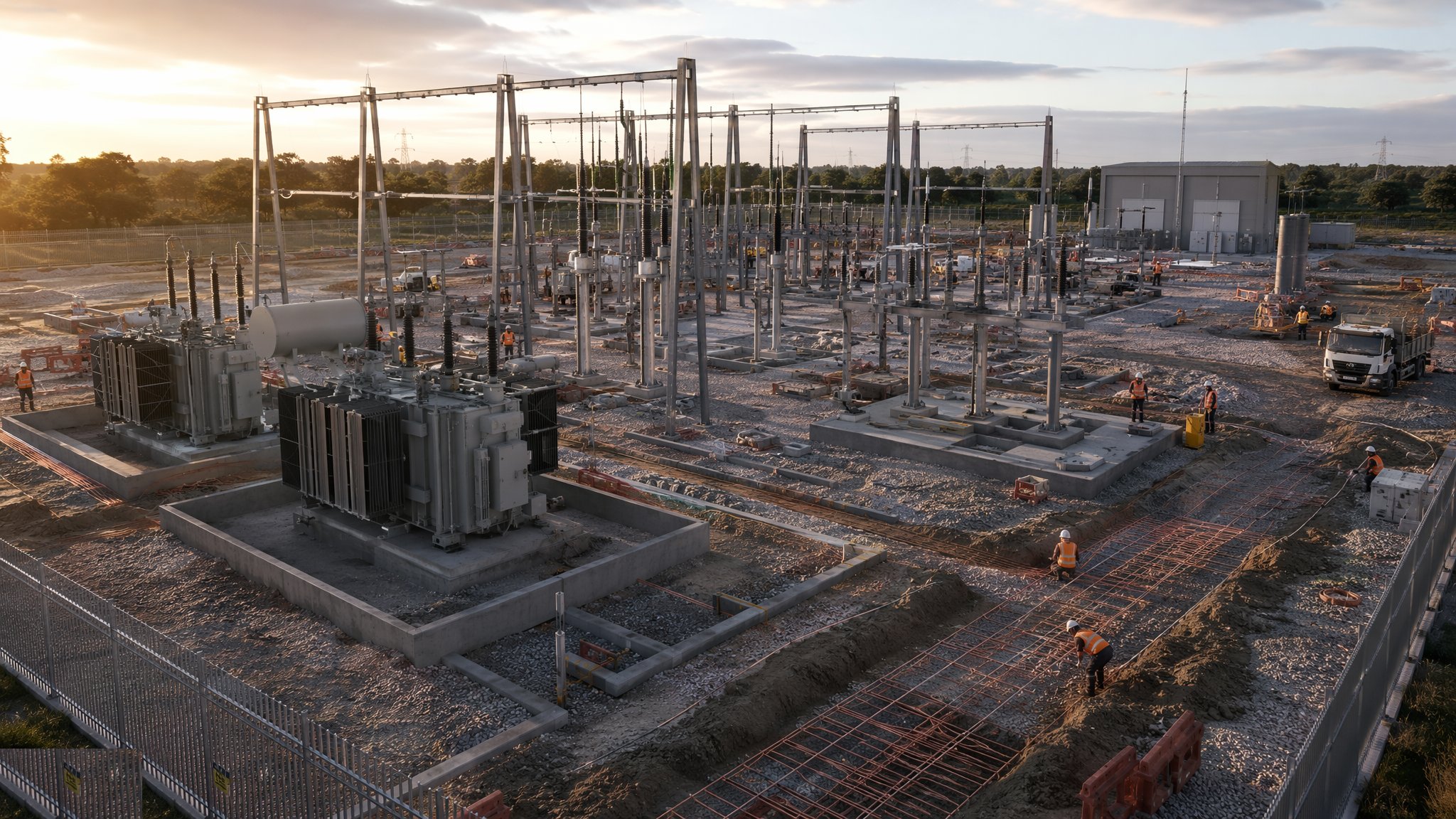
Substation Construction
The fenced compounds where voltage changes hands - air-insulated or gas-insulated switchgear, transformers the size of houses, and a buried copper earth grid that has to be right before anything else is built.
Open processCanonical guide: Power Transmission & Distribution
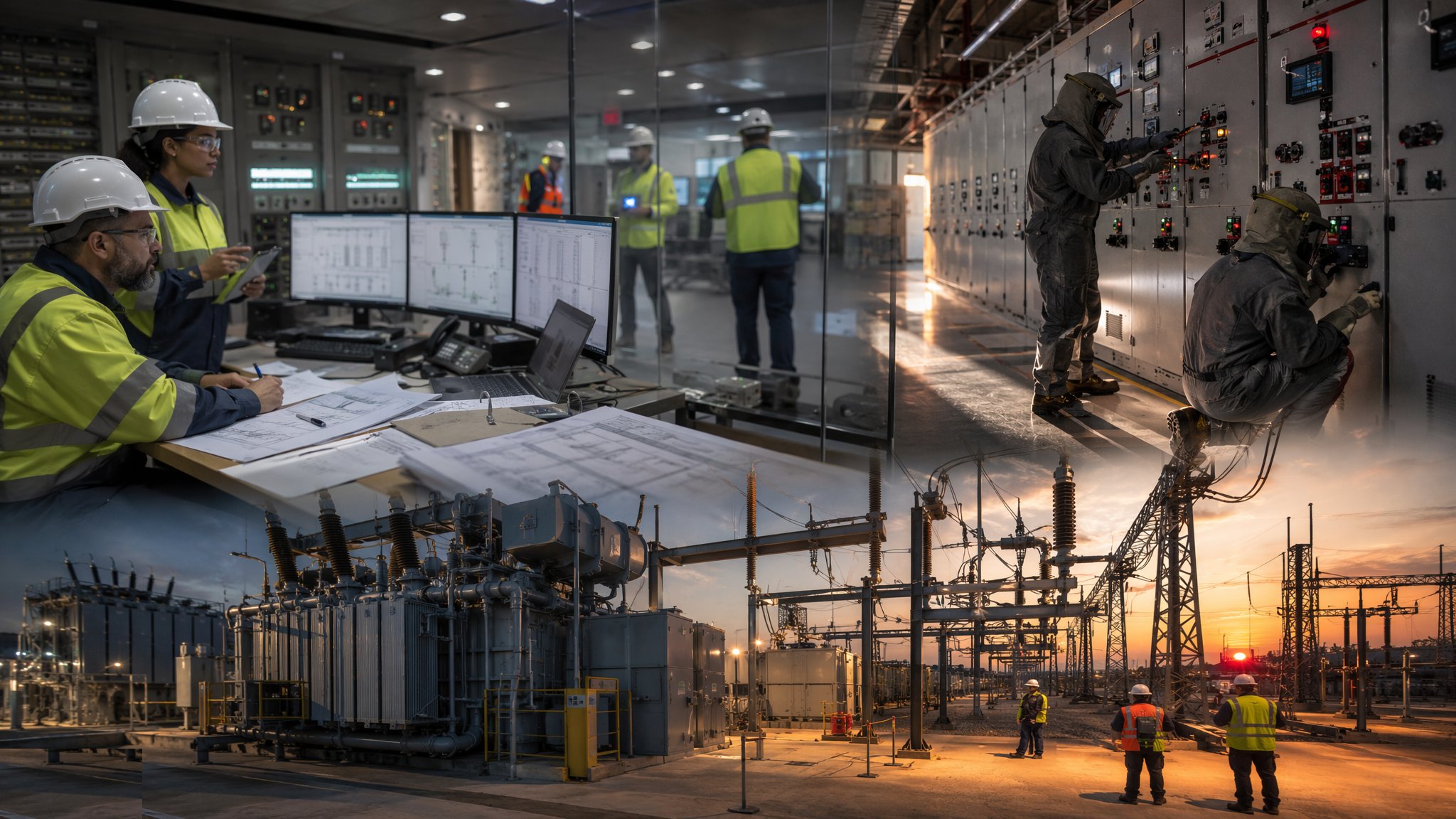
Grid Connections & Energisation
The paper-and-permit end of grid construction - connection agreements, protection witness tests, outages booked seasons ahead, and the phased switching sequence that puts a new asset on the live network.
Open processCanonical guide: Power Transmission & Distribution
Thermal & CCGT Power Plant in depth
About Thermal & CCGT Power Plant
The boiler or heat recovery unit is a steel and pressure-parts assembly job carried out at height, increasingly modularised at ground level and lifted in to keep people off scaffolds. Around it sits the balance of plant - cooling, water treatment, fuel supply, electrical distribution and the stack - which is the unglamorous majority of the scope and the usual source of delay.
Commissioning is a long staged sequence rather than an event. Systems are cleaned, energised and proved in order, and the milestones everyone actually watches are first fire and first synchronisation, when the network operator finally accepts the plant onto the system.