Cold commissioning
Proving that systems actually function, before any heat or pressure is anywhere near them.
Last updated 2026-09-07
What is Cold commissioning?
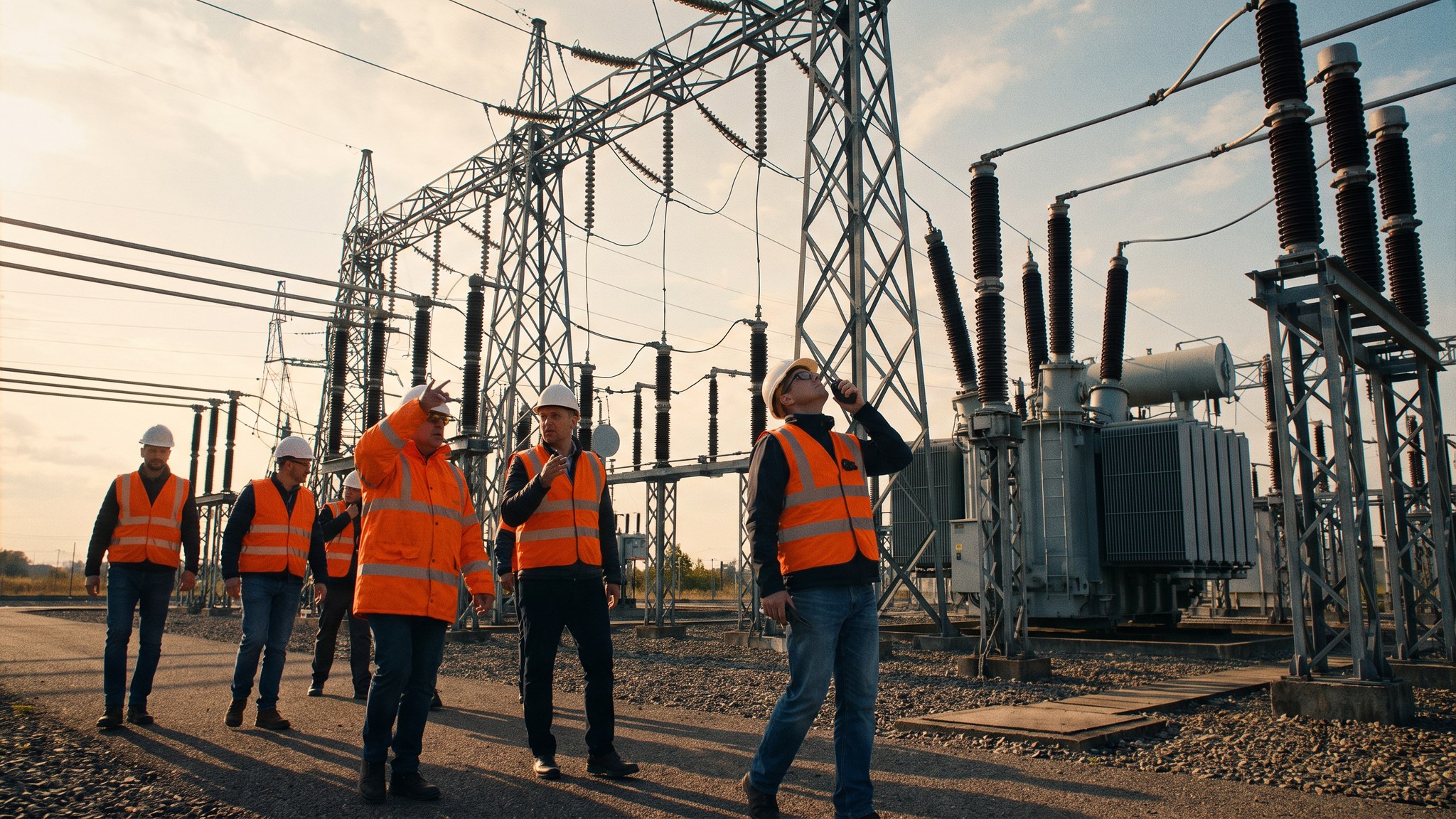
Cold commissioning is where the plant starts to work for the first time, but without heat and without the process running. Systems that have been turned over are filled, energised, run and proved: pumps turn, valves stroke, fans start, instruments read, controls respond, protections operate and alarms reach the control room. Everything that can be demonstrated without introducing the real process condition is demonstrated here, and everything found wrong here is found in the safest possible circumstances.
That is the whole point of it. Almost every fault that will appear on a new plant is present from the day it is installed - a valve wired backwards, an instrument reading the wrong way round, a pump rotating the wrong way, a protection that does not act, two signals crossed in a marshalling cabinet. Finding them cold is cheap and safe. Finding the same faults hot, with the plant running, is expensive and can be dangerous. So a thorough cold commissioning campaign is the best investment a power project makes, and cutting it short to save programme reliably costs more later.
By this stage the site has changed character. The systems being worked on are under the operator's permit-to-work system, so every activity is planned, authorised, isolated and tagged. The commissioning team leads and the construction team supports, which reverses the relationship of the previous two years. Work is done in a defined sequence because systems depend on each other, and the order in which systems are commissioned is planned as carefully as the construction sequence was. Electrical energisation in particular is executed by authorised persons under the operator's regime, and nobody else touches it.
How does Cold commissioning work, step by step?
- 1
Step 1: Sequence the systems in dependency order
Systems cannot be commissioned in any order, because most of them need others to be available first. The commissioning team builds a sequence that respects those dependencies, typically bringing services, electrical supplies, compressed air, water treatment and cooling into service before the systems that rely on them. That sequence then drives the turnover programme backwards into construction, which is why the commissioning sequence is developed early and construction is planned to deliver systems in the order commissioning needs them.
- 2
Step 2: Energise electrical systems under the operator's regime
Bringing electrical systems into service is done by authorised persons under the operator's permit-to-work and safety rules, working to written procedures with defined isolation and access control. From the moment a switchboard is energised, the area around it operates under those rules and construction access to it ends. This is one of the sharpest transitions on the whole project, and it is marked physically as well as procedurally so that nobody walks into a live area expecting a construction site.
- 3
Step 3: Fill, flush and prove the fluid systems
Water and other fluid systems are filled and circulated, and any remaining debris is caught in temporary filters and screens that are checked and cleaned repeatedly until the system runs clean. Leaks are found and fixed at this stage, which is far easier cold than later. Vents and drains are proved to work. Circulating systems are run for extended periods so that anything loose in them finds its way to a filter rather than to a bearing.
- 4
Step 4: Run the rotating equipment for the first time
Pumps, fans and drives are checked for alignment, lubrication and direction of rotation, then started and run. Vibration and bearing behaviour are measured, and running-in periods are observed where the plant supplier requires them. Direction of rotation and alignment are the two faults most commonly found here, and both are far more damaging if left to be discovered under load. Records of each machine's first run are kept and form part of the plant history.
- 5
Step 5: Stroke and prove valves, dampers and actuators
Every powered valve, damper and actuator is stroked and checked: that it moves, that it moves the right way, that it reaches its end positions, that its position feedback agrees with reality, that its timing is correct and that it goes to the right position on loss of power or signal. Fail positions matter enormously and they are proved individually rather than assumed from the datasheet. The number of items is large, so this campaign starts as early as the turnovers allow.
- 6
Step 6: Loop check instrumentation and prove the control system
Every instrument loop is checked from the field device through to the control system display and back out to the final element, confirming that the right signal arrives from the right place, reads correctly and drives the right output. Control loops are tuned as far as they can be without process conditions. Displays, alarms, logs and interlocks are verified. Loop checking is repetitive and unglamorous and it is where a very large share of the plant's latent faults are actually caught.
- 7
Step 7: Prove protections, interlocks and emergency systems
Protection systems, trips, interlocks and emergency stops are tested to demonstrate that they act as designed. These tests are planned carefully and executed under permit, because a protection test on a partly live plant can itself create a hazard. Fire detection, gas detection, emergency lighting, communications and evacuation systems are proved as systems. Results are recorded, and any setting associated with them is applied by the operator, not adjusted by the site.
- 8
Step 8: Close out cold testing and prepare for first heat
The cold campaign closes with a review of what has been proved and what remains outstanding, and a joint decision on readiness to introduce heat and pressure. Outstanding items are categorised by whether they prevent hot commissioning. Temporary filters, screens and blanks used during flushing are removed or accounted for under a formal register, because a strainer left in place or a blank left fitted is a classic and serious cause of damage at first firing.
What are the benefits of Cold commissioning?
- Finds the great majority of installation faults in the safest and cheapest possible circumstances
- Proves protections, interlocks and emergency systems before the plant can hurt anybody
- Establishes the permit-to-work regime and the operator's control of the plant progressively
- Gives the operator early familiarity with the plant and its control system
- Produces a documented baseline of first runs and loop checks for the plant history
- Can proceed on turned-over systems while construction continues elsewhere on site
What are the limitations of Cold commissioning?
- Repetitive and labour intensive, with thousands of individual checks that cannot be shortcut
- Depends entirely on systems being turned over in dependency order, so late turnovers stall it
- Work under permit is slower than construction work, which surprises teams every time
- Some faults simply cannot be found without process conditions and will appear later
- Compressing the campaign to recover programme reliably costs more time during hot commissioning
- Requires large numbers of experienced commissioning staff at a point when budgets are under pressure
What is Cold commissioning best suited for?
What plant does Cold commissioning need?
- Temporary pumps, filters, screens and hoses for filling and flushing campaigns
- Calibration equipment and test sets for instrument loops and protection systems
- Vibration and alignment measurement equipment for first runs of rotating machinery
- Temporary power, lighting and compressed air supplies for commissioning activities
- Isolation, tagging and lock-off equipment for work under the operator's permit system
- Communications equipment linking field teams to the control room during testing
How is Cold commissioning quality-checked?
- Commissioning sequence developed early and used to drive the system turnover programme
- Electrical energisation carried out only by authorised persons under the operator's safety rules
- Direction of rotation, alignment and lubrication verified and recorded before each first run
- Every powered valve and damper proved for travel, feedback, timing and fail position individually
- All instrument loops checked end to end and recorded, with protections and interlocks proved under permit
- Register of temporary filters, screens and blanks reconciled and closed before heat is introduced