Pre-commissioning and system turnover
Proving construction is complete system by system and formally turning each one over - the real gearchange on a power project.
Last updated 2026-09-07
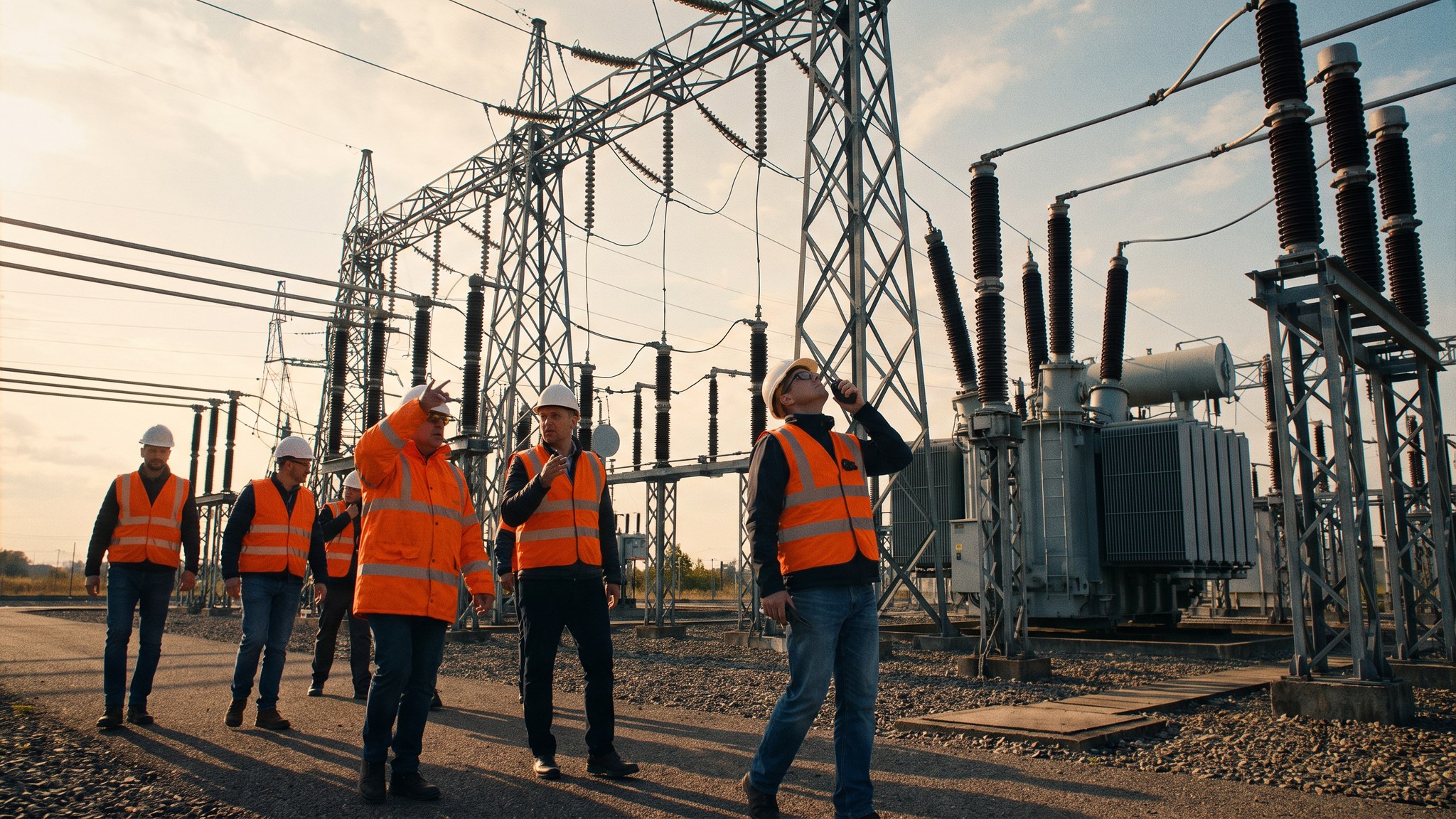
What is Pre-commissioning and system turnover?
Pre-commissioning is the bridge between building the plant and operating it. It is the work of proving, system by system, that what has been installed is complete, correct and ready to be brought into service: that every component is there, that it is installed as designed, that it has been inspected and tested, that its supports and settings are right, that it is clean, and that the records exist to show all of it. It is not commissioning, because nothing is being made to work yet. It is the disciplined closing out of construction, done in a form the commissioning team can accept.
The critical idea is that a power plant does not have a handover. It has a series of turnovers. The plant is divided into systems, and each system is completed, proved and formally transferred to the commissioning team on its own schedule. That is the real gearchange on the project, and it changes everything about how the site works. Areas that used to be construction sites become commissioning areas under the operator's control. Permit-to-work discipline replaces normal site supervision within them. Access is by permission rather than by right. Two organisations end up working within metres of each other under entirely different rules.
Projects that handle this well set the system boundaries early, build the completion documentation as they go and bring the commissioning team on site long before construction finishes. Projects that handle it badly leave documentation to the end, discover their system boundaries are ambiguous and find that the commissioning team cannot start because nothing can be cleanly separated from anything else. The commissioning team arriving early is not an overhead - it is what makes the sequence possible, because they define what a turnover package has to contain before the first one is assembled.
How does Pre-commissioning and system turnover work, step by step?
- 1
Step 1: Divide the plant into systems and fix the boundaries
The plant is broken down into systems that can be completed, isolated, tested and operated independently. Boundaries are drawn deliberately, usually at valves, at isolations or at defined interfaces, and they are marked on drawings that everybody works to. This is done early, because construction has to be planned and progressed against those systems rather than against areas. An ambiguous boundary is discovered at the worst moment, when the commissioning team needs to isolate something and finds it cannot be separated.
- 2
Step 2: Agree what a turnover package contains
The commissioning team, the operator and the contractor agree the content of a turnover package before the first one is produced: the inspection records, test certificates, weld and material records, calibration certificates, as-built drawings, punch list status and cleanliness confirmations that a system needs before it will be accepted. Agreeing this at the start avoids the most common failure on power projects, which is a system that is physically complete but cannot be accepted because the paperwork was never collected.
- 3
Step 3: Build the documentation as the work proceeds
Records are compiled as the work is done, not reconstructed afterwards. Every inspection, test, calibration and weld is recorded against its system at the time. Most sites run a completions database or register so that the status of every system is visible and the outstanding items are known. This discipline is what allows the first turnover to happen early, and it is the single strongest predictor of whether a project will commission on programme.
- 4
Step 4: Complete the physical checks system by system
For each system the team confirms that installation is complete and matches the design, that supports, hangers and spring settings are correct and released where required, that valves and instruments are the right ones in the right places and correctly oriented, that insulation and protection are complete, that labelling is in place, and that electrical connections and earthing are proved. These are unglamorous checks and there are thousands of them, which is why they are done progressively rather than in a final push.
- 5
Step 5: Clean, flush and prove the system is clean
Systems are cleaned and flushed so that construction debris does not reach the machinery. For most systems this is flushing, blowing through and internal inspection, all recorded formally before the system is closed. For the main steam pressure parts, cleaning is a different matter entirely: internal chemical cleaning and steam blowing are specialist operations carried out by the plant supplier and the commissioning team under the operator's permit-to-work system, with the area cleared and all other work stopped. They are planned as major events in the programme.
- 6
Step 6: Walk down the system jointly and agree the punch list
The contractor, the commissioning team and the operator walk the system down together against the design and record every outstanding item on a punch list, categorised by whether it prevents turnover, prevents operation or can be completed later. Joint walkdown is what makes the categorisation stick, because all three parties have seen the same thing. Items that prevent turnover are cleared before the package is submitted rather than argued about afterwards.
- 7
Step 7: Turn the system over and change the control regime
When the package is accepted the system passes to the commissioning team and the rules change. From that moment the system is under the operator's permit-to-work system, and any work on it - including remaining punch list items - is done only under a permit issued by the operator. Isolation, tagging and access control become the operator's responsibility. Boundaries between turned-over systems and live construction areas are marked physically on site, not just on drawings.
- 8
Step 8: Manage two organisations working side by side
For a long period the site runs two regimes at once, and the interface between them is a genuine safety risk. Most projects manage it with joint planning meetings, clear physical demarcation, shared briefing of both workforces, and a single co-ordinating authority for the interface. Everyone on site is briefed on what the boundaries mean and what to do at them. The habit that matters most is simple: nobody crosses into a turned-over system to do anything, however small, without a permit.
What are the benefits of Pre-commissioning and system turnover?
- Lets commissioning start on completed systems while construction continues elsewhere, shortening the programme
- Forces completion discipline system by system rather than leaving a mountain of work at the end
- Produces a documented record of the plant as built, which the operator needs for the whole plant life
- Gives the commissioning team a defined, clean starting point rather than a partly finished site
- Punch list categorisation agreed jointly prevents disputes about what has to be done when
- Establishes permit-to-work discipline progressively rather than all at once at the end
What are the limitations of Pre-commissioning and system turnover?
- Needs system boundaries and package content agreed very early, which many projects leave too late
- Documentation compiled retrospectively is slow, incomplete and frequently the cause of delay
- Two organisations working side by side under different rules is a persistent safety interface risk
- Access for outstanding work becomes slower and more constrained once systems are turned over
- Requires the commissioning team on site long before construction finishes, which is an early cost
- Poorly drawn boundaries can make a system impossible to isolate, blocking turnover entirely
What is Pre-commissioning and system turnover best suited for?
What plant does Pre-commissioning and system turnover need?
- Flushing, blowing and cleaning equipment with temporary pumps, filters and screens
- Temporary power, lighting and compressed air to support system testing
- Calibration and test equipment for instruments, electrical circuits and protection systems
- Completions database or register with site access for progressive record capture
- Physical demarcation equipment, hoarding, signage and tagging for turned-over systems
- Temporary services and access arrangements to support work under permit in live areas
How is Pre-commissioning and system turnover quality-checked?
- System boundaries defined and issued on marked drawings before construction planning is finalised
- Turnover package content agreed by contractor, commissioning team and operator before the first package
- Records captured against systems progressively, with status visible in a completions register
- Cleanliness and closure of each system recorded formally before it is submitted for turnover
- Joint walkdown completed and punch list categorised and agreed by all three parties
- Permit-to-work regime and physical demarcation in place before the first system is turned over
More commissioning & grid connection methods
Next method
Cold commissioning