Hot commissioning
The plant fired for the first time and brought up progressively, with every step planned, authorised and reversible.
Last updated 2026-09-07
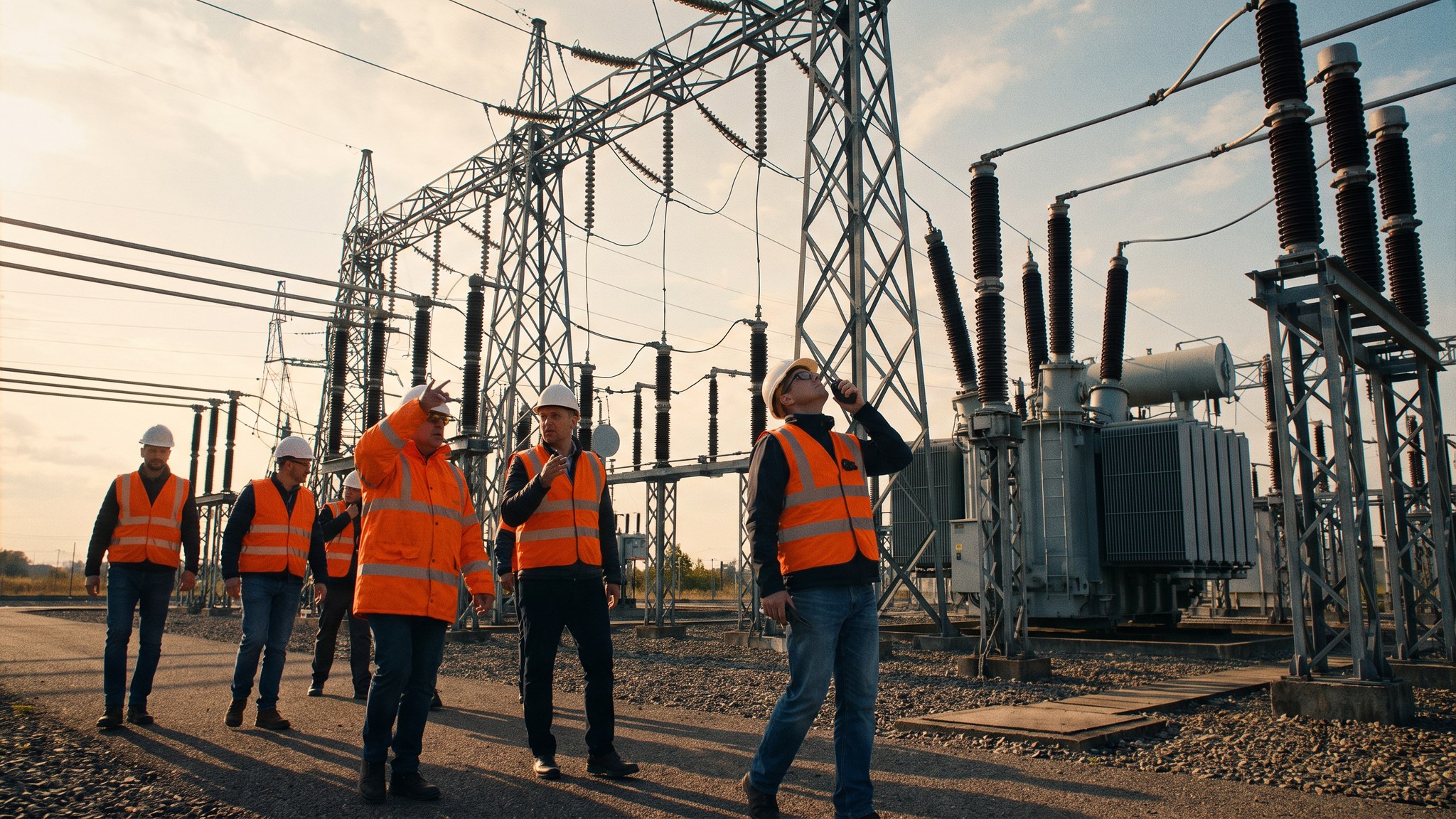
What is Hot commissioning?
Hot commissioning is the point at which the plant becomes a power station. Fuel is admitted, the plant is fired for the first time, and heat and pressure enter the systems that have so far only been proved cold. From there the plant is brought up progressively in planned stages, each one taking it a little further and each one followed by checks, adjustments and a decision on whether to continue. It is the most demanding and the most hazardous phase of the whole project, and it is run by the commissioning team and the operator, not by the construction organisation.
Everything about it is deliberate. First firing is a planned event with its own procedure, its own readiness review and its own clearance of the area. The plant is then held at each stage long enough to check behaviour, take readings, look for leaks, watch expansion and movement, and confirm that the protections are still doing what they should. Nothing is rushed and nothing is assumed. The rate at which the plant is brought up is set by the plant supplier and applied by the operator, and it is followed exactly - the reasons behind those limits are metallurgical and they are not negotiable on site.
The site is now a genuinely hazardous place. Steam at working condition, hot surfaces, fuel systems in service and energised electrical equipment are all present together, and any one of them can kill. Permit-to-work discipline governs every activity in every commissioned area. Access is restricted, exclusion zones are set around specific operations, and remaining construction work is either finished beforehand or done under permit with the plant in a defined state. The most important cultural change is that nobody does anything to a live system on their own initiative, however trivial it appears.
How does Hot commissioning work, step by step?
- 1
Step 1: Hold a formal readiness review before first firing
First firing does not happen because the plant looks ready. It happens after a formal review at which the commissioning team, the operator, the plant supplier and the contractor confirm that the necessary systems are turned over and proved, that protections and emergency systems are tested and available, that the outstanding item list contains nothing that prevents firing, that the procedures are approved and the personnel are trained and briefed, and that the area is clear. The review is minuted and the decision is recorded.
- 2
Step 2: Admit fuel and fire the plant under a controlled procedure
Fuel is admitted to the plant and the unit is fired for the first time by the commissioning team and the plant supplier under the operator's permit-to-work system, following an approved procedure with defined roles and defined abort criteria. The area is cleared of all personnel who are not part of the operation and other work in the vicinity is stopped. This is a specialist operation carried out by people qualified for it, and its detail belongs to the operator's procedures rather than to the construction method.
- 3
Step 3: Bring the plant up in planned stages
After first firing the plant is raised in defined stages set by the plant supplier, with hold points between them. Rates of change are limited to protect thick components from differential expansion, and those limits are applied exactly as issued. At each hold the team takes readings, checks behaviour against expectation and decides whether to proceed. The ability to stop and come back down is maintained throughout, and stopping is treated as a normal outcome rather than a failure.
- 4
Step 4: Watch expansion, movement and supports as things get hot
Pipework, casings and structures move as they heat, and this is the first time they ever have. Expansion is monitored at the points the designer identified, spring hangers are checked as they take up their hot positions, guides and anchors are watched, and clearances are confirmed. Anything restrained that should be free, or free that should be restrained, shows itself here. Hot walkdowns are carried out by trained personnel with the plant in a defined state, and findings are acted on before going further.
- 5
Step 5: Find and deal with hot leaks safely
Joints that were tight cold commonly weep once hot, and finding them is part of the process. Leaks are located from a safe position using the operator's procedures, never by approaching a suspect joint on a hot system. Anything requiring work is dealt with by taking the affected system to a safe state, isolating it under permit and then repairing it. The temptation to make a quick adjustment on a hot line is where people get seriously hurt, and it is designed out by the permit regime.
- 6
Step 6: Tune controls and prove protections under real conditions
Control loops that could only be roughly set cold are now tuned against real process behaviour, and the plant's response to load changes and disturbances is observed. Protections and trips are demonstrated under the conditions they are actually meant to act in, following planned tests with agreed criteria. Any setting is applied by the operator under their own change control. The operating team runs the plant during these tests wherever possible, which builds the familiarity they will need.
- 7
Step 7: Run the plant through its operating envelope
Once stable the plant is taken through its intended operating range, including starts, stops, load changes and the transitions between operating modes. Behaviour is recorded and compared with what the plant supplier predicted. This is where the practical characteristics of the machine become known - how quickly it responds, how it behaves during a start, where it runs comfortably and where it does not. That knowledge is captured for the operating team rather than left in the commissioning team's heads.
- 8
Step 8: Manage remaining construction work under permit
There is always work left, and it now has to be done in a live plant. Each item is assessed, planned and executed under the operator's permit system with the plant in a defined state, sometimes waiting for an outage. Construction personnel working in commissioned areas are inducted into the permit regime and escorted or supervised as the operator requires. Most projects find this work takes several times longer than the same work would have taken before turnover, and they plan for that rather than discovering it.
What are the benefits of Hot commissioning?
- Proves the plant under the conditions it will actually operate in, which nothing else can do
- Reveals expansion, movement and support behaviour at the first opportunity, under controlled conditions
- Allows control tuning and protection demonstration against real process behaviour
- Builds the operating team's familiarity with the plant before commercial operation
- Staged approach with hold points keeps every step reversible
- Produces a recorded baseline of plant behaviour for the operator to compare against in later years
What are the limitations of Hot commissioning?
- The most hazardous phase of the project, with steam, fuel and electrical energy all live together
- Remaining construction work becomes slow and expensive once it must be done under permit
- Rates of change set by the plant supplier limit how quickly the plant can be brought up
- Faults found here are far more disruptive and costly than the same faults found cold
- Requires experienced commissioning and operating personnel who are in limited supply
- Weather, fuel availability and network constraints can all interrupt the sequence
What is Hot commissioning best suited for?
What plant does Hot commissioning need?
- Temporary and permanent monitoring equipment for expansion, vibration and temperature observation
- Portable measurement and recording equipment for tuning and performance observation
- Permit-to-work, isolation and tagging systems administered by the operator
- Personal protective equipment appropriate to hot surfaces, steam and noise
- Communications systems linking field personnel with the control room at all times
- Emergency response, first aid and rescue arrangements suited to a live plant
How is Hot commissioning quality-checked?
- Formal readiness review completed, minuted and signed before first firing
- Approved procedures with defined roles and abort criteria in place for each major step
- Plant supplier's rates of change applied exactly as issued and recorded at each hold point
- Hot walkdowns carried out at defined stages, with expansion and support findings recorded and closed
- Protection and trip demonstrations completed under real conditions with agreed acceptance recorded
- All remaining construction work in commissioned areas carried out under the operator's permit system