Show-home & fast-track garden
A garden built to a sales deadline rather than for the person who will eventually live in it.
Last updated 2026-09-05
What is Show-home & fast-track garden?
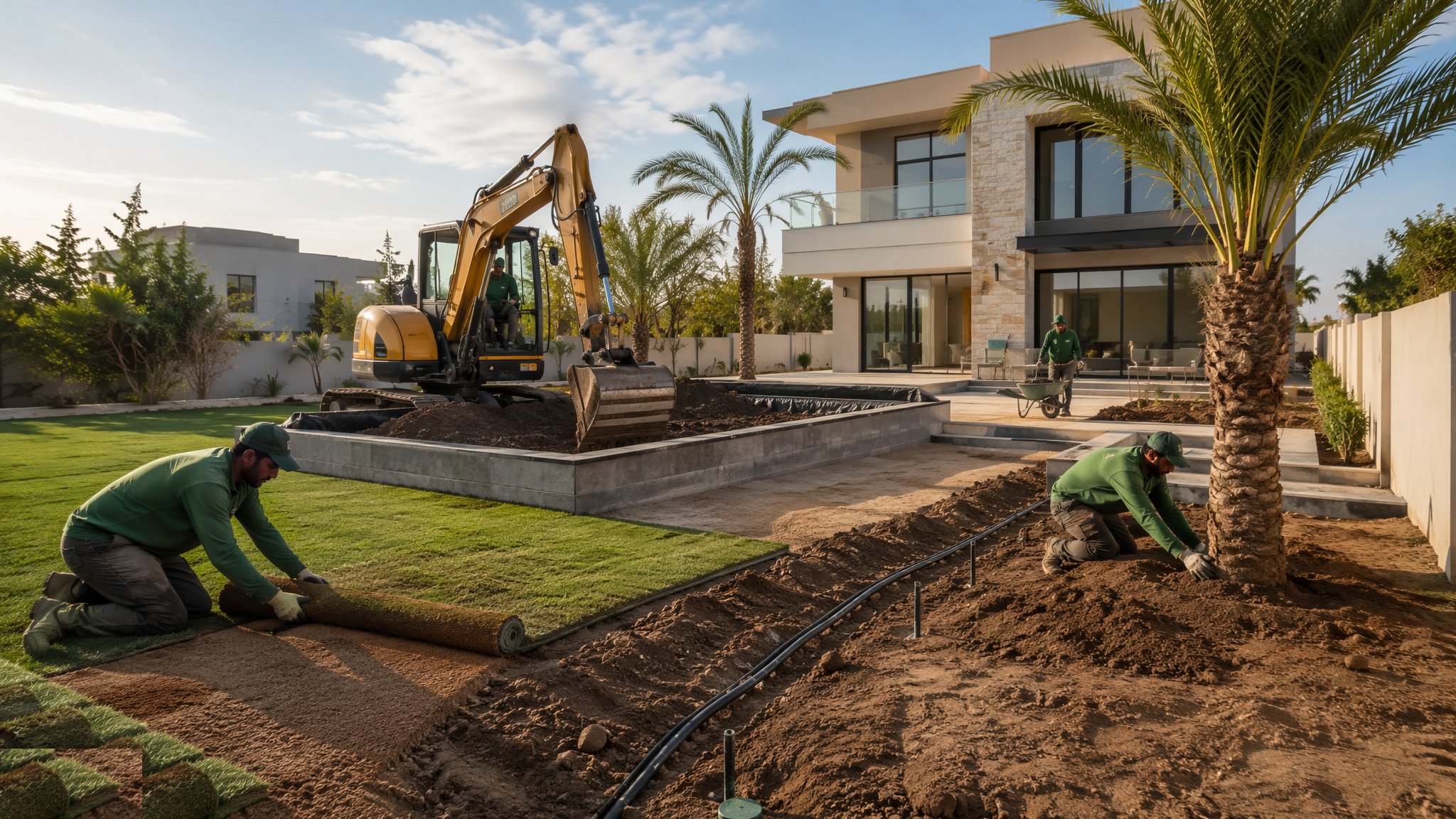
A show-home garden has a different client from every other garden on the development. It is not being built for an occupier - it is being built for a marketing suite opening date, and its job is to sell the houses behind it. That single fact changes the whole approach. The finished appearance has to be complete on the opening day, so nothing can be left to grow into place. Mature and semi-mature stock is used instead of young plants, rolled turf replaces seed, containerised planting fills the beds, and the effect that a normal garden reaches after three seasons has to be present in three weeks. Everything else about the project - programme, sequencing, cost per square metre, and what happens afterwards - follows from that requirement.
The programme is the defining constraint and it is usually compressed into the final fortnight before the suite opens, which is exactly the period when the house is still being snagged, the paving gang is still on site and the marketing team is walking the plot. Preparation has to be right first time because there is no float to redo it. In practice the disciplined approach is to bring the groundworks forward: get the levels, the drainage, the sub-bases and any ducting done early, while the plot is still a construction site and heavy plant is available, then leave the plot clean and wait. The soft landscaping itself is then a short, intense operation of soil, turf, planting and dressing that can be executed inside a few days. Where that discipline slips, the temptation is to skip the sub-base and put topsoil straight onto compacted subsoil, and the garden looks perfect for one summer and fails in the second.
The two risks worth naming are maintenance and expectation. Instant landscaping is under stress from the day it is installed: semi-mature trees have lost most of their root system, freshly laid turf has no root at all, and containerised stock planted out of season is living on whatever the pot gave it. All of that needs watering, feeding and attention that a normal garden would not need, and someone has to be contracted to provide it for as long as the suite is open. The second risk is that the show garden sets the standard the buyer thinks they are purchasing. If the plot gardens are seed lawns and whips while the show garden is instant turf and mature specimens, the difference needs to be stated plainly in the sales material rather than discovered at handover.
How does Show-home & fast-track garden work, step by step?
- 1
Step 1: Work backwards from the opening date
The programme is built from the marketing date in reverse: opening day, dressing and snagging, planting, turf, soil, sub-bases and paving, drainage and levels, and enrichment. Long-lead items - semi-mature trees, specimen stock, bespoke paving, and any structure such as a pergola or an outdoor kitchen - are identified first because they are the items that will not be there on the day if they are ordered late. Nursery availability of mature stock is genuinely limited and is not something that can be resolved with money at short notice. The turf order is placed against a delivery date, not against a week, because turf that sits on a pallet is turf that is dying.
- 2
Step 2: Do the underground work early, while it is still a building site
Levels, land drainage, soakaways, service ducts, irrigation sleeves, external power and lighting feeds, sub-bases and edge restraints are all installed well ahead of the final fortnight, while plant and access are available. That means accepting that the plot then sits looking unfinished for a period, which takes some explaining. It is still by a wide margin the cheapest way to run the job. Every item on that list becomes disproportionately expensive and disruptive once the paving is down and the sales team is on site.
- 3
Step 3: Prepare the soil properly even though nothing will show
The compaction under a show garden is worse than average because the plot has been the working area for the whole first phase of the development. Subsoil is ripped or broken up, buried construction debris is removed, and imported topsoil of a checked and approved quality is placed to the depth the specification calls for. This is the step that gets cut when the date slips, and it is the one that determines whether the garden survives its second year. A show garden that dies while the suite is still open costs far more than the preparation would have.
- 4
Step 4: Bring in mature and semi-mature stock
Instant effect comes from size. Semi-mature trees, large container-grown shrubs, established hedging in troughs or root-balled runs, and mature specimens are selected at the nursery where possible and delivered close to the planting date. Large stock is heavy and awkward and usually needs a telehandler or a crane and a proper access route planned in advance, which on a part-built development is not a given. Pits are dug generously, stock is planted at the depth it grew at, and trees are staked and tied because a semi-mature tree with a reduced root system has no natural anchorage. The larger the stock, the greater the transplant shock and the more aftercare it needs.
- 5
Step 5: Lay turf and install the finished surfaces
Turf goes down onto a prepared, graded and firmed soil surface with tight, staggered joints, and it is watered in immediately and heavily. It is laid as close to the opening date as the programme sensibly allows, but not so close that it has had no chance to knit at the edges. Paving, decking, edging and gravel are completed and cleaned, mowing edges are formed so the lawn meets hard surfaces cleanly, and beds are mulched to a consistent finish. The visual standard on a show garden is higher than on a plot garden because it will be photographed and walked over by every prospective buyer.
- 6
Step 6: Dress the garden for the photographs and the viewings
The final layer is presentation: seasonal colour in pots and beds, furniture, lighting, screening of anything unfinished beyond the boundary, and a clean, swept, snagged finish. Some of this is temporary by design and everybody involved knows it, but it should be honest - a bed filled with pot-grown seasonal colour that will be replaced in six weeks is a dressing decision, not a planting decision, and it belongs in the maintenance schedule rather than being quietly forgotten.
- 7
Step 7: Contract the aftercare before the suite opens
Instant landscaping cannot be left alone. New turf needs frequent watering until it roots, semi-mature trees need watering through their first two seasons and their ties checked as they move, containerised planting needs feeding, and seasonal dressing needs replacing. A maintenance contract covering watering, mowing, feeding, replacement of failures and tree tie inspection is put in place before the opening rather than negotiated after the first casualties. Where irrigation has been installed to support the instant effect, it is commissioned, programmed and included in the maintenance scope.
- 8
Step 8: Manage what the buyer thinks they are buying
The show garden is a marketing asset, and buyers reasonably assume it represents what they will receive. Where the plot gardens are specified differently - seed instead of turf, young stock instead of mature, no irrigation, a smaller paved area - that difference is set out clearly in the sales documentation and, ideally, on a plot-garden specification the buyer can read. Managing that expectation up front is far cheaper than dealing with it as a complaint at handover, and it is the single most common source of dissatisfaction that traces back to soft landscaping on a housing development.
What are the benefits of Show-home & fast-track garden?
- Delivers a complete, photographable garden on a fixed date, which is what the marketing programme actually needs
- Mature stock and turf remove the wait for establishment entirely
- Concentrated, short-duration works minimise the time the plot is disrupted once the suite is open
- Sets the visual standard for the whole development and supports sales values
- Bringing groundworks forward while plant is still on site is cheaper than doing them later
- Any shortcut is visible early, because the garden is under constant scrutiny from viewers
What are the limitations of Show-home & fast-track garden?
- Cost per square metre is well above a conventional plot garden, driven by stock size and by handling
- Mature stock suffers transplant shock and carries a real risk of failure in the first two seasons
- Instant landscaping depends on committed, funded aftercare - it will not look after itself
- The compressed programme creates constant pressure to skip preparation that will not be seen
- Planting is often carried out outside the ideal season because the date is fixed
- Sets a buyer expectation that the plot gardens will not meet unless the difference is stated clearly
What is Show-home & fast-track garden best suited for?
What plant does Show-home & fast-track garden need?
- Telehandler or crane for semi-mature trees and large containerised stock
- Mini excavator and tracked dumper for pits, soil movement and debris removal
- Plate compactor and small roller for sub-bases and edge restraints
- Rotavator and power rake for rapid seedbed and turf bed preparation
- Water bowser, hose reels and temporary standpipe supply for establishment watering
- Ground protection boards and sheeting to move heavy stock across finished surfaces without damage
How is Show-home & fast-track garden quality-checked?
- Programme worked back from the opening date with long-lead stock and turf delivery dates confirmed in writing
- Groundworks, drainage, ducting and sub-bases signed off before the final fortnight begins
- Topsoil quality approved and depth verified even under the compressed programme
- Semi-mature stock inspected at the nursery or on delivery for root condition, and staking and tying checked after planting
- Turf laid within the supplier's window, joints tight and staggered, watered in on the day it is laid
- Maintenance and watering contract in place, with responsibilities and frequencies agreed, before the suite opens