Ground improvement and engineered working platform
Treating the ground and building the surface the heavy erection cranes will stand on - on these projects a major work in its own right.
Last updated 2026-09-06
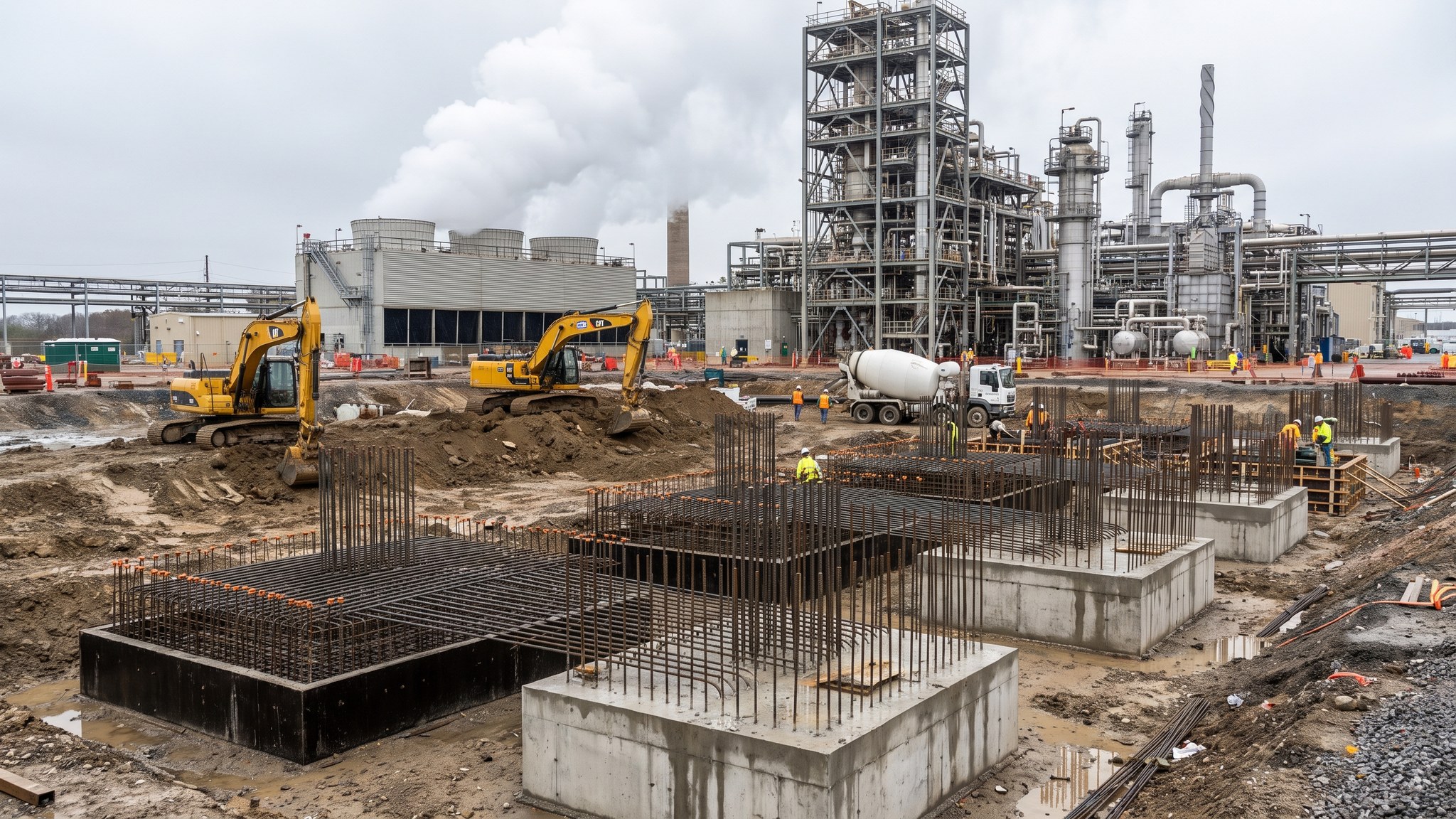
What is Ground improvement and engineered working platform?
On an ordinary project the working platform is a layer of stone that lets the rigs move about. On a capture plant it is one of the largest and most important pieces of temporary works on the site, because the cranes that erect the columns and set the modules are among the heaviest mobile plant used in construction, and they will be standing on reclaimed or filled ground to do it. The platform is therefore designed - by an engineer, against the actual crane and the actual loads it will impose - and the ground beneath it is often improved first so that the platform can work at all. On most projects the crane stand areas, the module transport routes and the laydown areas are drawn, designed and built as a single engineered system before any heavy lift is contemplated.
Ground improvement here means treating the weak ground so that it will support the platform and the loads above it without unacceptable settlement. Which technique the designer chooses follows the ground: densifying loose granular fill, reinforcing soft ground with columns or inclusions, preloading and surcharging where time allows, or simply excavating and replacing where the weak layer is shallow enough to make that sensible. The choice belongs to the geotechnical designer and the specialist contractor, and it is made from the site investigation rather than from a preference. What is consistent across these projects is scale: the treated area is large, it is programmed early, and it has to be finished and verified before the erection campaign can start.
The platform above the treated ground is a structure. It is normally a designed thickness of well-graded granular material, frequently over a geosynthetic layer, laid on a proven formation, with designed falls, drainage, ramps and stand-offs from open excavations. It is certified in writing before heavy plant tracks on to it, inspected while the works run, and repaired and re-certified when traffic damages it - which on a plant site with continuous heavy transport it will. The failures that matter in this trade are not platform failures on day one. They are failures on a platform that was adequate when it was built, then rutted, ponded and degraded through a wet month while everybody looked at the crane instead of the ground under it.
How does Ground improvement and engineered working platform work, step by step?
- 1
Step 1: Establish the loads the ground actually has to carry
The platform is designed against the plant that will use it, so the design starts by collecting that information: the crane configurations proposed for the column and module lifts, the outrigger or track loads they impose, the transport arrangements for the modules, and the laydown loads. On most projects this comes from the appointed person and the heavy lift contractor, and it arrives long before the crane does. A platform designed against an assumed crane and then used by a bigger one is the classic route to a very serious incident.
- 2
Step 2: Read the ground and choose the treatment
The geotechnical designer assesses the fill, its variability, the water level and the depth to a competent stratum, then selects the improvement approach and the extent of it. Techniques that densify loose granular fill, that reinforce soft ground with columns, that preload the ground where the programme allows waiting, or that replace shallow weak material are all in the shortlist, and the ground decides. The designer also decides how the treated ground will be verified, because on this package proving it worked is as important as doing it.
- 3
Step 3: Trial the treatment before committing to it
A trial area is treated at the design layout and tested. The trial answers the questions the calculation cannot: whether the plant reaches the depths intended, whether obstructions in the fill interfere, how the ground actually responds, and how long an area takes. Production parameters and acceptance criteria come out of the trial and are written down. On a site of this size a trial that fails is a cheap lesson, and one that is skipped is discovered under a crane.
- 4
Step 4: Treat the ground in the sequence the programme needs
Production treatment proceeds area by area, following the erection sequence rather than the most convenient plant movement, so that the areas needed first are ready first. Records are kept per treatment position and reviewed daily. Anomalies - positions that took far more or far less than their neighbours, or that refused short - are reported to the designer while the plant is still on that area, because returning to it later is expensive.
- 5
Step 5: Verify the treated ground against the acceptance criteria
Verification is agreed before mobilisation and carried out as the work proceeds: testing before and after treatment to show the change in the ground, and load testing to demonstrate the performance the design assumed. Results are assessed with the designer against the criteria, and shortfalls are re-treated rather than argued about. The verification record is what allows the platform above to be signed off with confidence.
- 6
Step 6: Build the platform to the design
The formation is proved, the geosynthetic layer is laid where the design calls for it, and the granular material is placed and compacted in layers to the designed thickness with the specified falls and drainage. Ramps are built at gradients the loaded plant can climb, and stand-offs from open excavations, trenches and pits are set by the designer and marked physically on the ground. Material is tested on delivery, because a platform is only as good as the stone in it and fines in a platform material destroy its performance in the wet.
- 7
Step 7: Certify the platform in writing before plant tracks on
The completed platform is inspected, tested and certified in writing against the design and the plant it was designed for. The certificate names the plant configurations permitted and the limits that apply, and it is issued to the people who will actually use it. On most projects a copy of the permitted configurations sits with the appointed person and with the crane supervisor, because a certificate filed in an office restrains nobody.
- 8
Step 8: Maintain, re-inspect and re-certify through the campaign
The platform is inspected on a set frequency and after heavy rain, after any unusually heavy operation, and whenever damage is reported. Ruts are made good, ponding is drained, and damaged areas are rebuilt and re-certified before they are used again. Where the crane configuration changes, the platform is re-assessed against the new loads. The erection campaign runs for months and the platform is in continuous heavy use throughout it, so maintenance is a planned activity with a named owner rather than something done when somebody notices.
What are the benefits of Ground improvement and engineered working platform?
- Makes very heavy crane and transport operations possible on ground that could not otherwise support them
- Reduces settlement across large areas, protecting both the temporary works and the permanent structures
- Treats and de-risks the whole plot early, before the site fills with equipment and access disappears
- Provides a single engineered surface serving piling, erection, transport and laydown
- Verification testing gives direct measured evidence that the ground performs as assumed
- Often cheaper across a large area than piling every temporary load case
What are the limitations of Ground improvement and engineered working platform?
- A major cost and programme item in its own right, frequently underestimated at tender
- Obstructions in old industrial fill interfere with treatment and are never fully known in advance
- Some techniques generate noise and vibration that neighbours or an operating works nearby will not accept
- Treated ground and finished platforms degrade under continuous heavy traffic and weather, so maintenance never stops
- The design is tied to specific plant configurations, so any change of crane requires reassessment
- Verification takes time, and an area cannot be released until it has been done
What is Ground improvement and engineered working platform best suited for?
What plant does Ground improvement and engineered working platform need?
- Ground improvement plant appropriate to the technique selected by the designer
- Large excavators and dump trucks for excavate-and-replace and for obstruction removal
- Dozers, graders and rollers for placing and compacting the platform in layers
- Geosynthetic handling equipment and material testing facilities
- Testing equipment for the verification regime, including load testing arrangements
- Survey equipment for levels, falls and settlement monitoring across the treated area
How is Ground improvement and engineered working platform quality-checked?
- Crane and transport loading information obtained from the appointed person and used as the design basis
- Trial treatment completed and production parameters set from the results
- Treatment records kept per position and reviewed daily, with anomalies reported while plant is still on the area
- Before-and-after testing and load testing completed to the agreed regime and assessed against acceptance criteria
- Platform material tested on delivery and compaction checked layer by layer
- Written platform certificate naming the permitted plant configurations, with scheduled re-inspection, repair and re-certification through the campaign