Energisation by the distribution network operator
The moment the supply is made live - on the network operator's programme, not the contractor's, and the usual reason an opening slips.
Last updated 2026-09-06
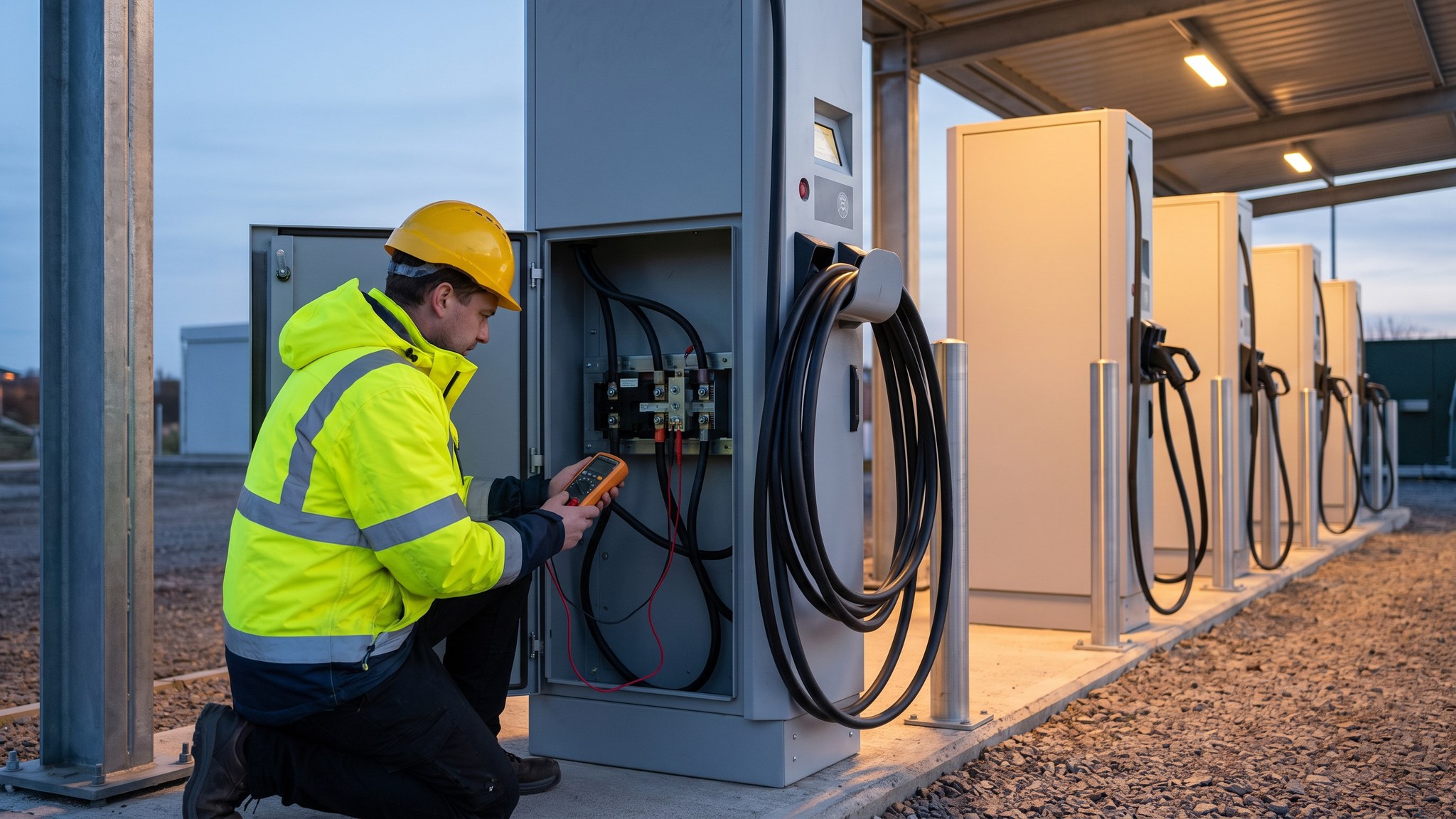
What is Energisation by the distribution network operator?
Energisation is the formal step at which the network operator makes the new supply live. Everything before it is preparation: the connection application, the offer and its acceptance, the network reinforcement if any is needed, the substation or connection point, the contractor's cabling up to the agreed point, the operator's own works and the operator's inspection. Everything after it is commissioning and opening. It is a single, unambiguous event, and on the great majority of charging projects it is the event the whole programme turns on.
What makes it different from every other item on the programme is that the contractor does not control it. The network operator works to its own procedures, its own resource planning and its own outage windows, and it will not energise until it is satisfied that the connection meets its requirements and that the works on its side are complete. On many projects the supply capacity requested is large enough that the operator has to reinforce the network before the connection can be made at all, and reinforcement is measured in months rather than weeks. The dates are the operator's to set. A contractor can prepare well, respond quickly and keep the relationship in good order, and doing all three shortens the process considerably - but none of it converts into control.
That is why energisation is the single most common cause of a late opening. A project can have every unit installed, every bay surfaced, every sign fixed and every marketing date committed, and still stand dark because the supply is not live. The defence is entirely front-loaded: apply early, before the design is finished if necessary, treat the connection programme as the spine that the construction programme hangs from rather than the other way round, resolve wayleaves and land access as soon as they appear, and keep the operator informed of anything on site that changes what was applied for. Where the client cannot wait, an interim arrangement at reduced capacity is sometimes possible so that part of the site can open, but that is a design decision with cost and disruption attached and it is taken early or not at all.
How does Energisation by the distribution network operator work, step by step?
- 1
Step 1: Apply for the connection at the earliest possible point
The connection application goes in as soon as the load and the site are known well enough to describe, which is normally long before the design is complete. The application sets out the capacity required, the location, the intended arrangement and the programme. Early application is the single most effective thing anyone on the project can do, because the operator's assessment and any reinforcement it identifies both take time that cannot be recovered later. Applications made after the construction programme is fixed are the origin of most late openings.
- 2
Step 2: Assess the offer and accept it
The operator responds with an offer setting out what it will provide, what it will cost, what work falls on each side and what the indicative timescale is. The client and the designer assess it against the scheme, and where it is unaffordable or too slow the options are reconsidered - a reduced capacity, a phased connection, a different point of connection or a different site arrangement. Acceptance is a commercial decision with a deadline attached, and the position in the operator's programme normally follows acceptance rather than application, so delay in accepting costs the same as delay in applying.
- 3
Step 3: Resolve land, access and wayleaves
The route the operator needs for its cable may cross land the client does not control, and the connection point may need land the client has to provide. Wayleaves, easements, licences and access agreements are pursued as soon as the route is known, because they are legal processes with their own timescales and they sit outside the construction programme entirely. Third party land is a common and badly underestimated source of delay on charging projects.
- 4
Step 4: Carry out the network operator's works and any reinforcement
The operator carries out its own works to the agreed point of connection, which may include reinforcement upstream, new cabling, a new connection point or a substation. This work is the operator's, carried out by its own people or its approved contractors, and the site team's role is to provide access, to keep the working area available and to coordinate around it. Where reinforcement is required, this stage dominates the programme and the site team plans construction around the dates it is given.
- 5
Step 5: Complete and present the customer side
The contractor completes the installation up to the agreed demarcation point, and presents it with the documentation the operator requires. Everything on the customer side has to be finished, safe and secure before energisation - enclosures closed, compounds locked, protection in place, and nobody working on the installation. Presenting an incomplete installation for energisation wastes an operator visit and the next available date may be weeks away, which is why the pre-energisation check is treated seriously.
- 6
Step 6: Pass the operator's inspection and witnessing
The operator inspects the connection and satisfies itself that its requirements are met before it will proceed. What it looks at, and what evidence it requires, is set out in its own procedures and is confirmed with it in advance rather than assumed. Any observation raised is closed out and re-presented. This is work for competent qualified people on both sides, carried out under the operator's regime.
- 7
Step 7: Energise and confirm the live supply
On the agreed date the operator energises the connection. Access to the area is controlled, the site team is briefed, and from that moment the installation is live and is treated as live by everyone on site. Whether an outage of the existing site supply is needed, and how long it lasts, is agreed with the operator and with the site occupier well in advance, because on a trading site that outage may be the most disruptive hour of the whole project.
- 8
Step 8: Record the connection and hand the details to the operator of the site
The connection details, the agreed capacity, the metering arrangement, the demarcation point and the operator's reference information are recorded and passed to whoever will operate the site. That information is what any future alteration, fault or capacity increase will start from, and it is easily lost in the rush to open. The energisation date itself is recorded, because the commissioning and opening sequence all follows from it.
What are the benefits of Energisation by the distribution network operator?
- A single unambiguous milestone that the rest of the programme can be planned around
- The operator's inspection is an independent check on the connection before anything goes live
- Early application often reveals capacity constraints while the scheme can still be changed
- A formal demarcation point makes responsibilities clear for the life of the installation
- Reinforcement carried out now commonly leaves headroom for later expansion of the site
- The recorded connection details give the site operator a firm basis for any future change
What are the limitations of Energisation by the distribution network operator?
- The date belongs to the network operator and cannot be bought or compressed by the contractor
- Reinforcement, where required, is measured in months and dominates the programme
- Wayleaves and third party land access run to their own legal timescales, outside the works
- An incomplete or failed presentation wastes a visit and the next date may be far away
- The capacity offered may be less than the scheme wanted, forcing a redesign late in the day
- An outage to energise can be highly disruptive on a site that trades throughout
What is Energisation by the distribution network operator best suited for?
What plant does Energisation by the distribution network operator need?
- Provision of a safe, clear and accessible working area for the network operator's teams
- Excavation, ducting and reinstatement plant for the customer-side route to the connection point
- Temporary supply or generation where the site must keep trading through an outage
- Security fencing and locking arrangements to keep a completed installation secure before energisation
- Traffic management and access control for the operator's working area and for the energisation itself
- Craneage or handling equipment where a connection point or substation enclosure has to be set
How is Energisation by the distribution network operator quality-checked?
- Connection application, offer and acceptance dates recorded and tracked as programme items
- Wayleave and land access status tracked separately from the construction programme
- Customer-side installation confirmed complete, secure and unattended before presentation
- Operator requirements for inspection confirmed in advance and the required evidence assembled
- Any operator observations logged, closed out and re-presented with a record
- Connection details, capacity, metering arrangement and demarcation point recorded and handed over
More commissioning & energisation methods
Next method
Electrical commissioning and functional testing