Landfall and shore crossing
Bringing the cable ashore, almost always trenchless to avoid opening a beach or dune, tightly consented and environmentally sensitive.
Last updated 2026-09-07
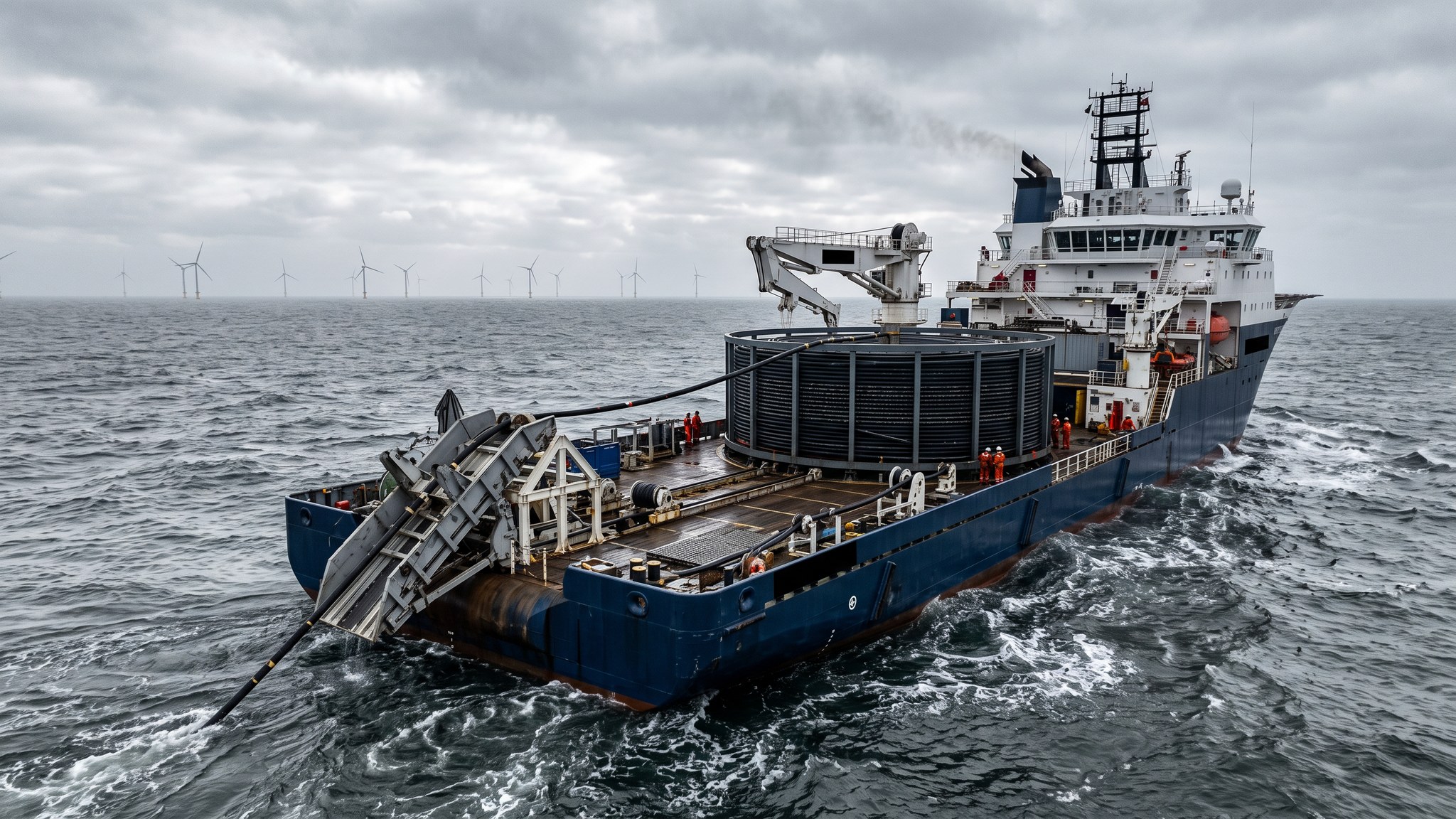
What is Landfall and shore crossing?
The landfall is the short length where the marine export cable comes ashore and becomes a land cable. It is a small fraction of the route and a large fraction of the risk. The coastline is where the most sensitive habitat usually sits, where the public are most visible, where the ground changes most quickly and where the marine and onshore contracts meet. It is also the one part of the export route that cannot be moved once consented, because a landfall position is agreed with landowners, regulators and the local community long before construction, and moving it means starting a good deal of that work again.
On almost every project the crossing is made without opening the beach. A trenchless technique is used to install a duct from a compound set back behind the dunes or the sea wall out to an exit point below the low water mark, and the cable is then pulled through that duct. The reason is environmental and social as much as technical. Beaches and dunes are frequently designated habitat, they are used by the public, and an open trench across them would be visible, disruptive and in many places simply would not be consented. Trenchless installation leaves the surface untouched between the two ends and confines the visible works to a compound behind the coast.
The classic programme risk is that the trenchless drive is a single operation that either works or does not. It is carried out through ground that has been investigated but never seen, and coastal ground is often the most variable on the whole route. A drive that meets an obstruction, loses returns or deviates off line can be abandoned and repeated on a fresh alignment, but that costs weeks and it happens at the point where the marine campaign and the onshore campaign both depend on the result. Projects therefore invest heavily in ground investigation at the landfall, plan contingency alignments in advance, and build the ducts well ahead of the cable arriving so that the marine vessel never waits on the shore.
How does Landfall and shore crossing work, step by step?
- 1
Step 1: Select and consent the landfall
Landfall selection weighs ground conditions, designated habitat, coastal processes, land ownership, access for construction traffic, the route inland to the onshore substation and the acceptability of the works to the people who live there. The chosen point is consented with conditions attached, and those conditions commonly restrict when work can happen, how noisy it can be, how the compound is to be screened and reinstated and what monitoring is required. The designer works within the consent rather than against it. Because the position is fixed by consent, everything else at the landfall is designed around it.
- 2
Step 2: Investigate the ground on the alignment
Ground investigation at a landfall is disproportionate to its length, because the whole operation turns on what the drive will meet. Boreholes are taken on the alignment, on land and where possible offshore near the exit point, and the results are used to select the trenchless technique and to set the alignment and the profile. Coastal ground can change from soft material to rock over a short distance, and buried obstructions and old defences are common. Where the investigation leaves doubt, a contingency alignment is investigated as well so that a second attempt can be started without a fresh programme of survey.
- 3
Step 3: Establish the compound and the access
A working compound is set up behind the coast, sized for the drilling or thrusting equipment, the fluid handling, the duct strings and the welfare and storage the crew need. Access roads are formed or improved, drainage and pollution control are put in, and the compound is fenced and screened to the standard the consent requires. Ecological protection measures are put in place before any ground is disturbed, and pre-construction surveys are carried out where the consent requires them. On many landfalls the compound layout is itself a consented drawing.
- 4
Step 4: Drive the trenchless crossing
The trenchless operation installs a bore from the compound, beneath the beach and the dune or defence, to an exit point on the seabed offshore. The technique varies with the ground and the distance, and the choice belongs to the designer and the specialist contractor. Alignment and progress are monitored continuously, and the fluid used to support the bore and carry cuttings is contained and recycled, with monitoring in place to detect any escape at the surface or on the seabed. Drives are worked continuously once started, because stopping part way is more difficult than going on.
- 5
Step 5: Install and prove the ducts
Once the bore is complete a duct is installed through it, usually assembled and pressure tested as a continuous string before it goes in. The duct is proved after installation to confirm it is clear, round and undamaged along its length, and it is then sealed and left with a pull rope in it ready for the cable. Ducts are almost always installed well before the marine campaign, sometimes a whole season ahead, so that a failed drive can be repeated without holding up the vessel. Spare ducts are commonly installed at the same time for future circuits or as contingency.
- 6
Step 6: Locate and prepare the seaward exit
The exit point is surveyed and the duct end is located and made ready for the cable to be pulled in. Depending on the design the exit may need excavation, a temporary support frame or protection placed around it, and divers or a remotely operated vehicle work at the exit to confirm its condition. A pull wire is run from the exit back through the duct to the compound. This work has to be complete and verified before the cable vessel is called in, because vessel time waiting at a landfall is among the most expensive standing time on the project.
- 7
Step 7: Pull the cable ashore
The lay vessel comes as close inshore as depth allows and the cable end is floated or carried to the exit point and connected to the pull wire. A winch in the compound then pulls the cable through the duct to shore while the vessel pays out and the cable is supported and monitored the whole way. It is a single continuous operation planned around tide and weather, and it is not started unless the window is good enough to finish it. Once the end is ashore it is secured, sealed and the surplus is arranged in the compound ready for jointing.
- 8
Step 8: Joint to the land cable and reinstate
The marine cable is jointed to the onshore cable in a transition joint bay, a buried chamber in the compound where the two systems meet. The jointing is done by specialist crews in controlled conditions and is the interface where the marine scope hands over to the onshore scope. Once the joints are made and tested the bay is backfilled and the compound is reinstated to the standard the consent requires, which on a dune or beach frontage commonly means restoring profiles, replanting and monitoring the result for several seasons. The completed landfall leaves nothing visible except access covers and marker posts.
What are the benefits of Landfall and shore crossing?
- Leaves the beach, dune or sea defence undisturbed, which is usually the only way the crossing can be consented
- Confines visible works to a compound set back from the coast, limiting disruption to the public
- Ducts can be installed a season ahead, decoupling the shore risk from the marine campaign
- Spare ducts installed in the same operation serve future circuits at very little extra cost
- Gives a defined and durable interface between the marine and onshore contracts
- The buried transition joint bay leaves a permanent, accessible and recorded connection point
What are the limitations of Landfall and shore crossing?
- A single drive that fails costs weeks and there is limited room to move the alignment within the consent
- Coastal ground is highly variable and expensive to investigate to the confidence the operation needs
- Consent conditions commonly restrict working seasons, hours and methods, compressing the available programme
- The compound needs land, access and reinstatement, all of which are negotiated with landowners and the community
- Marine and onshore contractors meet at this point, so responsibility at the interface has to be defined carefully
- Coastal processes can change the exit conditions between survey and installation
What is Landfall and shore crossing best suited for?
What plant does Landfall and shore crossing need?
- Trenchless drilling or thrusting spread with fluid mixing, recycling and containment equipment
- Alignment monitoring and steering equipment for the drive
- Duct handling, welding or jointing and pressure testing equipment for the duct strings
- Heavy pulling winch in the compound, with load monitoring and a pull wire spread
- Dive or remotely operated vehicle spread at the seaward exit
- Compound establishment plant, environmental protection measures and reinstatement equipment
How is Landfall and shore crossing quality-checked?
- Ground investigation results reviewed and the alignment and technique confirmed before mobilisation
- Continuous alignment and progress monitoring through the drive, with recorded deviation from the design line
- Duct proving after installation to confirm it is clear and undamaged along its full length
- Environmental monitoring for fluid loss at the surface and offshore, with a response plan in place
- Pull-in monitored and recorded continuously, with the operation stopped and assessed if it departs from plan
- Joint bay records, testing and as-built survey filed, with reinstatement inspected against the consent conditions