Sheet pile walls
Interlocking steel driven along the boundary - retention at driving speed.
Last updated 2026-08-22
What is Sheet pile walls?
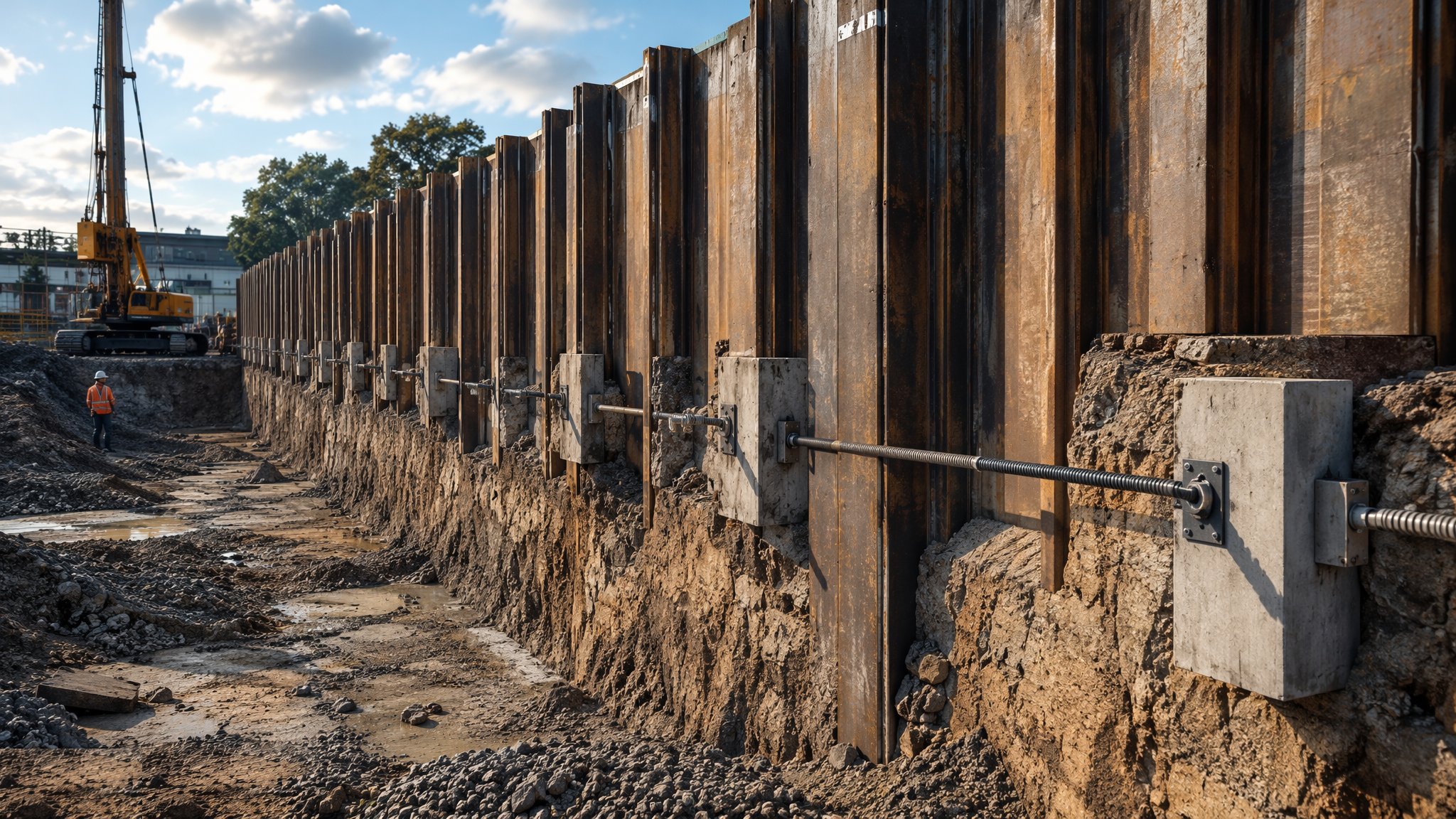
Sheet pile walls bring driven piling to the retaining problem: interlocking steel sections vibrated, pressed or hammered into the ground along the basement boundary form a continuous wall that holds back soil and throttles water, and can be standing weeks before a bored-pile wall would be. For single basements, temporary cofferdams and digs tight against boundaries in soft ground, sheets are frequently the economical answer - and on temporary works they leave with the job, extracted for reuse.
As a basement wall, sheets sit between the contiguous and secant options in both cost and watertightness. The clutches pass water in volume under a head, so permanent applications get clutch sealants, welded seals or an internal drained cavity, and the corrosion assessment - section loss over the design life, worst in the splash and low-water zones - is designed in honestly. The wall's stiffness is modest, so propping or the permanent slabs pick up the load early in the dig sequence.
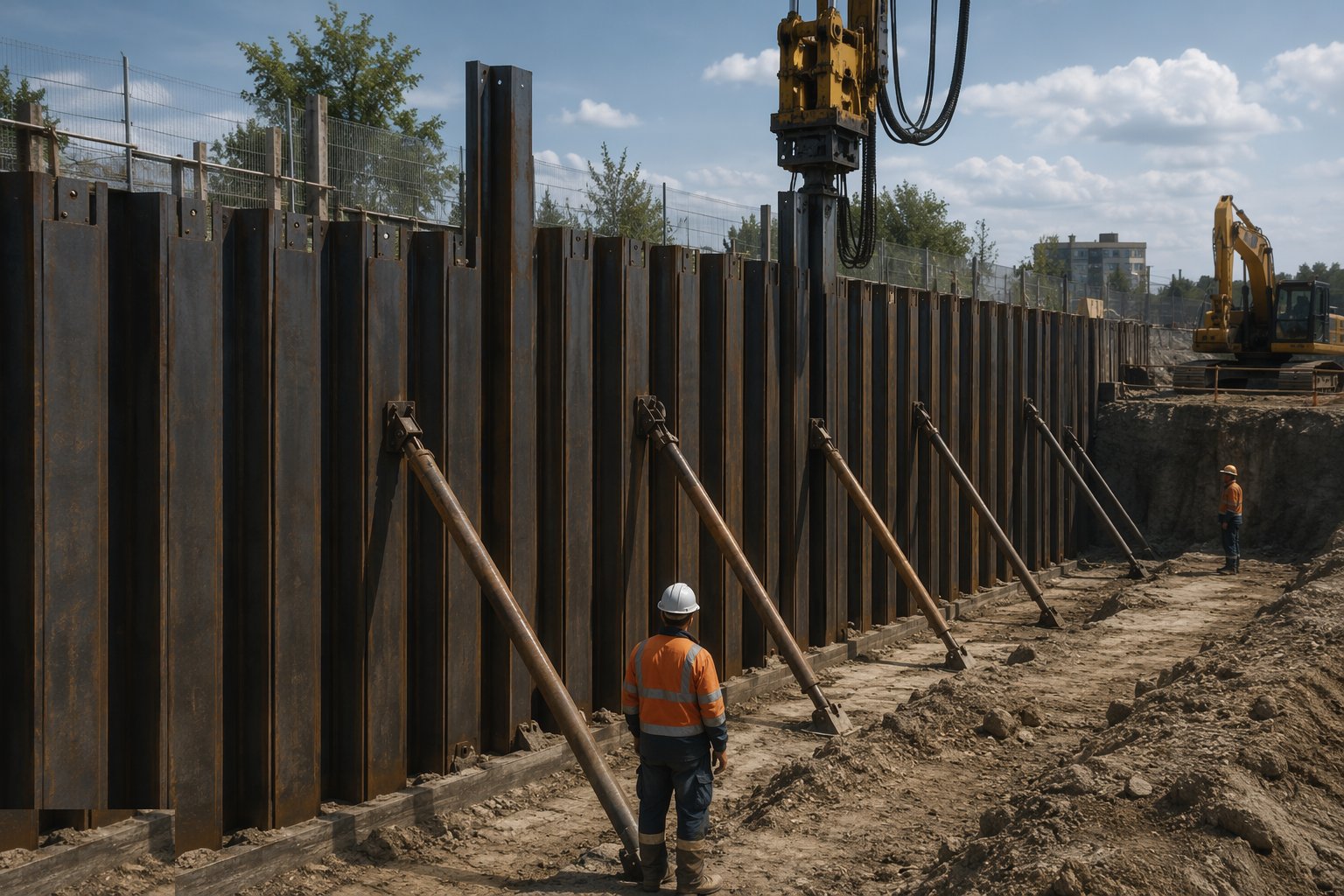
Installation is the craft. Sheets must be driven plumb in both planes within a guide frame, in panels, with the clutches interlocked from the first pitch - a run that develops a lean or a spread will jam, split clutches or refuse outright. Obstructions in made ground are the daily enemy: they split clutches and deflect sheets, and every split clutch is a soil-and-water leak written into the wall. The driving records, the plumb surveys and the seepage map through the dig are the quality file.
Process storyboard
Step 1 of 5 - slide through the snapshots.
STEP 1
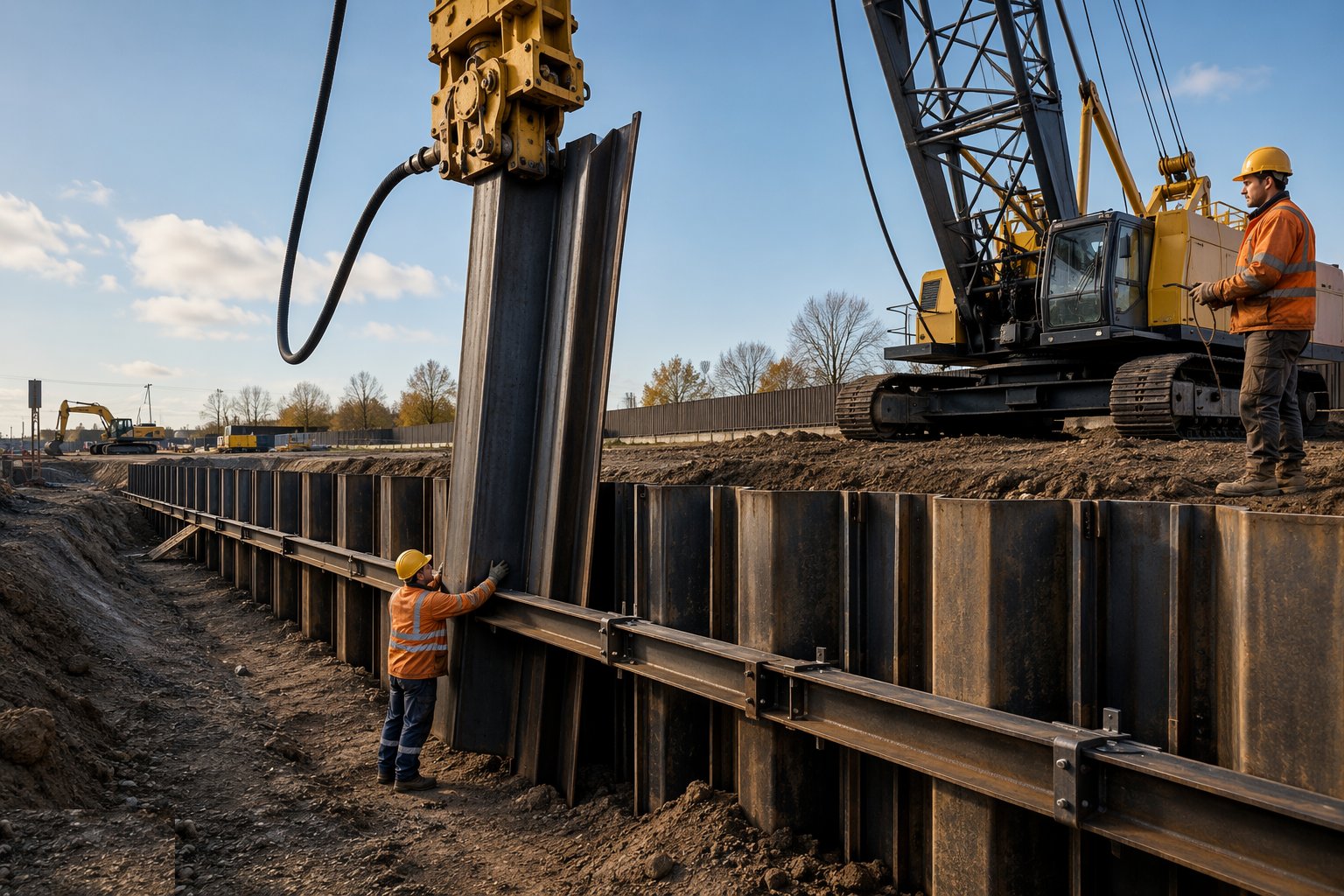
Set the guide frame and pitch the panel
Guide walings fix the wall line; the first sheets are pitched plumb in both planes with the clutches checked clean and undamaged on receipt.
How does Sheet pile walls work, step by step?
- 1
Step 1: Set the guide frame and pitch the panel
Guide walings fix the wall line; the first sheets are pitched plumb in both planes with the clutches checked clean and undamaged on receipt. Clutch sealant is applied before driving where the watertightness design requires it - it cannot be retrofitted underground.
- 2
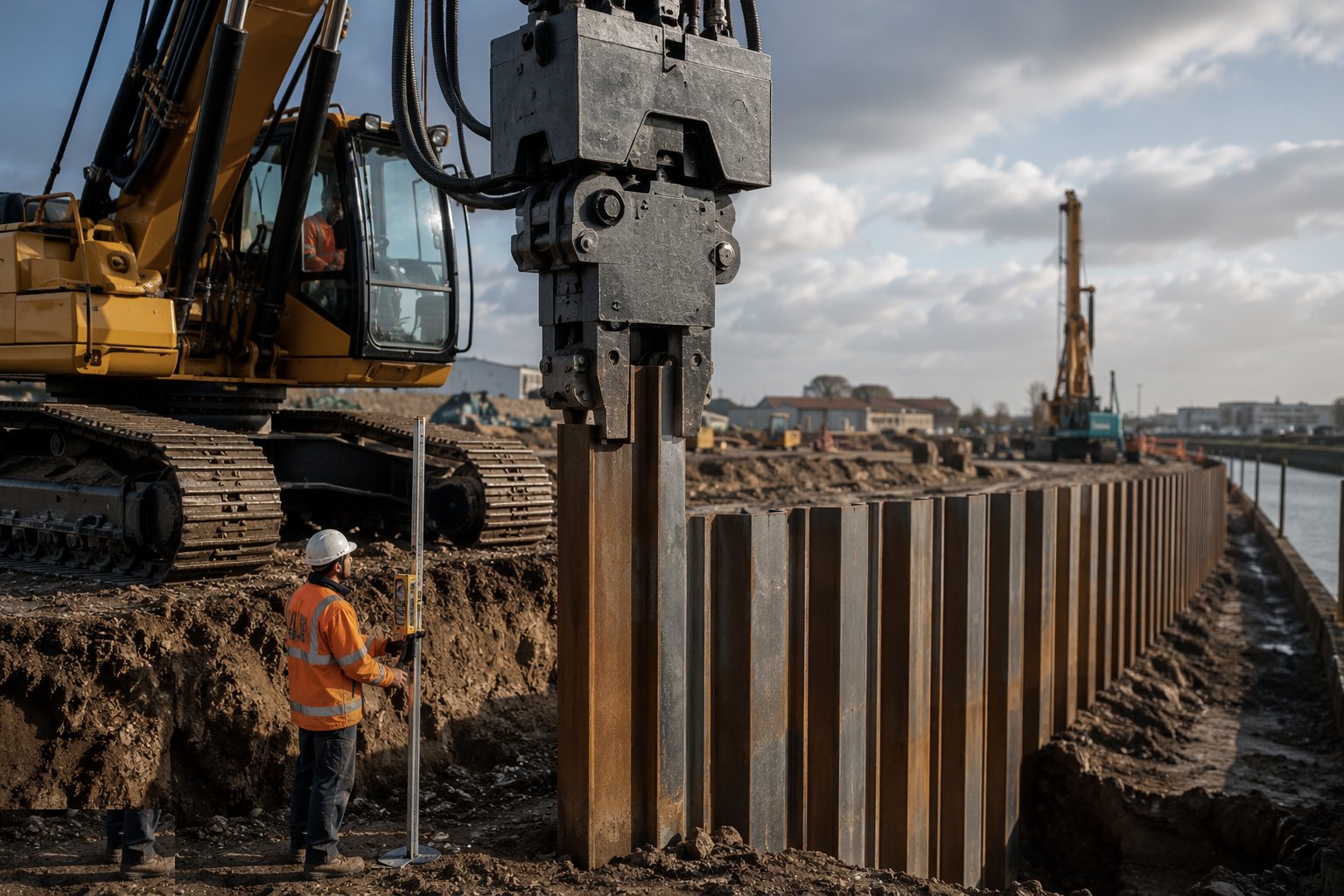
Step 2: Drive in panels with continuous plumb control
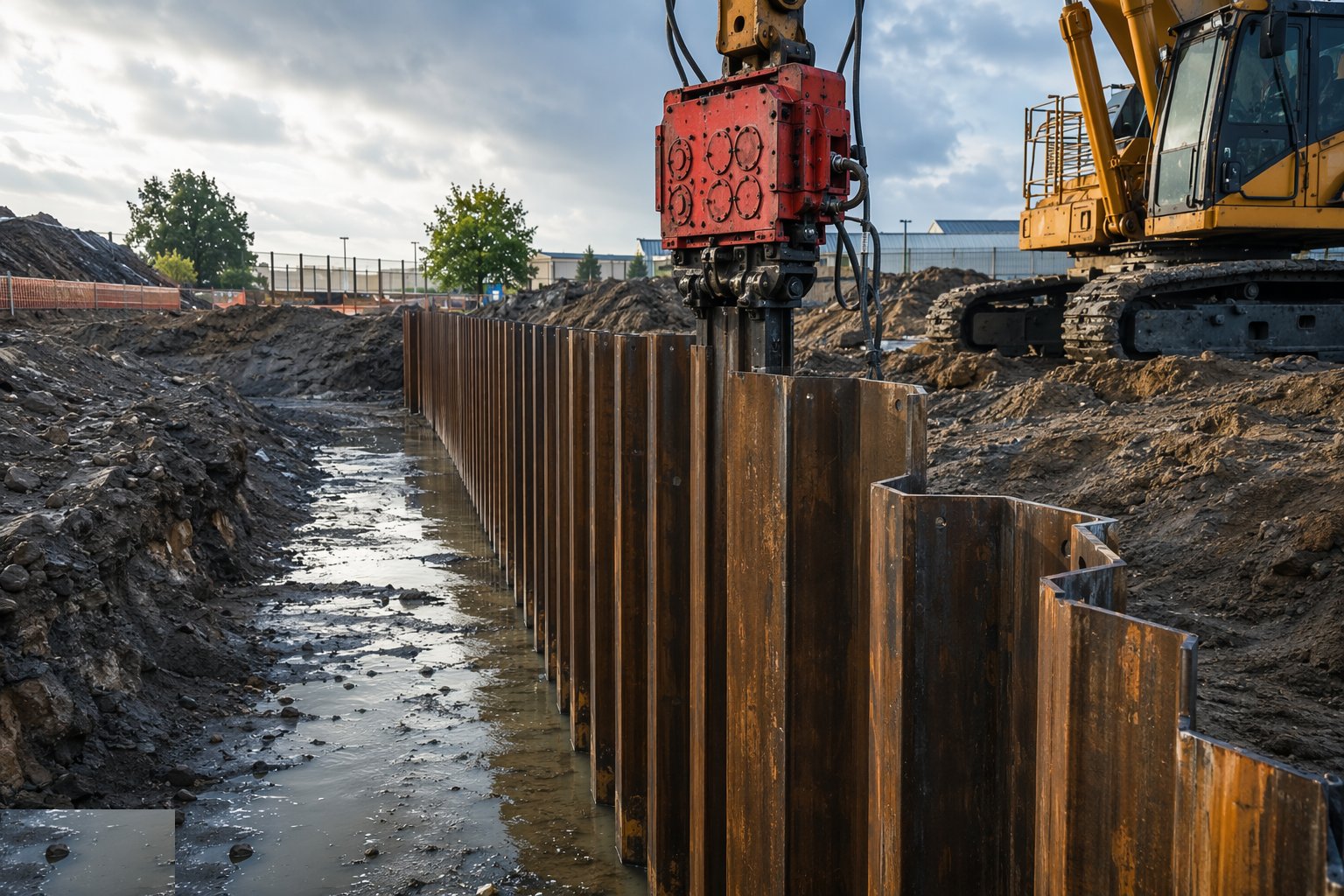
Sheets are driven a few at a time, staggered so no sheet runs ahead, with vibratory or impact hammers - or pressed where vibration is excluded. Plumb is checked every sheet and corrected early; driving records log depth, resistance and refusals per sheet.
- 3
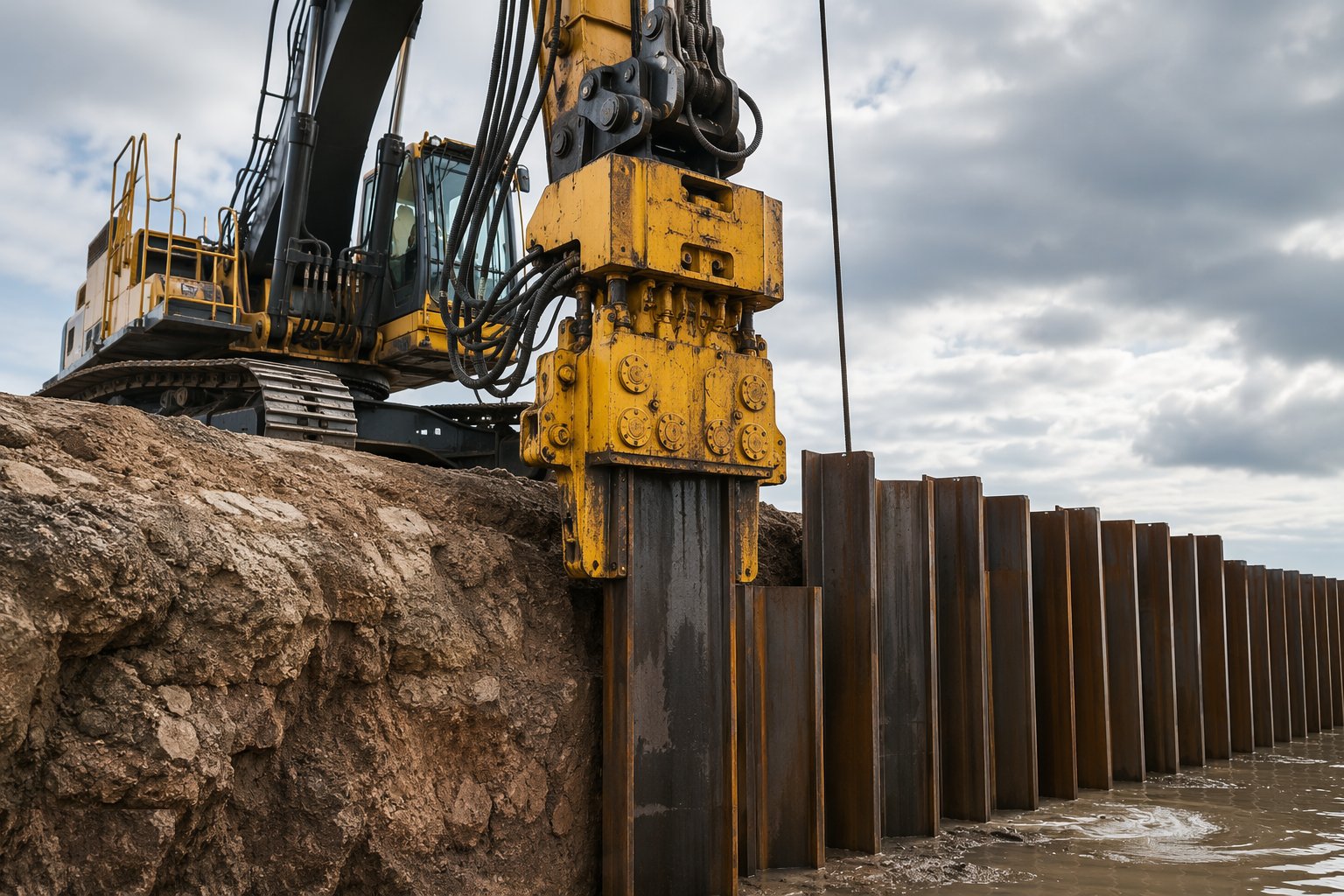
Step 3: Deal with obstructions without splitting clutches
Refusals are probed and relieved - pre-auger, jetting, or a heavier hammer within driveability - before force splits the clutch. Deflected or split sheets are extracted and redriven. Corners and junctions use fabricated sections set individually.
- 4
Step 4: Prop the wall as the dig descends
Walings, struts or anchors go in at the design levels as excavation proceeds - never behind the dig. Movement monitoring runs against trigger levels from the first lift; a sheet wall telegraphs distress early to anyone reading the instruments.
- 5
Step 5: Manage seepage and finish permanent or extract
Seepage through clutches and toes is mapped and managed - sealants, local grouting or controlled pumping. Permanent walls are cut to level and capped with a concrete capping beam; temporary walls are extracted when the permanent works allow, with the extraction voids grouted to protect adjacent ground.
What are the benefits of Sheet pile walls?
- Fastest retention available - the wall is standing while a piled wall is still mobilising
- Reusable - extraction and rehire make temporary works cheap
- Effective in soft ground and high water tables with sealed clutches
- Immediate load capacity - no curing, the dig can follow at once
- Doubles as the permanent basement face with corrosion design
What are the limitations of Sheet pile walls?
- Noise and vibration on driven install; pressing costs more and goes slower
- Obstructions and dense layers split clutches and refuse sheets
- Not watertight unsealed - clutches pass water under a head
- Modest stiffness - deep digs need early and substantial propping
- Corrosion allowance and sealant maintenance for permanent use
- Extraction settlement beside the wall if voids are not grouted
What is Sheet pile walls best suited for?
What plant does Sheet pile walls need?
- Vibratory hammer with rig or crane; impact hammer for hard driving
- Hydraulic pressing system for vibration-sensitive sites
- Guide frames and leads; fabricated corner and junction piles
- Propping steel, walings and anchor equipment
- Extraction equipment and void-grouting kit
- Pre-auger or jetting equipment for obstructions
How is Sheet pile walls quality-checked?
- Sheet and clutch inspection on receipt; sealant application records
- Plumb and line survey during driving and as-built
- Driving records per sheet: depth, resistance, refusals, remediation
- Seepage map through the dig with remediation records
- Propping installation records against the temporary works design
- Extraction log and void-grouting records for temporary works