Cooling system - towers, air-cooled condenser or direct cooling
Water availability, environmental consent and visual impact drive the choice, and the choice changes efficiency, footprint and civils completely.
Last updated 2026-09-07
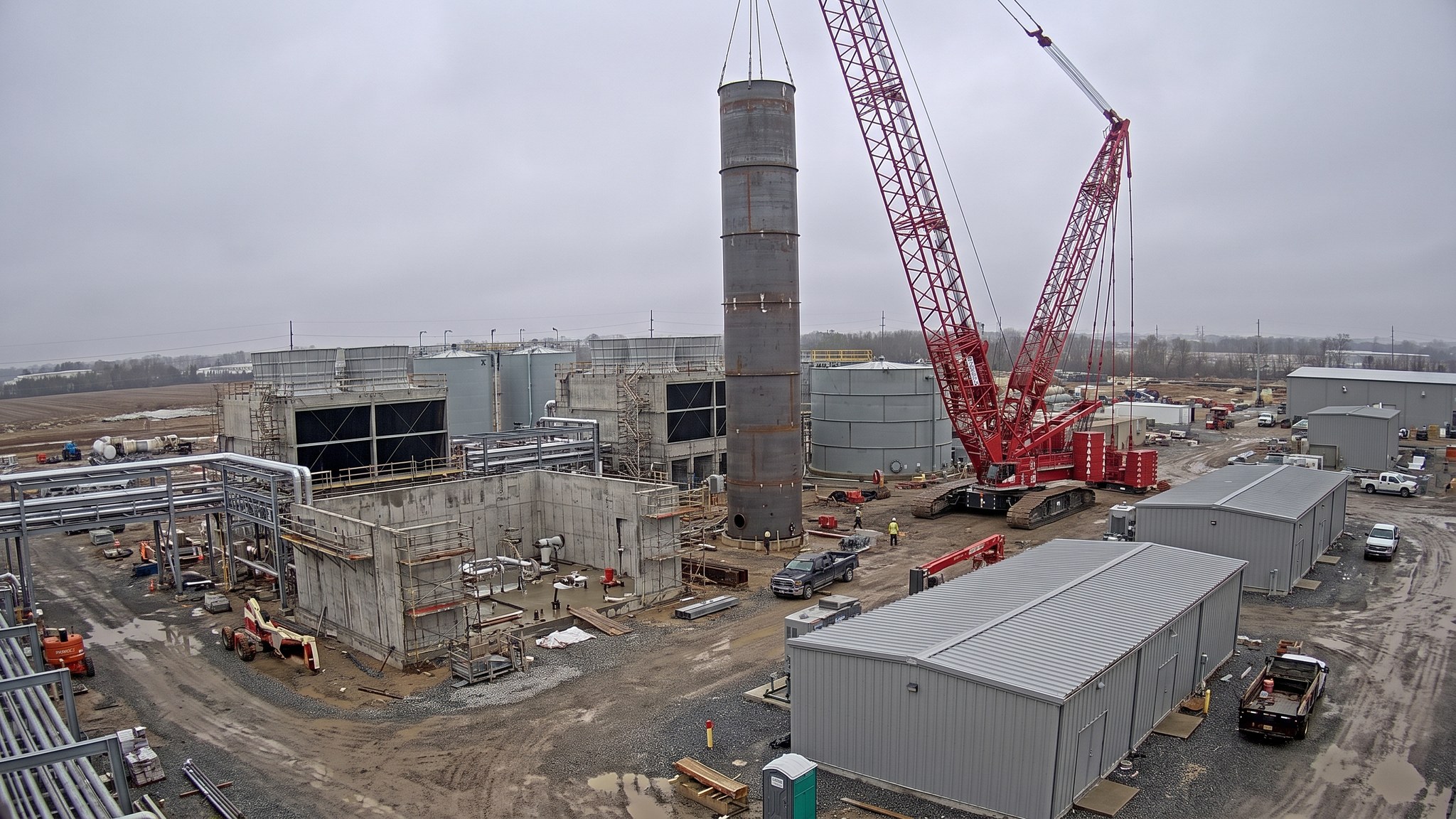
What is Cooling system - towers, air-cooled condenser or direct cooling?
Every thermal power plant has to reject the heat it does not turn into electricity, and the cooling system is how it does that. There are three broad answers. Wet cooling towers evaporate a modest flow of water to cool a much larger circulating flow. An air-cooled condenser rejects heat directly to the atmosphere across finned tubes with fans, using almost no water. Direct cooling takes water from a river, an estuary or the sea, passes it through the condenser and returns it. Each does the same job and each produces a completely different power station.
The choice is made early and it is made on constraints rather than on preference. Water availability comes first - a direct cooled plant needs a large, reliable body of water and a wet tower plant needs a continuous make-up supply. The environmental regulator then has a decisive say on abstraction, on what is returned and on the effect of that return. Planning and visual impact matter too, because towers and condenser structures are large, tall and visible, and vapour plume from wet towers is often the single most contentious feature of a scheme. Cost, efficiency and land availability are weighed alongside all of it.
For the construction team the consequences are total. Direct cooling brings marine or river works, intake and outfall structures, screening plant and very large diameter buried pipework, all of which are specialist and consent driven. Wet towers bring large civils, a substantial water treatment scope and a tall structure. An air-cooled condenser brings a very large elevated steel structure carrying a great deal of equipment and enormous duct from the turbine, with heavy crane demand and long working at height. The cooling choice also sets plant efficiency, because it fixes the conditions the steam turbine can exhaust into, so it is never a late decision.
How does Cooling system - towers, air-cooled condenser or direct cooling work, step by step?
- 1
Step 1: Establish what water the site can actually have
The starting point is the resource. The team establishes what water is available, how reliably, at what quality and on what terms, and what the environmental regulator will permit to be taken and returned. Where a large water body is available and abstraction is acceptable, direct cooling is possible. Where only a modest make-up supply exists, wet towers become the answer. Where water is scarce or abstraction will not be permitted, air cooling follows almost automatically. This assessment sits alongside the consent application and drives it.
- 2
Step 2: Weigh efficiency, footprint, cost and visual impact together
The designer, the plant supplier and the operator compare the options on a common basis. Direct cooling generally gives the best plant efficiency, wet towers sit between, and air cooling costs efficiency but removes the water constraint. Against that sit capital cost, land take, height, noise, plume and the long-term operating burden. Public and planning reaction to a tall structure or a visible plume is assessed honestly at this stage, because it is a common cause of late redesign and it cannot be engineered away afterwards.
- 3
Step 3: Fix the interface with the steam turbine and the condenser
The cooling system and the steam turbine exhaust are one system, not two. The plant supplier sets what the turbine can exhaust into and the cooling design has to deliver it across the full range of ambient conditions the site experiences. That interface fixes the condenser type and size, the duct or pipe routing and the space needed immediately around the machine. It is agreed and frozen early, because a change to the cooling system after the turbine hall layout is set is one of the most expensive changes available on a power project.
- 4
Step 4: Build wet cooling towers where that is the option
Wet towers are substantial civils. The basin is a large water-retaining structure, the tower above it is either a tall shell or a bank of cells with fans, and the internal fill, distribution and drift eliminators are supplier scope installed within it. Circulating water pumps, large diameter pipework and the connection to the condenser follow. A make-up and blowdown regime is provided and connected to the water treatment plant, and the whole arrangement is designed with the operator around cleaning, inspection and long-term maintenance access.
- 5
Step 5: Build an air-cooled condenser where water is not available
An air-cooled condenser is a very large elevated steel structure carrying tube bundles and fans, connected to the turbine by exhaust duct of exceptional size. The civils are extensive, the steel is tall and the equipment is lifted to full height, so cranage and working at height dominate the programme. Wind loading on a tall open structure governs its design, and wind at the site governs its performance. The duct from the turbine is a major fabrication that has to absorb movement and be supported without loading the machine.
- 6
Step 6: Build direct cooling intake and outfall works where a water body allows
Direct cooling brings the project into marine or river construction. Intake and outfall structures, screening and cleaning plant, and very large diameter buried or submerged pipework all have to be built, commonly within seasonal windows set by the environmental regulator to protect fish and other wildlife. This work is specialist, weather dependent and consent driven, and it usually starts long before the main plant civils because its windows are fixed and cannot be moved.
- 7
Step 7: Complete the circulating system, screens and chemical control
Whatever the arrangement, the circulating side has to be completed as a system: pumps, valves, large diameter pipework, screens or strainers, and the instrumentation and control that runs it. Biological growth and fouling control are part of the operator's environmental permit and the equipment for them is installed under the specification and connected to the monitoring the permit requires. The circulating system is often the first large system on the plant to be filled and run, which makes it an early test of the site's system turnover discipline.
- 8
Step 8: Fill, run and prove the system before it is needed
The cooling system is filled, flushed, cleaned and run cold well ahead of the steam plant, because the steam turbine cannot be commissioned without it. Pumps, fans and drives are proved individually and then as a system, controls are checked and performance is measured against the design. Any shortfall found here affects the whole plant output, so it is resolved before hot commissioning starts. The system is turned over to the commissioning team formally and comes under the operator's permit system from that point.
What are the benefits of Cooling system - towers, air-cooled condenser or direct cooling?
- The choice can be matched to the site rather than the site to the plant
- Direct cooling generally gives the best plant efficiency where a suitable water body exists
- Wet towers give good efficiency with only a modest continuous make-up water supply
- Air cooling removes the water constraint almost entirely and opens up dry or inland sites
- Each option is well established, with mature suppliers and proven construction methods
- The system is commissioned early, so it gives the site an early proving ground for turnover discipline
What are the limitations of Cooling system - towers, air-cooled condenser or direct cooling?
- The decision is effectively irreversible once the turbine hall layout is set
- Direct cooling brings marine or river works with fixed seasonal windows and heavy consent conditions
- Wet towers are tall, visible and produce a vapour plume that frequently draws planning objection
- Air cooling costs plant efficiency and brings a very large elevated structure with heavy crane demand
- Every option is a major civils scope in its own right, competing for the same site resources as the main plant
- Performance of air cooled and wet systems varies with ambient conditions, which affects output on the hottest days
What is Cooling system - towers, air-cooled condenser or direct cooling best suited for?
What plant does Cooling system - towers, air-cooled condenser or direct cooling need?
- Heavy civils plant for basins, intake and outfall structures and large diameter pipe trenches
- High capacity cranes for elevated condenser structures, tube bundles and fan assemblies
- Marine plant, pontoons and specialist diving or trenchless equipment for intake and outfall works
- Large diameter pipe handling, jointing and testing equipment
- Pumps, filtration and flushing equipment for cleaning and filling the circulating system
- Access equipment and edge protection for prolonged working at height on tall open structures
How is Cooling system - towers, air-cooled condenser or direct cooling quality-checked?
- Water availability and the environmental regulator's position established before the cooling option is selected
- Turbine exhaust interface agreed with the plant supplier and frozen before layout development
- Consent conditions, including seasonal working windows, tracked against the construction programme
- Large diameter pipework and water retaining structures pressure or leakage tested and recorded
- Structural and wind loading design of elevated structures verified before erection
- Circulating system flushed, cleaned, run and performance checked before turnover to commissioning
More balance of plant & stack methods
Next method
Water treatment and the water cycle