Water treatment and the water cycle
Producing water pure enough for the steam cycle and dealing with everything that comes back - a plant within a plant.
Last updated 2026-09-07
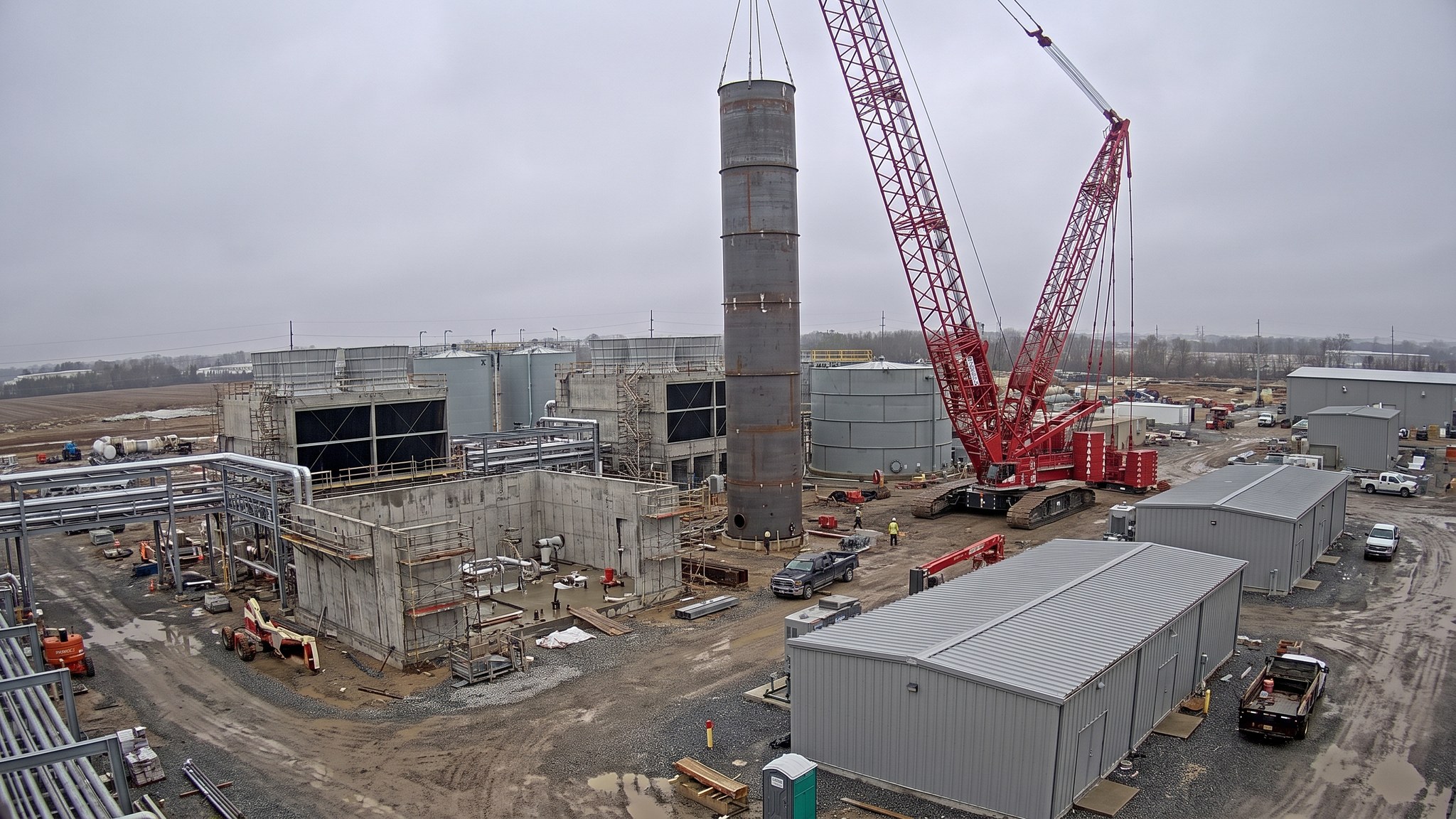
What is Water treatment and the water cycle?
Water is the working fluid of a thermal power station, and it has to be extraordinarily pure. Ordinary water carries dissolved salts, gases and solids that, once inside a steam cycle, deposit on heat transfer surfaces, attack metals and carry over into the turbine. So the plant builds its own treatment works: raw water arrives from a supply, a river or the sea, and is put through a series of stages that progressively remove what is in it until it is fit to enter the cycle. Everything downstream of that depends on it working.
The water cycle is a loop rather than a line. Treated water enters the cycle, becomes steam, does work in the turbine, condenses and returns to be used again. But the loop leaks and it degrades. Make-up water replaces what is lost, condensate returning from the cycle is polished to remove what it has picked up, and chemistry is monitored and controlled continuously by the operator. Alongside the clean side sits the dirty side: blowdown, backwash, drainage, oily water and process effluent all have to be collected, treated and discharged under the terms the environmental regulator sets.
For the project this is genuinely a plant within a plant. It has its own buildings, its own tanks, its own pumps and pipework in a wide range of materials, its own electrical supply, its own control system and its own commissioning programme. It is commonly a supplier package, and it is commonly underestimated, because it looks like ancillary work next to a turbine hall. In practice it is on the critical path twice over: nothing in the steam cycle can be filled, cleaned or commissioned until treated water is available, and nothing can be discharged until the effluent side is working and permitted.
How does Water treatment and the water cycle work, step by step?
- 1
Step 1: Characterise the raw water and confirm the supply
The design starts with what is actually available. The raw water source is characterised across the range of quality it shows through the year, because a river in flood and the same river in drought present very different problems. Quantity, reliability and the terms of supply or abstraction are confirmed with the supplier or the environmental regulator. The plant supplier then designs the treatment stages needed to take that particular water to the quality the steam cycle requires, which is why treatment plants are rarely identical between projects.
- 2
Step 2: Establish the discharge position with the environmental regulator
What can be discharged, to where, and under what conditions is settled with the environmental regulator at the same time as the intake. The answer determines how much effluent treatment the plant needs and whether any streams have to be recovered rather than discharged. On constrained sites the discharge position can be more restrictive than the intake, and it commonly reshapes the treatment plant. The monitoring the permit requires is designed in from the start rather than added afterwards.
- 3
Step 3: Design the treatment train and the water balance together
The designer and the plant supplier build a water balance covering every stream on the plant: raw water in, treated water to the cycle, cooling make-up, losses, blowdown, backwash, drainage and effluent out, across the full range of operating conditions. The treatment train follows from that balance. Storage capacity is sized so that the plant can ride through a supply interruption or a treatment outage, because a station that runs out of treated water has to come off load.
- 4
Step 4: Build the civils, buildings and tankage
The treatment plant needs buildings, bunded chemical storage areas, tanks, sumps, pipe trenches and hardstanding. The civils are unremarkable individually but numerous, and they are frequently the first thing to slip because they sit away from the main plant. Bunding, drainage and containment around chemical storage are designed to the environmental requirements and built exactly as designed. Tanks are erected, tested and lined or coated as the specification demands, and floors and containment are proved before anything is stored.
- 5
Step 5: Install the treatment equipment and the pipework
The treatment stages are installed as supplier packages, with the interconnecting pipework, pumps, valves and instrumentation built around them. Materials vary widely across the plant because the streams do, and each has its own jointing, testing and inspection requirement. Pipework identification and labelling matter more here than almost anywhere on the plant, because streams look identical and the consequences of connecting the wrong two are severe. The chemical handling installations are executed to the specification and by suitably experienced installers.
- 6
Step 6: Complete the sampling, analysis and control systems
Chemistry is controlled by measurement, so the sampling system, the analysis instruments and the control system that uses them are part of the plant rather than an addition to it. Sample points, cooling of sample lines, instrument locations and the laboratory facilities are all installed to the design. The control system is integrated with the main plant control so that the operator sees cycle chemistry alongside everything else. Alarms and trips associated with chemistry are set and proved by the operator, not adjusted on site.
- 7
Step 7: Build the effluent, drainage and recovery side
The dirty side is built alongside the clean side: blowdown and backwash collection, oily water separation, site drainage, neutralisation and any recovery or reuse the water balance requires, ending at the discharge point with the monitoring the permit specifies. This scope is easy to leave late and hard to catch up, because it involves buried work across the site that conflicts with everything else. Most teams sequence the buried drainage early, before the site fills with plant and access is lost.
- 8
Step 8: Commission early, because everything else waits for it
The water treatment plant is commissioned ahead of the main plant, because filling, cleaning and commissioning the steam cycle all need treated water in quantity. Stages are proved individually and then as a train, storage is filled, and the effluent side is proved to the permit before any significant volume is produced. Chemical systems are brought into service by the plant supplier and the operator under the operator's permit-to-work system. The plant is turned over as its own set of systems and comes under operator control early.
What are the benefits of Water treatment and the water cycle?
- Protects the steam cycle, the boiler and the turbine from deposition and attack for the life of the plant
- Allows the station to use whatever raw water source is locally available
- Storage capacity lets the plant ride through supply interruptions without coming off load
- Recovery and reuse can cut abstraction where the environmental regulator restricts it
- Commissioned early, so it is available to support filling and cleaning of the main plant
- Supplied as a package, so design responsibility for a complex process sits with a specialist
What are the limitations of Water treatment and the water cycle?
- Frequently underestimated as ancillary work, then found to be on the critical path in both directions
- Design is site specific, so experience from another project transfers only partly
- Wide range of pipework materials and streams increases installation, testing and labelling complexity
- Chemical storage brings bunding, containment and handling requirements across a large area
- The effluent and drainage side involves buried work that conflicts with all other site activity
- Discharge conditions can be tightened by the environmental regulator, forcing redesign of the treatment train
What is Water treatment and the water cycle best suited for?
What plant does Water treatment and the water cycle need?
- Excavation, shoring and drainage plant for buried pipework, sumps and containment structures
- Tank erection and testing equipment, including lining and coating application plant
- Pipe fabrication, jointing and testing equipment covering several different material families
- Mobile cranes and telehandlers for setting treatment packages, vessels and pumps
- Flushing, filling and cleaning equipment for commissioning the treatment train
- Calibration and sampling equipment for the analysis instruments and laboratory
How is Water treatment and the water cycle quality-checked?
- Raw water characterised across seasonal variation before the treatment train is designed
- Discharge conditions and monitoring requirements agreed with the environmental regulator and reflected in the design
- Full water balance produced and agreed across all operating conditions before equipment is ordered
- Bunding, containment and drainage tested and proved before any chemical is delivered to site
- Pipework identification, labelling and stream verification checked independently before commissioning
- Treatment train commissioned, proved and turned over ahead of steam cycle filling and cleaning