UAE boundary & screen walls
Heat takes the water out of the mortar and salt comes up out of the ground - curing and cement choice matter more than anything you do with a trowel.
Last updated 2026-09-05
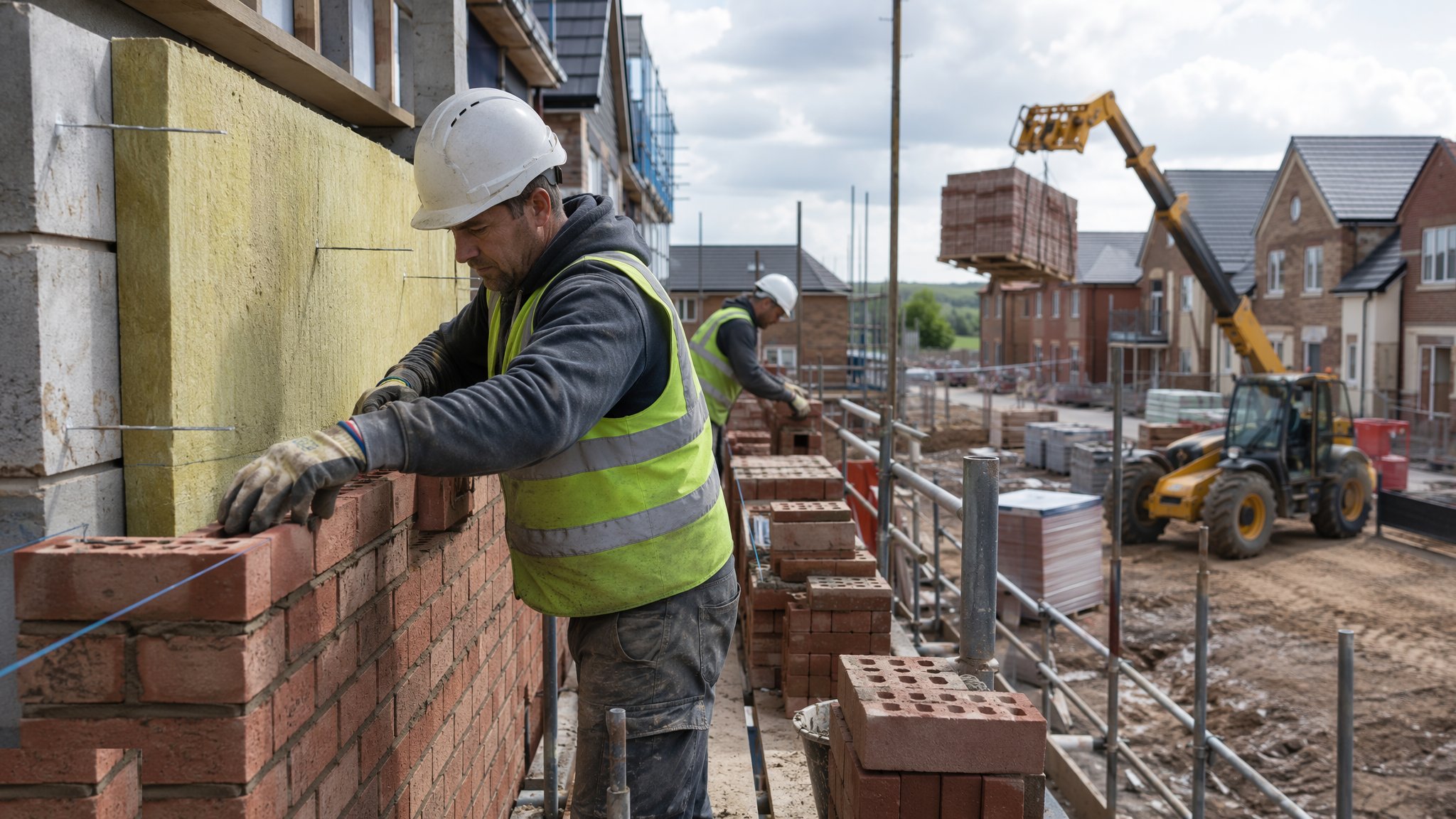
What is UAE boundary & screen walls?
Across the Gulf the ordinary boundary wall is rendered blockwork, so face brick here is a deliberate architectural choice - villa compounds, entrance walls, planters, and screen walls where a perforated brick pattern gives shade and lets the breeze through while still blocking the view. The laying is the same craft as anywhere, but almost every failure you will see on a Gulf boundary wall traces back to two things that have nothing to do with the bricklayer's hands: the mortar dried out before it hydrated, or the ground is feeding salt into the base of the wall.
Heat is the first problem. Through summer, ambient temperatures in the mid-forties and a hot wind will pull the water out of a mortar bed in minutes. Mortar that dries has not set - it looks finished, it goes hard, and it crumbles under a screwdriver a month later. So the Gulf method is different: work is pushed into early mornings, evenings and night shifts; blocks and bricks are wetted before laying so they do not suck the bed dry; mixes are used quickly and materials are kept shaded; and the wall is water-cured, kept visibly damp under hessian or by sprinkling, for several days after laying. On a UK site curing is a box to tick. Here it is the job.
Ground is the second problem. Coastal sabkha ground is salty, the water table can be shallow, and sulphates and chlorides attack ordinary cement and corrode anything ferrous. The specification will name the cement type, the below-ground protection and the reinforcement grade for that ground - sulphate-resisting cements are commonly called up in aggressive conditions, and the engineer decides. What you will see if it is got wrong is a white bloom of salt creeping up the base courses, mortar joints softening and eating back, and the face of the brick blowing off as the salt crystallises inside it. Sand is the third, quieter problem: drifting sand piles against the base of a wall and buries the damp-proof course, and windborne sand slowly abrades soft joints on the exposed face.
How does UAE boundary & screen walls work, step by step?
- 1
Step 1: Set out and build the base for the ground you are in
Set the line and levels off the approved drawing and confirm the foundation is cast to the engineer's dimensions - a boundary wall in loose sand is still a cantilever and it still needs a proper footing. Below-ground protection, the cement type and any coating are named in the specification for the ground conditions on that plot, so read it rather than repeating what the last villa had. Set out the pier and column positions before the first course, and keep the finished base clear of the sand line so drifted sand does not bury the damp-proof course.
- 2
Step 2: Plan the shift around the heat
Programme the laying for early morning, late afternoon or night, and keep the face out of direct sun with screens or shade netting where you can. Store bricks and sand shaded and damp rather than baking in the open. Mix small and often, and only what the gang will use straight away - retempering a stiffening mix with more water weakens it, and the limit on how long a mix stays usable is far shorter here than the same mix in a temperate climate. Keep mixing water cool; on the hottest days it is chilled or iced.
- 3
Step 3: Wet the units and lay to the line
Gulf bricks and blocks are absorbent and, dry, they will strip the water out of a bed joint before it ever sets. Wet them ahead of laying so they are damp but with no free water on the face - a soaked unit floats on the bed and the wall rides. Then it is ordinary bricklaying: corners and piers first, gauge rod on every course, line between, full beds, perpends filled. Tool the joints early, because in the heat the window between thumbprint firm and gone is a fraction of what you are used to.
- 4
Step 4: Build the screen pattern or the solid face
Perforated screen walls - hit-and-miss bond, on-edge patterns, or a pierced panel set in a solid frame - are set out dry first, because the pattern reads across the whole wall and cannot be adjusted at the far end. Screens are much weaker laterally than a solid wall, so the engineer sets the panel size, the framing piers and any reinforcement, and the openings are kept exactly where the setting-out puts them. Solid runs get their piers bonded in from the base course, not stitched on later.
- 5
Step 5: Movement joints and the top of the wall
The daily temperature swing here is large and the wall grows and shrinks with it, so vertical movement joints go in at closer centres than a temperate-climate equivalent - the designer sets the spacing. Form them full height, full thickness and straight, slip-tie across, and seal with a sealant that will take the movement and the ultraviolet. Cap the wall with a coping that overhangs and has a drip both sides, bedded on a damp-proof course, because the top of a boundary wall is where the water gets in on the few days a year that it rains hard.
- 6
Step 6: Cure it, then keep curing it
As soon as the mortar has taken its initial set, start curing - damp hessian over the work, sheeting to hold the moisture in, or a scheduled sprinkling routine, kept up for several days. Give it to somebody by name, on the daily record, or it quietly stops happening at the weekend. Protect the base from drifting sand and the fresh face from windborne dust. Clean down at the end using the mildest method that works, and never let acid anywhere near a face brick without a test panel and a full rinse first - acid residue in a hot, salty environment causes staining that nothing removes.
What are the benefits of UAE boundary & screen walls?
- A face-brick boundary or entrance wall gives a villa compound a finish that rendered block cannot match, with no painting cycle
- Screen and perforated walls give shade, privacy and airflow at the same time, which is exactly what the climate wants
- Masonry stands up to heat, ultraviolet and sand far better than timber, composite or coated metal screens
- No applied finish means no render cracking, no drummy patches and no repaint every few years
- Robust and secure boundary treatment with a long life where the base detail and cement type suit the ground
- Local trade and local materials, so short lead times and easy repairs
What are the limitations of UAE boundary & screen walls?
- Working hours are squeezed by heat and by the summer midday working restrictions, so productivity is seasonal
- Curing is labour that has to be planned, resourced and supervised, and it is the first thing to slip
- Salty ground attacks ordinary cement and any unprotected steel, so the below-ground detail is specialist and non-negotiable
- Salt rising through the base courses causes efflorescence and face spalling that is very hard to cure once established
- Face brick is a premium in a market geared to blockwork and render, so cost and availability are both worse
- Screen panels are weak laterally and need engineered framing, which limits how large an uninterrupted panel can be
What is UAE boundary & screen walls best suited for?
What plant does UAE boundary & screen walls need?
- Mixer sited in shade, with a chilled or iced water supply on the hottest days
- Shade netting, screens and hessian sheeting for both the gang and the work
- Water bowser, hoses and sprinklers for pre-wetting units and for curing
- Bench saw with wet cutting, which suppresses dust and suits the pattern cutting on screens
- Telehandler or dumper to keep packs moving along a long boundary run
- Task lighting and generator for night-shift working
How is UAE boundary & screen walls quality-checked?
- Cement type, below-ground protection and reinforcement confirmed against the specification for that ground before the footing is cast
- Units pre-wetted to damp, not soaked, and mixes used within their working time with no retempering
- Ambient and material temperatures recorded, with laying stopped when the specification says to stop
- Curing regime named to a person, logged daily, and continued for the full specified period
- Movement joints at the drawn centres, full height and depth, sealed with a sealant rated for the exposure
- Coping, damp-proof course and base level checked, with drifted sand cleared away from the base of the wall