CBTC metro signalling
Continuous radio-based train control, close headways and automatic operation on a metro.
Last updated 2026-09-05
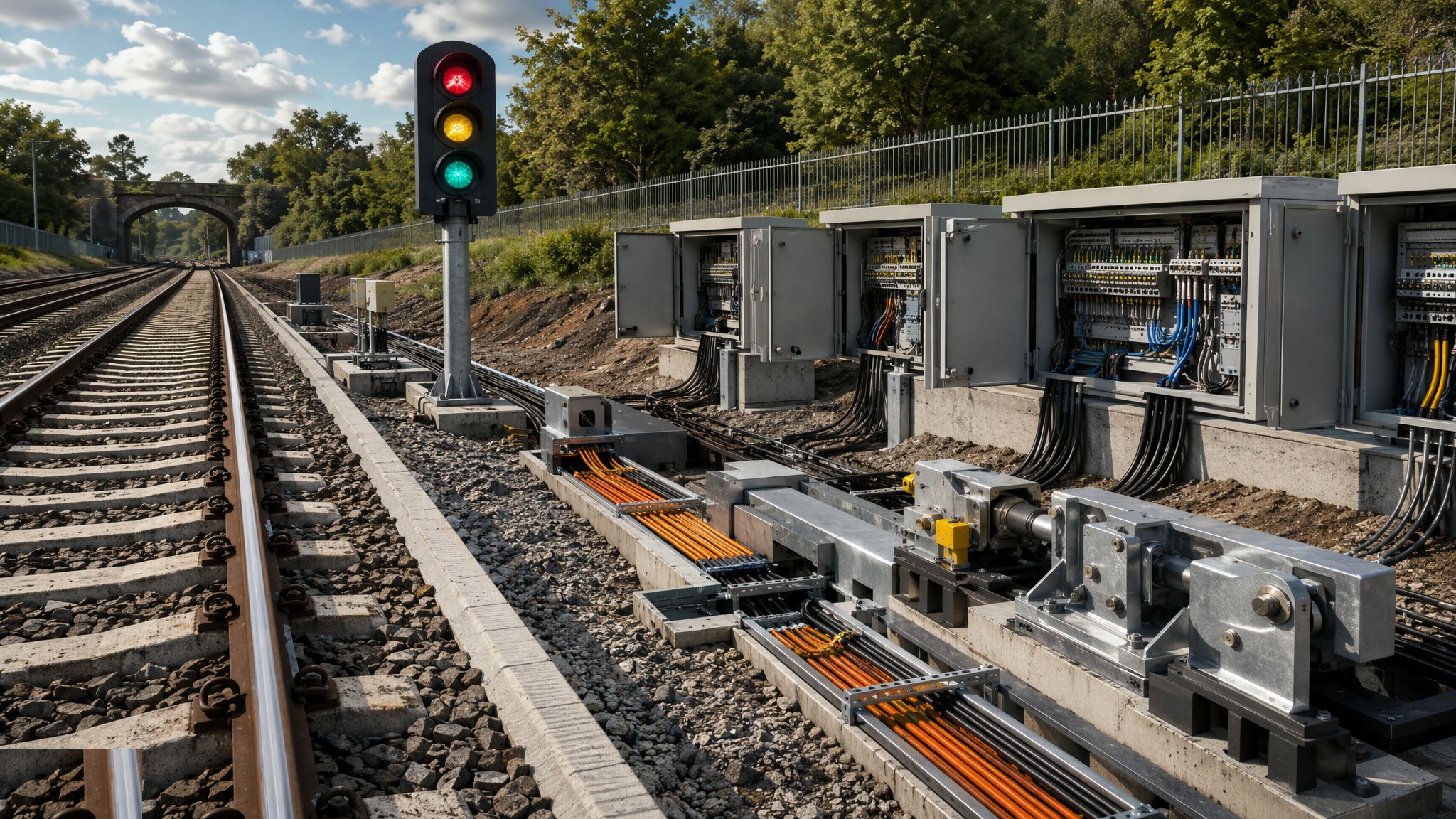
What is CBTC metro signalling?
Communications-based train control is the metro version of in-cab signalling, taken further. Trains and the control system are in continuous radio communication, so the system knows where every train is at all times rather than only when it passes a fixed point. That continuous knowledge is what allows metro trains to run very close together, which is the whole reason the system exists: on an urban metro the constraint is almost always how many trains an hour the line can carry, and headway is the currency. It also enables automatic operation, from automatic driving with staff on board through to fully automatic operation without a driver in the cab, and which of those a network adopts is an operating decision rather than a technical inevitability.
Because the system knows where trains are continuously and controls them directly, it becomes entangled with everything else the metro does. Platform screen doors have to open in step with train doors, which means the system controls where the train stops to a degree conventional signalling never attempted. Station control, passenger information, depot operations and the control centre all connect to it. On an automatic railway the operating concept - what staff do, how a train is recovered when something goes wrong, how passengers are managed at a platform - has to be designed alongside the technology rather than written afterwards. The infrastructure manager and operator decide that concept, and it shapes the technical requirement as much as the technical capability shapes the concept.
Delivering it on an operating metro is the hardest version of the problem. The line cannot close for long, the engineering window each night is short, the new system has to be installed and tested while the old one keeps running the service, and the changeover has to happen without stranding either. Projects handle this with staged conversion, extensive off-site testing and long periods of trial running in the engineering hours, and even then the transition is the riskiest part of the programme. As with any signalling scheme, design, testing and entry into service run through an independently checked assurance process managed by the infrastructure manager and carried out by competent qualified staff, and no detail of that process or of the system's operating behaviour is given here.
How does CBTC metro signalling work, step by step?
- 1
Step 1: Fix the headway target and the operating concept together
The project starts with what the line has to deliver - trains an hour, journey time, reliability - and with how it will be operated. The degree of automation, the role of staff on board and at stations, and the way disruption will be managed are decided by the infrastructure manager and the operator at the outset. On a metro these decisions are not consequences of the technology, they are inputs to it, and settling them late is one of the reliable ways a project loses years.
- 2
Step 2: Plan the fleet fitment and the depot works
Every train needs on-board equipment, and on a metro the fleet is intensively used, so taking units out of service for fitment eats directly into the service the operator can run. Depot facilities, test tracks and stabling arrangements all need work of their own, because a depot on an automatic railway operates differently. This stream starts early and usually sets the earliest possible conversion date.
- 3
Step 3: Design the trackside, radio and control systems
The signalling engineer designs the trackside equipment, the continuous radio communication system through tunnels and stations, and the control centre arrangements. Radio coverage in a tunnel environment is an engineering problem in its own right and is designed and proven rather than assumed. The design is independently checked within the infrastructure manager's assurance process, and its technical content and operating behaviour are not described here.
- 4
Step 4: Integrate with platform doors, stations and the control centre
Platform screen doors, station control systems, passenger information and the control centre all have to work with the train control system as one. Where platform doors are being installed at the same time, that is a substantial station works programme in its own right, delivered in the same short engineering windows. The interfaces between these systems are where integration projects typically find their surprises, so they are defined early and tested hard.
- 5
Step 5: Install trackside and station equipment in short windows
Installation happens at night while the metro runs a full service by day. Materials arrive by engineering train, are installed and made safe, and the railway is handed back before service. Everything installed has to be capable of coexisting with the system currently running the railway. The practical limit on progress is not the work itself but how much can be delivered, installed and cleared within the window.
- 6
Step 6: Prove the system off site and then in the engineering hours
The bulk of integration and software assurance is done in laboratories and on test tracks, long before it touches the operating railway. What follows is trial running in the engineering hours, with test trains operating on the new system while the daytime service continues on the old one. This stage is long and it is where the schedule risk sits. Its technical content is a matter for qualified engineers within the assurance process.
- 7
Step 7: Convert the line in stages
Conversion is normally staged section by section, with transitional arrangements where a train moves between the new system and the old one. Each stage is planned, assured and accepted separately by the infrastructure manager, and each carries the risk of having to be reversed before service resumes. The staging strategy, the fall-back arrangements and the acceptance criteria are matters for the infrastructure manager and qualified staff, and no detail of them appears here.
- 8
Step 8: Train the staff, hand over and remove the old system
Drivers, station staff and control centre staff all work differently on an automatic railway and are trained before conversion. Once the line is converted and stable, the previous system's equipment is recovered, which is a project of its own. Handover covers the trackside and station assets, the control system, the software configuration and version records, the operating concept documentation and the maintenance regime the operator will run.
What are the benefits of CBTC metro signalling?
- Continuous knowledge of train position allows very close headways and higher line capacity
- Supports automatic operation, up to fully automatic running where the operator adopts it
- Integrates directly with platform screen doors, station systems and the control centre
- Removes conventional lineside signalling equipment from a constrained tunnel environment
- Allows service to be recovered and regulated more precisely after disruption
- Capacity gains are achieved without lengthening platforms or building new tunnels
What are the limitations of CBTC metro signalling?
- The operating concept has to be settled at the outset, and late changes are extremely expensive
- Fleet fitment takes intensively used units out of service and usually sets the earliest conversion date
- Installation happens in short overnight windows while the metro runs a full daytime service
- The new system has to coexist with the old one throughout, and the transition is the riskiest part of the programme
- Deep integration with platform doors and station systems means a fault in one system affects several
- Software configuration and version control become permanent operational duties
What is CBTC metro signalling best suited for?
What plant does CBTC metro signalling need?
- Engineering trains for delivering trackside equipment and materials into tunnels
- Rail-mounted installation and handling equipment for confined working
- Radio and communication infrastructure installation equipment for tunnel and station environments
- Station works plant for platform screen door installation and station system integration
- Depot and test track facilities for fitting and proving on-board equipment
- Laboratory and test facilities for systems integration and software assurance
How is CBTC metro signalling quality-checked?
- Headway target and operating concept agreed by the infrastructure manager and operator before design
- Fleet fitment and depot programme planned and started ahead of the trackside works
- Scheme design, including radio coverage, independently checked as part of the assurance process
- Interfaces with platform screen doors, station systems and the control centre defined early and tested
- Integration and software assurance completed off site before trial running on the railway
- Staged conversion planned with the infrastructure manager, each stage assured and accepted separately
- Testing and entry into service carried out only by competent, qualified staff under the independently checked assurance process
- Staff training, software configuration records and the maintenance regime handed over with the asset