ETCS and in-cab signalling
The driver reads authority from a display in the cab, not from a signal at the lineside.
Last updated 2026-09-05
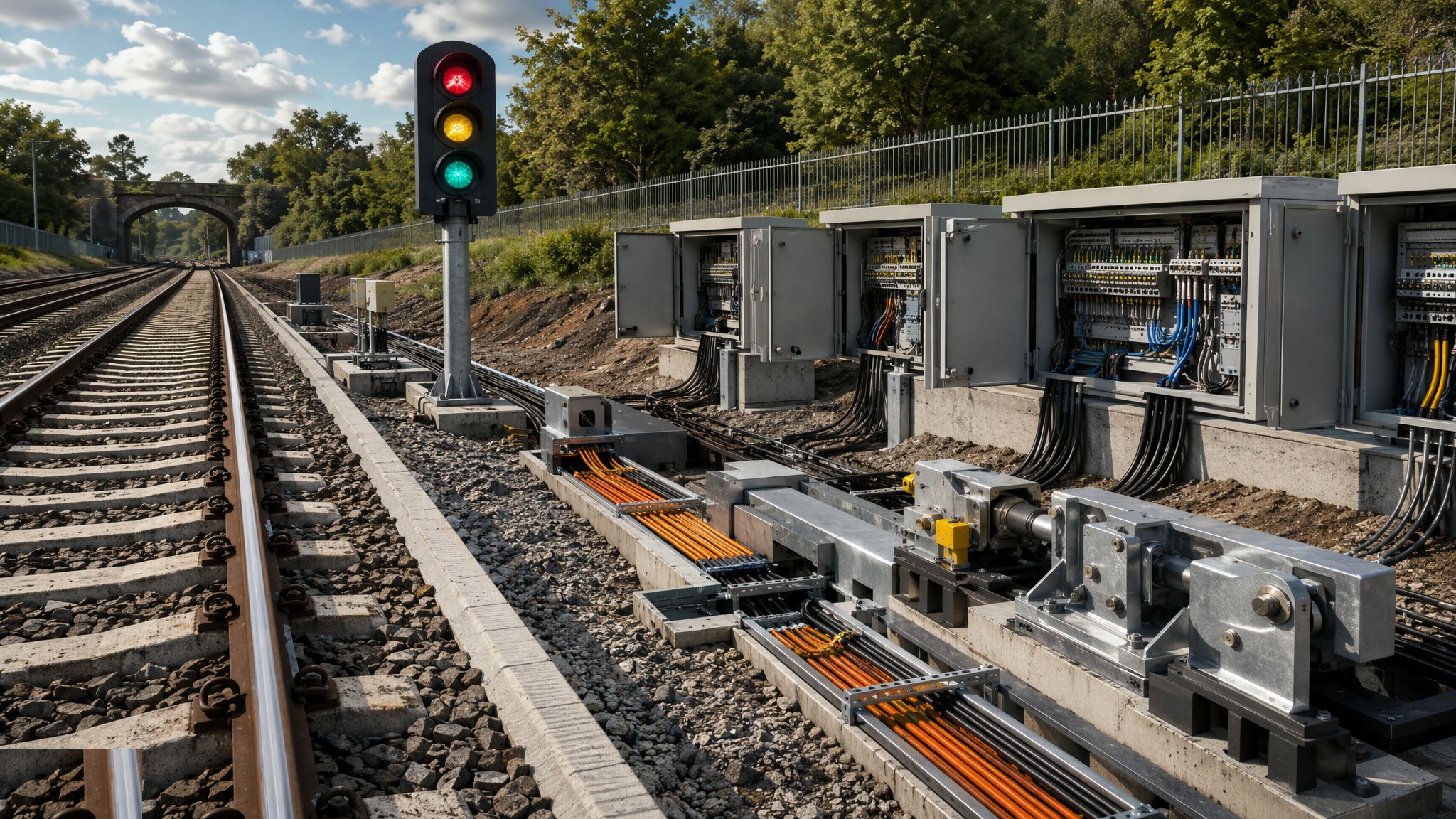
What is ETCS and in-cab signalling?
In-cab signalling moves the information the driver needs from the lineside into the cab. Instead of reading an aspect from a signal as the train passes it, the driver reads a display fed by equipment on board the train, which is in continuous communication with the equipment controlling the railway. The immediate consequence is that lineside signals become unnecessary, and on routes converted to in-cab operation they are progressively removed. The visible railway gets simpler. The engineering behind it does not.
The change reshapes what a signalling project actually is. A conventional resignalling is dominated by civil and installation work: foundations, structures, location cases and many kilometres of cable. An in-cab scheme still needs trackside equipment, cable and power, but a far greater share of the effort moves to systems integration, software assurance and the fitment of equipment to trains. That last item is often the hardest part of the programme, because the trains belong to operators and owners rather than to the infrastructure manager, they have to be taken out of service to be fitted, and every different class of vehicle needs its own engineering. A route cannot switch to in-cab operation until enough of the fleet that uses it is fitted and enough drivers are trained, so the infrastructure programme and the fleet programme are locked together.
What in-cab signalling offers in return is capacity and consistency. Authority is no longer tied to the position of physical signals, so the railway can be operated more finely, and the same arrangement can be applied across routes that previously had different systems. It also removes a large population of lineside assets from the maintenance burden. The costs are the fleet fitment, the driver training, the transition period during which both arrangements have to work together, and an assurance task that is heavily weighted towards software and systems rather than hardware. All of that assurance, all testing and all entry into service run through an independently checked process managed by the infrastructure manager, carried out by competent qualified staff. This page gives no detail of that process, of the system's operating logic or of anything a driver or engineer would act on.
How does ETCS and in-cab signalling work, step by step?
- 1
Step 1: Establish the operating and capacity case
In-cab signalling is normally adopted to deliver capacity, to renew a life-expired conventional system, or both. The infrastructure manager and the operators establish what the railway has to achieve and confirm that the change is the right way to achieve it, because the commitment extends well beyond the infrastructure to the fleet and to the people who drive it. That case is settled before design, since the fleet programme has to start early.
- 2
Step 2: Plan the fleet fitment programme first
Every train that will use the route needs equipment fitted, and the trains belong to operators and owners rather than to the infrastructure manager. Each vehicle class needs its own engineering, prototype fitment and approval, and each unit has to be taken out of service to be fitted. On most schemes this is the longest lead item in the whole project, and it is planned and started before the trackside works. A finished route with an unfitted fleet cannot enter service.
- 3
Step 3: Design the trackside and control arrangements
The signalling engineer designs the trackside equipment, the control system and the communication arrangements that connect them. There is less lineside hardware than a conventional scheme requires but the design task is broader, because the system, the trains and the control centre have to work together as one. The design is independently checked within the infrastructure manager's assurance process. Its technical content and operating behaviour are not described here.
- 4
Step 4: Install trackside equipment, cable and communications
Trackside equipment, cable routes, power supplies and communication infrastructure are installed along the route. This is recognisable railway installation work in a live corridor with the usual access, protection and buried services constraints, but it is a smaller share of the project than on a conventional scheme. The communication infrastructure is a project in its own right and often has its own supplier and its own programme.
- 5
Step 5: Integrate the systems and assure the software
The heart of the project is making the trackside, the on-board equipment and the control system work together correctly. That is a systems integration and software assurance task, carried out in laboratories and test facilities long before it is carried out on the railway, and it is where in-cab schemes typically consume time. Managing it means treating software releases, versions and configuration with the same formality as physical works. The technical content is a matter for qualified engineers within the assurance process and is not set out here.
- 6
Step 6: Train drivers and signallers
Drivers read authority from a display rather than from the lineside, and signallers work with a different picture of the railway. Both groups need training and time to become confident, and that training has to be delivered across a whole fleet's worth of drivers before the route can convert. Operators plan and resource it. Like fleet fitment, it is a long-lead item that determines when the railway can change, not a task that follows the construction.
- 7
Step 7: Test and bring into use under the assurance process
Testing and entry into service are run through the infrastructure manager's independently checked assurance process by competent, qualified staff, and typically include a period of running on the railway before conversion. Conversion is usually staged, with transitional arrangements while part of the route or part of the fleet still relies on the previous system. No detail of the testing, the transition arrangements or the acceptance criteria appears on this page.
- 8
Step 8: Remove the lineside equipment and hand over
Once the route is operating on in-cab authority and the transition is complete, lineside signals and the equipment that supported them are progressively removed, which is a recovery project with its own possessions and its own records. Handover covers the trackside asset, the control system, the software configuration and version records, and the maintenance regime. Software configuration records matter as much as physical records on this kind of asset, and are handed over with the same rigour.
What are the benefits of ETCS and in-cab signalling?
- Authority is no longer tied to the position of physical signals, so the railway can be operated more finely
- Removes a large population of lineside signals and supporting equipment from the maintenance burden
- Applies a consistent arrangement across routes that previously used different systems
- Reduces the civil and installation content compared with a conventional resignalling
- Gives the driver continuous information rather than information only at signal positions
- Supports higher speeds where reading lineside aspects becomes impractical
What are the limitations of ETCS and in-cab signalling?
- Fleet fitment is usually the longest lead item, and the trains belong to operators and owners rather than the infrastructure manager
- Every vehicle class needs its own engineering, prototype fitment and approval
- Drivers and signallers need training across the whole fleet before a route can convert
- Effort shifts to systems integration and software assurance, which is harder to schedule than physical installation
- Transitional arrangements are needed while part of the route or fleet still uses the previous system
- Software configuration and version control become permanent asset management duties
What is ETCS and in-cab signalling best suited for?
What plant does ETCS and in-cab signalling need?
- Road-rail plant for trackside equipment and cable route installation
- Cable pulling, handling and termination equipment
- Communication infrastructure installation plant, including mast and antenna erection where required
- Depot facilities and lifting equipment for fitting on-board equipment to trains
- Laboratory and test facilities for systems integration and software assurance
- Test equipment used by qualified signalling staff within the assurance process
How is ETCS and in-cab signalling quality-checked?
- Operating and capacity case agreed by the infrastructure manager and operators before design
- Fleet fitment programme planned and started ahead of the trackside works, with each vehicle class engineered and approved
- Scheme design independently checked as part of the infrastructure manager's assurance process
- Systems integration and software assurance carried out in test facilities before works on the railway
- Software releases, versions and configuration controlled with the same formality as physical works
- Driver and signaller training delivered and confirmed before conversion
- Testing, transition and entry into service carried out only by competent, qualified staff under the independently checked assurance process