Bolted connections
The site default - fast, inspectable joints that keep the crane moving.
Last updated 2026-09-05
What is Bolted connections?
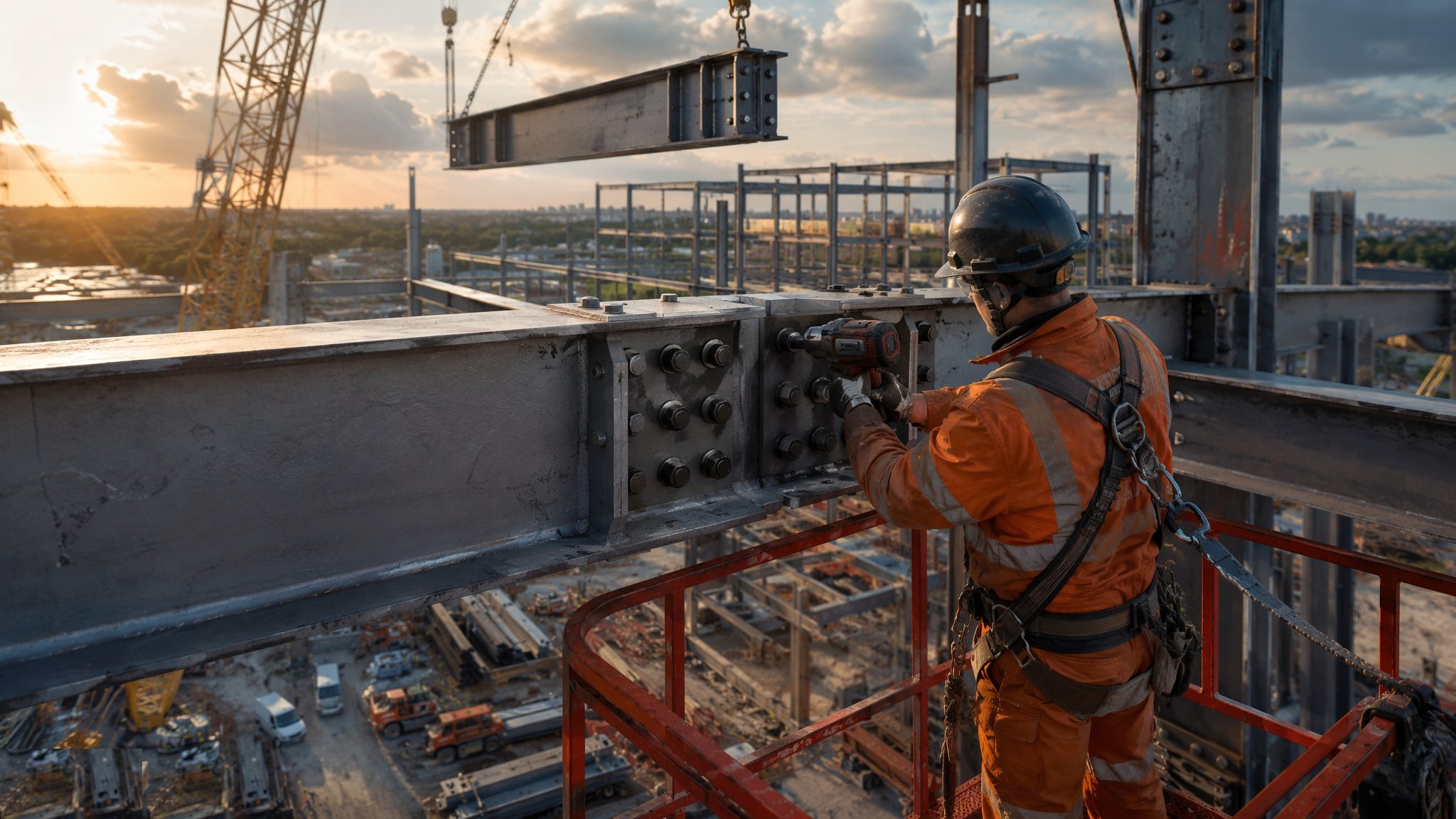
Bolting is how steel frames actually go together on site: fin plates, end plates, splices and angles connected with high-strength bolts, made up by the erection gang with calibrated guns. The fabrication shop welds the connection material onto the members; the site bolts them together. Erection is fast - a beam lands, spanners and guns follow, and the crane is released - and every joint is inspectable after the fact, which is why bolted connections are the default and site welding is the exception.
The engineering distinction that matters is ordinary versus preloaded. Ordinary (bearing-type) bolts carry shear across the shank and are snug-tightened - the workhorse of simple connections. Preloaded (friction-grip) bolts are tensioned to a calculated clamping force so the faying surfaces carry load by friction - used where slip cannot be tolerated: splices, bracing, dynamic loads. Preloaded bolts are single-use, installed to a specified method - torque control, part-turn or tension-indicating - and verified with calibrated equipment on a recorded sample.
Quality is procedural, and the failures are procedural too: wrong grade fitted from an unlabelled box, preloaded bolts reused after being slackened, holes elongated by drift pins beyond tolerance, connections left un-torqued because the decking programme ran over them. The controls are simple but absolute - bolt certification and traceability by grade, calibrated tightening equipment with daily checks, marked-off connections as they are verified, and a torque audit before the decking releases the floor. A bolted frame with good paperwork is a known structure; without it, it is an assumption.
Process storyboard
Step 1 of 5 - slide through the snapshots.
STEP 1
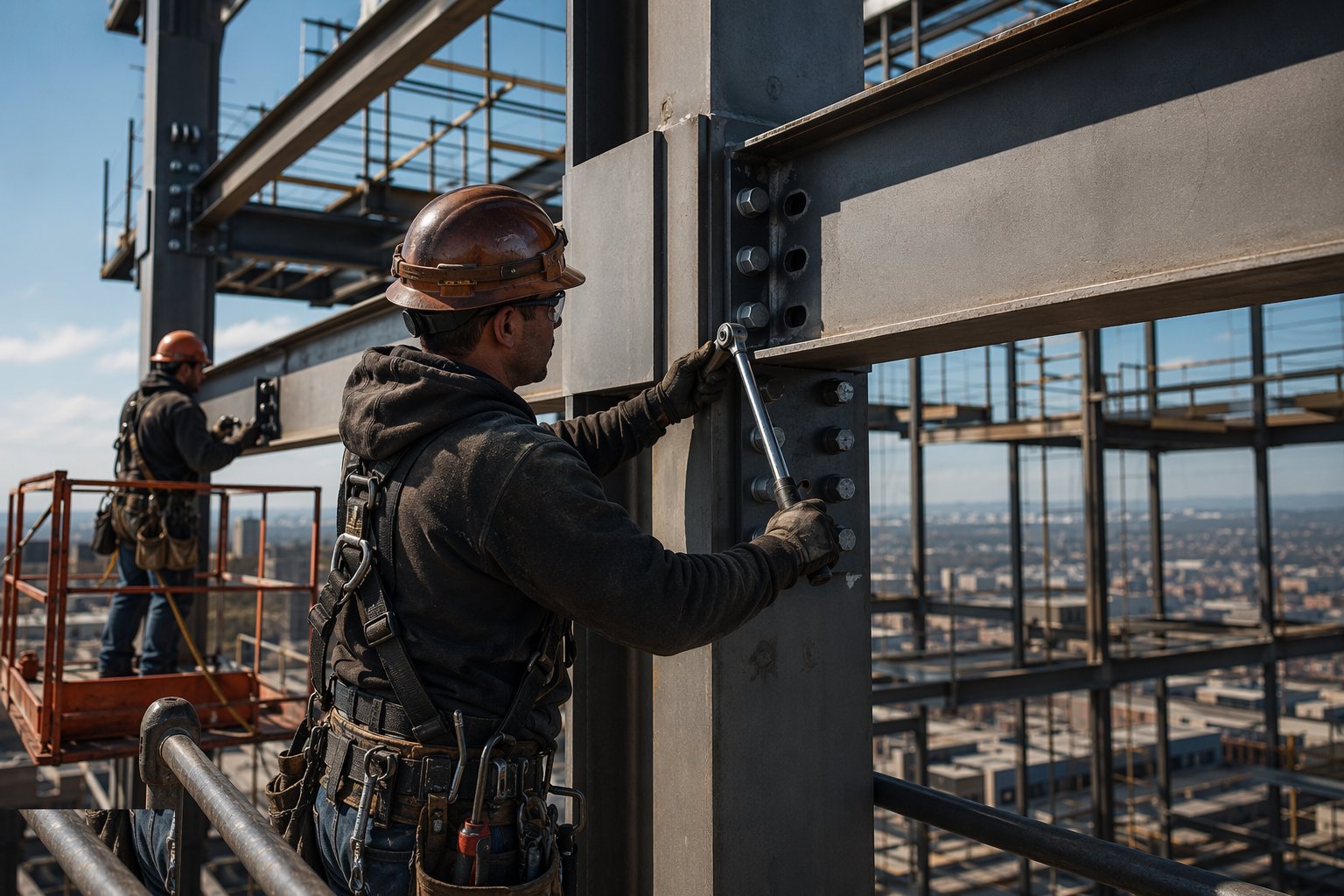
Verify the bolt sets and the connection design
Bolt grade, diameter and quantity are checked against the connection schedule; certifications and traceability are filed.
How does Bolted connections work, step by step?
- 1
Step 1: Verify the bolt sets and the connection design
Bolt grade, diameter and quantity are checked against the connection schedule; certifications and traceability are filed. Preloaded assemblies are confirmed in date and correctly stored - moisture and site mud are the enemies of controlled friction.
- 2
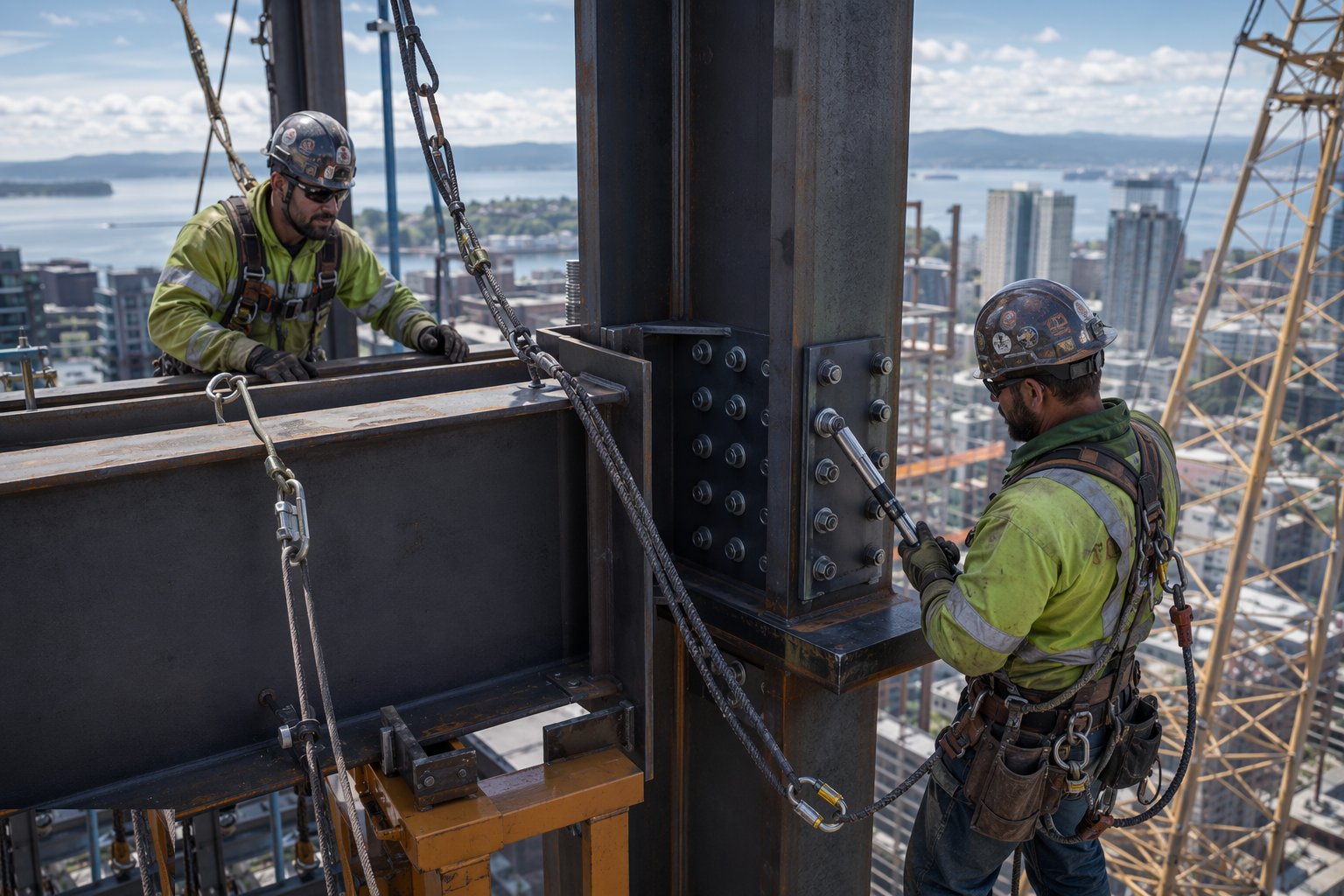
Step 2: Land and pin the member
The member is landed on its seats, pinned with enough bolts to hold geometry, and the bay is squared and surveyed before the gang completes the connection. Drift pins align holes within tolerance - reaming or drifting a hole oversized without approval is a non-conformance with a weld repair attached.
- 3
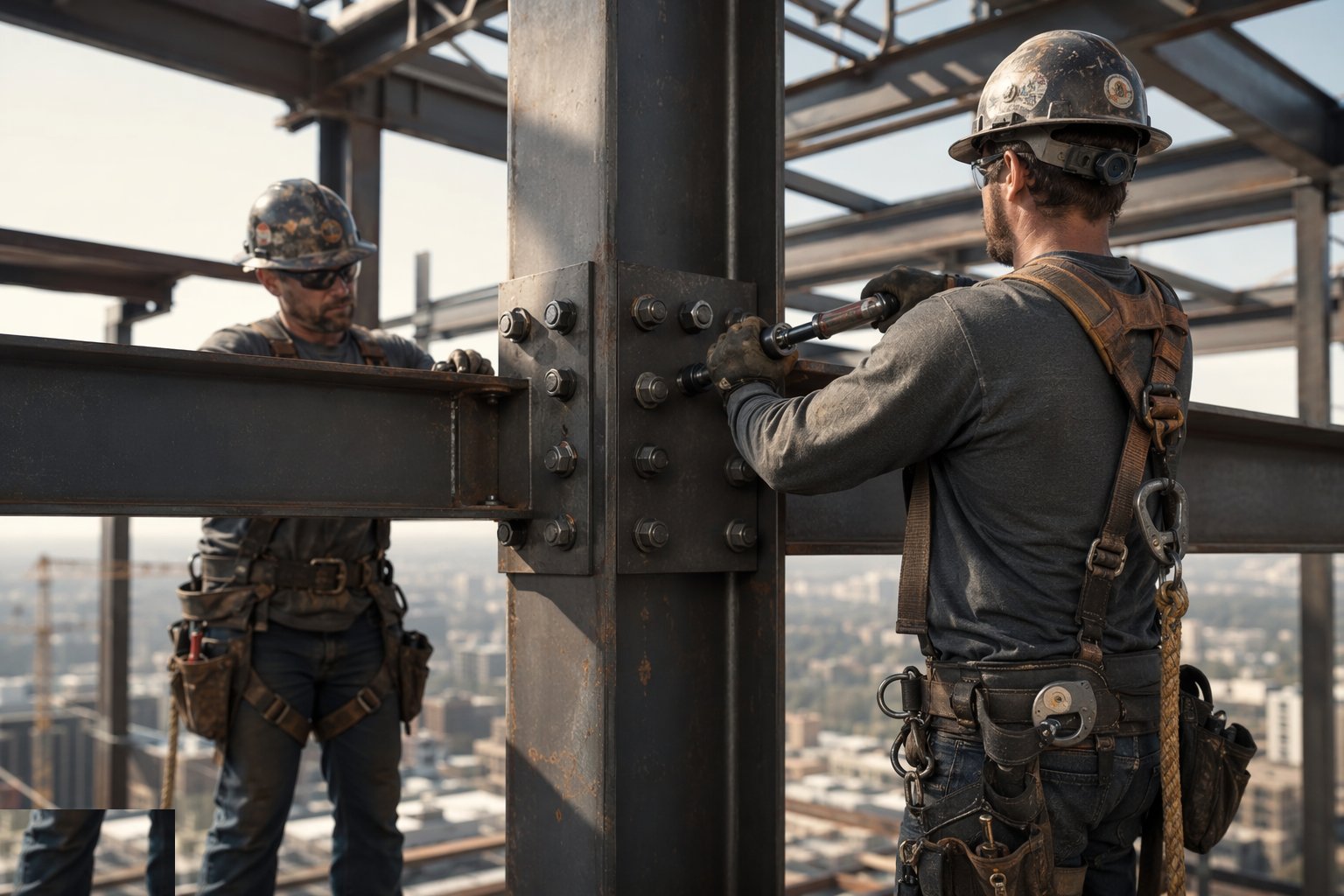
Step 3: Fill the connection and tighten to method
All bolts are fitted - right grade, right length, washers where specified - and tightened to the specified method: snug-tight for ordinary bolts; torque-controlled, part-turn or tension-indicating for preloaded. Tightening proceeds from the stiffest part of the joint outward so the plates pull up evenly.
- 4
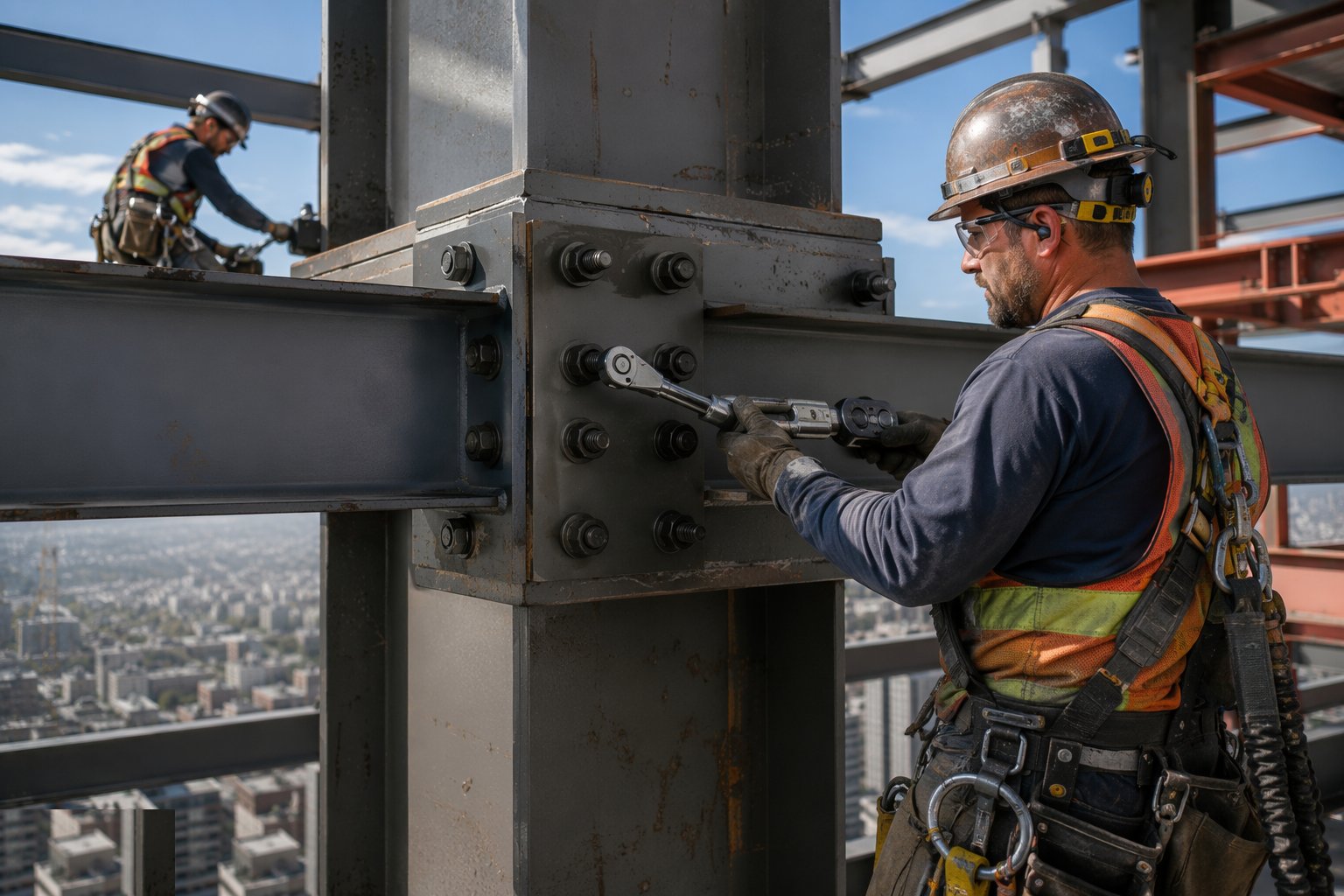
Step 4: Verify with calibrated equipment
Torque or tension is verified per the specification - a recorded sample, or 100% where required - with calibrated wrenches checked daily against the reference. Verified connections are marked; a mark is a signature. Failed bolts are replaced, never re-tensioned.
- 5
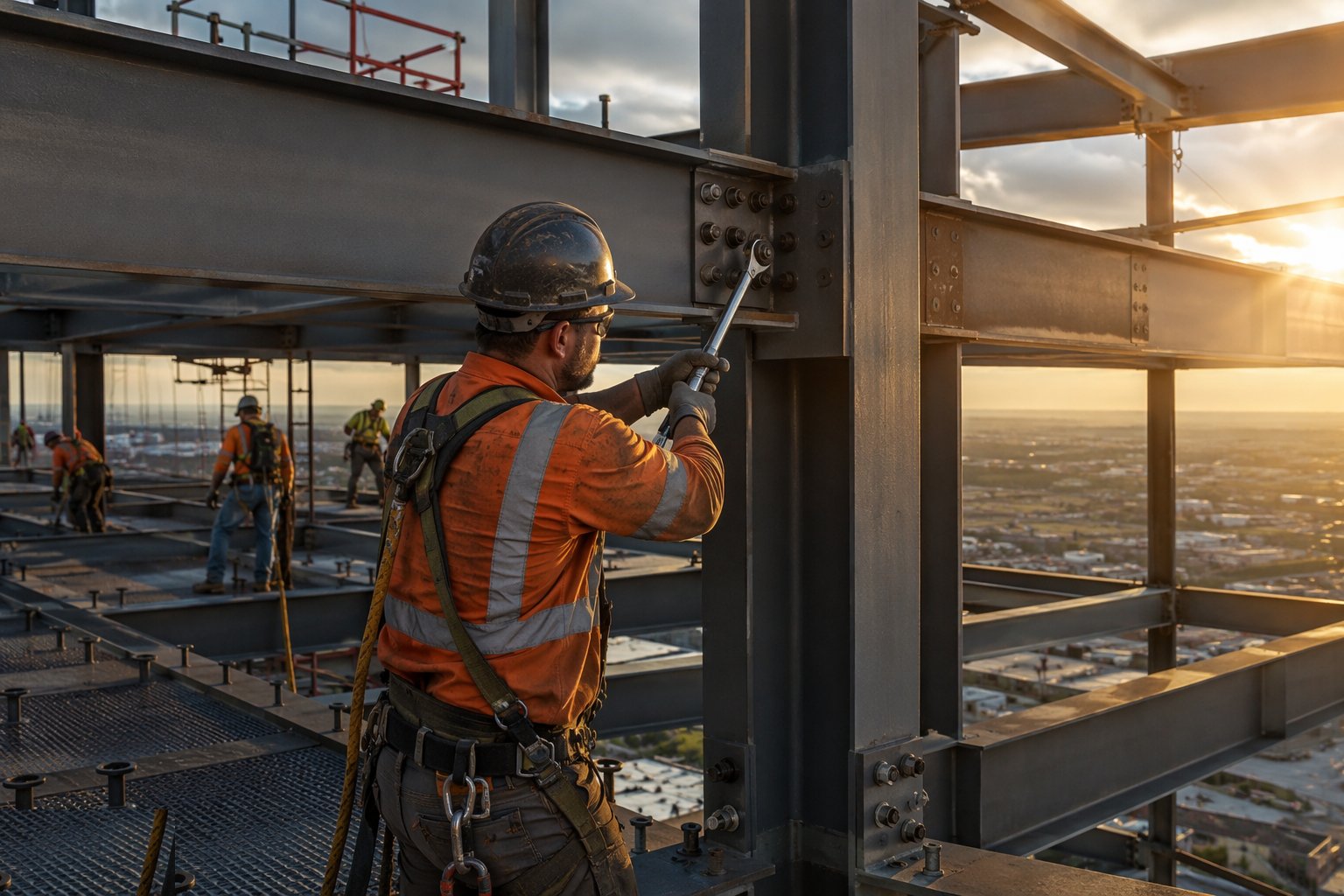
Step 5: Audit and release the floor
Before decking or follow-on trades cover the connections, the torque audit confirms every connection in the bay is complete and marked. Missing and wrong bolts are closed out with records. The connection sign-off releases the floor above - and the audit trail goes to the QA file.
What are the benefits of Bolted connections?
- Fastest site joint - keeps the crane cycle moving and the programme short
- Fully inspectable after installation - every connection can be audited
- Tolerant of minor fabrication and site adjustment
- No hot work - no welding weather limits, fire watch or NDT programme
- Demountable - future modifications and strengthening are practical
What are the limitations of Bolted connections?
- Connection material adds fabrication cost and member complexity
- Preloaded bolts are single-use with strict storage and installation discipline
- Hole tolerances punish poor fabrication - drifting and reaming invite defects
- Un-torqued connections hidden by follow-on trades are a standing structural risk
What is Bolted connections best suited for?
What plant does Bolted connections need?
- Calibrated torque wrenches and tension-control guns, with daily reference checks
- Erection spanners, podgers and drift pins
- MEWPs and connection access equipment
- Bolt storage and traceability system on site
- Torque verification and audit equipment
How is Bolted connections quality-checked?
- Bolt certification and grade traceability per connection type
- Calibrated equipment daily checks - recorded
- Tightening method verification: torque/tension sample or 100% per spec
- Marked-off connections with the audit before floor release
- Hole condition inspection - no unauthorised reaming or burning
More steel frame construction methods
Next method
Welded connections