Welded connections
Shop-welded by default, site-welded by exception - and inspected like it matters.
Last updated 2026-09-05
What is Welded connections?
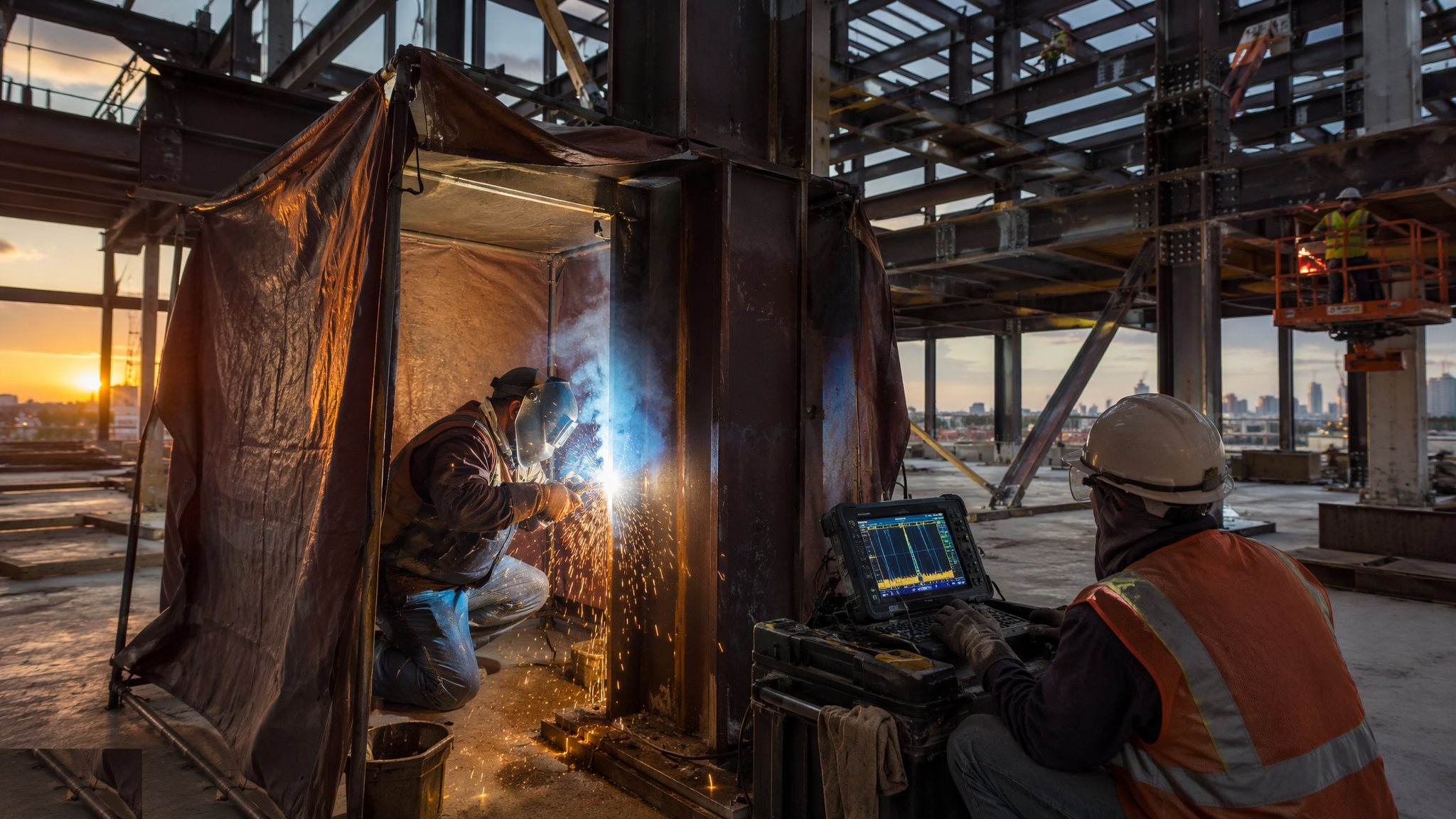
Welding is how steel connections are made in the fabrication shop: controlled environment, qualified welders, jigs, and inspection before paint. On site it is the exception, reserved for splices that must be continuous, special details and rectification - because site welding is expensive, weather-limited, access-constrained and hard to inspect well. When site welding is specified, it arrives with the full apparatus of welding quality control: approved procedures, qualified welders, and non-destructive testing per the specification.
The quality chain starts with the paperwork. Every weld has a Welding Procedure Specification - process, consumables, preparation, preheat, interpass temperature - and every welder is qualified to the procedure. Consumables are stored and dried per the manufacturer; a damp low-hydrogen electrode introduces hydrogen into a restrained joint and hydrogen cracks follow hours later. Preheat and interpass temperatures on thick or highly restrained joints are measured and recorded, not estimated by hand and prayer.
Inspection is layered: visual examination of every completed weld for profile, undercut, cracks and finish; then NDT - magnetic particle for surface cracks, ultrasonic for internal fusion - on the specified sample, 100% on critical joints. Defects are gouged out and re-welded under the same procedure, with the repair itself re-inspected. Site welds earn their keep where nothing else will do - full-strength moment splices, heavy section continuity - and everywhere else the correct response to a proposed site weld is a better bolted detail.
Process storyboard
Step 1 of 5 - slide through the snapshots.
STEP 1
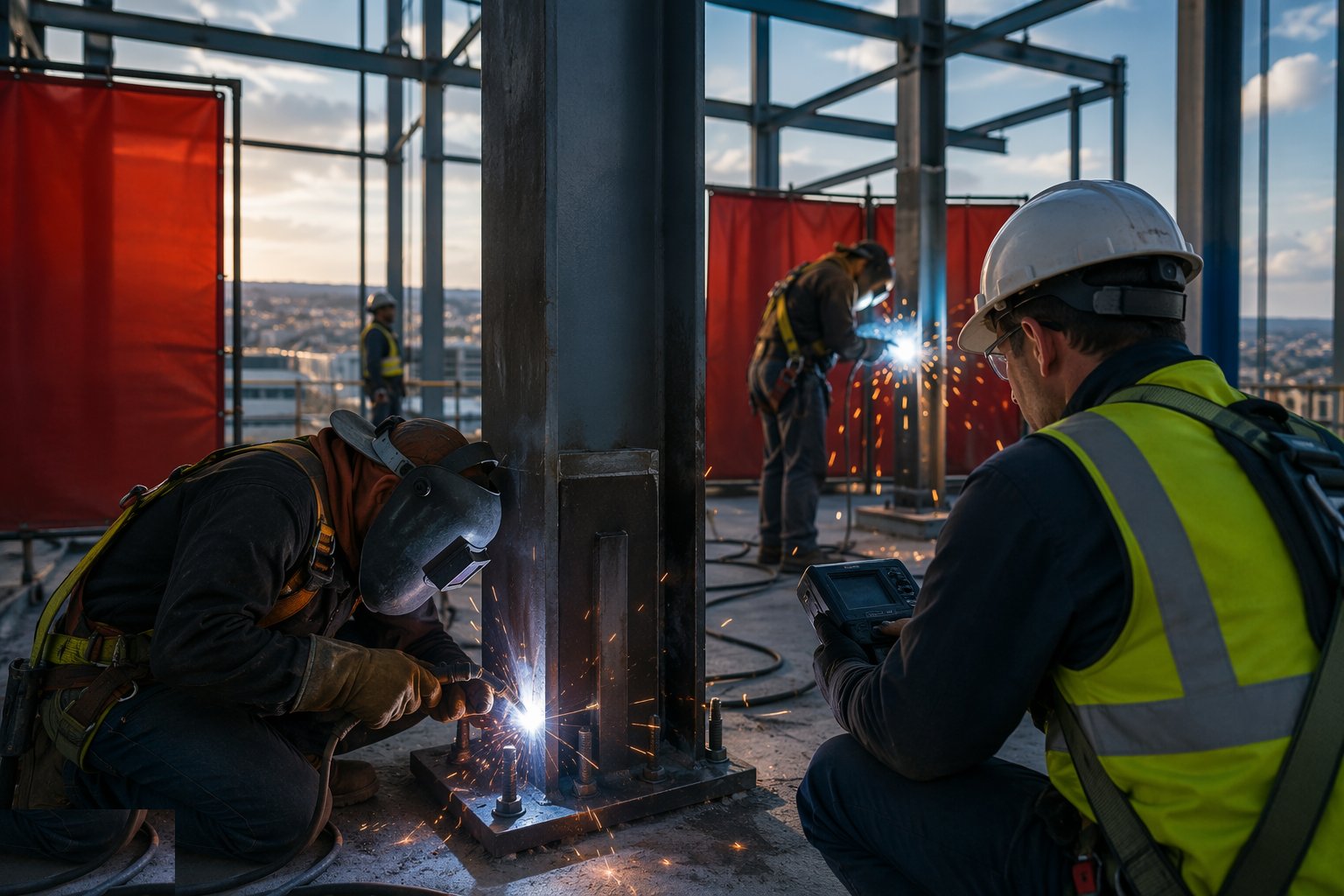
Approve procedures and qualify welders
Welding Procedure Specifications are approved for each joint type, position and thickness; welder qualifications are verified current and matching the…
How does Welded connections work, step by step?
- 1
Step 1: Approve procedures and qualify welders
Welding Procedure Specifications are approved for each joint type, position and thickness; welder qualifications are verified current and matching the procedure. Consumables are logged into controlled storage with drying records where required.
- 2
Step 2: Prepare and fit the joint
Edge preparation, root gap and alignment are checked against the WPS before arc strikes metal. Tack welds - made under the same procedure - hold the fit; weather protection goes up for wind and moisture, because a weld made in the rain is a weld that will be gouged out.
- 3
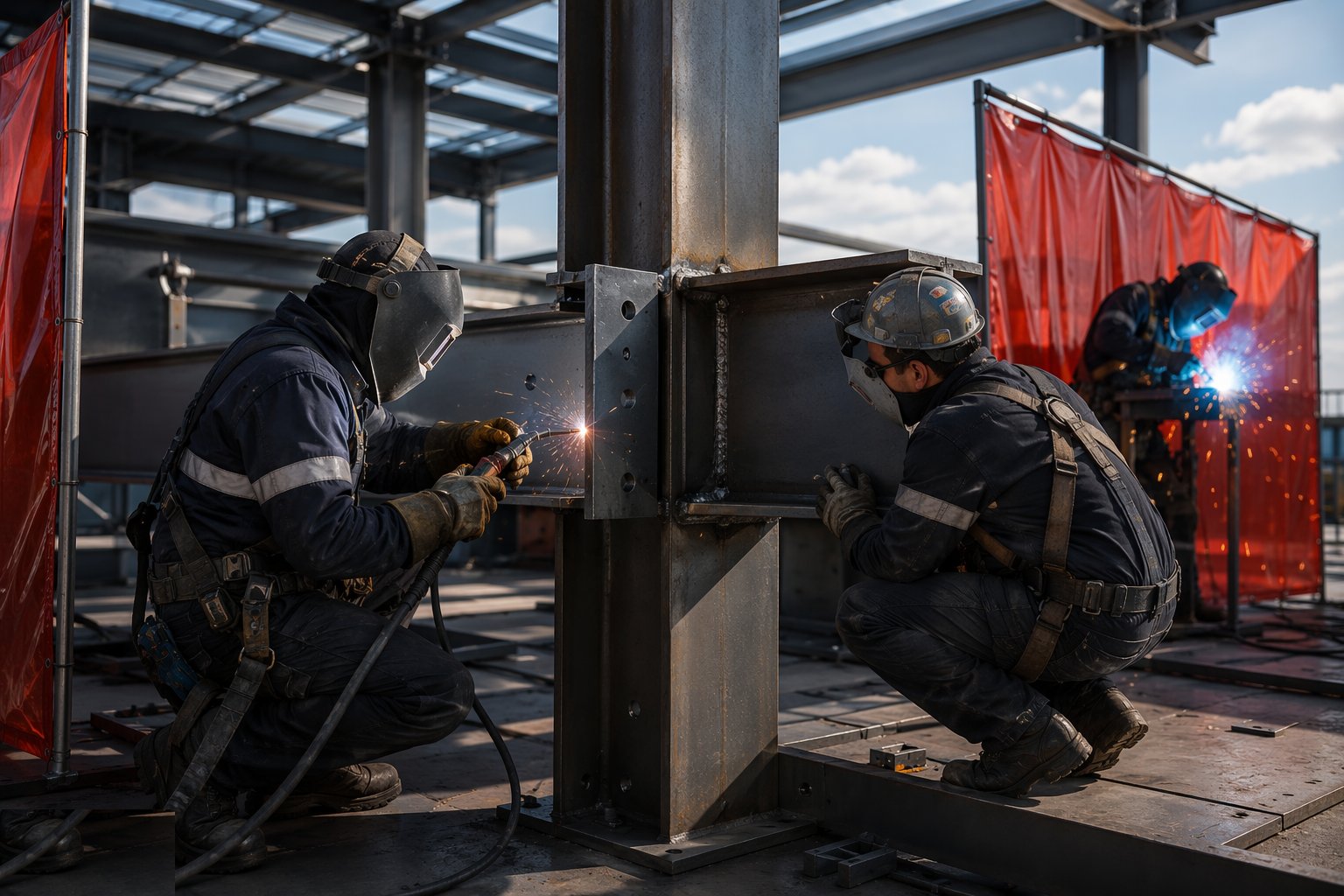
Step 3: Weld with controlled heat input
Preheat is applied and verified where specified; the weld is run in the designed pass sequence with interpass temperatures monitored. On thick restrained joints the thermal discipline is the quality control - cracking is a temperature event as much as a technique one.
- 4
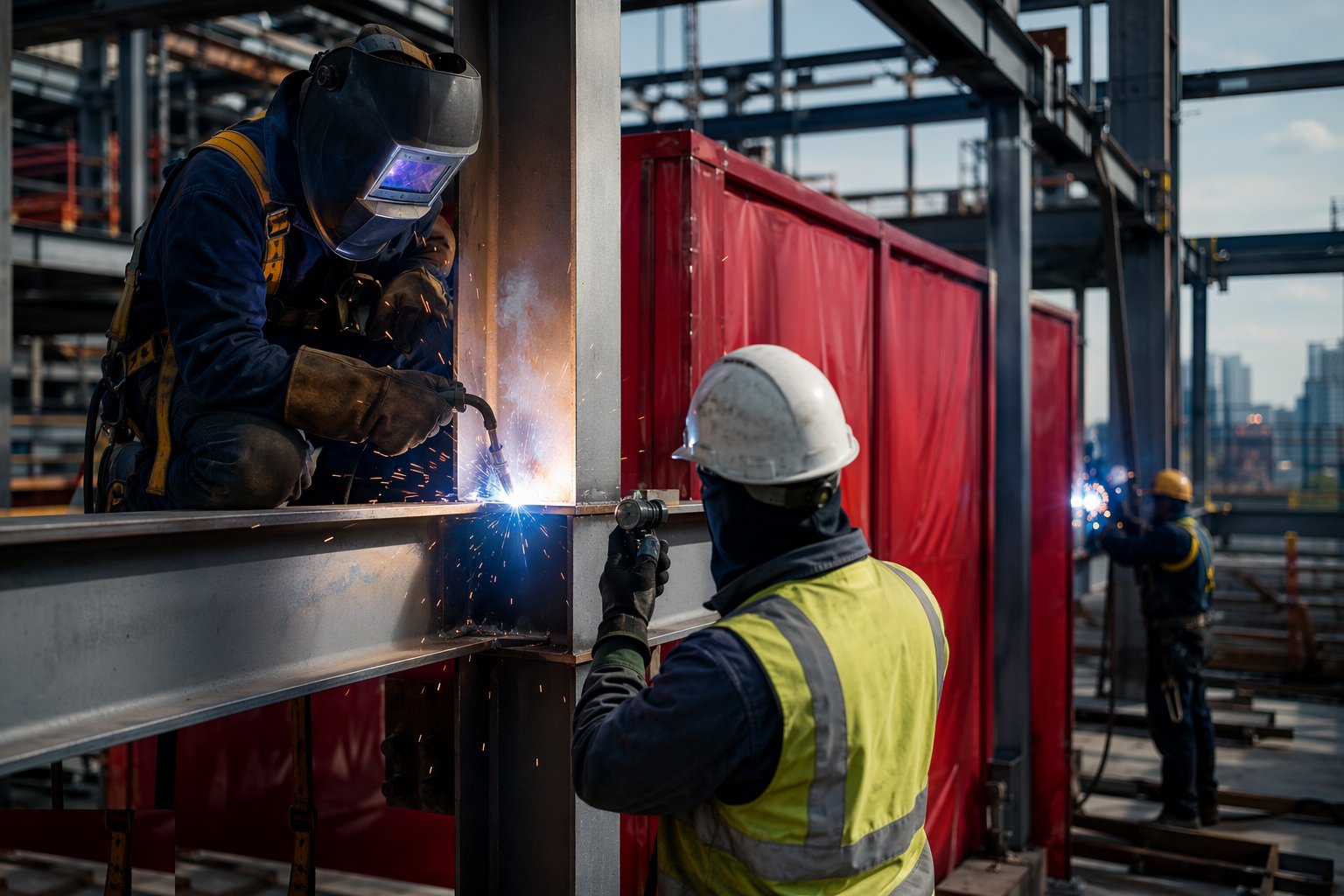
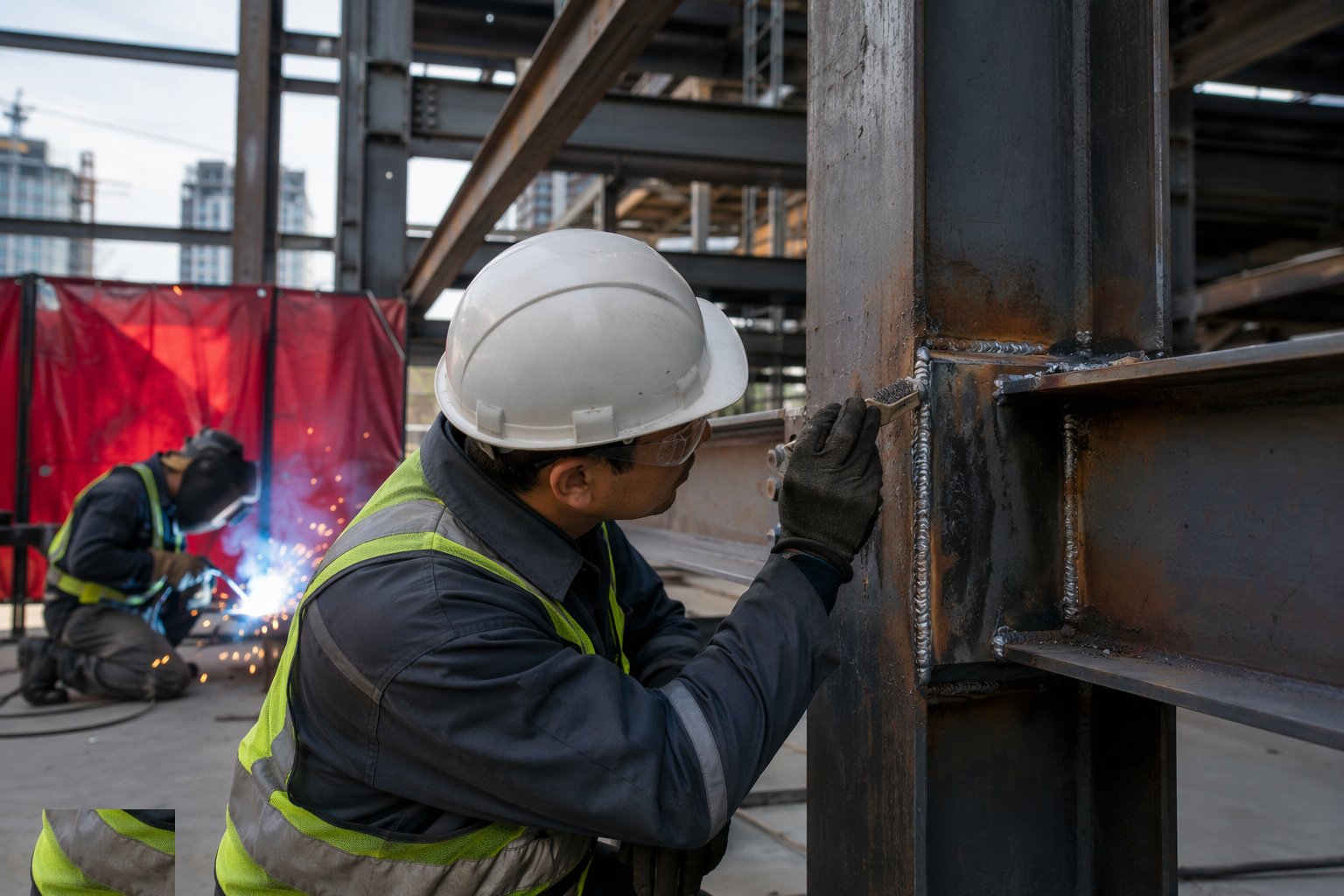
Step 4: Inspect visually, then NDT
Every weld gets visual examination after cleaning; the specified NDT follows - MPI for surface, UT for volume - by qualified examiners with recorded results. Acceptance criteria come from the specification, not the examiner's mood.
- 5
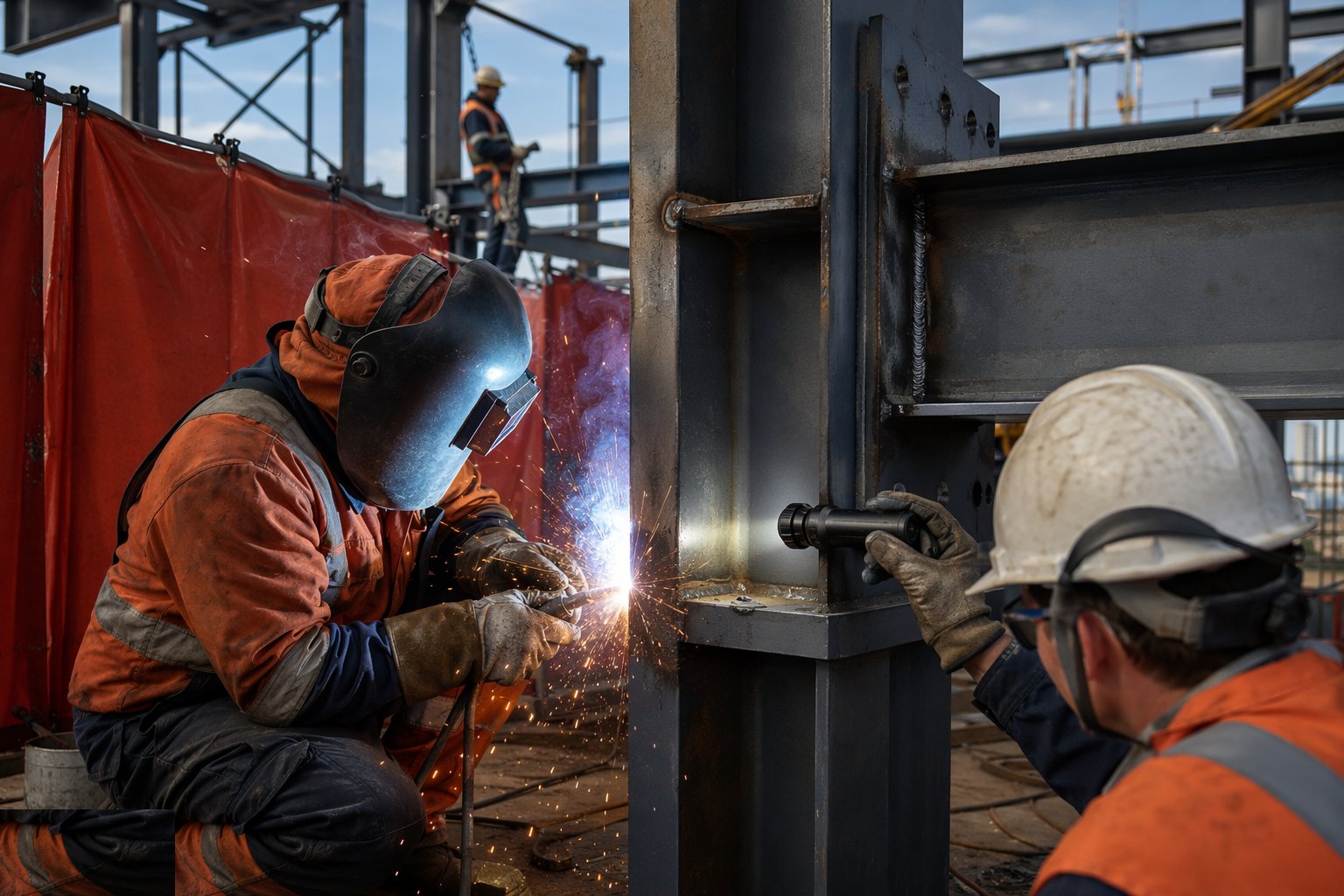
Step 5: Repair, re-inspect and record
Defects are excavated and repaired under the WPS, then re-inspected by the same methods. The weld map, welder log, consumable records, NDT reports and repair records form the welded connection QA file - a welded joint without records is an unknown joint.
What are the benefits of Welded connections?
- Full continuity and moment capacity - the strongest, stiffest connection available
- Clean details - no connection material projecting, suits exposed architecture
- No bolt tensioning or maintenance regime
- Shop welding delivers factory quality at factory productivity
What are the limitations of Welded connections?
- Site welding is expensive - welders, procedures, weather protection, NDT
- Weather and access limited - wind, moisture and position degrade quality
- Defects are internal and invisible without NDT - the inspection programme is mandatory
- Heat-affected zones and restraint demand thermal discipline on thick sections
- Hot work controls - fire watch, permits, fume extraction
What is Welded connections best suited for?
What plant does Welded connections need?
- Welding sets matched to process: MMA, MIG/MAG, FCAW
- Electrode ovens and consumable controlled storage
- Preheat equipment and temperature measurement crayons and gauges
- Welding shelters and weather protection
- NDT equipment: MPI kit, UT sets - with qualified examiners
- Fume extraction and hot-work fire watch equipment
How is Welded connections quality-checked?
- Approved WPS per joint; welder qualification records current
- Consumable storage and drying records
- Fit-up inspection: preparation, gap, alignment, preheat
- 100% visual examination; NDT sample per specification with reports
- Repair records with re-inspection results
- Weld map tying every joint to welder, procedure and inspection