Off-Site Logistics, Craneage and Tolerance
The unglamorous truth about MMC: it is a logistics problem wearing a hard hat - delivery slots, escorted loads, crane studies and the millimetre argument between the factory and the slab.
Last updated 2026-09-05
Typical duration
The logistics operation adds nothing visible and removes weeks: a well-run volumetric tower erects 3–6 modules per crane day; a badly-run one manages one and a half and bleeds the difference into standing time and damage. Route surveys and permits take 4–12 weeks of lead (escorted loads longer). Buffer sizing is the judgement call: two to five units buys resilience against a day or two of disruption; beyond that you are paying to store the factory's output on expensive land.
What is Off-Site Logistics, Craneage and Tolerance?
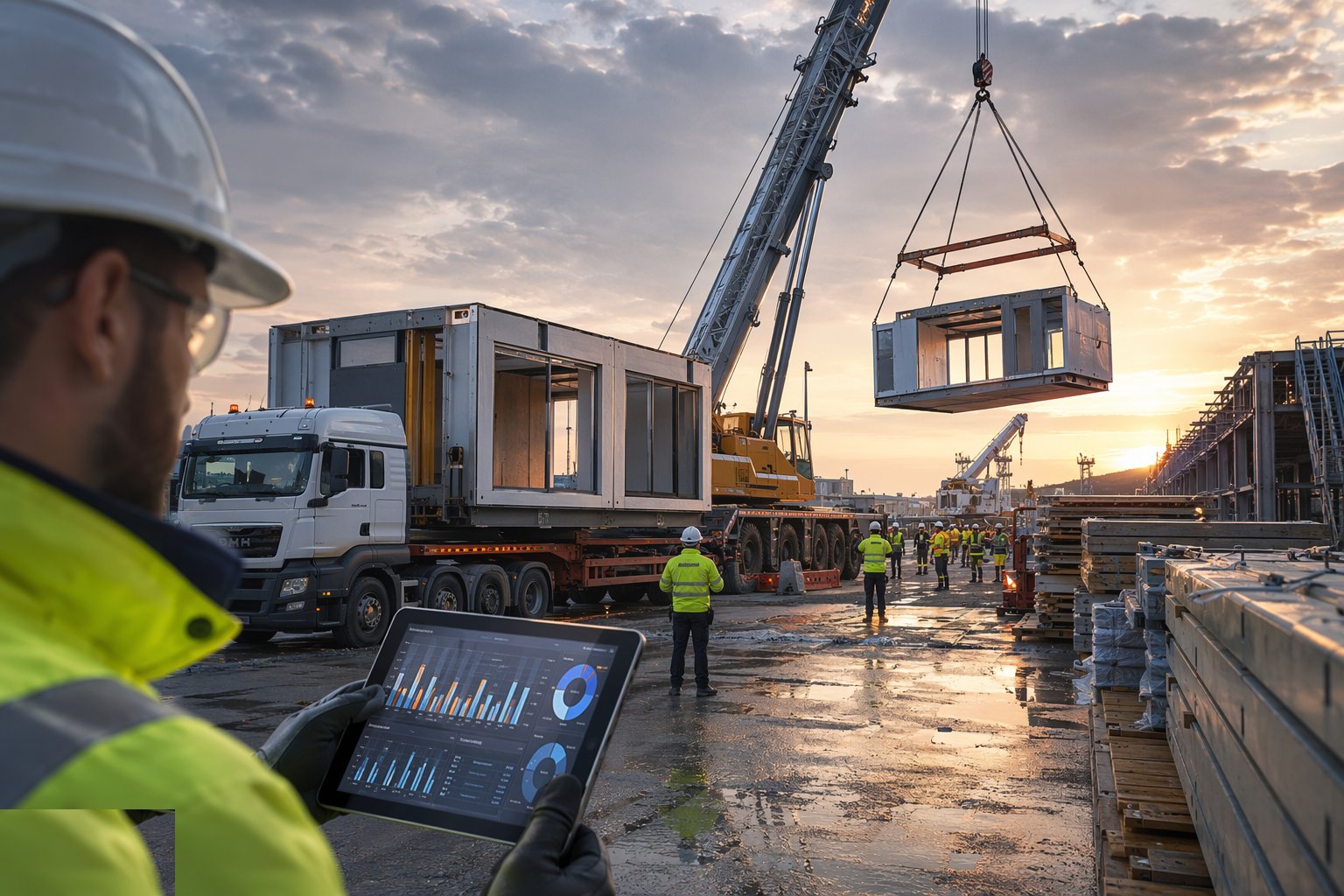
Ask why an off-site job slipped and the answer is rarely the factory. It is the lorry that arrived before the floor was ready and had nowhere to go; the module that would not pass the bridge on the planned route; the tower crane booked for the frame that could not lift a pod at radius; the unit that sat in laydown for six weeks and arrived at its floor with a crushed corner. Conventional construction forgives sloppy logistics because materials are small and the site can always stack another pallet of blocks. Off-site construction cannot: the deliveries are the biggest, heaviest, most fragile things on the job, they arrive on a factory's clock not the site's, and every one of them needs the crane - the same crane everything else needs.
The delivery strategy is the first decision: just-in-time, where the module comes off the lorry and straight onto the hook, or laydown, where a buffer stock sits on or near the site. Just-in-time is clean and cheap on space but brittle - one M25 closure, one RTA road closure in Dubai, and the crane stands. Laydown buys resilience at the price of space, double handling and damage: every unit handled twice is a unit that can be damaged twice, and stored pods and modules deteriorate - water in unfinished openings, sun through wrapping, support points settling. Most real jobs run a hybrid: a small buffer of two to five units, sized from an honest assessment of route reliability.
Then there is the tolerance argument, which is really an argument about who measures reality. The factory builds to ±2 mm against its drawings. The site builds to ±15 mm against its own. The module lands where the drawings say the two should meet, and they do not meet, and both parties produce survey instruments. The only resolution is agreed before manufacture: a single survey control, shared datum, defined interface tolerances with an adjustment mechanism that has enough range to absorb the worst credible stack-up. The sites that win the millimetre argument are the ones that refused to have it - they settled it on paper at design stage. In the UAE, add route surveys through developing areas where a roundabout appears between the survey and the delivery, escorted abnormal-load rules through the RTA or the relevant emirate, and heat that limits when wrapped modules can sit exposed.
Compare the methods at a glance
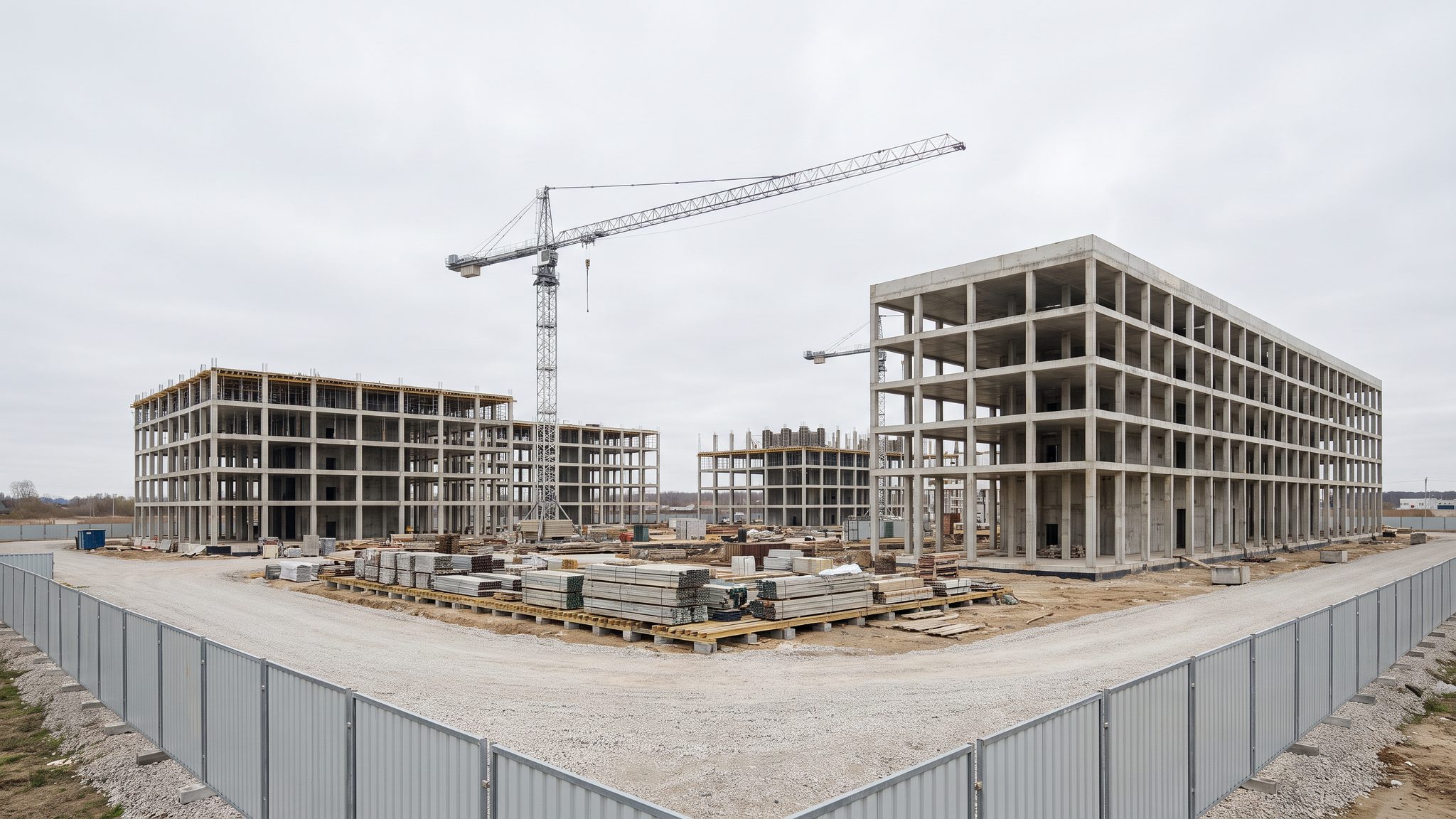
When and why is Off-Site Logistics, Craneage and Tolerance used?
This is not a process you choose; it is the discipline you need the moment any manufactured element larger than a pallet comes to site. It becomes a critical-path activity on volumetric jobs (every module is an abnormal-ish load), on tight urban sites with no laydown (just-in-time or nothing), on any job where the crane is shared between erection and the conventional trades, and wherever the route to site involves weak bridges, low wires, weight limits or escorted-load rules. Ignore it and the factory's speed simply moves the bottleneck from the works to the gate.
Walkthrough storyboard
The process in pictures, step by step - Step 1 of 8 - slide through the snapshots.
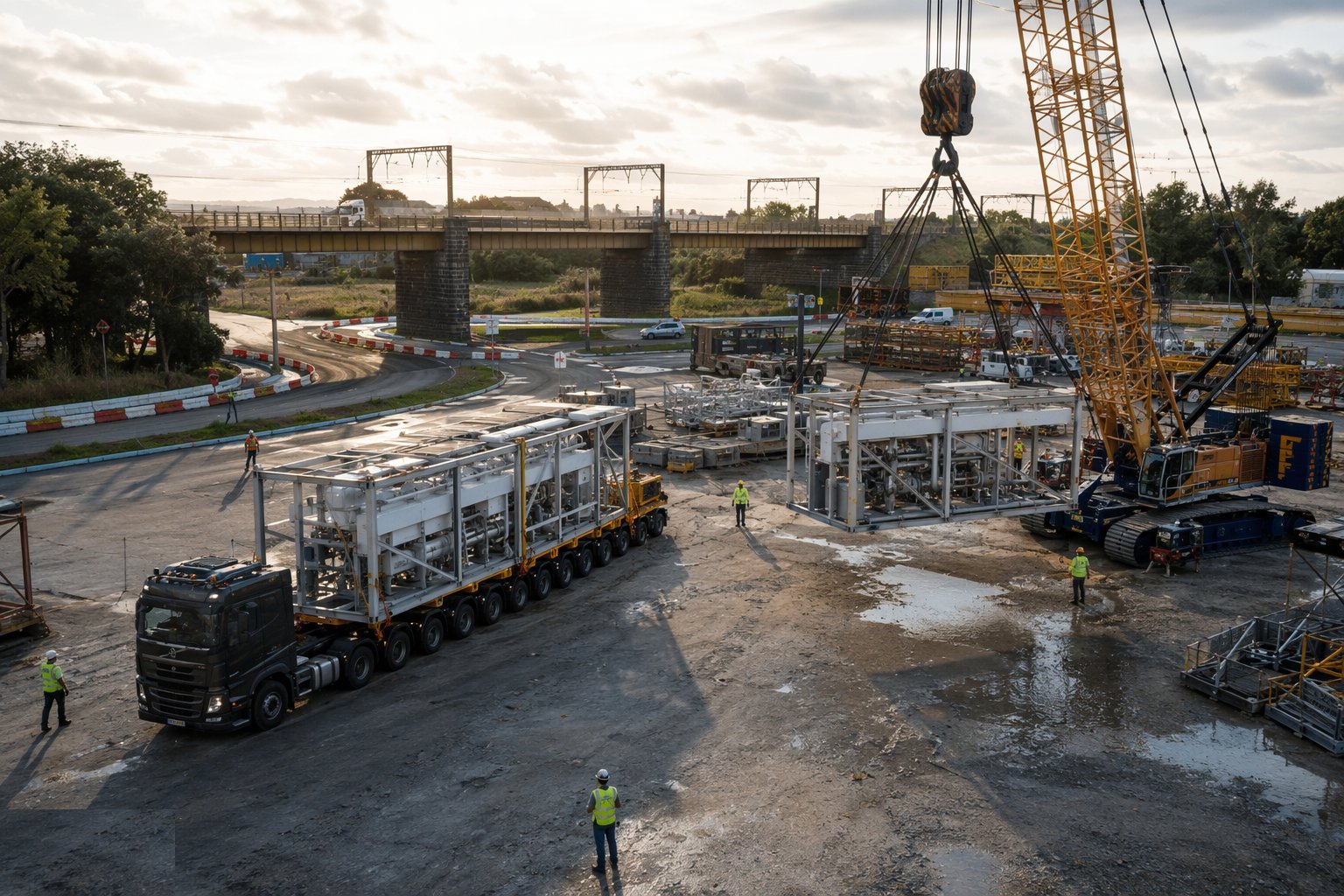
STEP 1
Run the route survey before the factory designs the unit
The maximum module size is set by the worst pinch point between the factory gate and the crane hook - bridge heights and weights, roundabout geometry, overhead…
Types of Off-Site Logistics, Craneage and Tolerance
Explore each method in depth - benefits, limitations, plant and quality control on its own page.
Just-in-time delivery
Lorry to hook to structure in one movement, timed to a booked crane slot. Zero storage, zero double handling - and zero tolerance for traffic, weather or a floor that is not ready.
Explore this methodBuffered laydown
A managed stock of two to ten units held on site or in a nearby compound: engineered support points, protection, inspection on receipt and before erection. Buys resilience; costs space and introduces storage damage risk.
Explore this methodConsolidation centre
Deliveries marshalled off-site at a logistics hub, inspected, sequenced and called forward in erection order on the just-in-time clock. The standard answer for city-centre sites with no gate capacity; standard practice on large UAE giga-projects.
Explore this methodAbnormal and escorted loads
Modules and pods over standard dimensions moving under notification, escort and route-specific rules - police or private escorts, night movements, route surveys with swept-path analysis. UK rules via the police/ESDAL notifications; UAE via RTA and emirate-level permits with approved routes and timings.
Explore this methodBest suited for
- Any volumetric or pod job - logistics is the critical path in disguise
- City-centre sites with no laydown: consolidation centres and just-in-time slots
- Tight-programme towers where the crane diary decides the completion date
- UAE giga-projects with long hauls, permit regimes and brutal storage climates
- Jobs where the interface register exists and someone enforces the millimetre protocol
Off-Site Logistics, Craneage and Tolerance: step by step
- 1
Step 1: Run the route survey before the factory designs the unit
The maximum module size is set by the worst pinch point between the factory gate and the crane hook - bridge heights and weights, roundabout geometry, overhead wires, site gate width, ground bearing at the unloading position. The route survey is done physically, with swept-path analysis for the worst moves, and re-validated before the first delivery and periodically after - roads change, and in fast-developing UAE districts they change monthly. Escort and notification requirements are identified here: dimensions, weights, travel windows, and who books them.
- 2
Step 2: Write the delivery schedule against the erection sequence
Every unit gets a delivery slot tied to an erection slot tied to a verified state of readiness - floor cast, cured, surveyed, landing proven. The schedule runs backwards from the crane's diary, not forwards from the factory's convenience, and every slot carries a readiness checklist that someone signs 72 hours ahead. A lorry that arrives to an unready floor is the programme's fault, not the driver's, and the cost - standing time, re-delivery, factory storage overflow - lands back on the job.
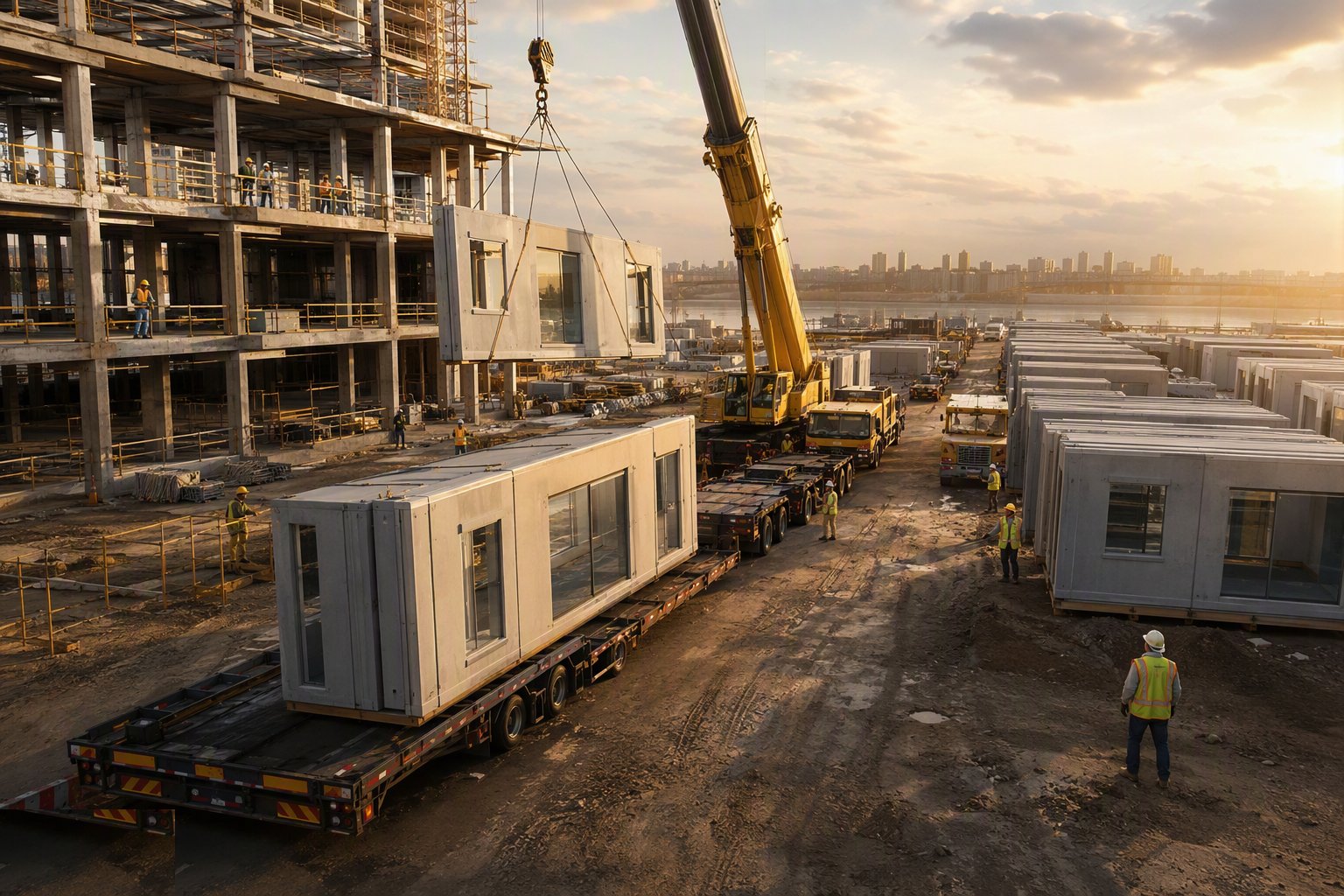
- 3
Step 3: Select the crane from the module weights, not the frame
The lift study starts with the heaviest unit at the furthest position - modules at 8–15 tonnes at full building radius routinely out-size the crane the frame needed - and checks duty: can this crane turn over four to eight heavy picks a day, in the wind, for six months? Free-standing height, tie positions, and the pick route over live parts of the site are engineered. If the numbers say a bigger crane or a second crane, that is a six-figure decision made at tender, not a surprise at floor three.
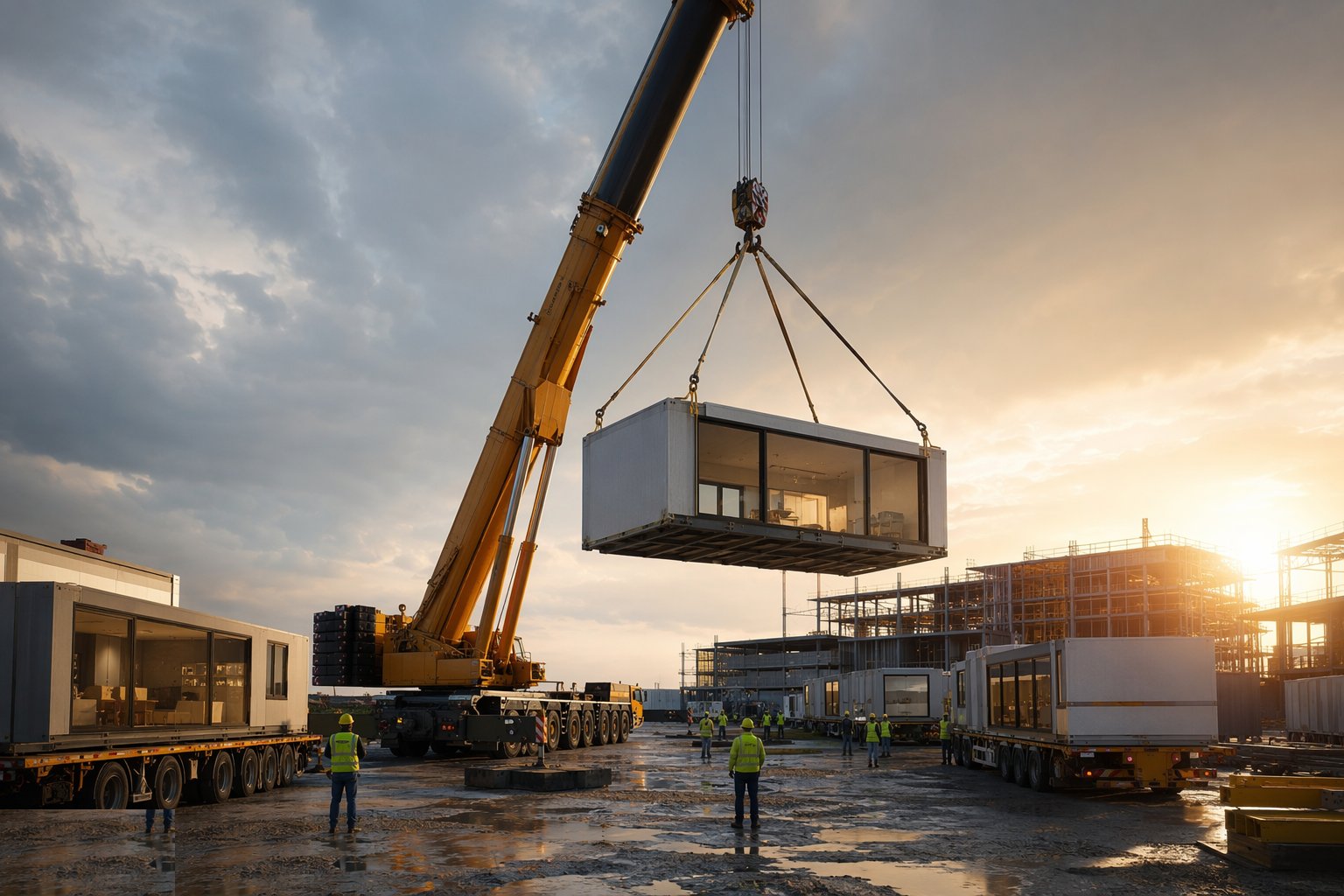
- 4
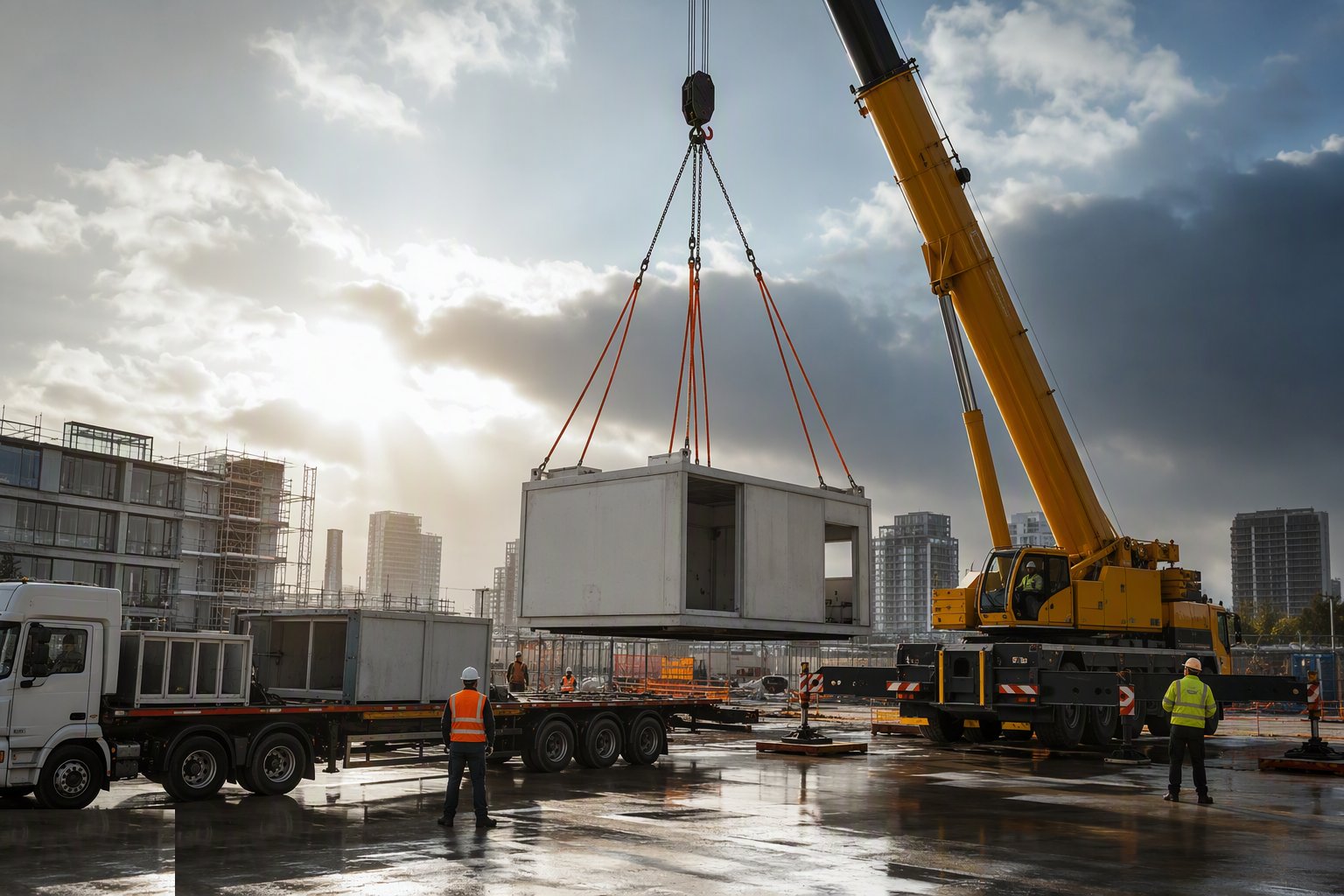
Step 4: Engineer the unloading position and the lift itself
The lorry parks where the crane can reach it within capacity - ground bearing proven for the combined lorry, unit and outrigger loads, overhead clearance checked, and the pick made vertical so nothing drags. Every unit lifts on designed points with certified tackle; a module lifted on ad hoc slings bends, and a bent module is a very expensive skip. Lifts run under a lift plan with an appointed person, exclusion zones and tag lines - a 12-tonne box does not forgive improvisation.
- 5
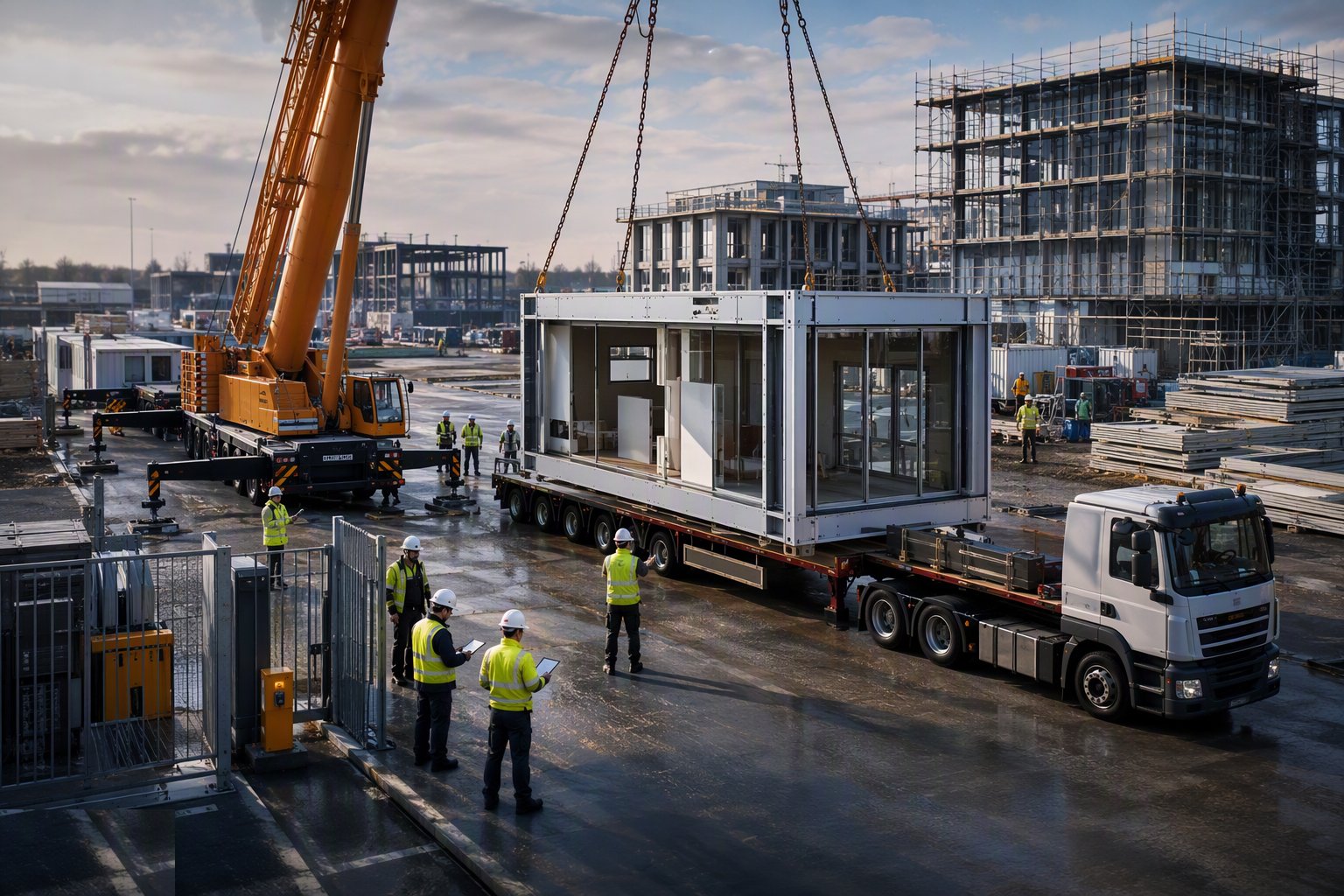
Step 5: Receive, inspect and either erect or store properly
At the gate: unit identity against the schedule, transit damage inspection with photographs, factory certificates collected. Erect now or store properly - level engineered bearers at the designed support points, never on jacks or corners; openings re-sealed; wrapping intact; in the UAE under shade, because a wrapped module at ambient 45 °C is an oven. Stored units are logged with dates and re-inspected before erection; storage damage discovered at the hook is a day gone.
- 6
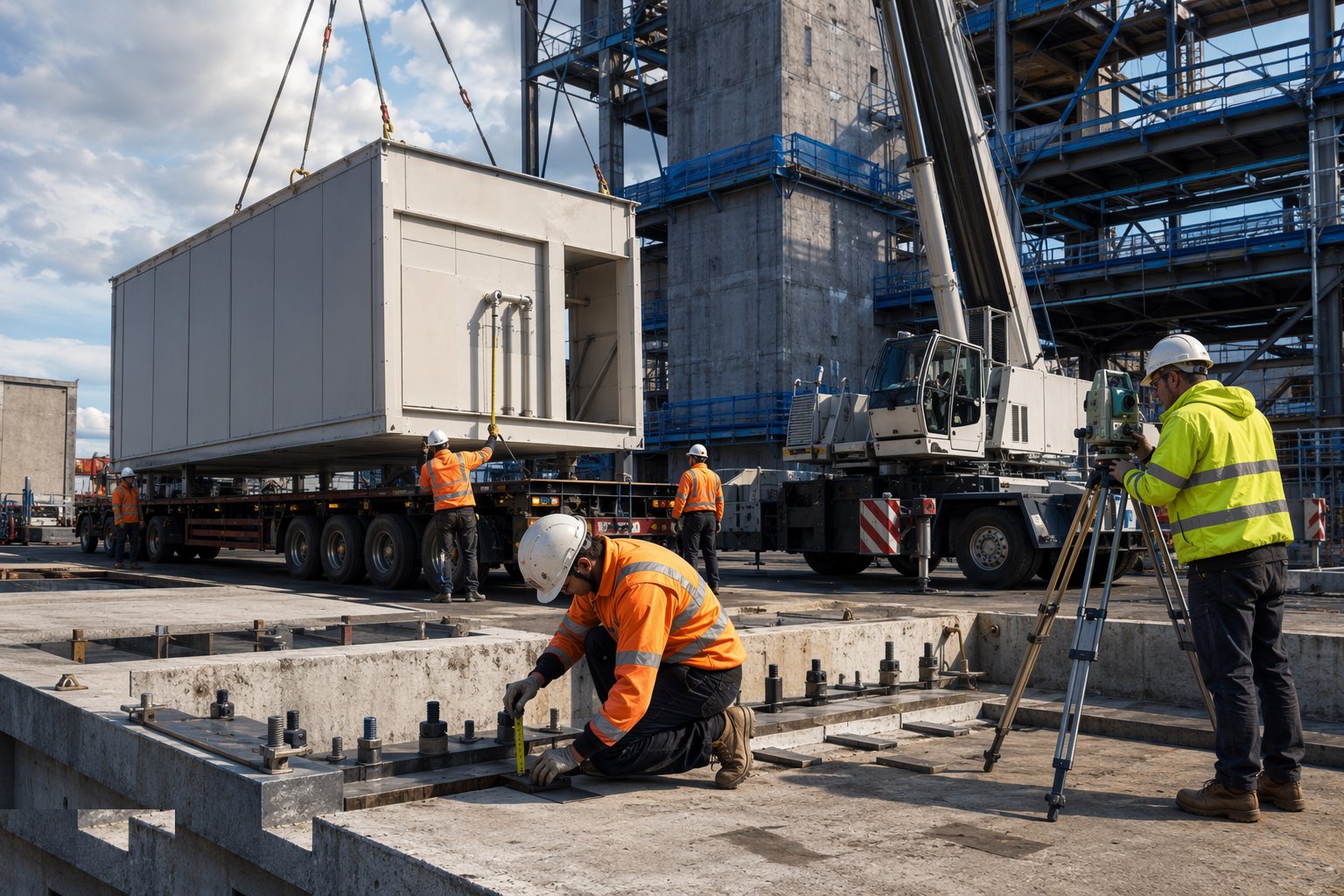
Step 6: Run the millimetre protocol at every landing
The tolerance protocol agreed at design stage is executed without argument: shared datum, as-built survey of the landing issued before dispatch, landing adjustment made on the ground within the designed mechanism, and the unit set down once. Disputes route to the interface register, not to the crane driver. The survey data flows back to the factory weekly so production tracks the building's real geometry - a factory blind to site drift is manufacturing tomorrow's argument.
- 7
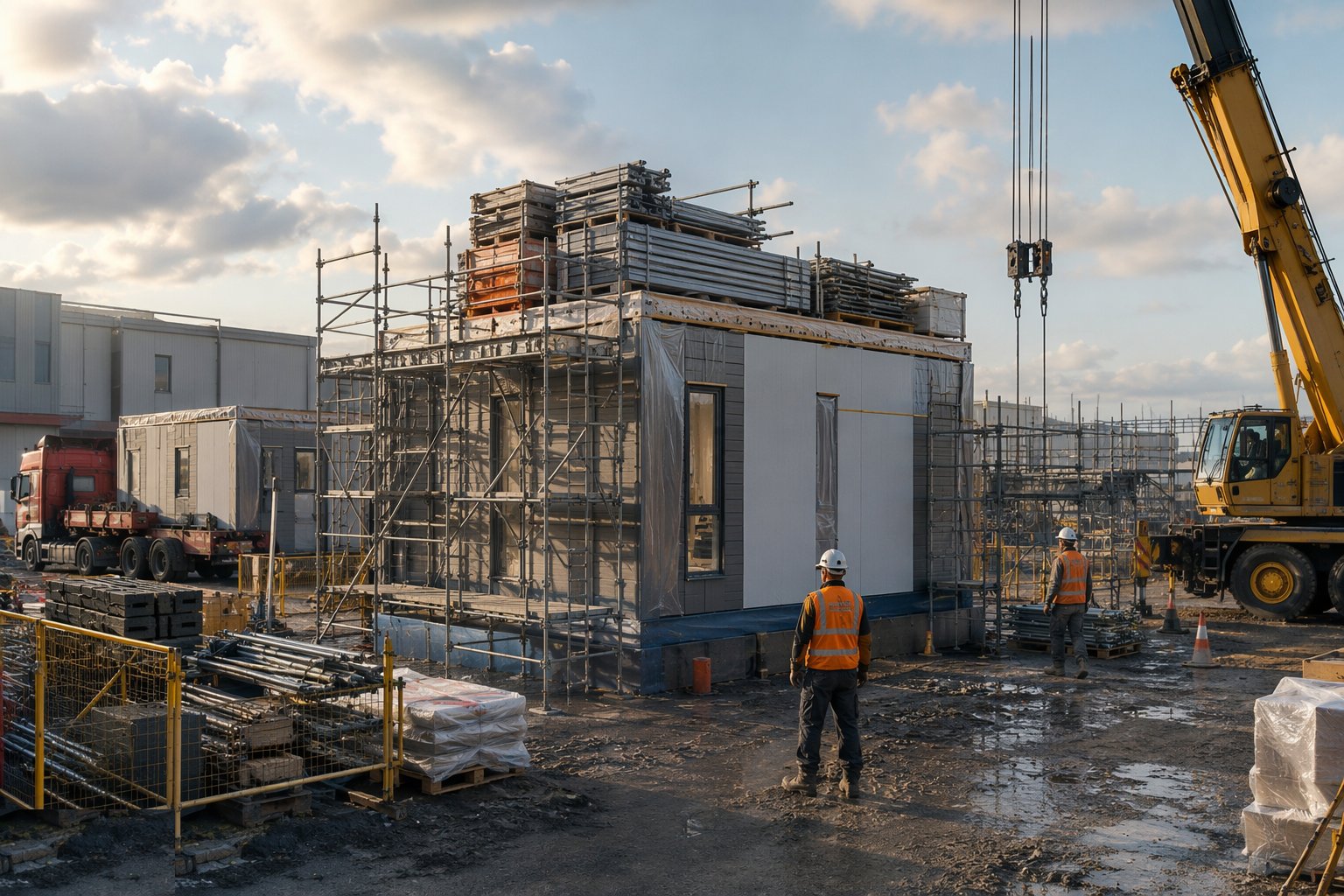
Step 7: Protect the erected unit and manage the follow-on traffic
A landed module on a live site is a magnet for damage: scaffold clips on its walls, materials stacked on its roof, trades cutting through it. Protection is specified like a finished room - access control, loading limits, no-fix zones marked - because factory finishes do not survive site behaviour. Lifting and delivery plans for conventional materials are rerouted around erected modules; the crane schedule that forgot the façade panels needed the same hook as tomorrow's pods is how the façade slips a month.
- 8
Step 8: Close the loop - KPIs, damage log and claims evidence
The logistics operation measures itself: slot adherence, crane utilisation on erection picks, units damaged in transit/storage/handling, survey non-conformances. The damage log with photographs is the claims evidence - transit damage to the haulier or factory, storage damage to whoever owned the laydown, erection damage to the lifting crew - and it settles fast only if the receipt inspections were done properly. Without the loop, every MMC job re-learns the same lesson at floor six.
Plant & equipment
- Tower cranes selected for module weights at radius; mobile cranes for low-rise set-down
- Spreaders, lifting beams, certified multi-leg slings and pod frames
- Flat-bed and extendable trailers with engineered transport frames
- Escort vehicles and route-survey kit including swept-path software
- Engineered storage bearers, cradles, shade structures and re-sealing materials
- Total stations and precision levels for the landing survey protocol
- Delivery management system: slot booking, readiness checklists, unit tracking
- Tag lines, exclusion-zone barriers and anemometers at the crane
Quality control & testing
- Route survey documented, re-validated, and matched to the unit dimensions before manufacture
- 72-hour readiness sign-off per delivery slot: floor cast, cured, surveyed, landing proven
- Crane capacity study signed for heaviest unit at worst radius with duty cycle checked
- Gate receipt inspection per unit: identity, transit damage, certificates, photographs
- Storage log: support points, protection, dates, re-inspection before erection
- As-built landing survey issued to the factory before dispatch of dependent units
- Damage log maintained with causation for claims and feedback
Safety watchpoints
- Abnormal-load movements to notified routes, windows and escort rules - RTA permits in the UAE
- Lifting operations under lift plans: appointed person, slinger/signallers, exclusion zones
- Ground bearing proven at unloading and storage positions - outriggers and bearers on engineered fill
- No personnel under or beside suspended units; tag lines on every pick
- Wind limits for large-sail-area modules monitored and enforced
- Storage stack stability - units chocked, bearer settlement checked after rain or heat
- Night deliveries lit and marshalled; driver welfare and site induction for every haulier
Common defects to hunt
- Unit arrives before the floor is ready - standing time, re-delivery, factory storage overflow
- Route survey stale: new roundabout, bridge weight limit or site gate rebuild strands the load
- Crane selected for the frame cannot lift modules at radius - re-crane at six figures
- Double-handled units damaged in laydown: crushed corners, water in openings, sun-cooked sealants
- Modules lifted on ad hoc slings and permanently distorted
- Landing tolerance exceeded and argued about at the hook instead of settled on the ground
- Erected modules used as stores and work platforms - factory finishes destroyed before handover
- Crane diary double-booked between erection and conventional trades - both programmes slip
How long does Off-Site Logistics, Craneage and Tolerance take?
Typical duration: The logistics operation adds nothing visible and removes weeks: a well-run volumetric tower erects 3–6 modules per crane day; a badly-run one manages one and a half and bleeds the difference into standing time and damage. Route surveys and permits take 4–12 weeks of lead (escorted loads longer). Buffer sizing is the judgement call: two to five units buys resilience against a day or two of disruption; beyond that you are paying to store the factory's output on expensive land..
Related processes
- Bathroom Pods, Riser and Plant Modules
- Design for Manufacture and Assembly
- Site-Based MMC - Tunnel Form, Jump Form, Slipform, ICF
- Hybrid MMC - Modules on Podiums, Precast on Cores
- 3D Printing and Additive Construction
- Modern Methods of Construction - What They Actually Are
- Volumetric Modular Construction
- Panelised Systems - Open and Closed Panel
- SIPs, Floor and Roof Cassettes
- Precast Concrete Structures
- Just-in-time delivery - method
- Buffered laydown - method
- Consolidation centre - method
- Abnormal and escorted loads - method
- Off-Site & Modern Methods sector guide
- Buildings - group of sectors