Craneage and Lifting Operations
Choosing, standing and running the cranes that feed the whole site - lift planning under BS 7121, ground bearing, wind limits and the people who make a lift legal.
Last updated 2026-09-05
Typical duration
Mobile crane mobilisation and a day's steel erection: one to three days on site per visit. Tower crane install to climbing operation: a week, then standing 12–24 months on a tower. Lift planning lead time: days for basic lifts, weeks for complex and tandem picks.
What is Craneage and Lifting Operations?
The crane is the most expensive and most lethal piece of plant on most sites, and the one everything else queues behind. Choosing it is an engineering decision before it is a commercial one: what is the heaviest load, at what radius, to what height, and where can the crane physically stand? Tower cranes dominate towers and tight urban plots because they live inside the footprint and reach everything; mobile cranes arrive, lift and leave for planned heavy picks like steel erection and precast; crawlers earn their keep on big open sites and infrastructure where they can track with load. In the UAE the tower crane density on a Dubai marina plot can reach four or five on one footprint, with anti-collision systems zoning every slew.
Every lift in the UK sits inside BS 7121 and the LOLER regime: an Appointed Person plans the lifting operations, a lift supervisor runs them, a slinger/signaller attaches and directs the load, and the operator drives. Lifts are categorised - basic (routine, within standard plans), intermediate and complex (tandem lifts, lifts over live areas, blind lifts, personnel lifts) - and the category sets the planning depth. A written lift plan exists before the hook does. The crane itself stands on verified ground: mobile crane outrigger loads can exceed 100 tonnes on a pad the size of a door mat, so ground bearing calculations and crane mats or a purpose-built crane platform are part of the plan, not an afterthought. The crane that sank an outrigger into a backfilled service trench is a story every city has.
Wind is the other hard limit. Every crane and every load has a maximum operating wind speed - often 38–45 mph at the hook for general work, much lower for large-sail-area loads like panels, formwork tables and cladding - and anemometer readings at height decide whether the afternoon's lifts happen. Shutdown and out-of-service conditions (weathervaning the jib, releasing the slew brake) are part of the daily routine, and in the Gulf the shamal can shut a skyline of tower cranes in an hour.
Compare the methods at a glance
When and why is Craneage and Lifting Operations used?
Craneage decisions happen at tender and mobilisation, because the crane choice shapes the site layout, the temporary works (bases, ties, platforms) and the programme itself. Tower cranes go in early on towers and dense plots and leave late; mobile cranes are booked per operation for steel, precast, plant installation and heavy MEP lifts. The planning question is always the same chain: load weight and dimensions → radius and height → crane capacity at that configuration → where it stands → what the ground takes → who plans and supervises the lift. Complex lifts - tandem picks, lifts over occupied or live areas, blind lifts, personnel in man-riding baskets - get individual engineered plans with their own sign-offs.
Walkthrough storyboard
The process in pictures, step by step - Step 1 of 9 - slide through the snapshots.

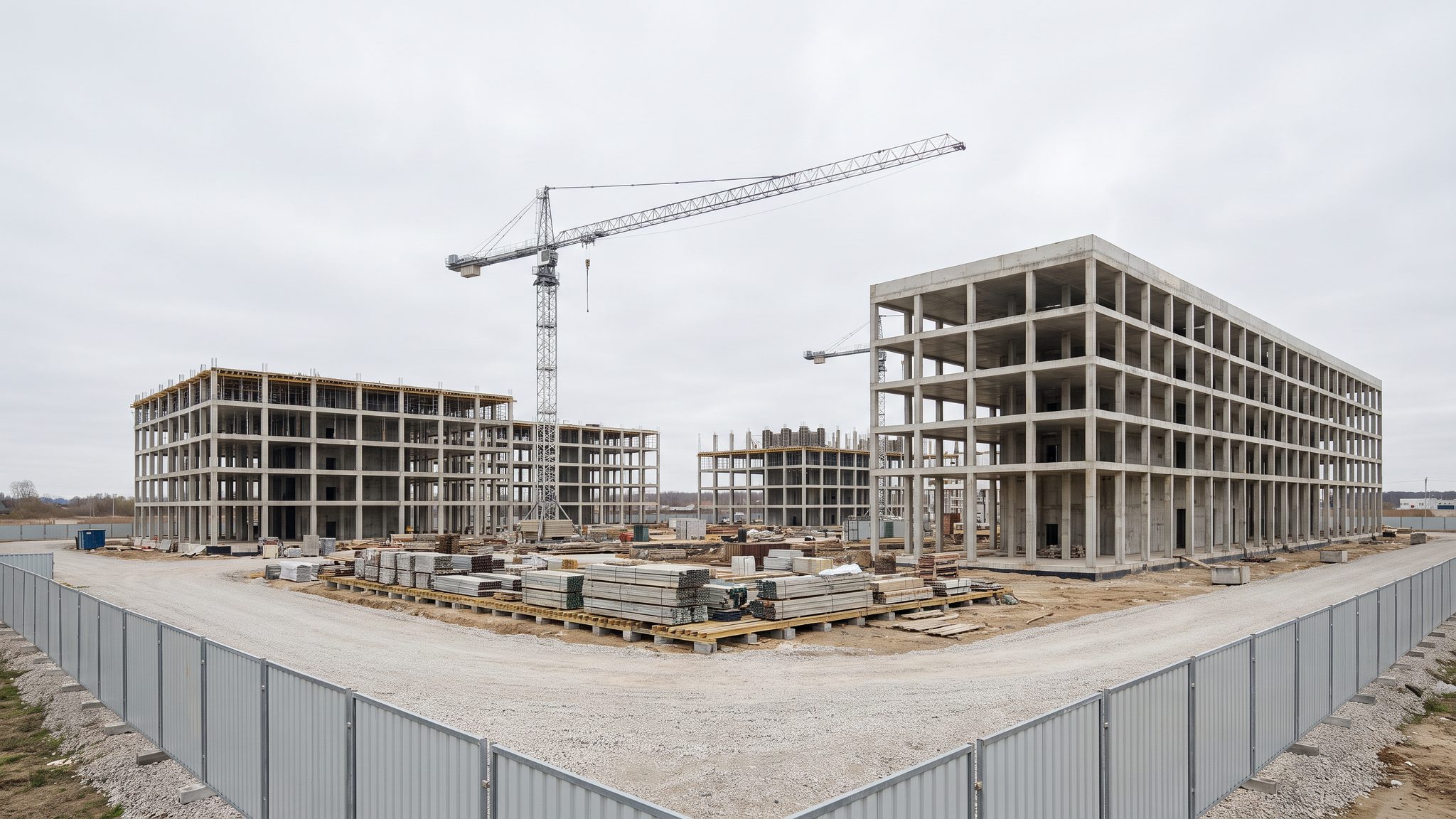
STEP 1
Define the lift requirements
Start with the schedule of lifts: heaviest loads, largest sail areas, furthest radii, highest hook heights, and how many lifts per day the programme needs.
Types of Craneage and Lifting Operations
Explore each method in depth - benefits, limitations, plant and quality control on its own page.
Tower cranes
Hammerhead, luffing-jib and topless cranes on concrete bases, tied to the structure as it rises. The fixed logistics hub of tower and dense urban construction; luffers where oversailing rights or airspace restrict the jib.
Explore this methodMobile cranes
Telescopic all-terrain cranes from 40 to 1000+ tonnes that arrive rigged or rig on site, lift and demobilise. The default for steel erection, precast placement, plant lifts and any one-off heavy pick.
Explore this methodCrawler cranes
Lattice-boom cranes on tracks that can pick-and-carry across open sites - bridge works, energy projects, heavy civil. Slow to mobilise, unbeatable capacity and reach, and need a levelled, compacted platform to work from.
Explore this methodCompact and specialist lifting
Spider cranes, mini crawlers, gantry systems and lorry loaders for the gaps the big machines cannot reach - plant rooms, courtyards, inside structures. Same rules: planned lifts, verified ground, competent people.
Explore this methodBest suited for
- Tower cranes: high-rise frames, dense urban plots, continuous daily lifting
- Mobile cranes: steel and precast erection, plant installation, one-off heavy picks
- Crawler cranes: bridge beams, energy and infrastructure works on open ground
- Compact cranes: plant rooms, courtyards and interiors the big machines cannot reach
- Any site where the logistics plan and the crane plan are the same document
Craneage and Lifting Operations: step by step
- 1
Step 1: Define the lift requirements
Start with the schedule of lifts: heaviest loads, largest sail areas, furthest radii, highest hook heights, and how many lifts per day the programme needs. This produces the load chart demands - a 12-tonne precast panel at 40 m radius is a very different crane from a 2-tonne skip at 20 m. Include the assembly and dismantling of the crane itself; erecting a tower crane is a major mobile-crane lift with its own plan.
- 2
Step 2: Select and position the crane
Match the load chart to the demand and position the crane where the radius coverage actually works - drawn on the site layout, with slew zones, oversailing boundaries and clash checks against neighbouring cranes and structures. Tower crane bases and ties are designed temporary works; mobile crane standing positions are chosen for verified ground, away from basements edges, backfilled trenches and live services. Oversailing neighbours or public highway triggers the legal and licensing conversations early.
- 3
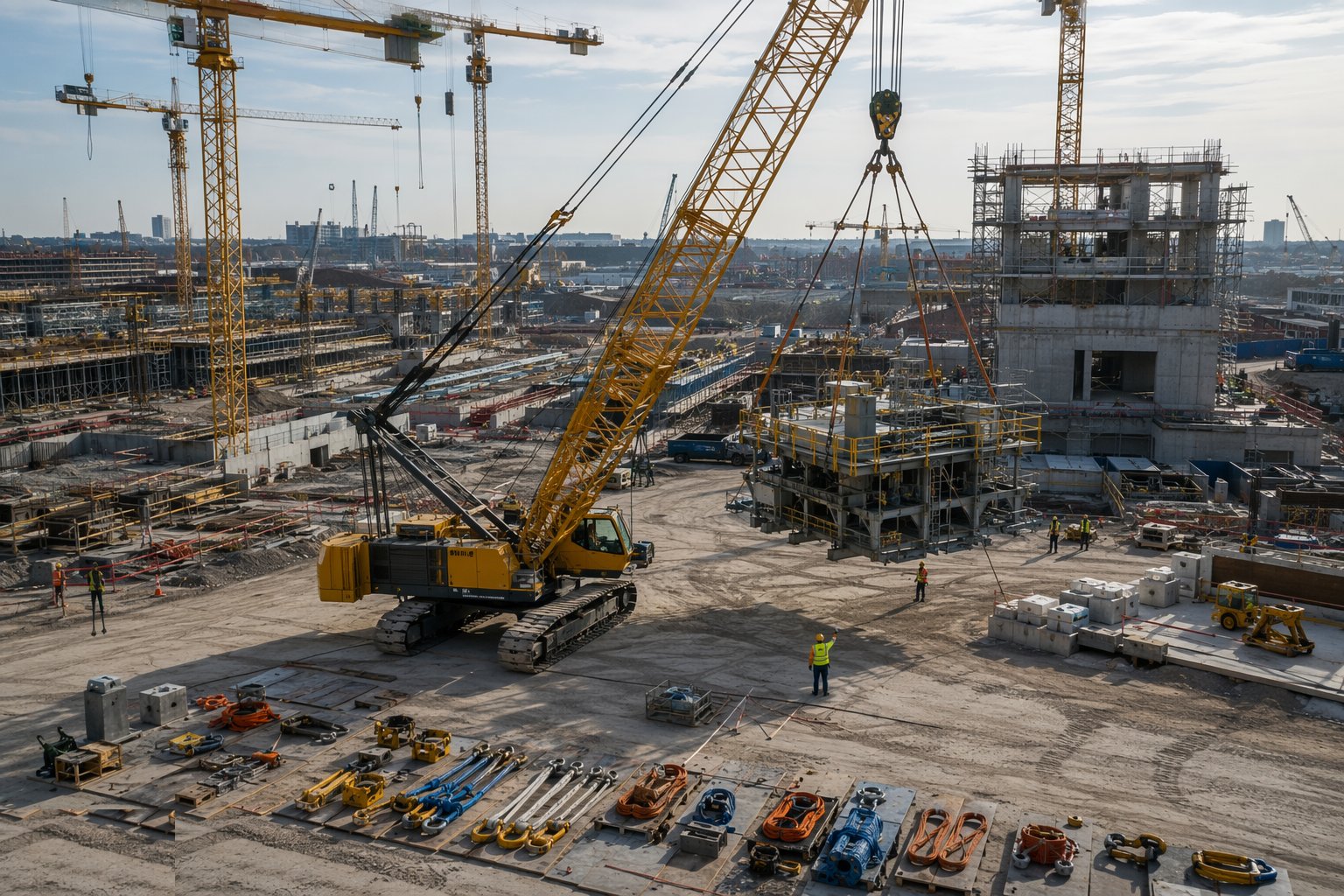
Step 3: Verify the ground and build the base
Ground bearing is calculated from the maximum outrigger or track pressures in the load cases - with the crane configured at its worst, not its average - and checked against tested ground data. Crane mats, steel spreader plates or a purpose-built concrete platform distribute the load; outriggers are always fully extended and packed per the manufacturer, on level ground, with the packing checked before every set-up. The trench someone backfilled last month is exactly where an outrigger wants to sit.

- 4
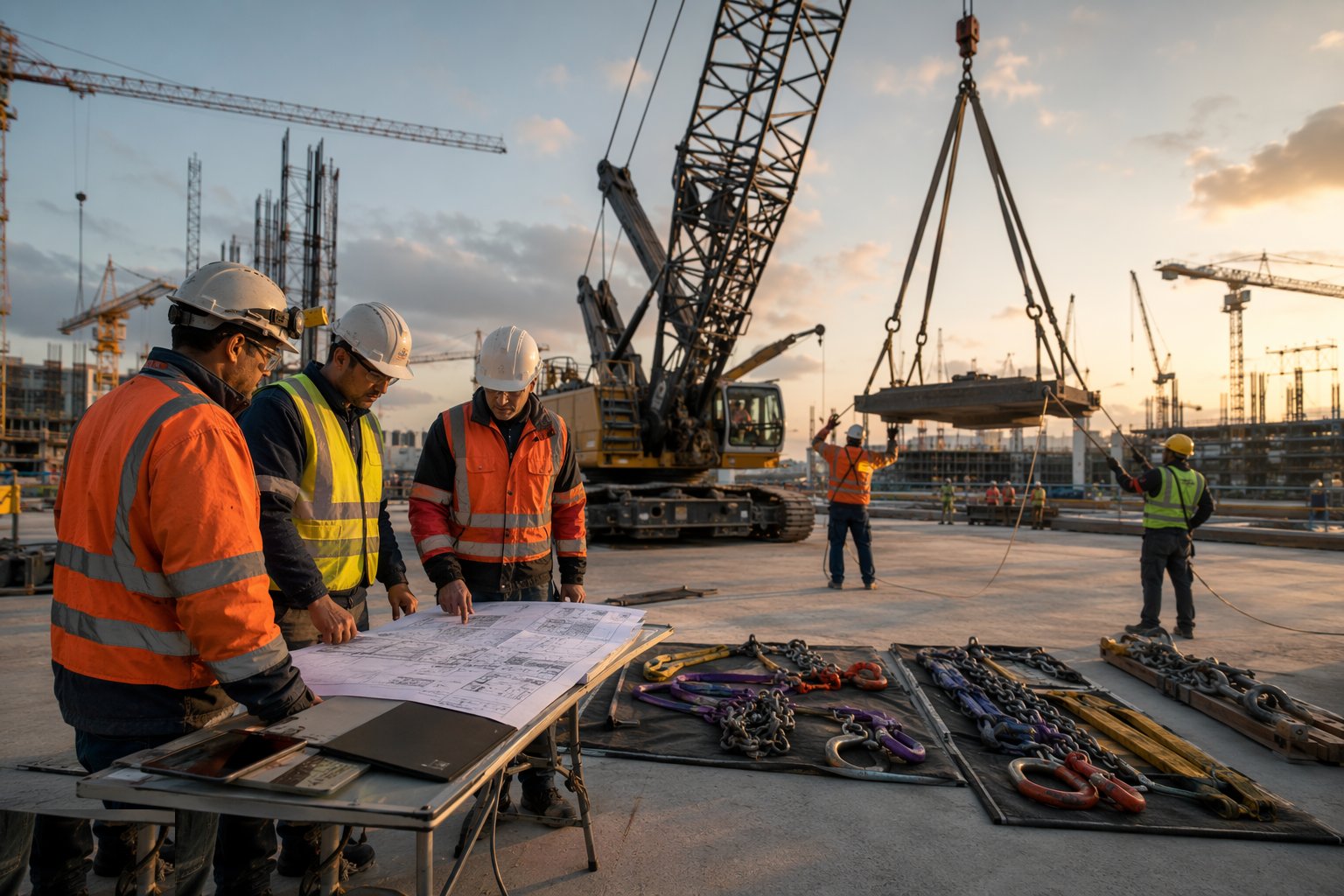
Step 4: Appoint the people and write the lift plans
The Appointed Person is named for the site and produces the lift plans: category per lift, rigging configuration, slinger/signaller and lift supervisor named, exclusion zones drawn, communication method agreed. Complex lifts - tandem, blind, over live areas, man-riding - get individual method statements with additional sign-off. Competence cards are checked: CPCS or NPORS categories matching the crane and the role in the UK; operator licences and third-party certification in the UAE.
- 5
Step 5: Inspect, test and certify the crane
The crane arrives or is erected with its thorough examination certificates current (LOLER), load test records where applicable, and weekly and pre-use inspections logged. After erection or reconfiguration, the crane is tested and certificated before its first working lift. Safety devices - rated capacity limiters, anti-collision on multi-crane sites, anemometers, slew and height limiters - are checked functional, not just present.

- 6
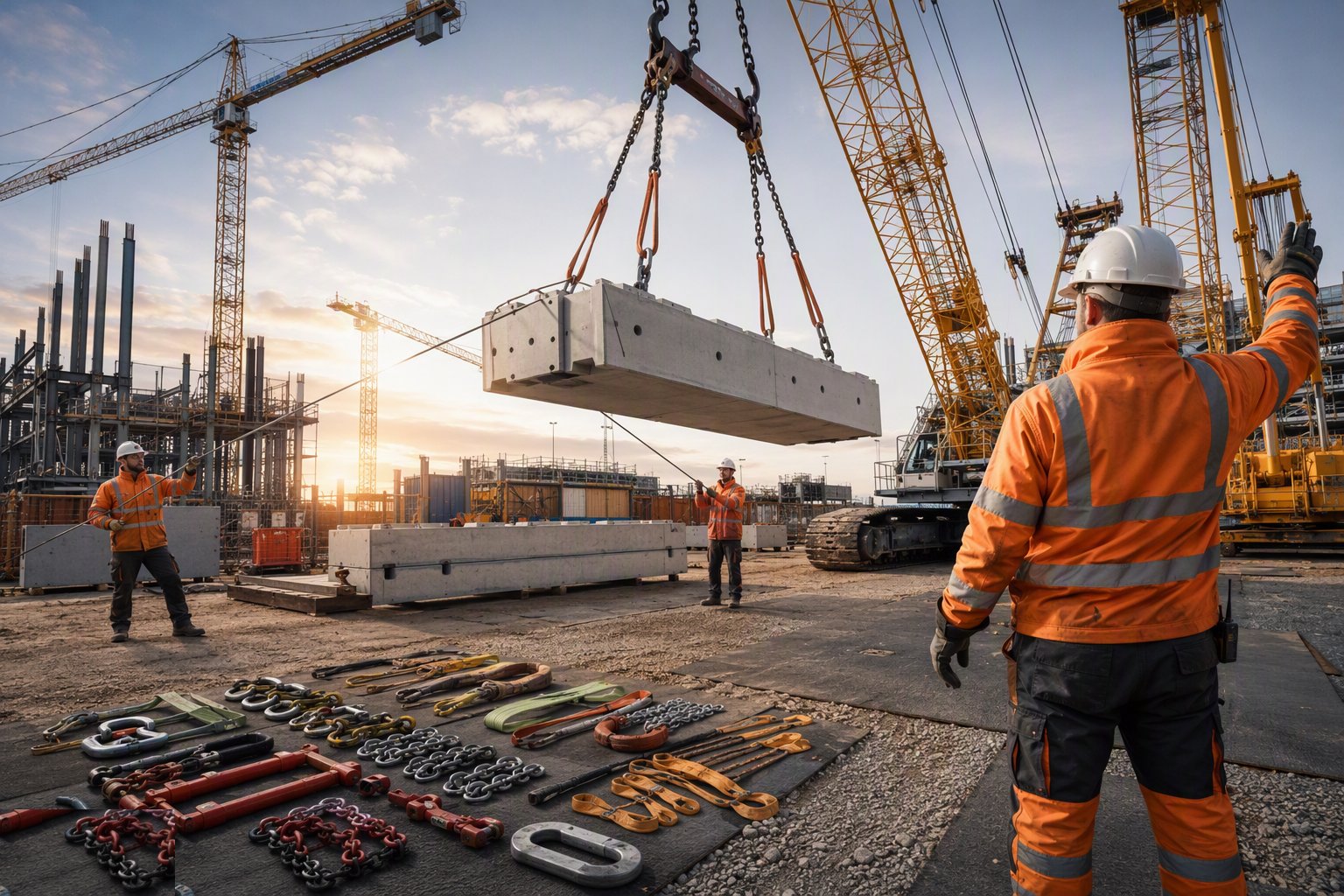
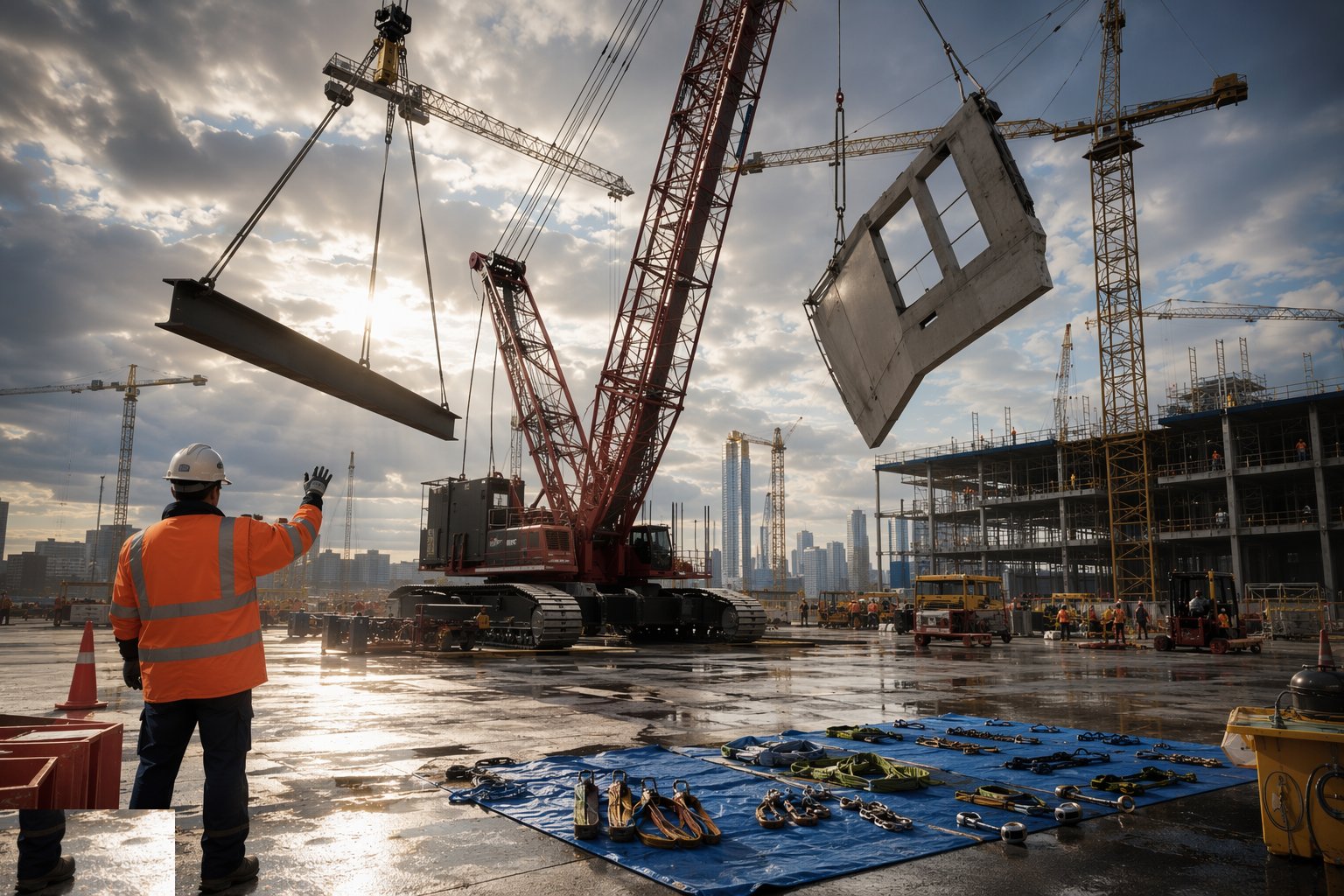
Step 6: Rig and execute the lifts
The slinger/signaller selects the gear to the plan - slings, chains, shackles, beams, all tagged and in date - attaches the load with the centre of gravity where the plan says, and controls the pick with agreed signals or radio. A trial lift a few hundred millimetres off the ground confirms balance and brake function before the load travels. The exclusion zone is held: nobody under a suspended load, ever, and tag lines on loads that can swing or spin.
- 7
Step 7: Manage blind lifts and communications
Where the operator cannot see the load or the landing point, the lift is run entirely on the slinger/signaller's signals - one voice, agreed code, radio with a dedicated channel, and a stop authority everyone respects. Blind lifts are categorised up and planned accordingly: cameras on the hook help but do not replace the signaller. Hand signals follow the standard code so any competent signaller can take over without ambiguity.

- 8
Step 8: Watch the wind and shut down properly
Wind is read at the crane, at height, against the limit for the crane and for the specific load - a cladding panel kites in half the wind a steel beam ignores. At the limit, lifts stop; loads are landed, not parked in the air. End of shift: hook stowed, tower crane slew brake released so the jib weathervanes, mobile cranes de-rigged or boom stowed per the manual. Forecast storm conditions trigger the crane-specific storm plan.
- 9
Step 9: Review, record and hand back
Every lift day closes with the log: lifts made, delays, any near-miss or overload events (the limiter records them), defects raised and inspections due. Recurring mobile crane visits review the standing positions and mats each time - ground conditions change with weather and works. At demobilisation the base is removed, the ground reinstated, and the lift records join the health and safety file.

Plant & equipment
- Tower cranes: hammerhead, luffing and topless, with bases, ties and climbing frames
- Mobile all-terrain cranes 40–1000 t with fly jibs and counterweight variants
- Crawler cranes and duty-cycle crawlers with lattice booms
- Crane mats, steel spreader plates and purpose-built crane platforms
- Lifting accessories: slings, chains, shackles, spreader beams, lifting frames - tagged and certificated
- Anemometers and wind monitoring at height; anti-collision systems on multi-crane sites
- Two-way radios, signal lamps and hook cameras for blind lifts
- Kentledge and test weights for commissioning and load tests
Quality control & testing
- Thorough examination certificates (LOLER) current for crane and every accessory
- Lift plans categorised and signed by the Appointed Person before lifting
- Ground bearing verification and outrigger/platform checks recorded per set-up
- Pre-use and weekly crane inspections logged; defects closed out before lifting
- Load chart compliance confirmed per lift - radius, configuration, counterweight
- Operator and slinger competence verified against the crane type and role
- Overload and limiter events investigated, recorded and reported
Safety watchpoints
- No person under a suspended load - exclusion zones set, barriered and policed
- Outriggers fully extended, packed and on verified ground every set-up
- Wind limits enforced per crane and per load sail area; loads landed, never parked aloft
- Blind lifts on a single agreed signal code with a dedicated radio channel
- Tandem lifts as complex lifts: engineered plan, matched cranes, one controlling supervisor
- Oversailing of public areas and neighbours licensed, with protection and notification
- Man-riding only with purpose-designed carriers, secondary protection and its own plan
- Power line approach distances observed or lines isolated - cranes and overhead lines kill
Common defects to hunt
- Outrigger on backfilled ground punching through mid-lift - the classic overturn
- Radius creep: load chart read for 20 m, lift made at 26 m "because it reached"
- Sail-area loads lifted in marginal wind that kites the load into the structure
- Worn or wrong lifting accessories picked from the bin instead of the plan
- Slew brake left on overnight - the first gust puts the jib through a neighbour's scaffold
- Slinger out of sight signalling by guesswork on a blind lift
- Anti-collision zones overridden and left overridden after the works that needed it
How long does Craneage and Lifting Operations take?
Typical duration: Mobile crane mobilisation and a day's steel erection: one to three days on site per visit. Tower crane install to climbing operation: a week, then standing 12–24 months on a tower. Lift planning lead time: days for basic lifts, weeks for complex and tandem picks..
Related processes
- Vertical Formwork - Wall, Column, Climbing and Jump Form
- Horizontal Formwork and Falsework
- Propping, Façade Retention and Temporary Support
- Excavation Support and Trench Shoring
- Hoists, Mast Climbers and Material Handling
- Construction Plant and Equipment
- Temporary Works - Design, Control and the TWC
- Scaffolding and Access Systems
- Craneage and Lifting Operations in Residential & Housing
- Craneage and Lifting Operations in Commercial & Workplace
- Craneage and Lifting Operations in Mixed-Use & Urban Regeneration
- Craneage and Lifting Operations in Bridges & Elevated Structures
- Craneage and Lifting Operations in Off-Site & Modern Methods
- Craneage and Lifting Operations in Data Centres & Digital Infrastructure
- Tower cranes - method
- Mobile cranes - method
- Crawler cranes - method
- Compact and specialist lifting - method
- Temporary Works & Plant sector guide
- Buildings - group of sectors